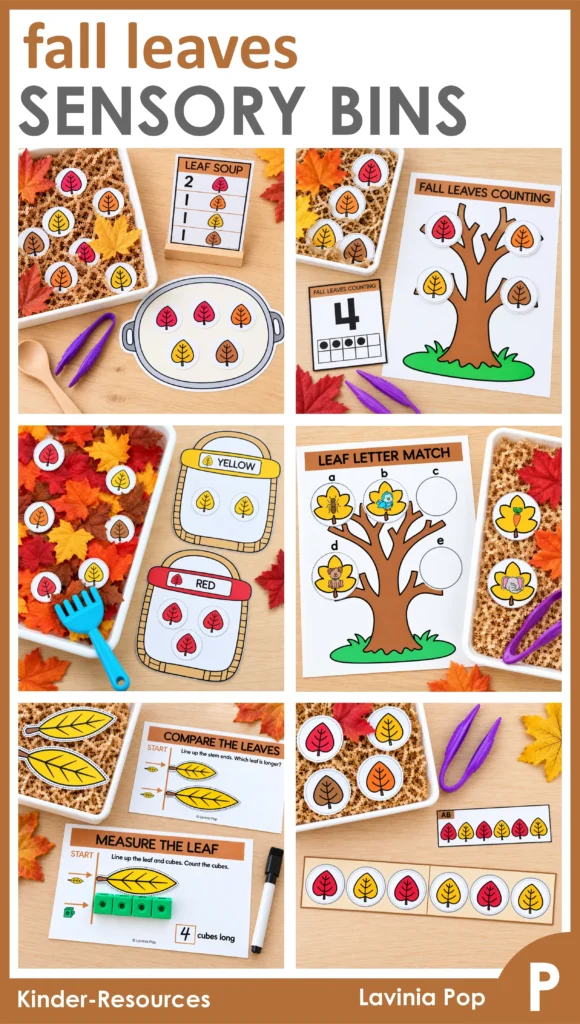
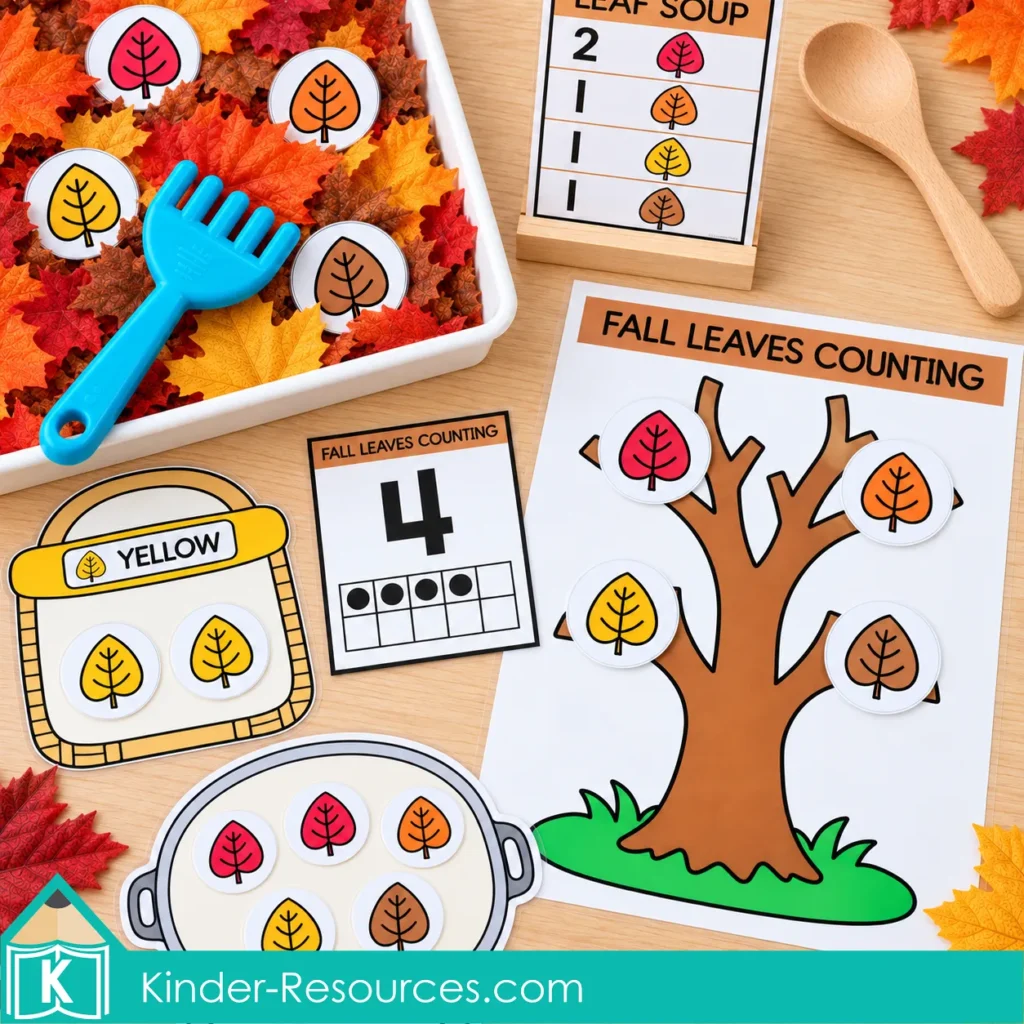
These fall leaves sensory bins give preschoolers playful ways to explore counting, letters, sounds, colors, patterns, and measurement. I created this set of 10 printable activities so you can rotate learning tasks while reusing many of the same leaf pieces. Below, you’ll find activity ideas, simple setup tips, and a free printable sample to try.
The activities can be used during preschool centers, small groups, morning tubs, or learning at home. You can also use one sensory bin and change the printable materials throughout your fall theme.
Setting Up Your Fall Leaves Sensory Bin
A shallow layer of light brown crinkle paper and a few fabric fall leaves provides a simple starting point for many of these activities. Tuck the printable pieces loosely into the filler, leaving some visible so children can spot where to begin.
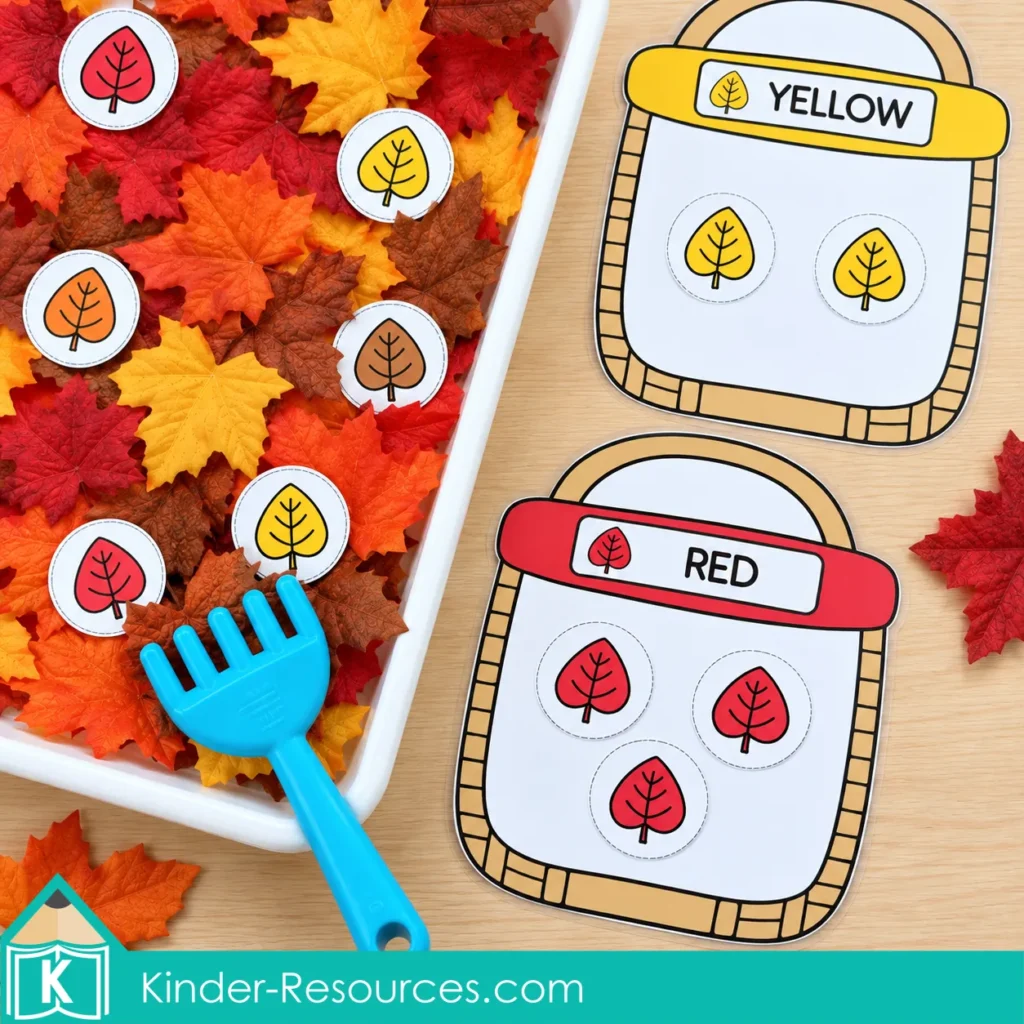
For Rake and Sort Leaves, a bin of fabric leaves gives children something to move aside with a small toy rake as they search for the printable leaf circles.
Place the activity mat beside the bin and add only the pieces needed for that task. For example, if you are introducing one alphabet tree, include the matching letters rather than the entire alphabet.
Children can collect the pieces with their fingers or use child-friendly tongs. The optional tools add another way to handle the materials, but the activities can begin with just the printables and a tray.
Counting Leaves and Making Leaf Soup
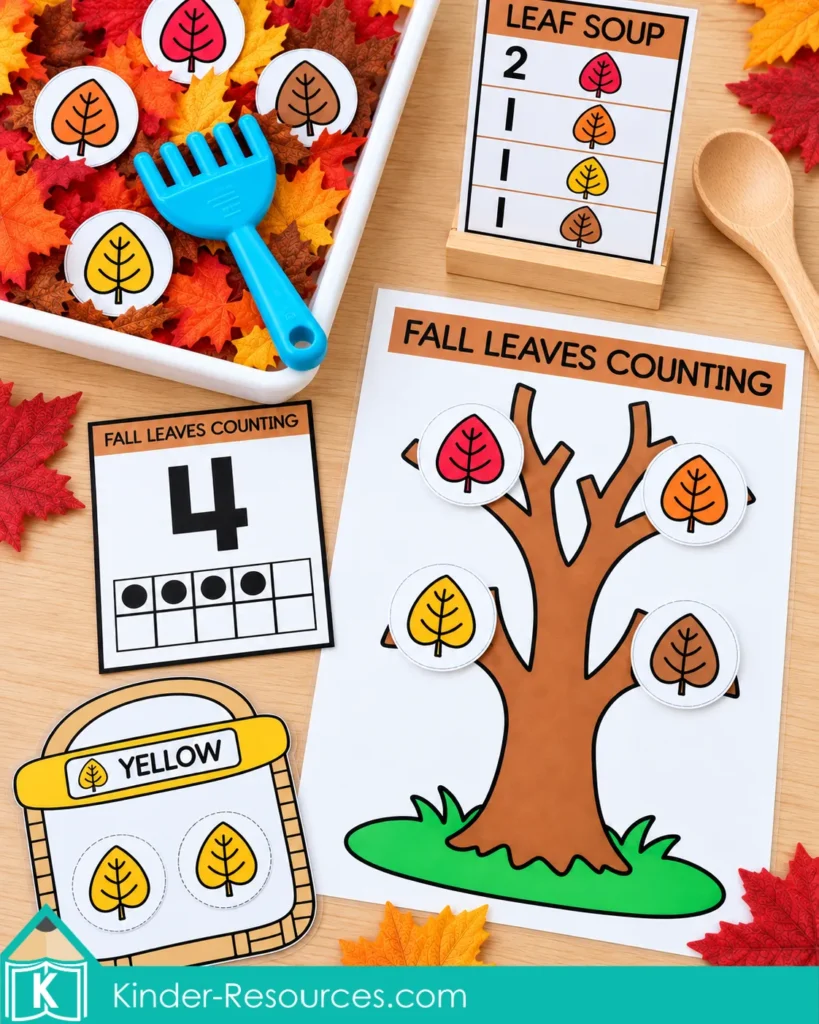
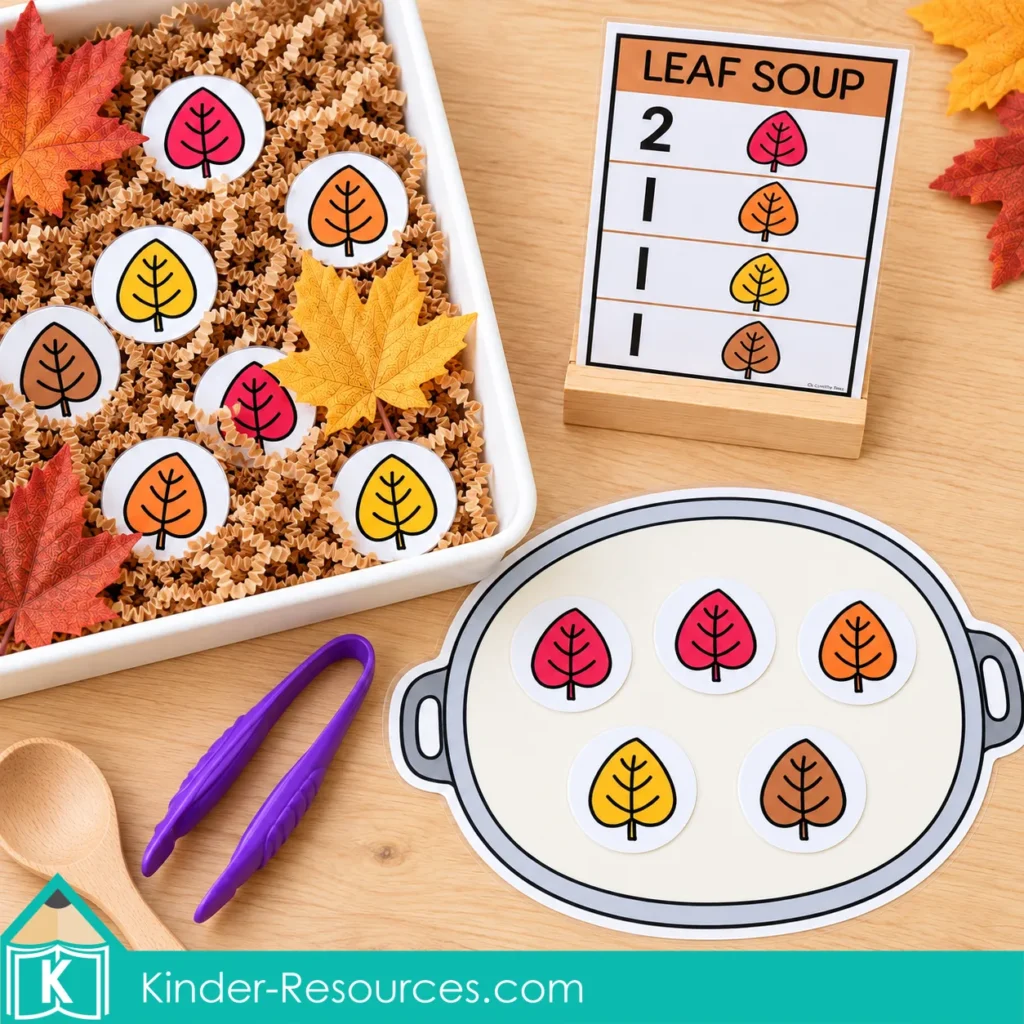
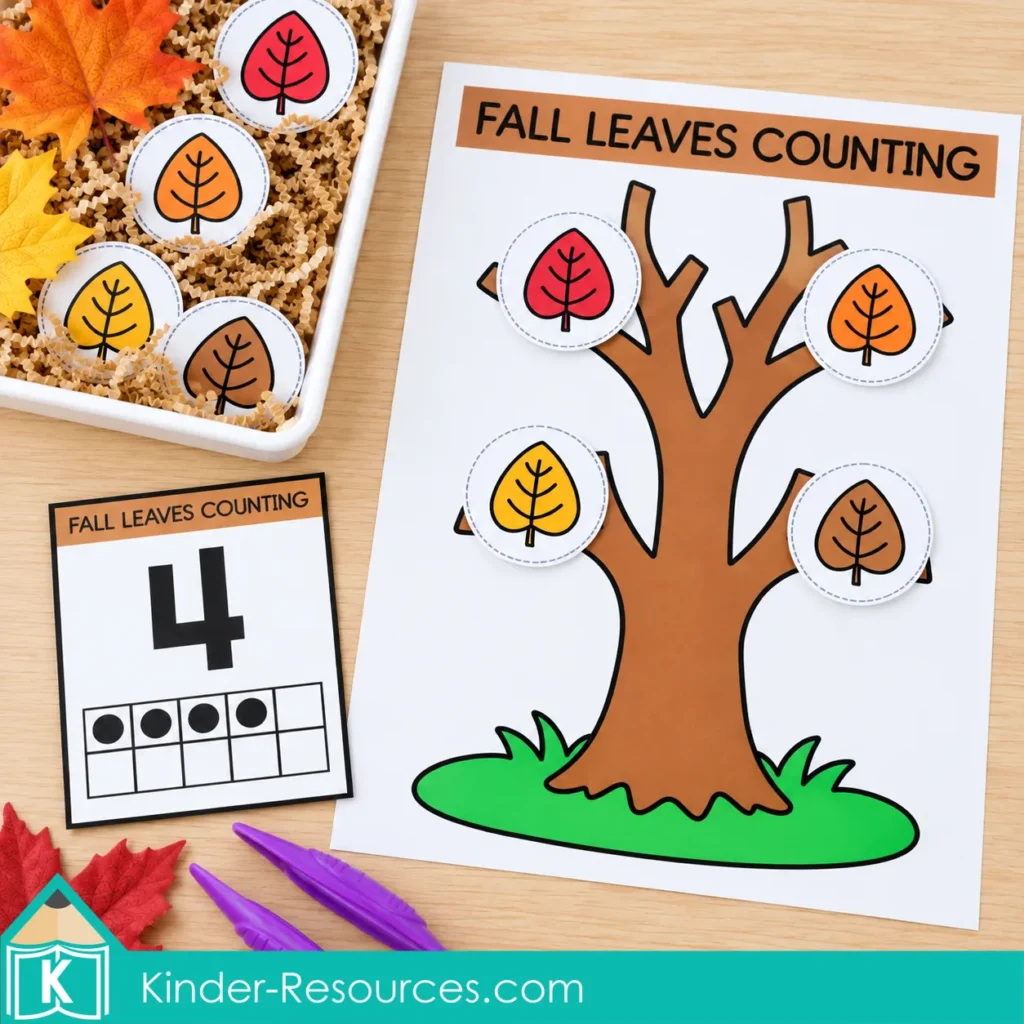
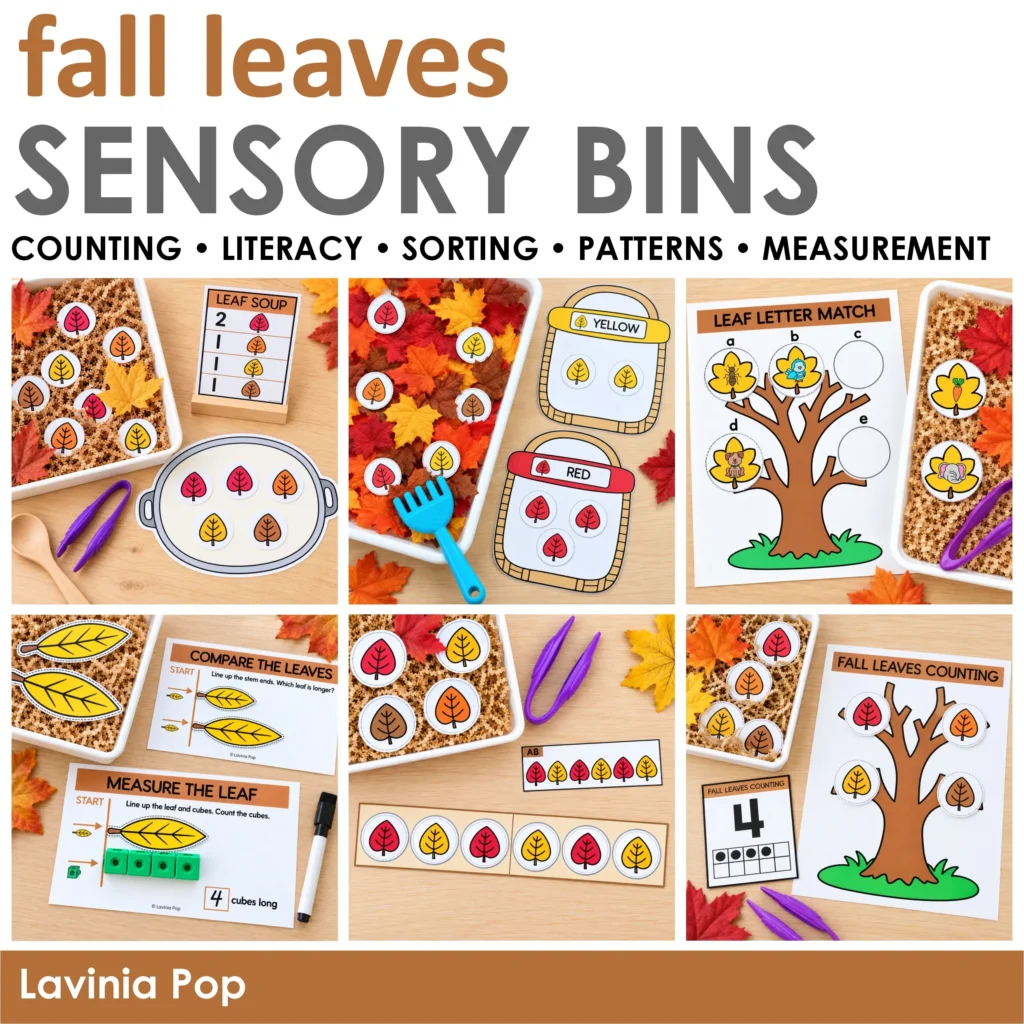
The counting activities in these fall leaves sensory bins connect numbers with quantities. Children can follow a leaf soup recipe or choose a number card and count that many leaves onto a tree.
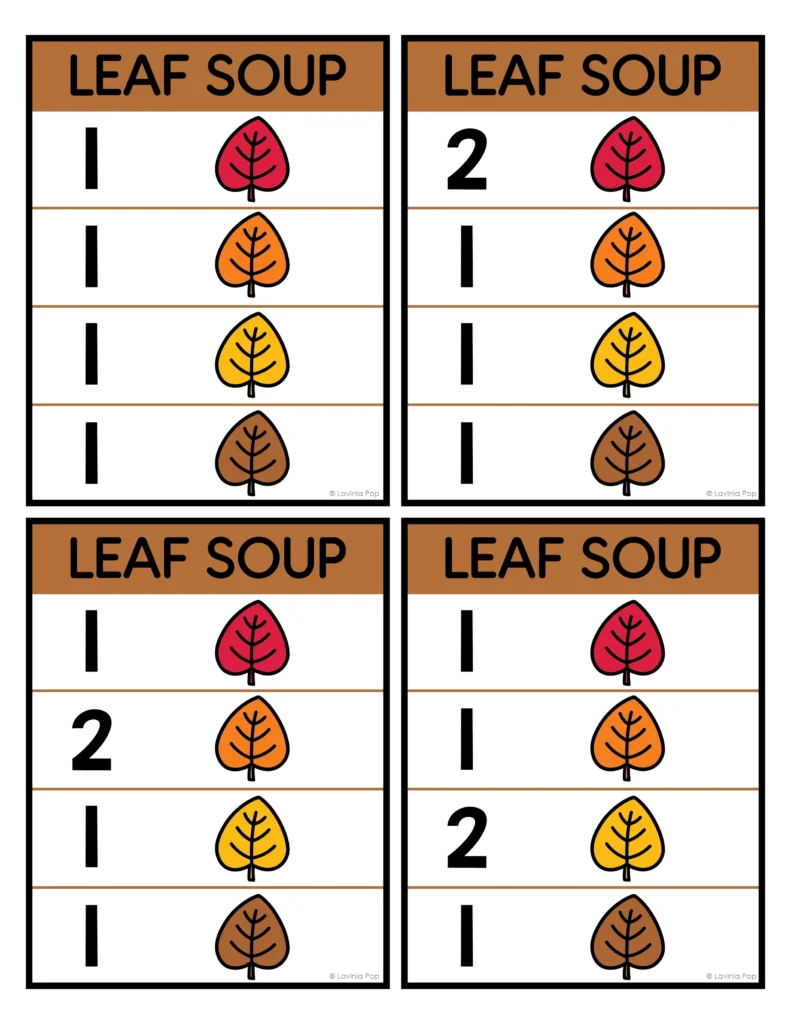
In Leaf Soup Recipes, children choose a picture recipe and gather the required leaves for their pot. They count each color separately, add the ingredients, and check their soup against the recipe card.
You can encourage children to move each leaf as they count. When the soup is complete, ask, “Have we added all the yellow leaves?” or “Which color do we need next?” The blank recipe cards also give children an opportunity to plan their own combinations.
Fall Leaves Counting focuses on making a set to match a number. Children choose a number card from 0–10, find that many leaves, and place them on the tree. The ten-frame dots provide a visual reference when children need help checking the quantity.
Begin with a few smaller numbers and introduce more when appropriate. The zero card offers a useful conversation too: “What would our tree look like if it had zero leaves?”
Sorting Colors, Matching Shapes, and Building Patterns
Looking carefully is central to Rake and Sort Leaves, Leaf Detective, and Leaf Pattern Paths. Each activity asks children to notice a different feature of the leaves.
In Rake and Sort Leaves, children gently rake through the bin, find a leaf circle, and place it on the matching colored basket. The four baskets cover red, orange, yellow, and brown. You can begin with two colors before adding the others.
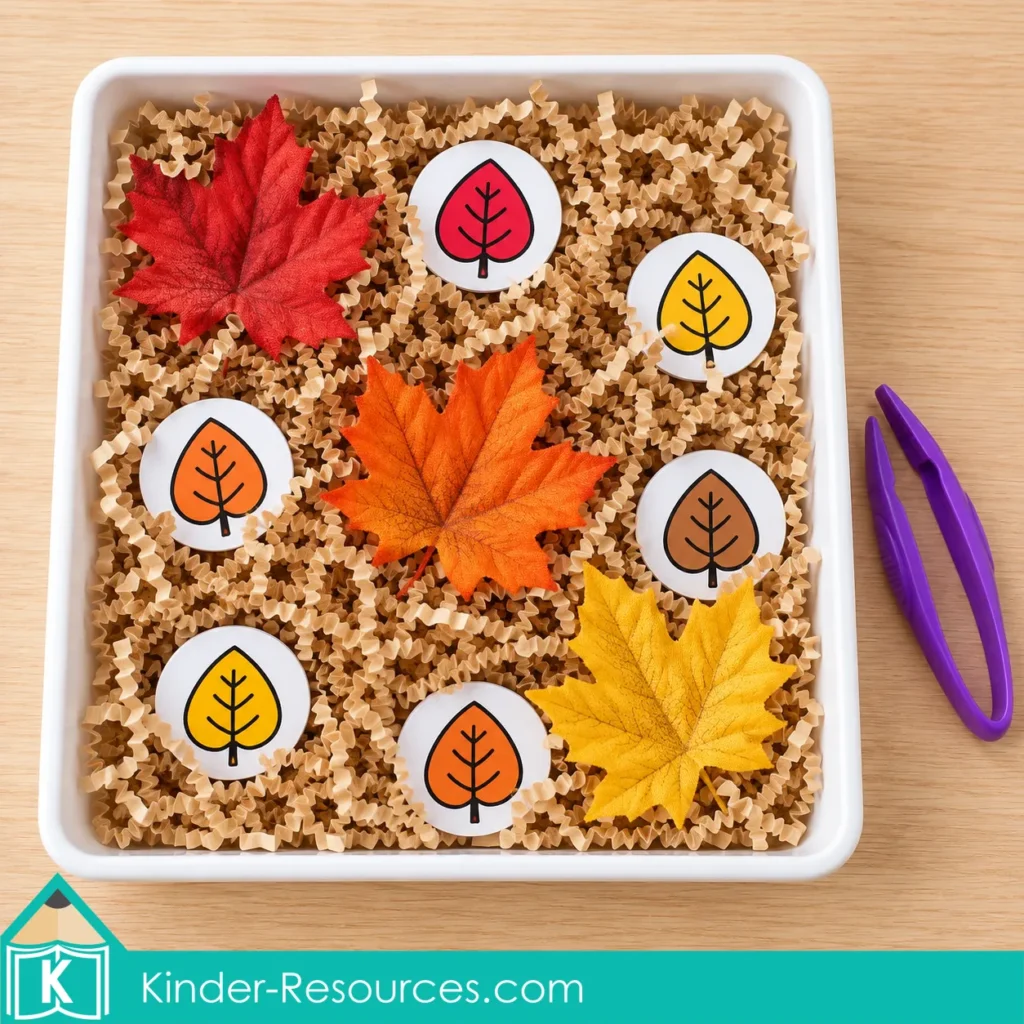
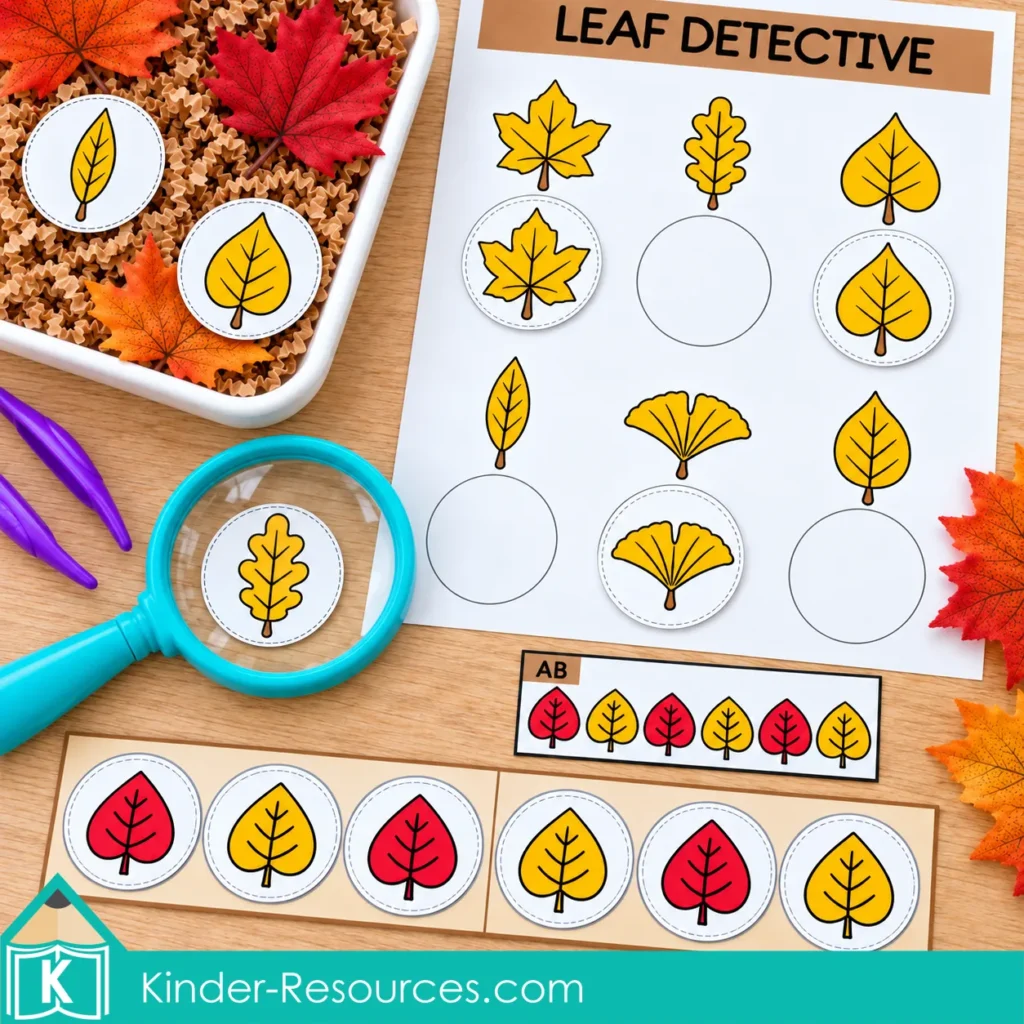
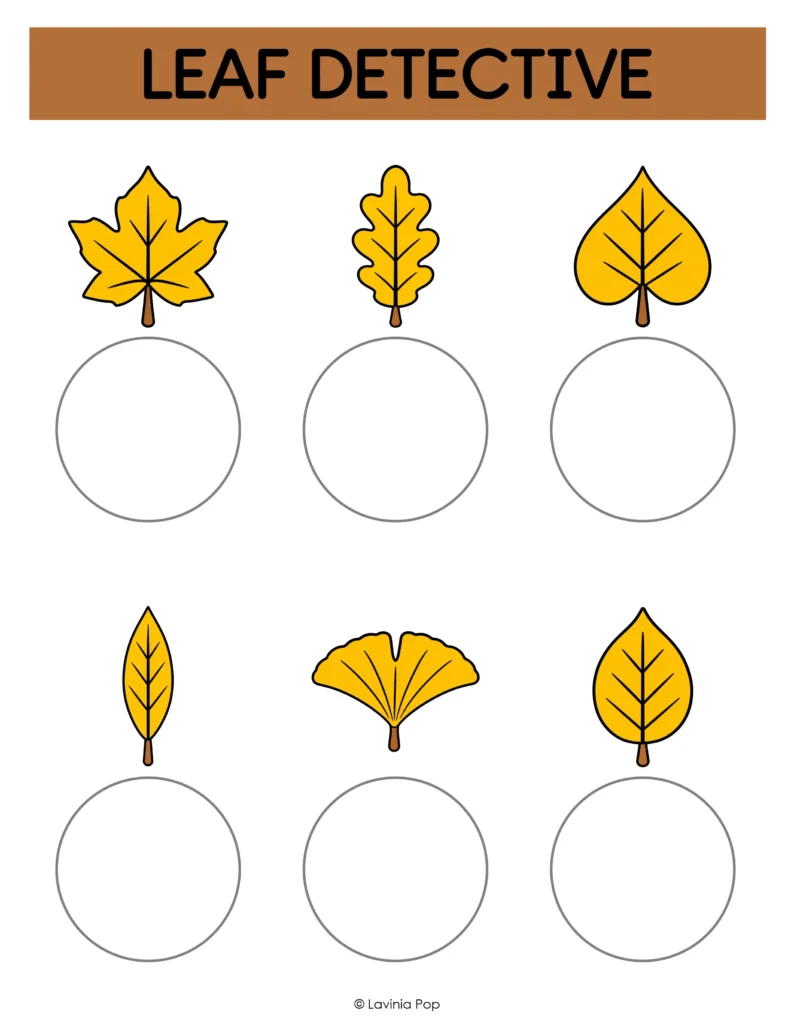
Leaf Detective shifts attention to shape. All six leaves are yellow, so children need to examine their outlines to find a match. A magnifying glass can add to the detective theme, but children can also compare the pictures directly.
Try asking, “What do you notice about the edge?” or “Which leaf has the same pointed tip?” These questions give children a reason to describe the features they are using.
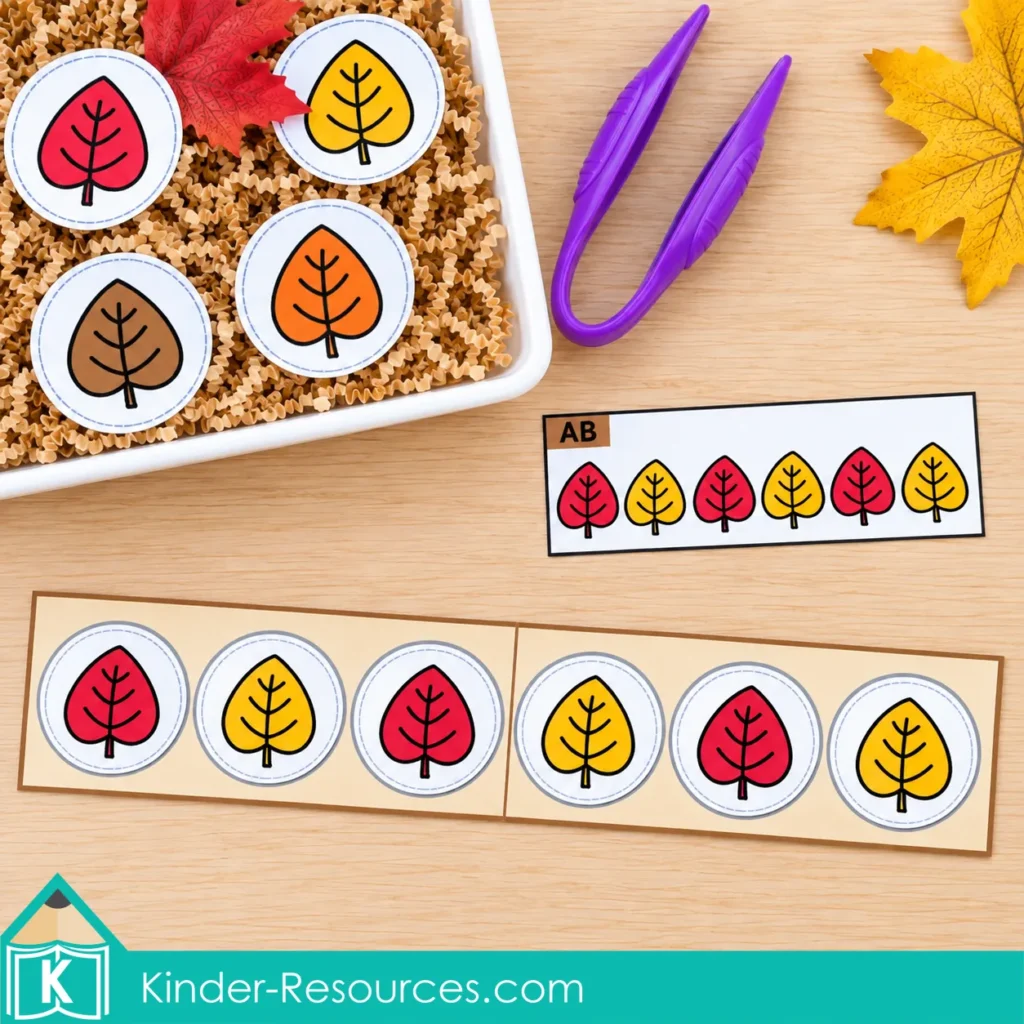
Leaf Pattern Paths introduces repeating sequences. Children look at a pattern card and arrange the leaf pieces on two joined strips. The collection includes six AB pattern cards, along with AAB and ABB patterns.
Once children can copy a pattern, add the third strip and invite them to continue it. Saying the colors aloud can help them hear the repeating sequence. Other options include making a new pattern or finding the missing leaf in one you have prepared.
Exploring Letters, Beginning Sounds, and Syllables
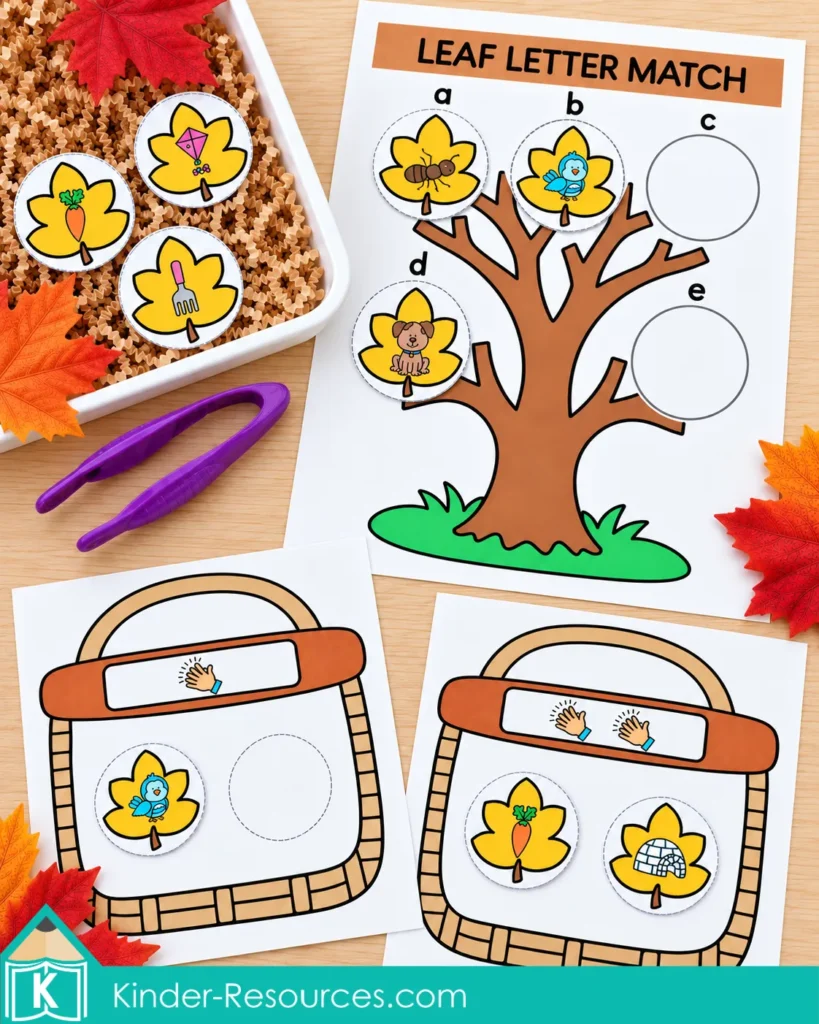
For early literacy, the fall leaves sensory bins include letter matching, beginning sounds, and syllable sorting. Choose alphabet leaves for uppercase and lowercase matching, or use the yellow picture leaves to explore sounds and clap one- and two-syllable words.
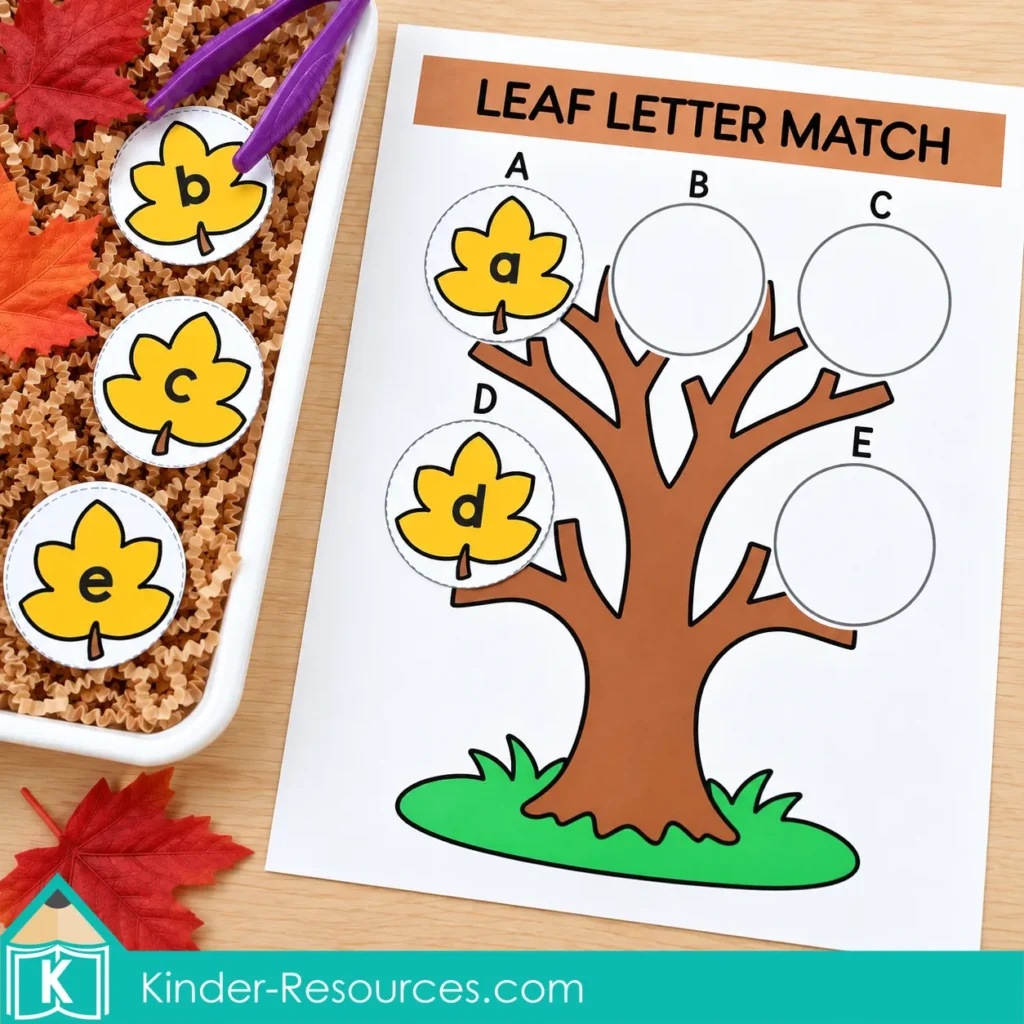
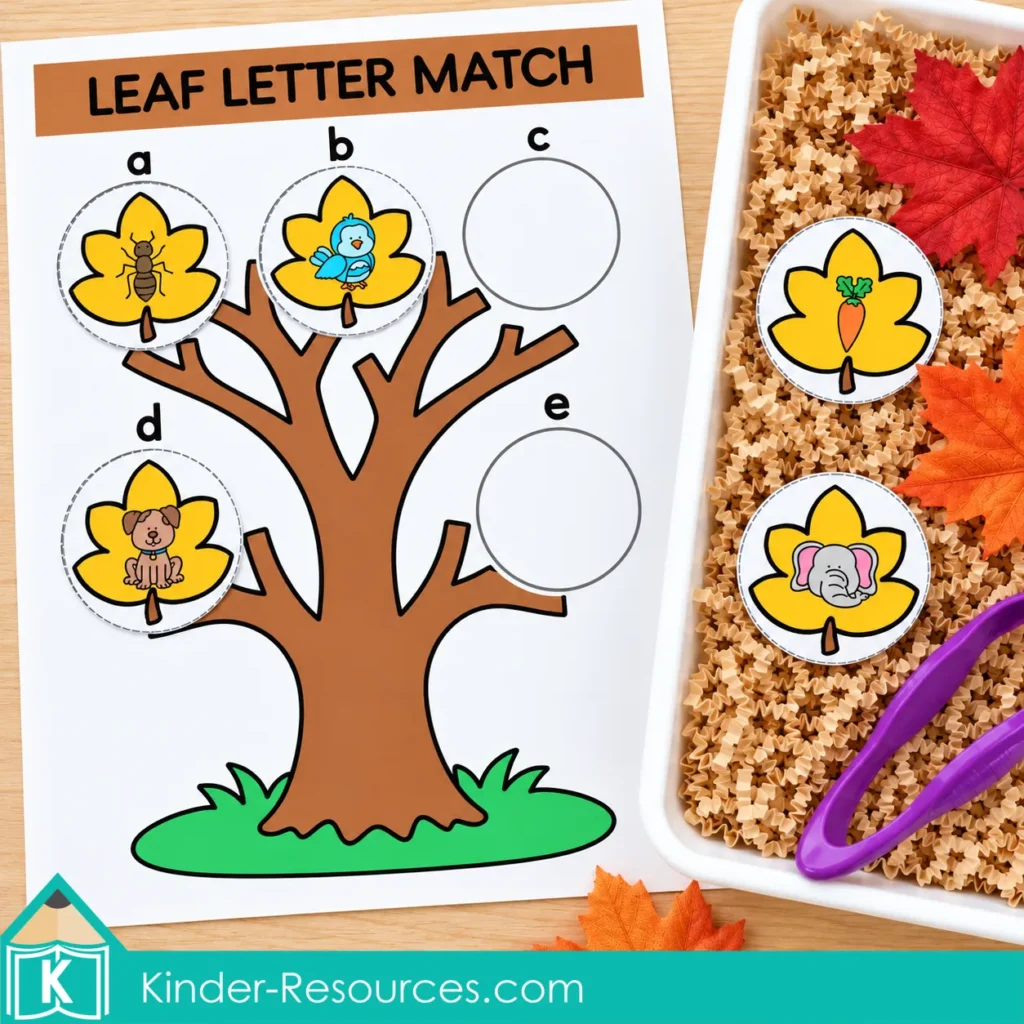
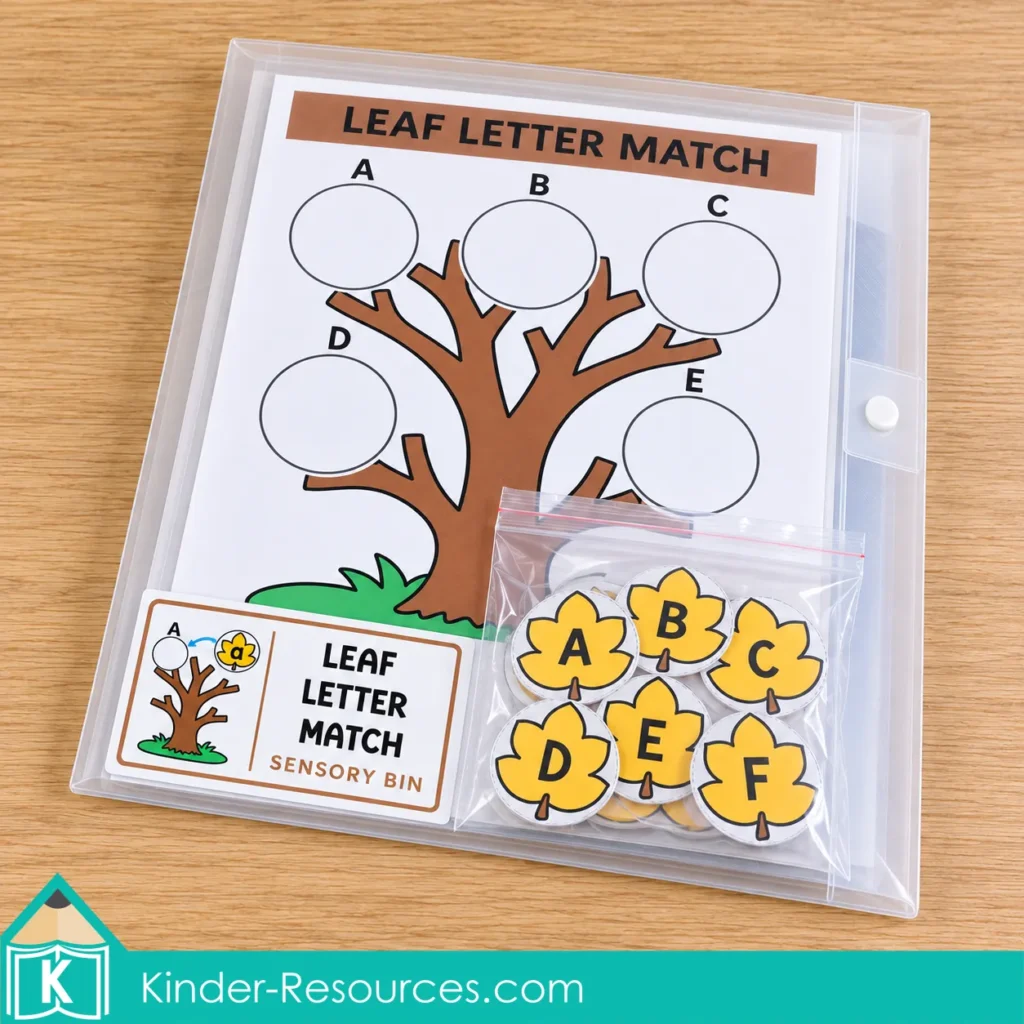
Leaf Letter Match includes uppercase and lowercase tree mats and letter leaves. Children can begin by matching identical letters, then explore uppercase and lowercase partners when they are ready.
One tree and its matching leaves are enough for an initial activity. You can name each letter together as children find its place.
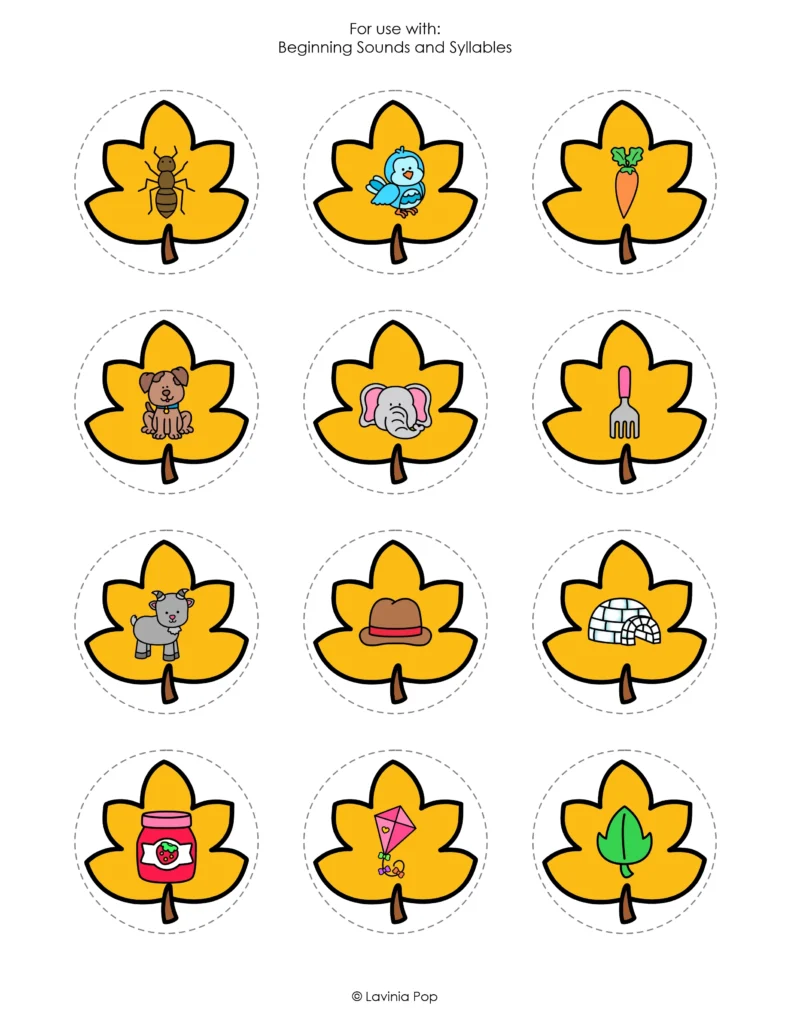
Leaf Beginning Sounds Match uses the same tree mats with picture leaves. Children name a picture, listen to its first sound, and find the corresponding letter. For example, a dog picture can be matched to d. The picture key helps adults use the intended names consistently.
Before beginning, look through the selected pictures together. This gives you an opportunity to introduce any unfamiliar words before asking children to listen for their sounds.
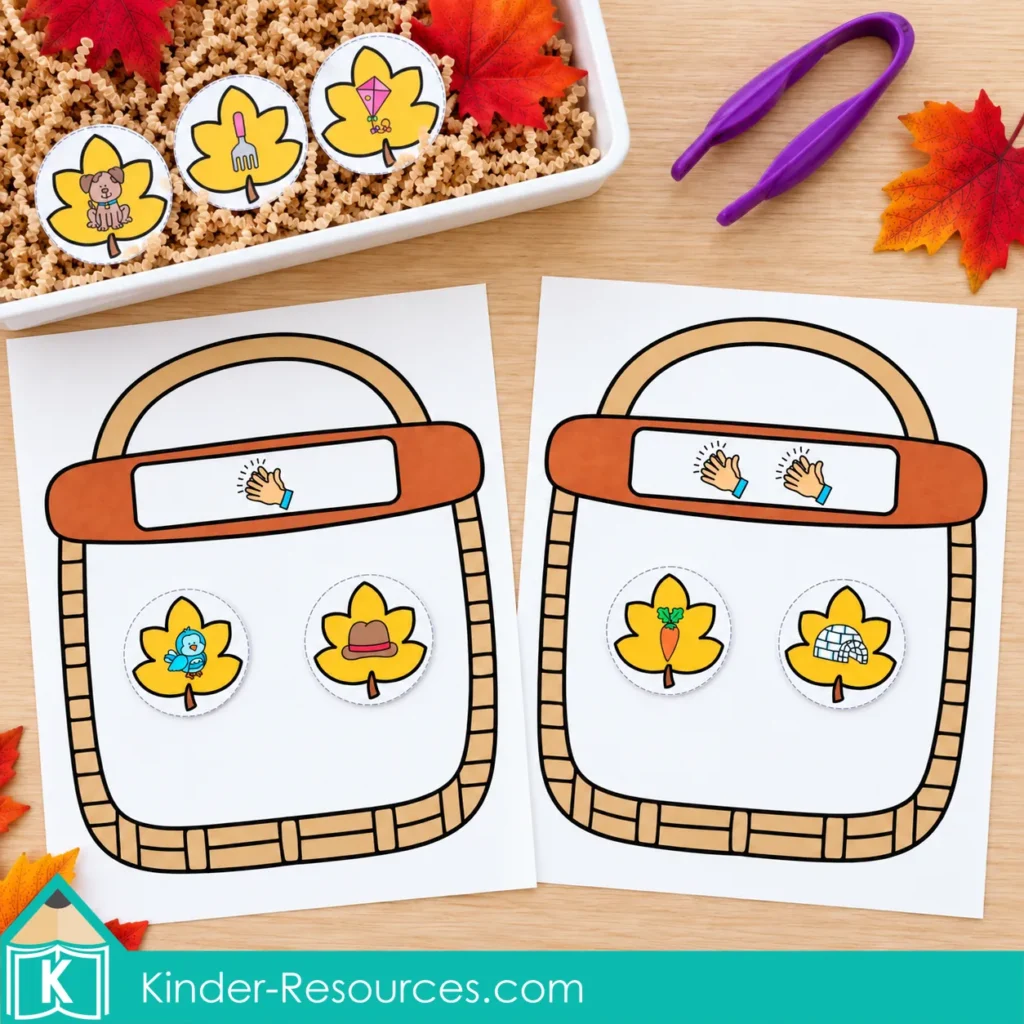
Leaf Clap and Sort uses selected picture leaves for a different listening task. Children say the whole word, clap its syllables, and place it on the basket with one or two clapping symbols.
For example, “dog” belongs with one clap, while “carrot” belongs with two. This activity uses only the one- and two-syllable words, so set aside the longer picture words before filling the bin.
Comparing Lengths and Exploring Positional Words
The final two activities introduce mathematical language through objects children can move and compare.
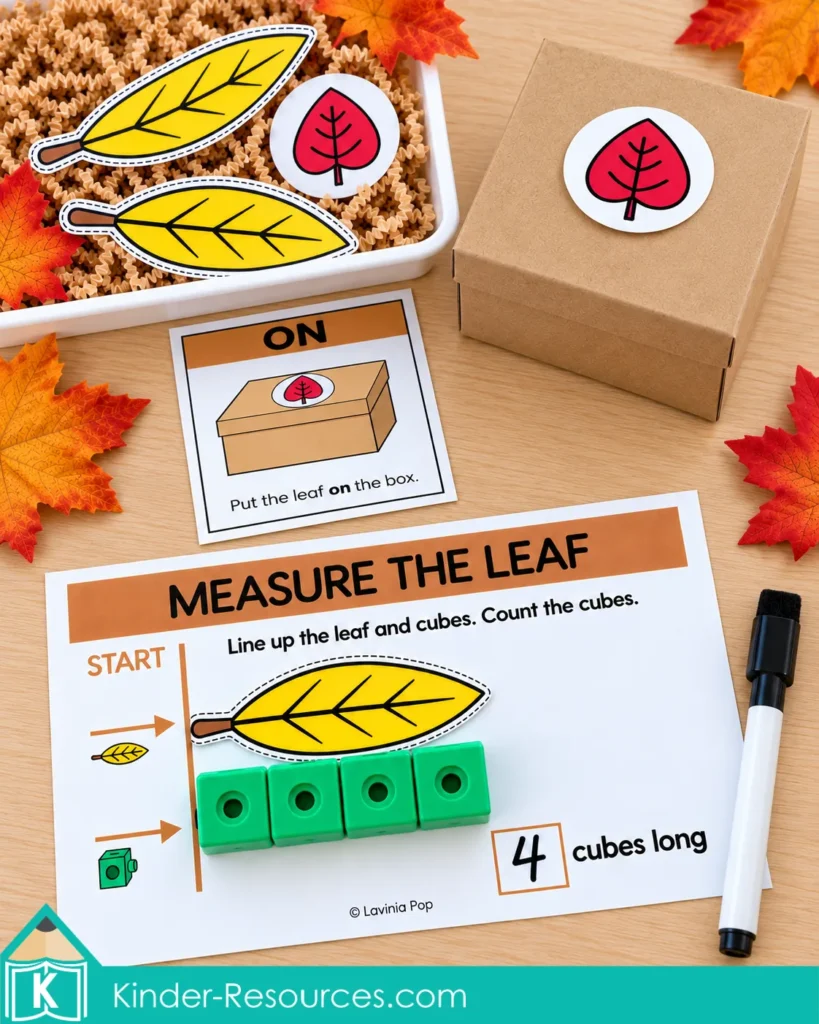
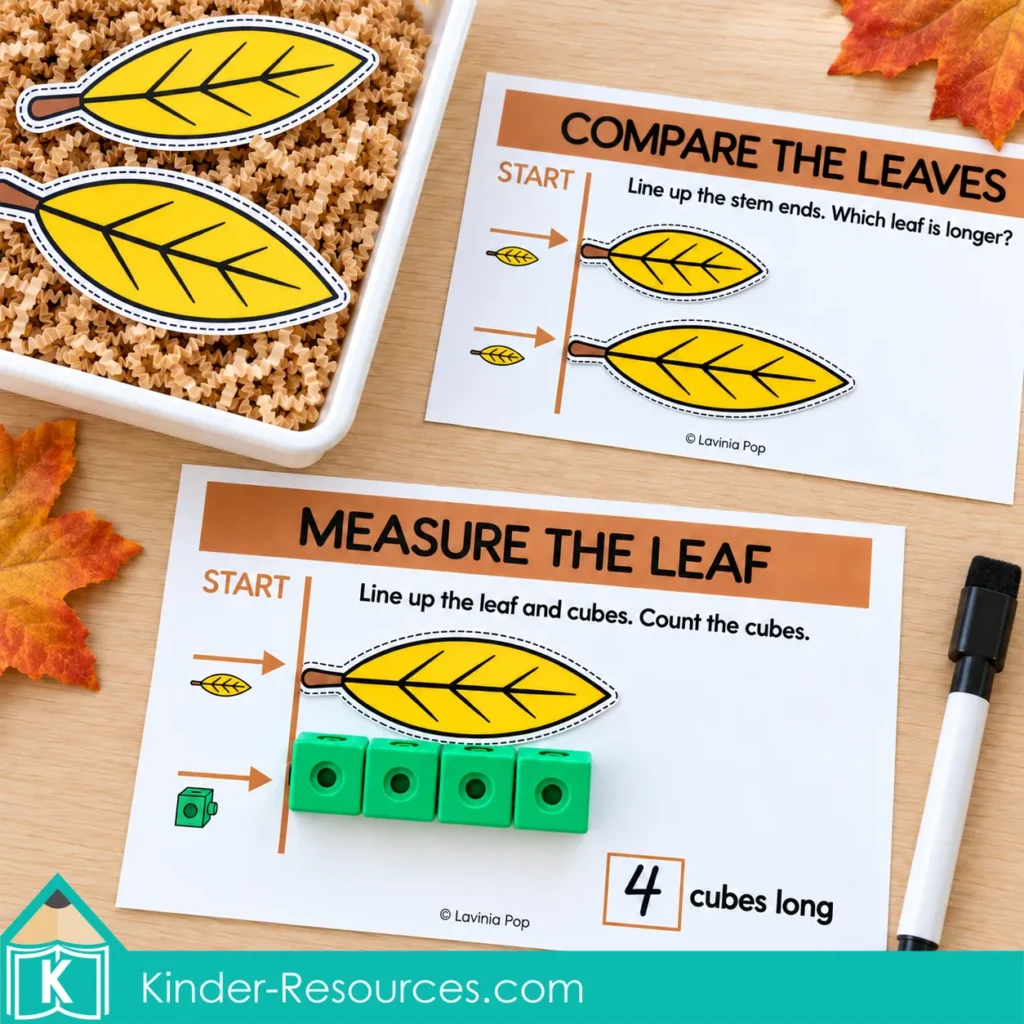
In Measure the Leaves, children begin by placing two leaves on the comparison mat with their stem ends lined up at the start line. They can then see which leaf reaches farther and use words such as longer and shorter.
When children are ready to measure, introduce the measurement mat and a row of linking cubes. Line up the leaf and cubes at the same starting point, keep the cubes together without gaps, and count how many cubes span the leaf.
The leaf pieces are designed for 2 cm linking cubes. Print the pages at 100% or Actual Size so the measurements remain consistent.
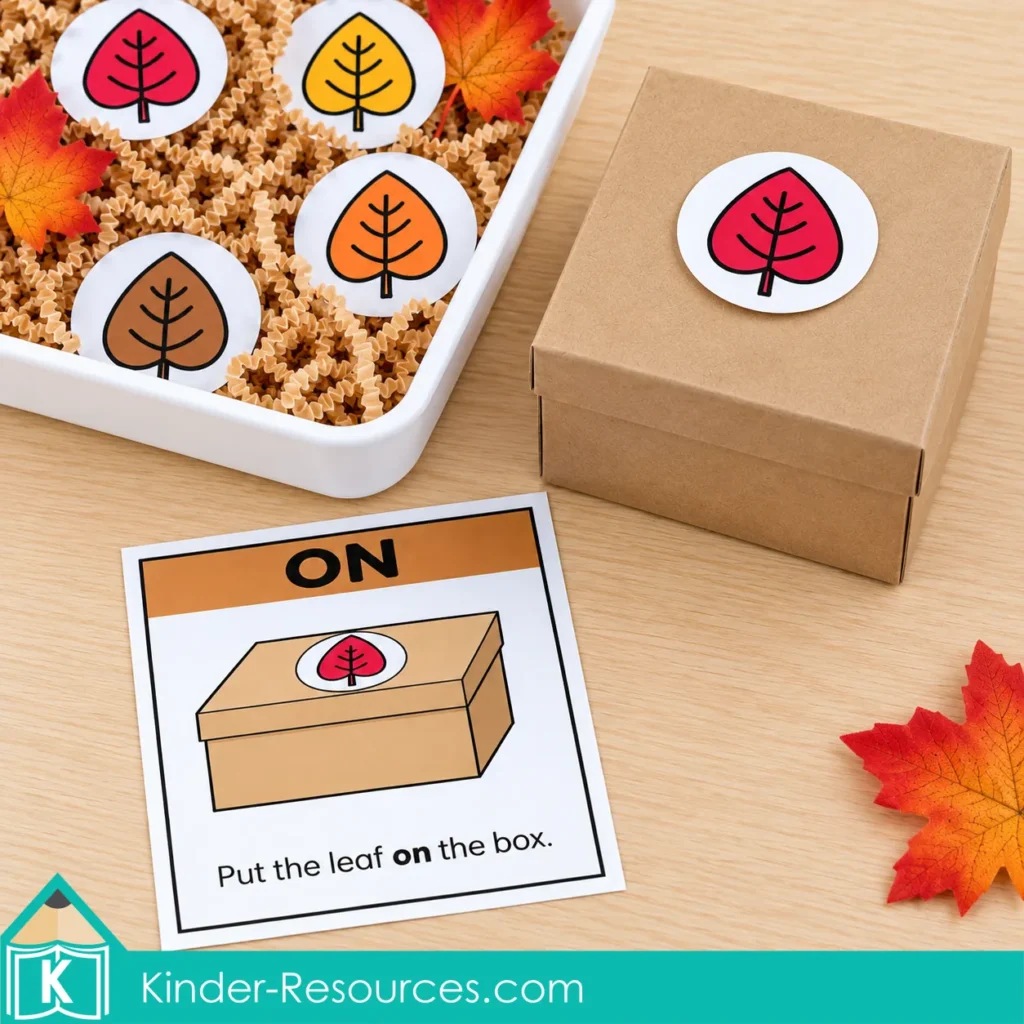
Where Is the Leaf? uses a real box, a leaf piece, and eight picture cards. Children follow directions to put the leaf in, on, under, beside, in front of, behind, above, or outside the box.
Begin with a few familiar positions and demonstrate them together. Later, children can choose a card and give the direction to a partner. Holding the leaf above the box also provides a clear opportunity to compare above with on.
Choosing the Right Starting Point
You do not need to introduce all ten activities at once. Choose one learning focus and offer a manageable selection of materials.
For an easier starting point, try two sorting colors, a few familiar letters, smaller counting quantities, or two leaves to compare. Demonstrate one example and talk through the choice: “This leaf is red, so I am looking for the red basket.”
To extend an activity, change the task using the same materials. Children might continue a pattern, create a soup recipe, explain a shape match, or give a positional direction.
The included More Ways to Play cards provide additional ideas for revisiting the activities.
Preparing and Storing the Printables
Print the required pages, laminate if desired, and cut out the pieces children will handle. Keep the Teacher Directions and illustrated How to Play cards with each activity so the instructions are easy to find.
Several activities reuse the same leaf pieces. Storing the colored leaf circles, alphabet leaves, and picture leaves in separate labeled bags can make it easier to select the pieces you need.
The packet includes storage labels for all ten activities. Use them on folders, envelopes, or containers to keep the mats and directions organized between sessions.
Download the Free Fall Leaves Sensory Bin Sample
Take a closer look inside the resource with these free Fall Leaves Sensory Bins sample pages.
The download contains selected pages for previewing the activities. The complete collection includes all ten activities, printable pieces, Teacher Directions, illustrated How to Play cards, extension ideas, and storage labels.

Explore the Complete Fall Leaves Sensory Bins Resource
The Fall Leaves Sensory Bins resource includes all ten printable activities, Teacher Directions, illustrated How to Play cards, More Ways to Play ideas, and storage labels.
Together, the activities cover counting, color sorting, letter recognition, beginning sounds, syllables, patterns, visual matching, measurement, and positional words. You can select the activities that suit your current learning goals and return to the others throughout your fall theme.


Happy Teaching! 😊
You Might Also Like