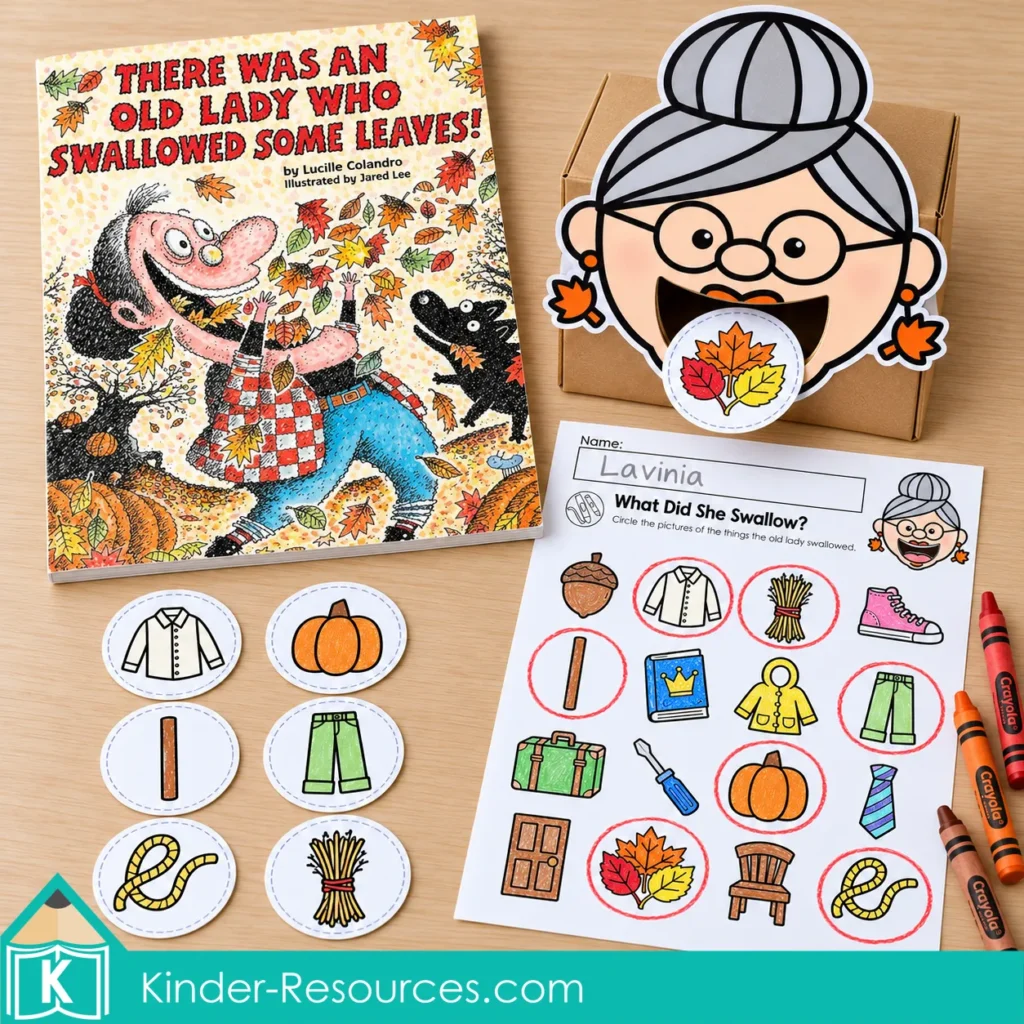
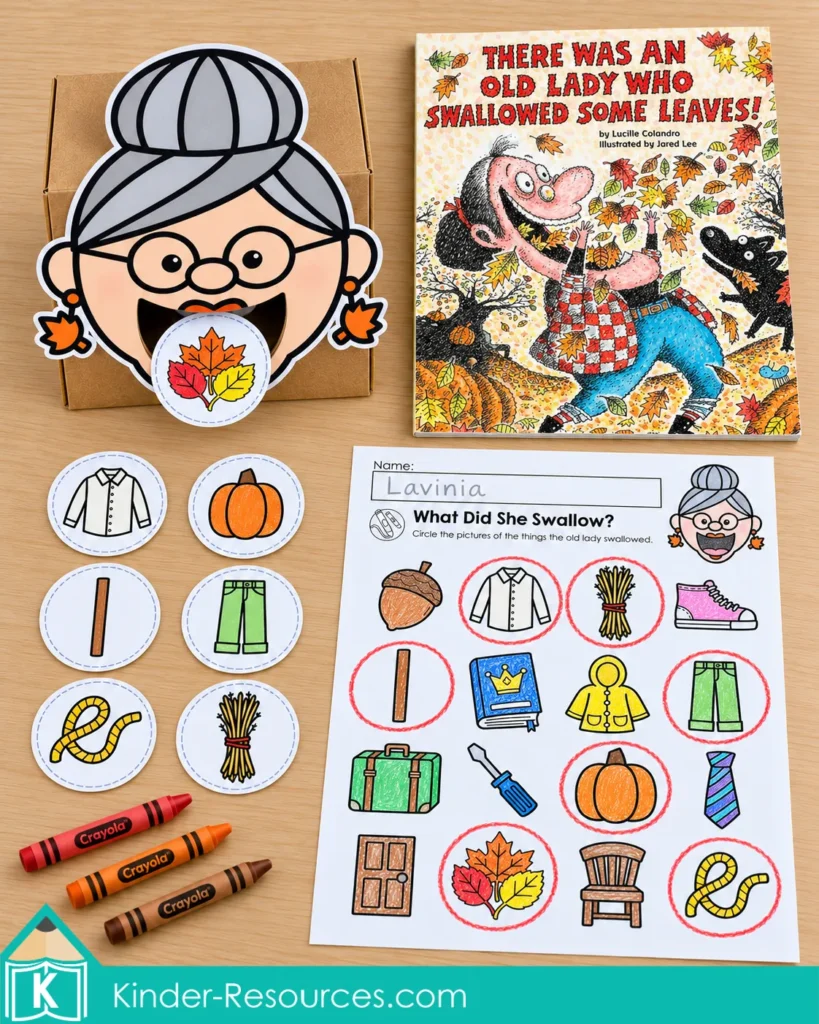
These There Was an Old Lady Who Swallowed Some Leaves activities give preschool and kindergarten children several ways to revisit a favorite fall story. Children can feed picture pieces to the old lady, put the events in order, answer questions, sort pictures, and listen for rhyming words.
The book companion includes six hands-on activities and four student worksheets. Begin with activities you can explore together, then introduce the worksheets when children are familiar with the pictures and tasks.
You can choose a few activities for your fall theme and return to the book across several sessions. Here is how I would use the packet.
There Was an Old Lady Who Swallowed Some Leaves Activities: Try a Free Sample
Would you like a closer look at these There Was an Old Lady Who Swallowed Some Leaves activities? Download the free sample below to try with your children.

There Was an Old Lady Who Swallowed Some Leaves Activities: Start with the Story
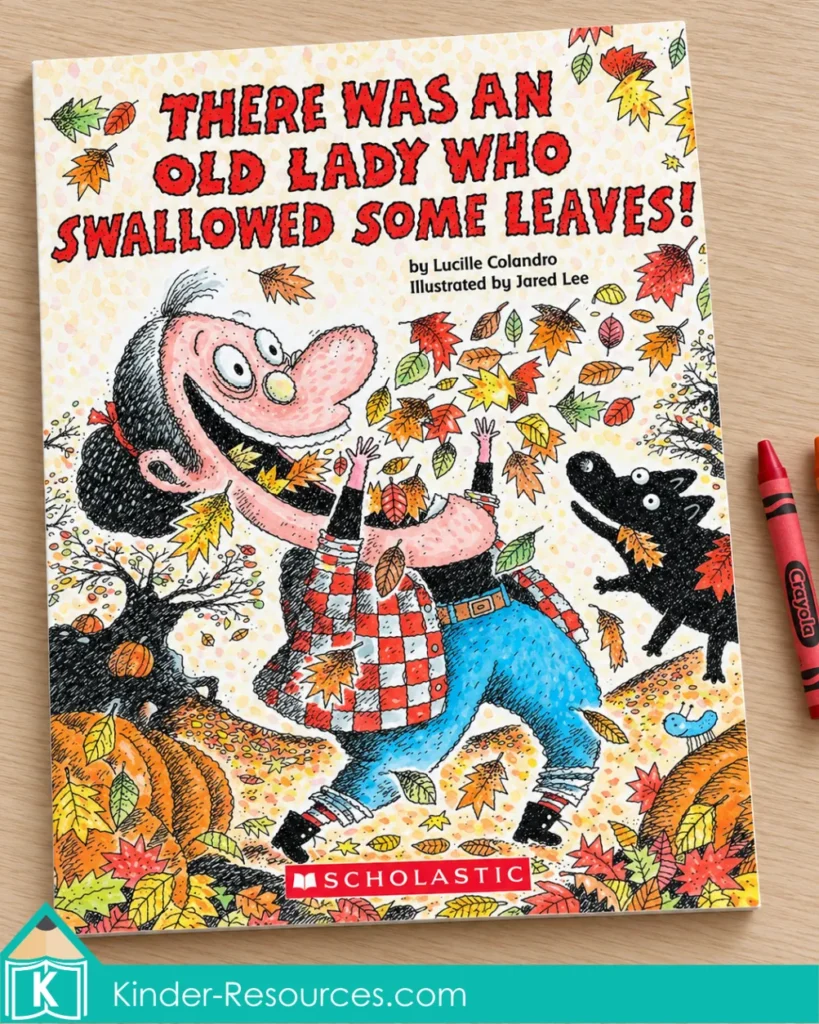
Begin with There Was an Old Lady Who Swallowed Some Leaves! by Lucille Colandro, illustrated by Jared Lee. You will need your own copy of the book, which is not included in the printable packet.
For the first reading, let children enjoy the story and discover the surprise ending. Afterward, revisit the illustrations and talk about the things the old lady swallowed.
The items appear in this order:
Leaves → shirt → pumpkin → pole → pants → rope → hay
Name each item together before introducing the picture activities. Words such as pole and hay may need a little explanation, and the book’s illustrations give you a useful place to begin.
At the end, talk about what happened when the old lady sneezed. How did the swallowed items become parts of a scarecrow?
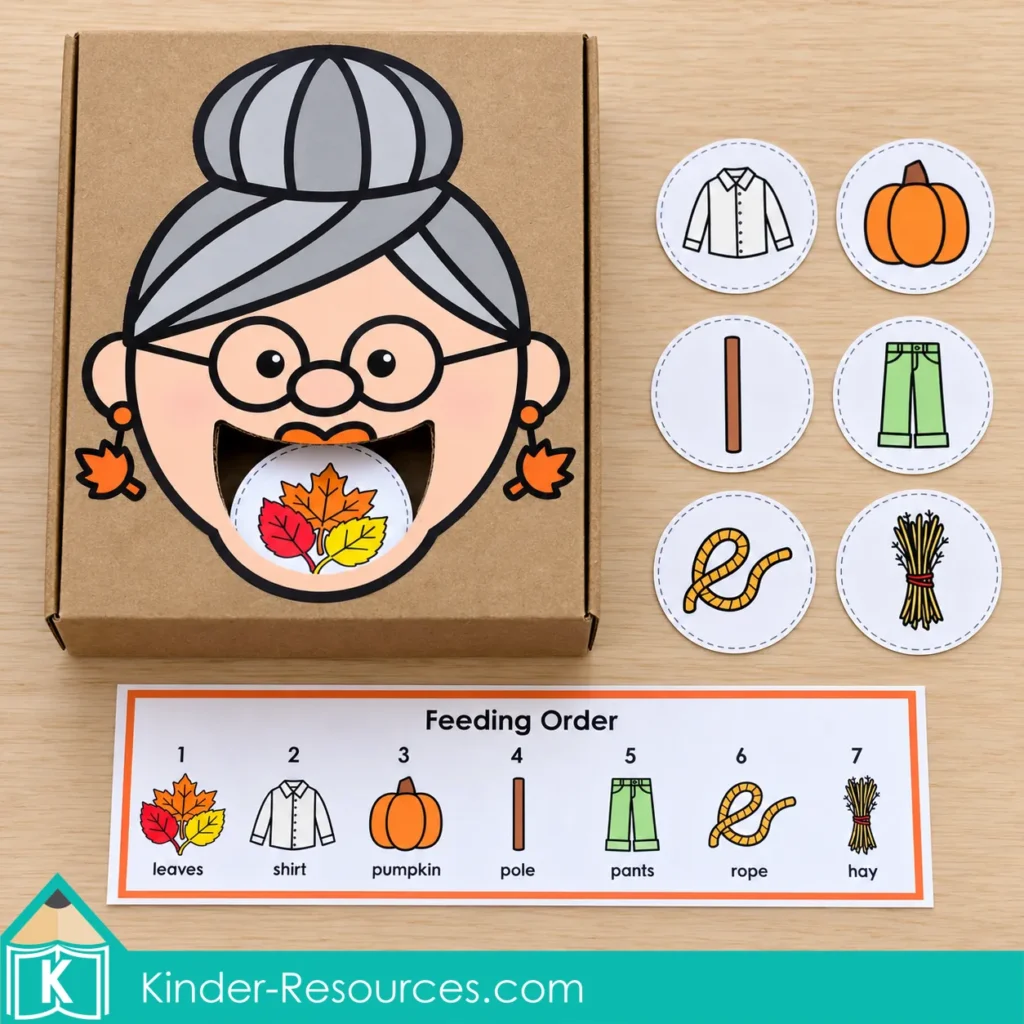
There Was an Old Lady Who Swallowed Some Leaves Activity: Feed the Old Lady
The feeding prop gives children a way to participate during another reading.
Choose an old lady head, attach it to a box or paper bag, and make an opening behind her mouth. Prepare the seven circular story pieces and keep the feeding order strip nearby for reference. The old lady head is included in three skin tones.
As you read, invite children to find each new item and feed it to the old lady. Encourage them to name the picture before placing it through the opening.
For children who find seven choices overwhelming, set out two pictures at a time. You can gradually offer more choices as they become familiar with the story.
After reading, take the pieces out and use them for a short retelling. Children can help you remember which picture belongs first, which comes next, and which item the old lady swallowed last.
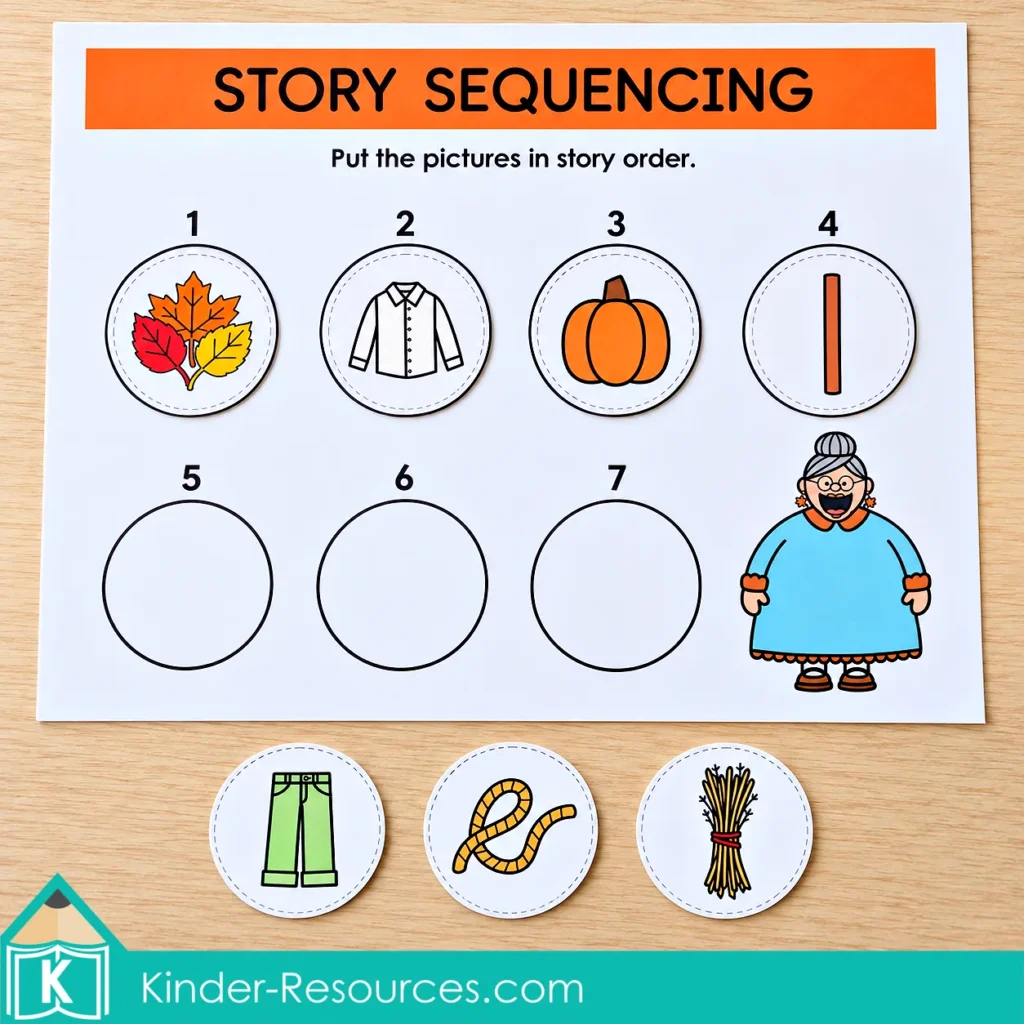
Put the Leaves Story Pictures in Order
The sequencing mats give children somewhere to organize the seven story pictures.
The packet includes a mat with picture cues and a blank mat. Children can begin by matching the pieces to the picture cues, then try the blank version when they are ready to recall the order.
Place the pieces in the numbered spaces, moving across the top row before continuing along the bottom row. Keep the book nearby so children can check an uncertain choice.
Once the pictures are arranged, encourage children to retell the events using words such as first, next, then, and last.
You might begin a sentence and let a child finish it:
“First, the old lady swallowed…”
This shared practice prepares children for the cut-and-paste sequencing worksheet later in the packet.
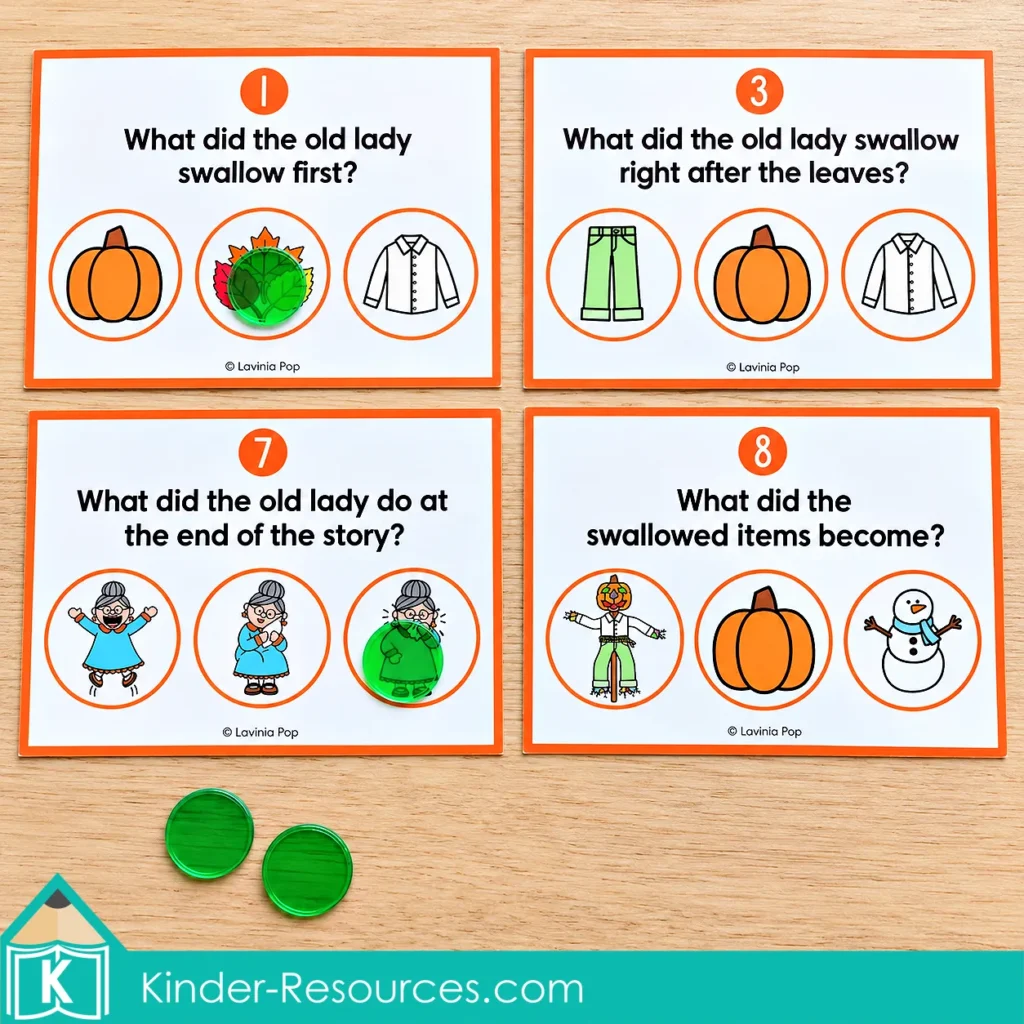
Answer Story Questions with Picture Choices
The eight question cards revisit the characters, swallowed items, sequence, and ending.
Each card includes one question and three picture choices. Read the question aloud and name the choices when needed. Children can point to their answer or mark it with a counter.
Some questions ask children to recall an item, while others ask them to think about what happened before or after something else. For example, one card asks what the old lady swallowed right after the pumpkin.
Give children time to look at all three choices before responding. After they select a picture, encourage them to explain their answer or say it in a short sentence.
If children are unsure, return to the relevant part of the book together. This helps them practice checking story details.
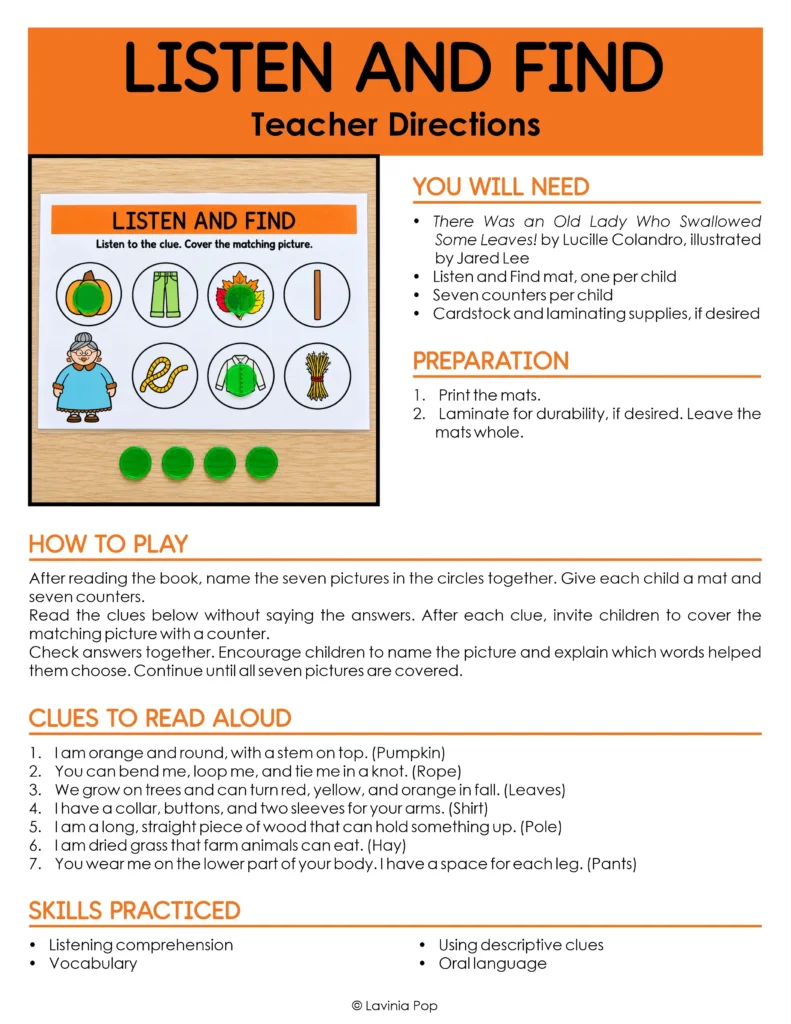
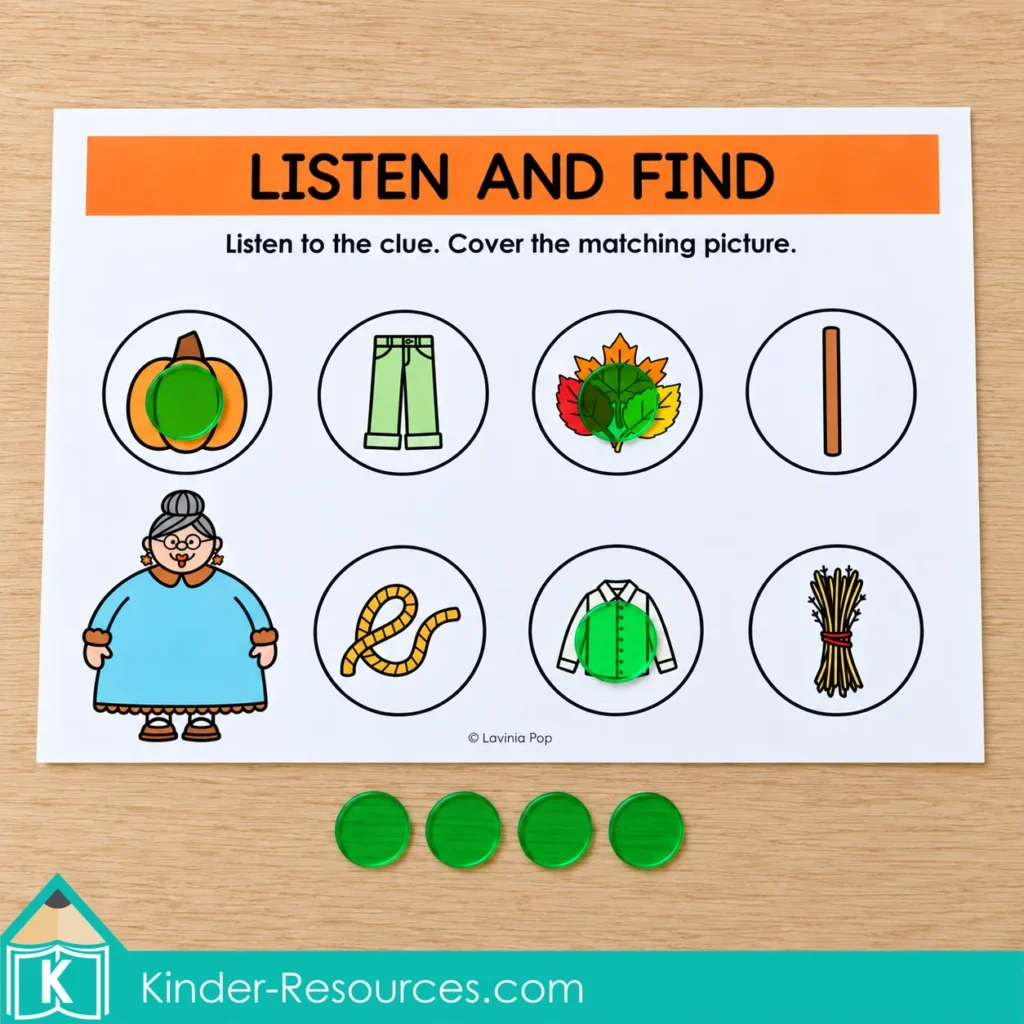
Listen to Clues and Find the Pictures
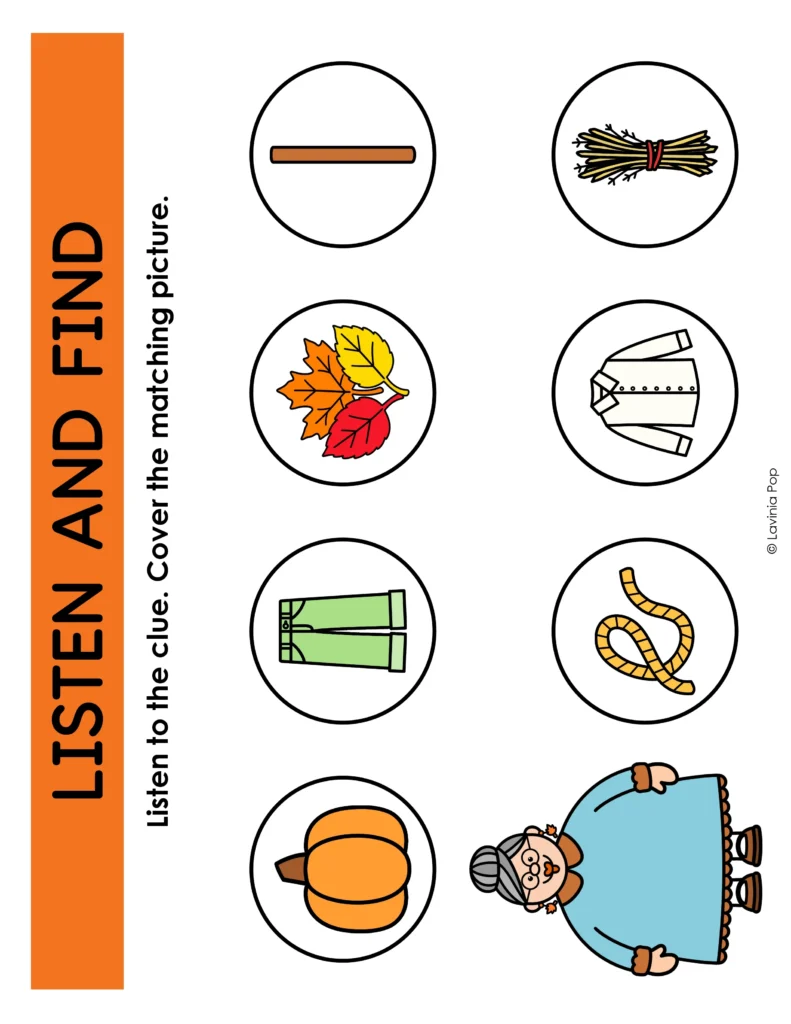
Listen and Find focuses on understanding spoken descriptions.
Give children a mat and counters, then review the seven story pictures together. Read one of the included teacher clues aloud without saying the answer. Children listen and cover the matching picture.
A clue about something orange, round, and topped with a stem leads children to the pumpkin. A clue about something that can bend, loop, and tie in a knot leads them to the rope.
Pause after a clue and invite children to explain their thinking. Which words helped them decide?
I would use this as a short small-group activity once children know the picture names.
Sort the Pictures: Did She Swallow It?
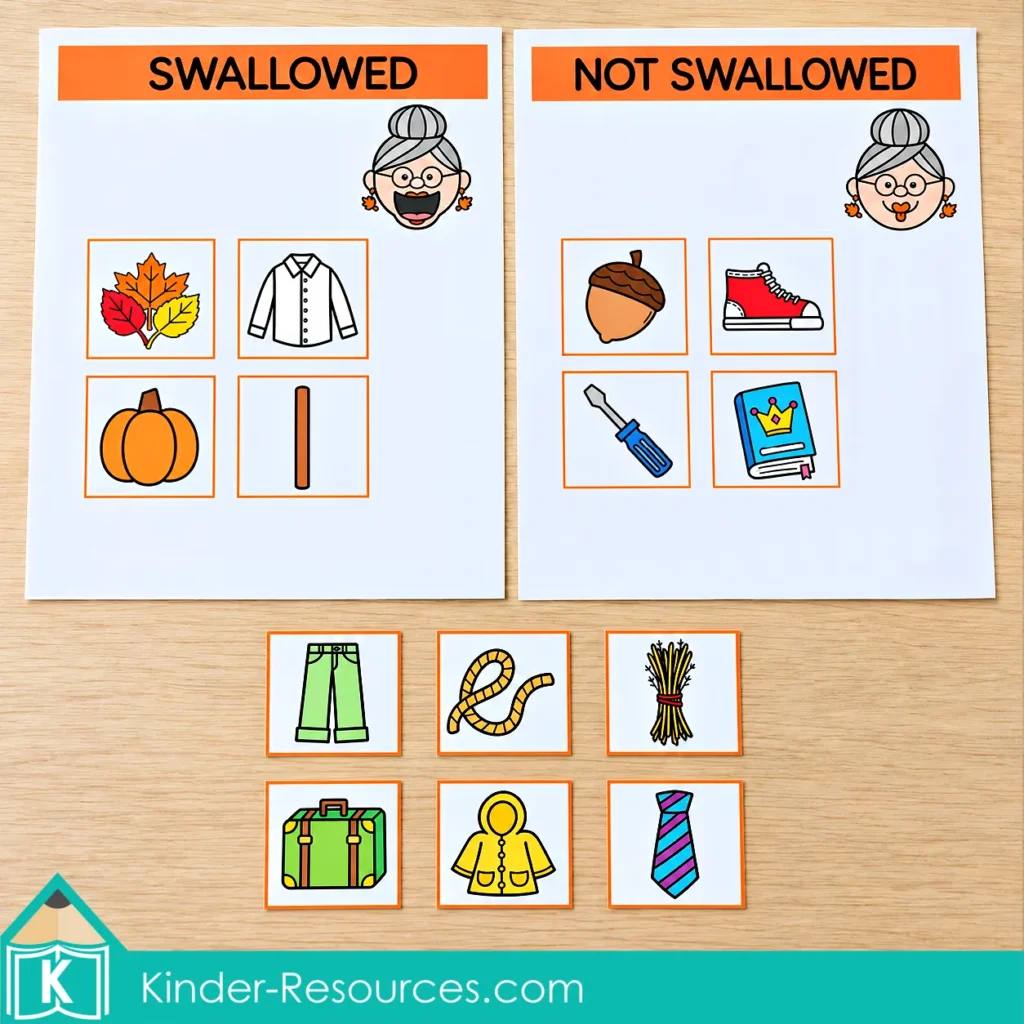
This activity asks children to distinguish the story items from other familiar objects.
Set out the Swallowed and Not Swallowed mats. Mix the fourteen picture cards and invite children to choose one, name it, and decide where it belongs.
Encourage children to use a sentence as they sort:
“She swallowed the pumpkin.”
“She did not swallow the acorn.”
The acorn can prompt a useful conversation. It fits a fall theme, but children need to remember whether it was one of the things the old lady swallowed.
Begin with fewer cards if needed, then add more as children become comfortable with the task. After sorting, check the swallowed group against the book.
This activity leads naturally into the What Did She Swallow? worksheet.
There Was an Old Lady Who Swallowed Some Leaves Activity: Feed a Rhyme
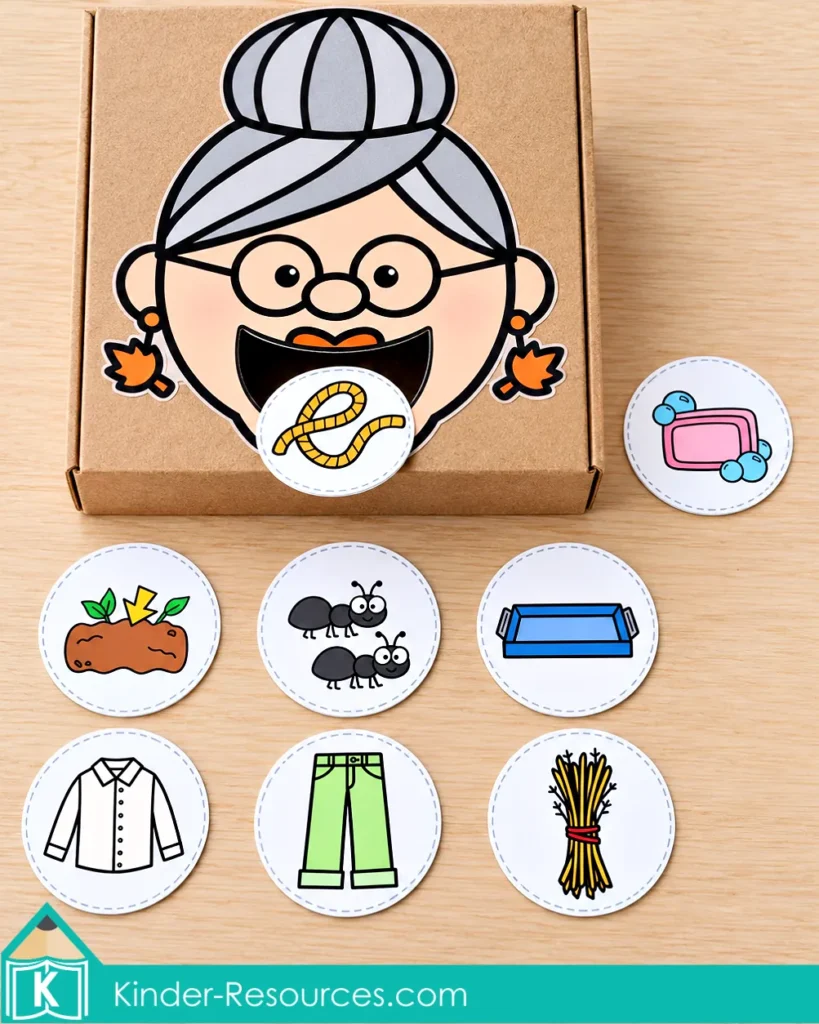
The feeding prop can also help children practice recognizing rhyming words.
Feed a Rhyme includes four picture pairs:
- Dirt and shirt
- Ants and pants
- Soap and rope
- Tray and hay
Name all eight pictures before beginning so children know which words to use.
Keep the dirt, ants, soap, and tray pictures as teacher prompts. Place the shirt, pants, rope, and hay pictures where children can see them.
Show a prompt and say its name. For example, hold up the soap picture and ask children to find the picture that rhymes with soap. They choose the rope, say “soap, rope,” and feed the rope to the old lady.
For children who are beginning to recognize rhymes, model a pair first and offer two choices. Say the words together so they can listen for the matching ending sounds.
There Was an Old Lady Who Swallowed Some Leaves Activities: Worksheets
The four student worksheets give children a way to practice familiar tasks on paper.
Introduce each page after its related hands-on activity. Explain the directions and model the task before children begin. Children who are ready can then work more independently, with support available when needed.
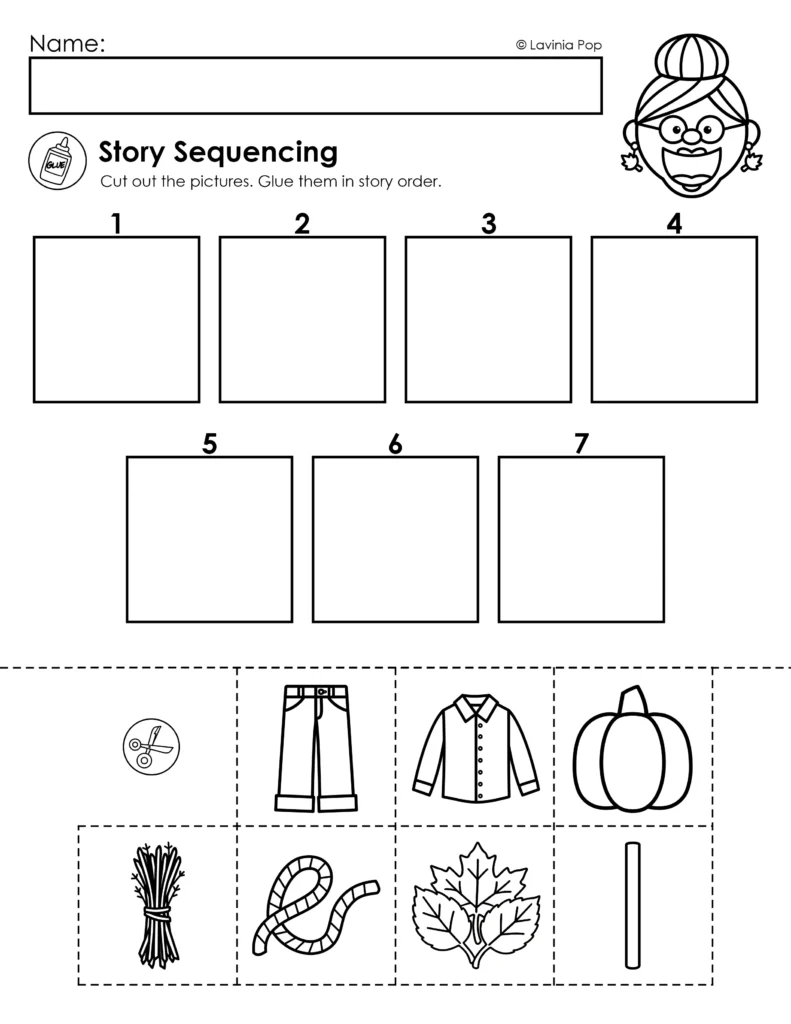
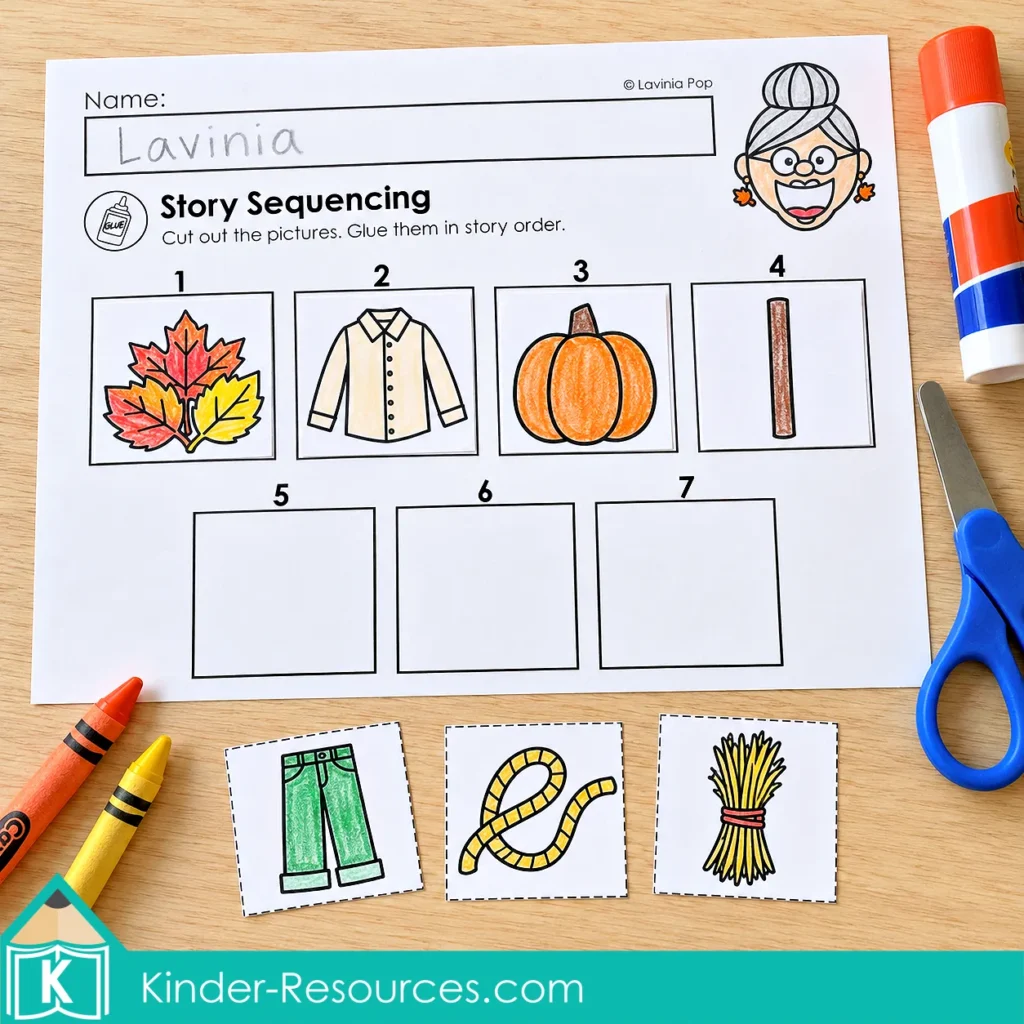
Story Sequencing
Children cut out the seven pictures and glue them into the numbered boxes in story order.
Encourage them to arrange all their pieces before using glue. They can check the order with the sequencing mat or book, make any changes, and then glue the pictures down.
Children can color their pictures and use the completed page to retell the story.
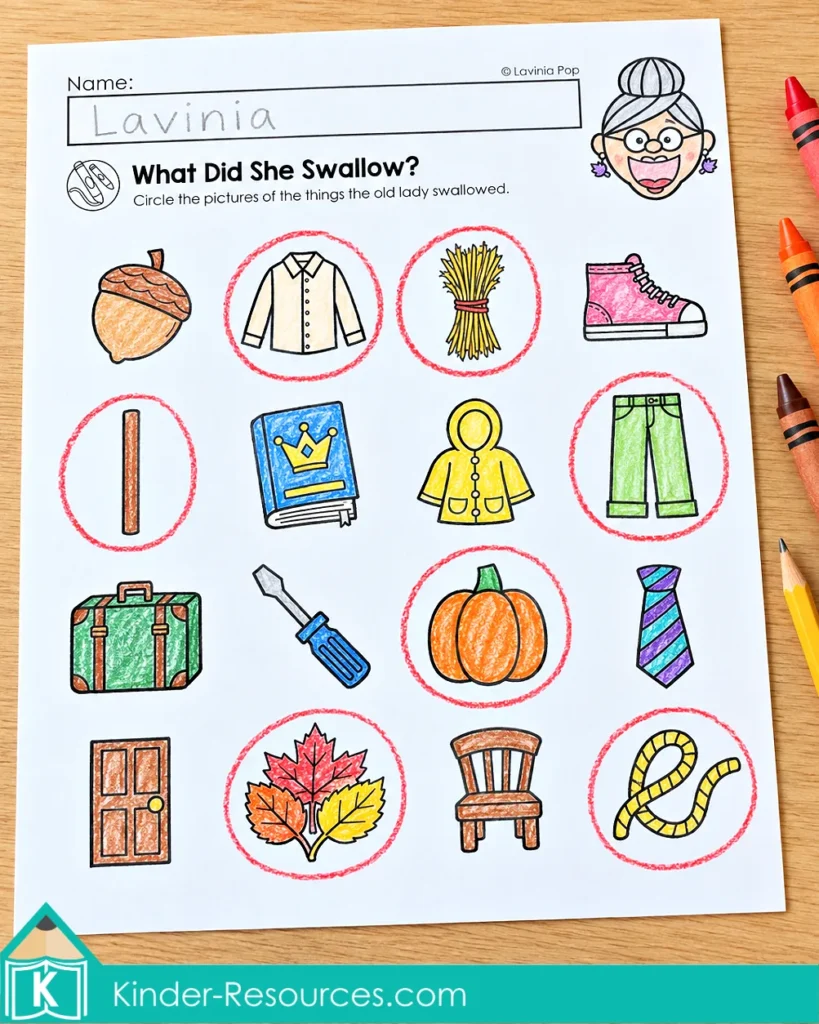
What Did She Swallow?
Children look through sixteen pictures and circle the seven things the old lady swallowed.
Use this page after the sorting activity so the decision is already familiar. Encourage children to name each picture and think about the story before marking it.
After circling the correct answers, children can color all the pictures. The circles show their answers even when the whole page is colored.
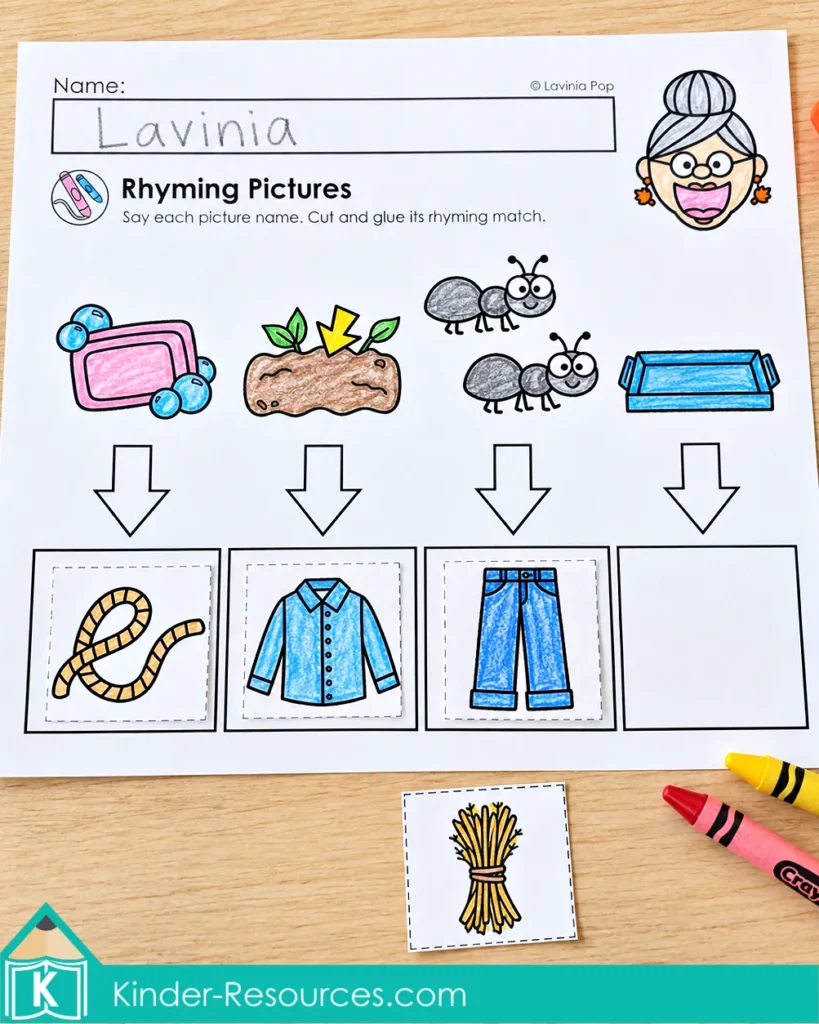
Rhyming Pictures
This worksheet uses the same four pairs introduced in Feed a Rhyme.
Children name the pictures across the top, then cut out the matching pieces and place each one beneath its rhyming partner:
- Rope beneath soap
- Shirt beneath dirt
- Pants beneath ants
- Hay beneath tray
Have children say each pair aloud before gluing. If they need support, return to the circular rhyme pieces and practice the words together again.
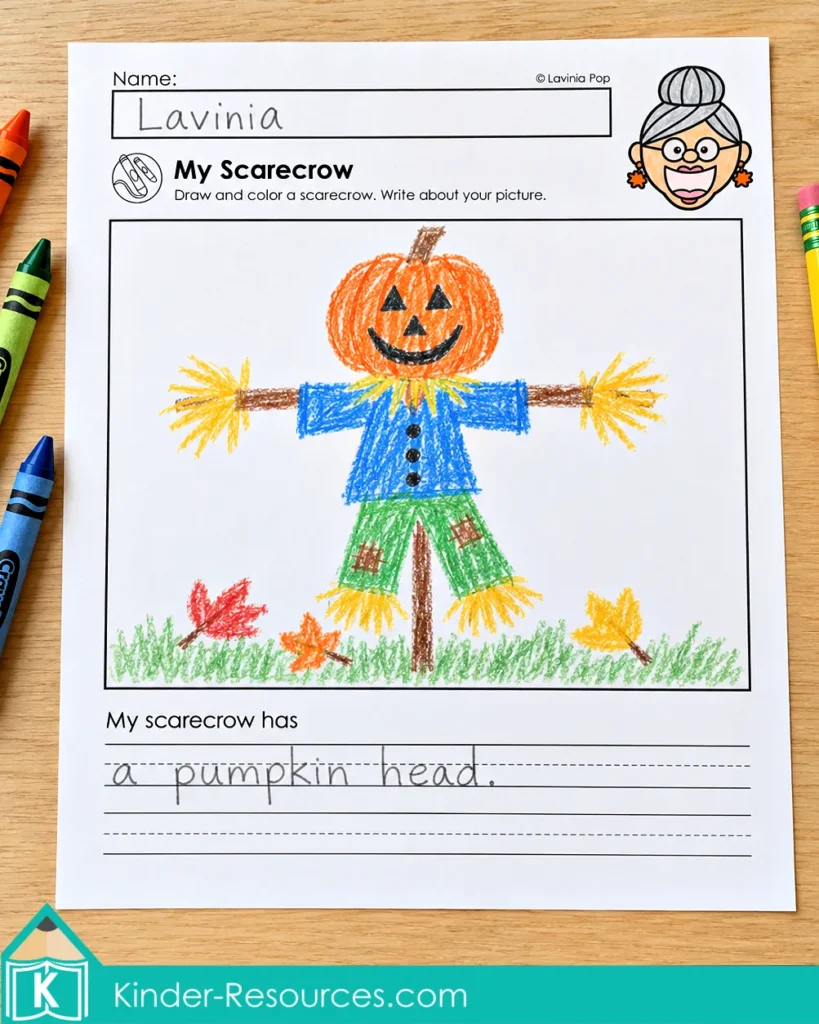
My Scarecrow
The final worksheet gives children room to contribute an idea of their own.
Children draw and color a scarecrow in the large picture box, then complete the sentence starter:
My scarecrow has
Before writing, invite children to describe their drawing. What kind of head does their scarecrow have? What is it wearing?
A child might complete the sentence with:
“a pumpkin head.”
“a blue shirt.”
“green pants.”
Encourage children to say their idea aloud before writing. Younger children can dictate their words to an adult, while children who are ready can write their own response.
The finished pages can become a fall display, with each child sharing a different scarecrow.
Prepare the Activities for Repeated Use
The hands-on materials are provided in color, and the four student worksheets are in black and white.
Print the mats, cards, and picture pieces on cardstock if you would like them to be sturdier. Laminate the reusable materials if desired, then cut out the pieces while leaving the activity mats whole.
Keep each activity’s materials together in a bag or envelope. Store the feeding order strip with the story pieces so it is easy to find during a read-aloud.
For the worksheets, gather crayons, pencils, scissors, and glue. You can provide precut pieces when you want children to focus on sequencing or rhyming without also managing the cutting.
Teacher directions are included for the hands-on activities, with answer keys and read-aloud clues where needed.
Choose a Few Activities for Each Session
You do not need to complete the whole packet at once.
I would begin with the book and feeding activity, then introduce the sequencing mat and picture questions during another session. The listening, sorting, and rhyming activities can follow as children become more familiar with the story.
Pair a hands-on activity with its worksheet when that suits your children. For example, sort the picture cards together before completing What Did She Swallow?, or practice the rhyme pairs before introducing the rhyming page.
This gives children repeated opportunities to use the vocabulary and revisit the story while gradually taking more responsibility for the tasks.
Get the Complete There Was an Old Lady Who Swallowed Some Leaves activities
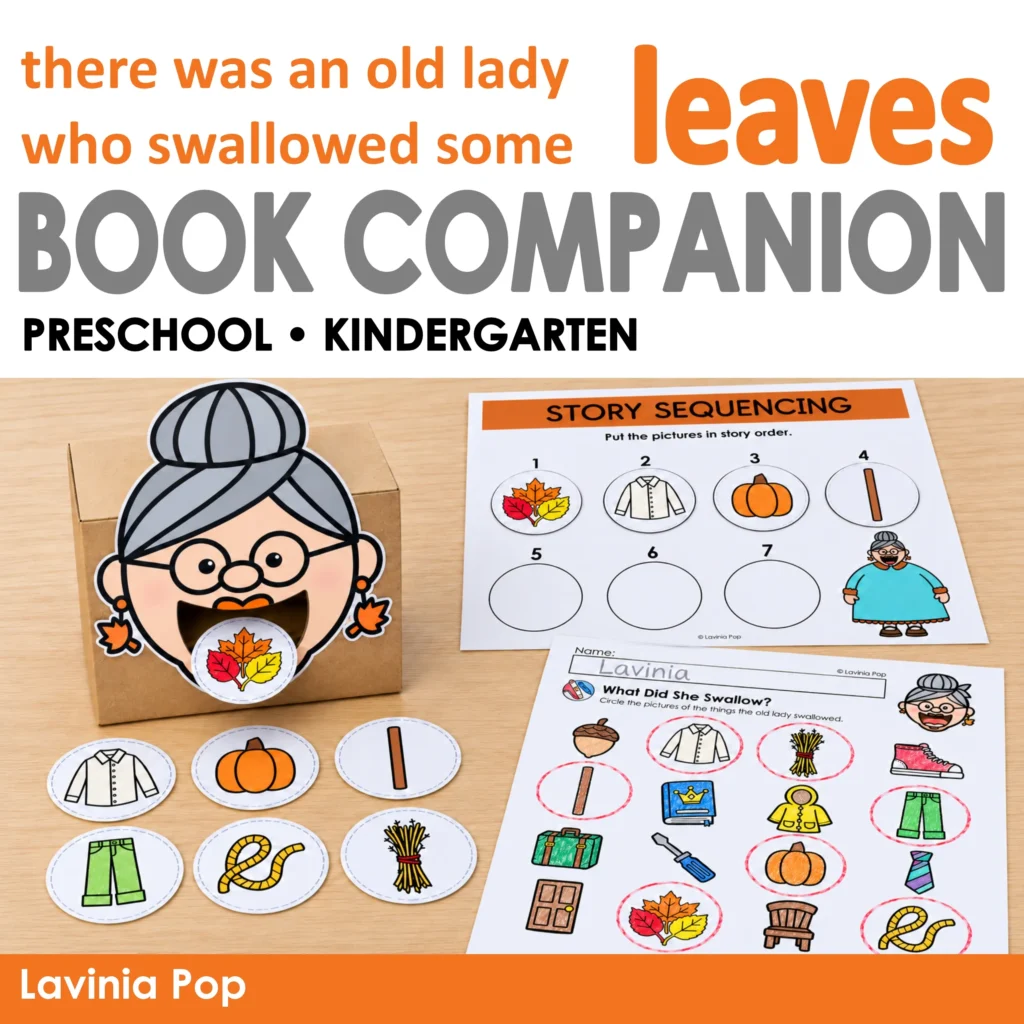
The complete There Was an Old Lady Who Swallowed Some Leaves activities packet includes six hands-on activities, four student worksheets, and teacher directions.
Use the activities during shared reading and small groups, then choose worksheet pages for follow-up practice.

The storybook is not included. Please purchase or borrow a copy separately to use alongside the activities.
Happy Teaching! 😊
You Might Also Like