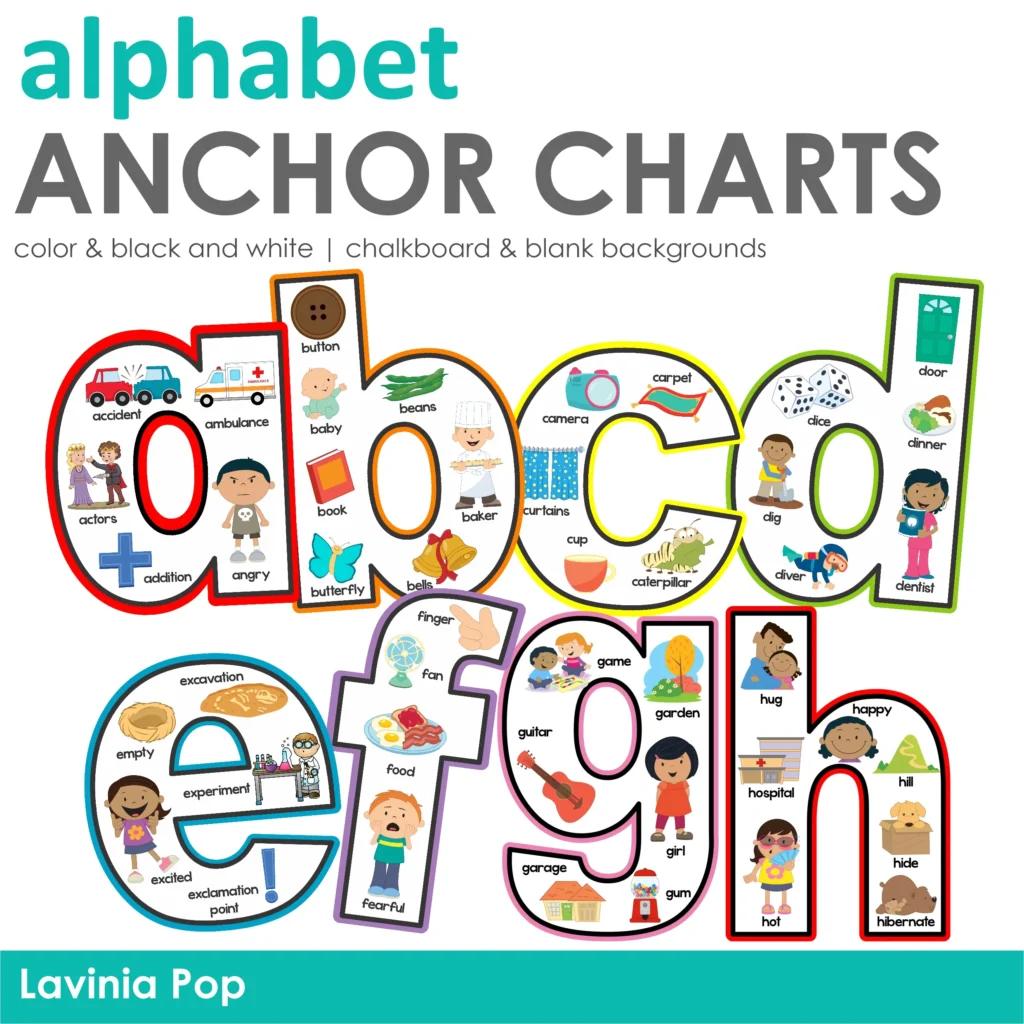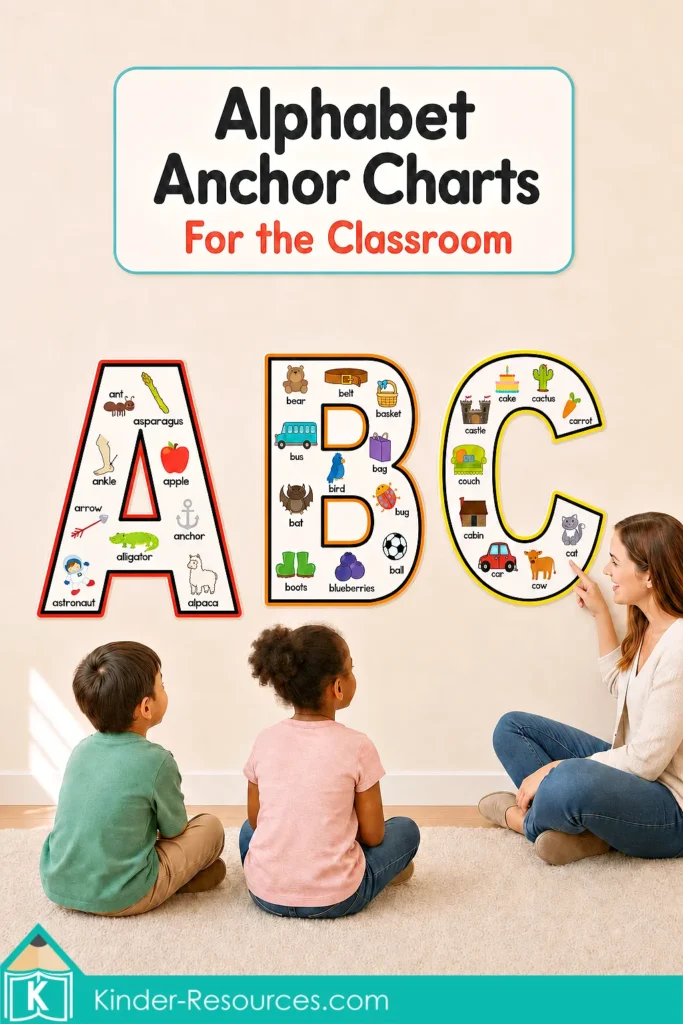
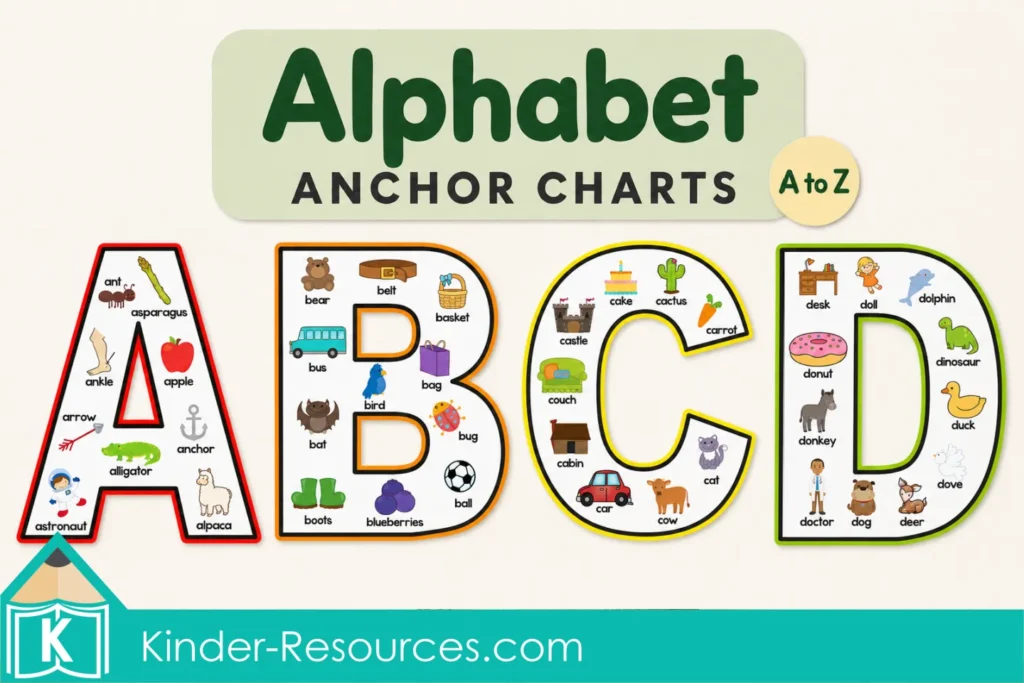
Alphabet Anchor Charts give children a clear visual connection between uppercase letters, beginning sounds, familiar pictures, and printed words. They can be displayed around the classroom, introduced during phonics lessons, or used as helpful references during reading and writing.
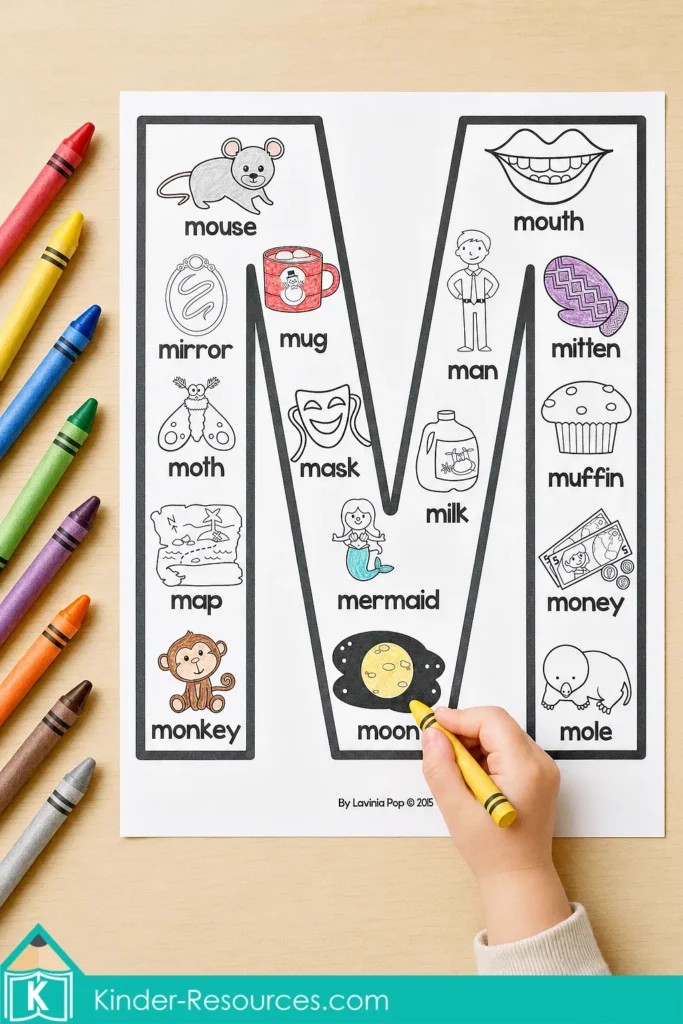
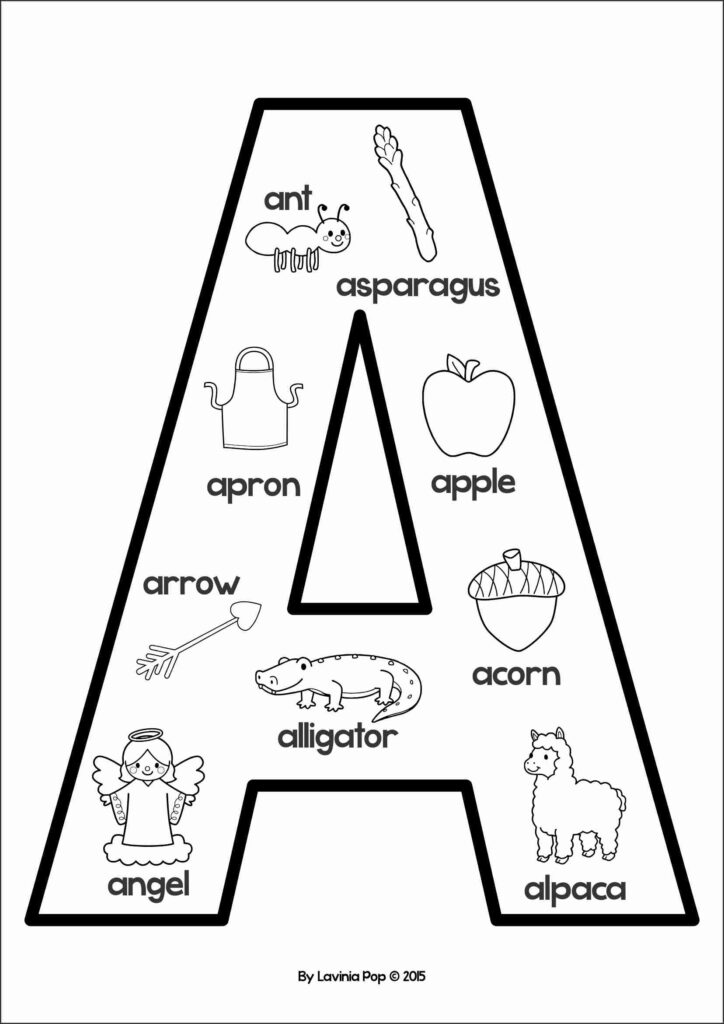
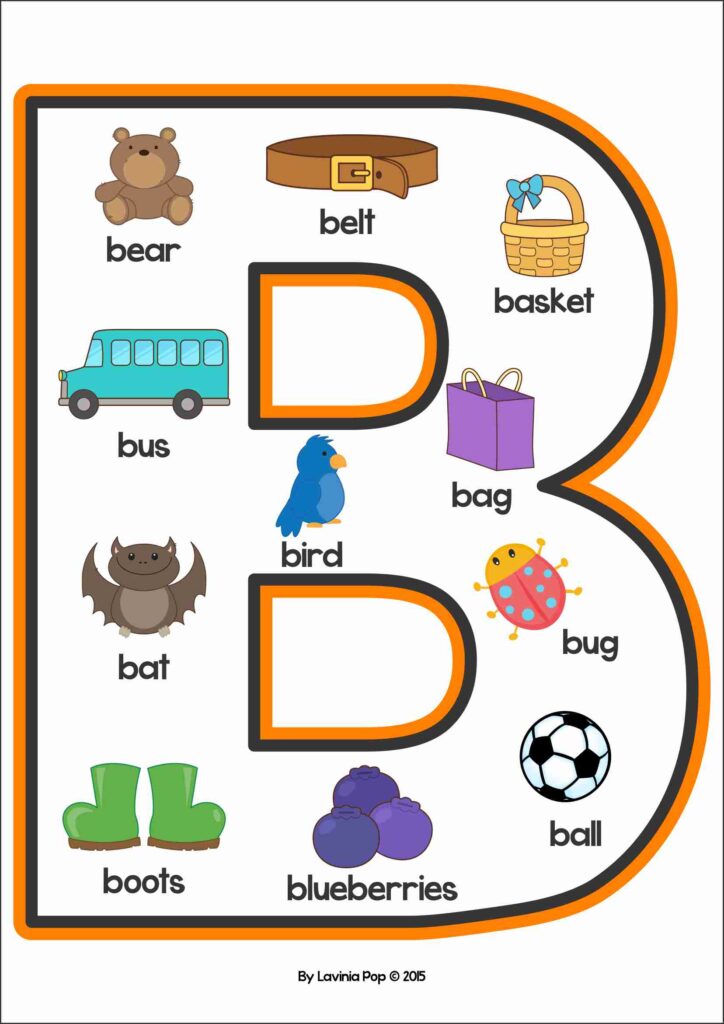
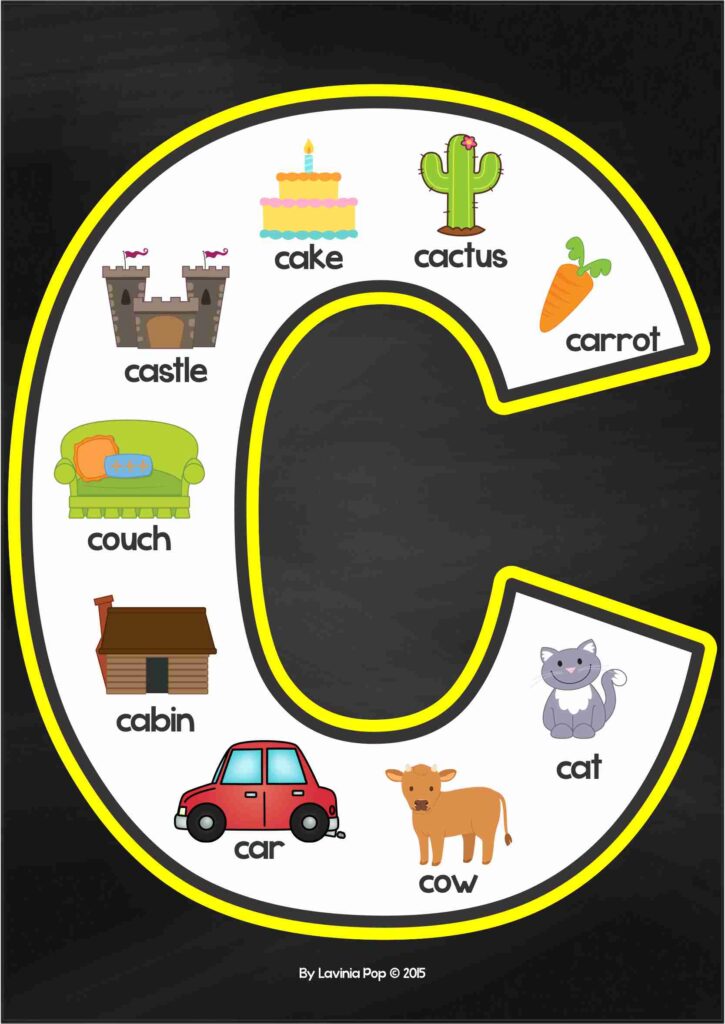
Each chart features one large uppercase letter filled with labeled pictures that begin with the focus sound. Therefore, children can use the pictures to recall letter sounds, develop vocabulary, and generate ideas for early writing.
What Is Included in These Alphabet Anchor Charts?
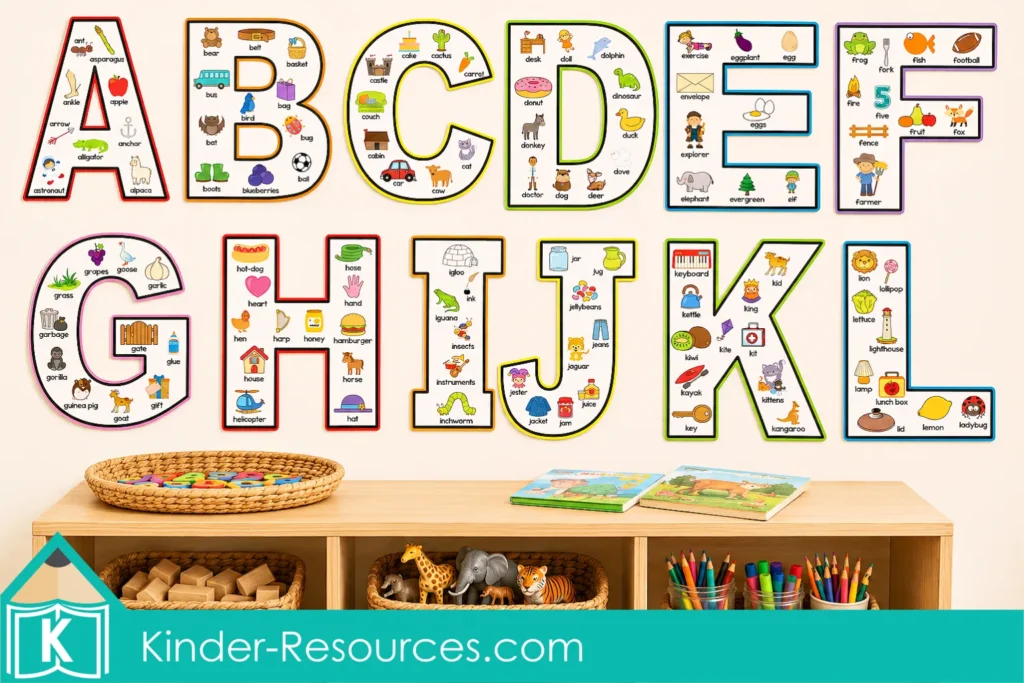
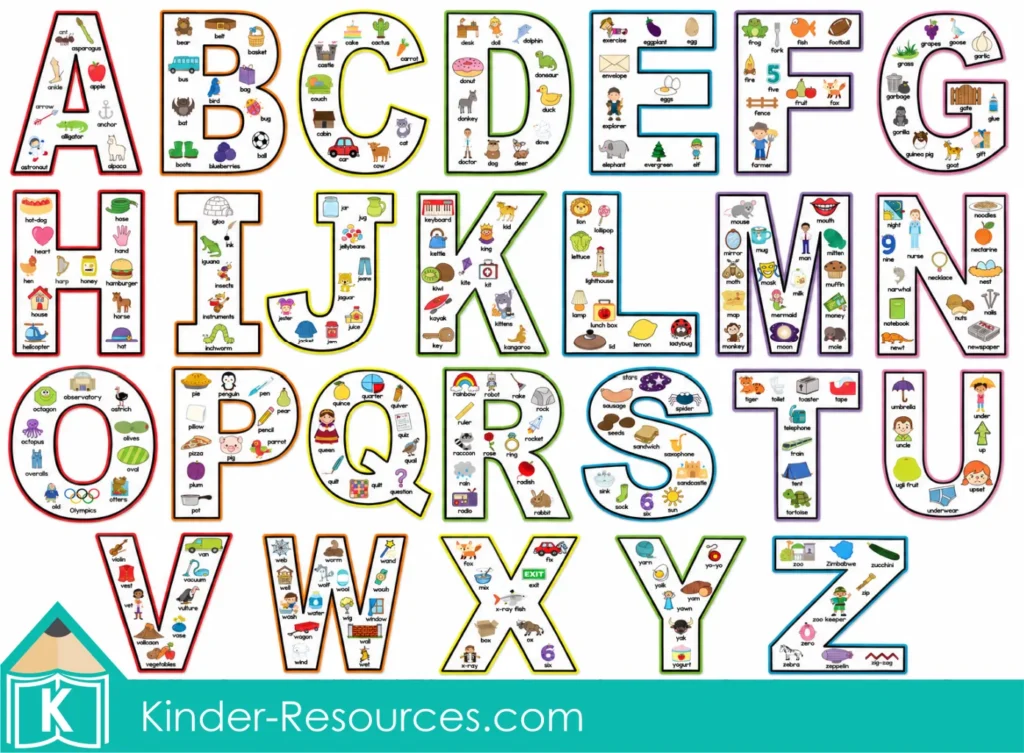
The complete resource includes uppercase Alphabet Anchor Charts for letters A through Z. Each letter contains a collection of familiar pictures with matching vocabulary labels.
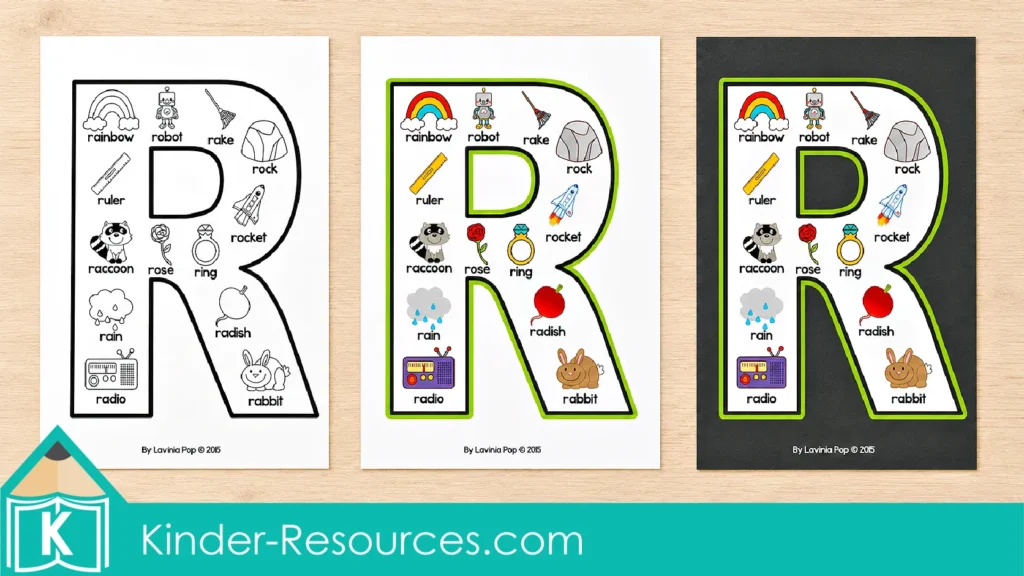
Three printable options are included:
- Colored letters on a white background
- Colored letters on a black background
- Black and white letters for coloring or lower ink printing
Selected letters also include alternative vocabulary pages. As a result, teachers can choose the pictures and words that are most appropriate for their children.
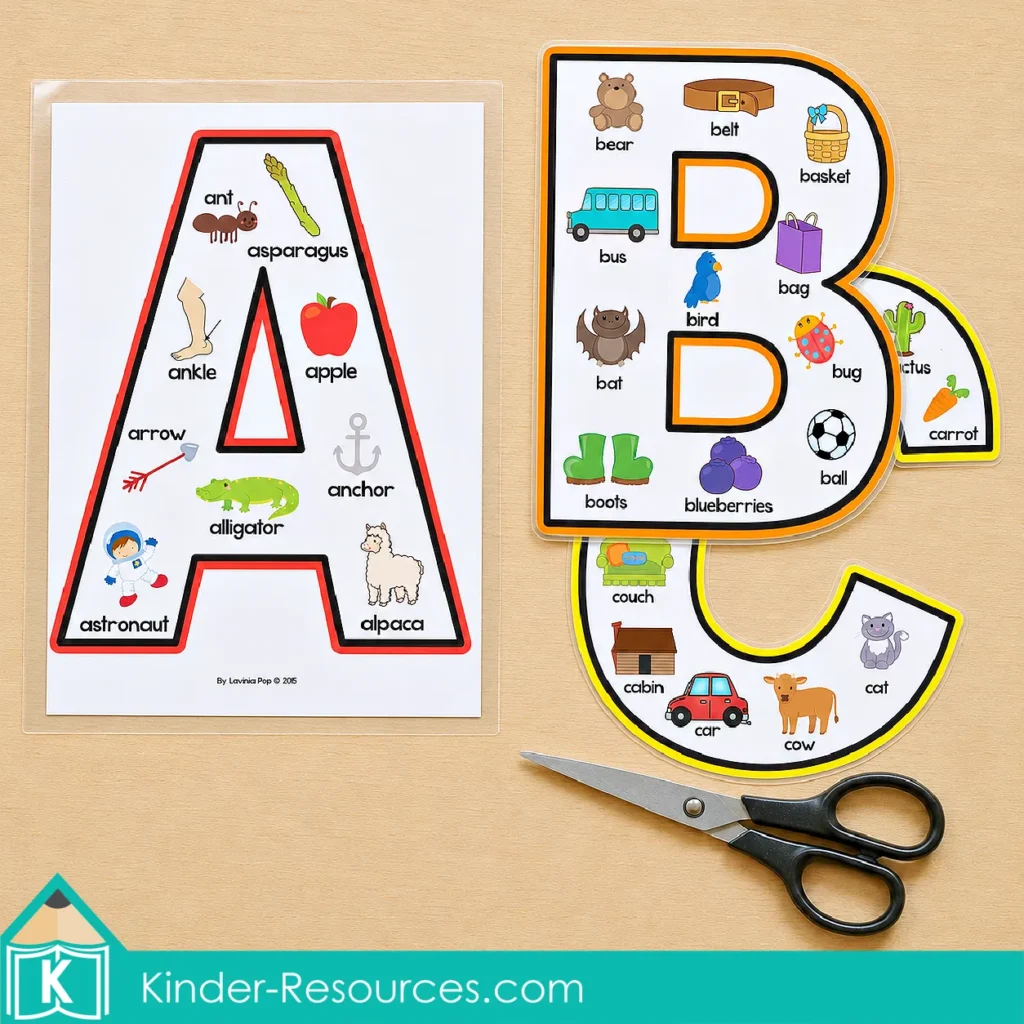
All charts are designed for A4 paper. They can be displayed as complete pages or carefully cut around the outside of each letter.
Download Free Alphabet Chart Sample Pages
Would you like to preview the Alphabet Anchor Charts first? Click below to download the free sample pages.
Choose the Best Letter Chart Style for Your Classroom
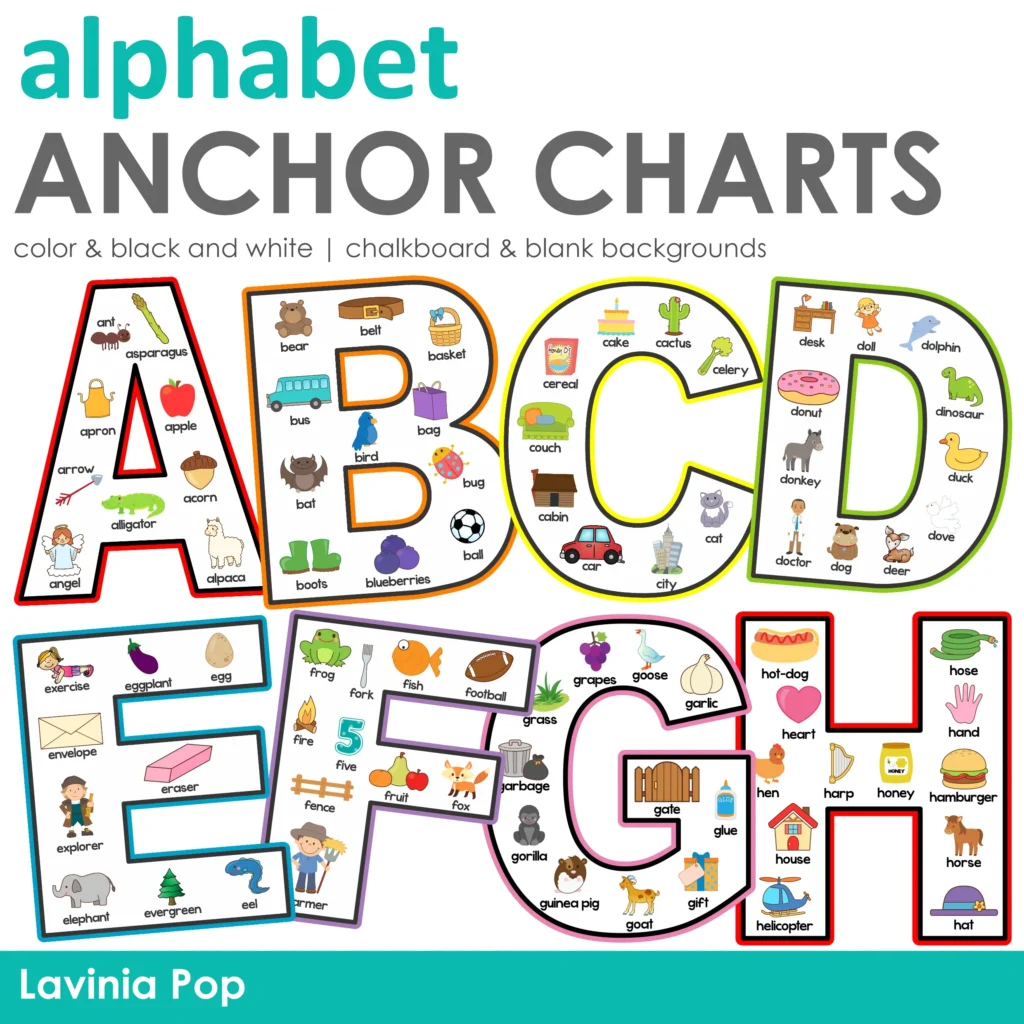
The three designs make it easy to adapt the letter sound charts to different classrooms, printing needs, and teaching activities.
Colored Alphabet Charts with White Backgrounds
The white background version is bright, clean, and easy to coordinate with most classroom decor. It also uses less dark ink than the black background option.
Colored Alphabet Charts with Black Backgrounds
The black background creates a bold classroom display. In addition, it helps the white letters, colorful pictures, and vocabulary labels stand out clearly.
This option works particularly well on a feature wall or bulletin board.
Black and White Alphabet Charts
The black and white Alphabet Anchor Charts provide a lower ink option. Children can also color the pictures during a letter and sound activity.
Once completed, the pages can be displayed in the classroom, collected in an alphabet folder, or sent home for additional practice.
How to Prepare Alphabet Anchor Charts
Preparing the alphabet posters is simple.
- Print the selected pages on A4 paper.
- Leave the charts as complete pages or cut around each letter.
- Laminate the letters if they will be handled frequently.
- Attach them to the wall using removable adhesive, reusable putty, or display clips.
- Display the complete alphabet or introduce one chart at a time.
Printing on sturdy paper can provide additional durability. However, regular printer paper also works well when the Alphabet Anchor Charts will be laminated.
Ways to Use Letter Sound Charts in the Classroom
These Alphabet Anchor Charts can support phonics, vocabulary, oral language, reading, and writing activities.
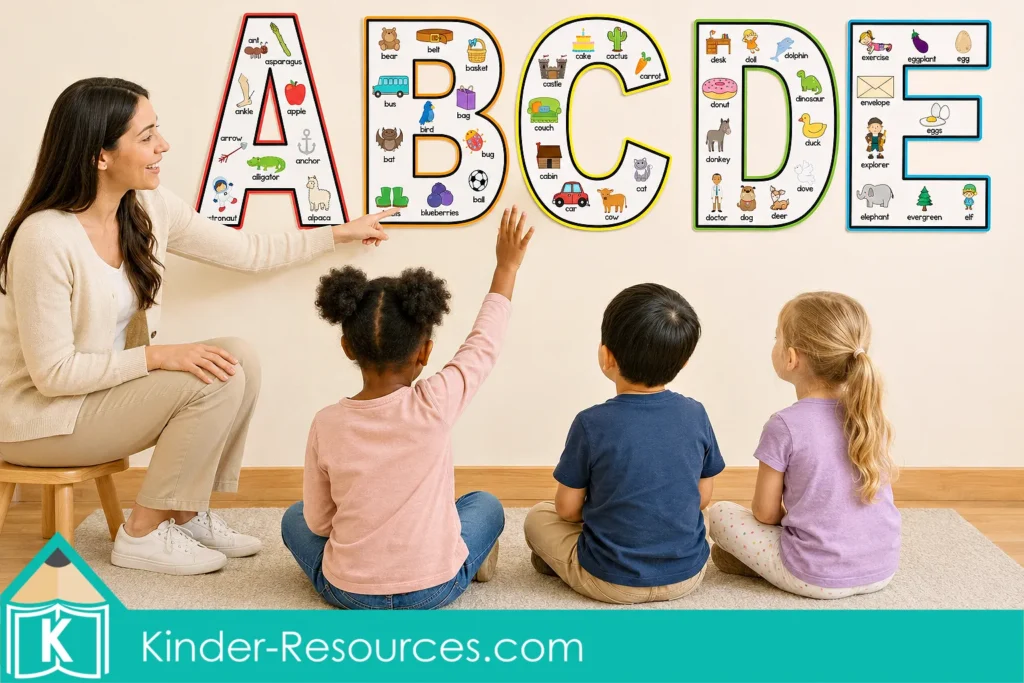
Create an Alphabet Wall
Display the complete set in alphabetical order so children can refer to the letters throughout the day.
The alphabet wall can help children remember a letter name, recall a beginning sound, or find a word during early writing.
Introduce One Alphabet Chart at a Time
Instead of displaying every chart immediately, add each letter after it has been introduced.
First, name the letter and model its most common sound. Next, point to each picture and say the word slowly. Encourage children to listen carefully to the beginning sound.
The growing alphabet wall then becomes a record of the letters children have learned.
Use Alphabet Charts During Circle Time
Display the focus chart while introducing a new letter. Children can name the pictures, repeat the words, and listen for the shared beginning sound.
The chart can remain near the circle time area throughout the week for quick daily review.
Add Letter Charts to the Writing Area
Place selected charts near pencils, crayons, and writing paper. Children can use the picture vocabulary to generate words or drawing ideas.
For example, a child looking at the R chart may choose to draw a rainbow, robot, rocket, rose, or rabbit.
Support Small Group Phonics Instruction
Keep the current focus charts near the small group table. Use them for letter recognition, beginning sound practice, vocabulary review, and simple listening games.
Create a Letter of the Week Display
Feature one chart beside children’s drawings, name cards, crafts, or classroom objects beginning with the focus sound.
At the end of the week, move the chart to the alphabet wall and introduce the next letter.
Simple Alphabet Chart Activities
The pictures inside each letter can be used for quick phonics and oral language activities.
Find the Picture
Give children a clue about one of the pictures.
For example, say, “I am thinking of something that flies into space.”
Children find the rocket on the R chart and say its name.
Which Picture Is Missing?
Ask children to study the Alphabet Anchor Chart. Next, cover one picture with a small card.
Invite children to identify the missing picture and say its beginning sound.
Add Another Word
After naming the pictures, ask children to think of another word beginning with the focus sound.
Record their suggestions beside the chart or invite children to draw one of their ideas.
These activities take only a few minutes. However, they encourage children to use the alphabet display as a meaningful learning tool.
Black and White Alphabet Charts for Coloring
The black and white alphabet charts can also be used as individual coloring activities.
Before children begin coloring, name the letter and review its sound. Next, invite children to identify each picture. Repeat the words slowly and emphasize their beginning sounds.
Children can color one page each week or complete only the letters currently being taught. The finished Alphabet Anchor Charts can become a class display or an individual alphabet book.
Create a Useful Classroom Alphabet Display
Alphabet Anchor Charts provide ongoing support during phonics, oral language, reading, and writing activities. The large letters are easy to recognize, while the labeled pictures provide meaningful sound and vocabulary cues.
With three printing options, alternative vocabulary pages, and black and white coloring charts, the resource can be adapted for different classrooms and learning needs.

You might also like…