Learning numbers involves much more than memorizing numerals. Children need opportunities to connect each numeral with its number word, quantity, and different visual representations. These Number Anchor Charts 0 to 20 provide consistent visual support that helps preschool and kindergarten children make those important connections.
Each chart presents a number in several meaningful ways, making the resource useful for classroom displays, whole group instruction, number talks, math centers, and independent learning activities.
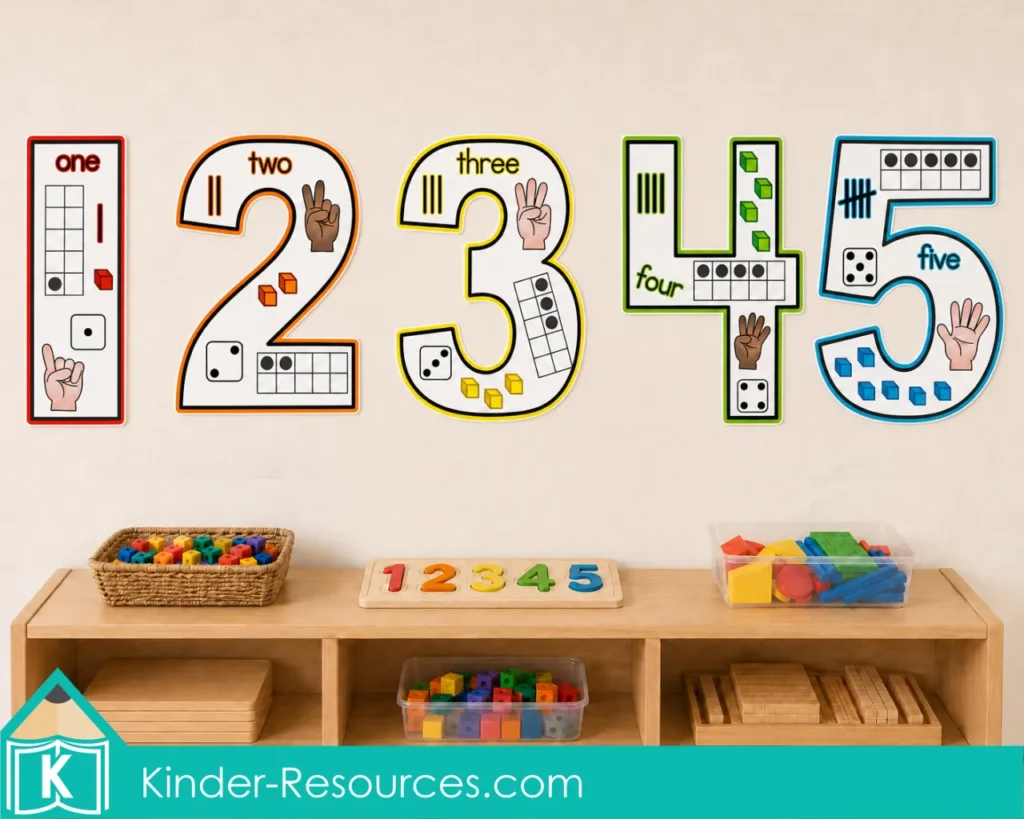
Why Use Number Anchor Charts?
Young children often learn to recognize a numeral before they fully understand the quantity it represents. A child might be able to name the number 6 but still need support counting six objects or recognizing six counters in a ten frame.
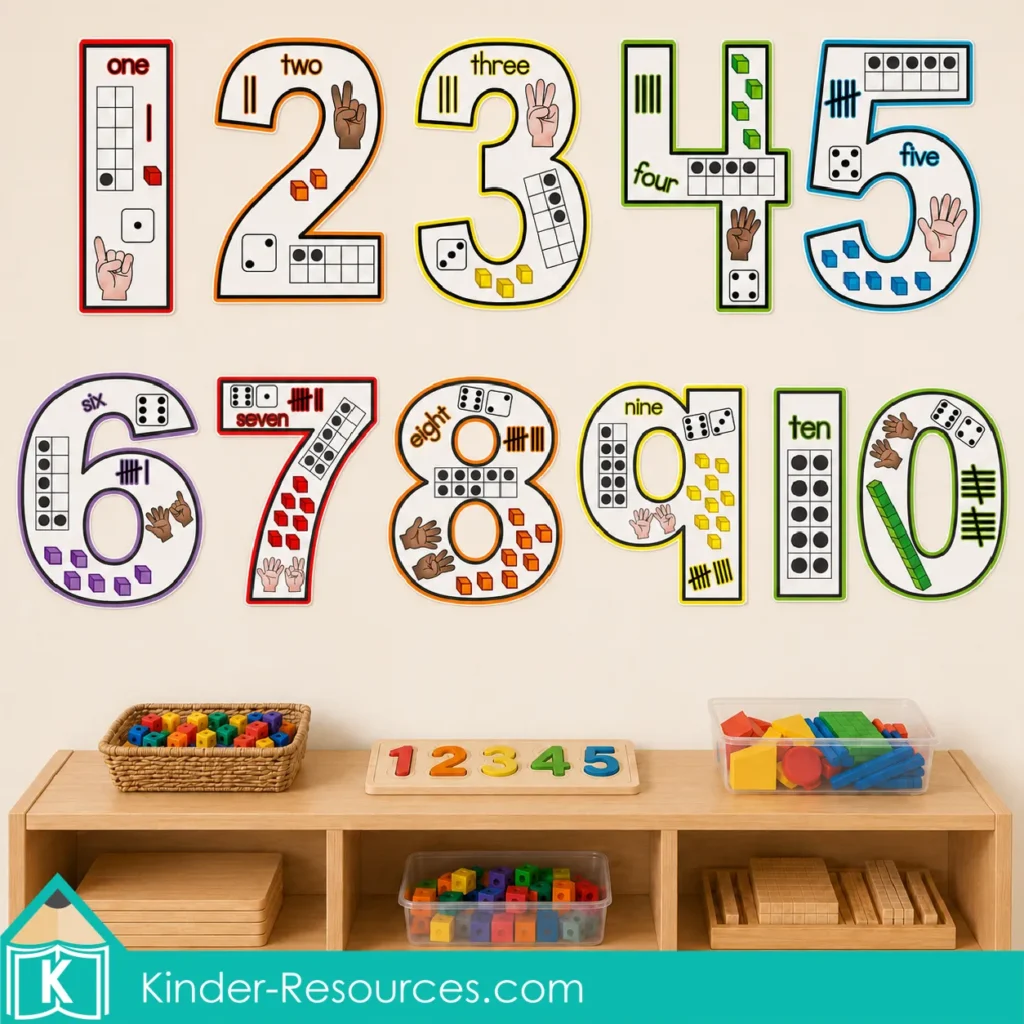
Number anchor charts bring these ideas together on one page. Children can compare the large numeral with several representations of the same quantity, including:
- The number word
- Ten frames
- Tally marks
- Dice
- Counting cubes
- Finger representations
- Base ten blocks for larger numbers
Seeing the same number represented in multiple ways helps children understand that a quantity remains the same even when it looks different.
What Is Included in the Number Anchor Chart pack?
The resource contains 96 printable number chart pages covering numbers 0 to 20.
Three versions are included:
- A black and white version with a blank background
- A colored version with a blank background
- A colored version with a chalkboard background
The black and white pages can be used for economical printing, student coloring, or printing on colored paper. The bright colored pages are ideal for classroom displays, while the chalkboard version offers another classroom decor option.
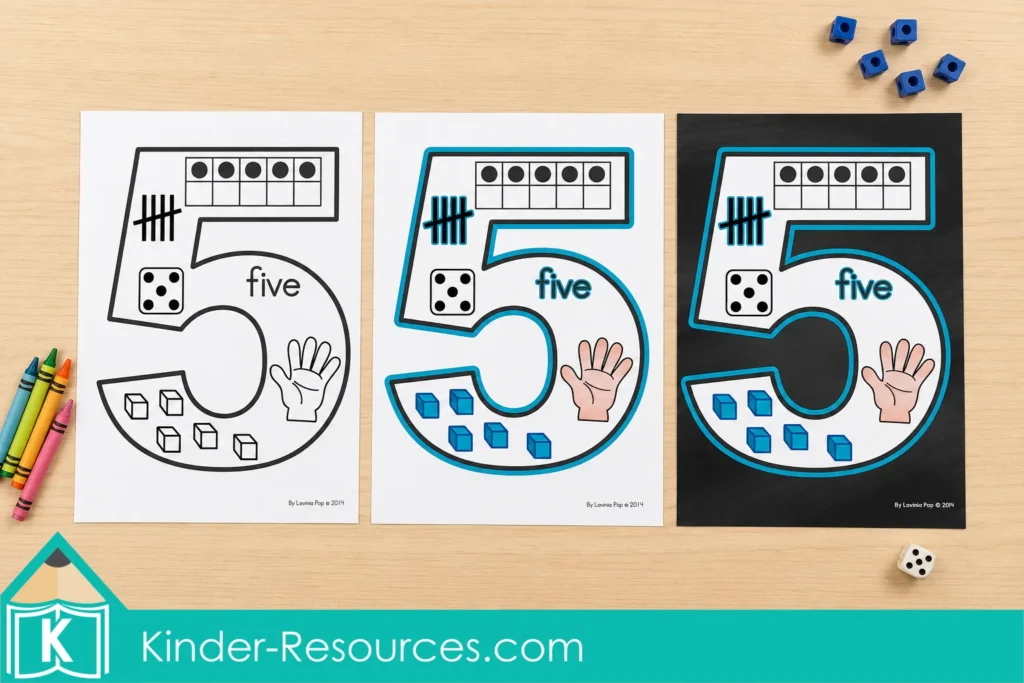
Download a Free Number Anchor Charts Sample
Would you like to preview the resource before purchasing? Download the free sample to see the artwork, layouts, and printing options included in the complete set.
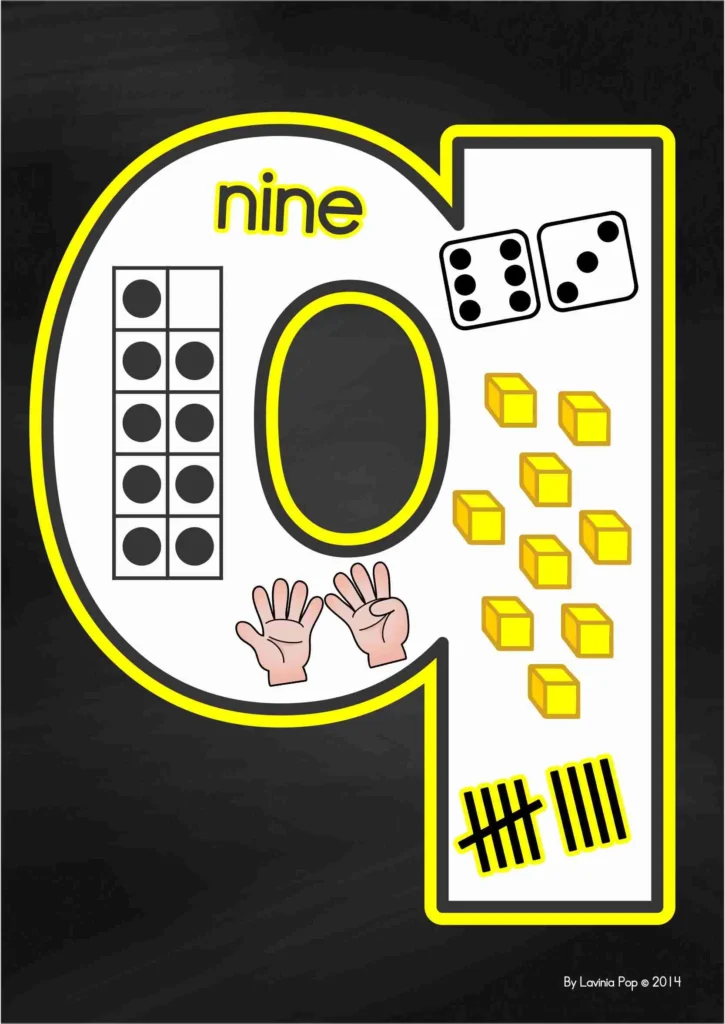
The sample includes number charts for 2, 3, two numeral 4 styles, and 20. Each chart is provided in black and white, color with a white background, and color with a chalkboard background.

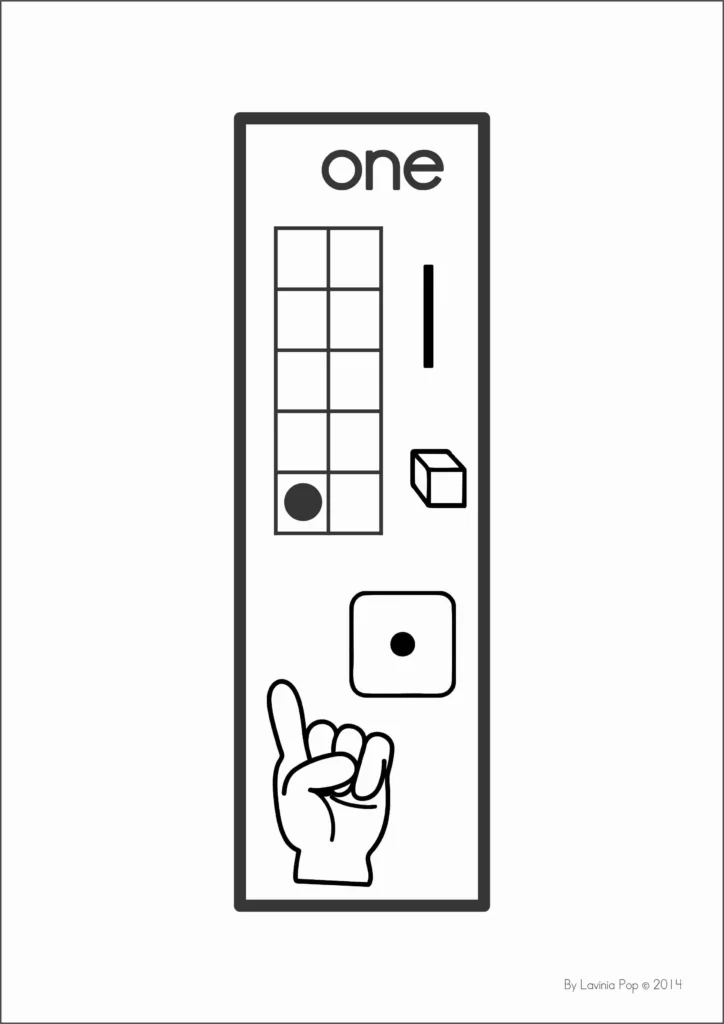
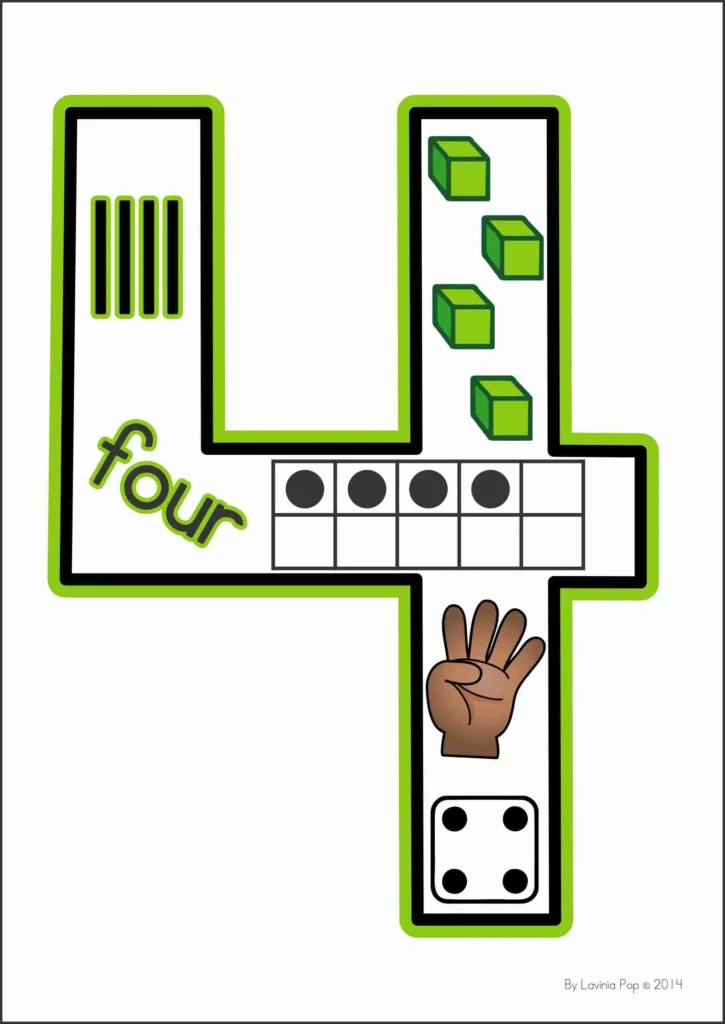
Portrait and Landscape Number Charts
The resource includes two layout options to accommodate both single digit and two digit numbers.
The portrait charts feature numbers 0 to 10. The large numeral fills the page and contains visual representations of the corresponding quantity.
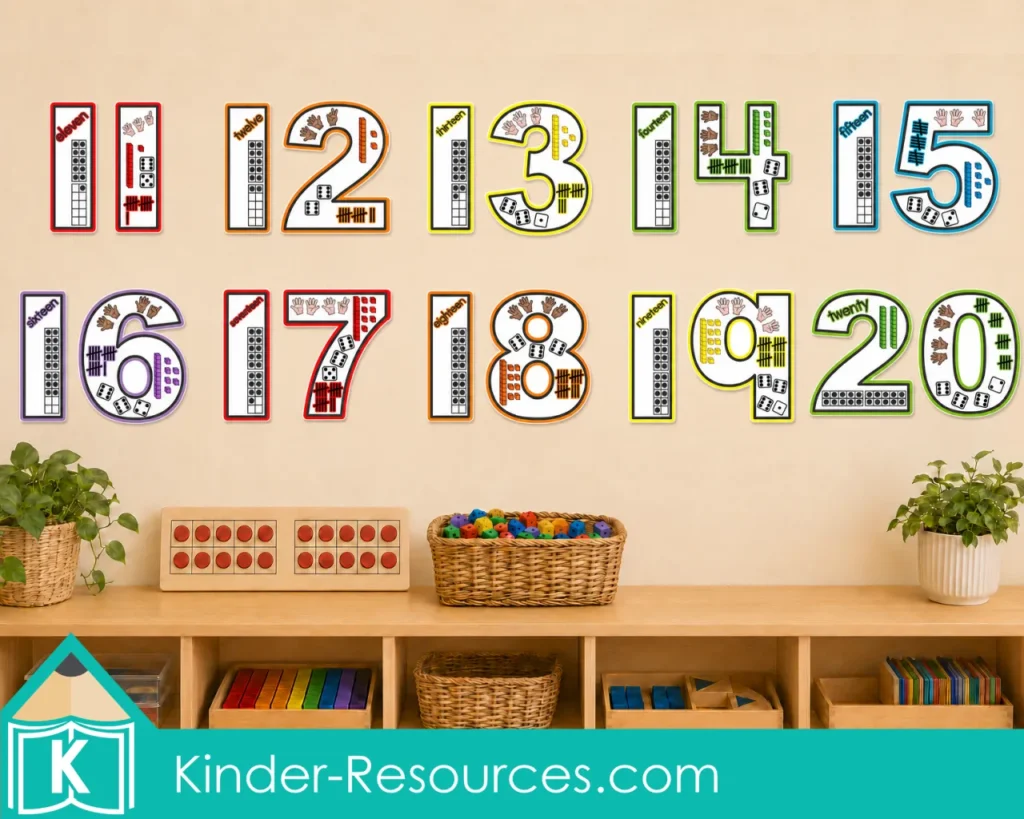
The landscape charts continue through number 20. The wider layout provides enough space for both digits, larger quantities, double ten frames, base ten blocks, tally marks, dice, and finger representations.
Including number 0 is especially valuable. Zero helps children understand that numbers can represent the absence of a quantity. It also gives children a complete visual number sequence beginning with 0 rather than 1.
Preparing the Number Charts
Print the charts. For a simple classroom display, the pages can be laminated and displayed as complete sheets.
For a more visually engaging number wall, carefully cut around the outside colored border of each numeral before laminating. This creates large numeral shaped posters while keeping all the number representations together.
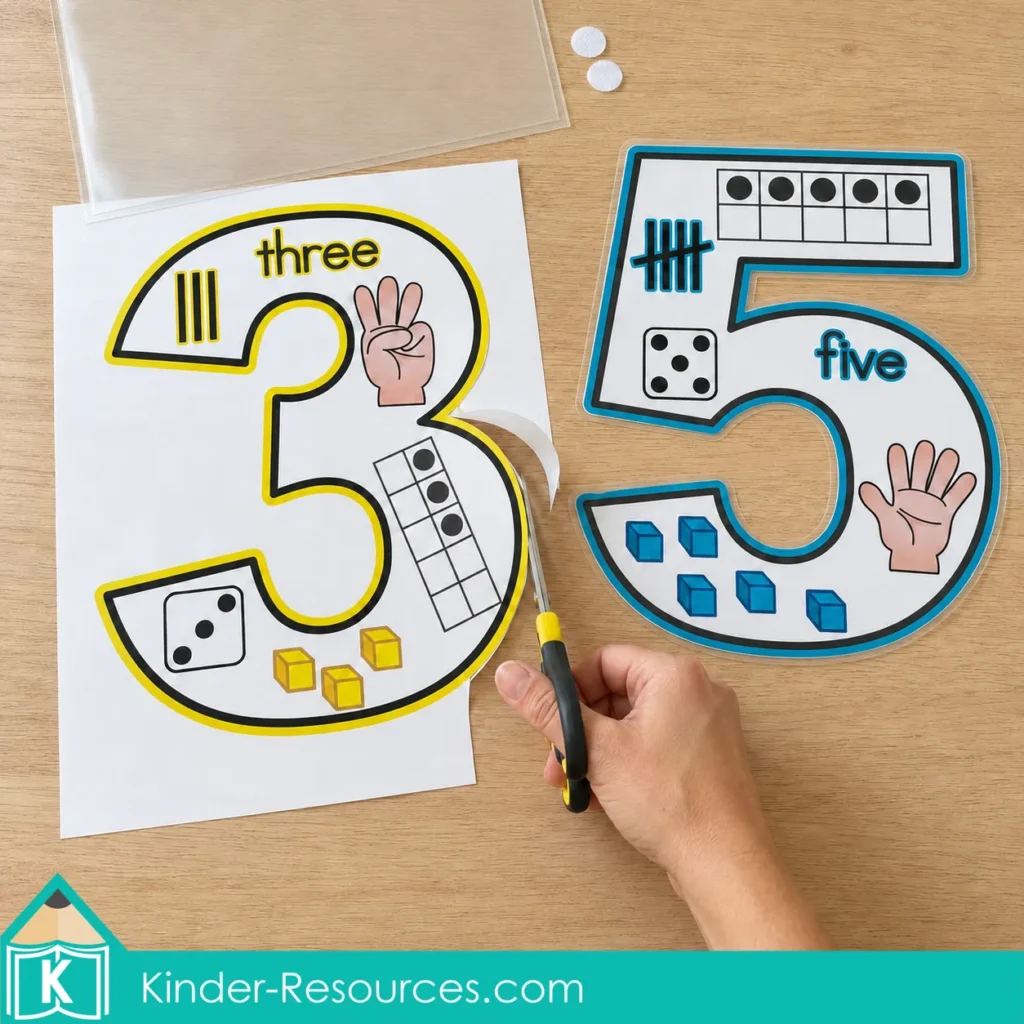
You can attach the prepared charts to the wall using adhesive dots, removable mounting strips, or reusable adhesive. Keeping the charts at children’s eye level allows students to refer to them independently throughout the day.
Creating a Classroom Number Display
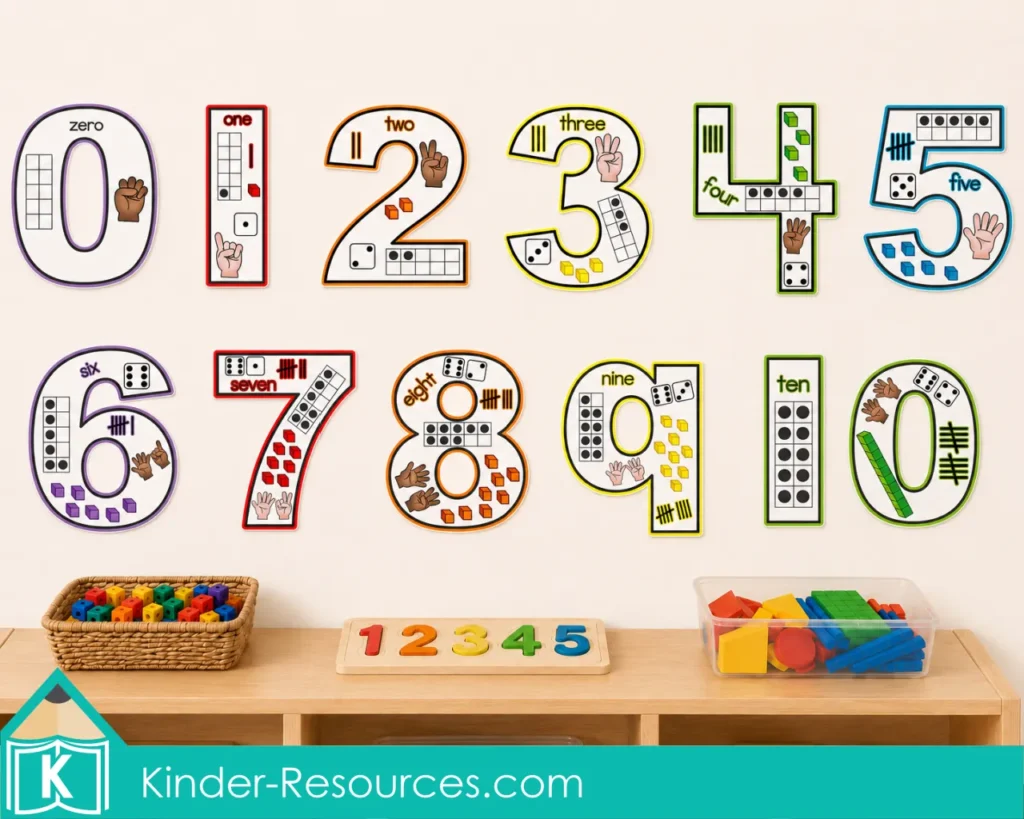
Display the charts in numerical order to create a colorful number line or math focus wall.
For numbers 0 to 10, arrange the charts in two rows:
Top row: 0, 1, 2, 3, 4, 5
Bottom row: 6, 7, 8, 9, 10
Displaying 0 at the beginning gives children a complete number sequence and creates opportunities to discuss what zero means.
Numbers 11 to 20 can be displayed separately when children are ready to explore teen numbers and larger quantities. You may introduce these charts gradually rather than displaying every number at the beginning of the year.
Use the Black and White Number Anchor Charts for Coloring
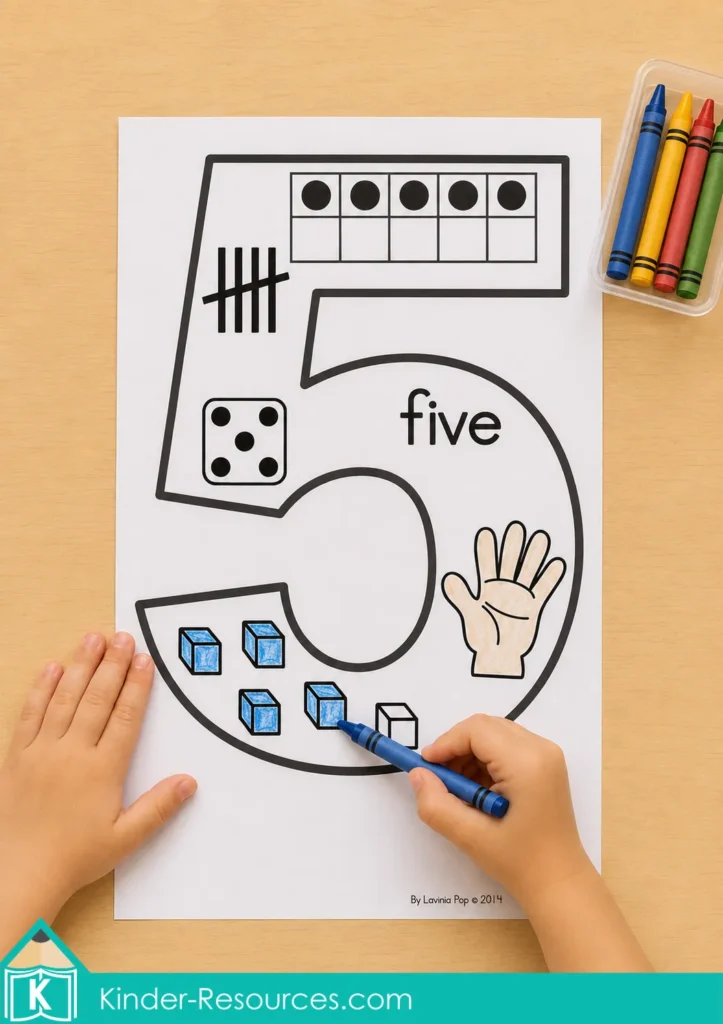
The black and white version can become a simple number recognition and fine motor activity.
Invite children to color the number word, counting cubes, hand illustrations, or other pictures inside the numeral. As they work, encourage them to name each representation and count the objects carefully.
You might ask questions such as:
- “How many cubes can you see?”
- “What number is shown on the die?”
- “How many counters are in the ten frame?”
- “Can you show this number using your fingers?”
These conversations help turn a coloring page into a meaningful number sense activity.
Use the Charts During Math Centers
The charts can also be used as visual references during hands on counting activities.
Place one laminated chart at a math center with connecting cubes, counters, counting bears, buttons, or other classroom manipulatives. Children can identify the numeral and then count the corresponding number of objects.
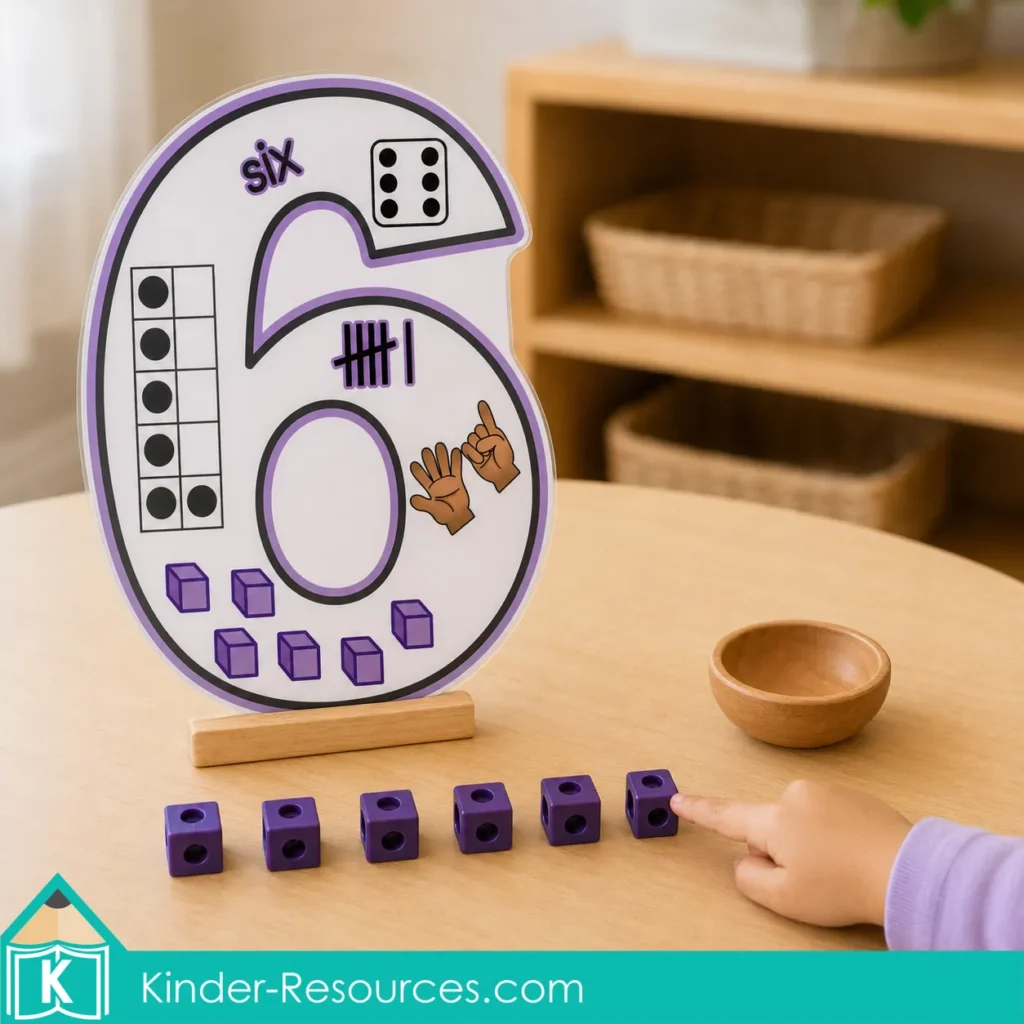
For example, children using the number 6 chart might:
- Count six connecting cubes
- Build a tower using six cubes
- Make six using two different groups
- Find a die showing six
- Recreate the ten frame shown on the chart
- Draw six objects on a recording page
The chart provides visual support without giving children a complicated set of instructions.
Ideas for Whole Group Learning
These Number Anchor Charts can also support daily whole group math instruction.
Choose one chart as the number of the day and invite children to examine each representation. Count the ten frame counters, read the number word, copy the tally marks, and show the number using fingers.
You can also compare two charts and ask children what they notice.
Questions might include:
- “Which number is greater?”
- “Which number comes first?”
- “How many more does this number have?”
- “What changes when we move from 9 to 10?”
- “How are 12 and 2 different?”
These discussions encourage children to explain their thinking and build early mathematical vocabulary.
Supporting Independent Number Recognition
A classroom number display becomes most valuable when children are encouraged to use it.
Children can refer to the charts while completing number worksheets, writing numerals, counting manipulatives, participating in morning meetings, or checking their work at a math center.
Because each chart uses a consistent format, children quickly learn where to find the numeral, number word, ten frame, and quantity pictures.
Purchase the Number Anchor Charts
The Number Anchor Charts make it easy to connect numerals with number words and quantities. Whether they are displayed on a math wall, used during number talks, colored by students, or added to a hands on math center, the charts provide children with a helpful visual reference they can use throughout the year.
Happy Teaching! 😊


You might also like…