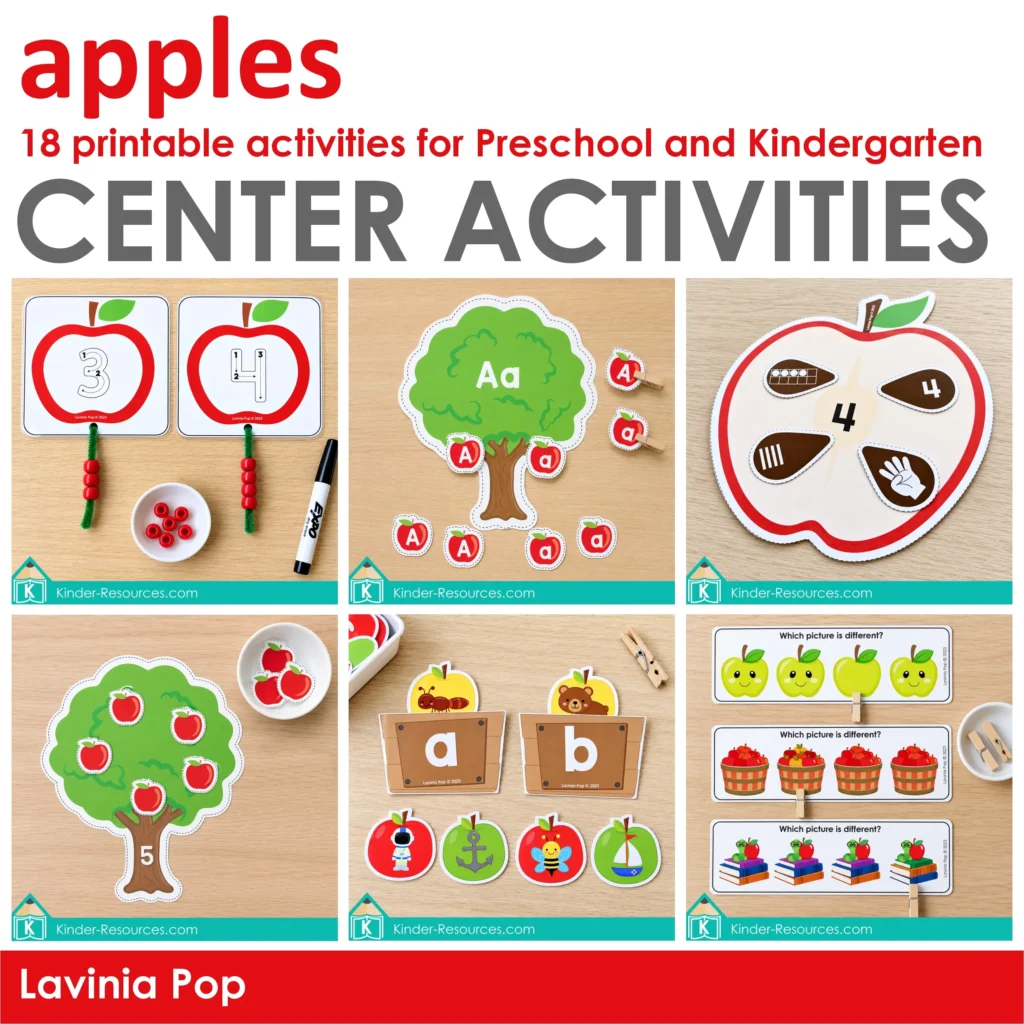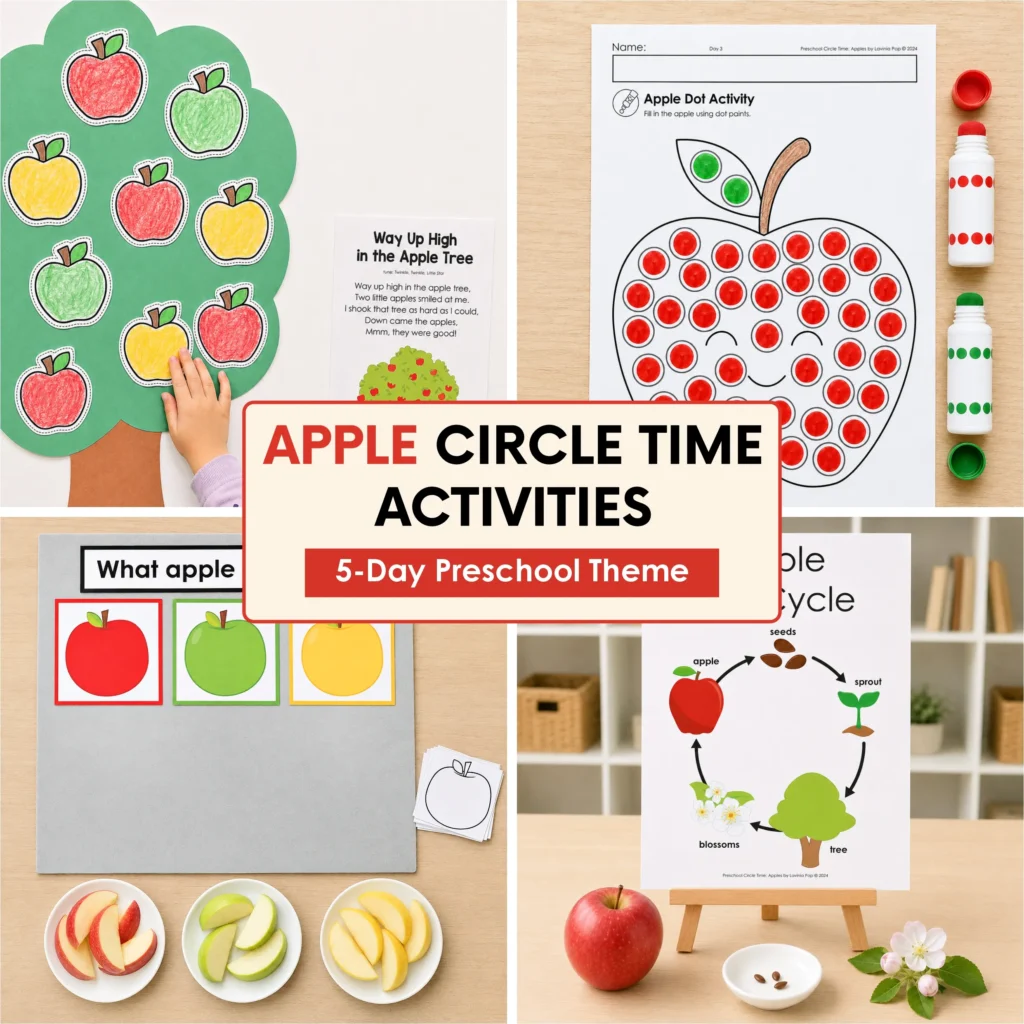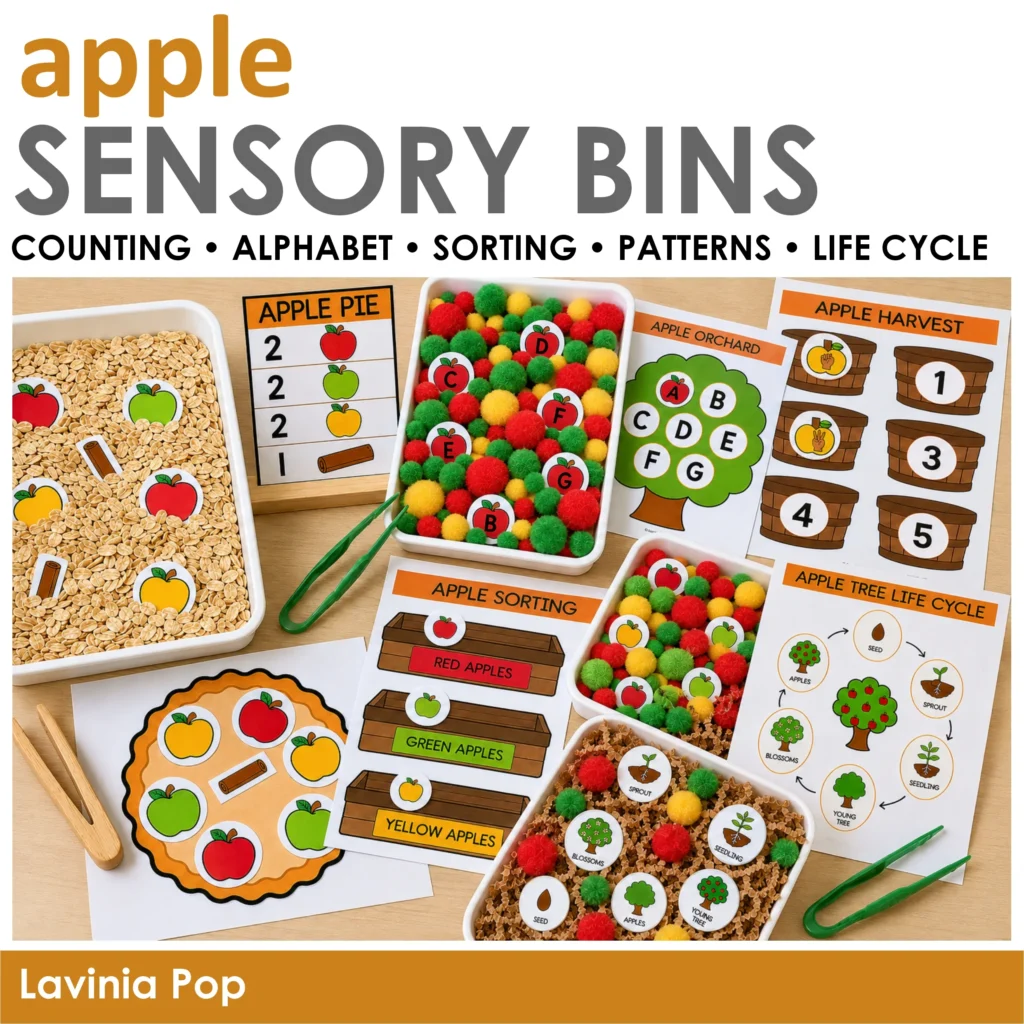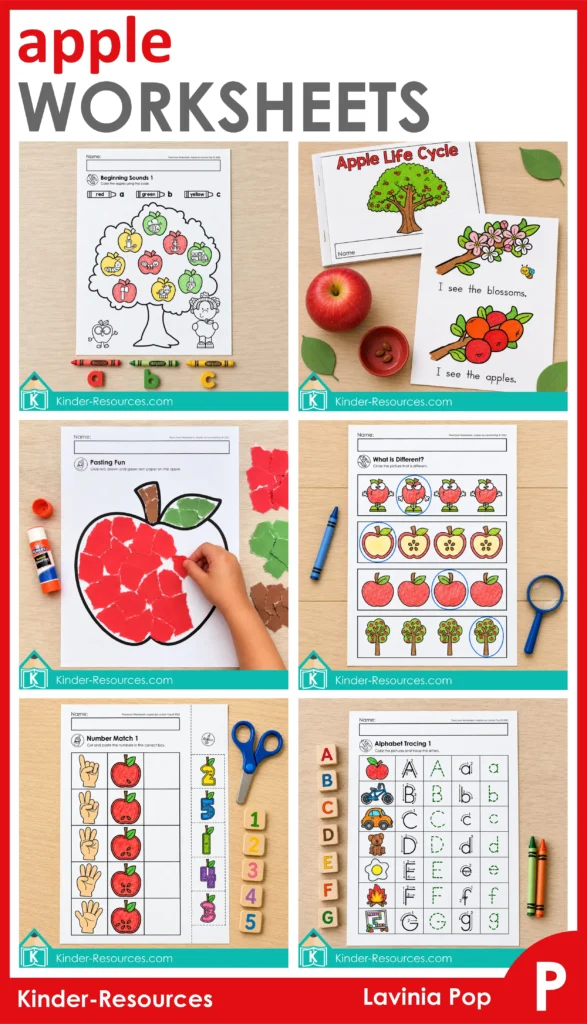
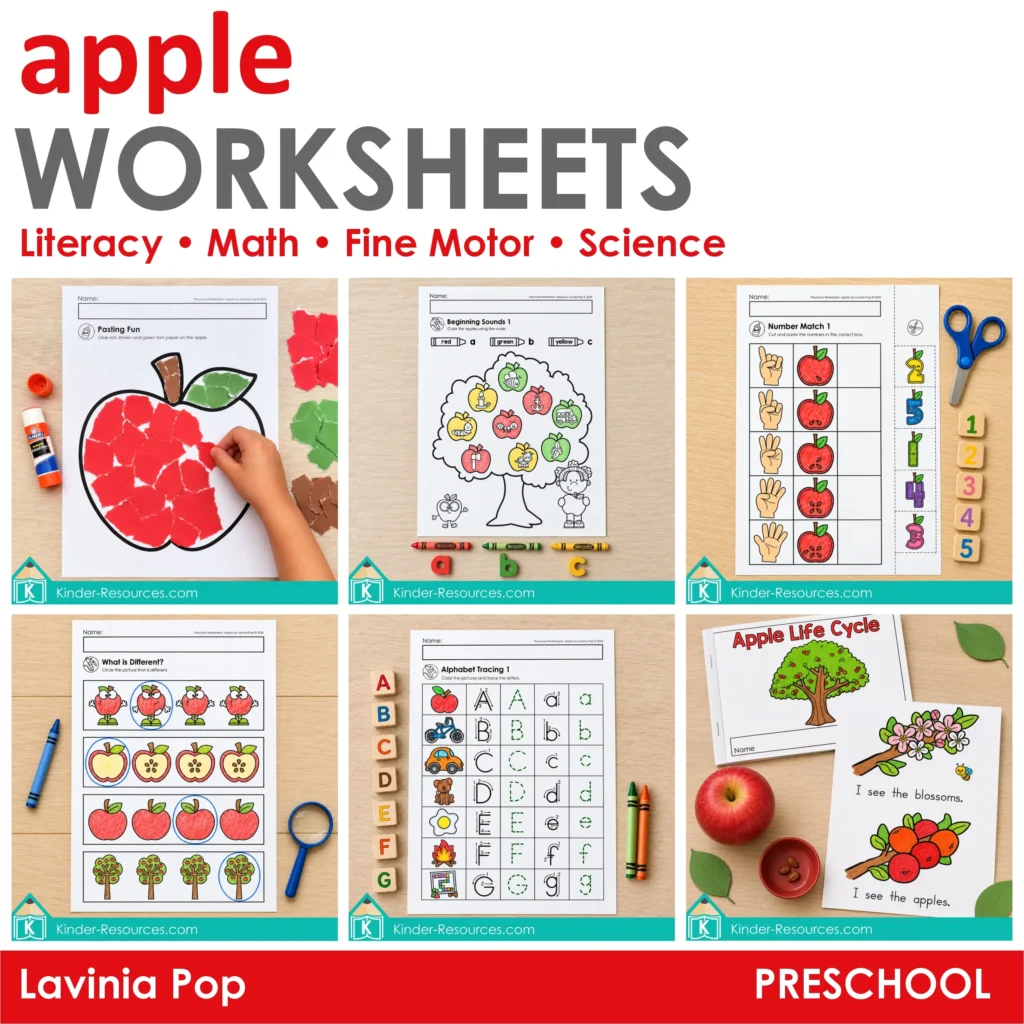
Apple season provides so many opportunities for playful preschool learning. Apples are familiar, colorful, and easy for young children to recognize, making them a wonderful theme for early literacy, math, fine-motor practice, science, and classroom conversations. I created this collection of preschool apple worksheets to bring those different learning areas together in one coordinated resource. The activities include letter and sound work, early reading, counting, number recognition, tracing, cutting, pasting, sorting, sequencing, shapes, and the apple life cycle.
You can select just a few pages for a short apple theme or use different sections throughout an entire fall unit.
Try a Free Preschool Apple Worksheets Sample
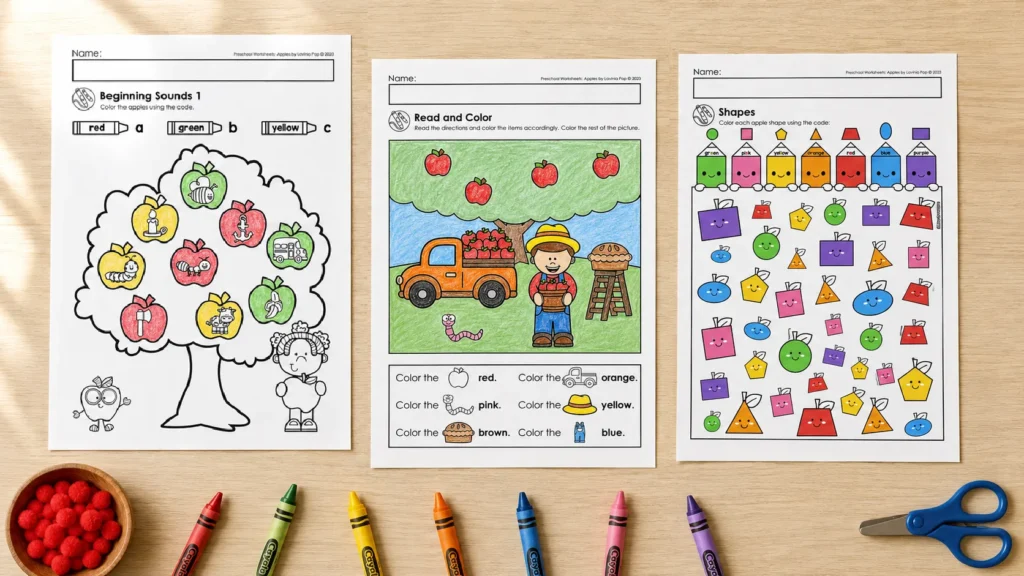
Would you like to look inside the resource before choosing the complete pack? I have prepared a free sample containing a selection of activities from the collection.
Use the sample during your apple theme, place the pages in a fall learning center, or send them home as a little seasonal learning activity.
Why Use an Apple Theme in Preschool?
A familiar classroom theme can help children connect new skills with something they already understand. Most preschoolers recognize an apple, and many have experience eating apples, seeing them in stores, or picking them from a tree.
That familiarity makes it easier to introduce new vocabulary and learning concepts. Children can count apple seeds, compare differently sized apples, talk about how an apple grows, identify the beginning sound in the word “apple,” and practice following directions while coloring an apple picture.
A single theme can therefore support several areas of development without making the activities feel disconnected.
Fine-Motor Apple Activities
Several of the preschool apple worksheets focus on strengthening the small hand muscles children will need for writing, drawing, dressing, and other everyday tasks.
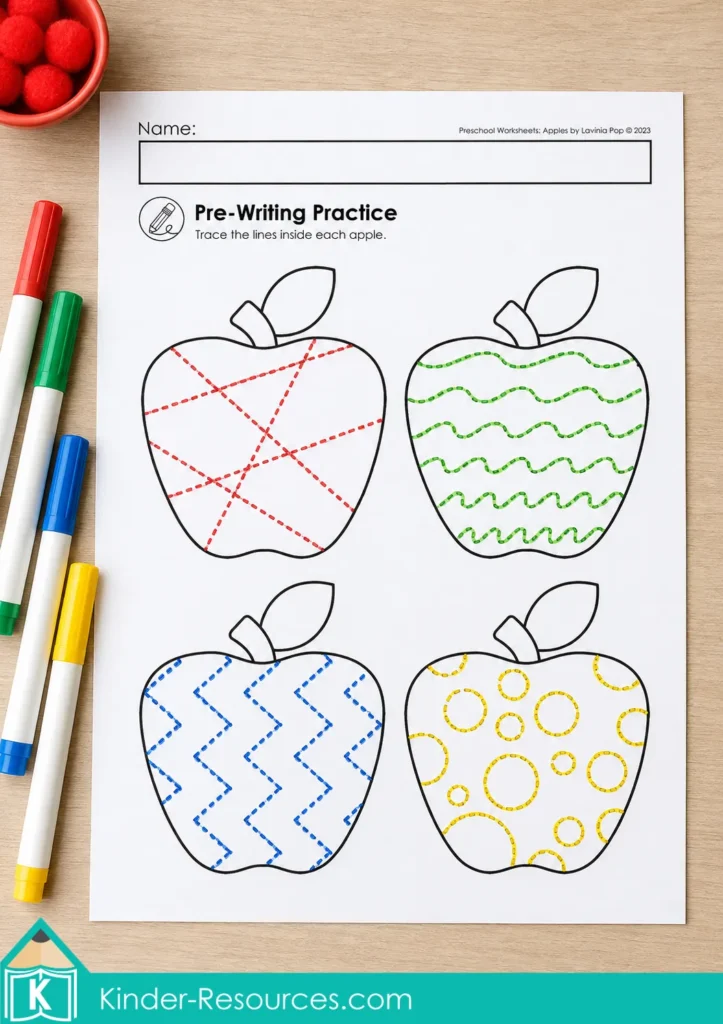
The pre-writing pages give children practice following different line paths. Depending on the page, they may trace straight, curved, wavy, or zigzag lines. These activities are useful for children who are not quite ready for formal handwriting practice.
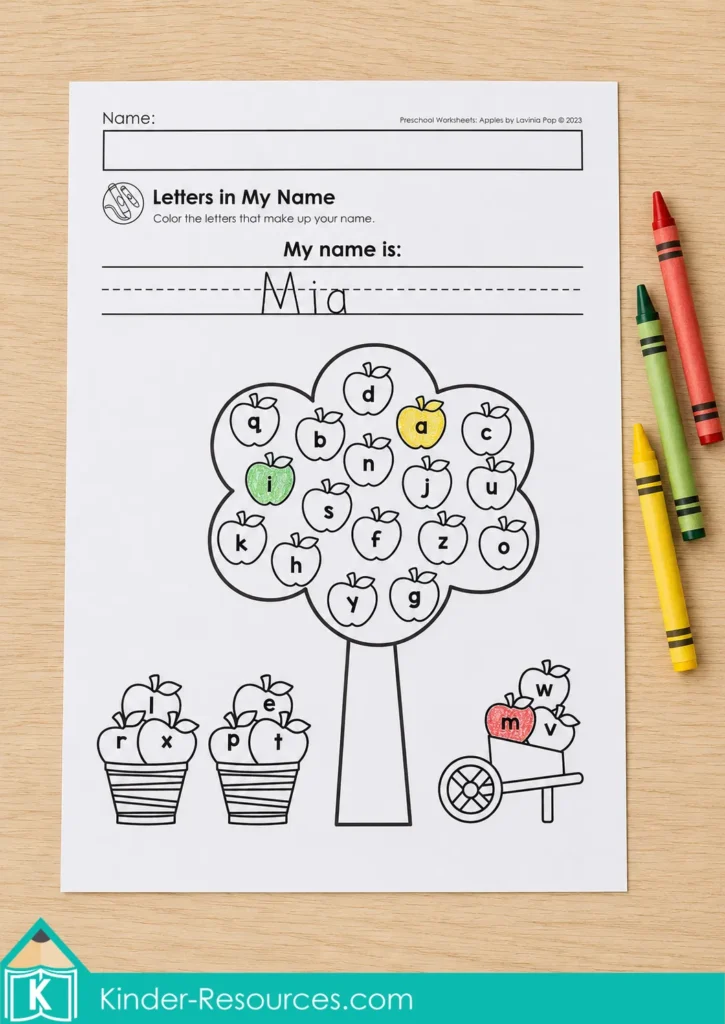
Tracing pages provide additional pencil-control practice, while the name activity helps children begin recognizing and working with the letters in their own names.
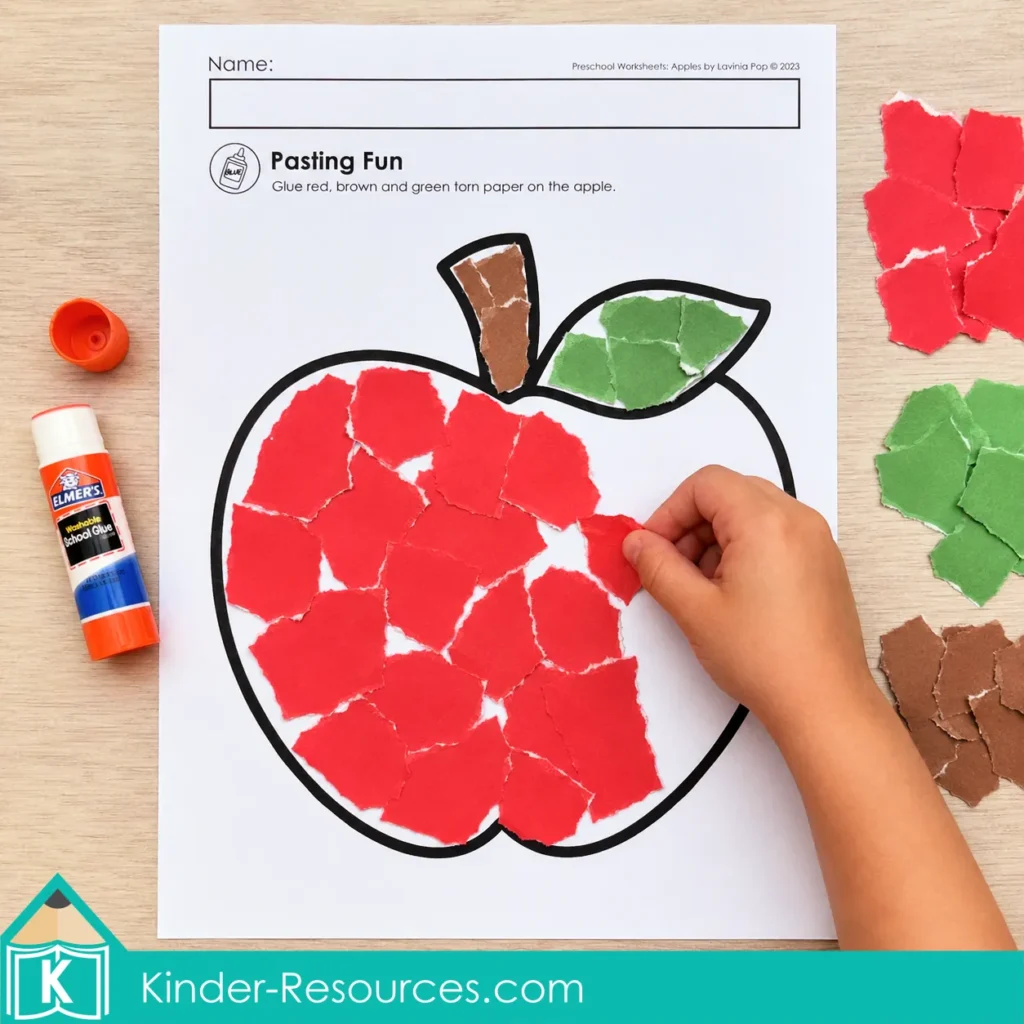
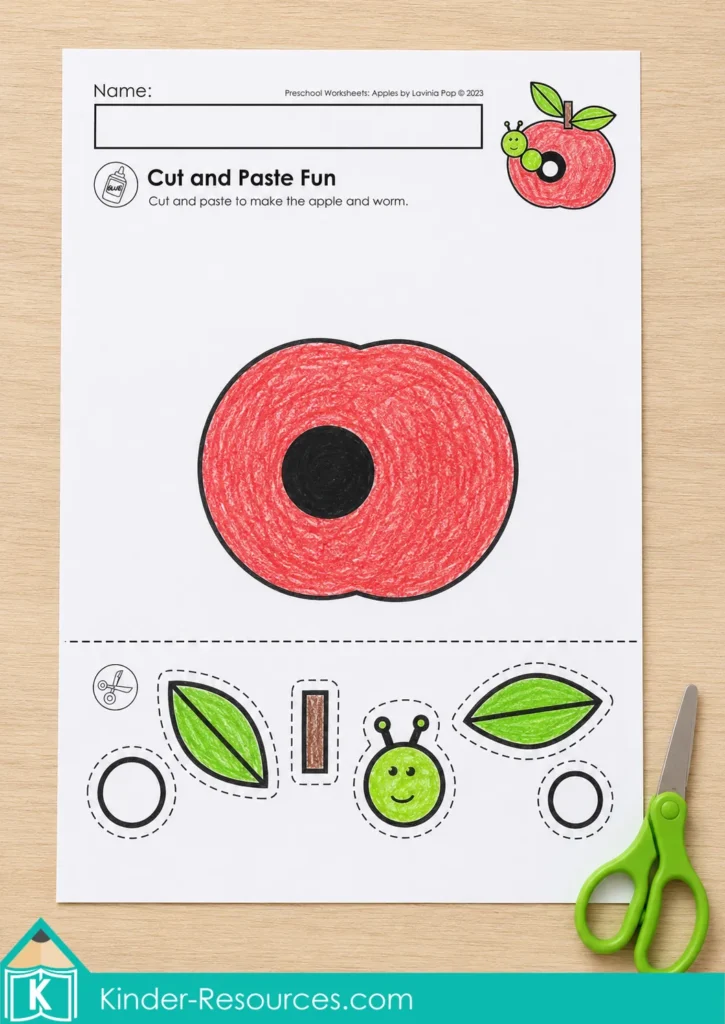
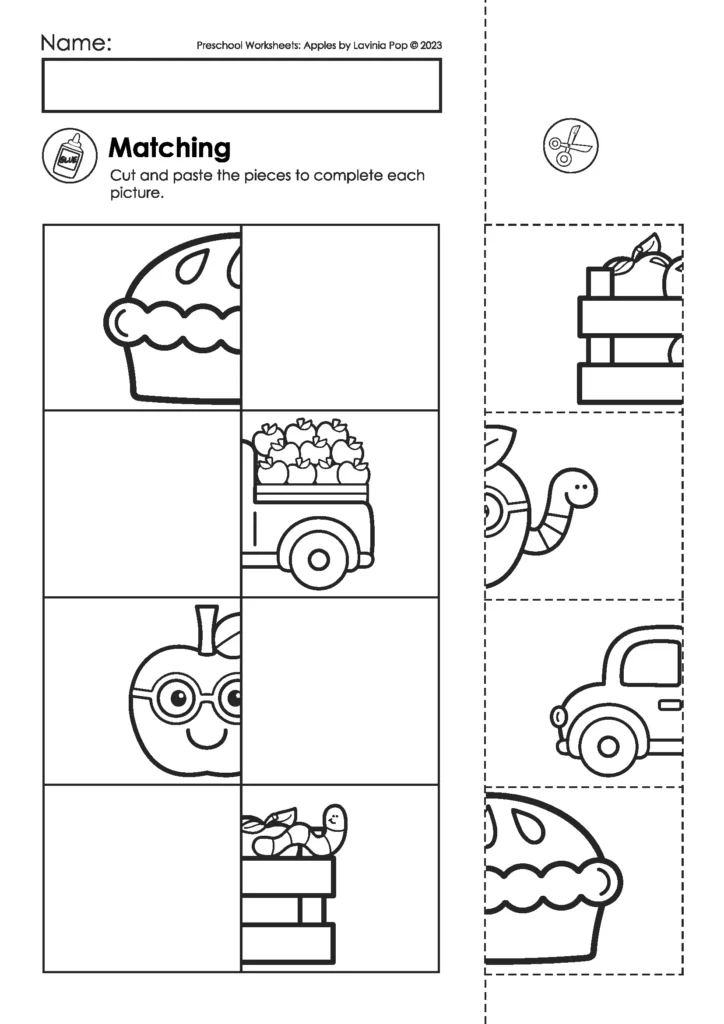
The pack also includes cutting and pasting activities. Children can cut along the lines, arrange the pieces, and glue them in place. For the apple pasting activity, small pieces of colored paper can be torn and glued onto the picture.
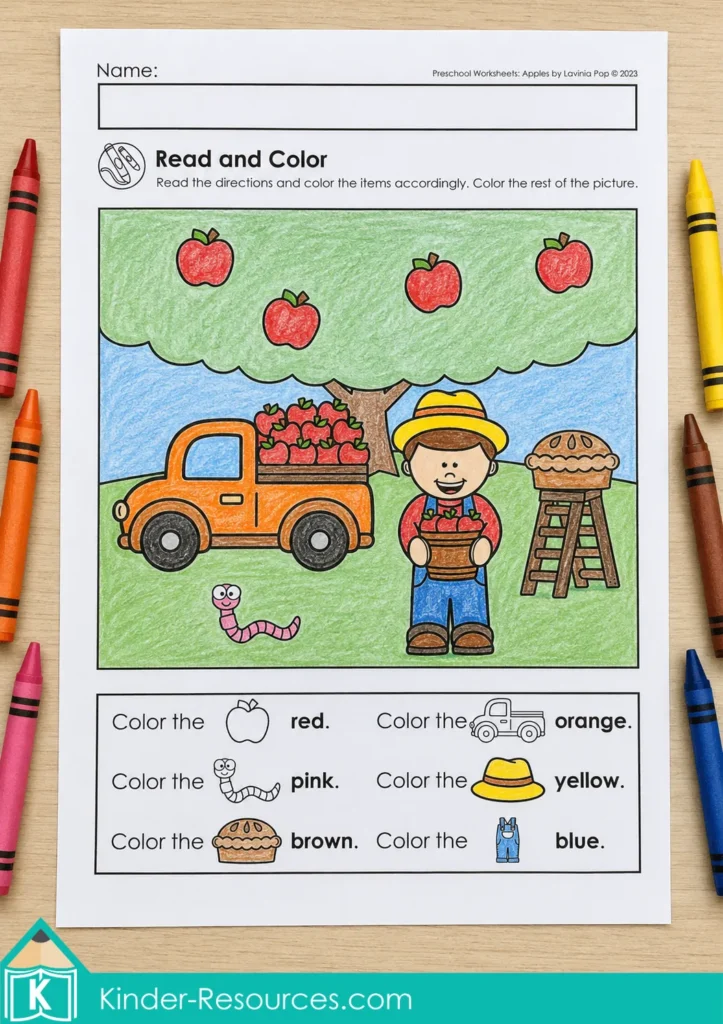
These activities can be completed with crayons, child-safe scissors, glue sticks, colored paper, or small manipulatives. Offer only the materials that are relevant to the selected page so that the work area stays inviting and manageable.
Preschool Apple Literacy and Phonics Worksheets
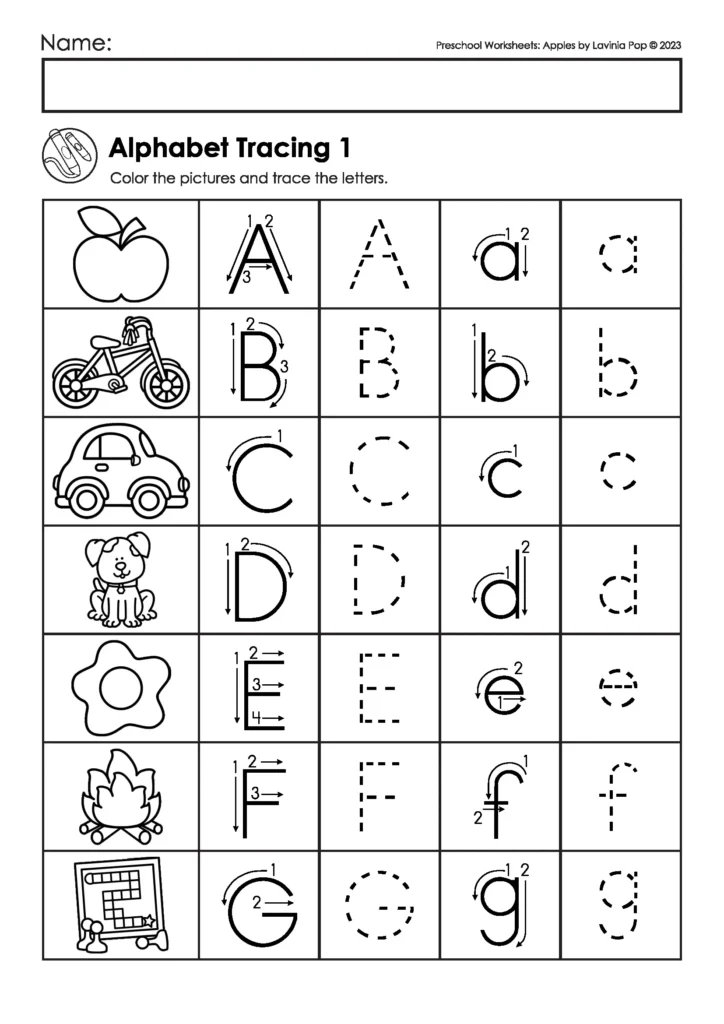
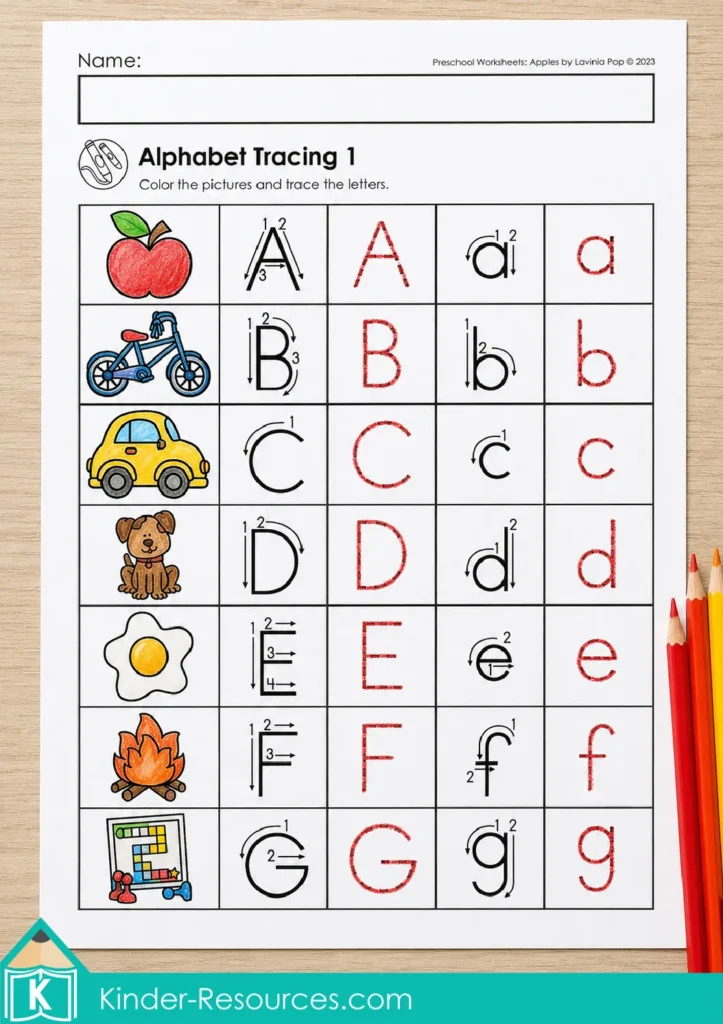
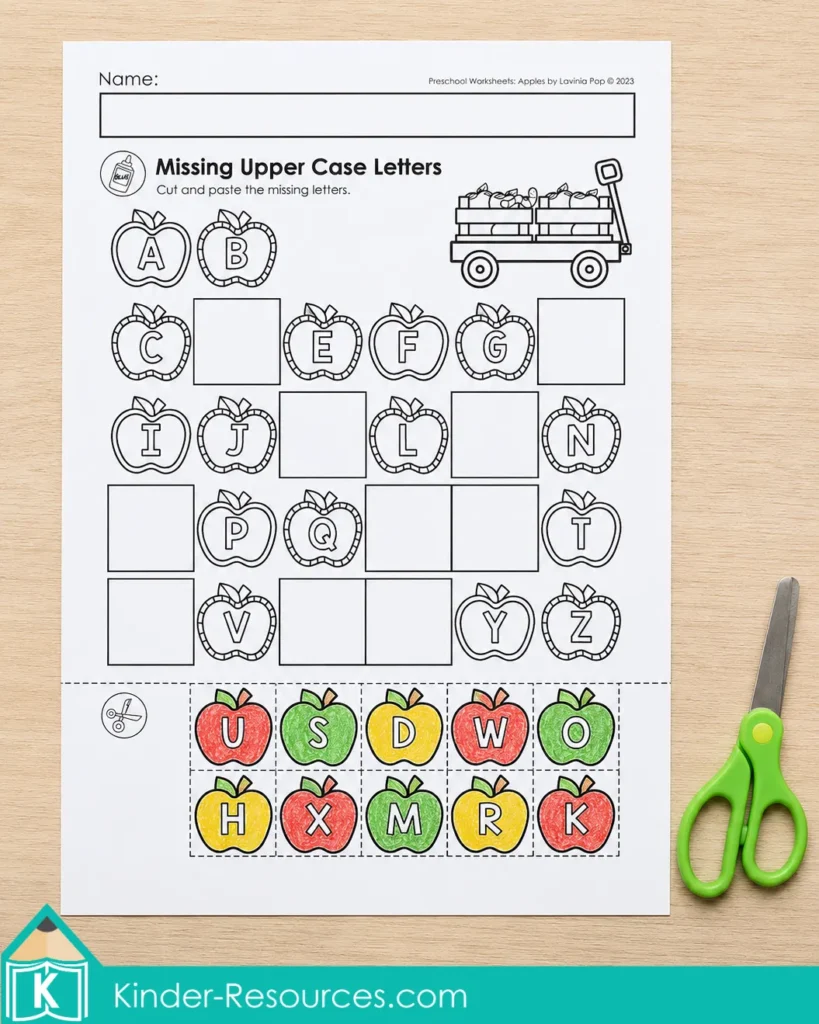
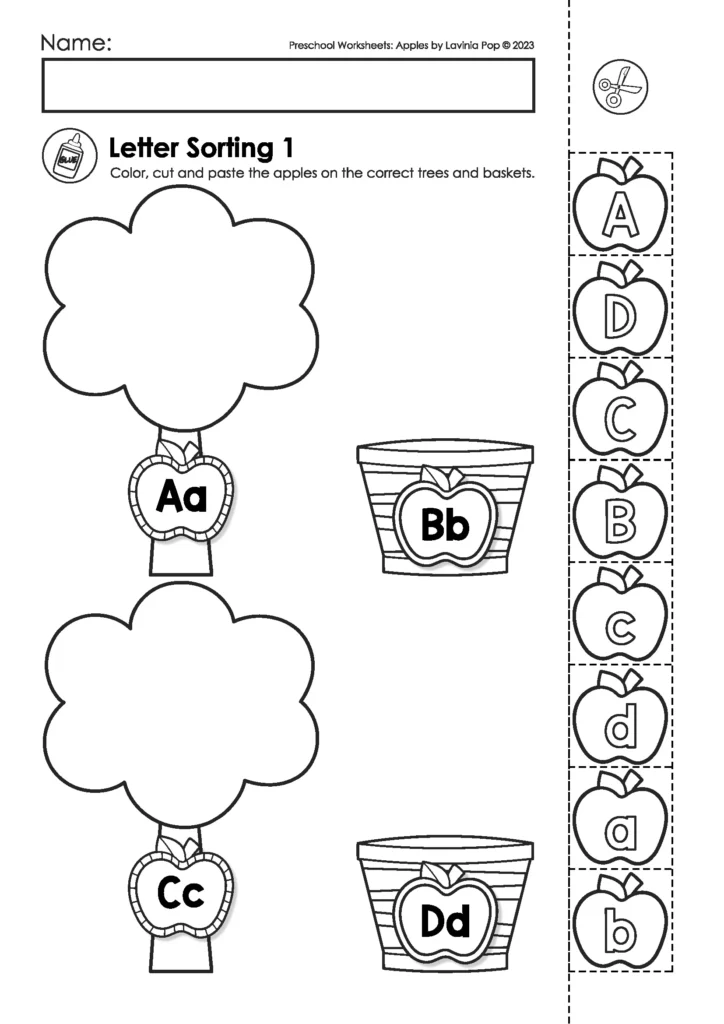
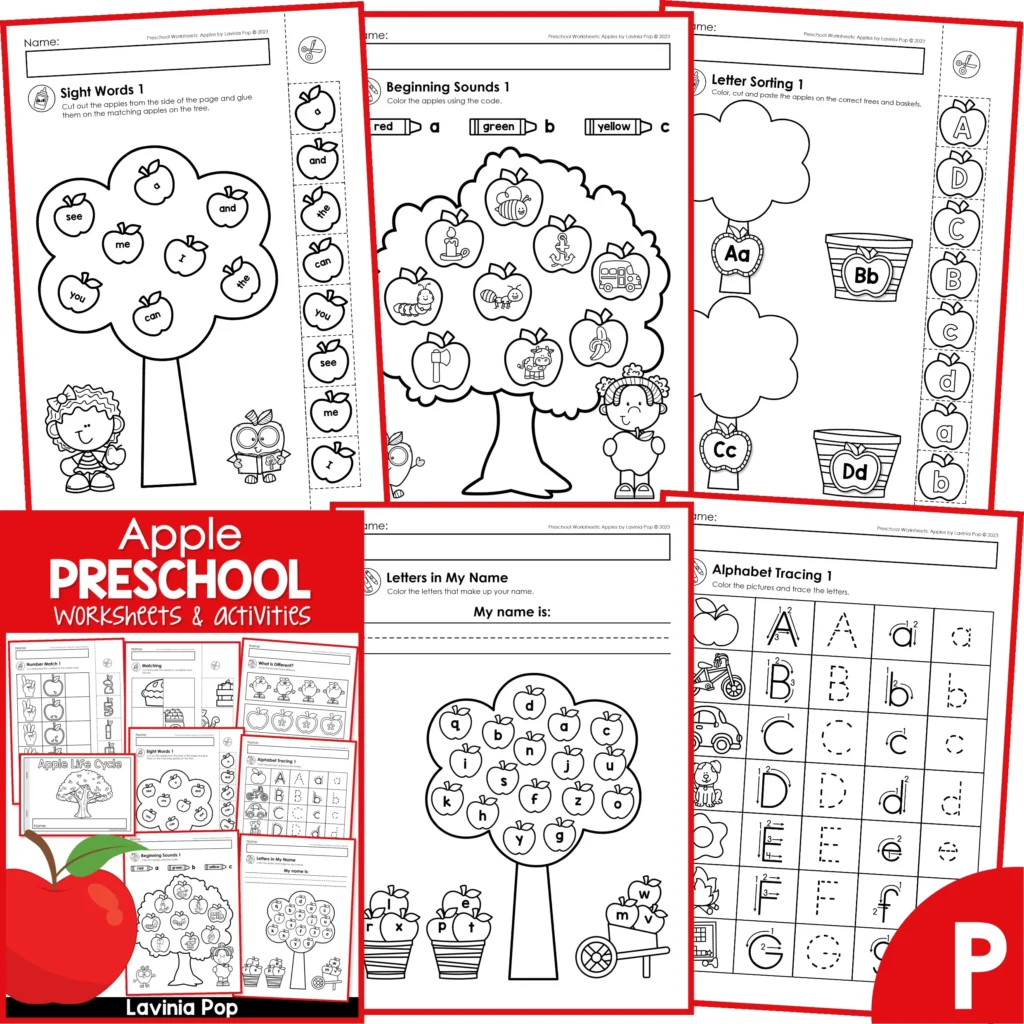
The literacy section begins with alphabet tracing and letter-recognition activities. Children can trace uppercase and lowercase letters, sort different letter forms, and identify missing letters.
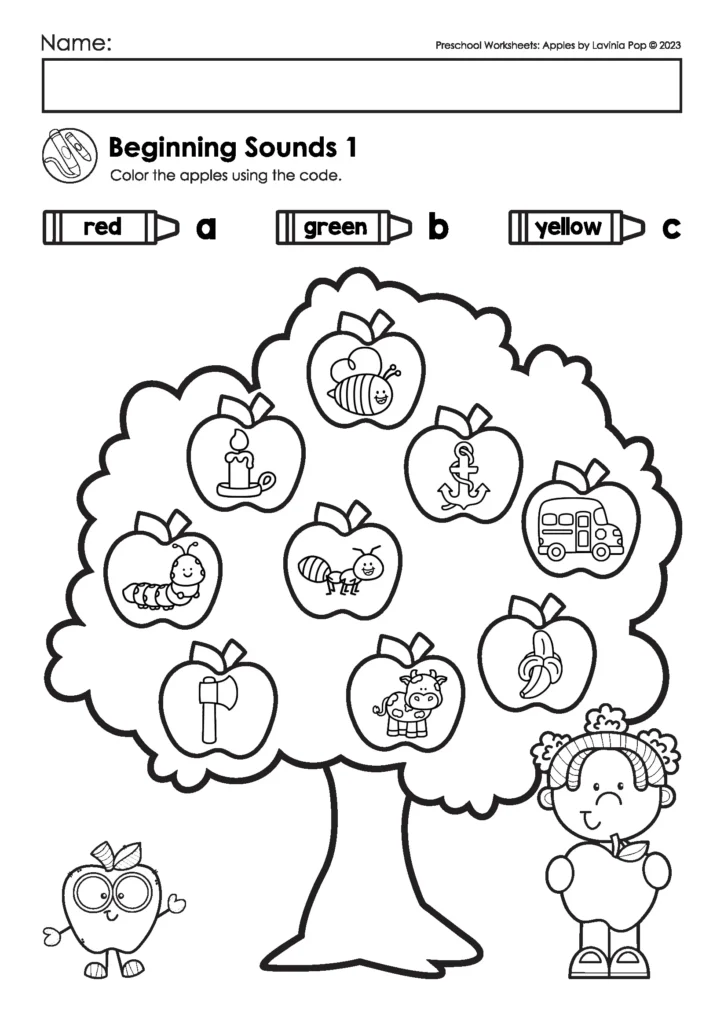
The beginning-sounds activities invite children to look at a picture, say its name, and identify its first sound. This encourages children to listen carefully to spoken words instead of relying only on visual recognition.
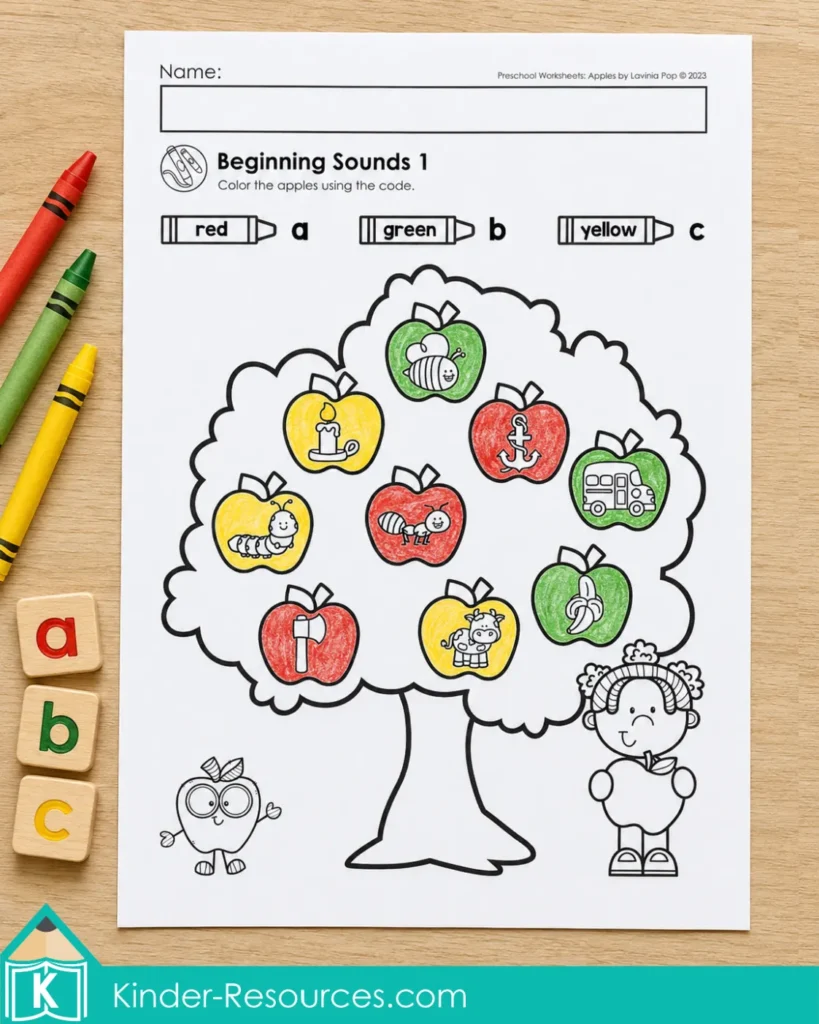
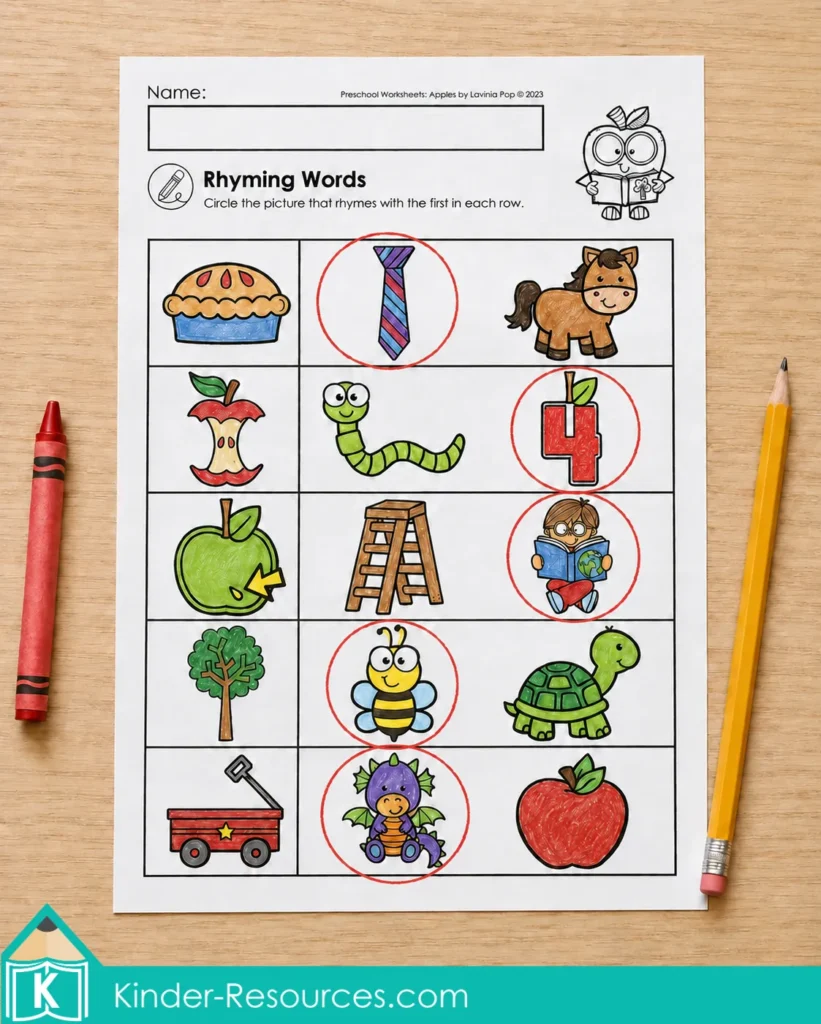
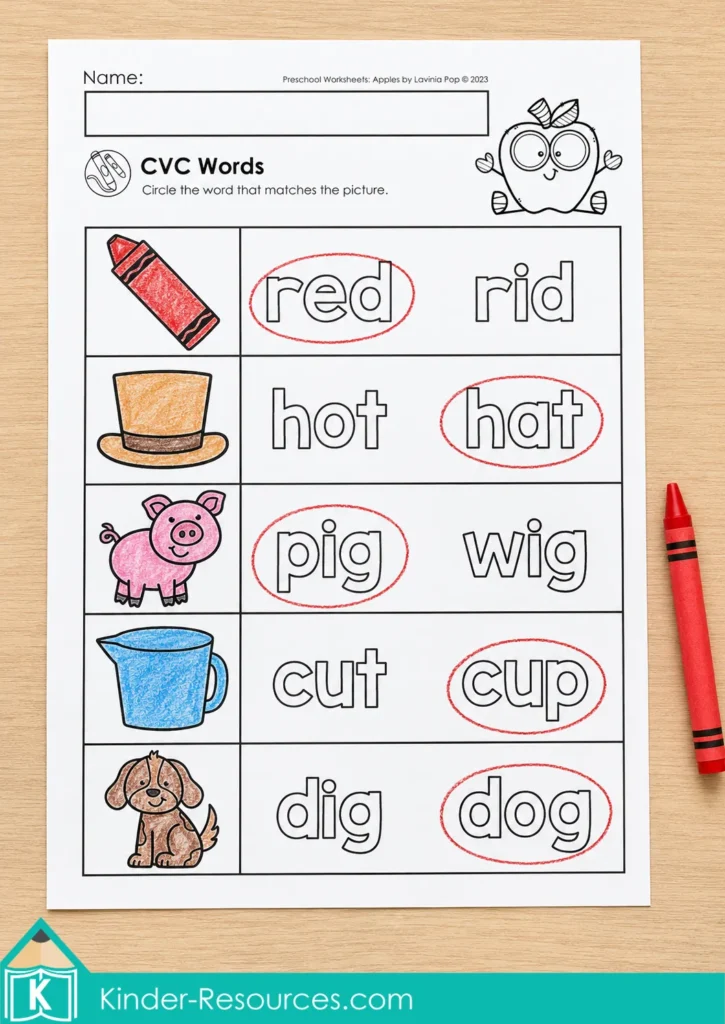
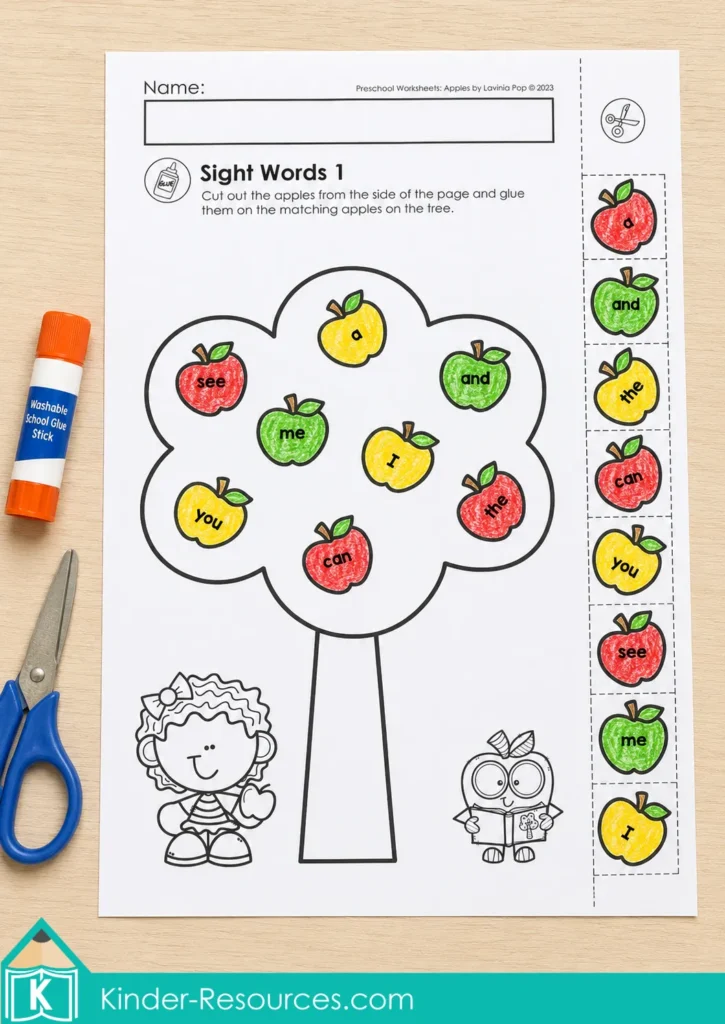
There are also activities for syllables, rhyming words, CVC words, and early sight words. These pages can be used individually according to each child’s readiness. Preschoolers might concentrate on alphabet and beginning-sound activities, while Pre-K or early kindergarten children may be ready to work with CVC words and sight words.
When using a picture-based phonics page, I like to name each picture with the children before they begin. This ensures that everyone is using the intended word and gives children a chance to hear the target sounds clearly.
You can also turn the page into an oral activity first. Ask children to point, say the word, stretch out its sounds, and then complete the worksheet.
Preschool Apple Math Worksheets
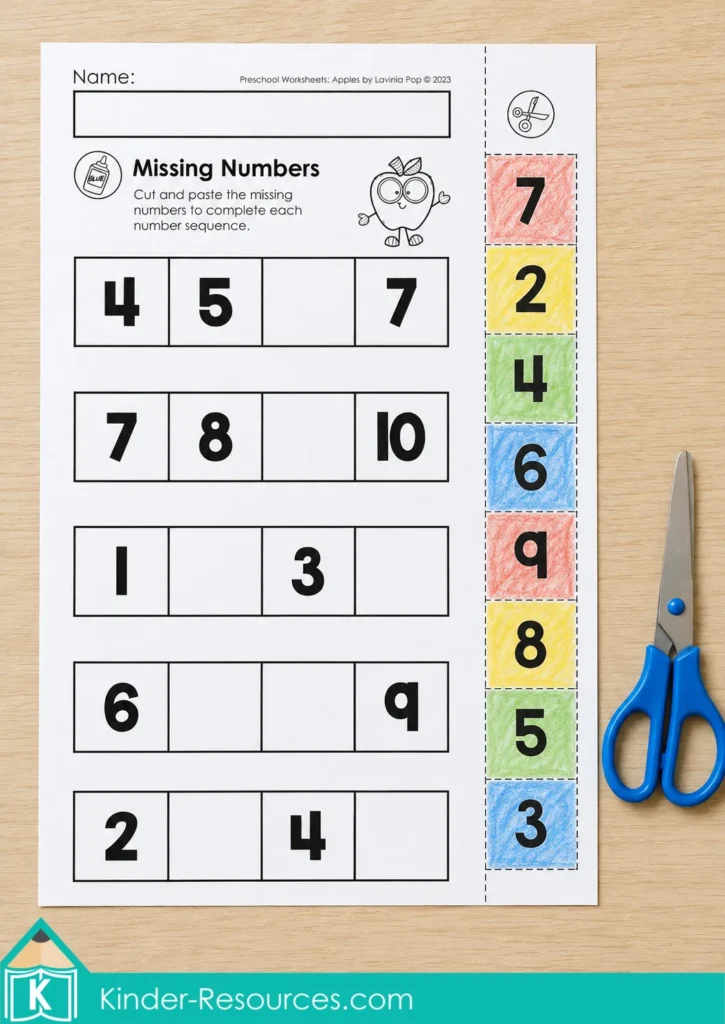
The math activities cover a range of early number skills, including numeral tracing, counting, number matching, number order, missing numbers, number sense, graphing, shapes, measurement comparisons, and patterns.
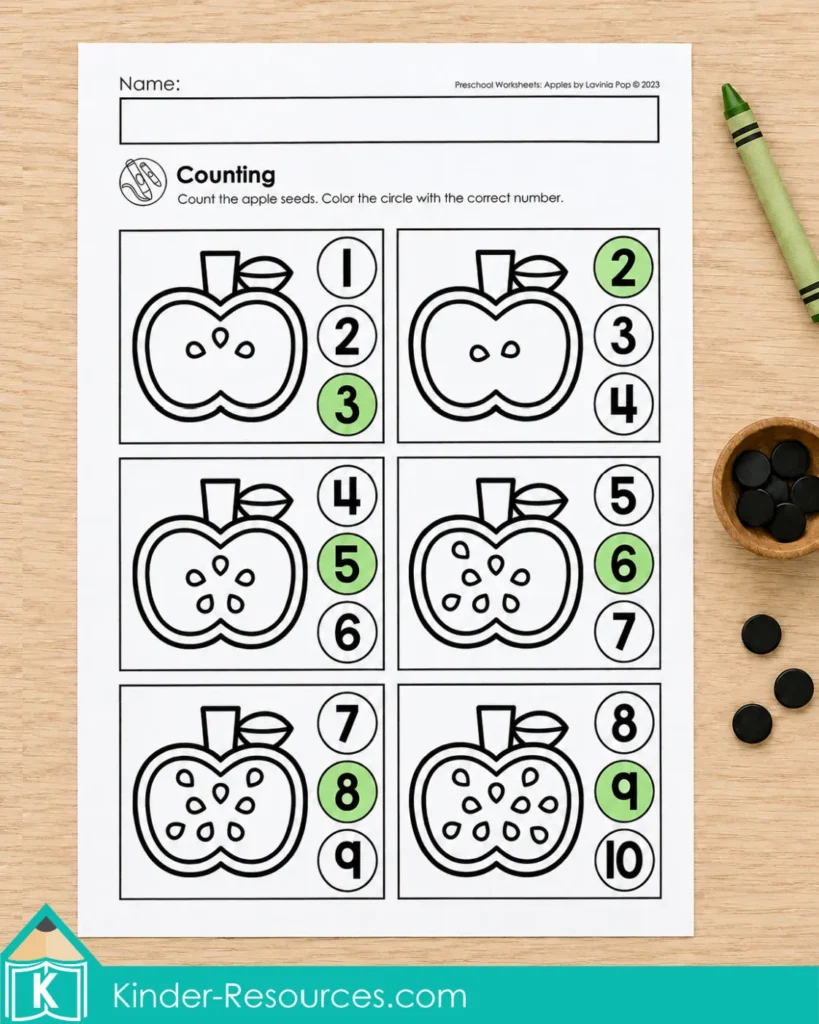
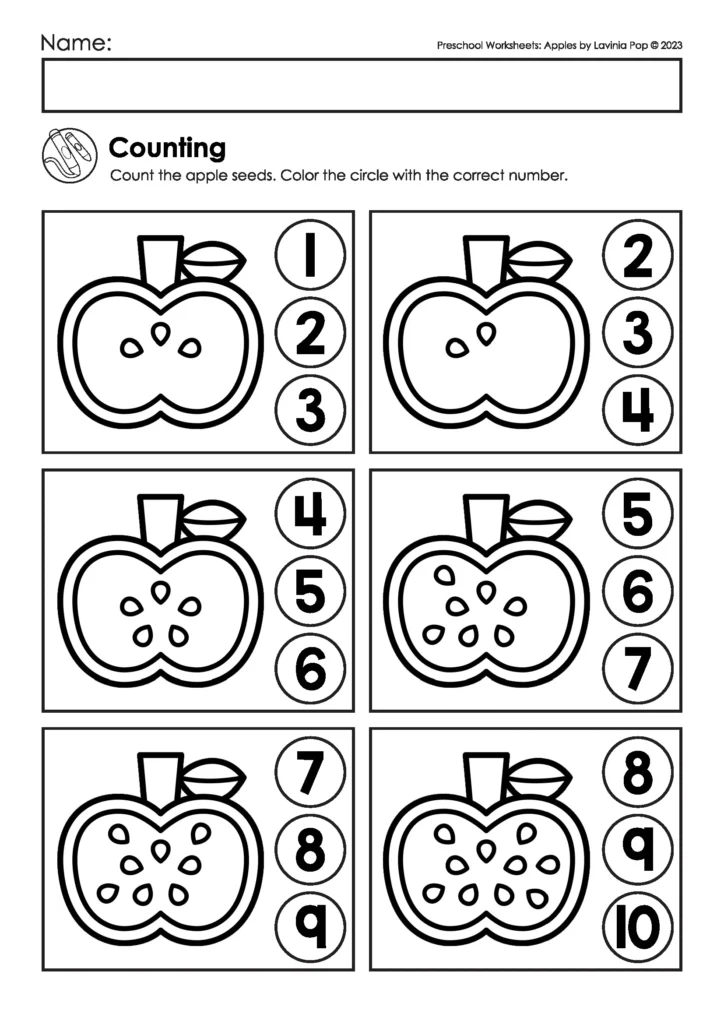
For the counting activities, children count the objects or apple seeds and select the corresponding numeral. This supports one-to-one correspondence as well as numeral recognition.
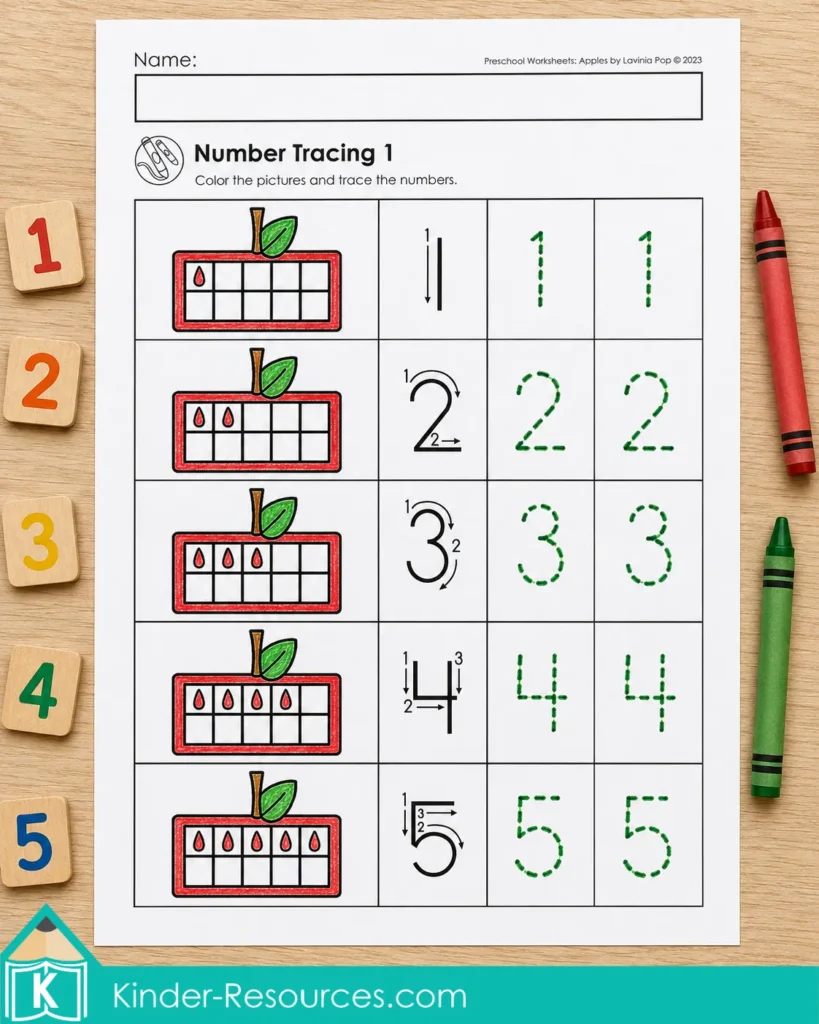
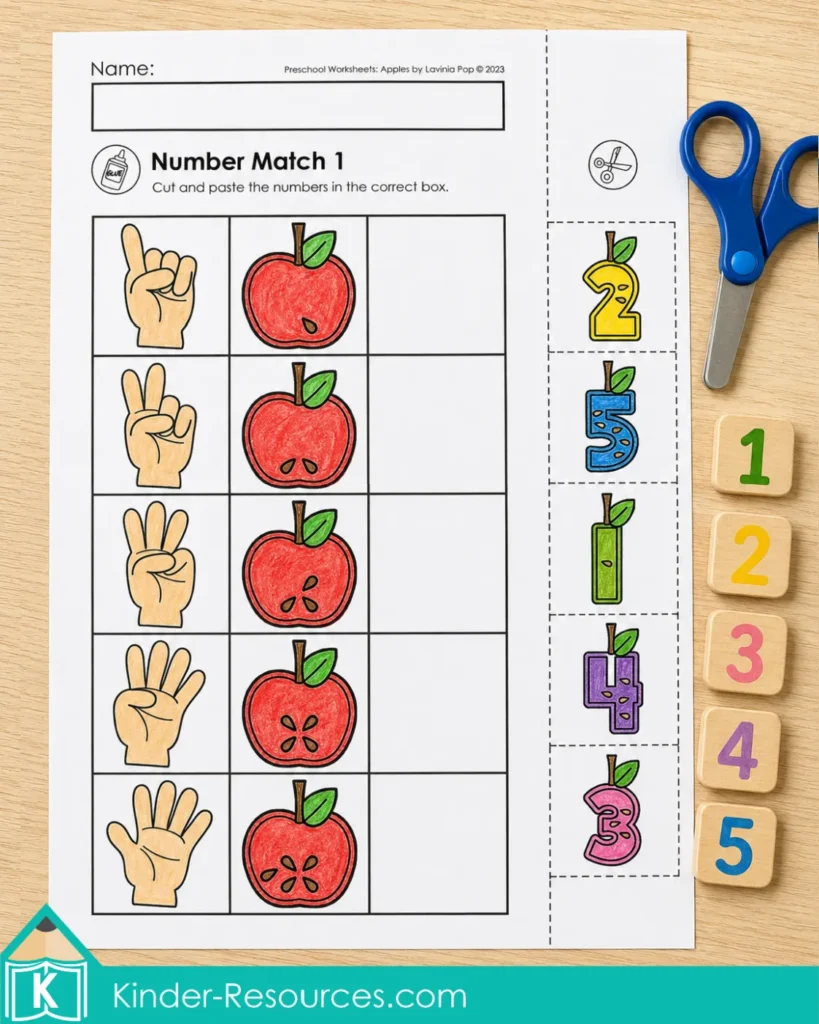
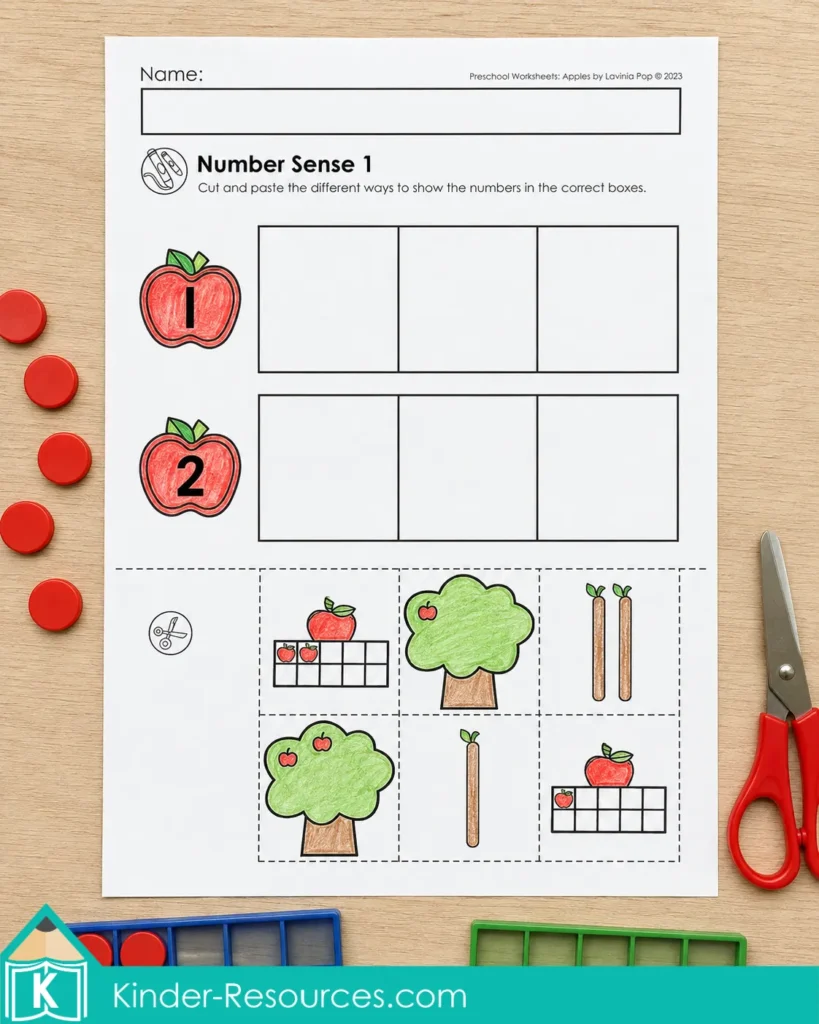
The number-sense pages help children understand that a number can be represented in several ways. Depending on the activity, children might connect a numeral with a quantity, ten-frame, group of objects, or another visual representation.
The number-order pages can be completed as worksheets or turned into hands-on activities. Cut out the pieces and invite children to place them in order before gluing them down. If you would like to reuse the activity, laminate the pieces and add hook-and-loop dots.
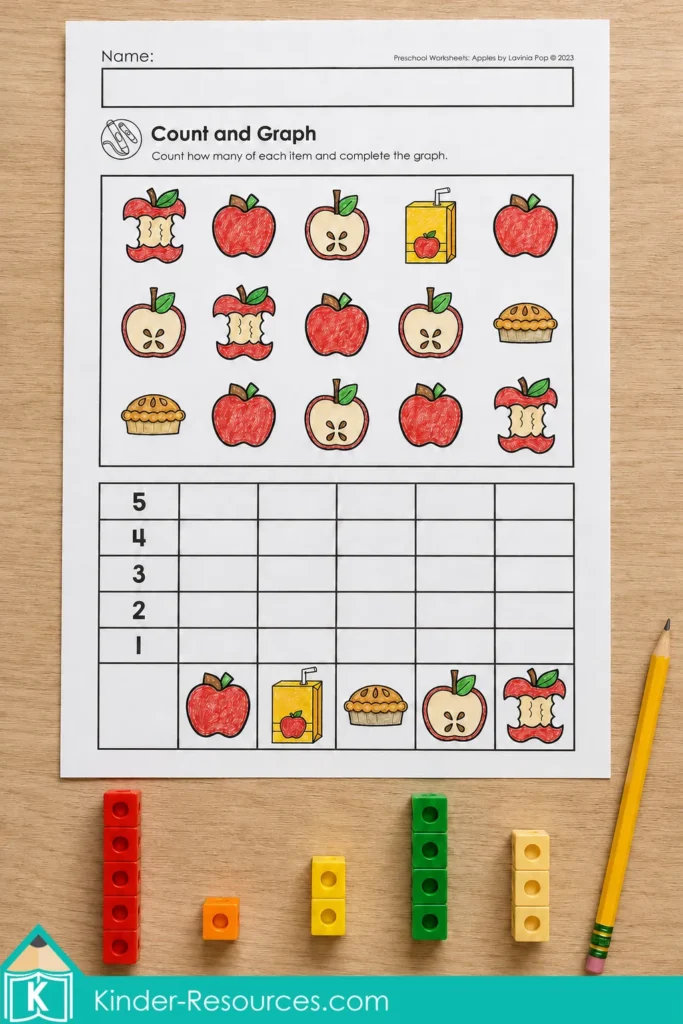
The graphing page provides an opportunity to count and compare groups. After completing it, ask questions such as:
- Which group has the most?
- Which group has the least?
- Are any groups equal?
- How many would there be if we added one more?
These short conversations help children use mathematical language and explain what they notice.
Learning About the Apple Life Cycle
An apple theme would not be complete without exploring how apples grow.
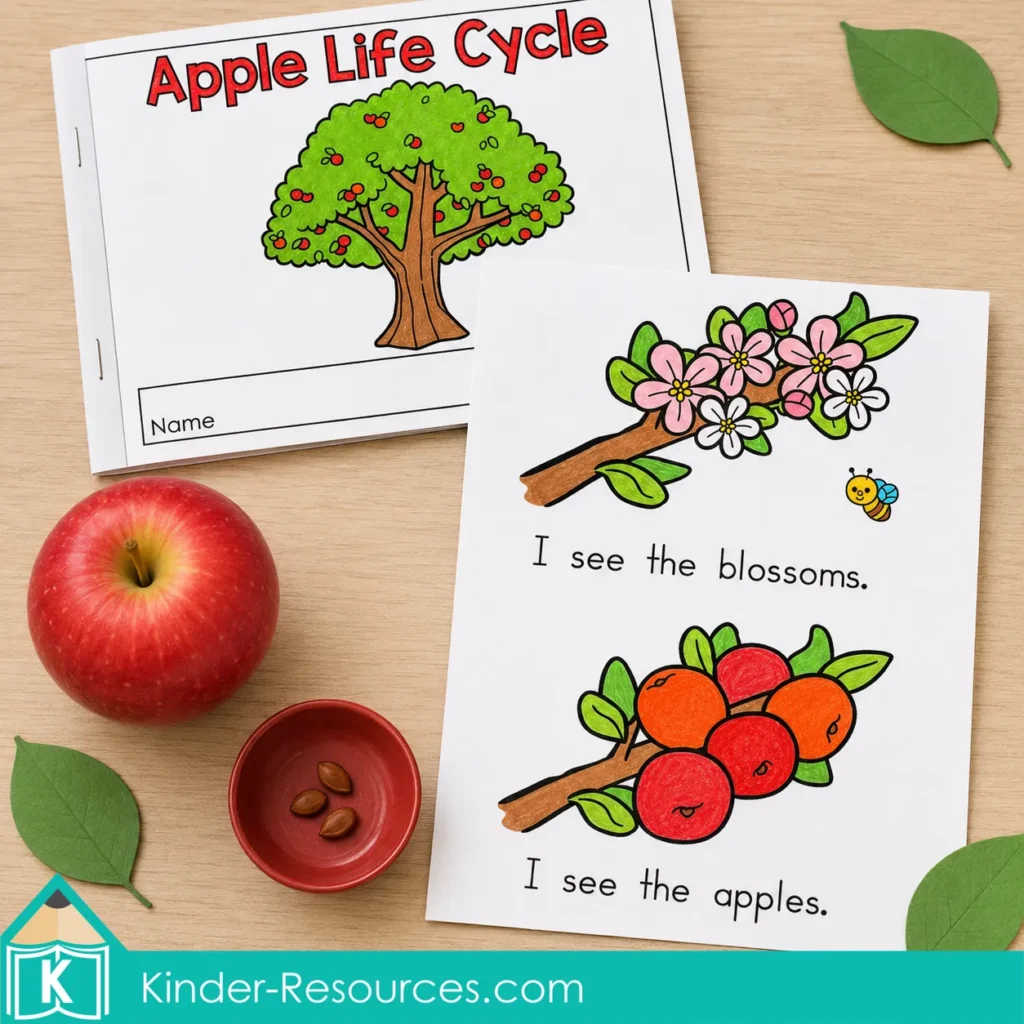
The apple life-cycle reader introduces children to the journey from seed to sprout, tree, blossom, and apple. The illustrations provide visual support while the short text keeps the information manageable for young learners.
You can read the pages together, place them in a classroom reading area, or use them to support a discussion about plants and seasonal change.
Try bringing in a real apple and cutting it open so children can examine the seeds. Ask them to compare the real apple with the pictures in the reader. Children can describe the apple’s color, shape, smell, and texture while learning relevant vocabulary.
Early Reading Comprehension
After children have learned about apples, the reading-comprehension activities provide a simple way to check understanding.
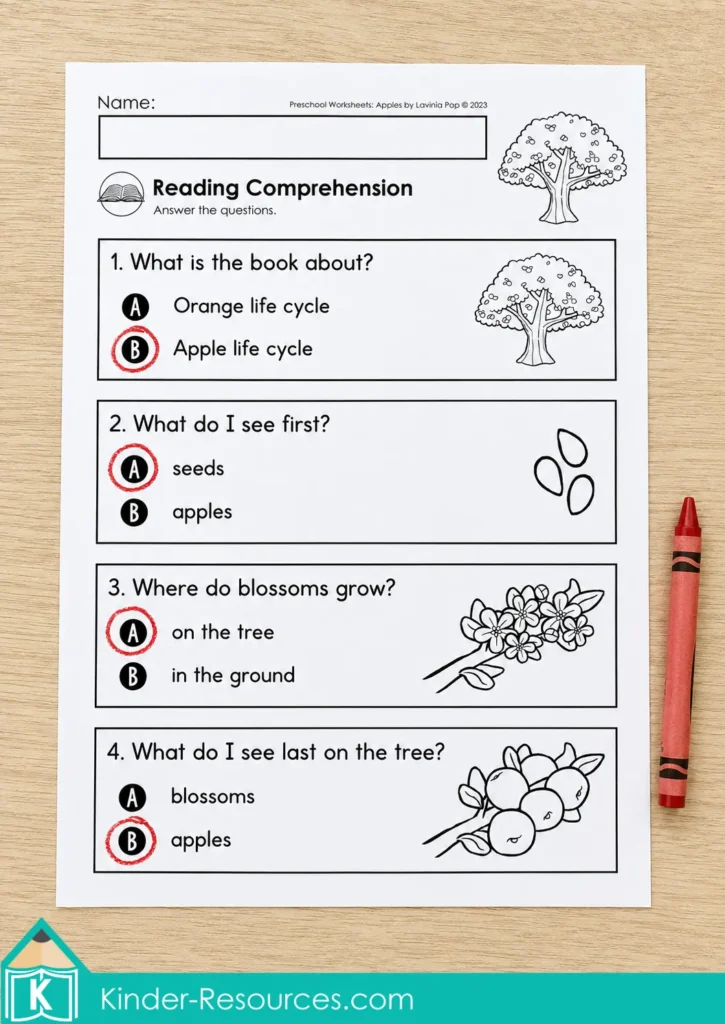
One version includes picture cues to support children who are still developing their independent reading skills. Children can listen to the text, look at the choices, and use both the words and illustrations to answer the questions.
These pages work well in a teacher-led small group. Read one section at a time, pause to discuss it, and encourage children to return to the text or pictures before choosing an answer.
The purpose is not to rush children toward independent reading. Instead, the activity helps them practice listening, recalling information, using picture clues, and explaining their thinking.
Sorting, Sequencing, Shapes, and Visual Discrimination Preschool Apple Worksheets
The collection also contains activities that do not fit neatly into a literacy or number category but still support important preschool skills.
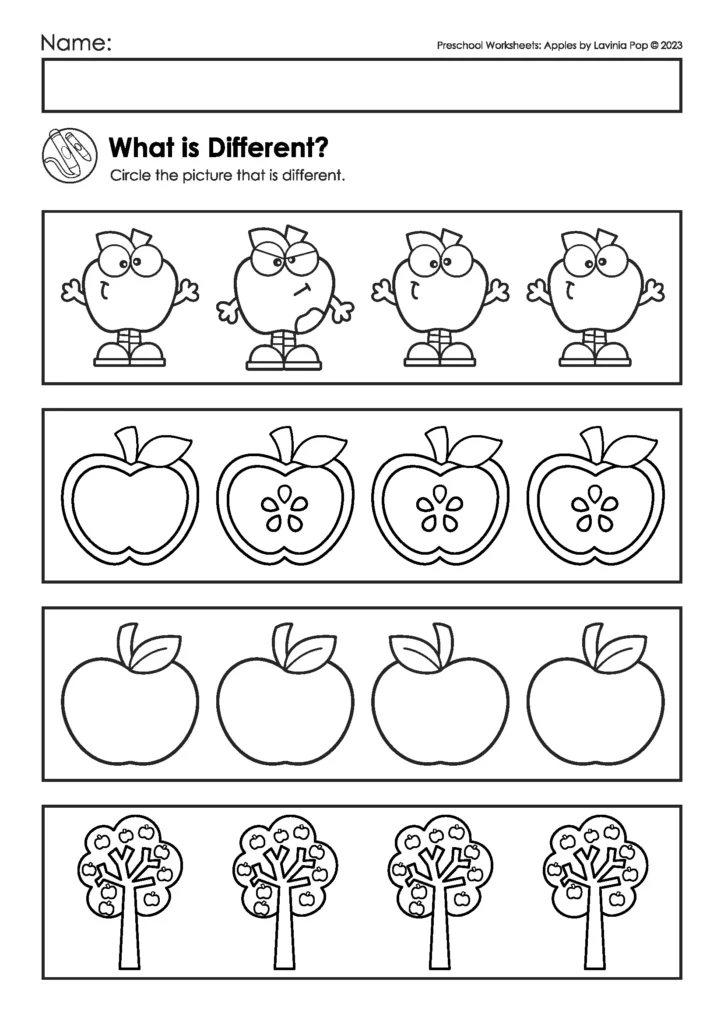
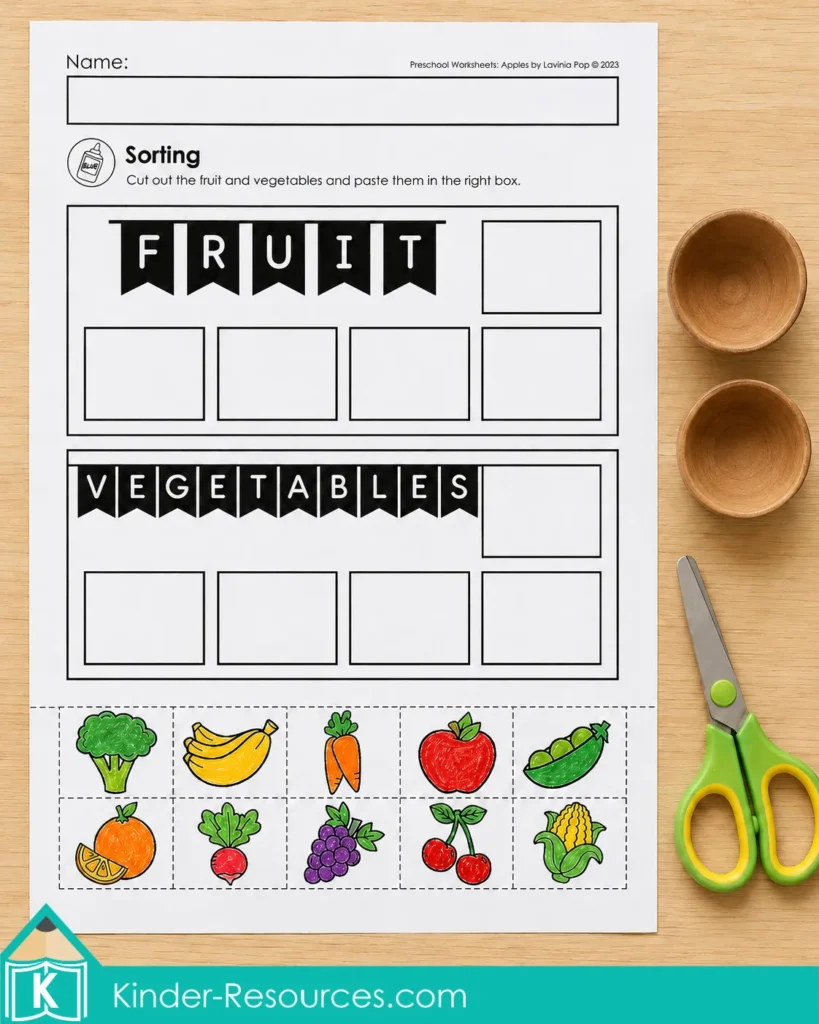
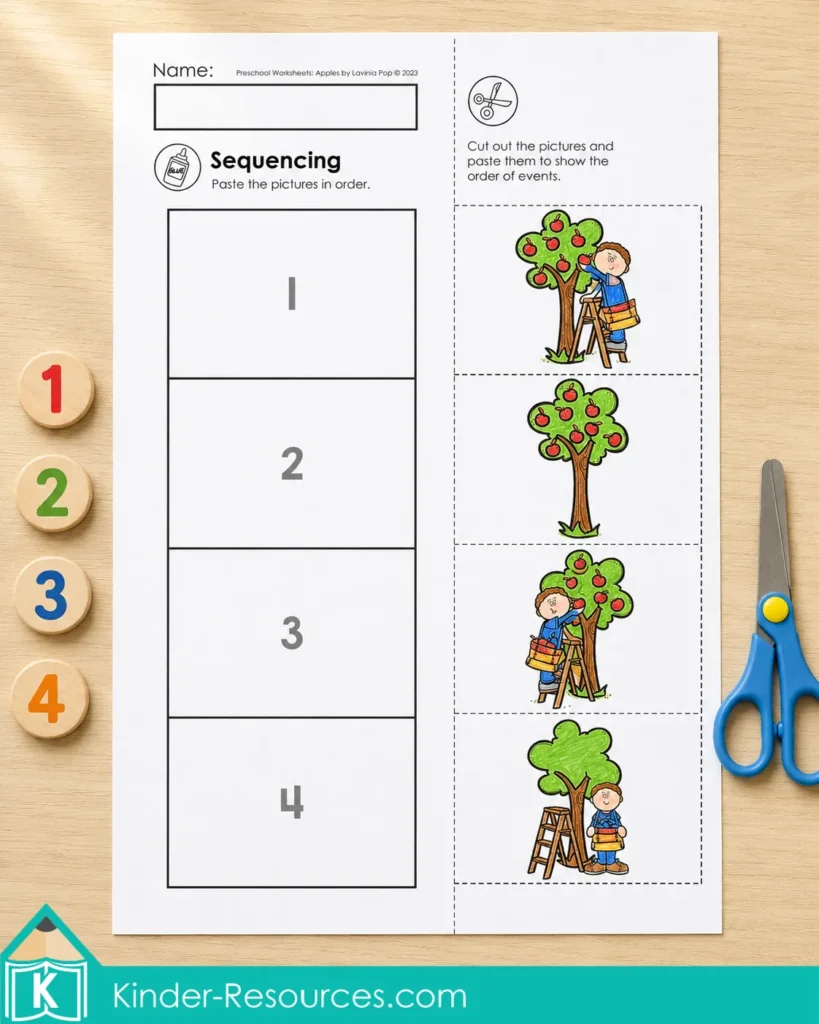
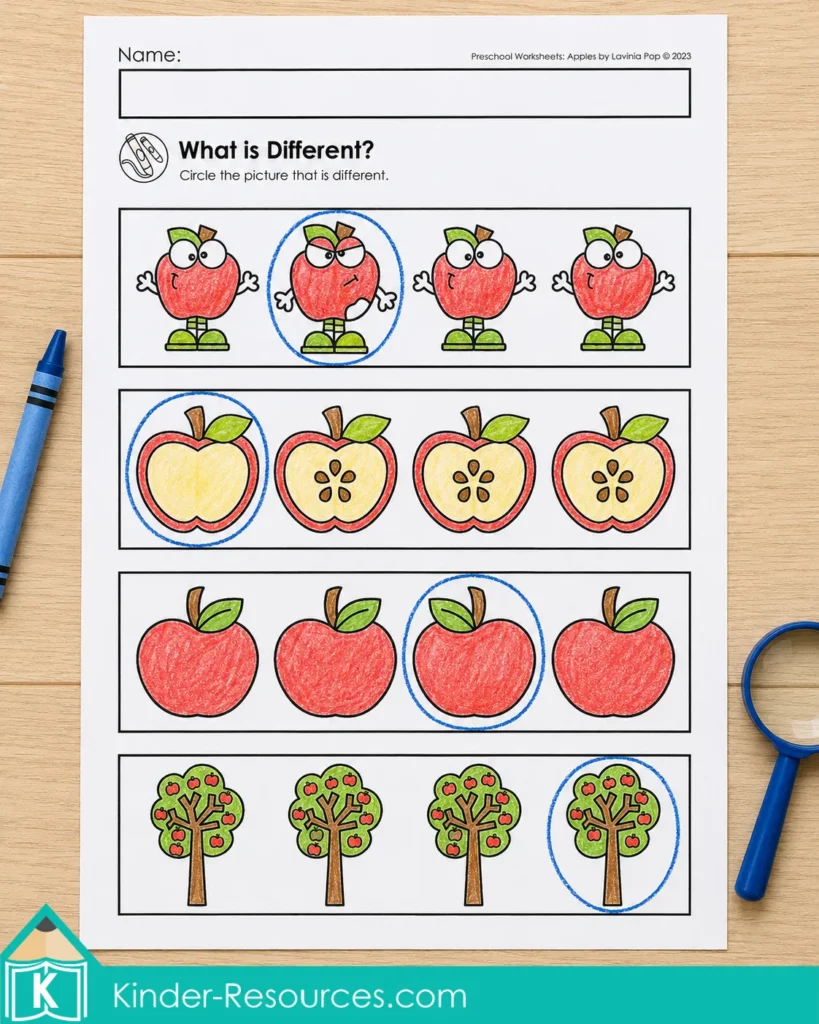
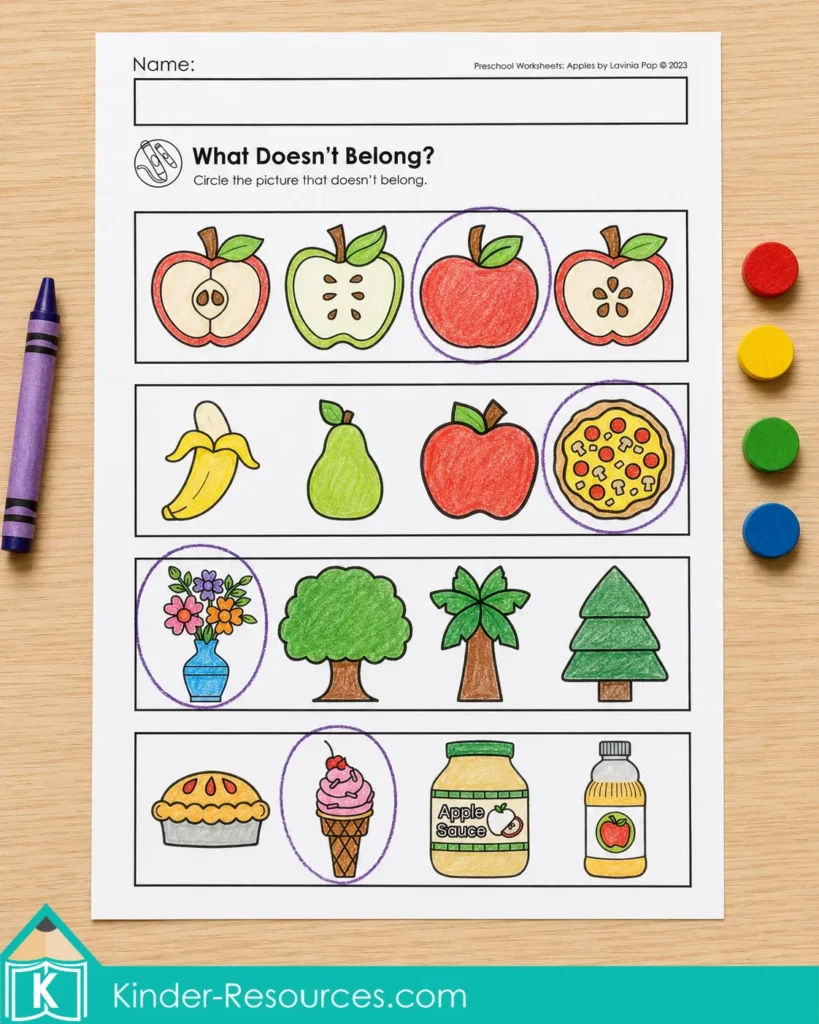
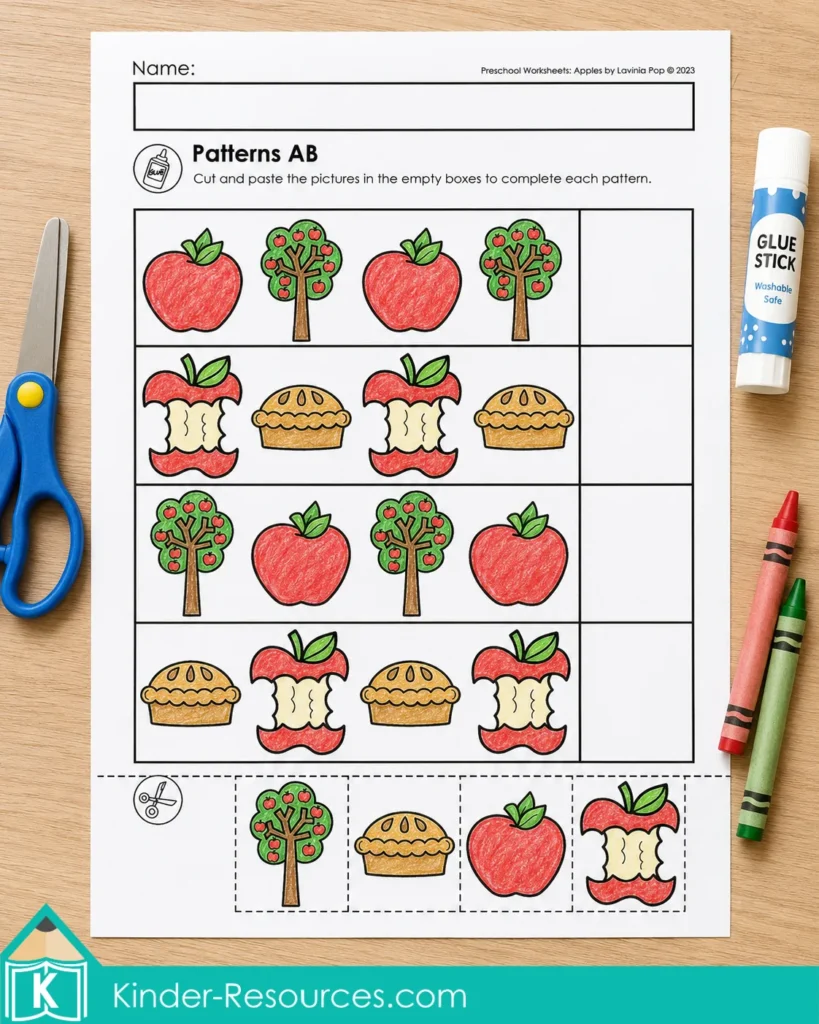
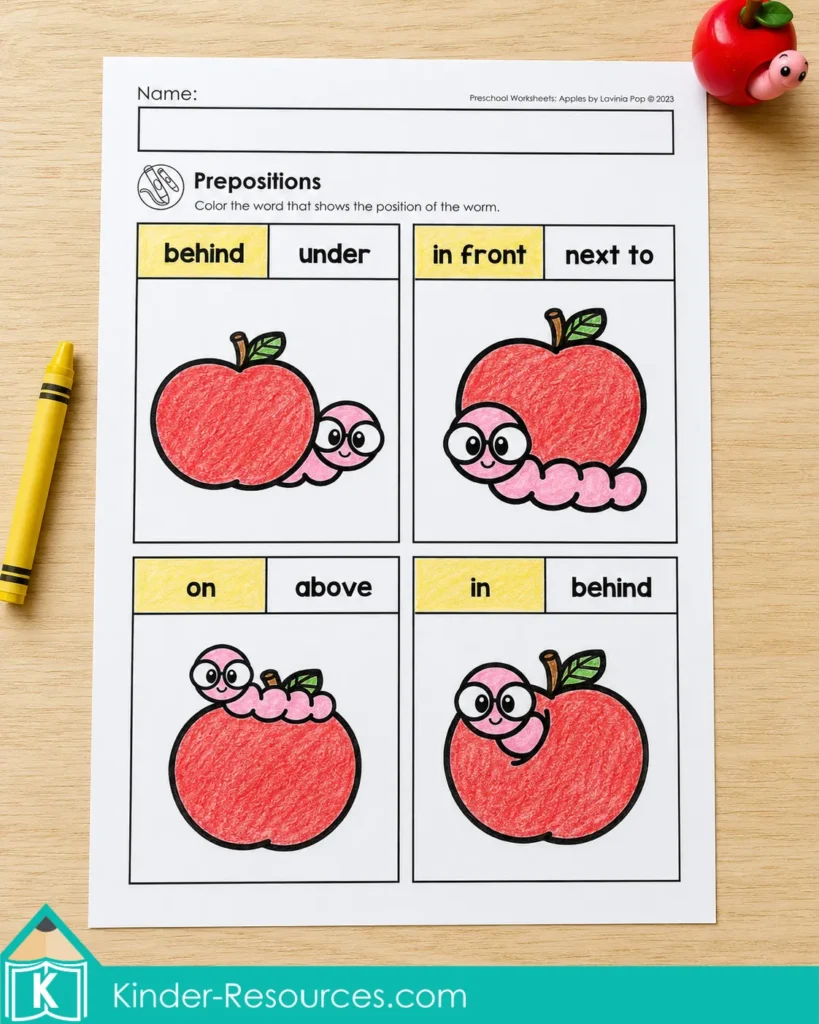
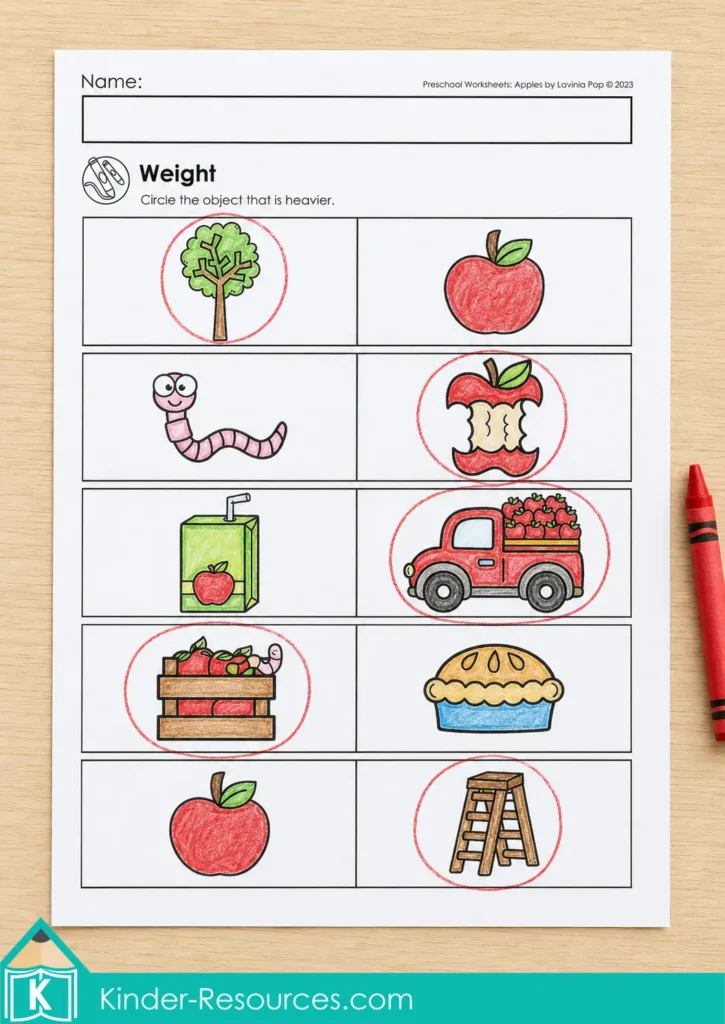
Children can sort pictures into fruit and vegetable groups, sequence events, identify the picture that is different, find what does not belong, complete patterns, compare height and weight, and practice positional vocabulary.
The shape activity encourages children to recognize familiar shapes within an apple-themed page.
These activities strengthen observation, comparison, categorization, and visual-discrimination skills. They can also encourage conversation. Instead of asking only for an answer, invite children to explain how they know.
Easy Ways to Use These Preschool Apple Worksheets
You do not need to complete every page or use the resource in order. Choose the activities that match your children’s current skills and your teaching goals.
Here are a few ways to use the collection:
- Add selected pages to an apple-themed learning center.
- Use one page during a teacher-led small group.
- Provide a tracing or coloring page for morning work.
- Place cut-and-paste activities in a fine-motor center.
- Use the life-cycle reader during a science lesson.
- Send a small selection home for optional fall practice.
- Place reusable pages in dry-erase sleeves.
- Pair counting pages with counters, buttons, play dough, or pom-poms.
- Display completed pages as part of a fall classroom board.
For younger children, concentrate on coloring, tracing, matching, and simple counting. For children who are ready for a greater challenge, introduce phonics, sight words, sequencing, graphing, and comprehension.
Preparing the Activities
Most activities require only basic classroom materials:
- Crayons or colored pencils
- Pencils
- Child-safe scissors
- Glue sticks
- Colored paper
- Small counting manipulatives
- Dry-erase sleeves or laminating supplies for reusable pages
Print only the pages you plan to use. This makes preparation more manageable and allows you to adjust the collection for different children or groups.
Always supervise cutting activities and select manipulatives that are appropriate for the children’s ages and developmental levels.
Purchase the Preschool Apple Worksheets
These preschool apple worksheets are designed to support a variety of early skills through one cheerful fall theme. Children can practice pencil control, letters, sounds, early words, counting, shapes, sorting, sequencing, and science concepts while working with familiar apple pictures.
Whether you are planning a week of apple activities, preparing fall learning centers, or looking for printable practice pages, you can choose the activities that work best for your children.
You can purchase the complete apple pack at the links below:

Happy Teaching! 😊
You Might Also Like