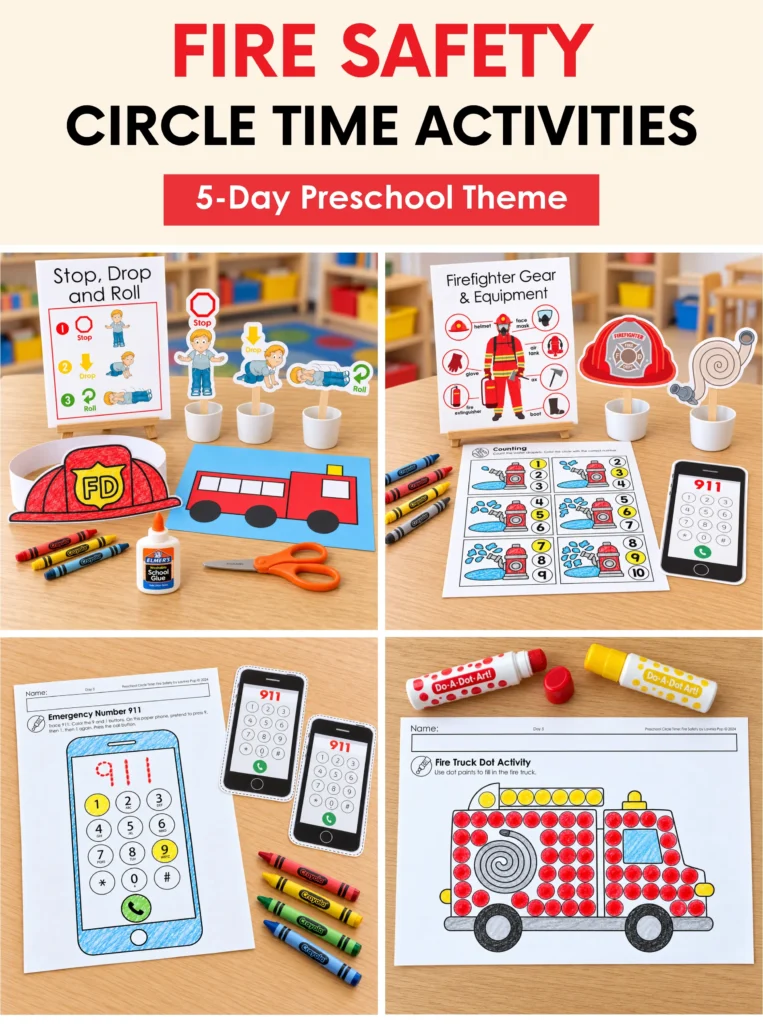
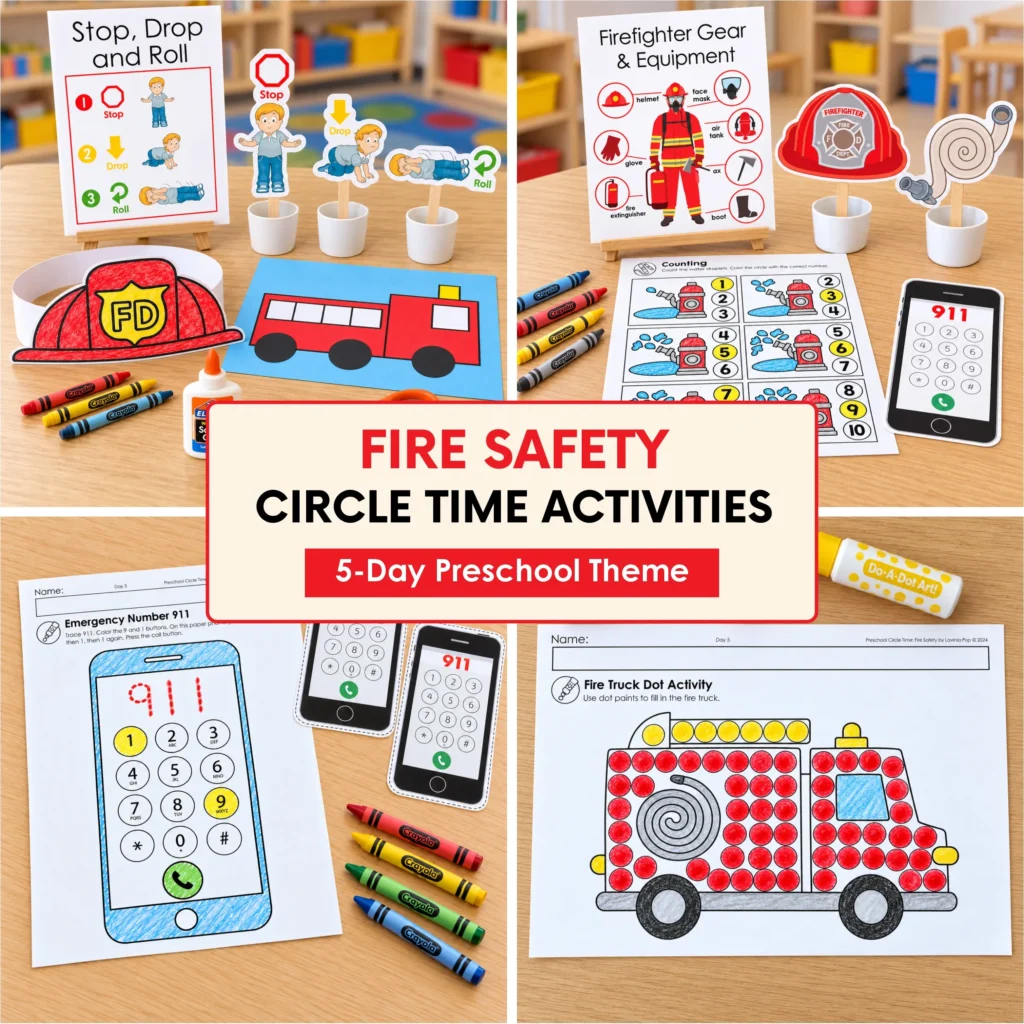
Fire safety circle time activities give preschool and kindergarten children practical ways to learn important safety routines. Through stories, songs, picture prompts, and guided practice, children explore what to do when they hear a fire alarm, how firefighters help, and how to get help in an emergency.
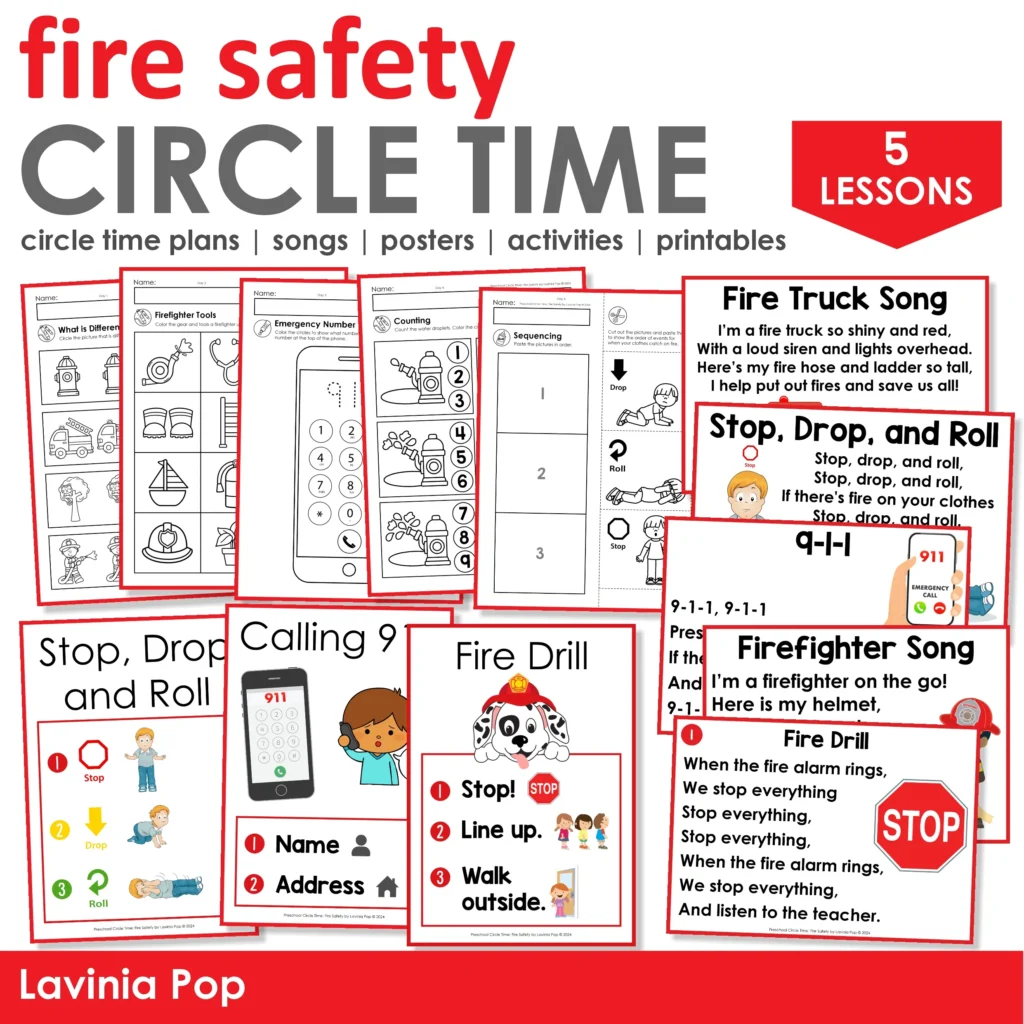
My Fire Safety Circle Time resource brings these lessons together in five days of activities for preschool and kindergarten. Each day includes a suggested read-aloud, a song with printable props, a group activity, and follow-up printables. Children practice fire drill routines, make firefighter helmets, explore calling 911, learn about Stop, Drop, and Roll, and create their own shape fire trucks.
A Week of Fire Safety Circle Time Activities
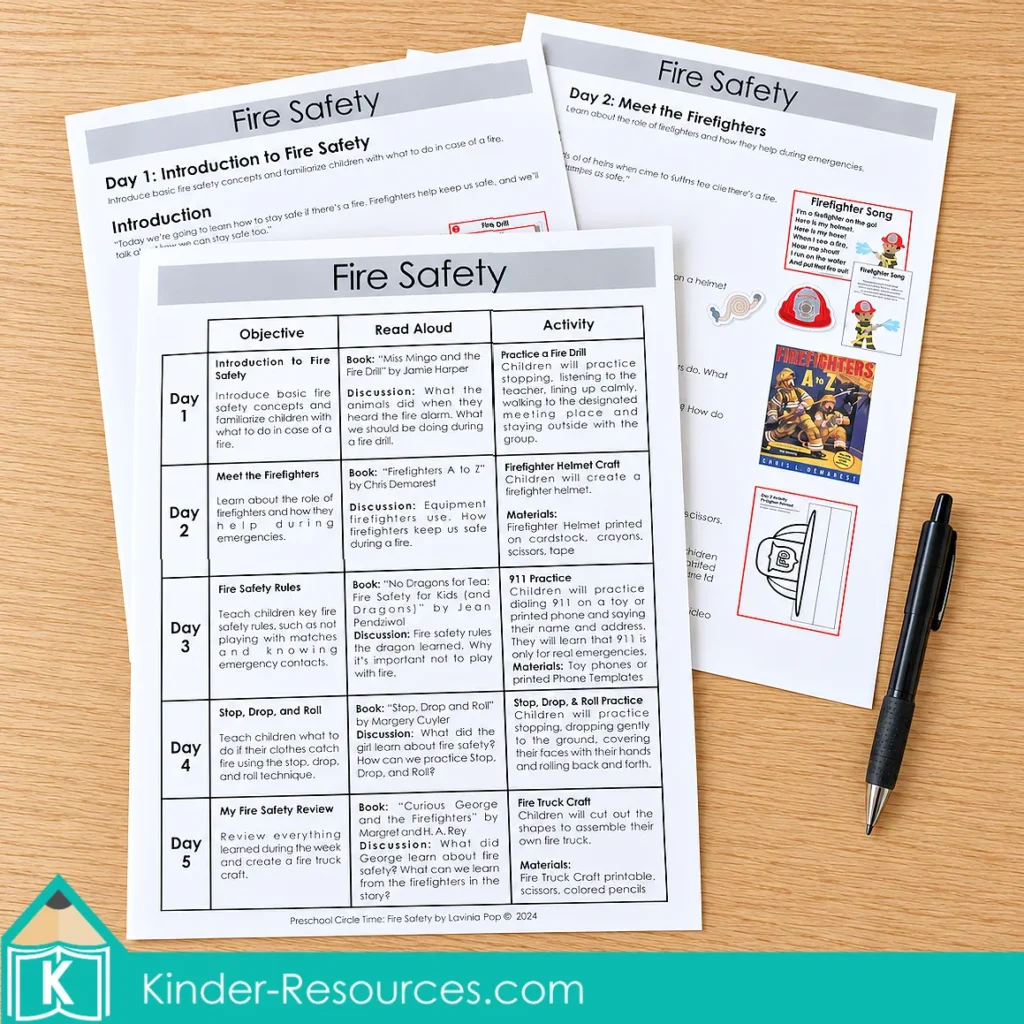
The five daily topics give you a simple starting point for planning your week:
- Day 1: Introduction to Fire Safety and Fire Drills
- Day 2: Meet the Firefighters
- Day 3: Fire Safety Rules and Calling 911
- Day 4: Stop, Drop, and Roll
- Day 5: Fire Trucks and Fire Safety Review
Use the stories, songs, and discussions during circle time, then bring out the crafts and worksheets during small groups, centers, or another part of your day. You can choose the follow-up activities that suit your children and spread the lessons across more than one week if needed.
Preparing Your Fire Safety Activities
Start with the weekly overview and daily lesson plans, then gather the books and print the materials you want to use. The song posters and picture props help you introduce each topic, while the activity pages give children opportunities to revisit it afterward.
For reusable props, print on cardstock, cut out the pictures, and attach them to craft sticks. Keep each day’s props together in a small cup or container so they are easy to find when it is time to sing.
You will also need crayons or markers, child-safe scissors, glue, tape, paper for the crafts, and dot markers for the fire truck dot activity. Prepare the printable phones for Day 3, and check your school’s evacuation procedures before planning the fire drill practice.
Day 1: Introduction to Fire Safety and Fire Drills
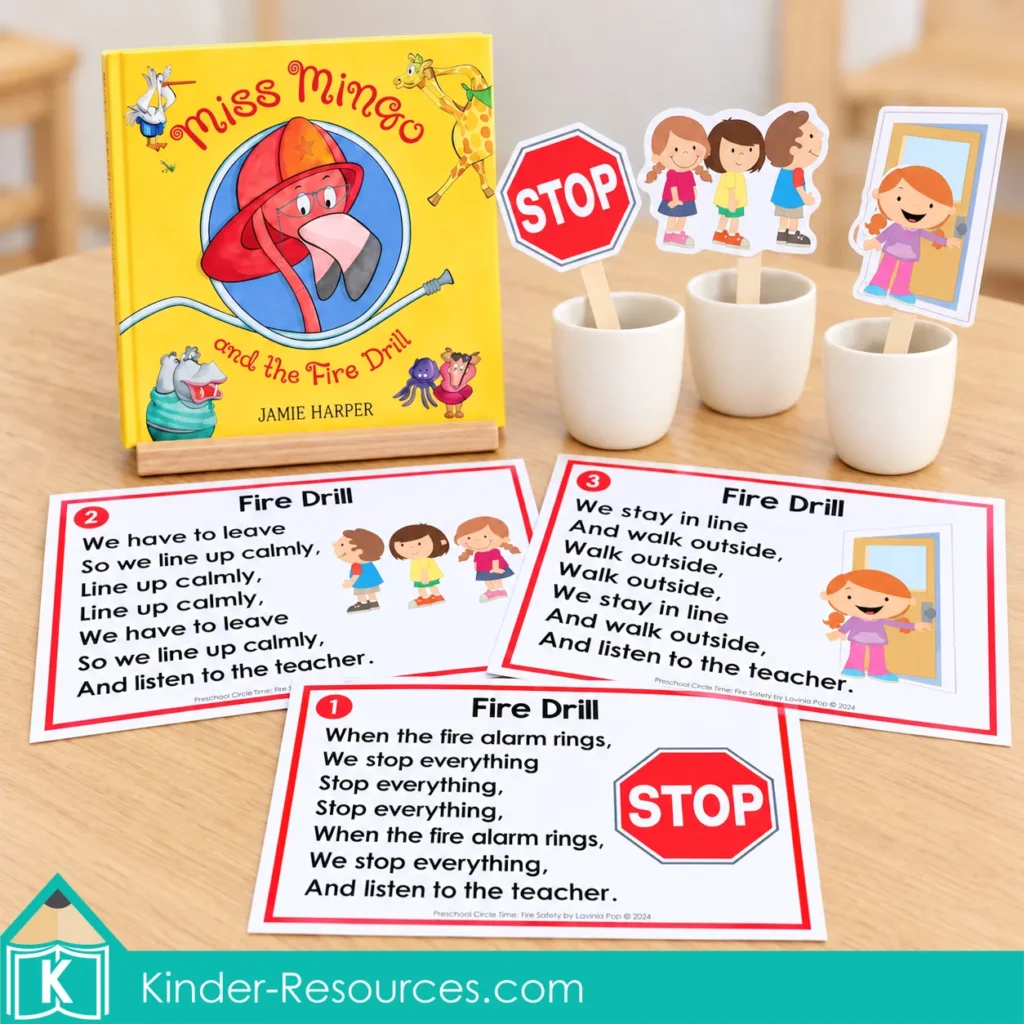
Begin the week with Miss Mingo and the Fire Drill by Jamie Harper. Use the story to introduce what a fire drill is and give children time to ask questions. Talk about the alarm as a signal to act, then explain the routine your class will follow.
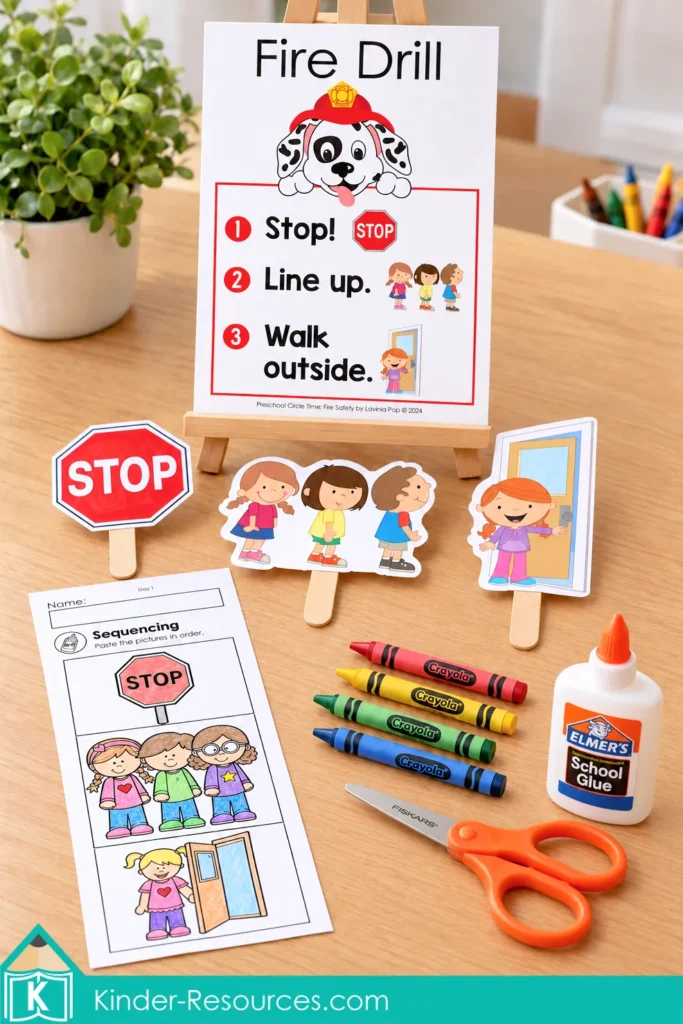
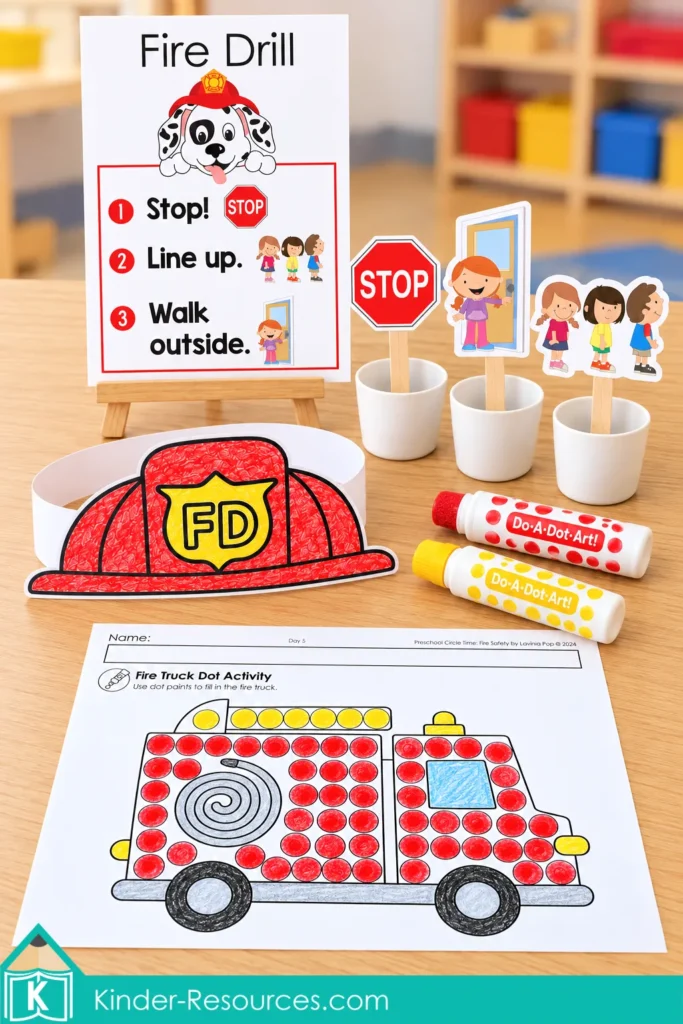
Next, sing “Fire Drill” to the tune of “The Wheels on the Bus.” Use the stop sign, lining-up, and walking-outside props to connect the words with familiar classroom actions. Display the Fire Drill poster as you talk through stopping, listening, lining up calmly, and following the teacher outside.
Practice your school’s evacuation routine and visit your designated meeting place. Teach children to stay low under smoke while moving toward a safe exit, and reinforce that once they are outside, they stay outside. After a practice drill, children return when the teacher says the drill is finished. In a real fire, firefighters determine when it is safe to reenter.
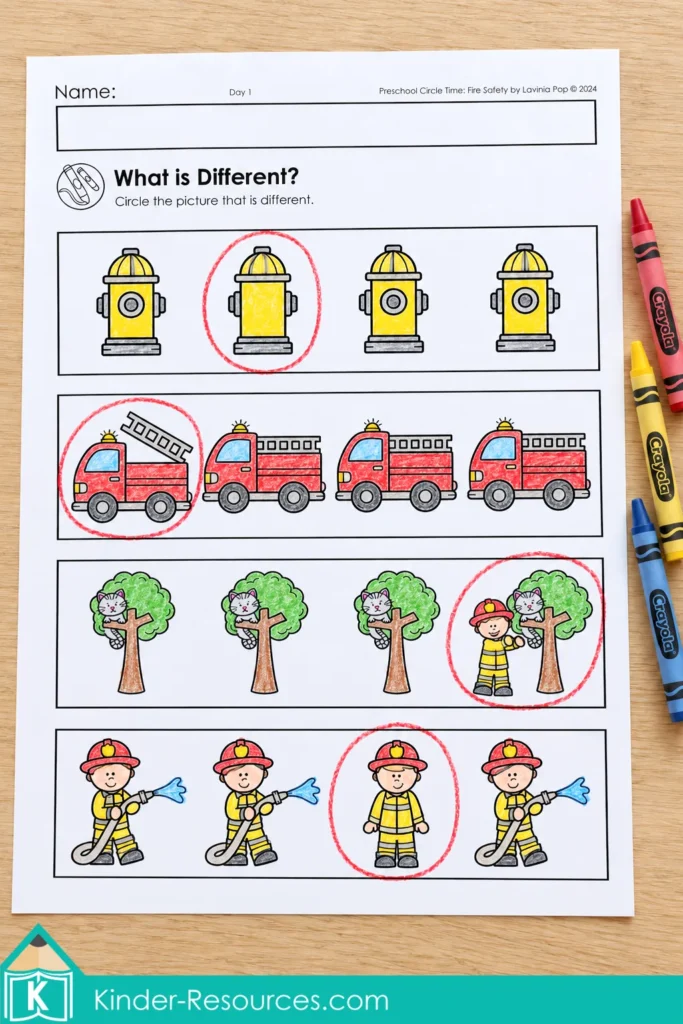
For a follow-up activity, use the fire drill sequencing worksheet. Children arrange the pictures in order and explain what happens first, next, and last. The What Is Different? worksheet adds a visual discrimination activity: children look closely at each row of pictures and identify the one that is different. Encourage them to describe the detail they noticed.
Day 2: Meet the Firefighters
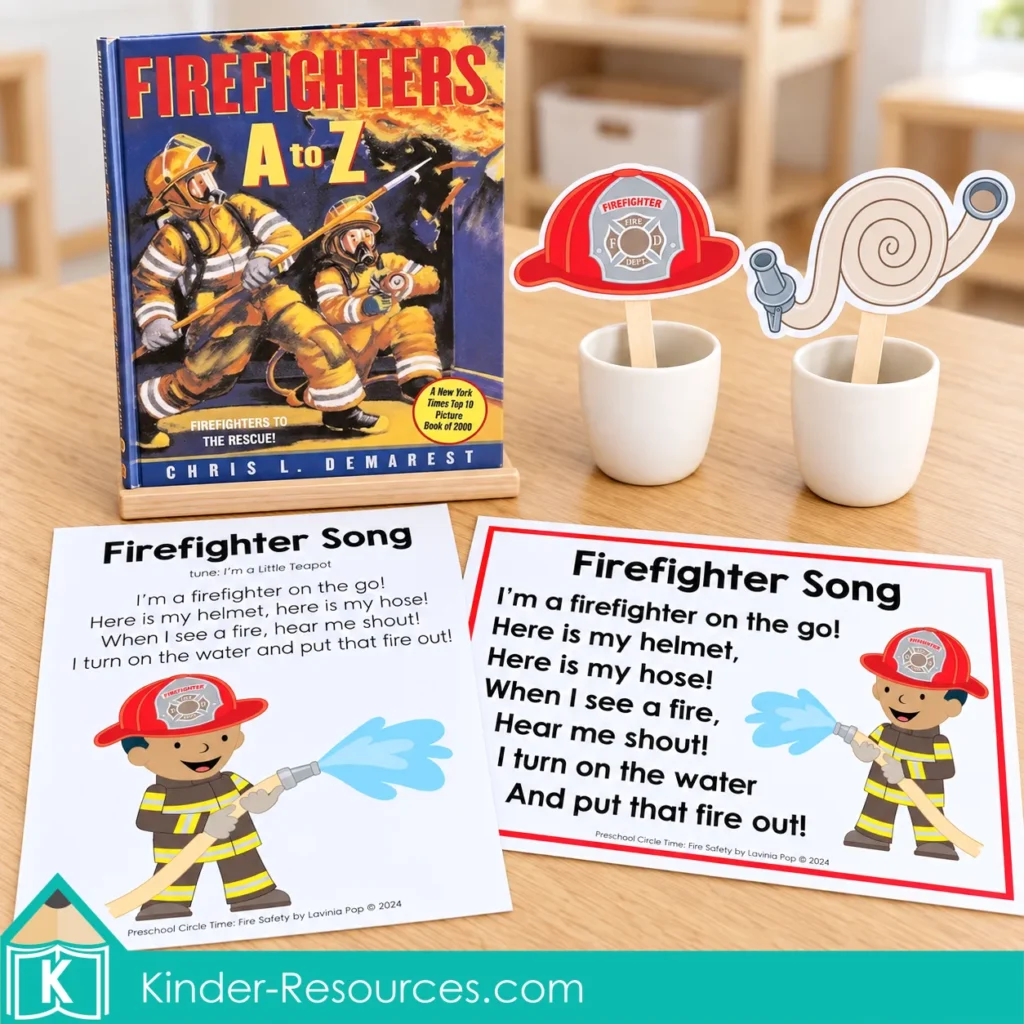
Day 2 introduces the people who help during a fire. Read Firefighters A to Z by Chris Demarest, pausing to notice the clothing, equipment, and vehicles in the illustrations. Invite children to share what they already know about firefighters and introduce new vocabulary as you explore the pictures together.
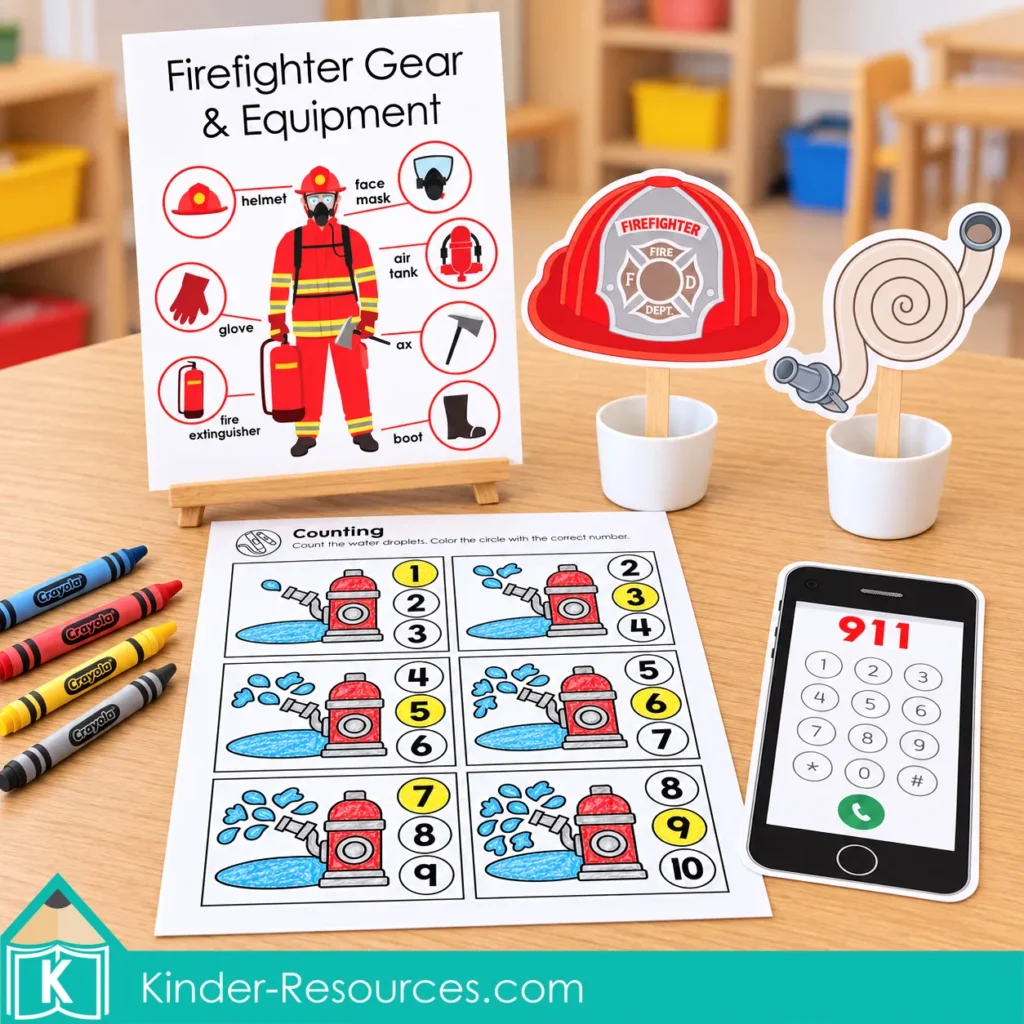
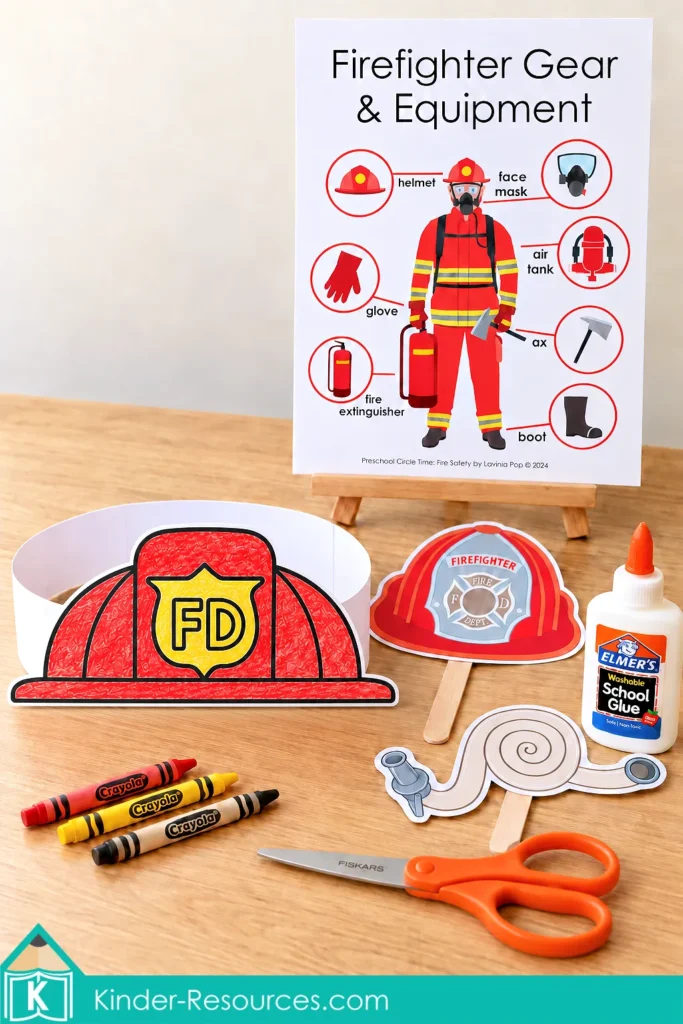
Sing “Firefighter Song” to the tune of “I’m a Little Teapot,” using the helmet and hose props. Then bring out the Firefighter Gear and Equipment poster. Point to the different items, name them together, and talk about how protective clothing and equipment help firefighters do their work.
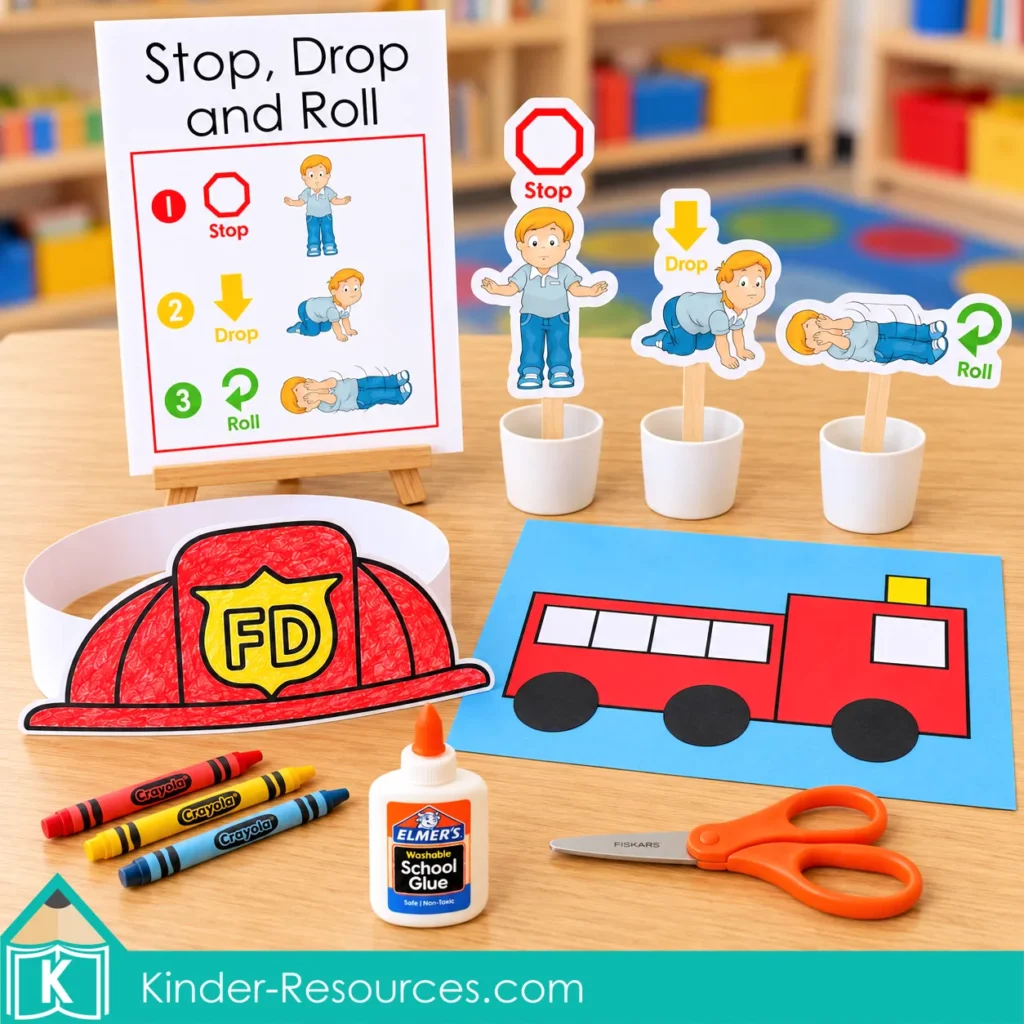
The firefighter helmet craft gives children a chance to make something they can wear. Children color the helmet, cut it out with support as needed, and attach it to a paper headband. Use the additional strips to adjust the fit, then invite children to name the piece of protective gear they have made.
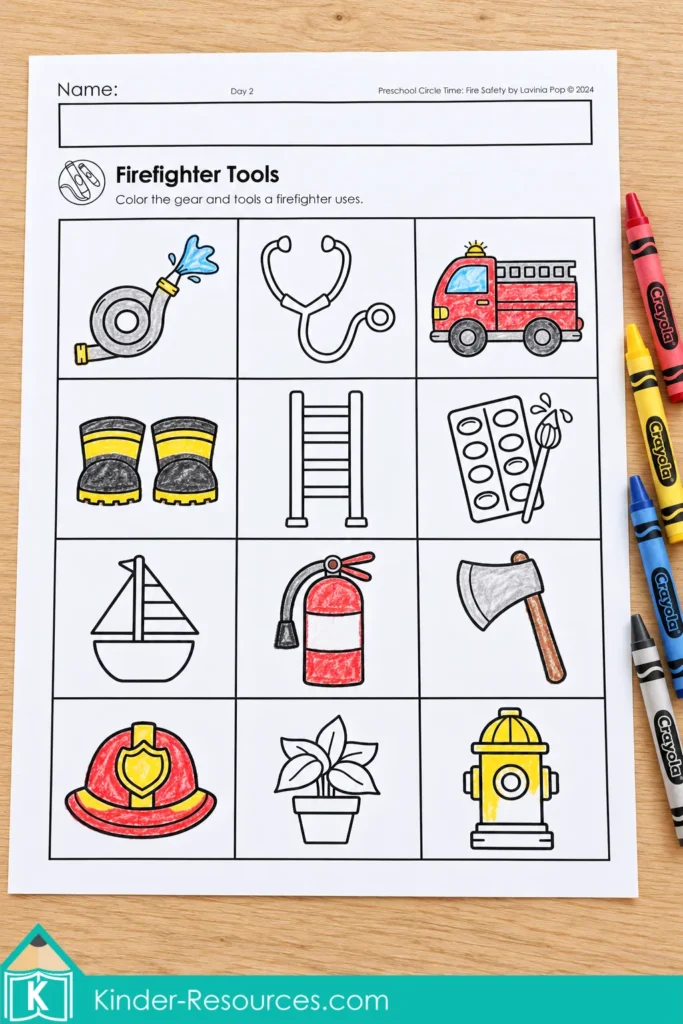
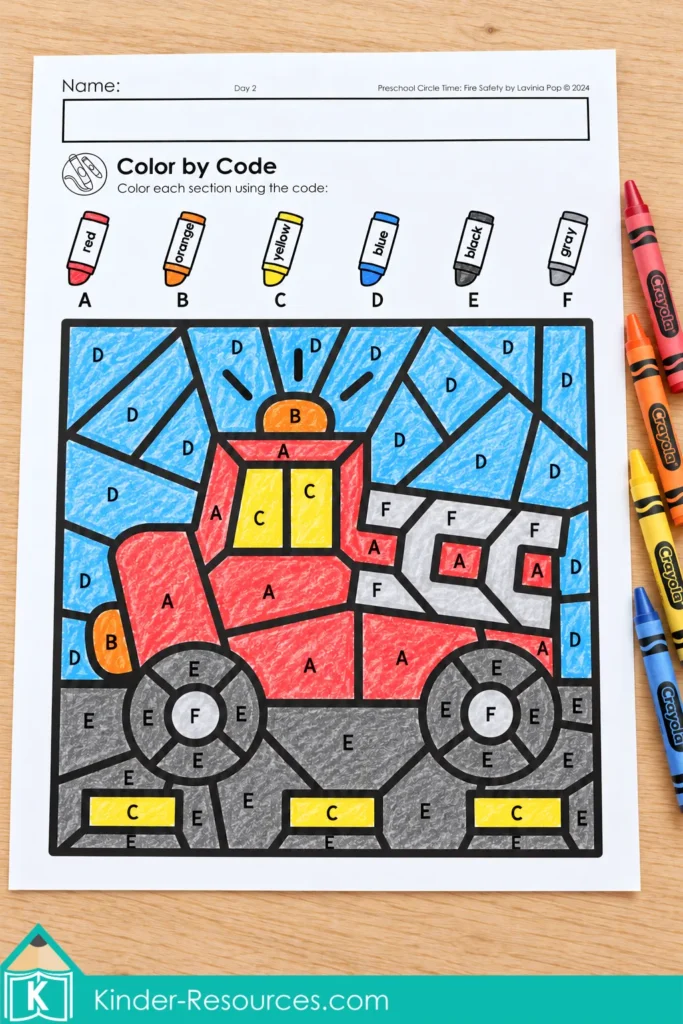
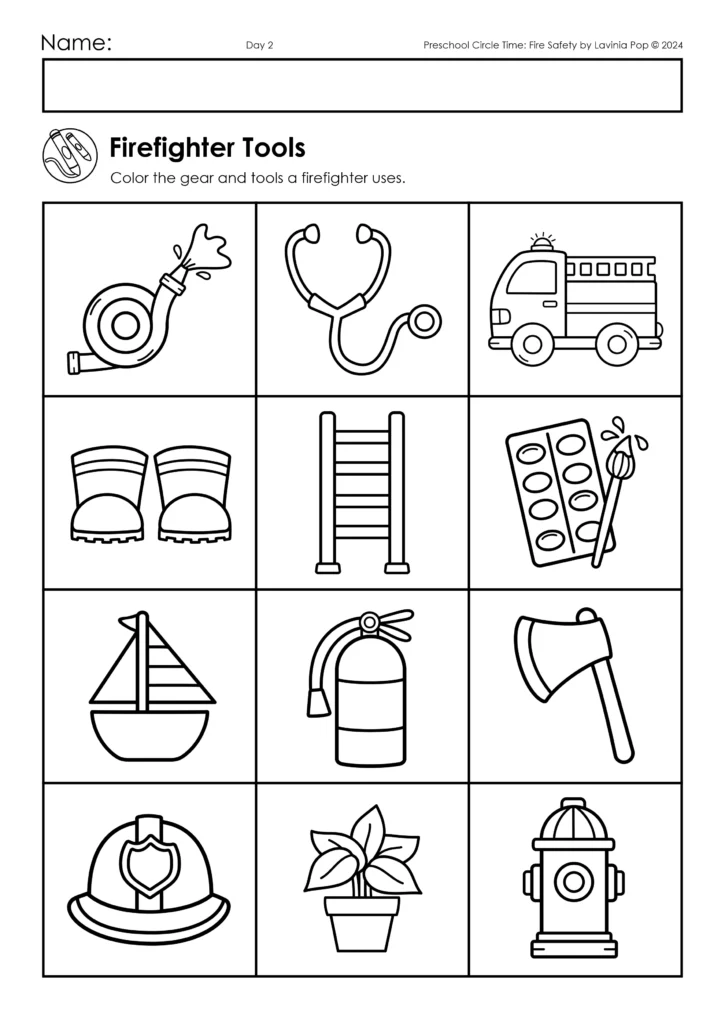
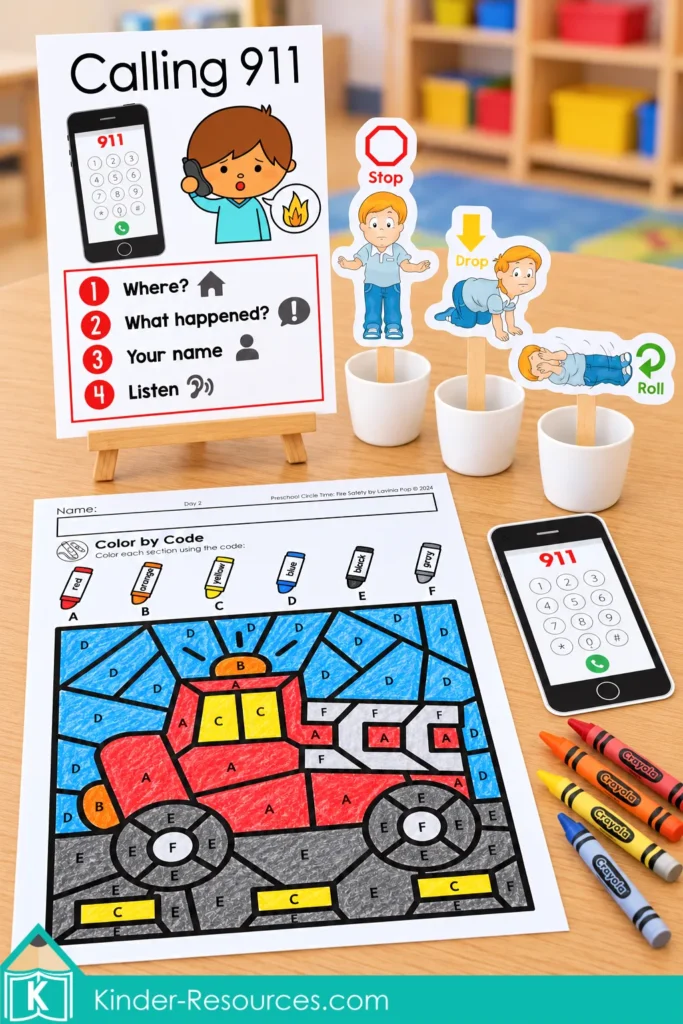
Continue the discussion with the Firefighter Tools worksheet, which asks children to identify and color equipment firefighters use. The Color by Code worksheet provides another follow-up option. Children match letters to the color key to complete a fire truck picture, combining letter recognition with careful coloring.
Day 3: Fire Safety Rules and Calling 911
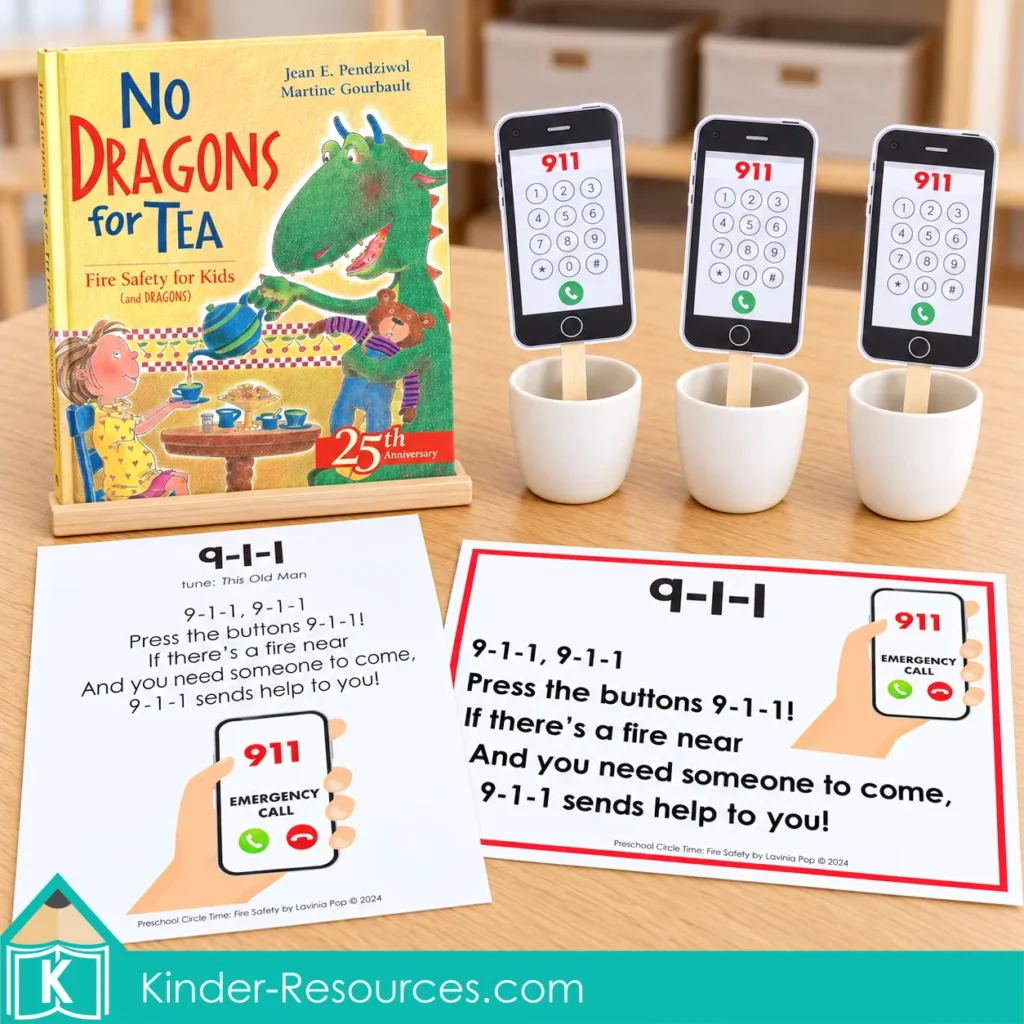
Read No Dragons for Tea: Fire Safety for Kids (and Dragons) by Jean E. Pendziwol to begin a conversation about safe choices. Review that children should leave matches and lighters alone and tell an adult if they find them. For a building fire, teach the order clearly: get outside to safety, stay outside, and then call 911 from a safe place.
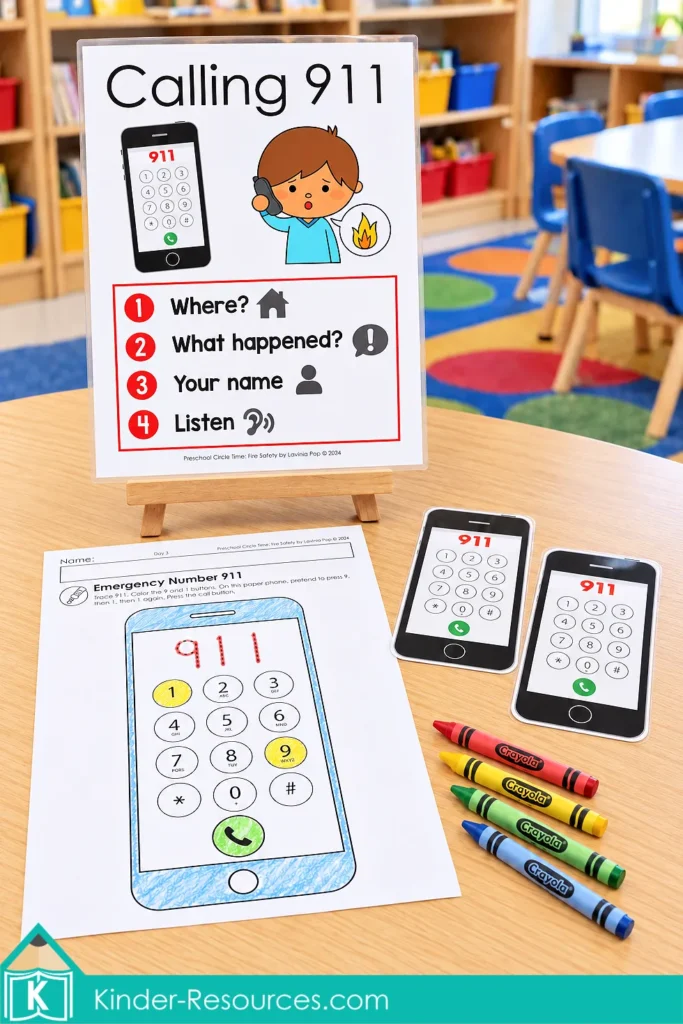
Introduce “9-1-1” to the tune of “This Old Man.” Use the phone props to help children remember the number, and explain that 911 is for real emergencies. The calling 911 poster provides four prompts for your discussion: Where? What happened? Your name. Listen. Explain that the location is where the emergency is happening. Model answering the operator’s questions, listening to instructions, and staying on the line until the operator says to hang up.
Give children the printable practice phones and take the role of the operator. They can practice pressing 9, 1, and 1, then answering a few simple questions. Keep all role-play on the paper phones or purpose-made toy phones that cannot place calls. Old mobile phones without an active service plan can still connect to 911.
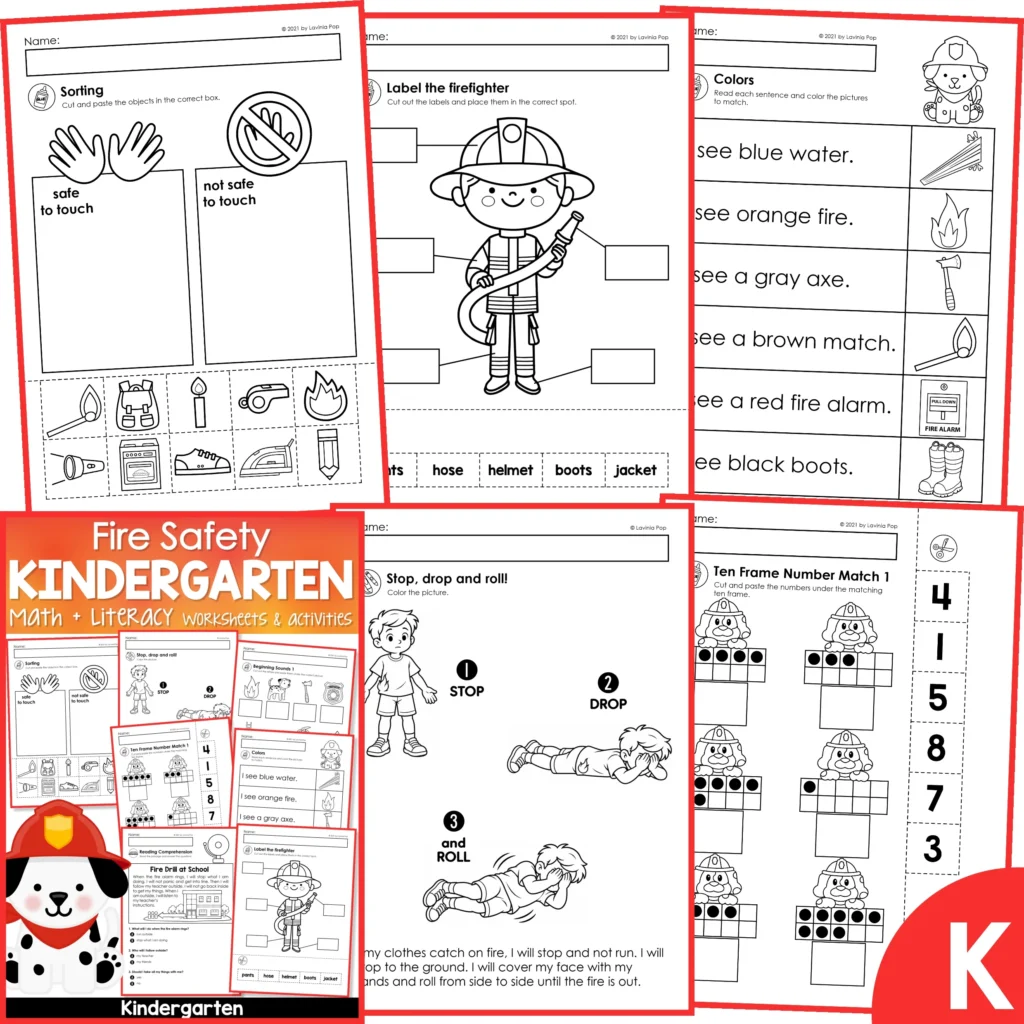
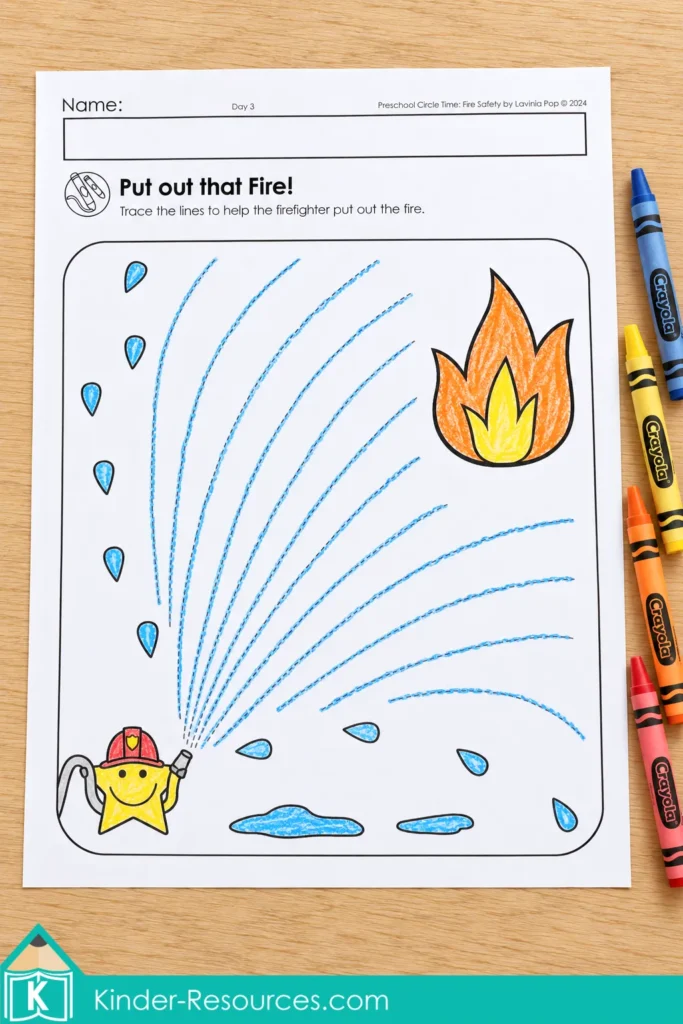
Continue these fire safety circle time activities with the Emergency Number 911 worksheet, which helps children revisit the number on paper. For additional fine motor practice, use Put Out That Fire!, a pre-writing activity with curved paths to trace. Children can follow each path with a finger before using a crayon or pencil. As you introduce the page, remind children that firefighters put out real fires; children’s job is to get to safety.
Day 4: Stop, Drop, and Roll
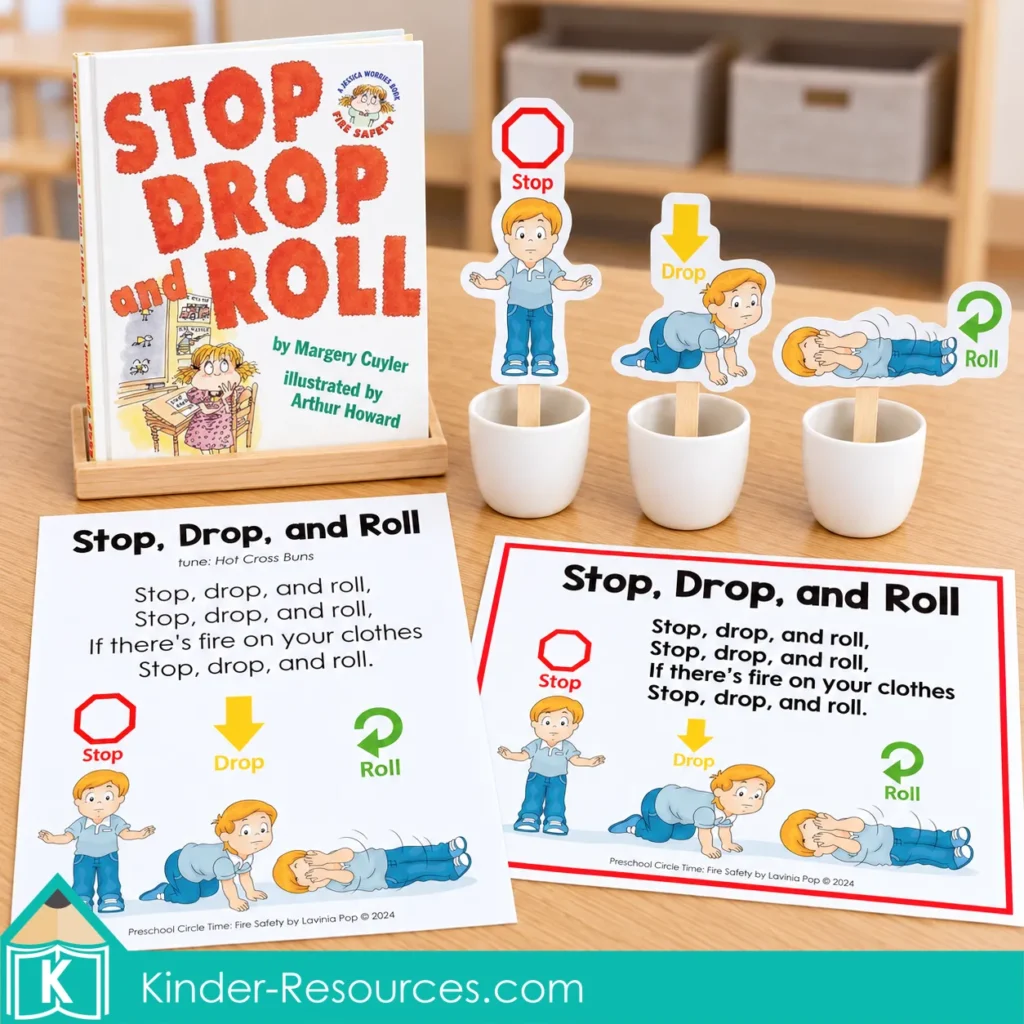
Begin with Stop, Drop, and Roll by Margery Cuyler. Use the story to introduce a specific safety rule: Stop, Drop, and Roll is what we do if our clothes catch fire. Explain that a fire in a building calls for getting outside to safety.
Display the Stop, Drop, and Roll poster, and model the movements slowly. Stop moving, drop to the ground, cover the face with both hands, and roll back and forth until the flames are out. Give children space to practice the motions with adult guidance.
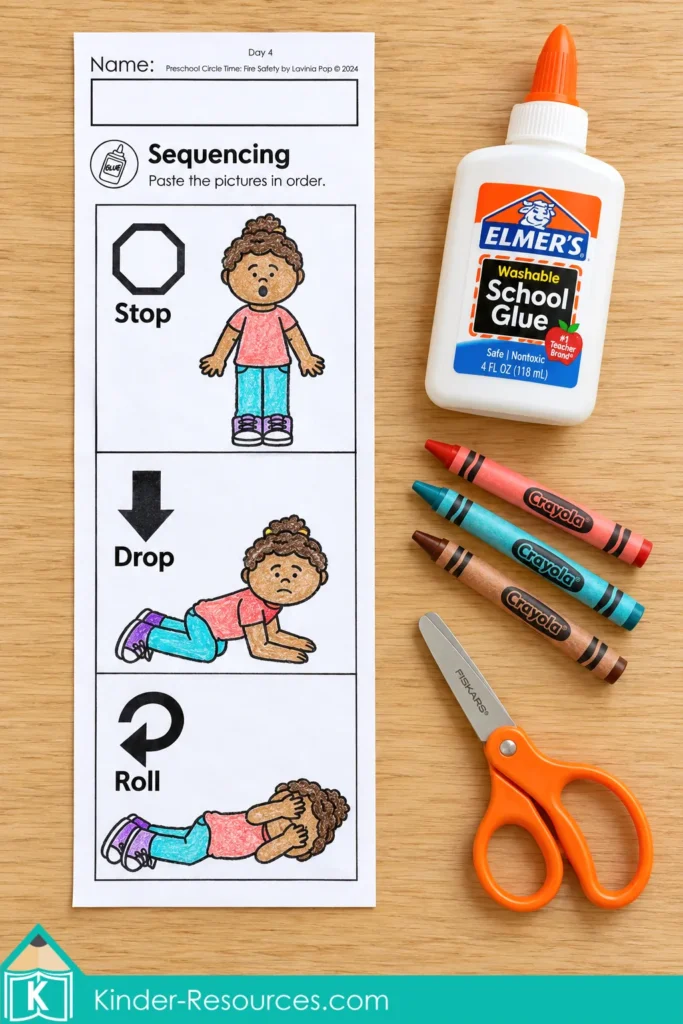
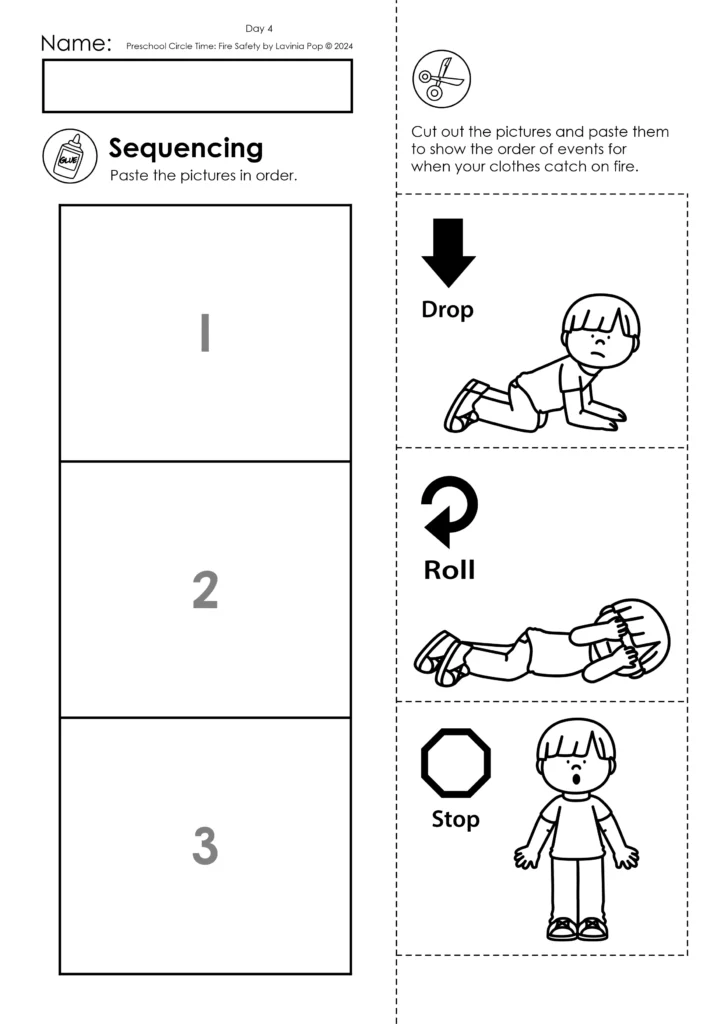
Sing “Stop, Drop, and Roll” to the tune of “Hot Cross Buns,” using the picture props to show the order. Then offer the sequencing worksheet. Children color, cut, and glue the three pictures in order before using them to retell the steps. Both boy and girl versions are included. Children who need help with cutting can work with prepared pieces or point to the pictures as they explain the sequence.
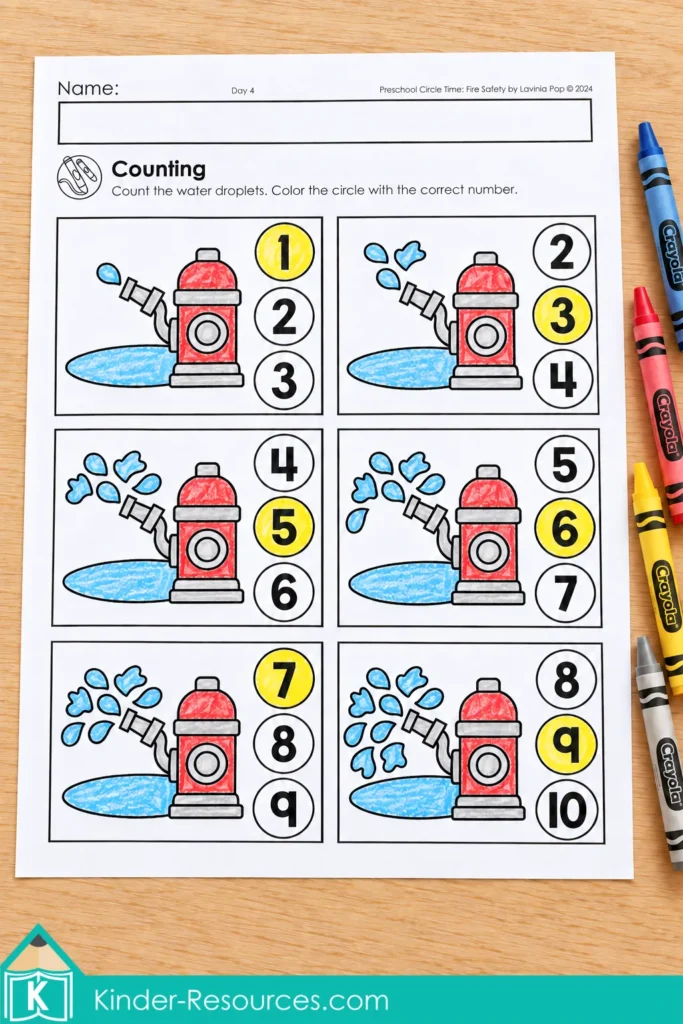
For a math follow-up, use the water drop counting worksheet. Children count the drops in each group and color the matching number. Encourage them to touch or point to each drop as they count, then check their answer before coloring.
Day 5: Fire Trucks and Fire Safety Review
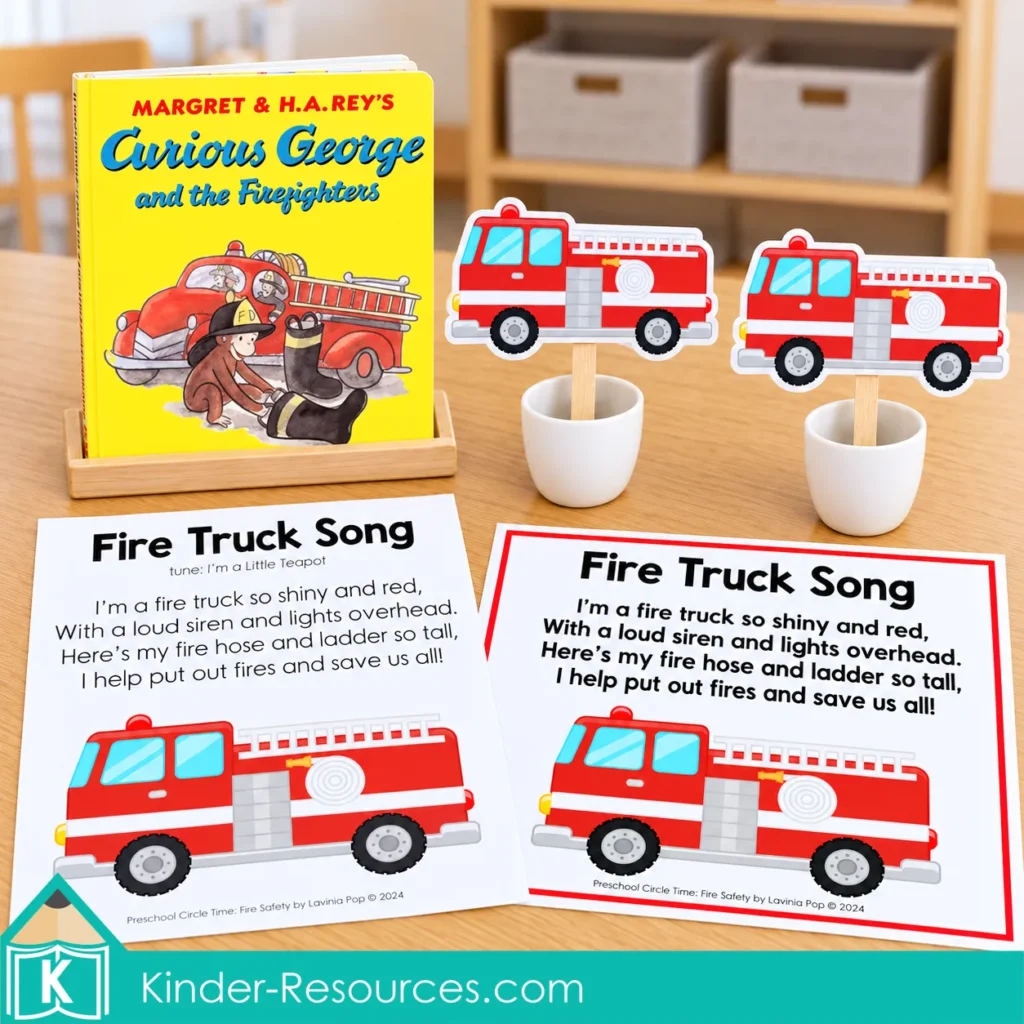
Finish the week with Curious George and the Firefighters. Invite children to notice the fire truck and talk about how firefighters use their vehicles and equipment to help people. Revisit familiar words from the week, such as helmet, hose, ladder, and firefighter.
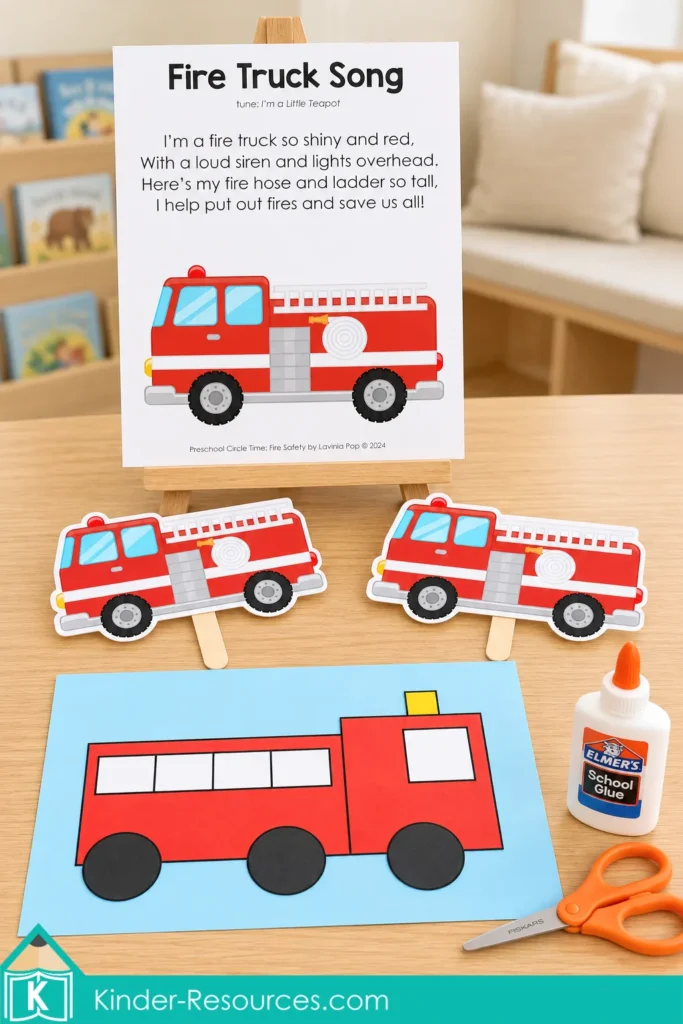
Sing “Fire Truck Song” to the tune of “I’m a Little Teapot,” using the fire truck props. Children can join in with simple actions as they sing about the siren, lights, hose, and ladder.
Next, introduce the shape fire truck craft. Look at the pieces together and identify the circles, squares, and rectangles before children begin assembling their trucks. The resource includes color and black-and-white versions, so you can use ready-colored pieces or let children color their own. Children arrange the shapes on a backing sheet and glue them in place.
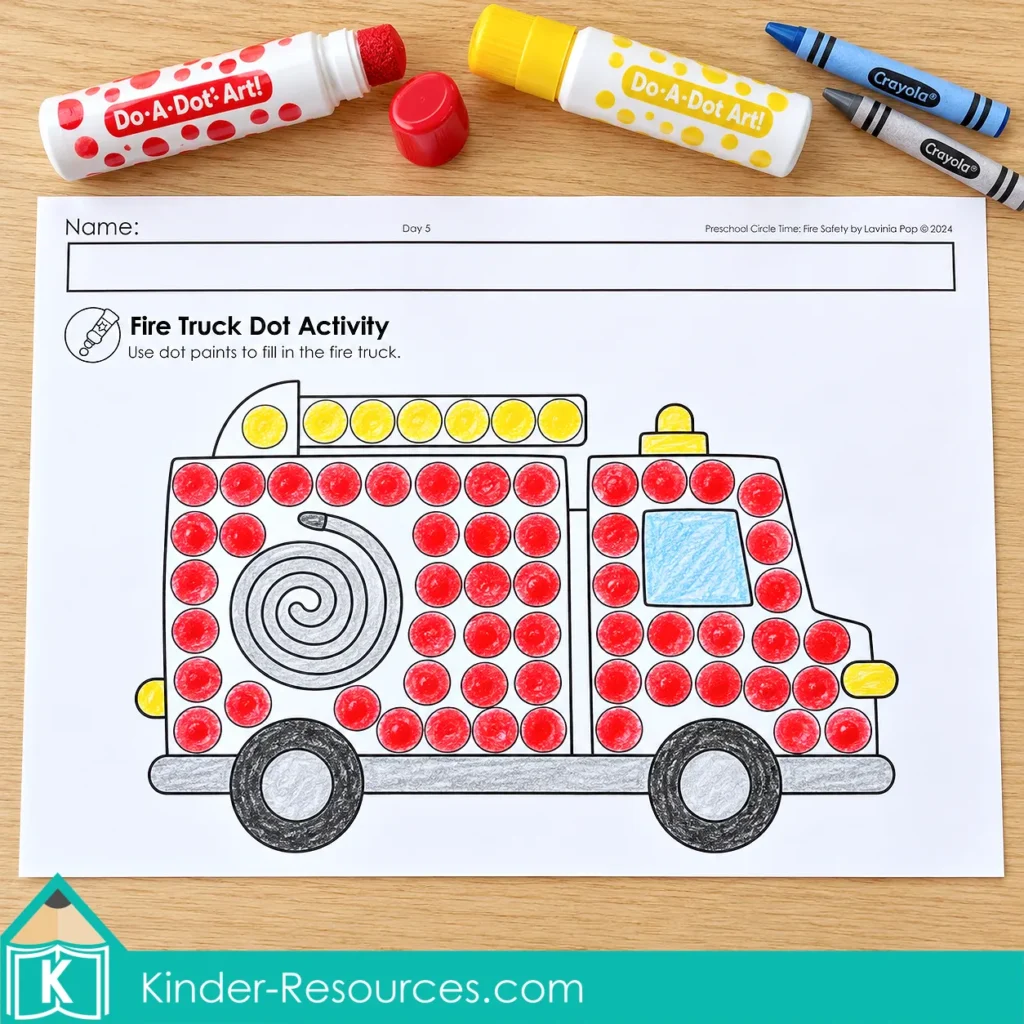
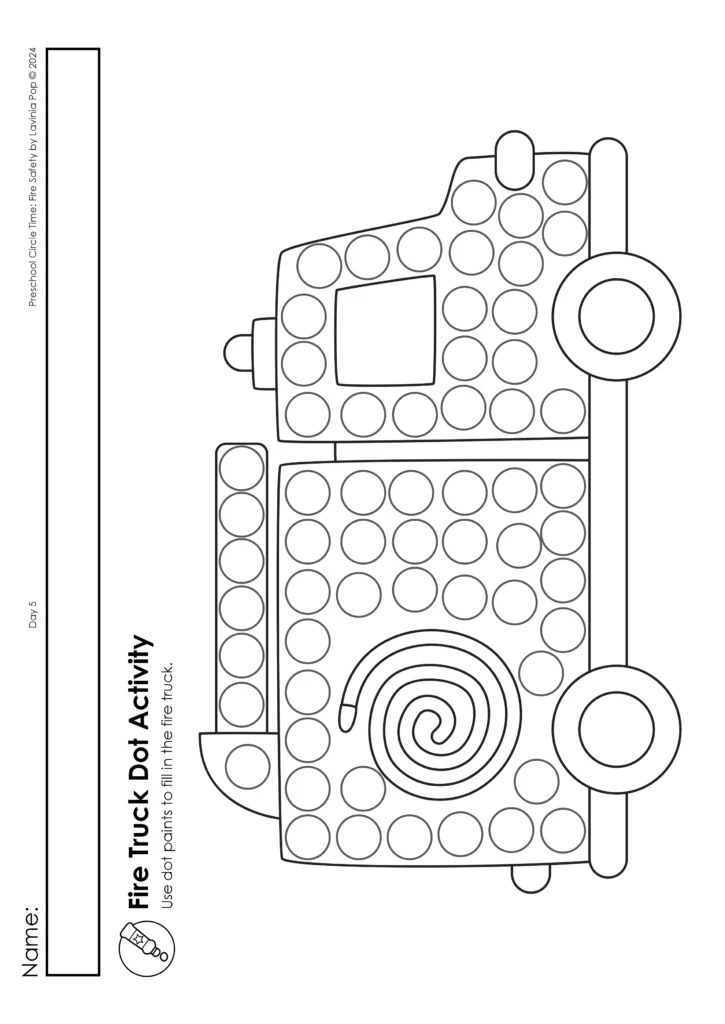
The fire truck dot activity offers another way to finish the theme. Children use dot markers to fill the circles in the picture, working carefully to place each dot. End with a short review using the week’s posters and props. Ask children to explain your fire drill routine, name someone who helps during a fire, describe what to do before calling about a building fire, and tell you when to Stop, Drop, and Roll.
Download a Free Fire Safety Circle Time Sample
Would you like to try the resource with your class? Download the free Fire Safety Circle Time sample below for a closer look at the printable materials.

What’s Included in the Complete Resource?
The Fire Safety Circle Time resource includes:
- A weekly overview and five daily lesson plans.
- Suggested read-alouds for each day.
- Five songs with printable song posters and picture props.
- Fire drill, firefighter equipment, calling 911, and Stop, Drop, and Roll posters.
- Fire drill and Stop, Drop, and Roll sequencing activities.
- A firefighter helmet craft and shape fire truck craft.
- Printable phones for guided emergency-call practice.
- Activities for visual discrimination, letter recognition, counting, tracing, coloring, and dot painting.
The suggested read-aloud books and classroom supplies shown in the photos are not included in the printable resource.
The materials give you a planned sequence for introducing fire safety while leaving room to choose activities that fit your class. Keep the posters and props accessible so you can revisit the safety messages after the week is finished.
Get the Complete Fire Safety Circle Time Resource
Plan a full week of fire safety circle time activities with read-aloud suggestions, songs, picture props, crafts, and printable activities for preschool and kindergarten. Get the complete resource below and choose the activities that work best for your class.


Happy Teaching! 😊
You Might Also Like