
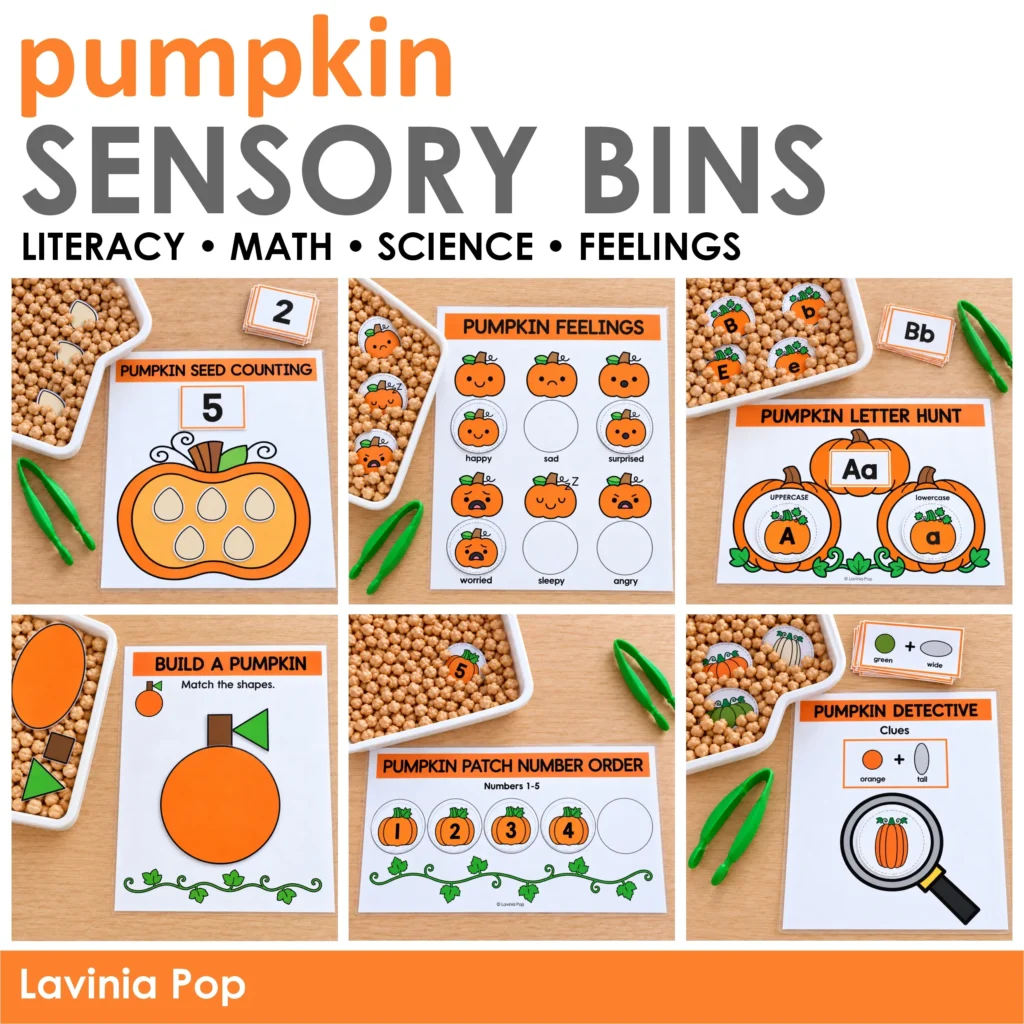
A pumpkin theme offers plenty of opportunities to count, match, build, and explore. These pumpkin sensory bin activities for preschool bring together ten printable activities covering early literacy, math, science, and feelings.
Children search for pieces in a sensory bin, then use what they find to complete a task. They might match uppercase and lowercase letters, find a rhyming partner, count seeds, or use picture clues to choose a pumpkin.
I created this collection for preschool and Pre-K centers, small groups, morning tubs, and learning at home. You can introduce one activity at a time and reuse the same bin and filler throughout your pumpkin theme.
Download Free Pumpkin Sensory Bin Activities for Preschool Sample Pages
Take a closer look inside the packet with these free pumpkin sensory bin activities for preschool sample pages.
The download includes selected pages for previewing the resource. The complete activities, matching pieces, Teacher Directions, illustrated How To Play cards, More Ways to Play cards, and storage labels are included in the full packet.

Setting Up Pumpkin Sensory Bin Activities for Preschool
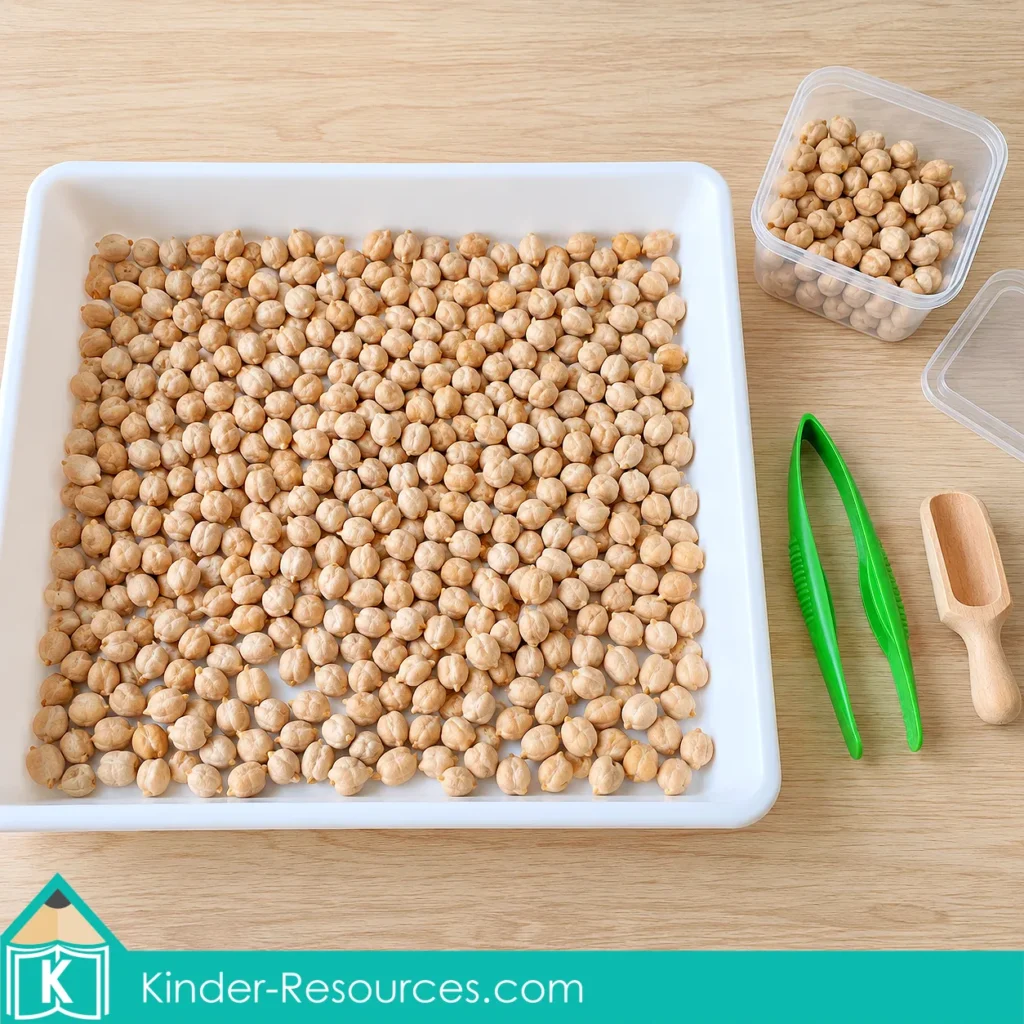
For this set, I suggest useing plain dried chickpeas in a shallow white tray. Their neutral color helps the orange pumpkins and colorful picture pieces stand out.
Add a shallow layer of filler and tuck the printable pieces into it. Leave some partly visible so children can see where to begin. Place the matching activity mat beside the bin, with any number cards, letter cards, or picture clues within reach.
Only include the pieces needed for the activity. For example, a few familiar letter pairs are enough to begin Pumpkin Letter Hunt. A smaller selection makes it easier to search, compare, and complete a match.
Children can collect the pieces with their fingers or use child-friendly tweezers or tongs. You can also offer the pieces in a shallow dish or directly on the tabletop when you want to focus on the matching or counting task.
Choose materials appropriate for your learners and supervise play. Small fillers and printable pieces are not suitable for children who mouth materials.
Pumpkin Sensory Bin Activities for Literacy
These pumpkin sensory bin activities for preschool give children hands-on practice with letter matching and rhyming.
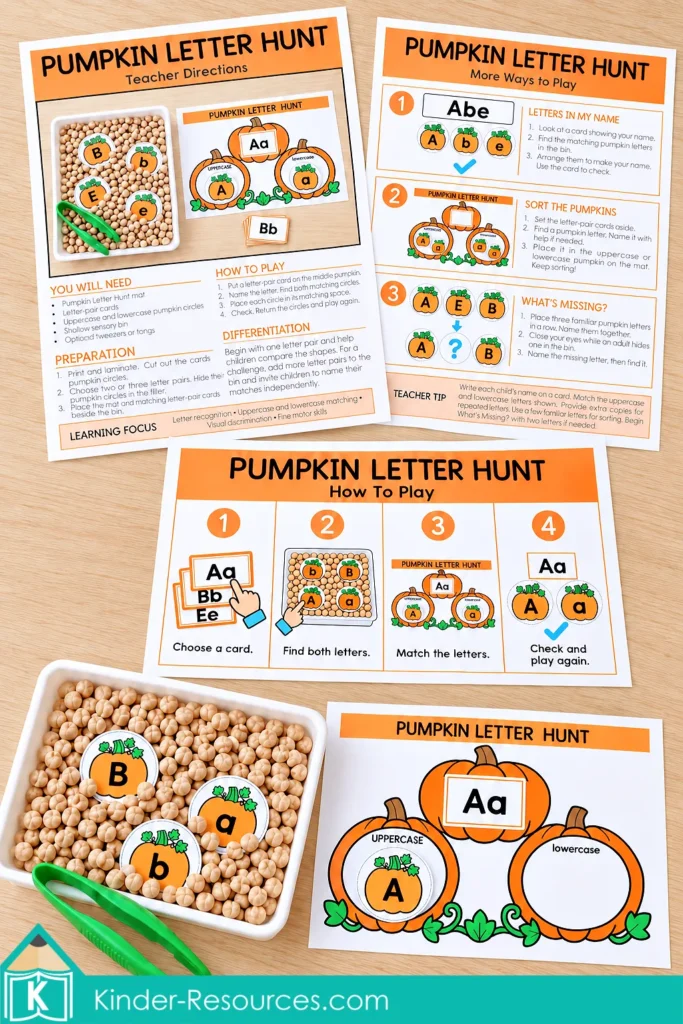
Pumpkin Letter Hunt
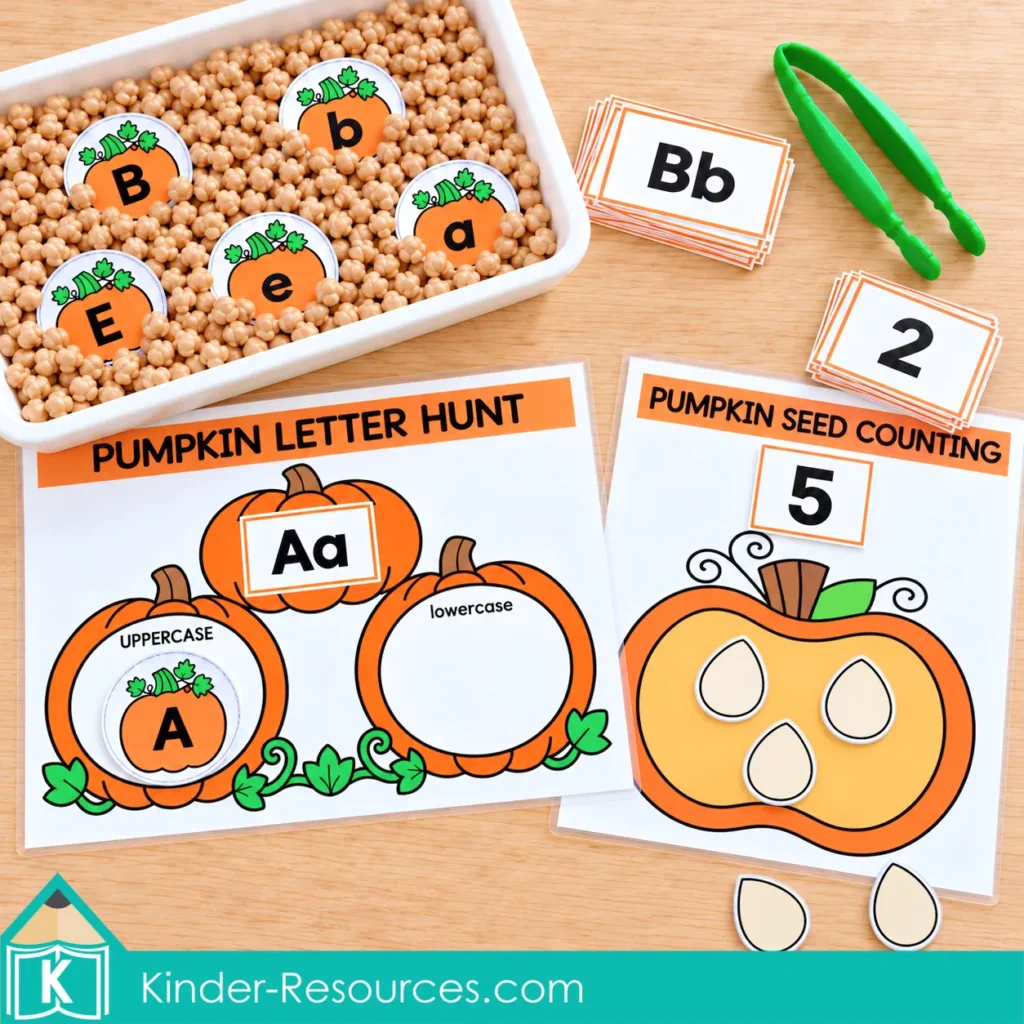
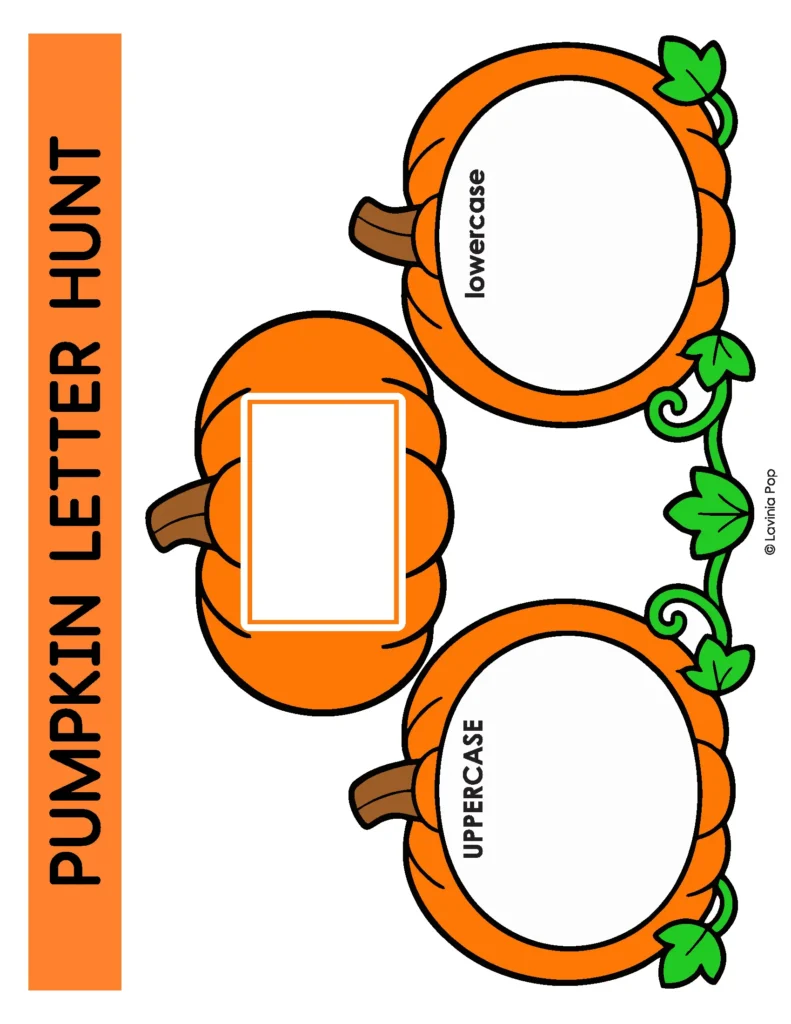
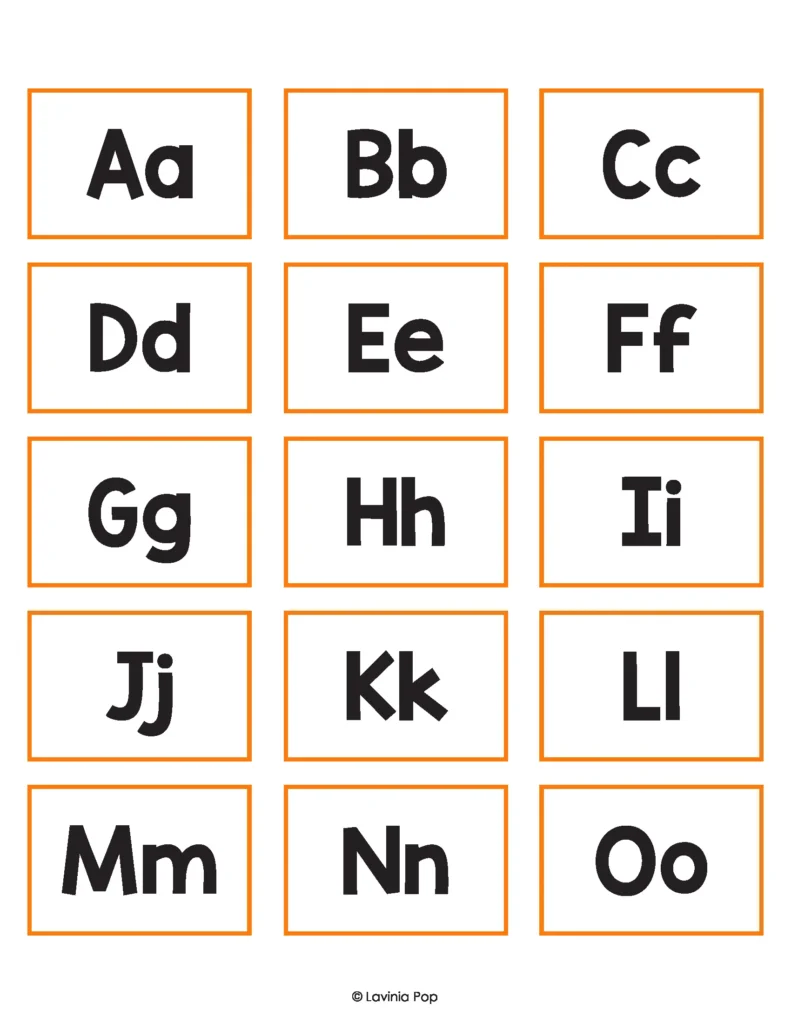
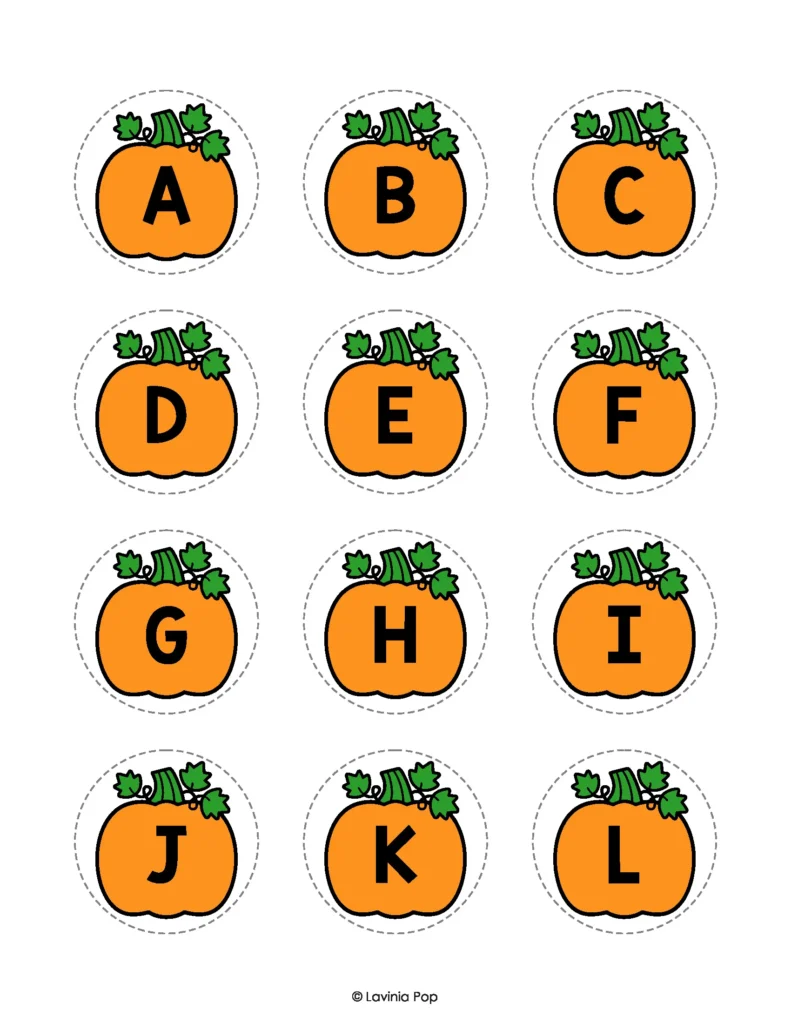
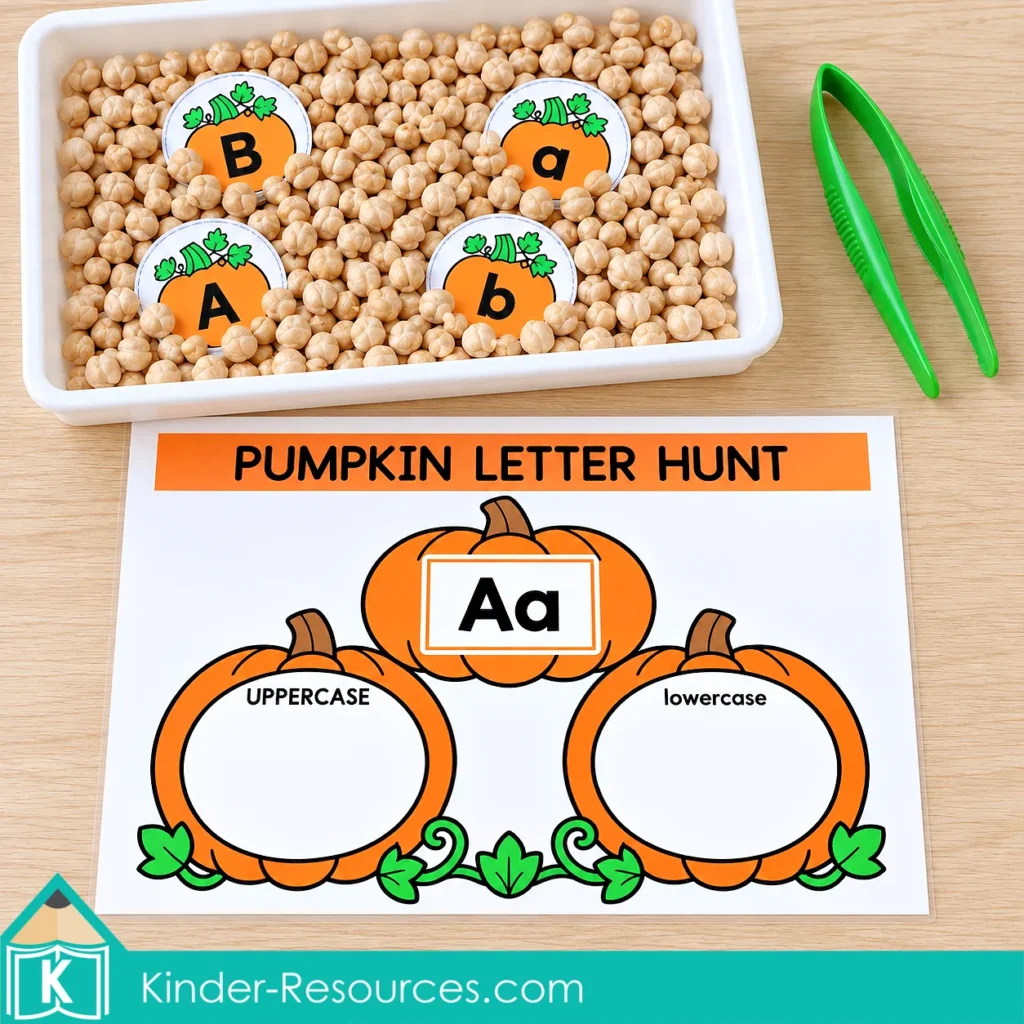
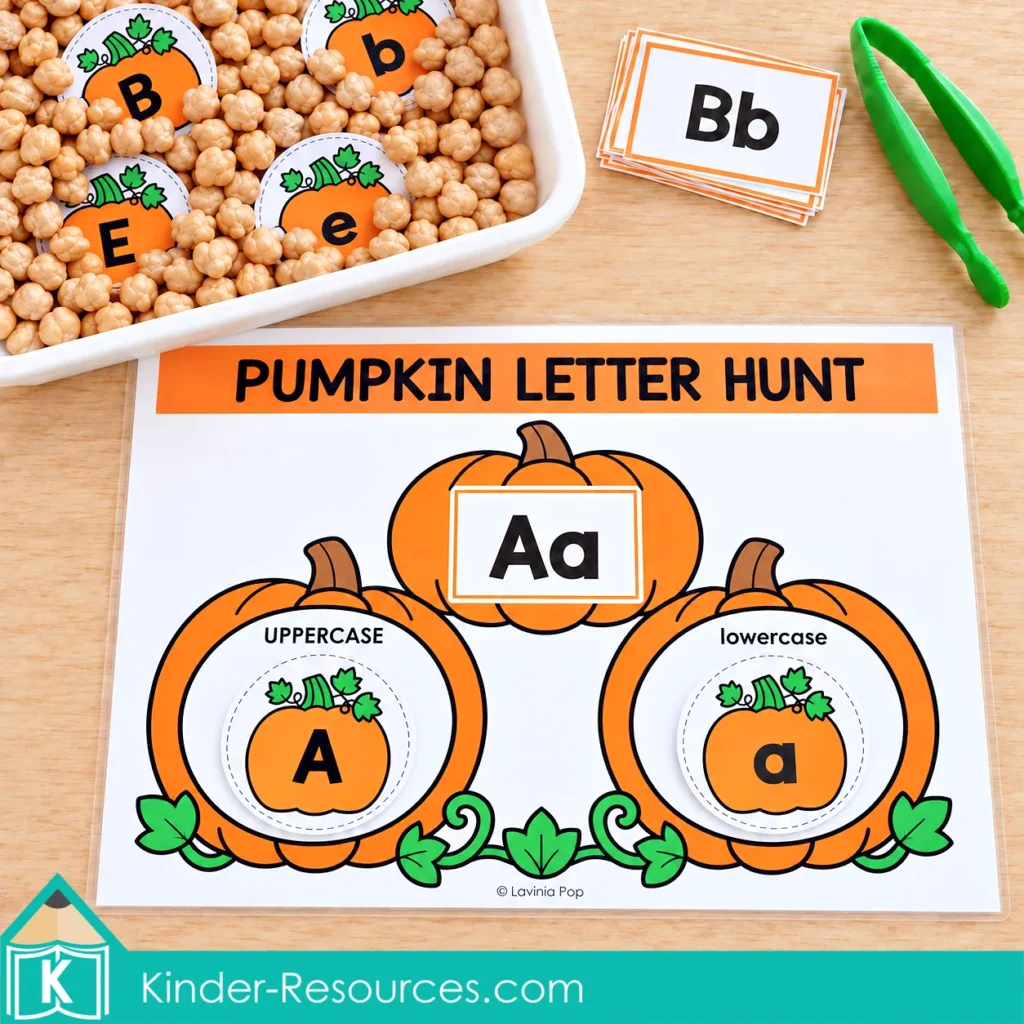
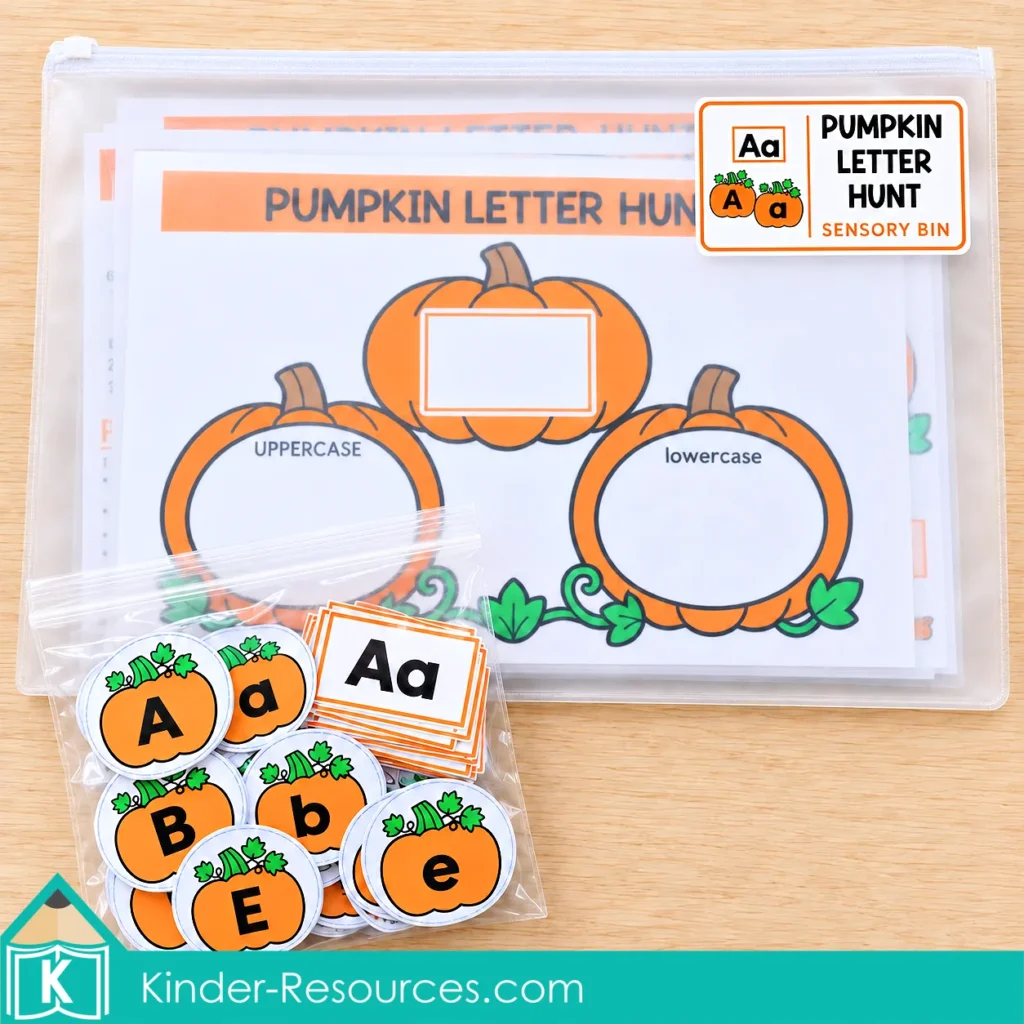
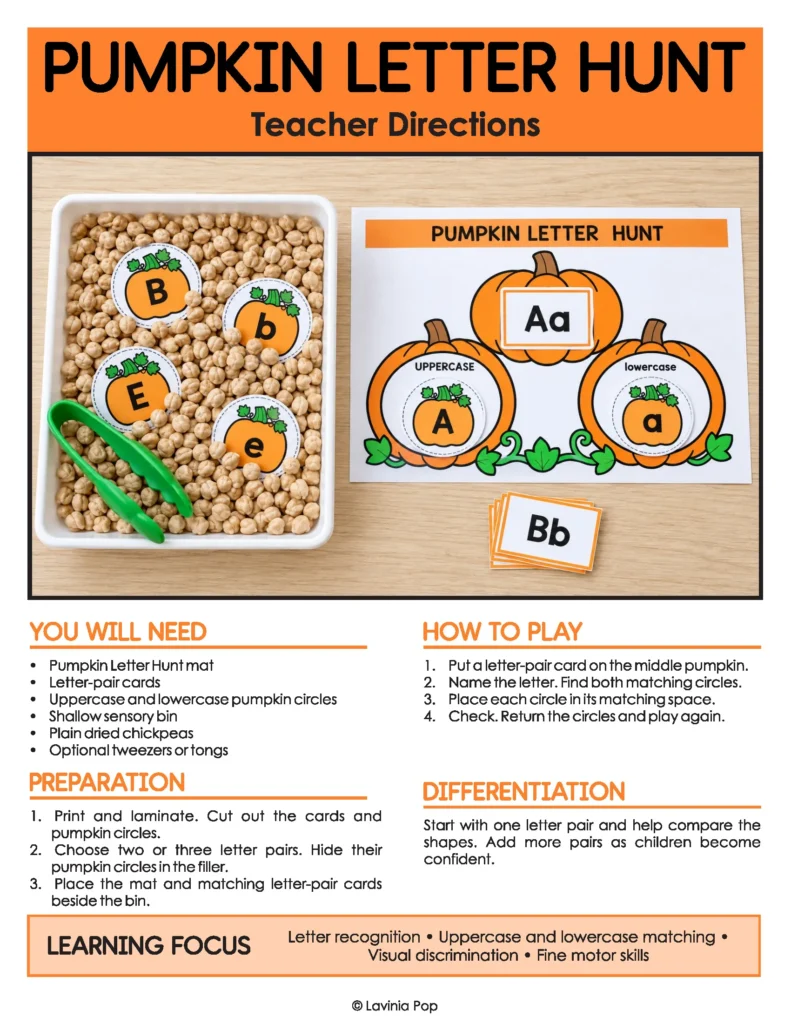
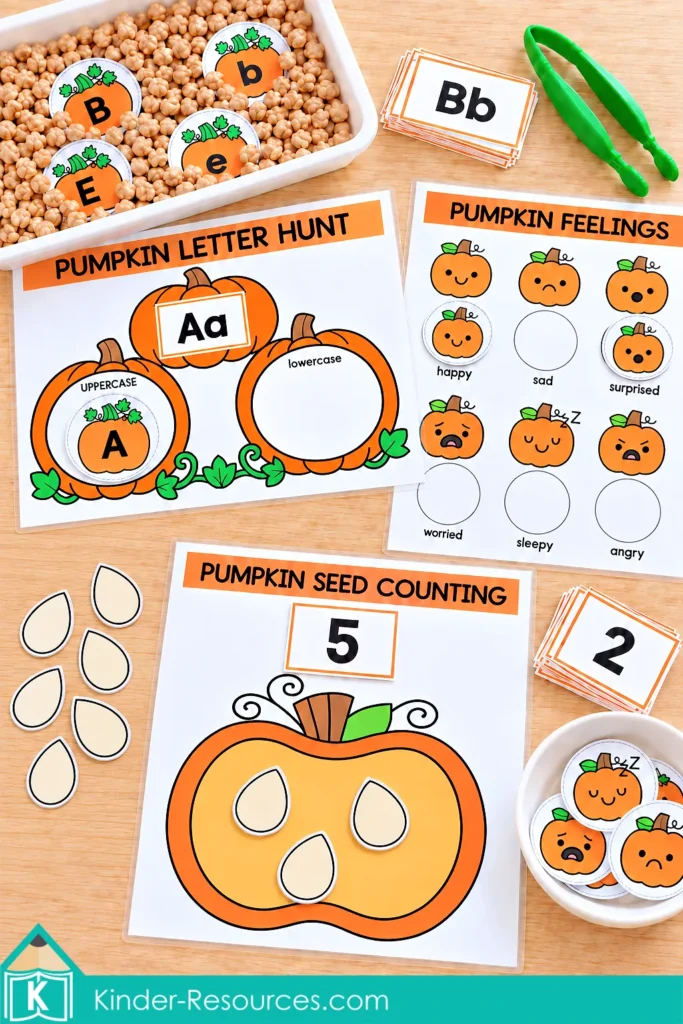
Children choose a letter-pair card and place it on the middle pumpkin. They then search for the matching uppercase and lowercase pumpkin circles and place them in the two spaces below.
For example, an Aa card asks children to find A and a. Name the letter together and look at both forms before searching.
Begin with one pair if children need support. When they understand the routine, add two or three familiar pairs so they have more choices to compare.
The letter pieces can also be used to build a familiar name or sort uppercase and lowercase letters.
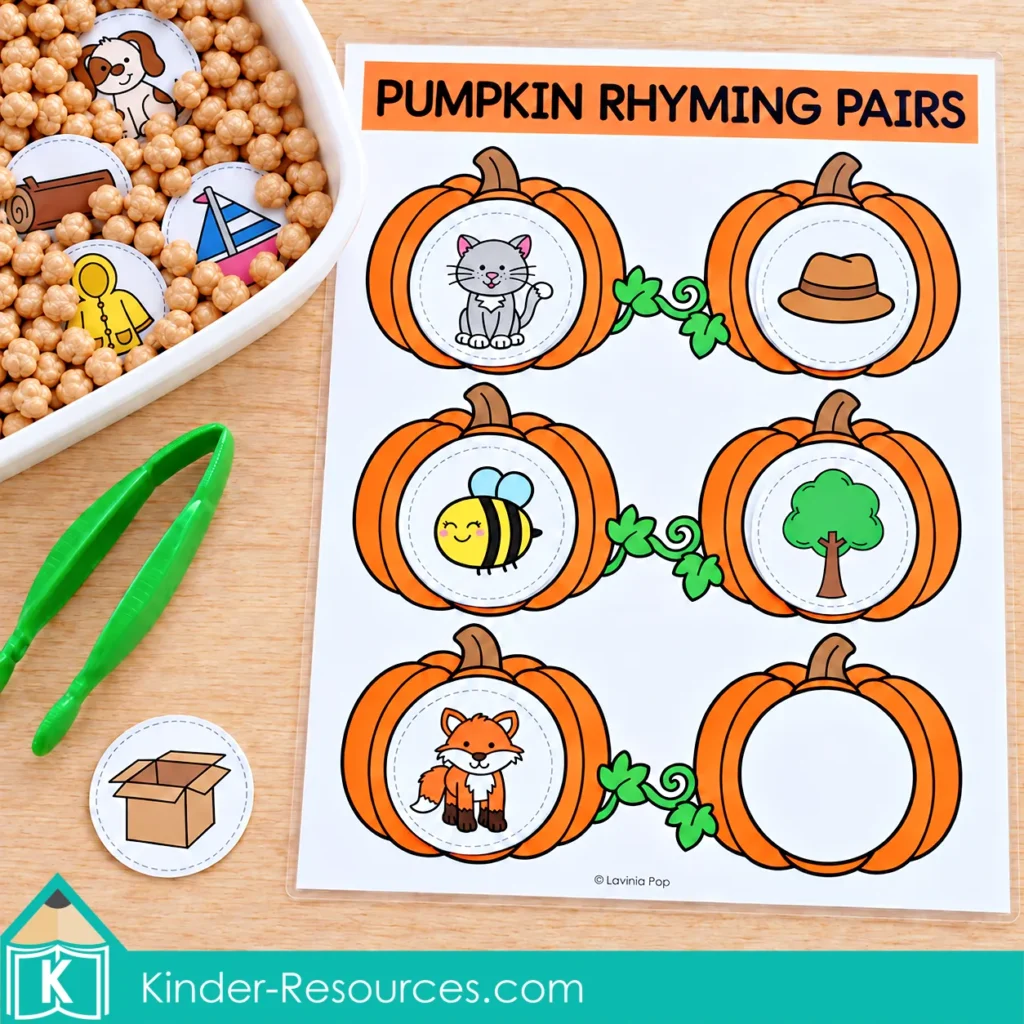
Pumpkin Rhyming Pairs
This activity asks children to listen for words that rhyme. Place one picture from each selected pair on the left side of the mat and hide its partner in the bin.
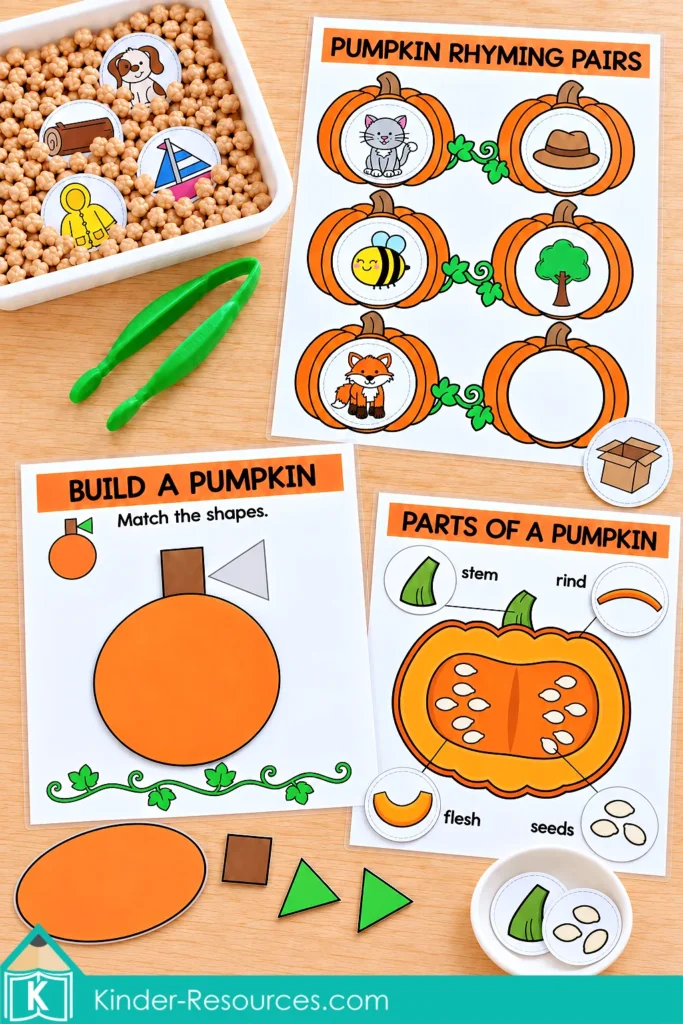
Children name a picture, search for its rhyming partner, and place the two pictures beside each other. Say both words aloud to check: cat, hat or bee, tree.
Look through the pictures together before beginning so children know the intended names. Start with one familiar pair and model the rhyme before introducing more.
The pictures do the work here, so children can join in without needing to read printed words.
Pumpkin Sensory Bin Activities for Preschool: Math and Counting
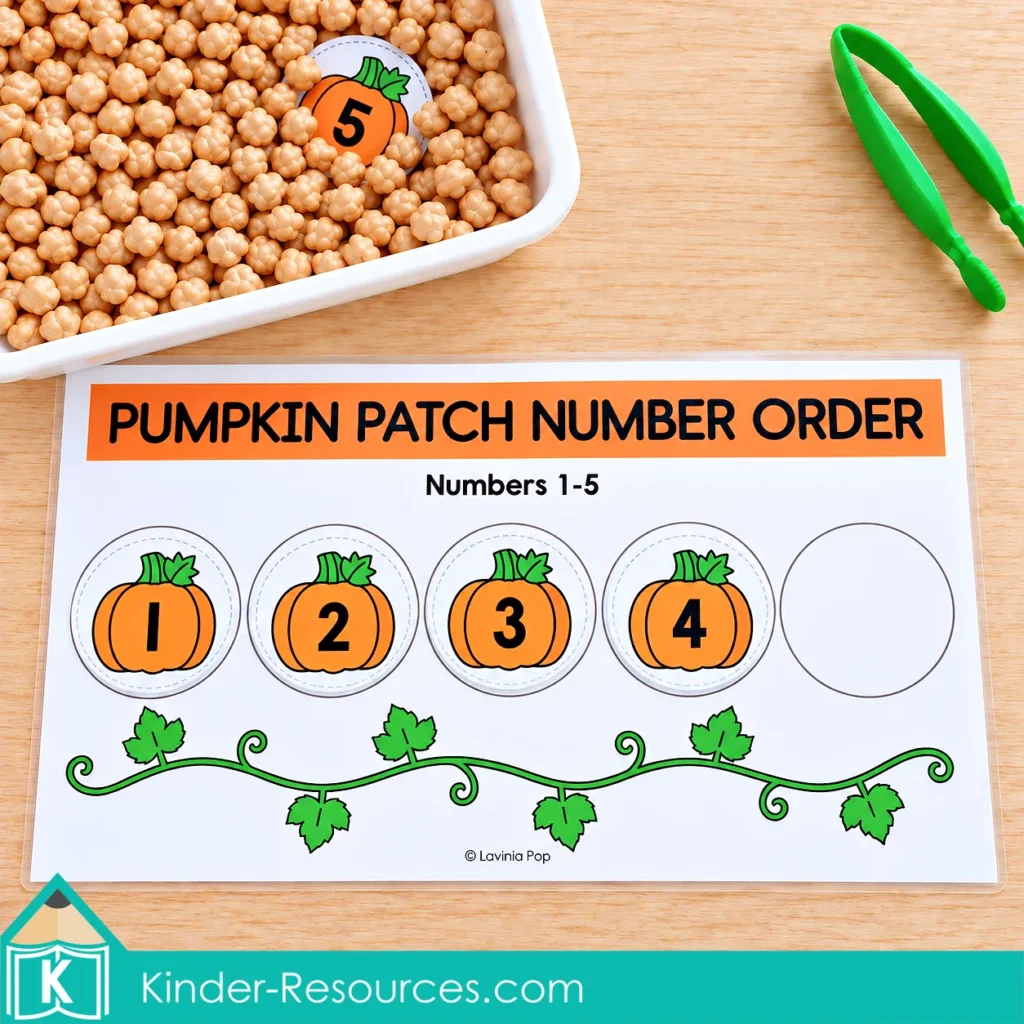
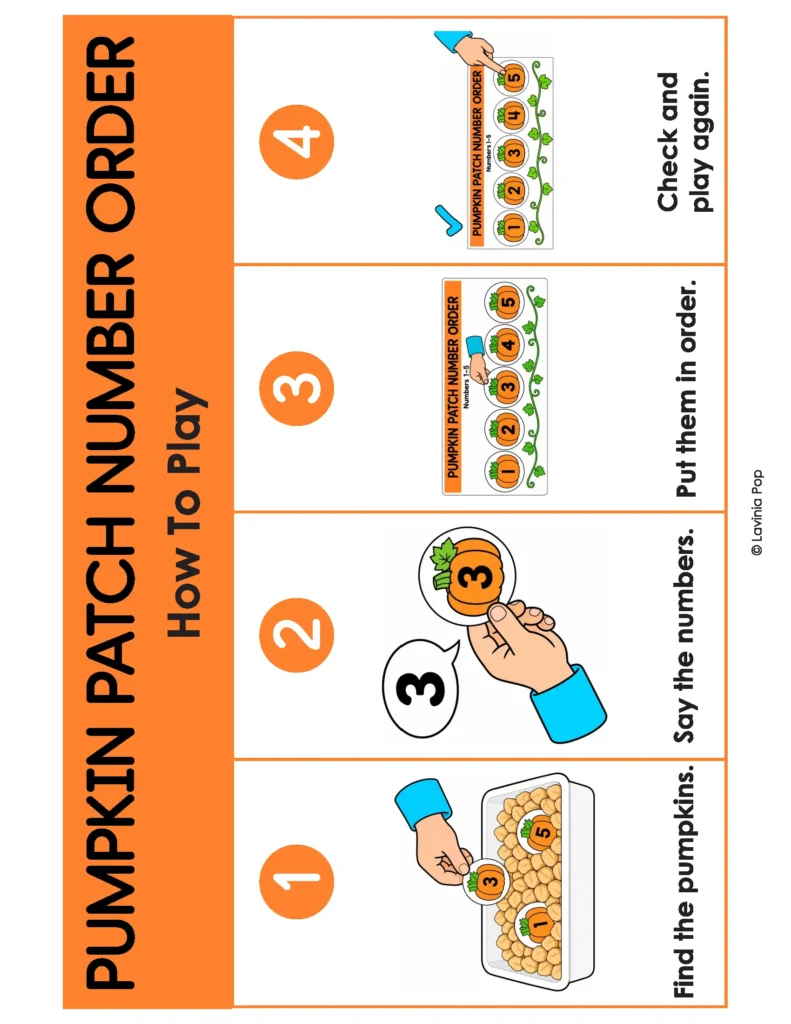
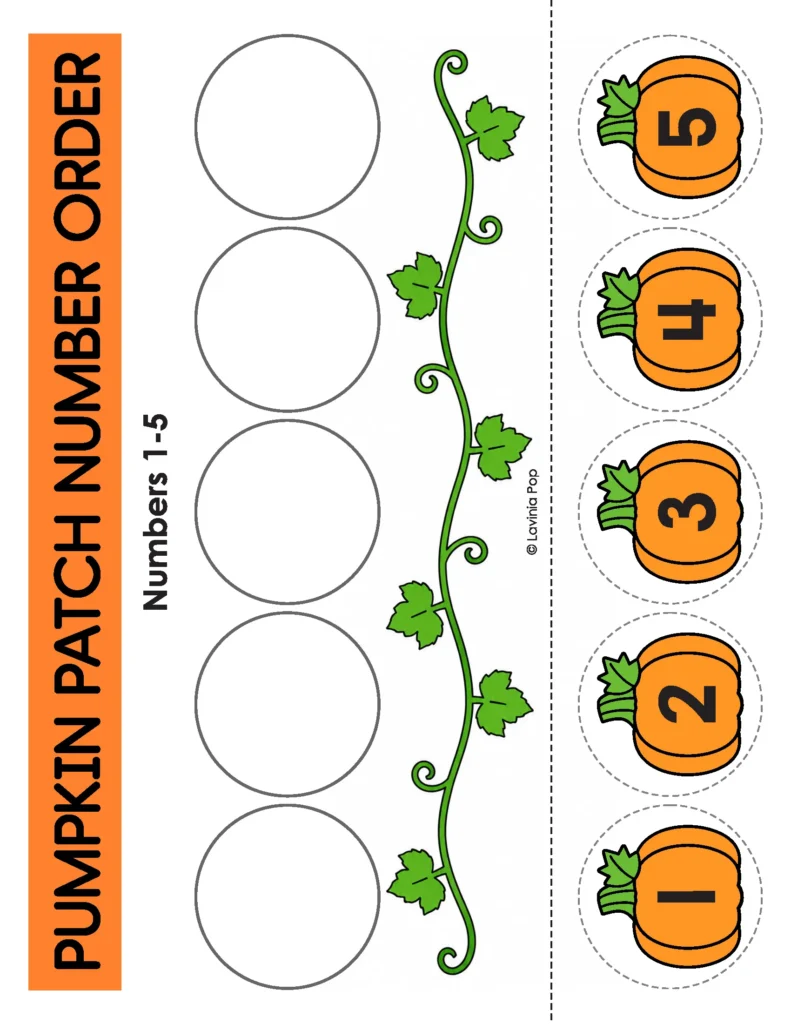
Pumpkin Patch Number Order
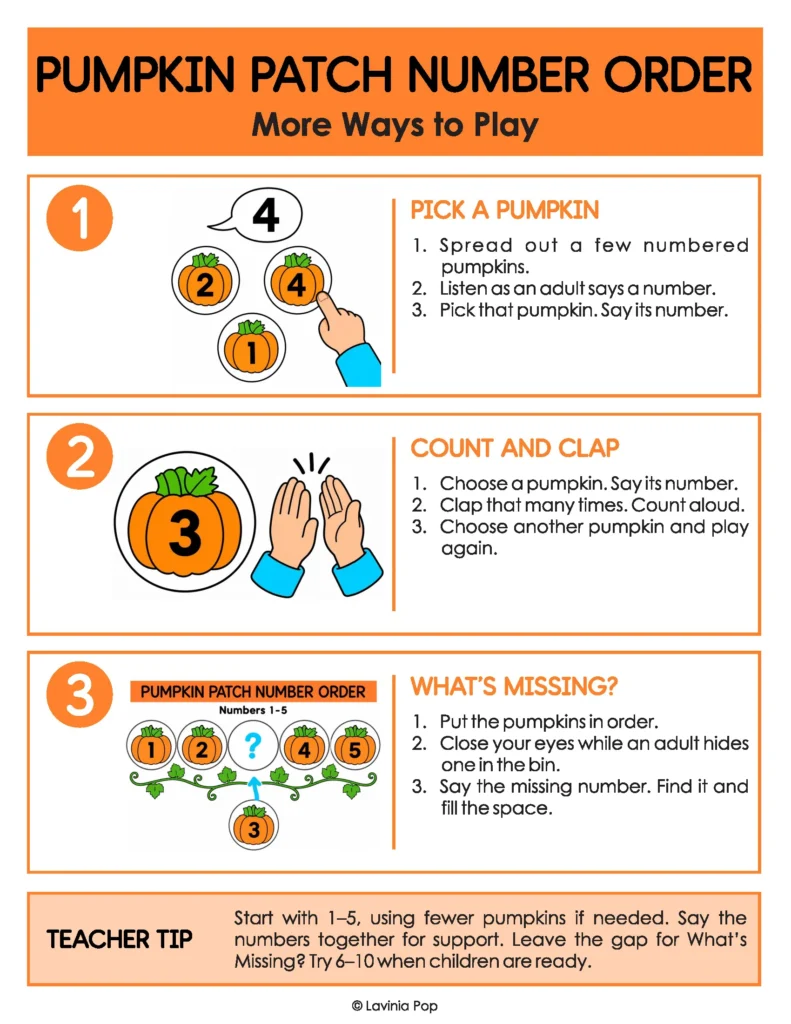
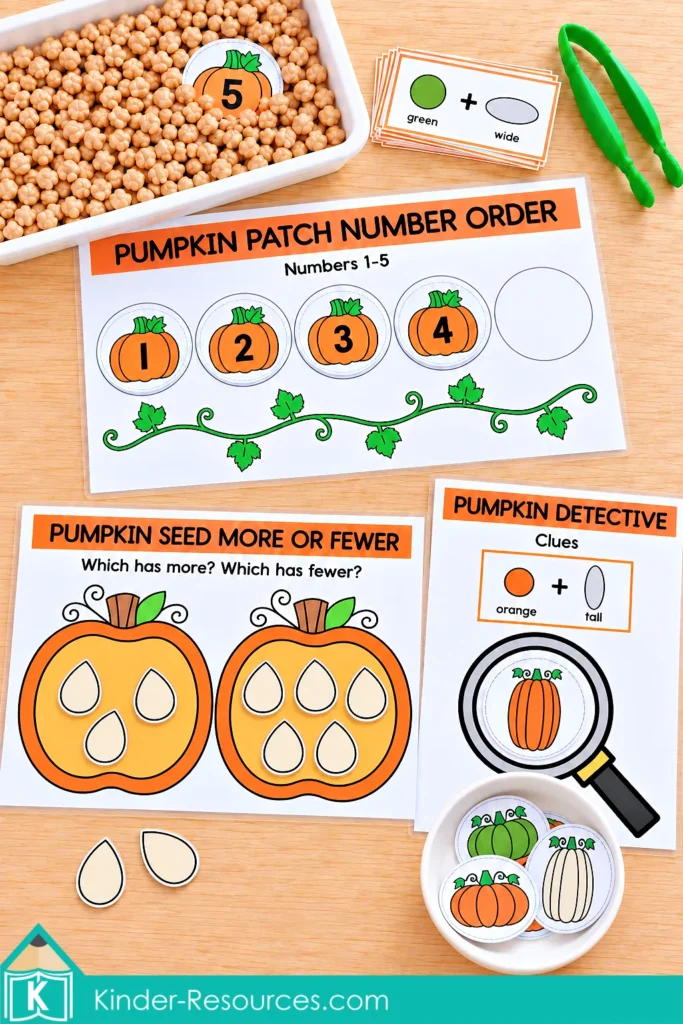
Children find numbered pumpkins and arrange them along the vine in order.
The two mats cover 1–5 and 6–10, allowing you to offer one sequence at a time. Begin with the 1–5 mat and count together as each pumpkin is placed.
Once the row is complete, point to each number and read the sequence aloud. For another way to play, remove one pumpkin and invite children to work out which number is missing.
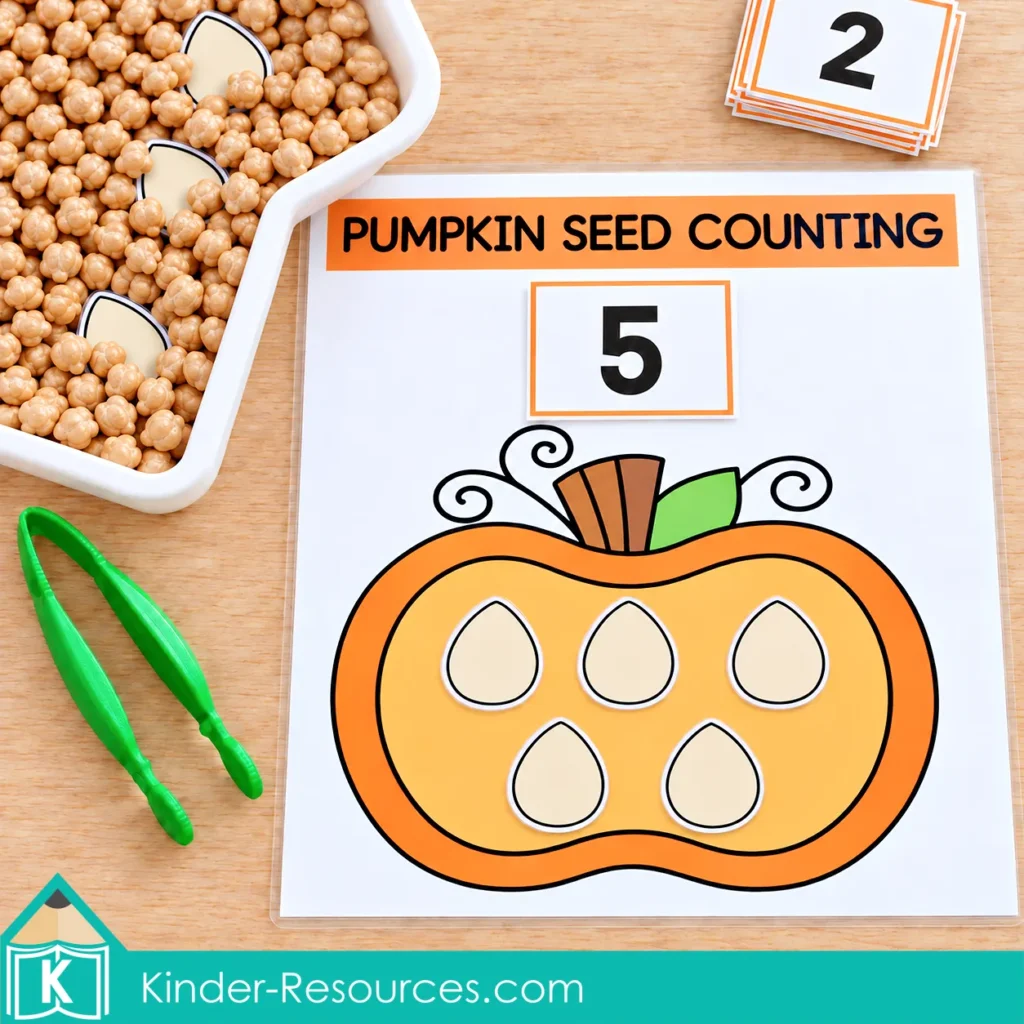
Pumpkin Seed Counting
Children choose a number card, place it on the mat, and add the matching number of printable seeds to the pumpkin.
Encourage children to move one seed at a time as they count. When they finish, touch and count the seeds again to check that the amount matches the card.
The number cards cover 1–10. You can begin with 1–3, move to 1–5, and introduce the larger quantities when children are ready.
A partner can join in too: one child chooses the number, and the other counts out the seeds.
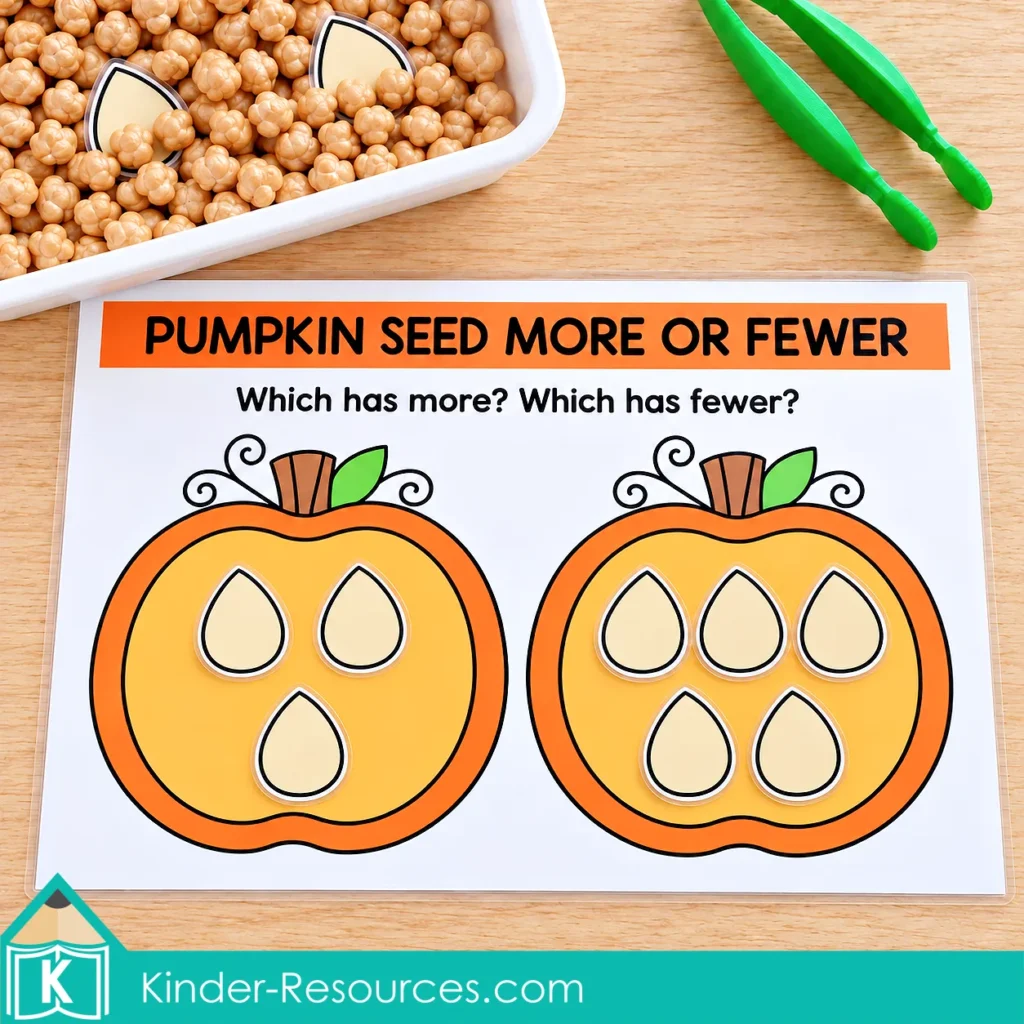
Pumpkin Seed More or Fewer
Use the same seed pieces to explore two groups on the comparison mat.
Place a different number of seeds in each pumpkin and ask, “Which pumpkin has more? Which has fewer?” Children can count each group or pair the seeds across the two pumpkins to check.
For example, place two seeds in one pumpkin and four in the other. Matching one seed from each group helps children notice the extra seeds in the larger group.
You can also make equal groups and introduce the phrase the same number.
Pumpkin Sensory Bin: Building Pumpkins and Following Clues
Build a Pumpkin
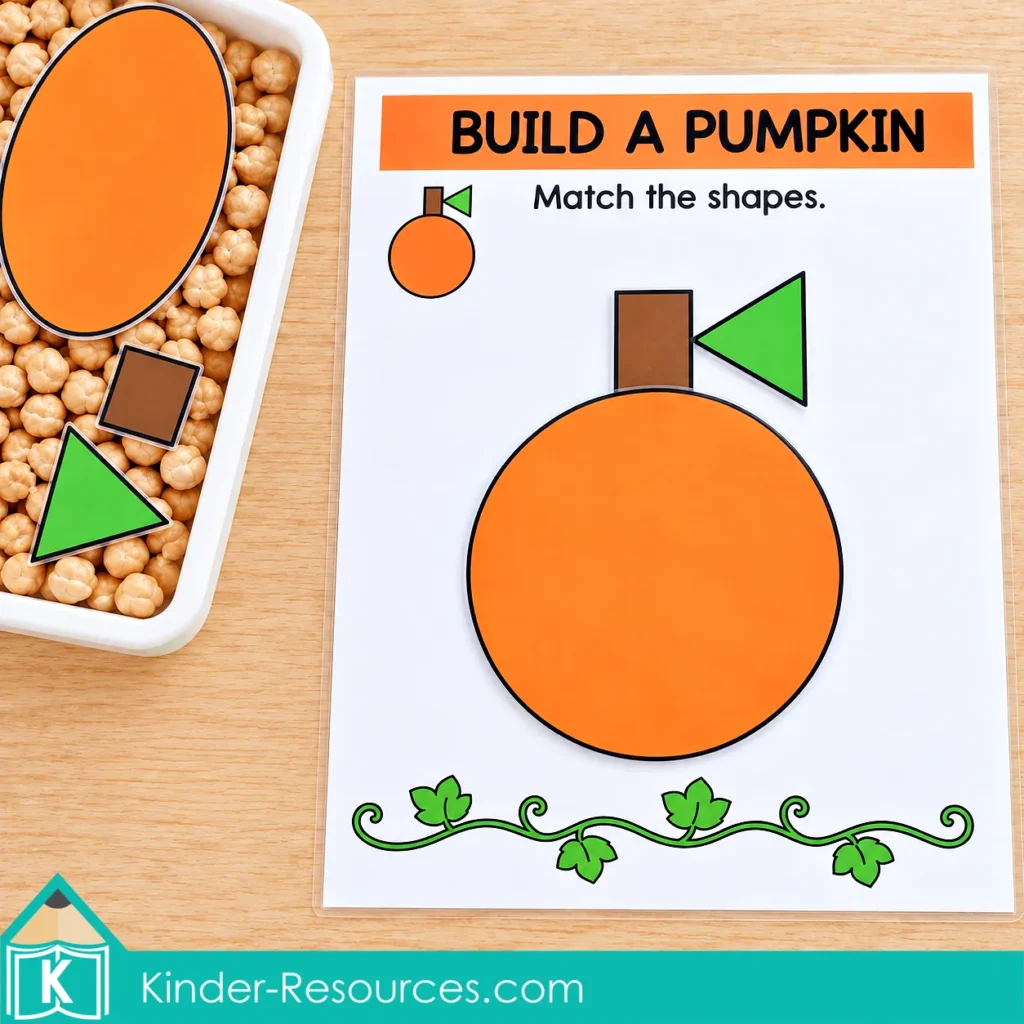
Children combine simple shapes to make a pumpkin. Orange circles and ovals form the bodies, brown shapes become stems, and green triangles become leaves.
Begin with a mat that shows where the pieces belong. Children find the shapes, turn them as needed, and place them over the guides.
Talk about the shapes as you build: “You found the circle. Which piece will make the stem?” The model cards and blank mat provide another way to use the pieces once children are familiar with them.
This activity gives children opportunities to name shapes, compare their features, and explore how separate pieces form a picture.
Pumpkin Detective
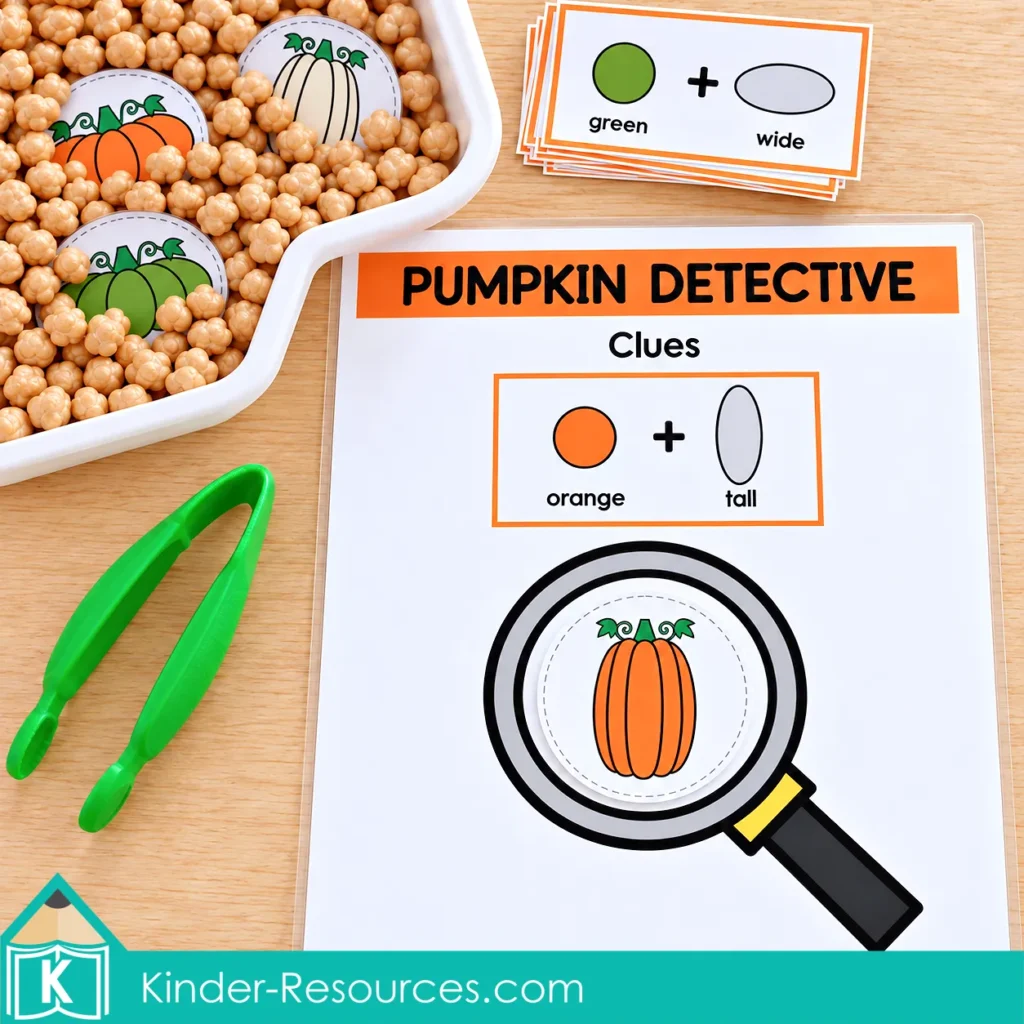
Pumpkin Detective asks children to look at more than one feature before choosing a match.
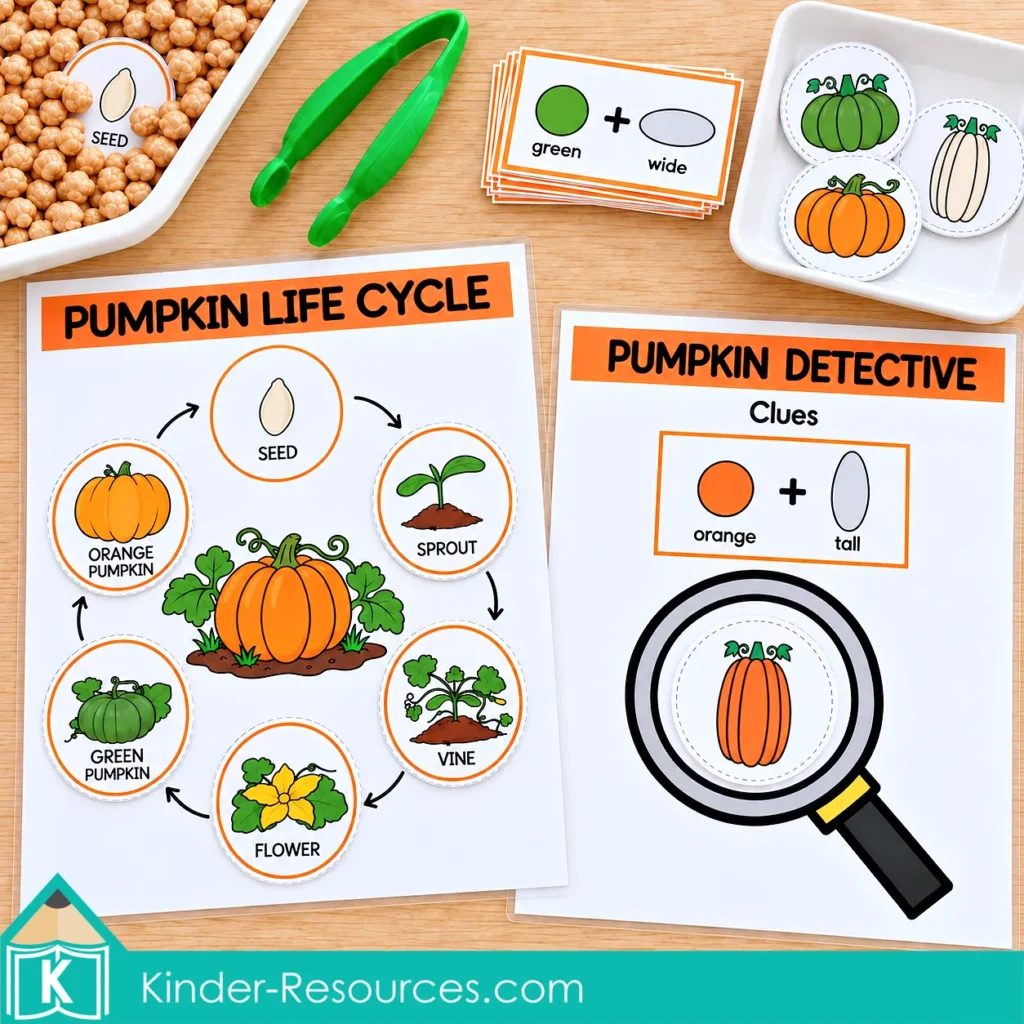
Children examine the color and shape clues, then search for the pumpkin that matches both. A clue might ask for an orange, tall pumpkin. An orange, wide pumpkin matches the color but still needs another look.
Model checking each clue separately: “It is orange. Is it tall too?”
Begin with a small selection of pumpkins and add more choices as children become confident. Invite them to explain what helped them choose their match.
Science Pumpkin Sensory Bin Activities for Preschool
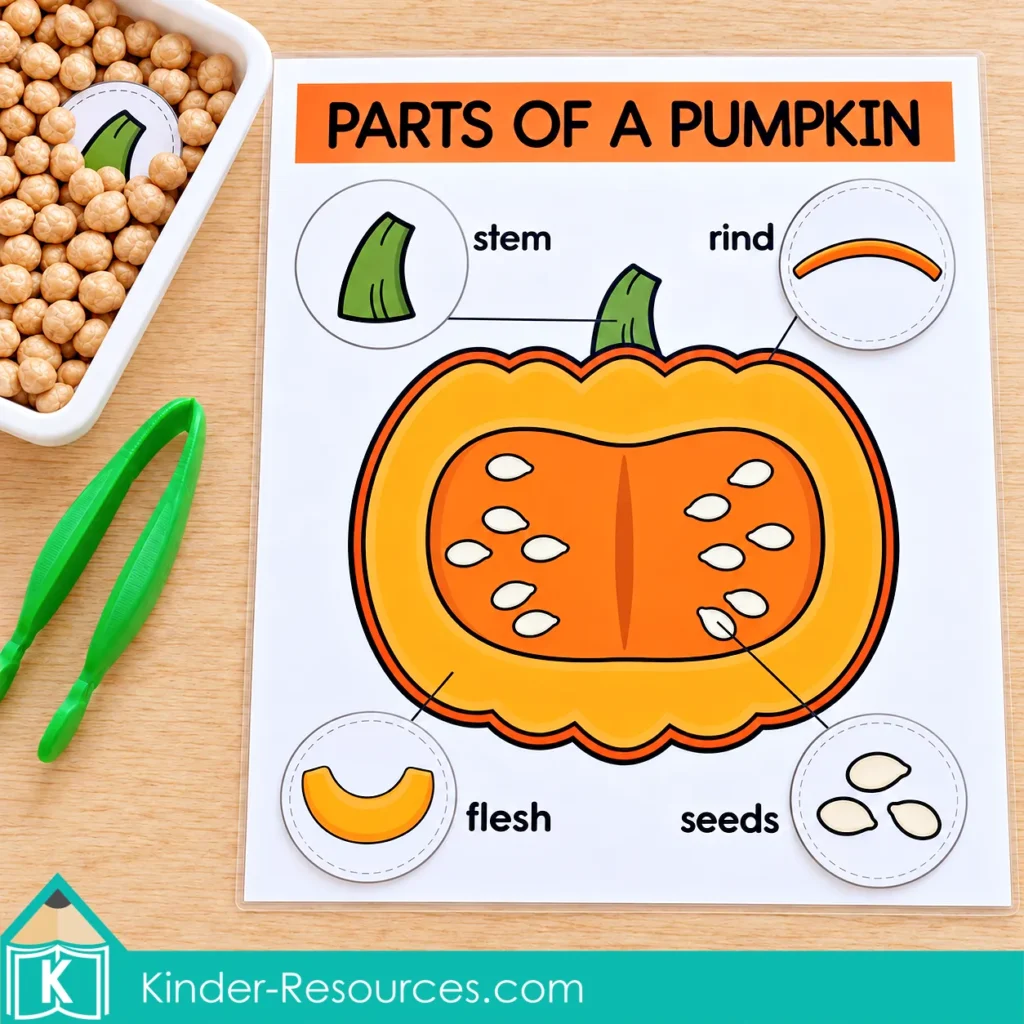
Parts of a Pumpkin
This activity introduces four pumpkin parts: stem, skin, flesh, and seeds.
Look at the cut pumpkin illustration together and name each part. Children then find the matching pieces and place them on the mat.
If you have a real pumpkin available, compare it with the pictures. Look at the outside first, then explore the flesh and seeds after an adult cuts it open.
Simple questions help connect the vocabulary to what children can see: “Where is the stem?” “Which part covers the outside?” “What can you find inside?”
Pumpkin Life Cycle
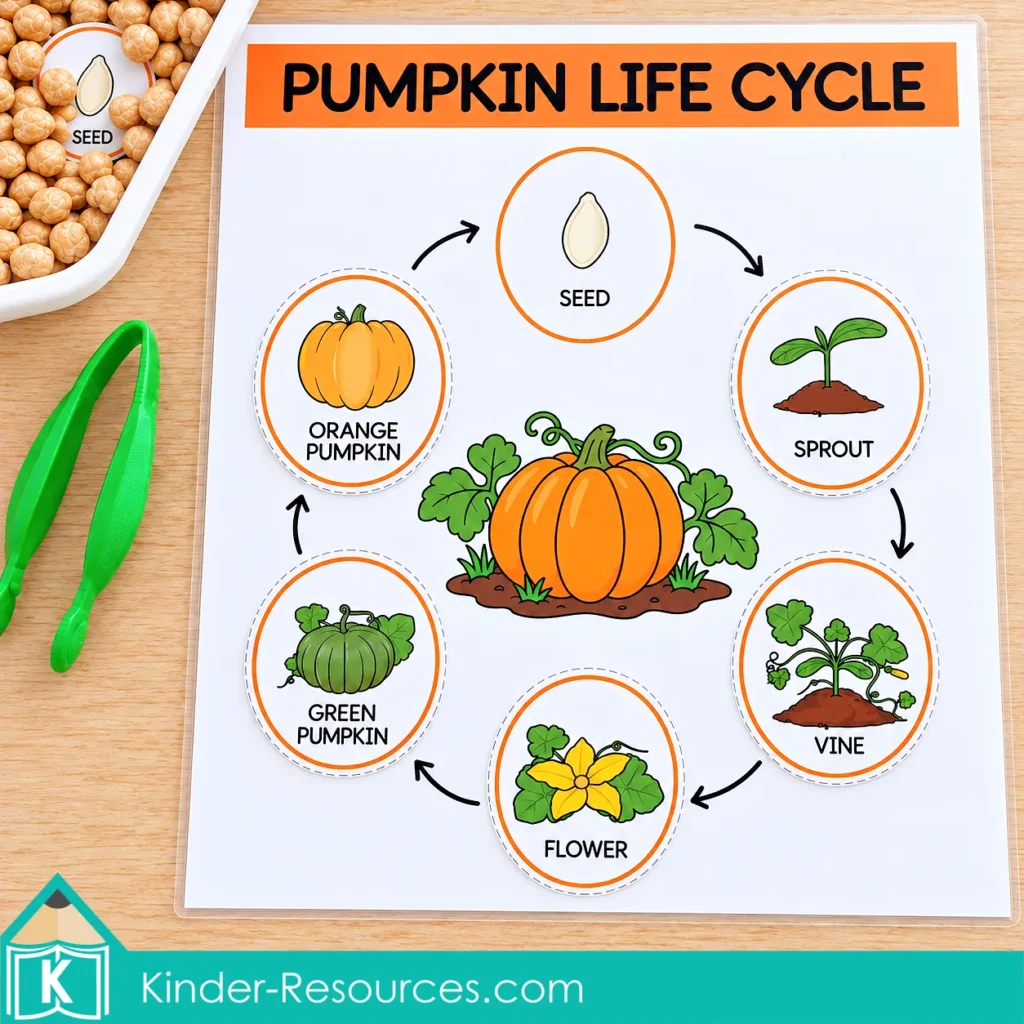
Children explore a simple six-stage sequence:
Seed → Sprout → Vine → Flower → Green Pumpkin → Orange Pumpkin
Introduce the pictures together before hiding the pieces in the bin. Children find each stage and use the mat to place it in the sequence.
Follow the arrows and talk about what changes as the pumpkin grows. Use words such as first, next, and then as you retell the sequence together.
You can return to the seed at the end and explain that seeds from a mature pumpkin can grow into new plants.
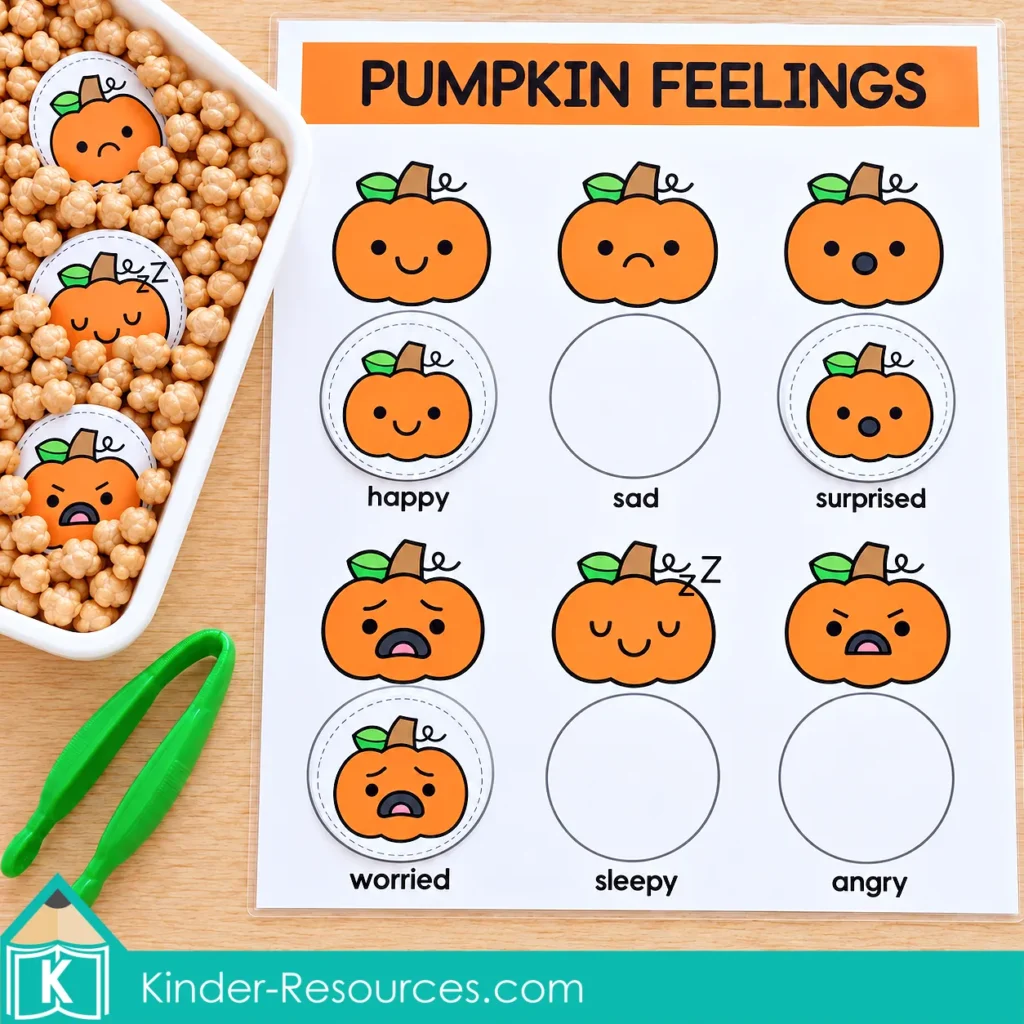
Pumpkin Sensory Bin: Matching Feelings
The pumpkin faces provide a starting point for noticing and talking about feelings.
Children find a pumpkin face and match it to the corresponding picture on the mat. Encourage them to look at the eyes, eyebrows, and mouth as they compare the expressions.
Try asking, “What do you notice about this face?” or “What might make someone feel that way?” Children can copy an expression or share an idea if they would like to.
Treat the pictures as conversation starters. People can show the same feeling in different ways, and children may have different ideas about what an expression means.
Three Support Cards for Each Activity
Each activity includes three cards to help you prepare, introduce, and revisit the task.
- Teacher Directions: materials, preparation, how to play, differentiation, and learning focus.
- How To Play: four illustrated steps with short, simple directions.
- More Ways to Play: three additional ideas for using the materials.
Introduce the activity together, then keep the illustrated steps nearby as a reminder. The additional play ideas let you return to familiar pieces with a different task.
Choosing a Starting Point for Your Learners
You do not need to set out all ten activities at once. Choose one that connects with your current learning goals and offer a manageable number of pieces.
A few familiar letters, one rhyming pair, or a small counting quantity can be enough for an initial session. Demonstrate one example, talk through your thinking, and give children time to try.
When children are ready for more, add choices, increase the quantity, or invite them to explain how they checked their answer.
The same materials can also move between a sensory bin, a tabletop activity, and a small-group lesson.
Storing Your Pumpkin Sensory Bin Activities for Preschool
Print the mats, cards, and pieces you need. Laminate for repeated use if desired, then cut out the pieces children will handle. Use a consistent print setting so matching pieces and spaces stay the same size.
Keep each activity’s mat and three support cards in a document wallet that fits A4 or letter-sized paper. Smaller pieces can go in a separate zip bag inside the wallet.
The included activity labels make it easy to identify each set. Before packing away, check the filler for any hidden pieces so the activity is ready for next time.
Explore the Complete Pumpkin Sensory Bin Activities for Preschool
The complete Pumpkin Sensory Bin Activities for Preschool packet includes all ten printable activities, matching pieces, Teacher Directions, illustrated How To Play cards, More Ways to Play cards, setup guidance, and activity storage labels.
Use the activities throughout your pumpkin theme to explore letters, rhyming, counting, number order, comparing quantities, shapes, visual matching, science vocabulary, and feelings.
Happy Teaching! 😊
You Might Also Like
Would love these pumpkin resources
Absolutely! 😊 Just click on one of the store links in the post to grab the Pumpkin Sensory Bin Activities. I hope you enjoy them!