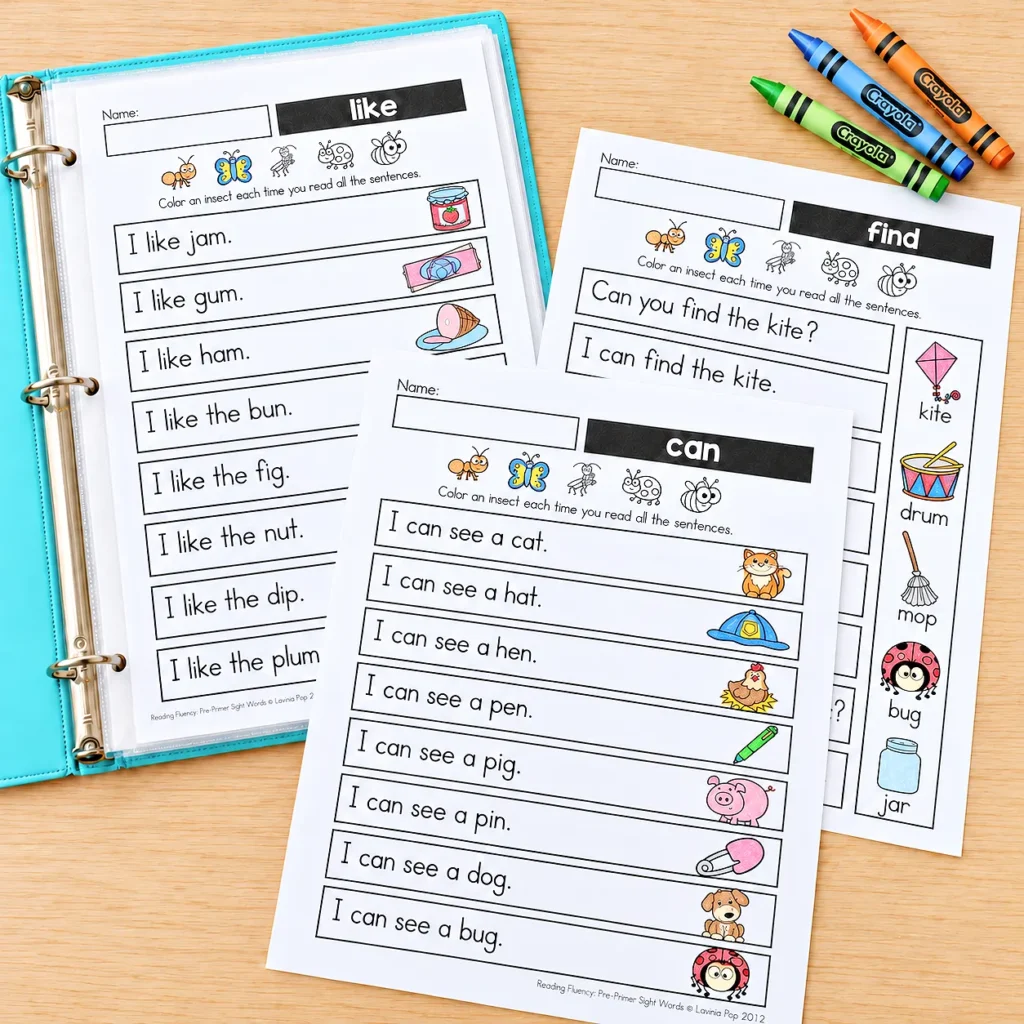
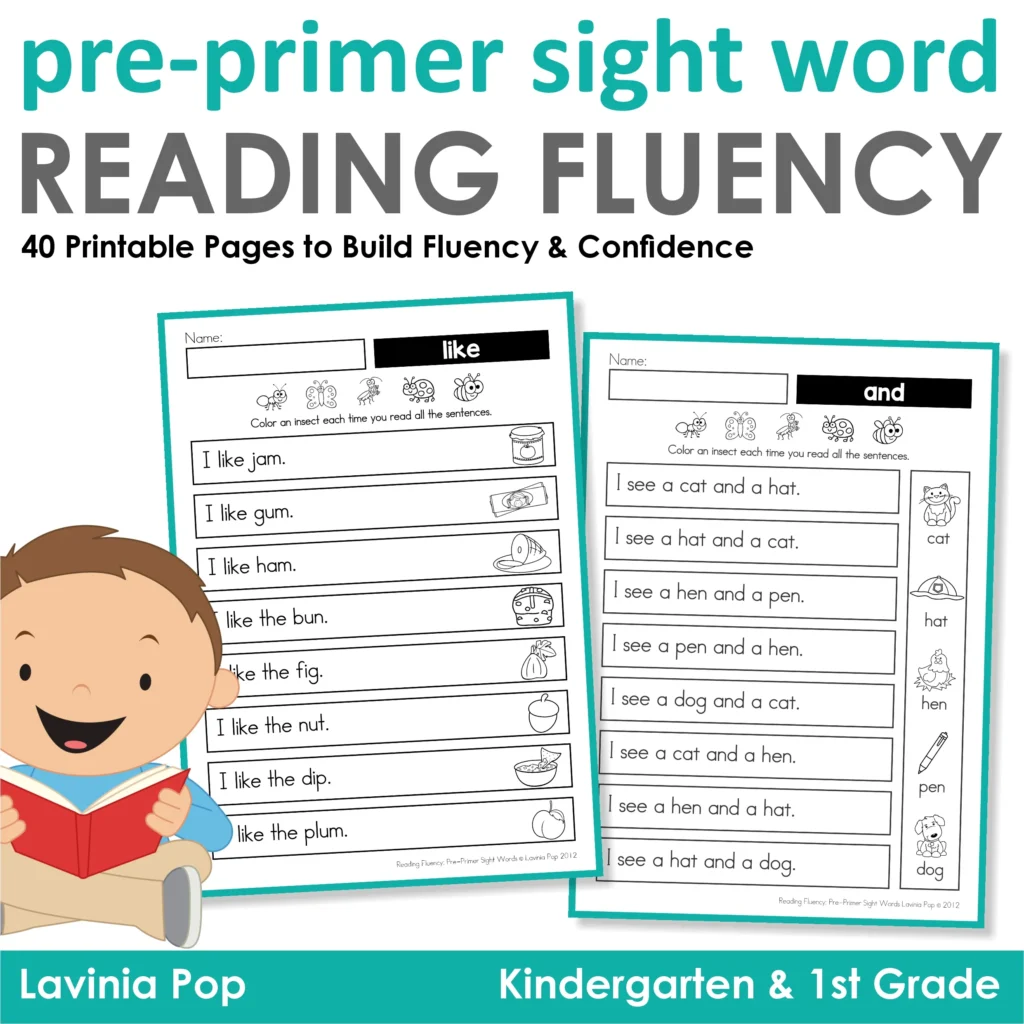
Short, repeated reading activities can give beginning readers a manageable way to practise reading connected text. With a familiar sentence pattern and a small amount of text on each page, children can spend time working through the words and then reread with growing confidence. My Pre-Primer Sight Word Reading Fluency packet includes 40 reading pages featuring short sentences, picture support, and a simple insect tracker. The pages are easy to add to small-group lessons, literacy centres, take-home reading folders, or homeschool routines.
You can use the worksheets as they are or turn them into hands-on reading activities. Here are several ways to make them part of your reading time!
What Is Included in the Sight Word Reading Fluency Packet?
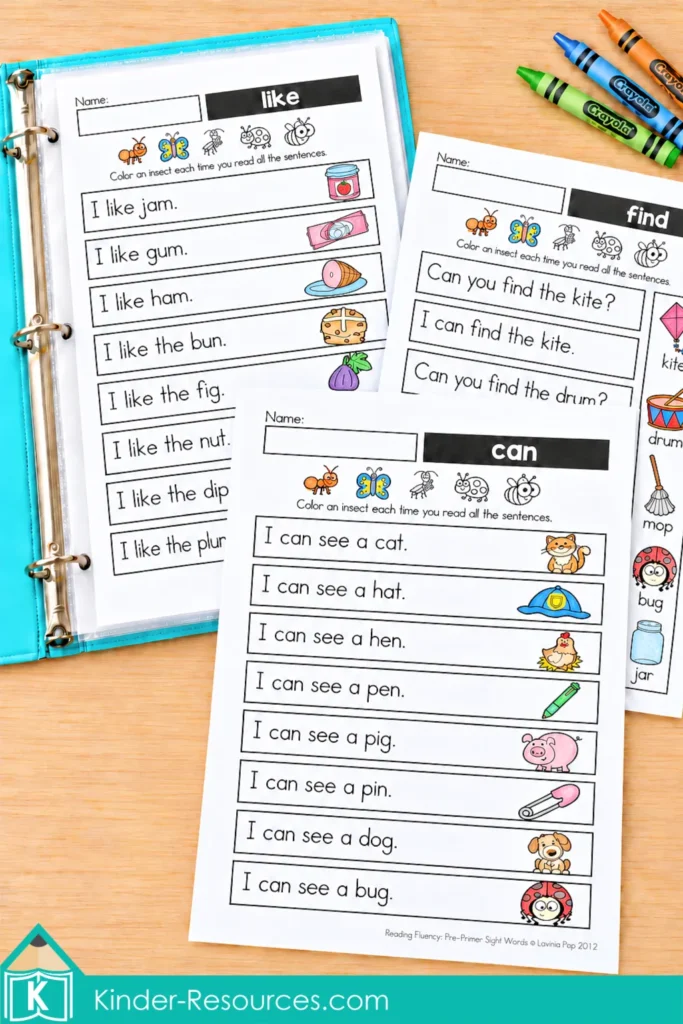
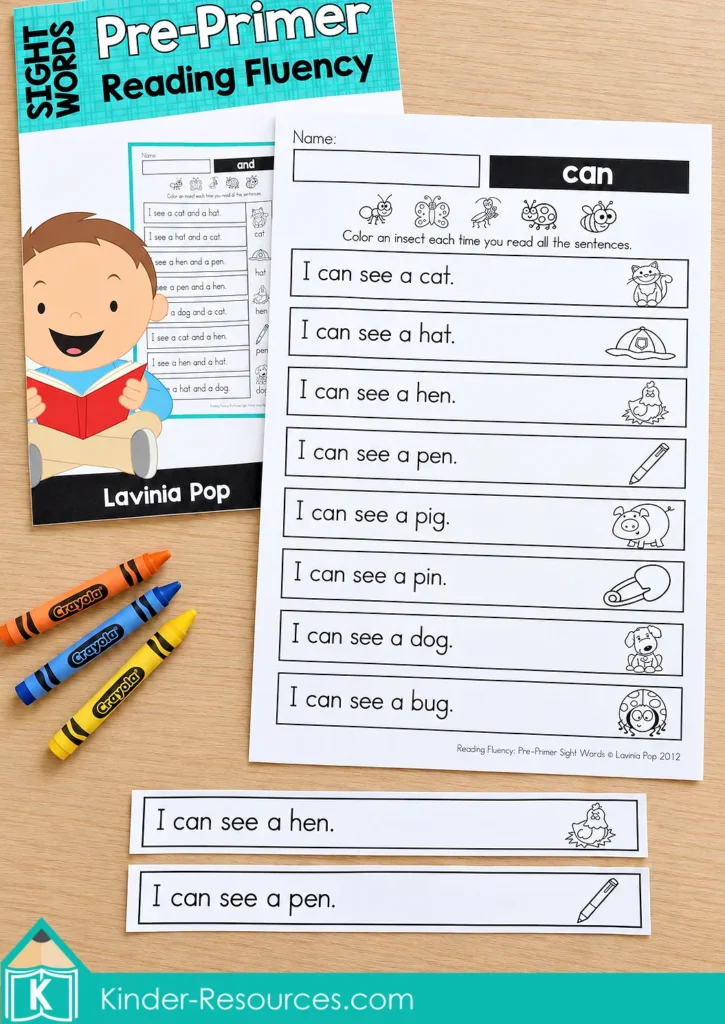
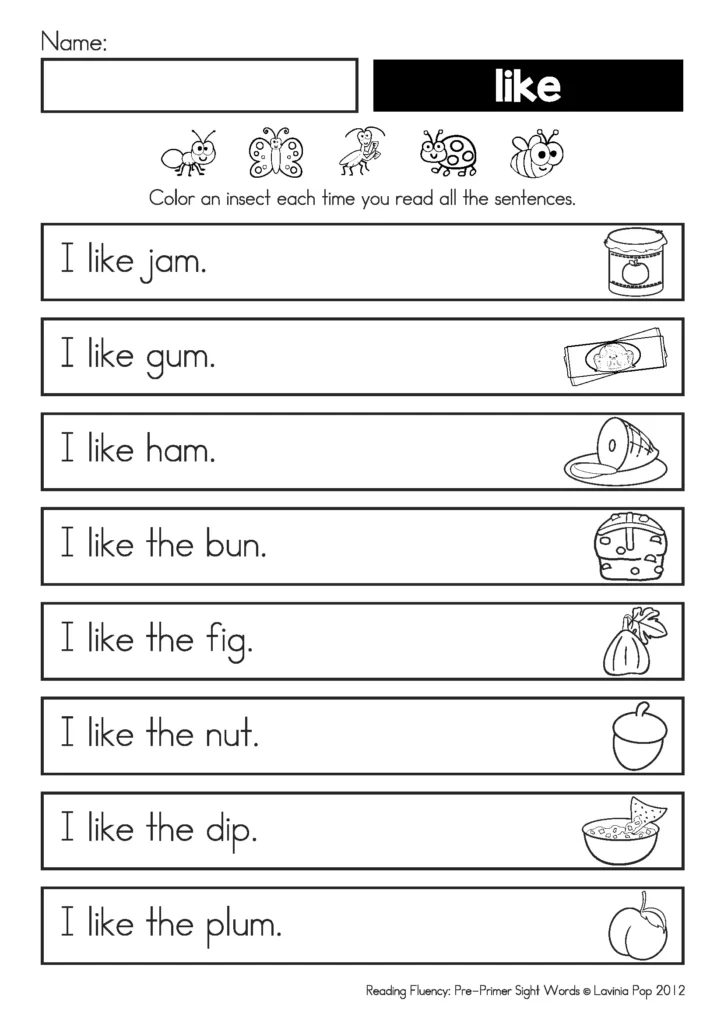
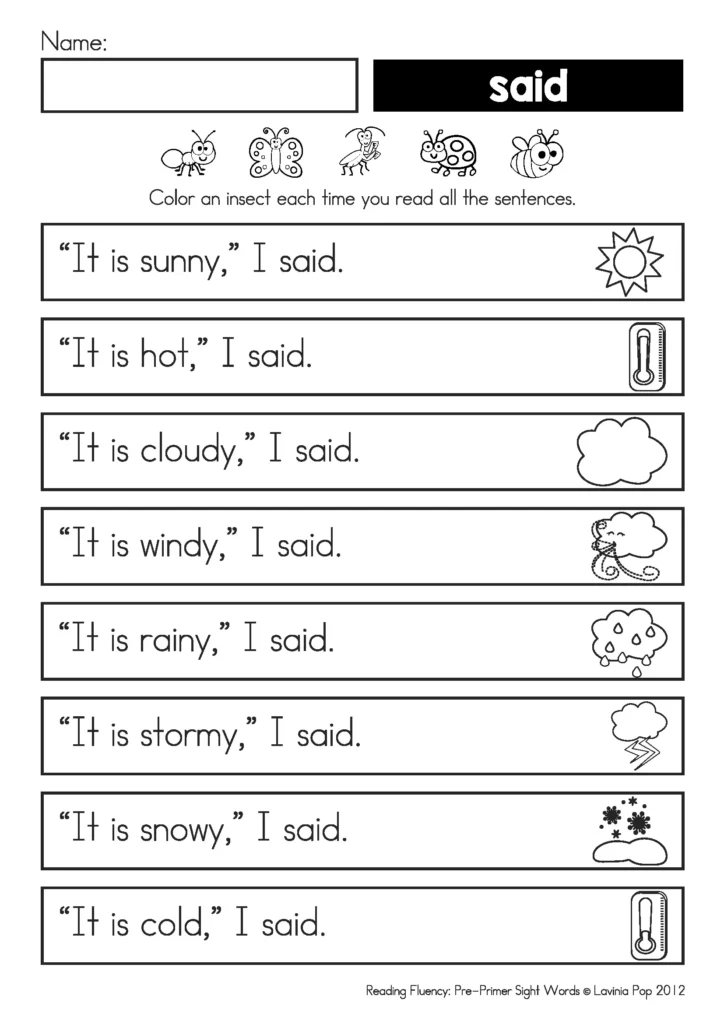
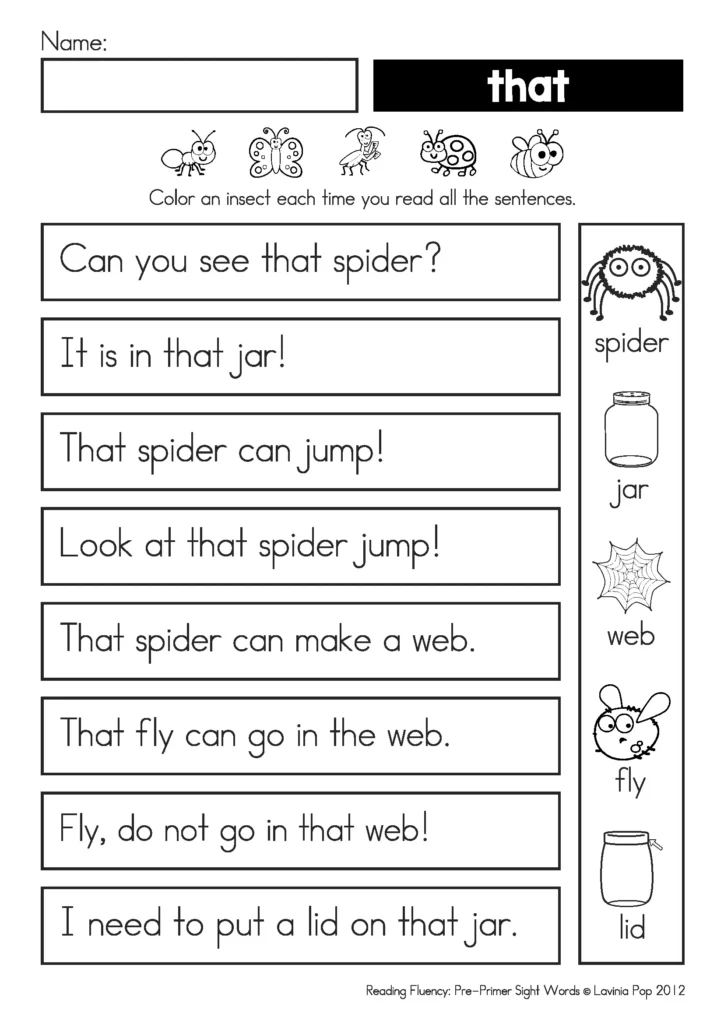
Each reading page features:
- A focus sight word displayed at the top.
- Eight short sentences.
- Pictures to support understanding and vocabulary.
- Five insects for children to color as they complete repeated readings.
- A space for the child’s name.
Some pages have a picture beside each sentence. Others include a separate picture-and-word bank down the side.
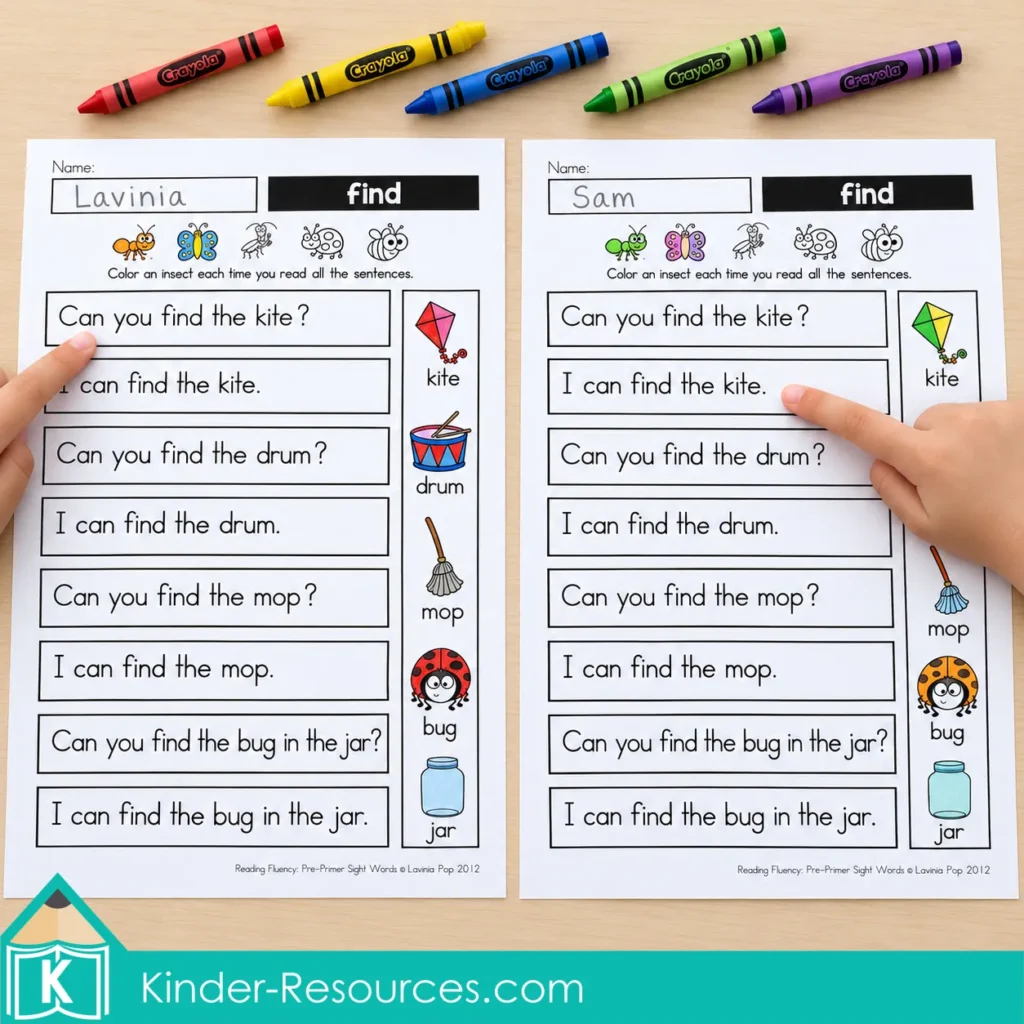
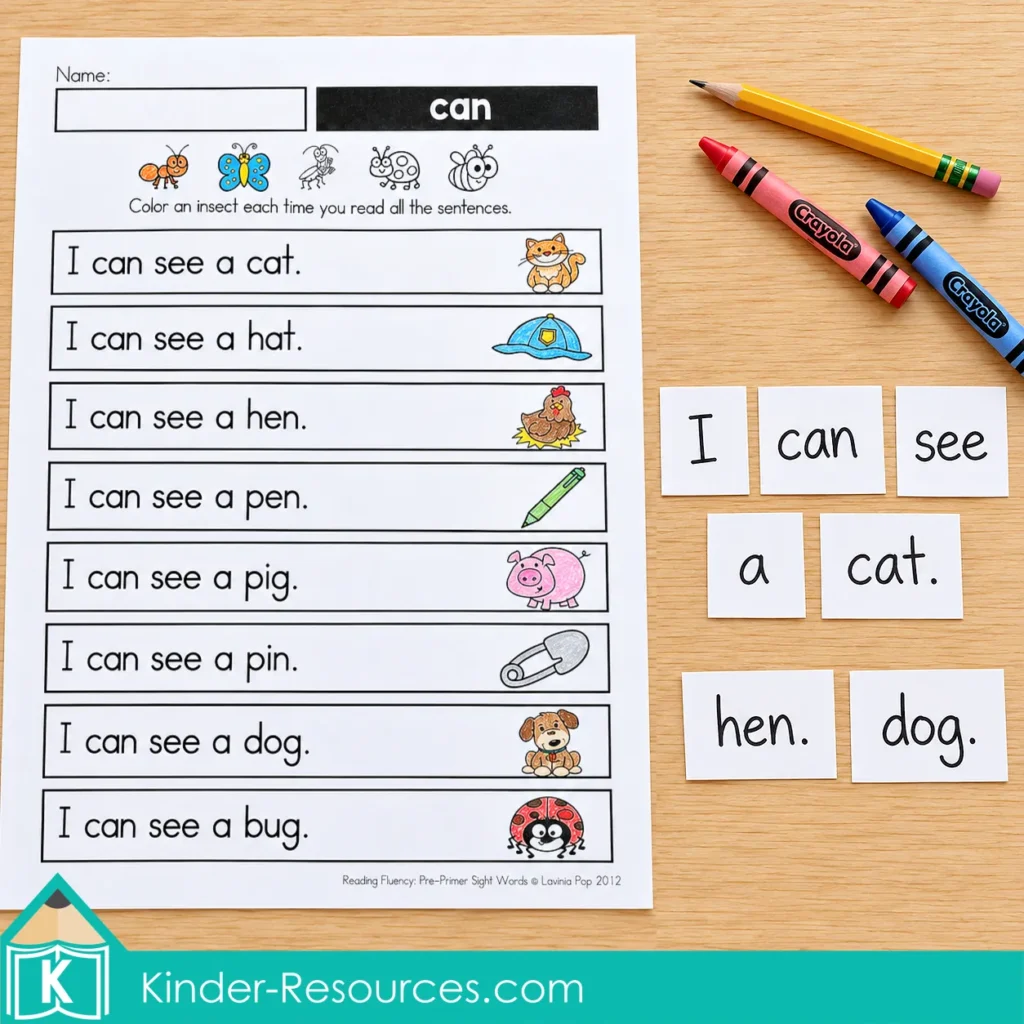
The sentence patterns vary throughout the packet. For example, the can page includes sentences such as “I can see a cat.” and “I can see a hen.” The find page pairs questions with answers, including “Can you find the kite?” and “I can find the kite.”
Choose a page that suits the words and spelling patterns your child or group is ready to practise.
Start with a Supported Reading
Begin your pre-primer sight word reading fluency practice by introducing the focus word and looking through the page together. Discuss any unfamiliar vocabulary before reading.
Model a sentence, pointing beneath the words as you read. Then invite children to read with you or try the sentence themselves. Help them use the letter–sound relationships they have learned, and explain any unfamiliar parts of a word.
The pictures are useful for talking about meaning and checking understanding. Encourage children to read the printed words before using the illustration to confirm what the sentence says.
Once children have worked through the page accurately, invite them to reread it with a smoother voice. Keep the emphasis on understanding and comfortable reading rather than racing through the sentences.
Track Sight Word Reading Fluency with the Insects
The five insects at the top of each page provide a simple way to record repeated readings.
After a child reads all eight sentences, they color one insect. They can return to the page later and color another insect after the next complete reading.
There is no need to finish all five readings in one sitting. You might read the page together during a lesson, revisit it the following day, and send it home for another reading with a family member.
The tracker helps children see their progress while keeping the routine easy to follow.
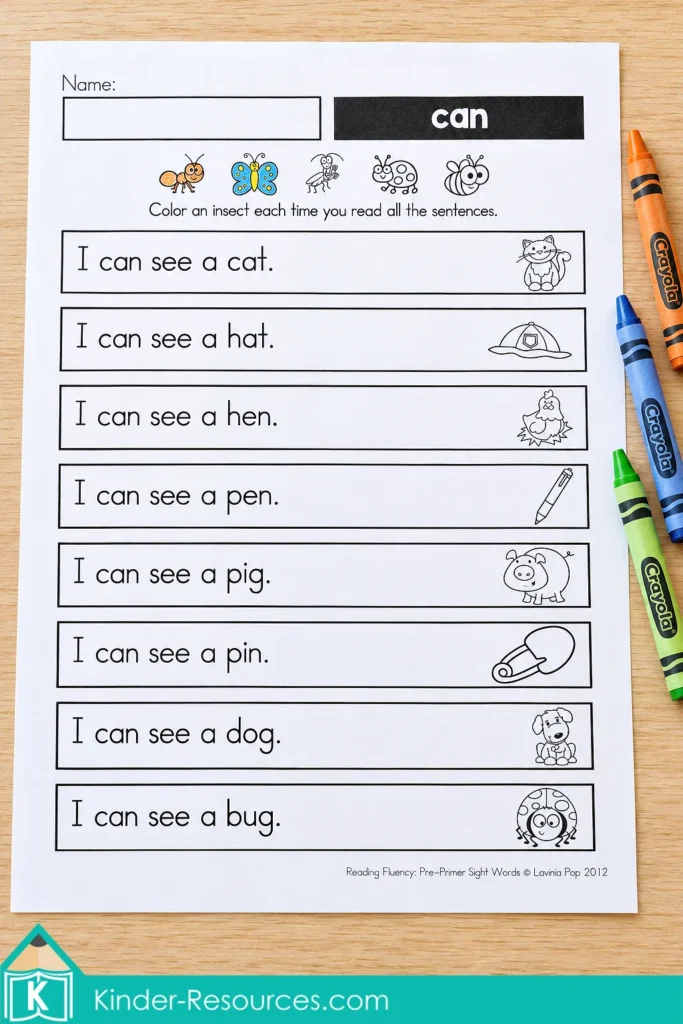
Color the Pictures Beside the Sentences
Children can also color the pictures on the side of the page!
After reading a sentence, ask the child to find its matching picture and explain what they read. They can then color the illustration.
On pages with a separate picture-and-word bank, children can locate the relevant picture or label as you discuss the sentences.
Keep the two coloring activities distinct: the side pictures are an optional follow-up activity, while each insect records a complete reading of the page.
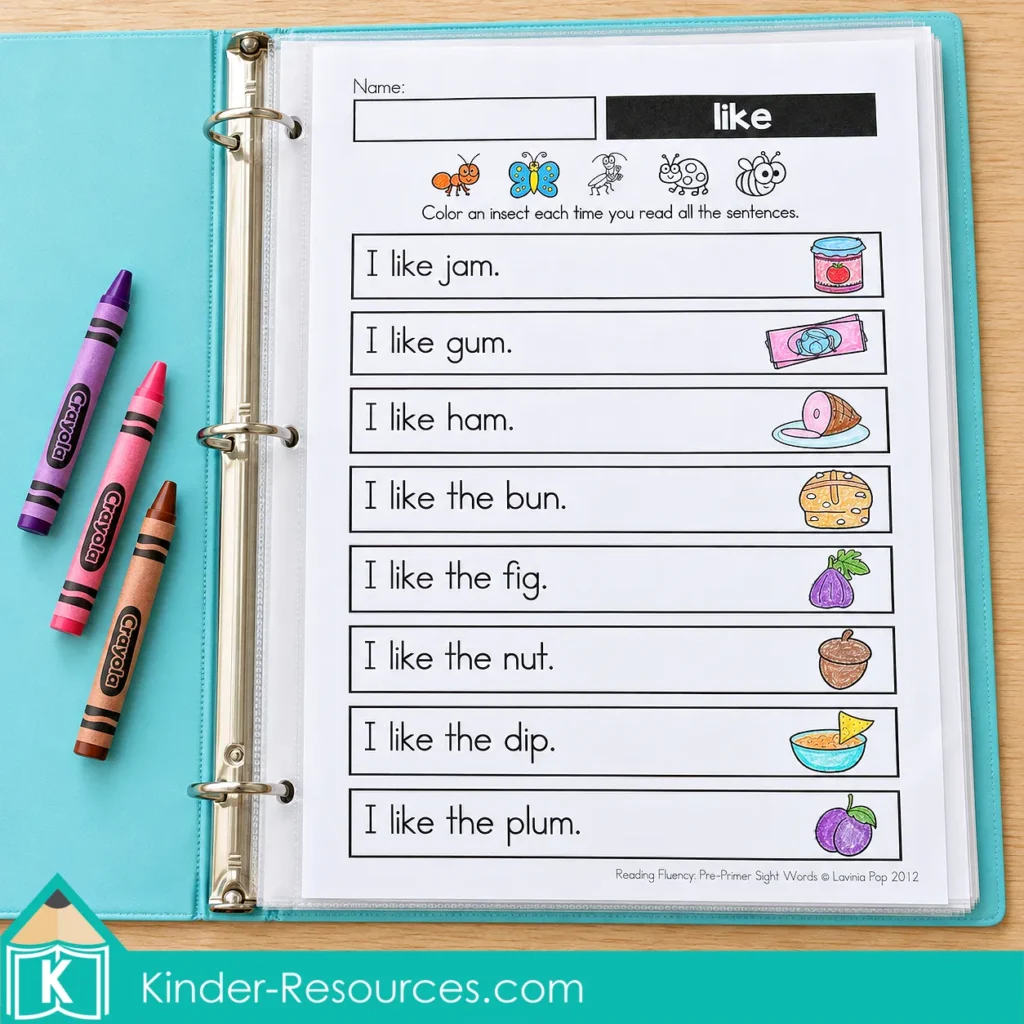
Keep the Pages in a Reading Folder
A reading folder or binder makes it easy to return to familiar pages.
Add a small selection of worksheets that children have already practised with support. During reading time, they can choose a familiar page to revisit before trying something new.
For classroom use, individual folders can hold pages selected for each child. For homeschool, a binder can keep your current reading pages together and make it easy to see which ones you have used.
If you place a page in a clear sleeve, remove it before children color the insects or illustrations. Return it to the sleeve when they have finished.
Practise Sight Word Reading Fluency with a Partner
The question-and-answer pages work well for reading with a partner.
Using the find page, one child can read:
“Can you find the kite?”
Their partner then reads:
“I can find the kite.”
Continue through the matching pairs, then swap roles so both children have a turn reading questions and answers.
Partners can share one worksheet or use a copy each. Remind both readers to follow the same question-and-answer pair.
In a homeschool setting, a parent or sibling can take one of the roles.
Make Reading Strips for a Pocket Chart
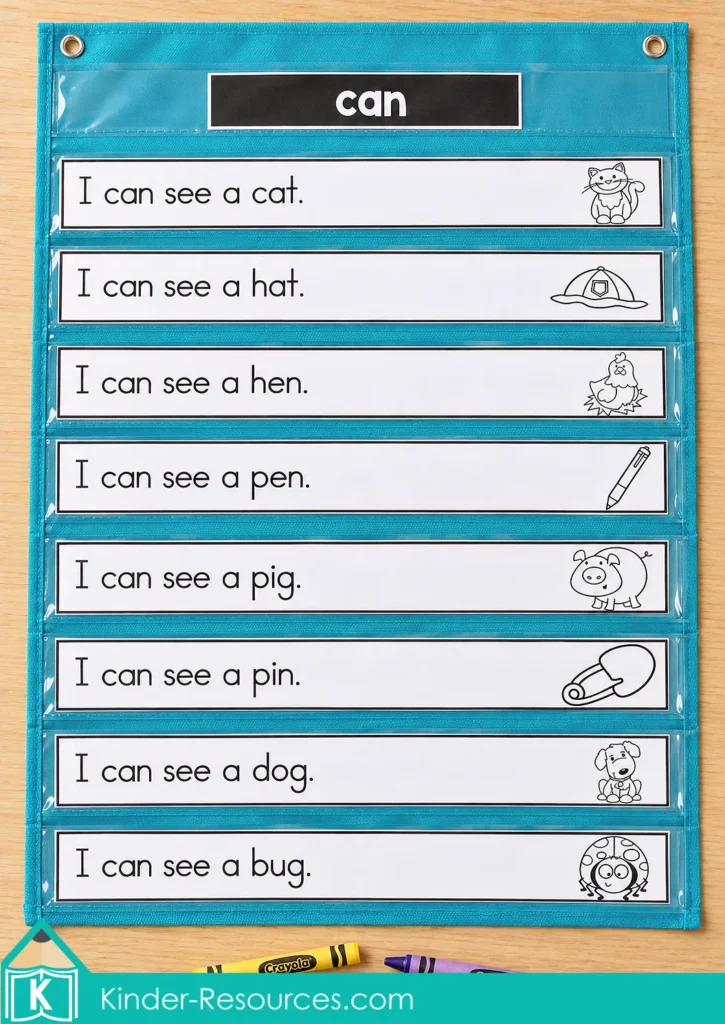
Pages with a picture inside each sentence box can be cut into individual reading strips.
Cut around the complete rectangular boxes, keeping each sentence and its matching picture together. Keep the original long strip shape so there is plenty of space between the words and the illustration.
Place the strips in a pocket chart for small-group reading. You can:
- Read one sentence at a time.
- Take turns choosing a strip to read.
- Find a sentence containing a particular word.
- Rearrange familiar strips to practise reading them in a different order.
The a and can pages are useful for this activity because each sentence has its own picture.
Pages with a separate picture bank work differently: cutting out their sentence boxes will not give every strip an attached illustration. Keep the picture bank available alongside those sentences if you use them separately.
Put the Reading Strips on a Binder Ring
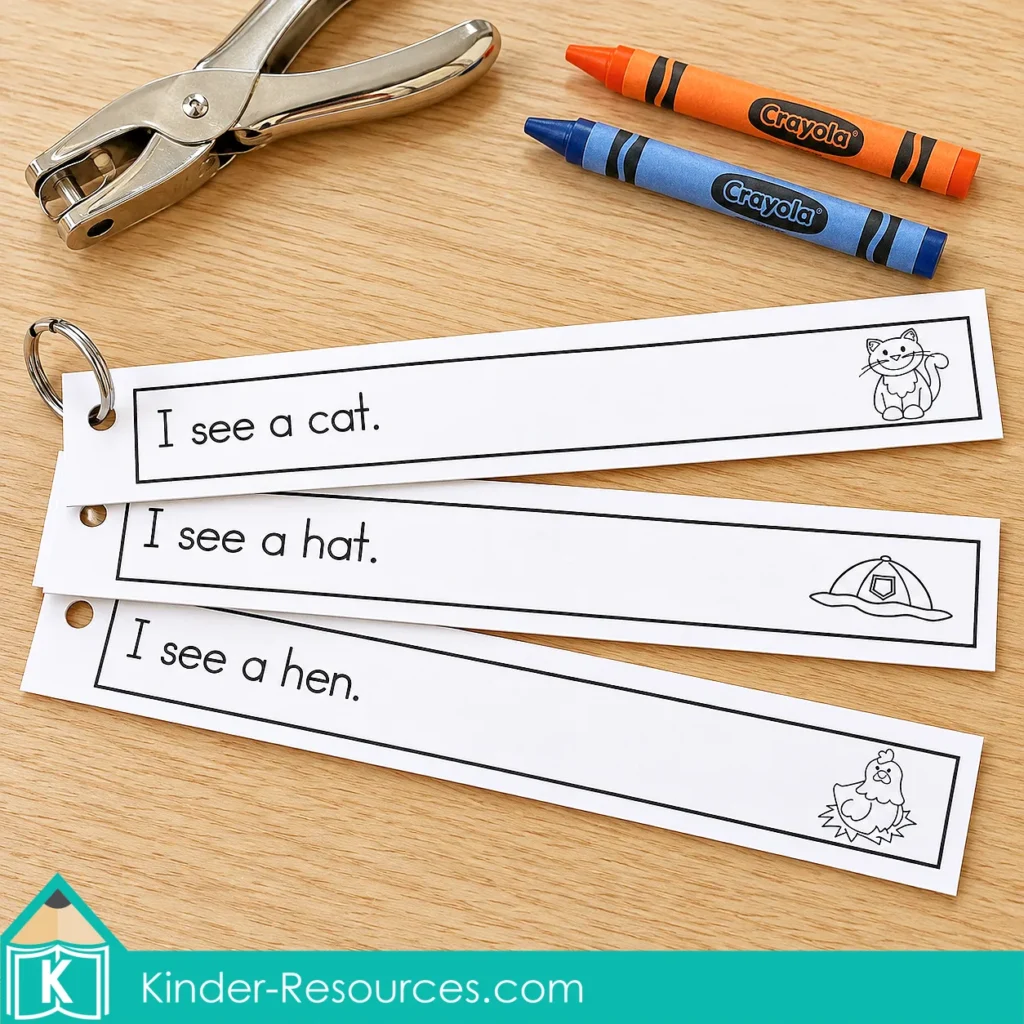
Turn your Pre-Primer Sight Word Reading Fluency pages into a portable reading set with a binder ring. This works with both types of reading strips: those with an illustration beside each sentence and those with a separate strip of vocabulary words and pictures.
Children can color the illustrations before you prepare the strips. Cut each reading strip as a complete, straight rectangle, leaving some extra white paper at the left end. Punch a hole in that margin near the upper-left corner, clear of the sentence and its black border.
For pages with a separate strip of vocabulary words and pictures, cut it off as one complete strip. Punch a hole in its left margin and attach it to the back of the set so children can flip to it for reference as they read.
Thread the strips onto a hinged binder ring. The holes should line up so the strips can turn around the ring without covering or damaging the words.
Children can flip through the sentences one at a time, read them to an adult, or revisit a few familiar strips during a short practice session.
Keep each set manageable. You can begin with a few sentences and add more as children become comfortable reading them.
Read and Draw
A quick drawing activity gives children a way to show what they understood.
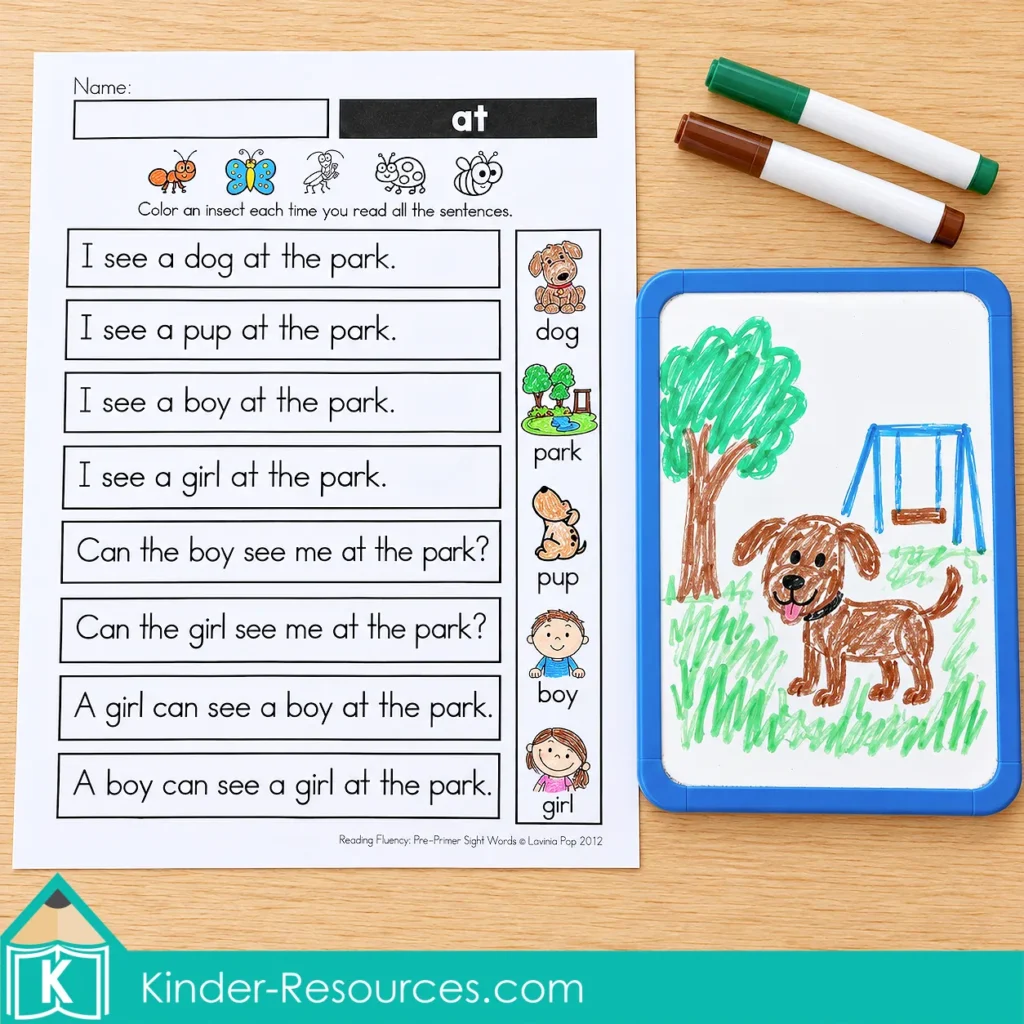
Choose a sentence from a page and ask the child to draw it on paper or a small whiteboard.
For example, after reading “I see a dog at the park.” from the at page, the child might draw a dog beside trees or play equipment.
When the drawing is finished, ask the child to read the sentence again and explain how their picture matches it.
This makes a simple follow-up for small groups, literacy centres, or reading time at home. The drawing can be quick and uncomplicated—the purpose is to connect the words with their meaning.
Read and Act with Toys
Add movement to pre-primer sight word reading fluency practice by using small toys to act out the sentences.
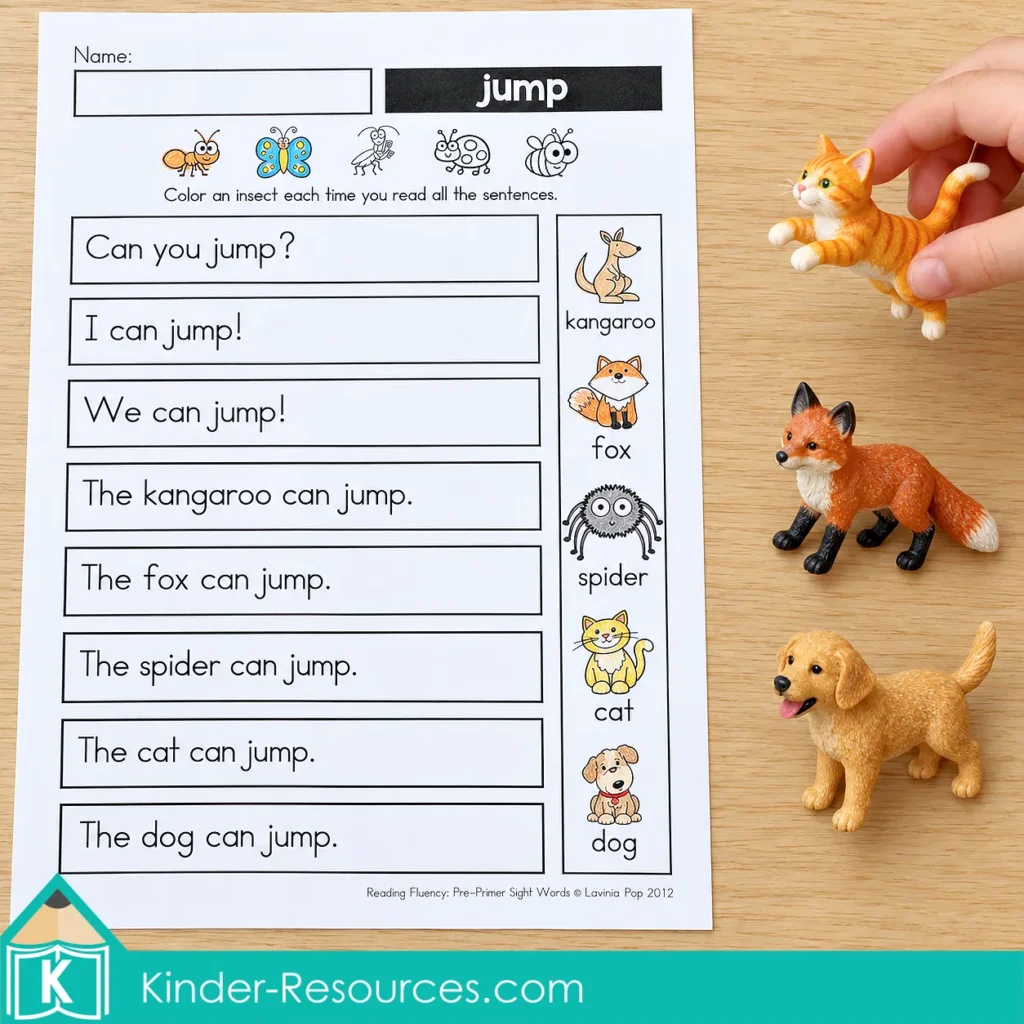
The jump page includes sentences such as “The cat can jump.” and “The dog can jump.” Children can read a sentence and use a matching toy to act it out.
Read first, act second, and then reread the sentence together.
If you do not have the matching toys, children can use puppets or act out suitable sentences themselves. This can be a useful movement break between short periods of seated reading.
Build Sentences with Homemade Word Cards
You can extend a familiar page with a few homemade word cards.
Write the words from one sentence on separate pieces of paper. For example:
I | can | see | a | cat.
Children can read the sentence on the worksheet, arrange the cards to match it, and read their completed sentence.
Once they are comfortable with that pattern, offer another ending, such as hen. or dog. Ask them to change the final card and read the new sentence.
These word cards are an optional activity you make to accompany the packet. Use words from the page your child is practising so the task stays closely connected to their reading.
A Simple Sight Word Reading Fluency Routine at Home
You do not need to use every activity with every page. One worksheet can support several short sessions.
A simple routine might look like this:
- Introduce the focus word and read the page together.
- Revisit the page and color an insect after a complete reading.
- Choose a sentence to draw, act out, or build with word cards.
- Read the page to another family member.
- Return to familiar sentences later for another supported or independent reading.
Adjust the amount of reading to suit your child. If a page needs a lot of help, continue reading together before expecting independent practice.
Download a Free Sight Word Reading Fluency Sample
Would you like to try these reading pages with your children? Download the free Pre-Primer Sight Word Reading Fluency sample and explore how the pages fit into your classroom or homeschool reading routine.
Start by reading a page together, then revisit it during short practice sessions. Children can color an insect after each complete reading. You can also try one of the activities above, such as partner reading, drawing a sentence, or making reading strips.

Add These Pages to Your Reading Routine
Whether you use the worksheets in a folder, read with a partner, display sentences in a pocket chart, or keep strips on a binder ring, the packet gives you several ways to revisit the same reading material.
Start with the printed page, then choose an extension that suits your learners. A few familiar sentences and a short, purposeful activity can make reading practice easy to return to.
You can find the Pre-Primer Sight Word Reading Fluency packet in both shops:


Happy Teaching! 😊
You Might Also Like