
A pumpkin theme offers plenty to explore, from curly vines and tiny seeds to pumpkins of different shapes and sizes. These pumpkin preschool worksheets bring that theme into activities children can color, trace, count, cut, and put together.
You can choose a page to follow a pumpkin story, add a little counting to a fall activity, or spend some time tearing paper and making a pumpkin picture. There’s no need to work through every page—start with something that suits the skills your child is practicing.
Free Pumpkin Preschool Worksheets to Try
If you’d like to try a few activities, you can download the free sample pages below.
Print the pages you’d like to use and gather the supplies shown on each one. Crayons, a pencil, scissors, and glue will cover many of the activities, with torn orange and green paper for the pasting page.

Pumpkin Preschool Worksheets for Fine Motor Practice
These pumpkin preschool worksheets give little hands several ways to get involved. Children can scrunch tissue paper, arrange pumpkin pieces, or follow tracing paths, depending on the kind of practice they are ready for.
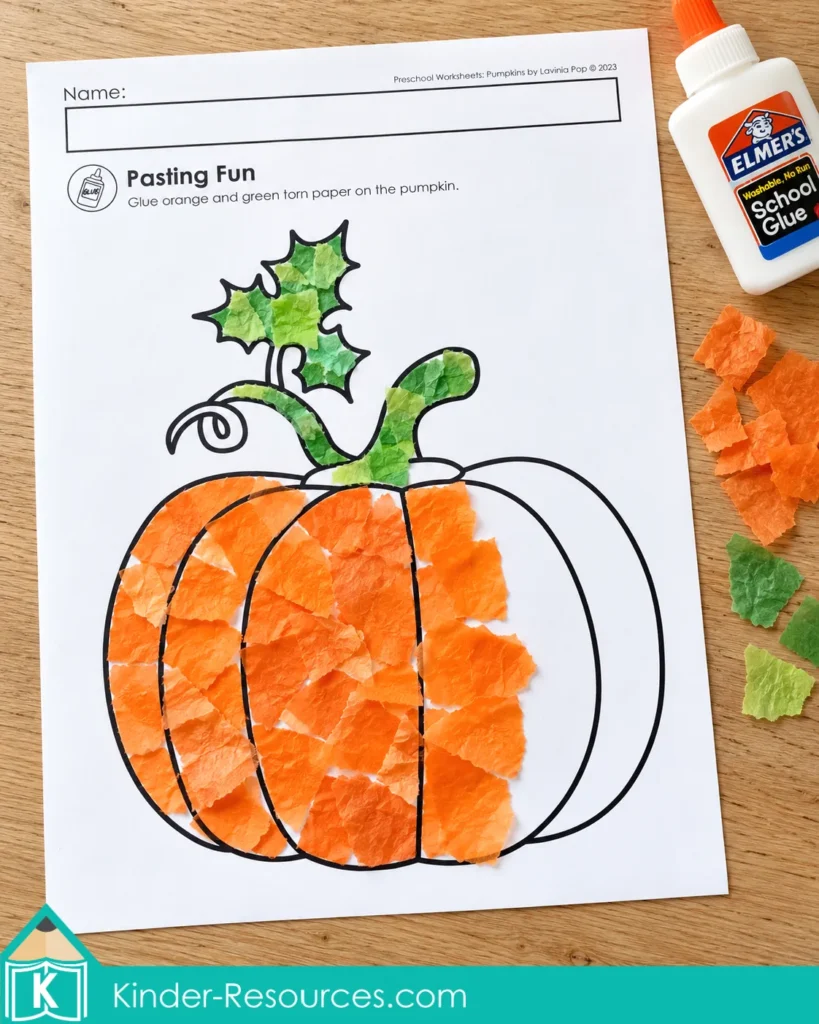
The pasting pumpkin is a lovely place to begin. Children tear orange and green paper into small pieces, then glue them onto the picture. Tissue paper adds a little texture, and the pieces don’t need to be perfectly shaped. Tearing, picking up, and placing each piece are all part of the activity.
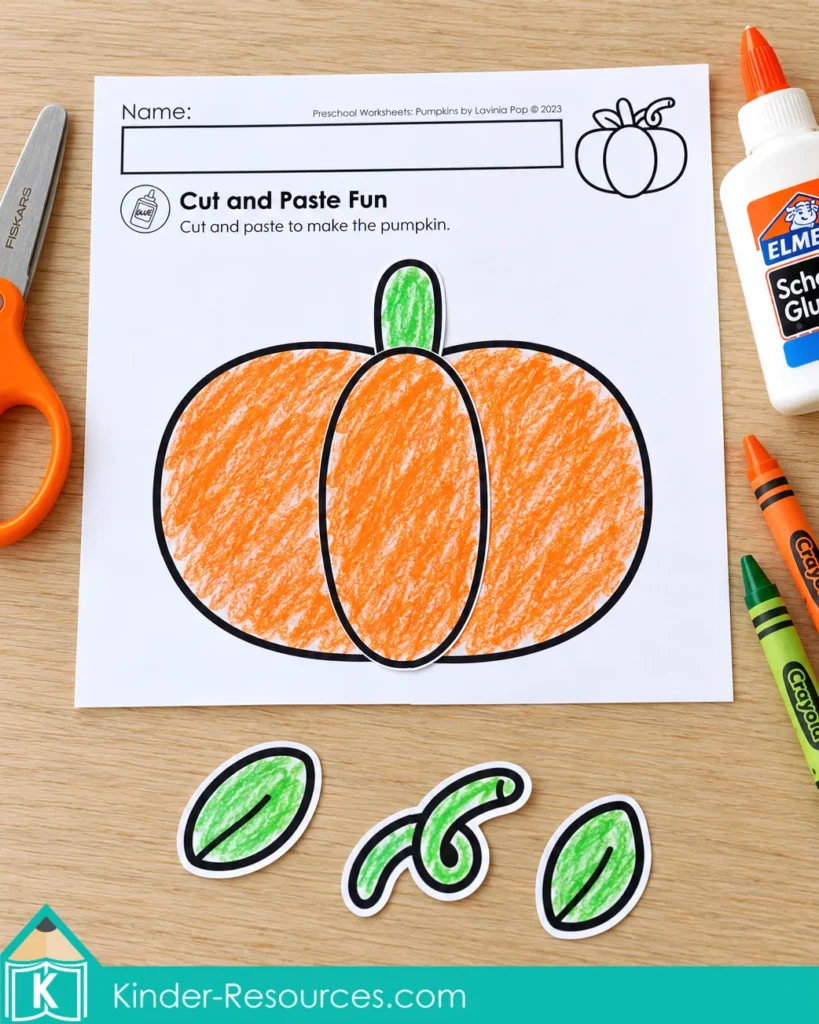
For children practicing cutting, the cut-and-paste pumpkin offers another way to build a picture. Before reaching for the glue, lay out the pieces and talk about where they belong. Which part is the stem? Where will the leaves go? Moving the pieces around first gives children time to work out how the picture fits together.
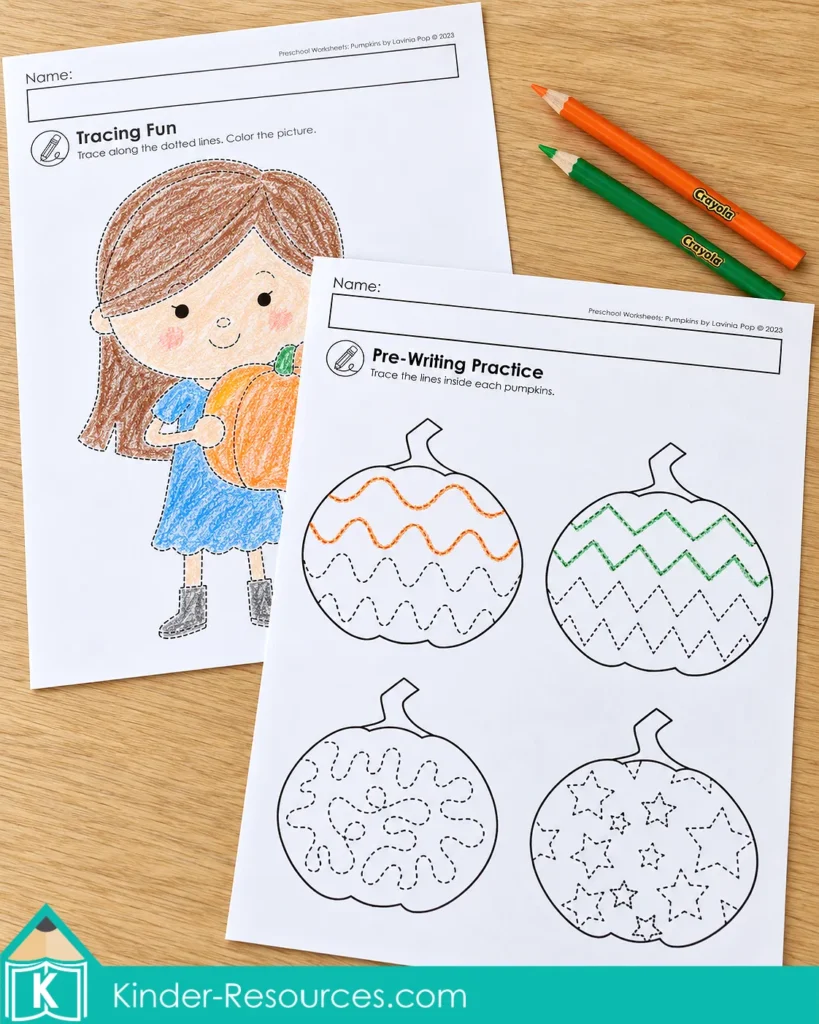
The prewriting and tracing pages offer a change of pace. Children can follow a path with a finger before trying it with a pencil. A few carefully followed lines are enough for one sitting; the rest can wait for another day.
Pumpkin Letter Activities for Names and the Alphabet
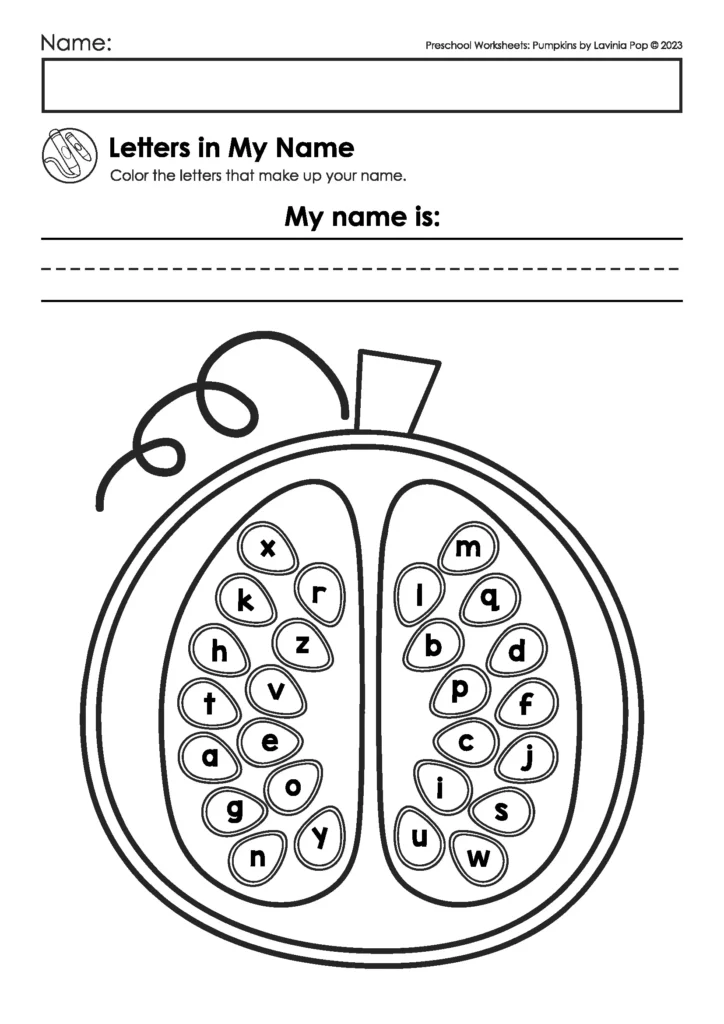
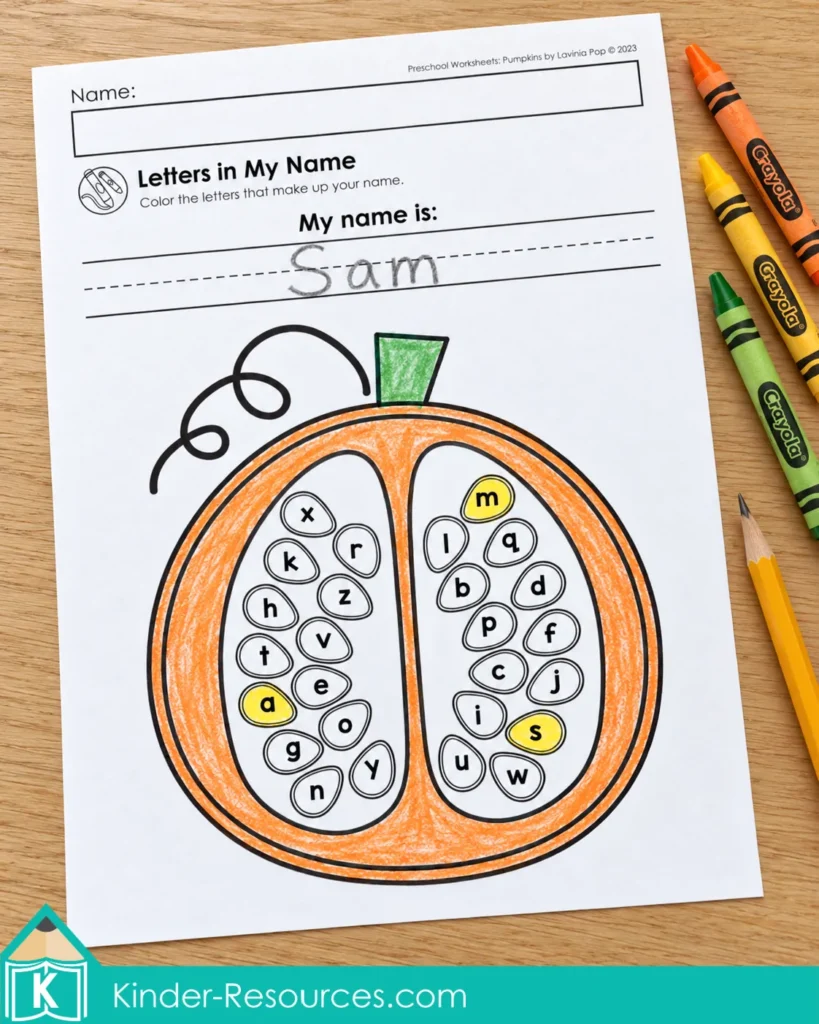
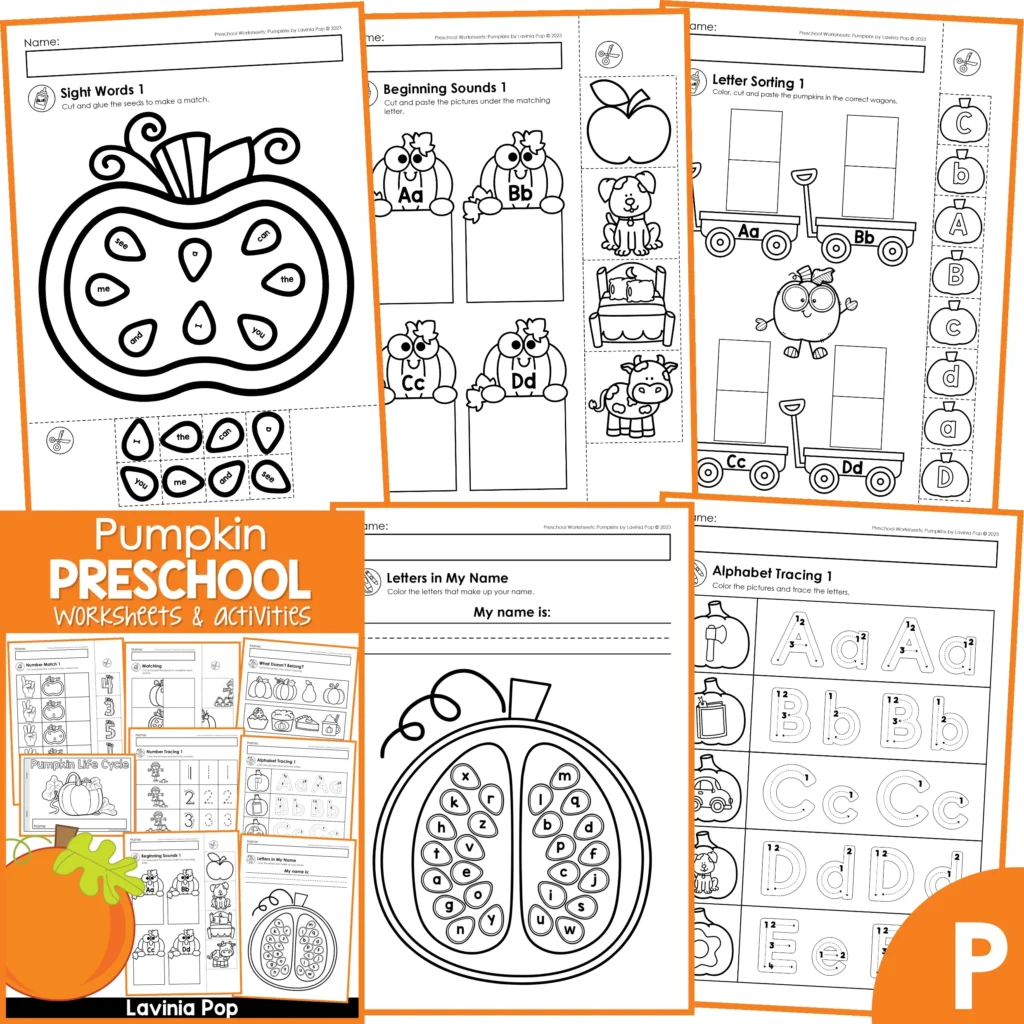
A child’s name gives letter practice a familiar starting point. On the name activity, children look through the letters inside the pumpkin and color those that appear in their name. Keep a written name nearby so they can check one letter at a time.
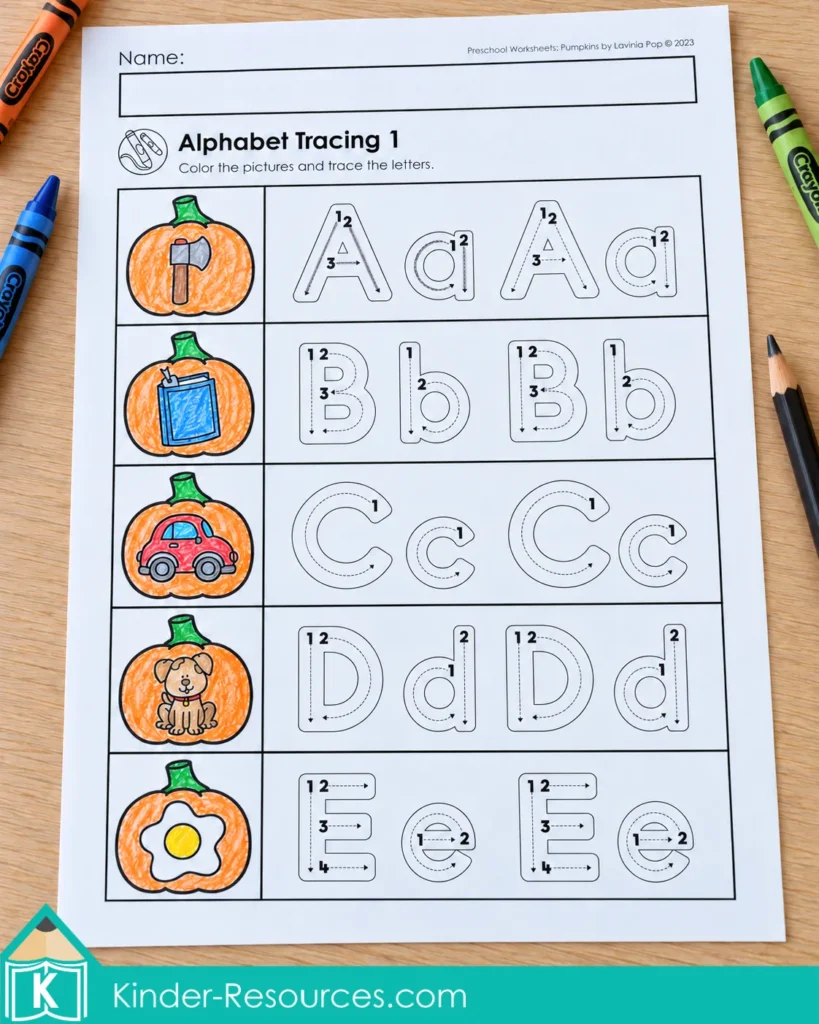
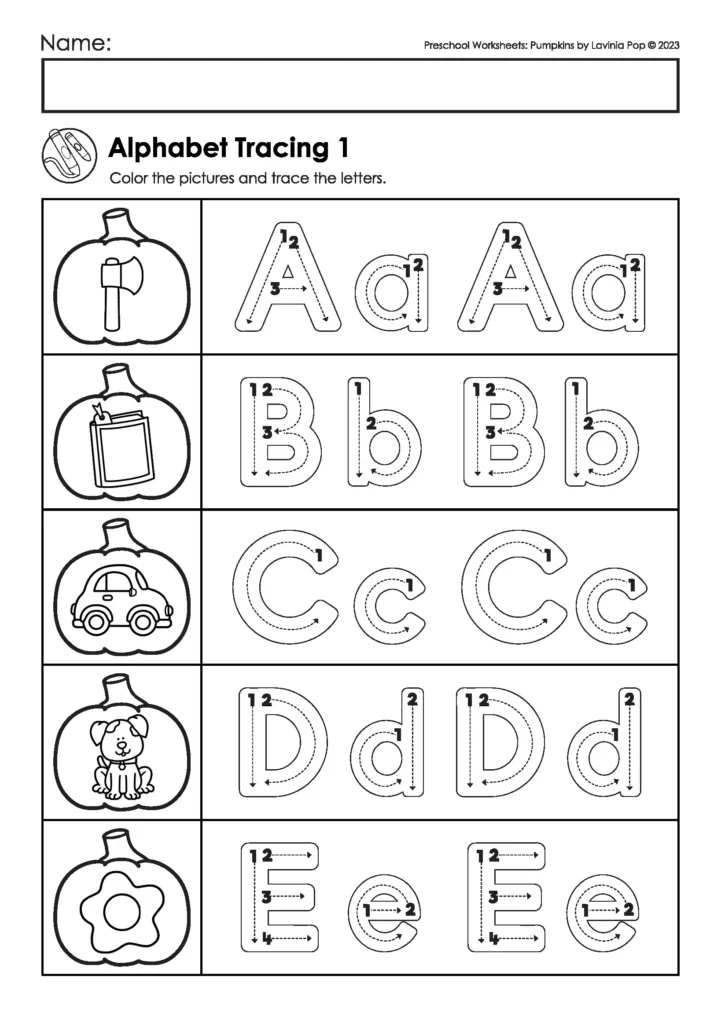
You can continue that conversation with the alphabet tracing page. Look at the picture, name the letter, and trace along the guide. Children who are still getting used to the movement can try it with a finger first.
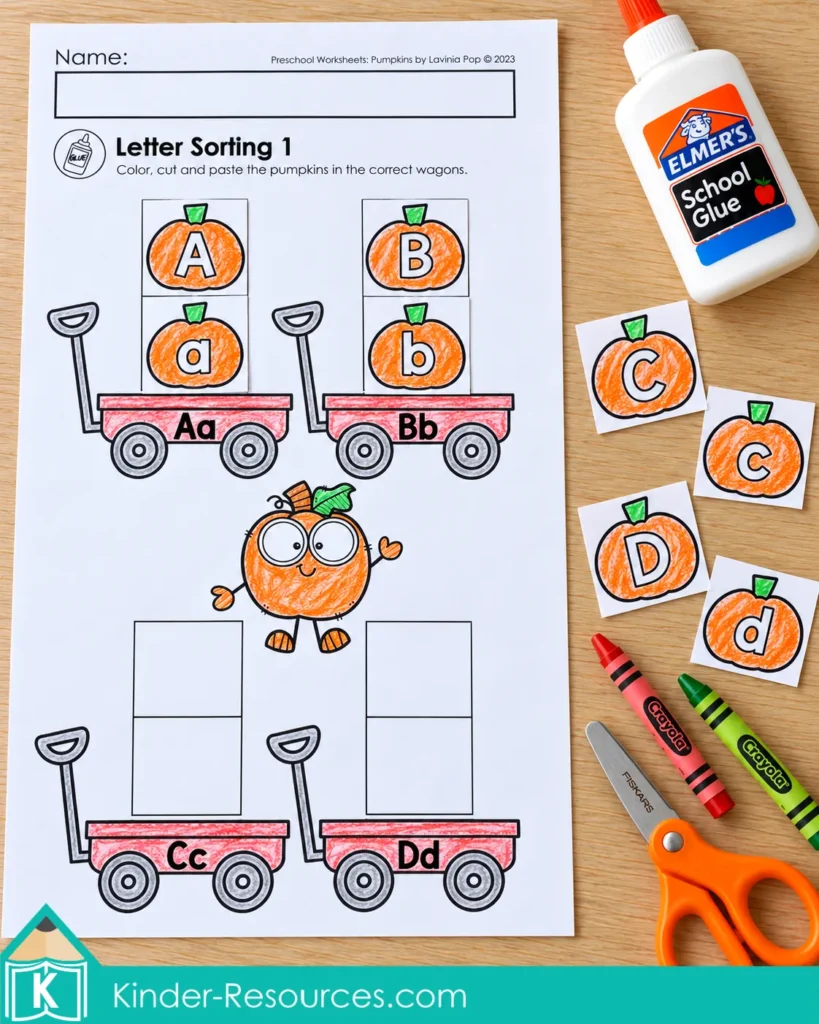
The letter sorting page adds cutting and matching. Set out the letter pieces and compare their shapes before pasting them. Uppercase and lowercase letters don’t always look alike, so it helps to name each pair together as you go.
Pumpkin Literacy Activities for Sounds and Early Reading
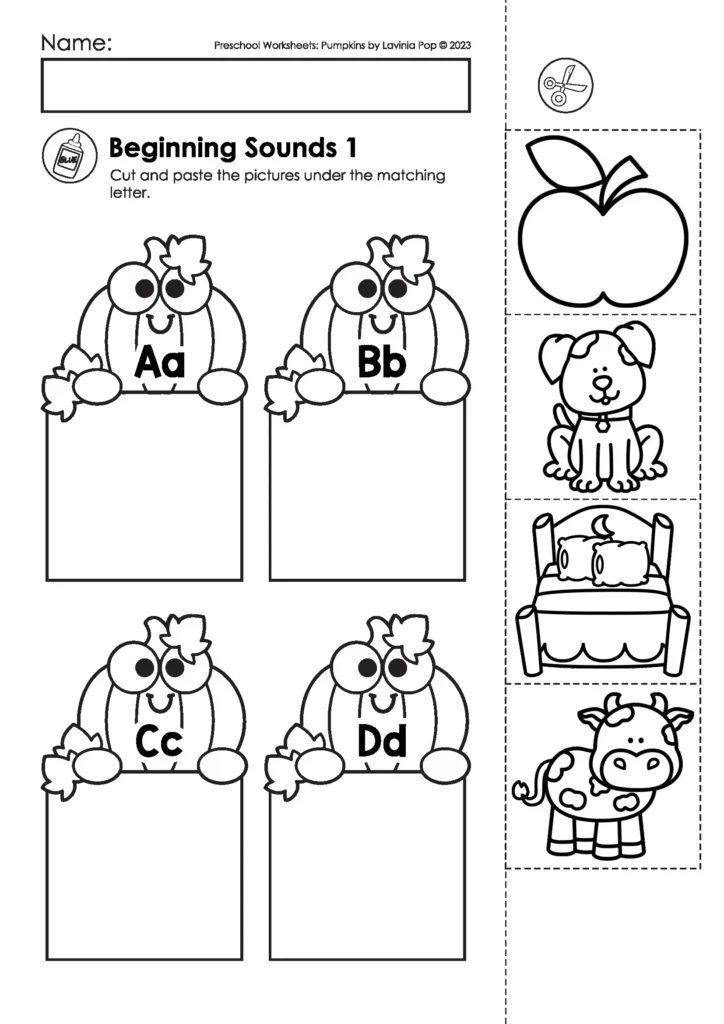
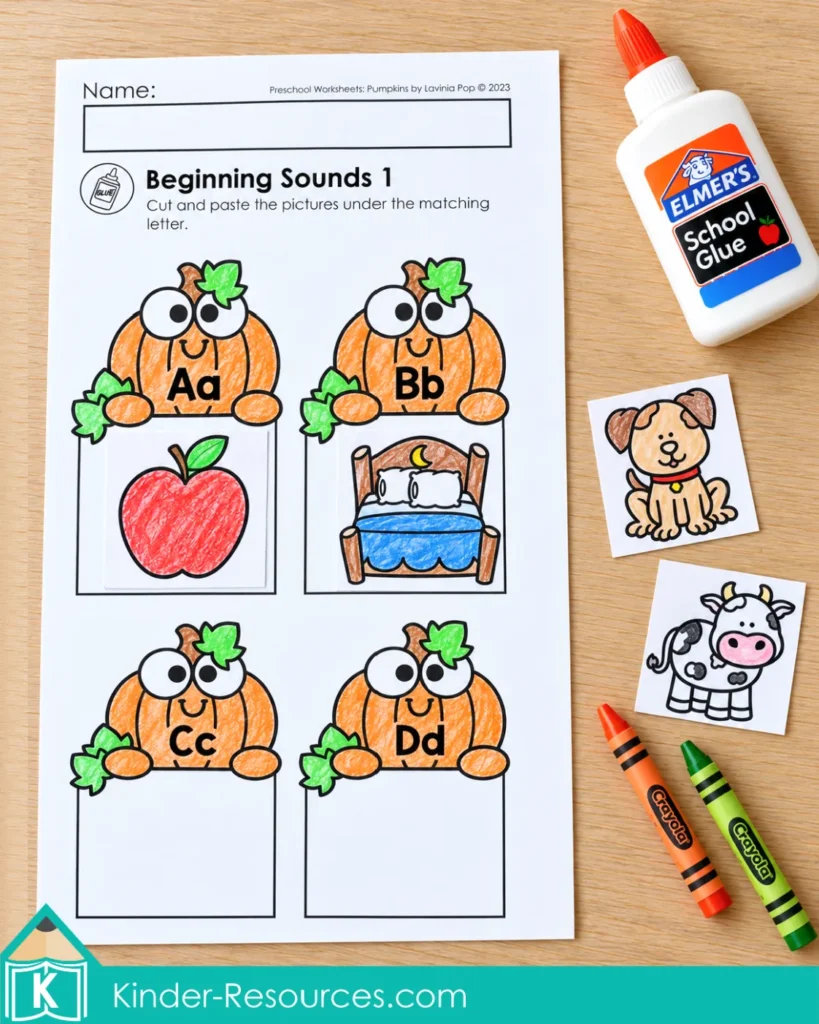
Before completing the beginning sounds page, spend a moment naming the pictures together. Say “apple,” then draw attention to the first sound. Children can find the matching letter and place the picture underneath it. Naming everything first also helps avoid confusion when a child uses a different word for a picture.
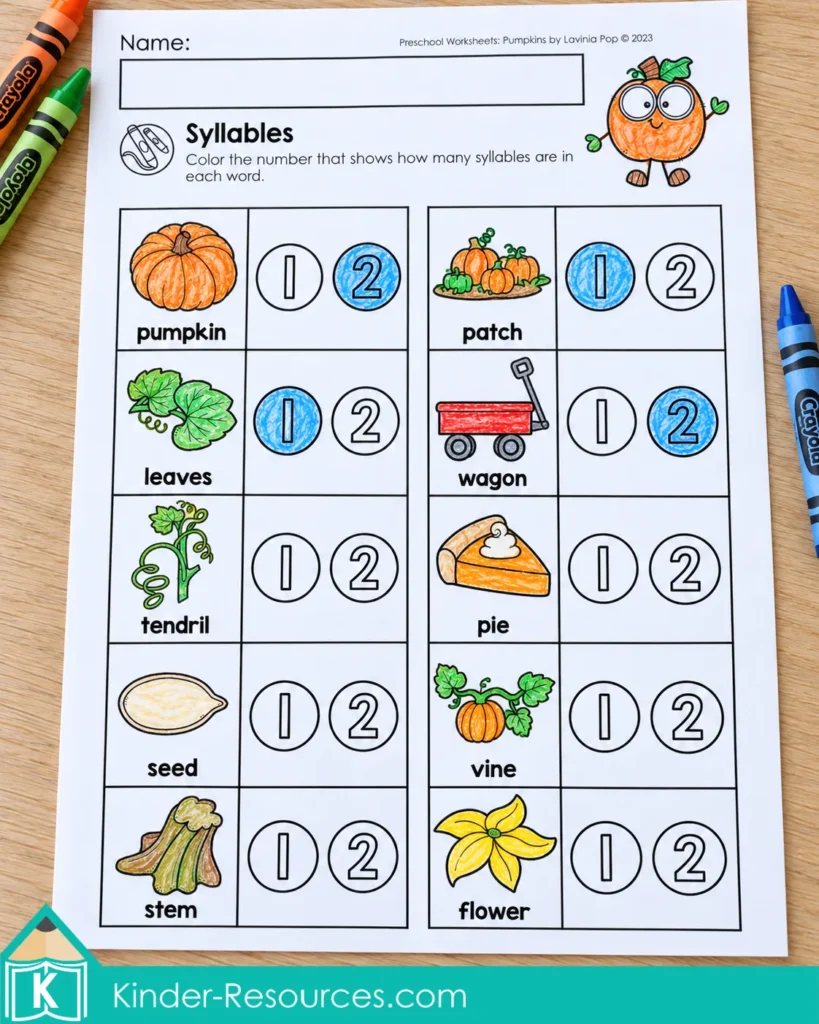
The syllable page brings in a little movement. Say each picture’s name slowly and clap its parts before choosing an answer. Try the word again at a normal speaking pace, then repeat the claps together.
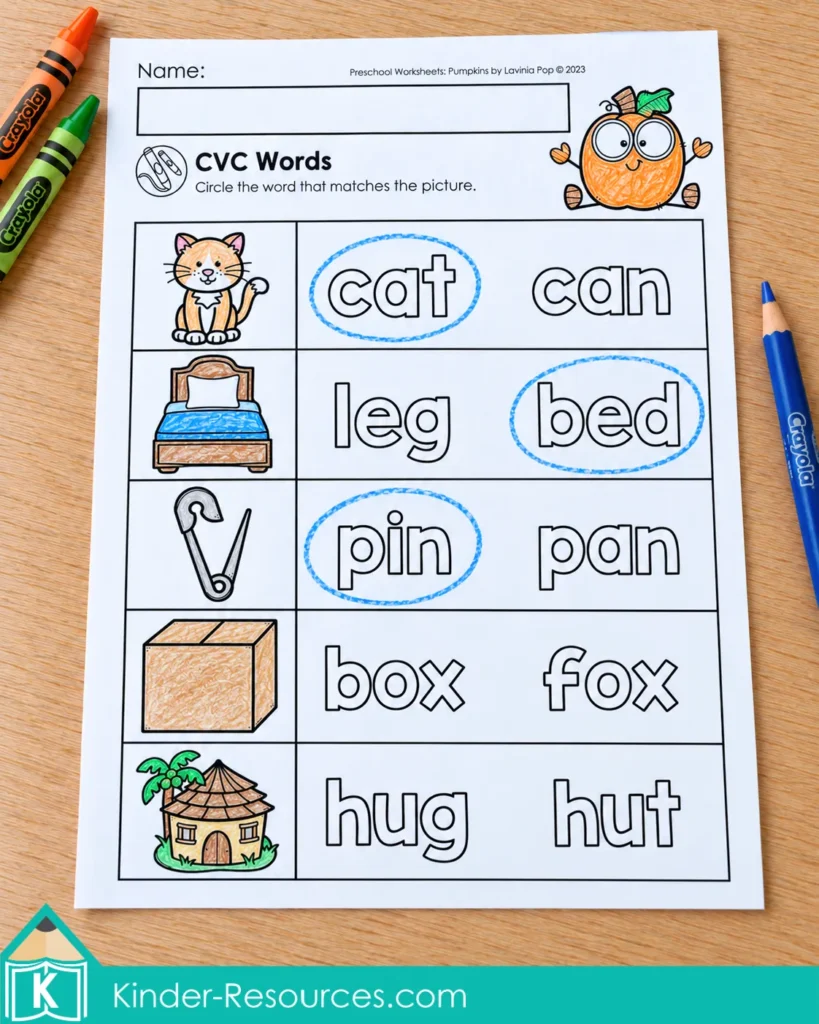
For children who already know the letter sounds and are beginning to blend, the CVC word page offers a further step. Say the picture’s name, sound out the word choices, and circle the one that matches. Children who are still learning beginning sounds can stay with those activities and return to the word-reading page later.
Pumpkin Preschool Worksheets for Counting and Number Practice
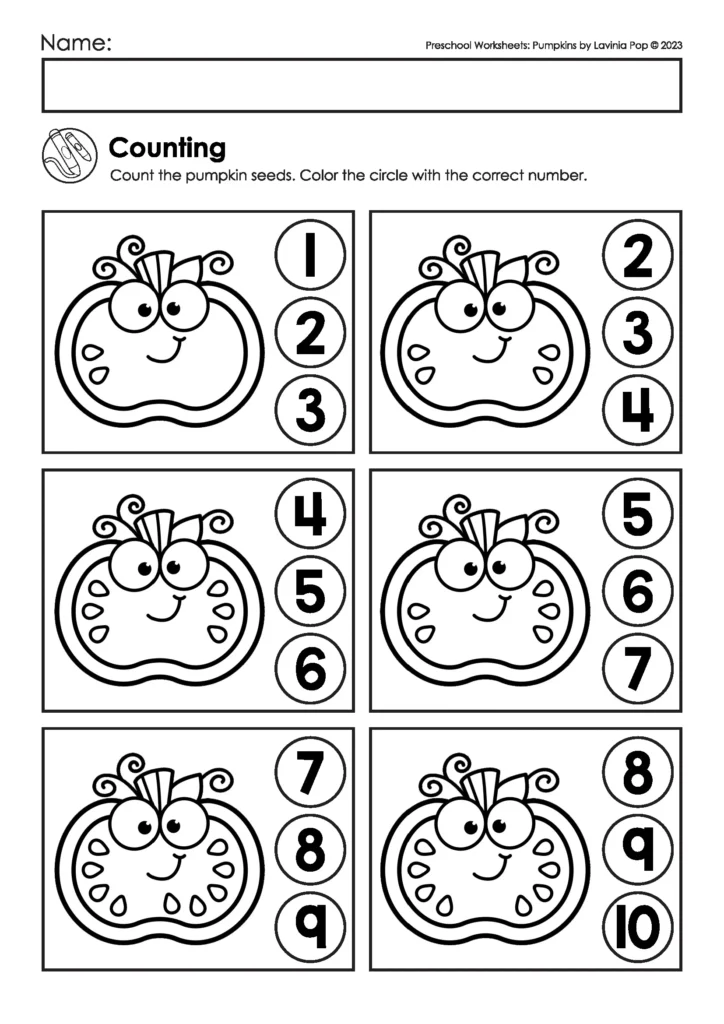
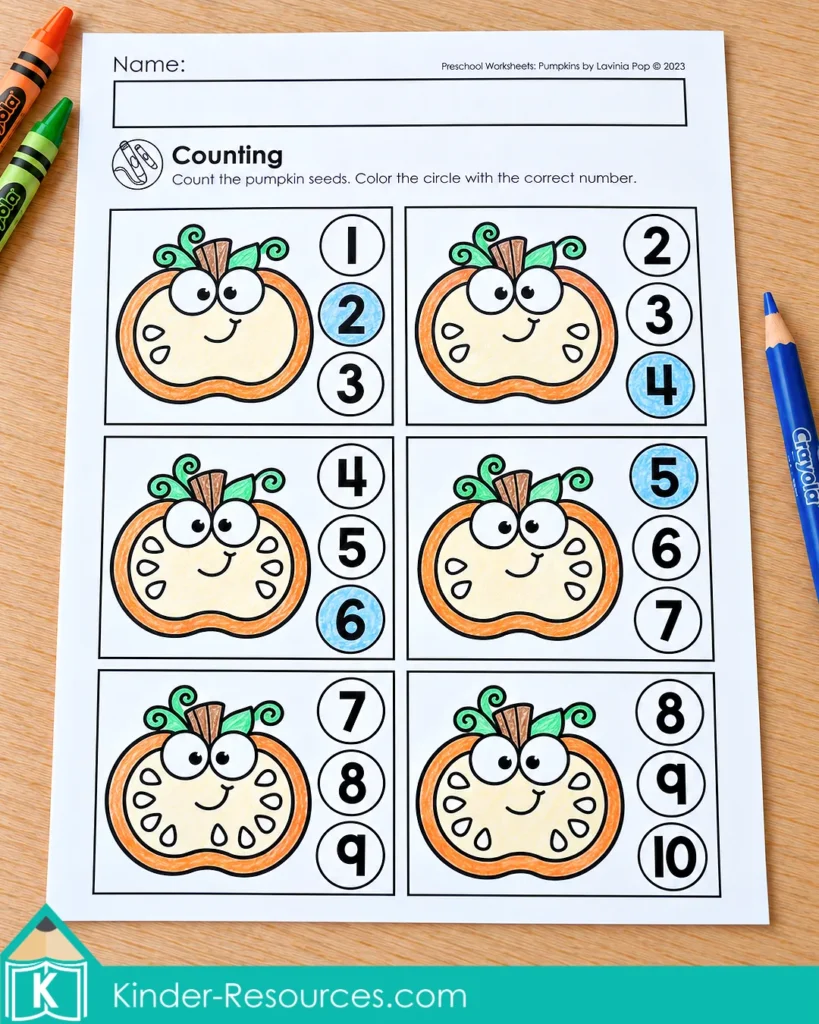
The pumpkin seed counting page encourages children to look closely and count one item at a time. Point to each seed while counting, then find the matching numeral. If the total changes on a second attempt, slow down and check that each seed has been counted once.
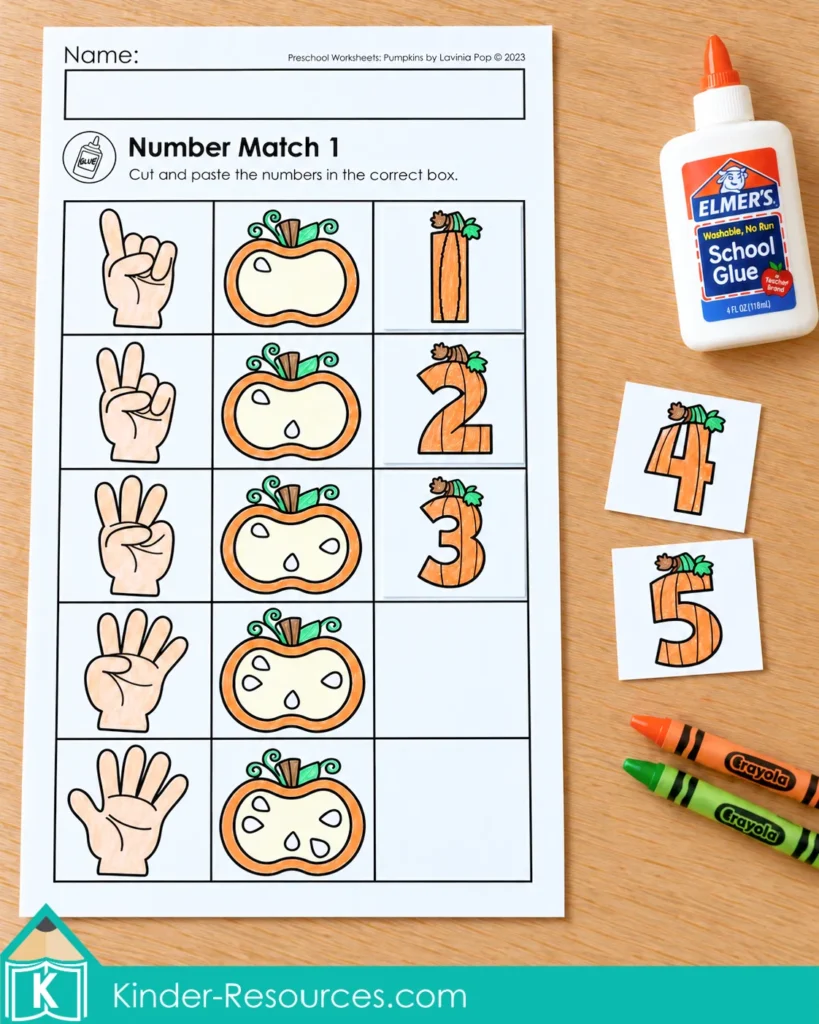
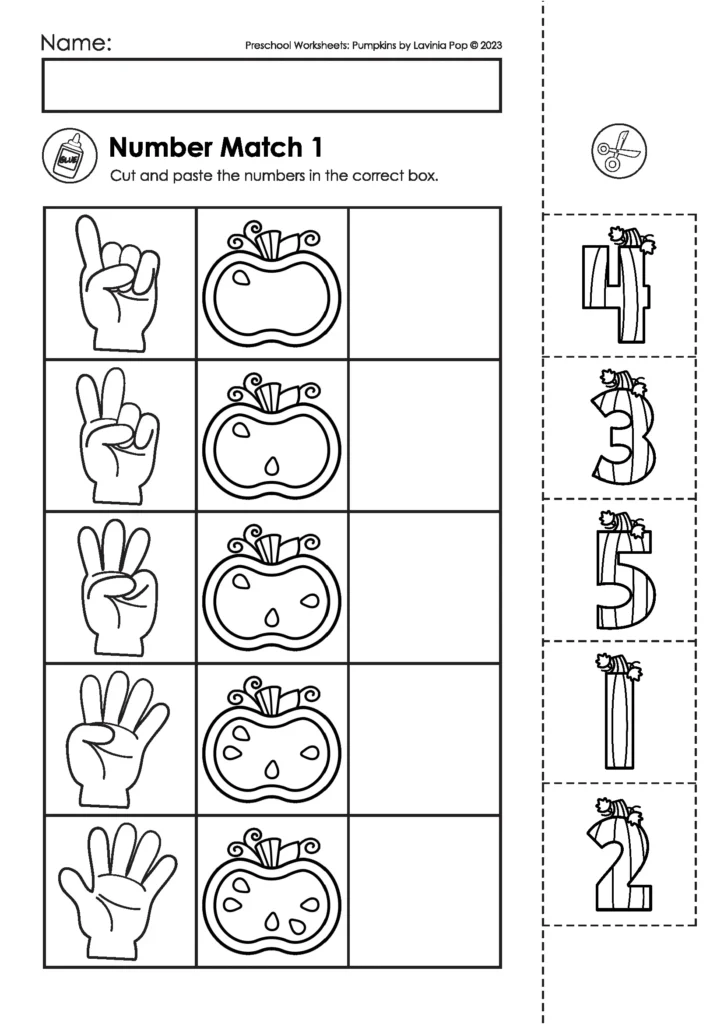
Number matching gives children another way to explore the same idea. A numeral, a group of seeds, and fingers on a hand can all show the same amount. Before gluing a number into place, count the pictures and compare them with the fingers.
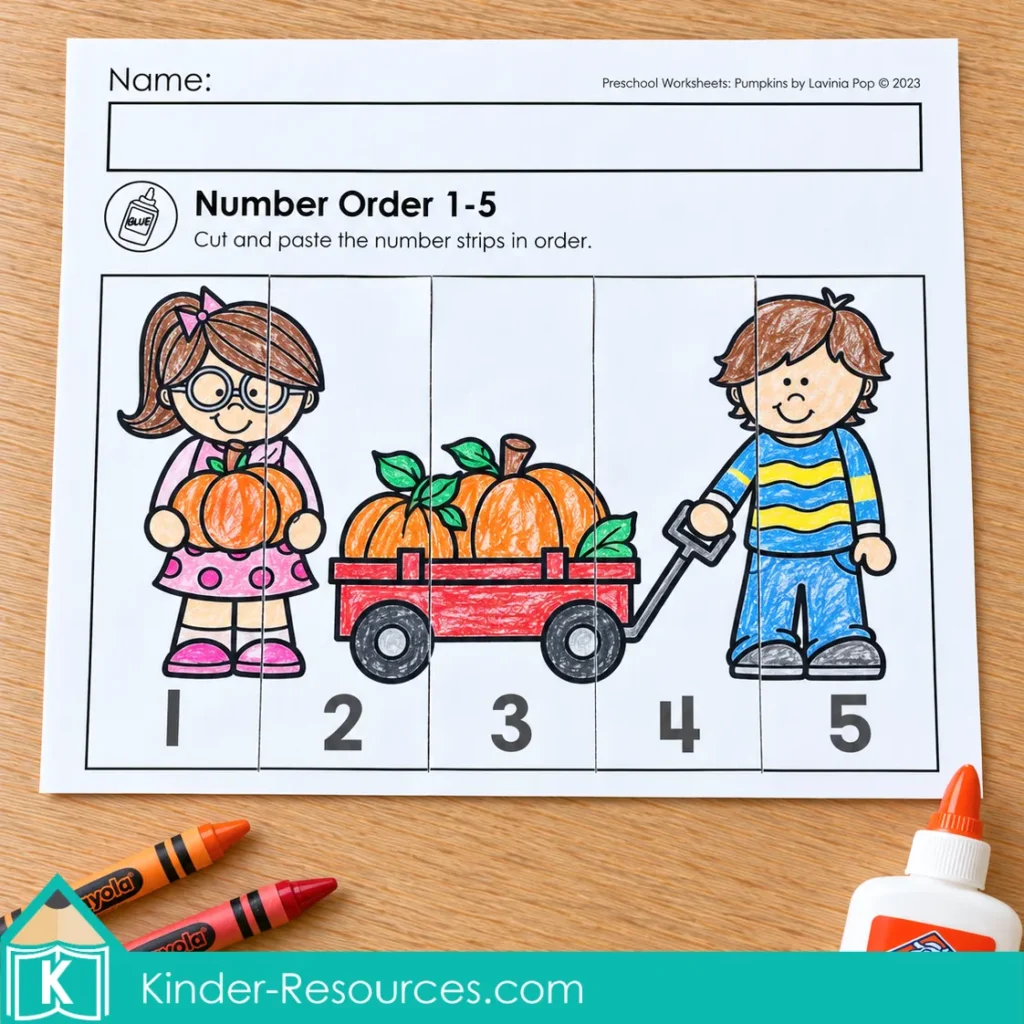
The number-order puzzle adds a picture to the counting sequence. Children arrange the strips in order, then check how the illustration joins together. You can say the numbers aloud as each strip is placed and count along the finished row once more before pasting.
Pumpkin Math Activities for Shapes, Patterns, and Graphing
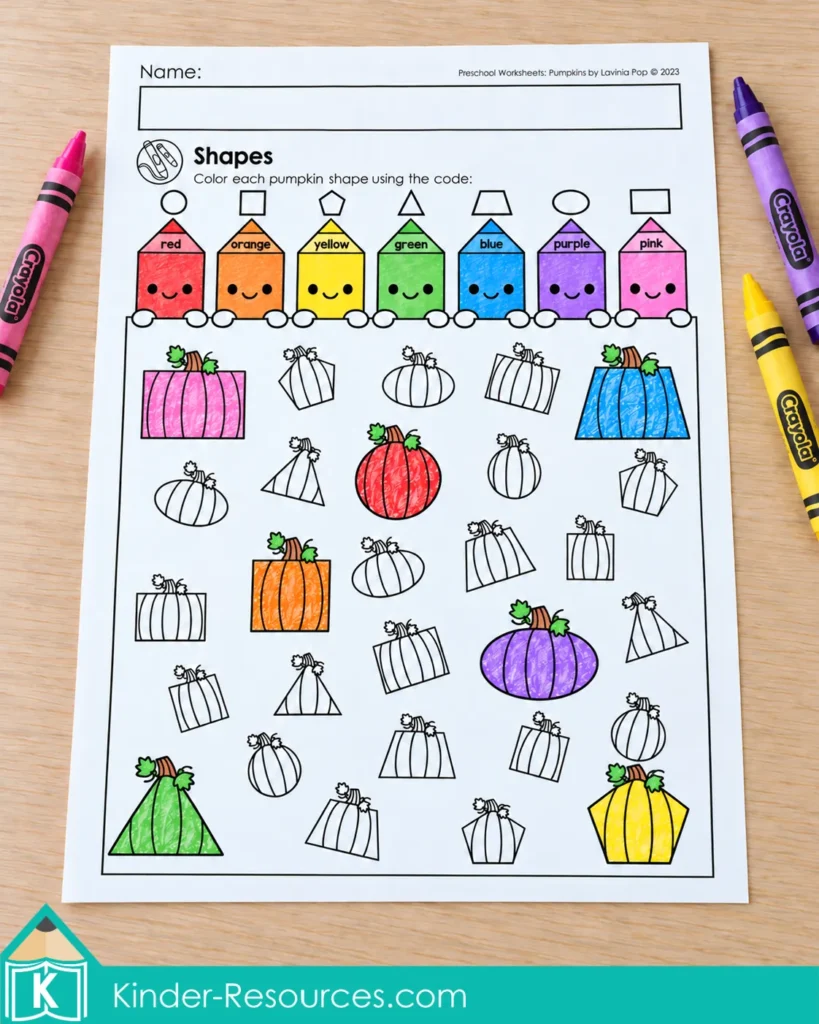
The shape page invites children to look past the pumpkin details and notice the outside edge. Is it round? Does it have corners? Choose one shape from the color key and find a matching pumpkin before moving on to another.
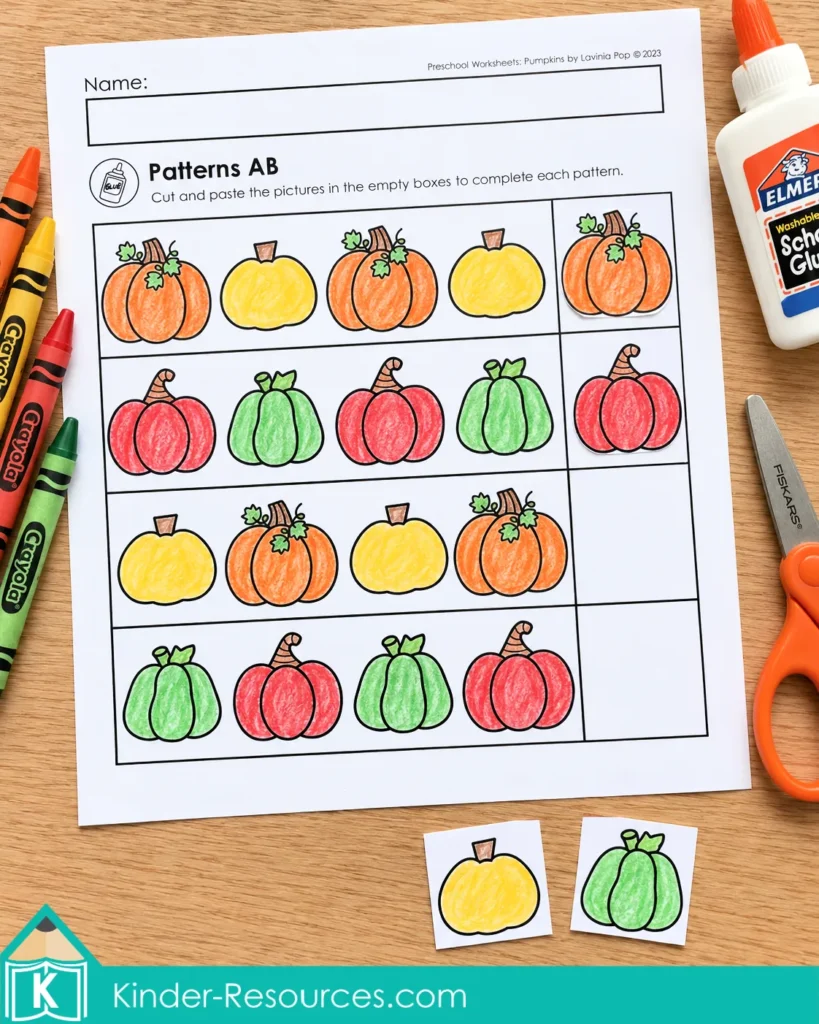
On the AB patterns page, point to each picture and say the repeating sequence aloud. Once children notice which two pumpkins repeat, they can choose the piece that comes next. Let them place the cutout in the empty box and read the whole pattern again before gluing it down.
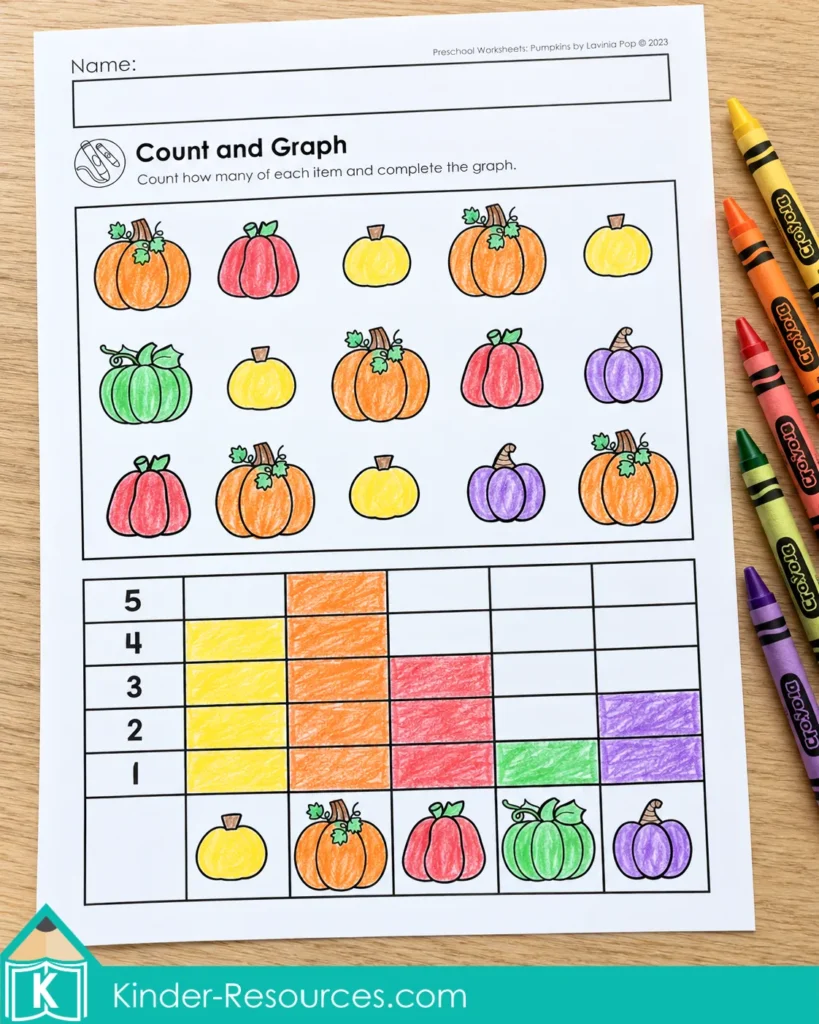
The counting and graphing page brings several steps together: finding matching pumpkins, counting them, and coloring the correct number of boxes. Work on one pumpkin type at a time. Matching the pumpkin in the graph’s key to its bar color makes the finished graph easier to follow. Then ask, “Which kind has the most?” or “Which has the fewest?”
Pumpkin Picture Activities for Matching and Positional Words
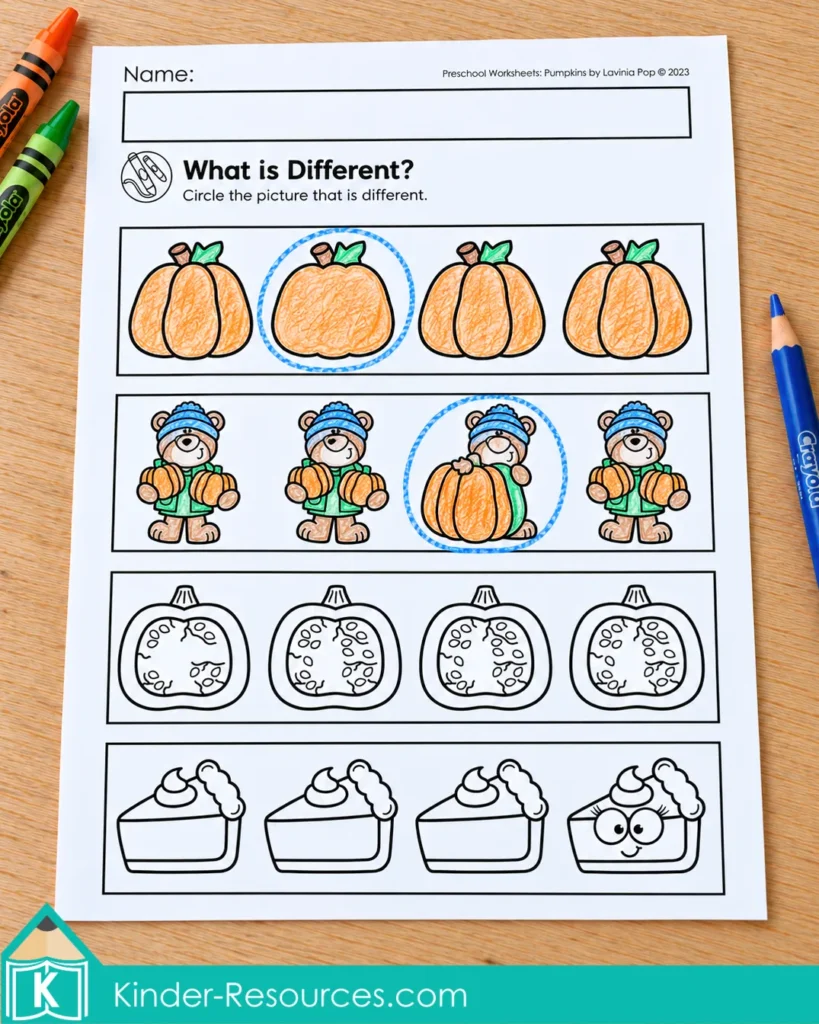
Some of the pumpkin activities are useful for slowing down and noticing small details. On the “What Is Different?” page, children compare the pictures in each row and find the one that changes. Ask them to explain what they noticed before circling it.
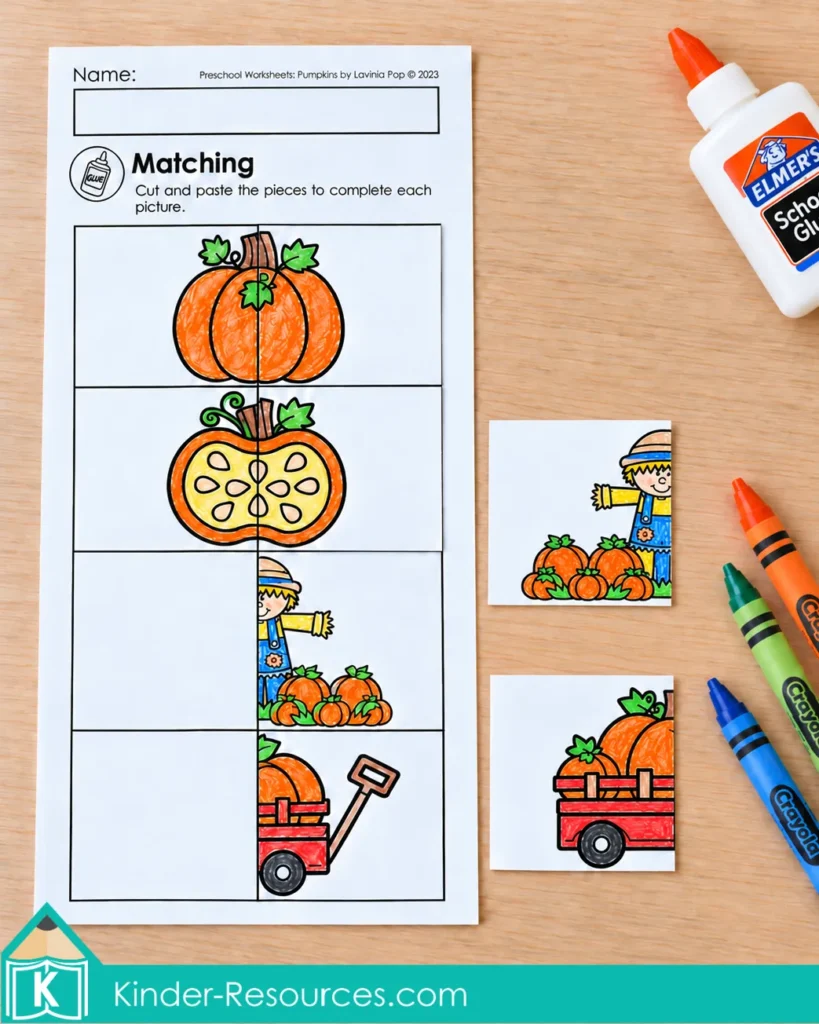
The picture-half matching page takes that observation a little further. Children look at an unfinished picture, find the missing half, and check whether the lines meet. Placing the pieces without glue first makes it easy to swap them around and try again.
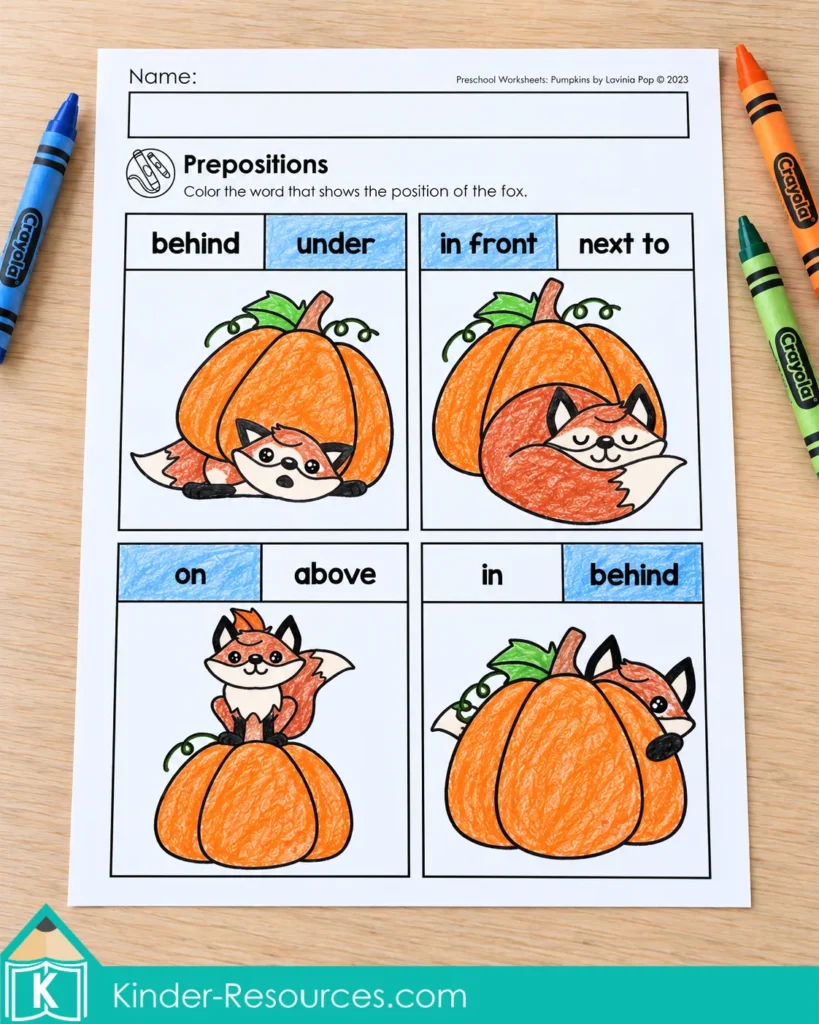
The fox prepositions page gives you plenty to talk about, too. Where is the fox in relation to the pumpkin? Read the two word choices aloud and let children point to the picture as they explain their answer. You can follow up with a toy and a small object, taking turns placing the toy on, behind, or in front of it.
Pumpkin Life Cycle Reading and Sequencing Activities
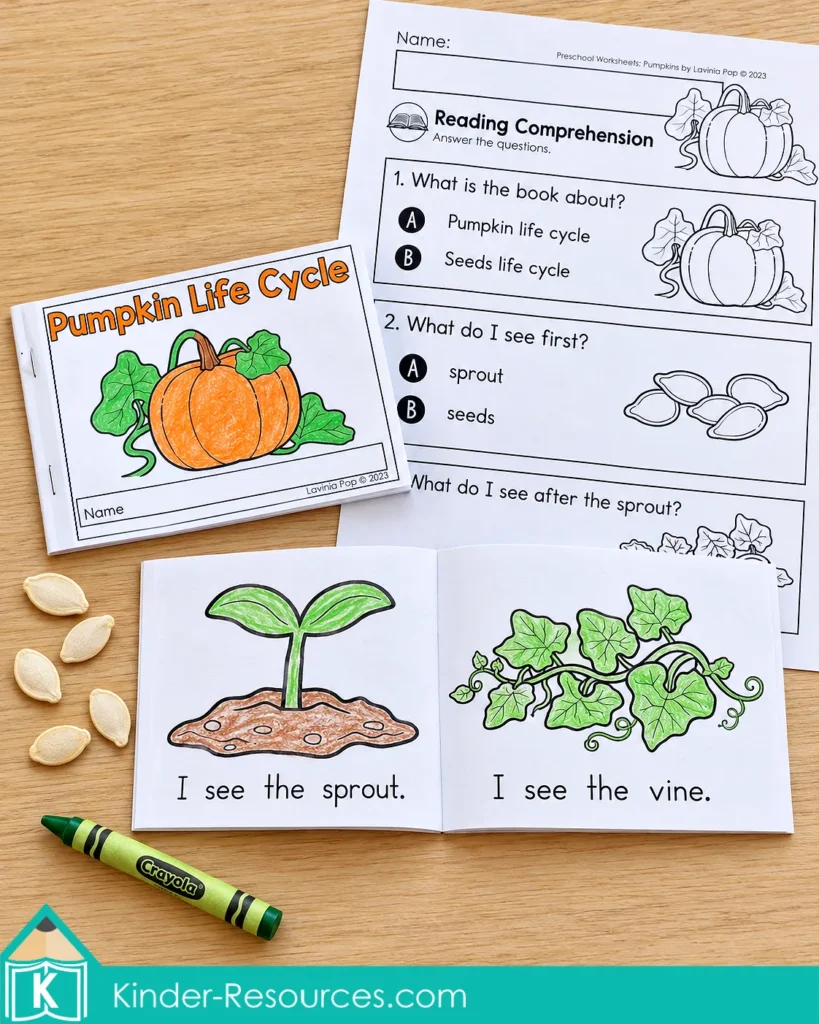
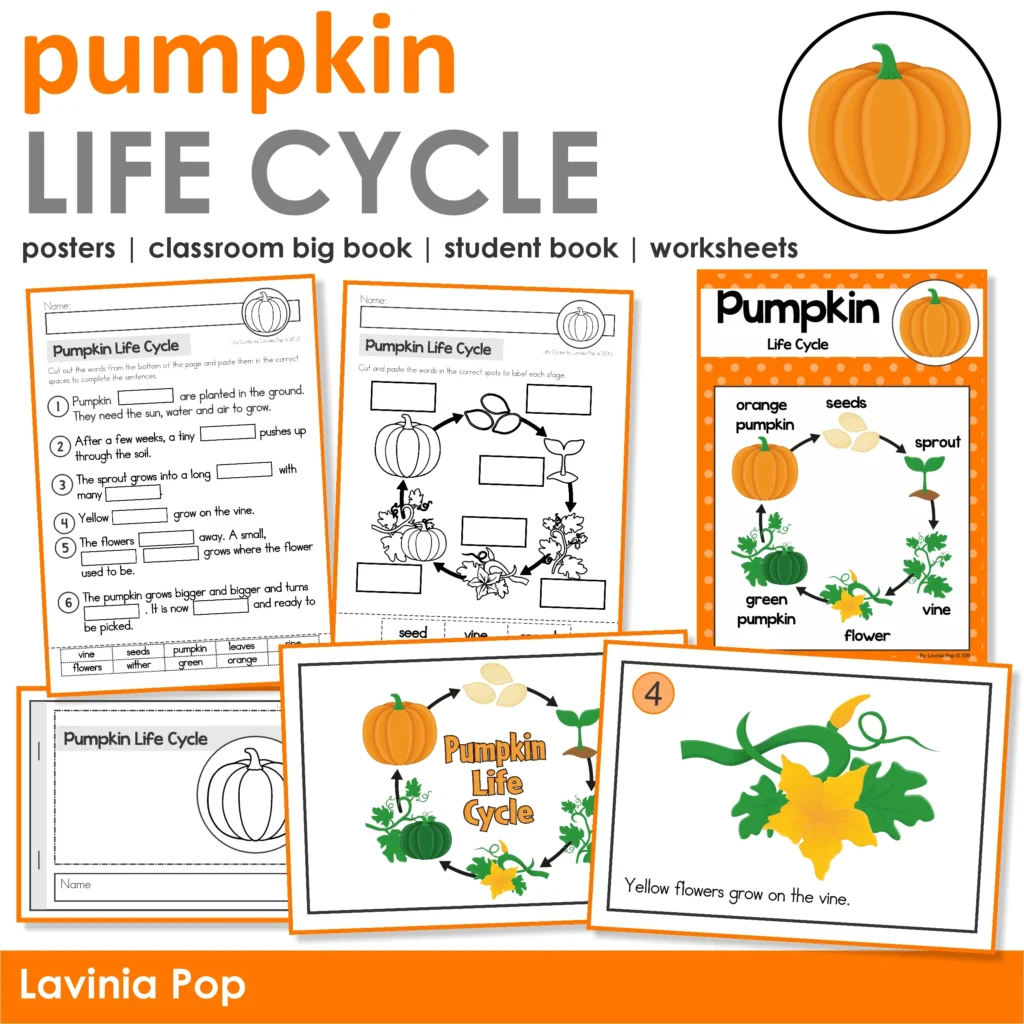
The Pumpkin Life Cycle mini-reader offers a way to bring a short reading activity into the theme. Look through the pictures together, read the text aloud, and pause to talk about what changes as the pumpkin grows.
Keep the reader nearby when working on the comprehension page. Children can look back through it, point to the pictures, and talk about their answers. The page can be completed together, with an adult reading the questions and choices aloud.
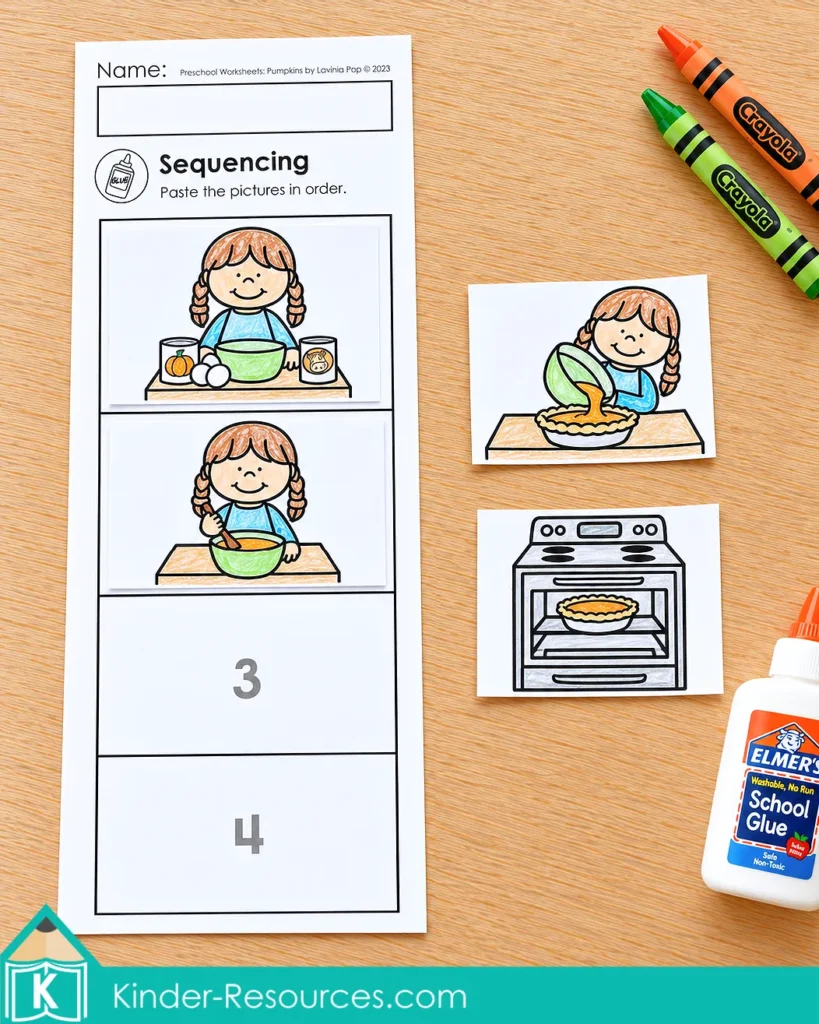
The pumpkin-pie sequencing activity continues the idea of putting events in order. Lay out the pictures and talk about what is happening in each one. What needs to happen before the mixture goes into the pie crust? Which picture belongs last? Once the cards are arranged, children can tell the sequence using “first,” “next,” “then,” and “last.”
Choosing a Few Pumpkin Activities
You don’t need a long session or a large stack of pages to explore a pumpkin theme. One day might be a paper-pasting activity; another might be a short counting page or a look through the reader.
Choose activities that feel manageable, talk through unfamiliar directions, and leave time for children to explain what they see. There’s often a useful conversation in a picture before a pencil even touches the page.
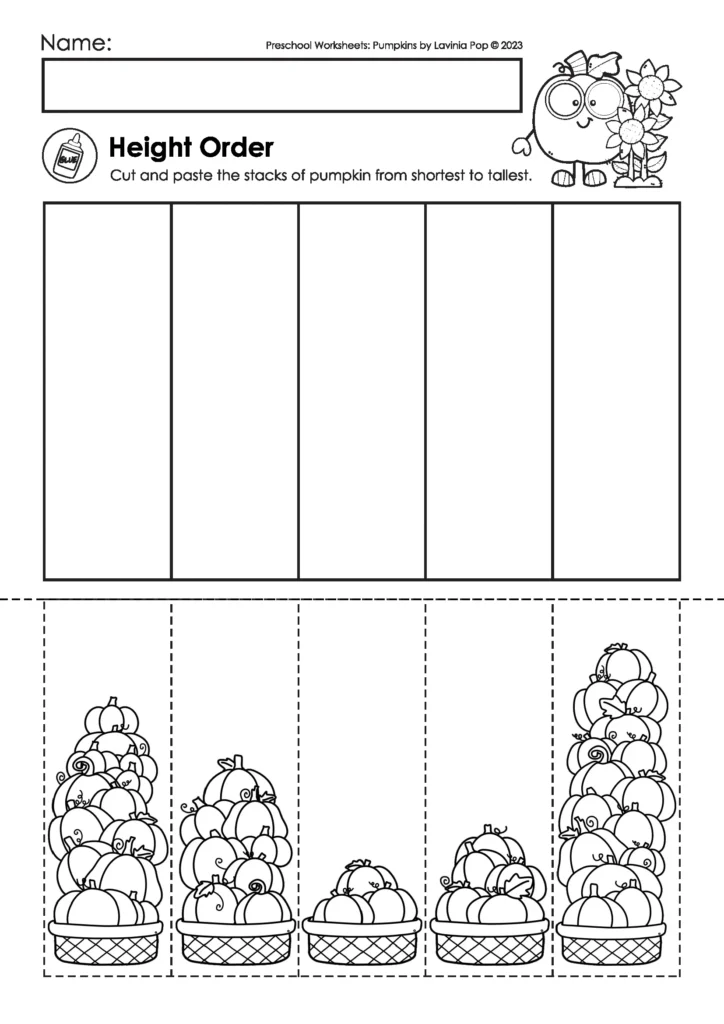
If you’d like the full collection of pumpkin preschool worksheets, you can find it in either shop:


Happy Teaching! 😊
You Might Also Like
Prek teacher
Thank you, Clara! 😊 Happy teaching! ❤️