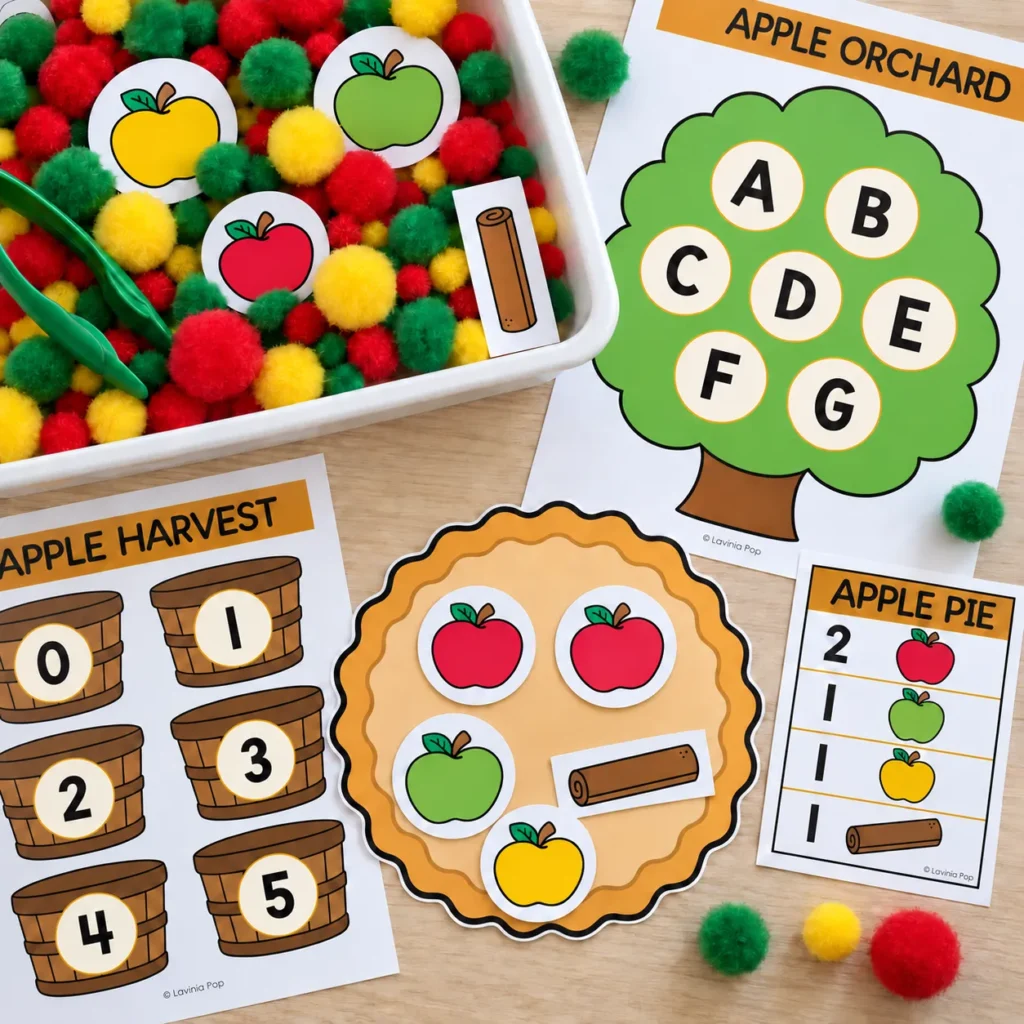
An apple theme offers so many opportunities for playful learning. Children can count ingredients for an apple pie, match letters in an orchard, sort a basket of apples, and discover how an apple tree grows. These apple sensory bin activities for preschool bring those ideas together with printable materials you can use during centers, small groups, morning tubs, or learning at home. Children search for pieces in the sensory bin, then use what they find to complete a meaningful task.
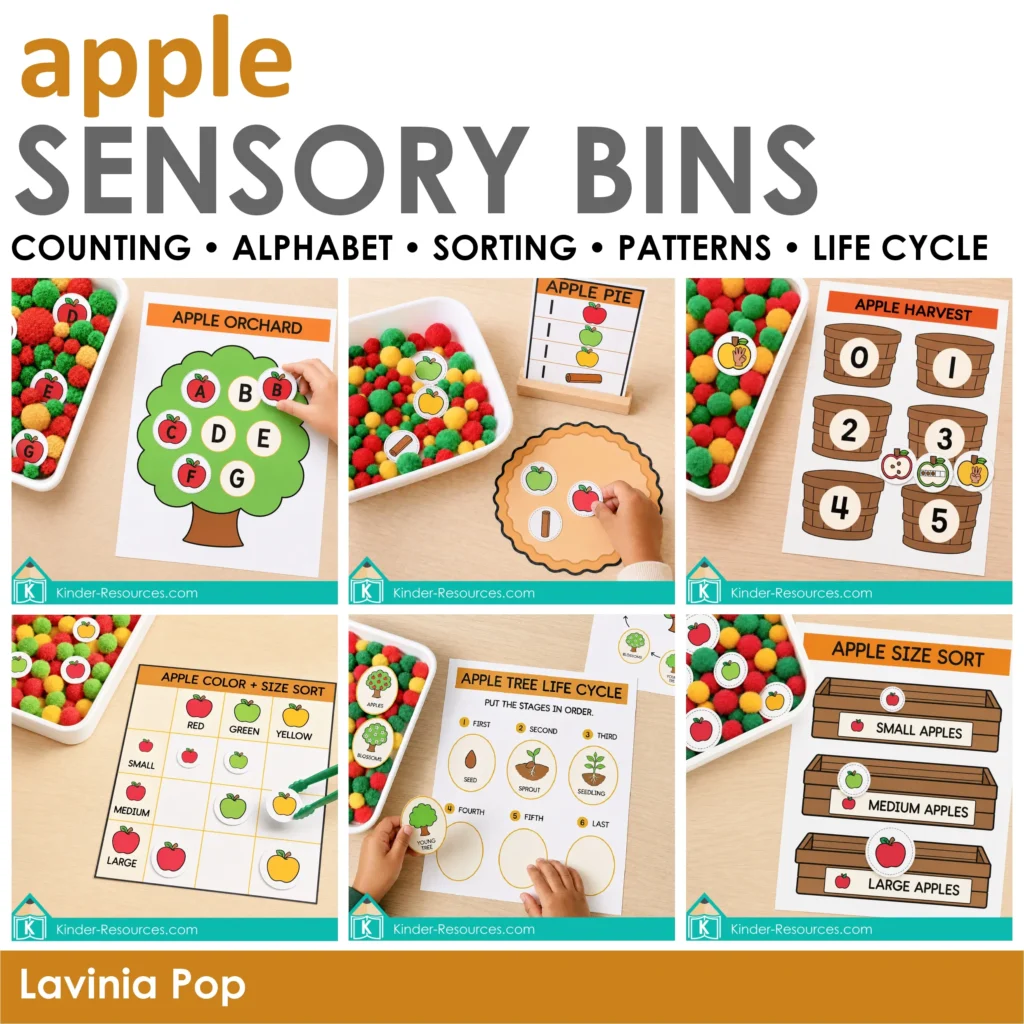
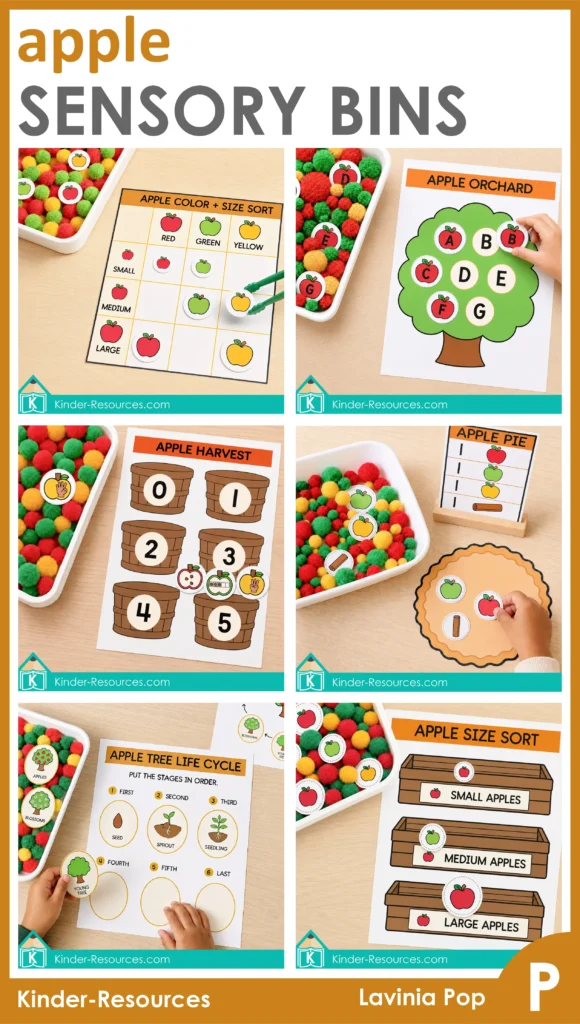
I created this Apple Sensory Bins resource to include five activities that explore early math, literacy, and science. Each activity also includes ways to adjust the challenge and extend the play, so you can revisit familiar materials as children develop new skills.
Why Use Apple Sensory Bin Activities?
A sensory bin gives children a reason to look closely, handle materials, and talk about what they notice. Finding an apple card is just the beginning. What letter does it show? How many seeds are inside? Where does it belong?
As children play, they practice counting, matching, sorting, and explaining their choices. Picking up the pieces with fingers or child friendly tongs also gives them opportunities to practice fine motor control.
The activities share a familiar routine: find a piece, look carefully, and decide where it goes. Once children understand that routine, you can introduce a different learning focus by changing the printable pieces and mat.
1. Apple Pie Recipes
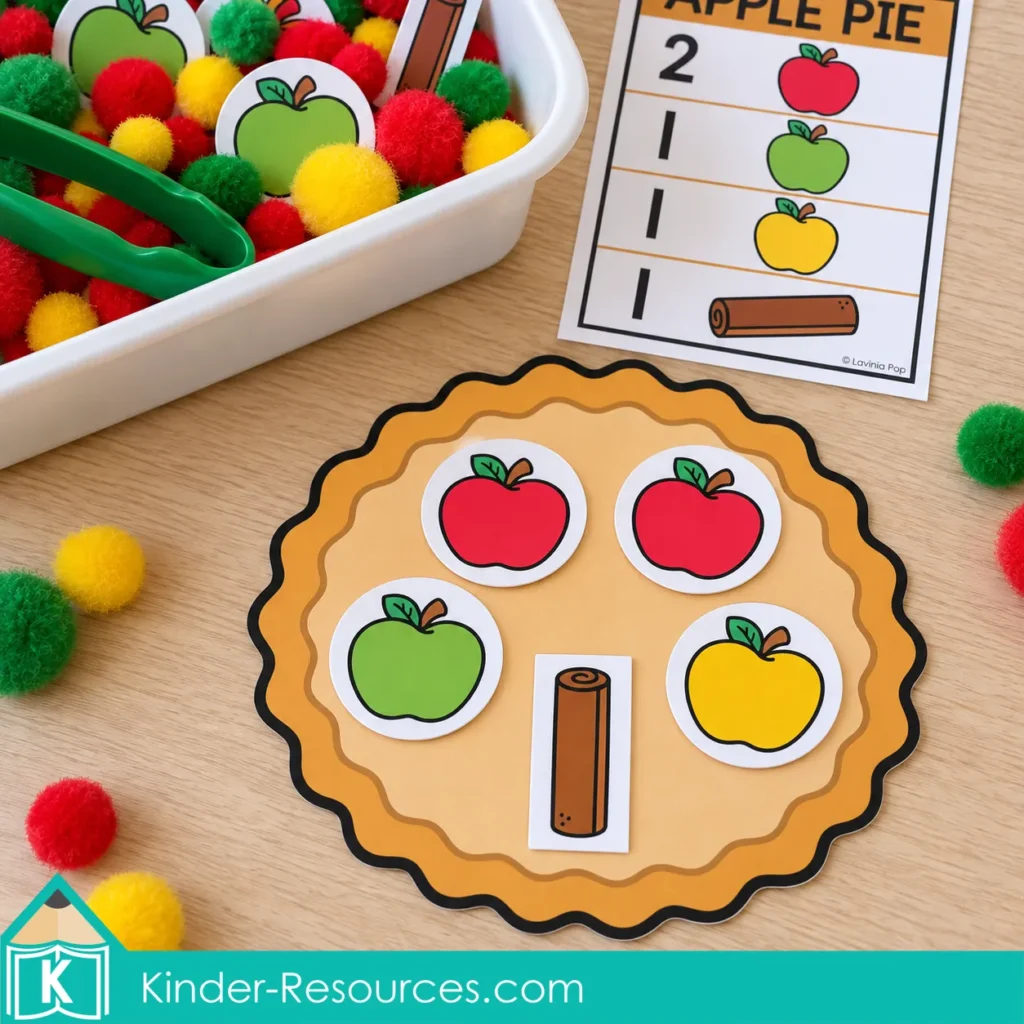
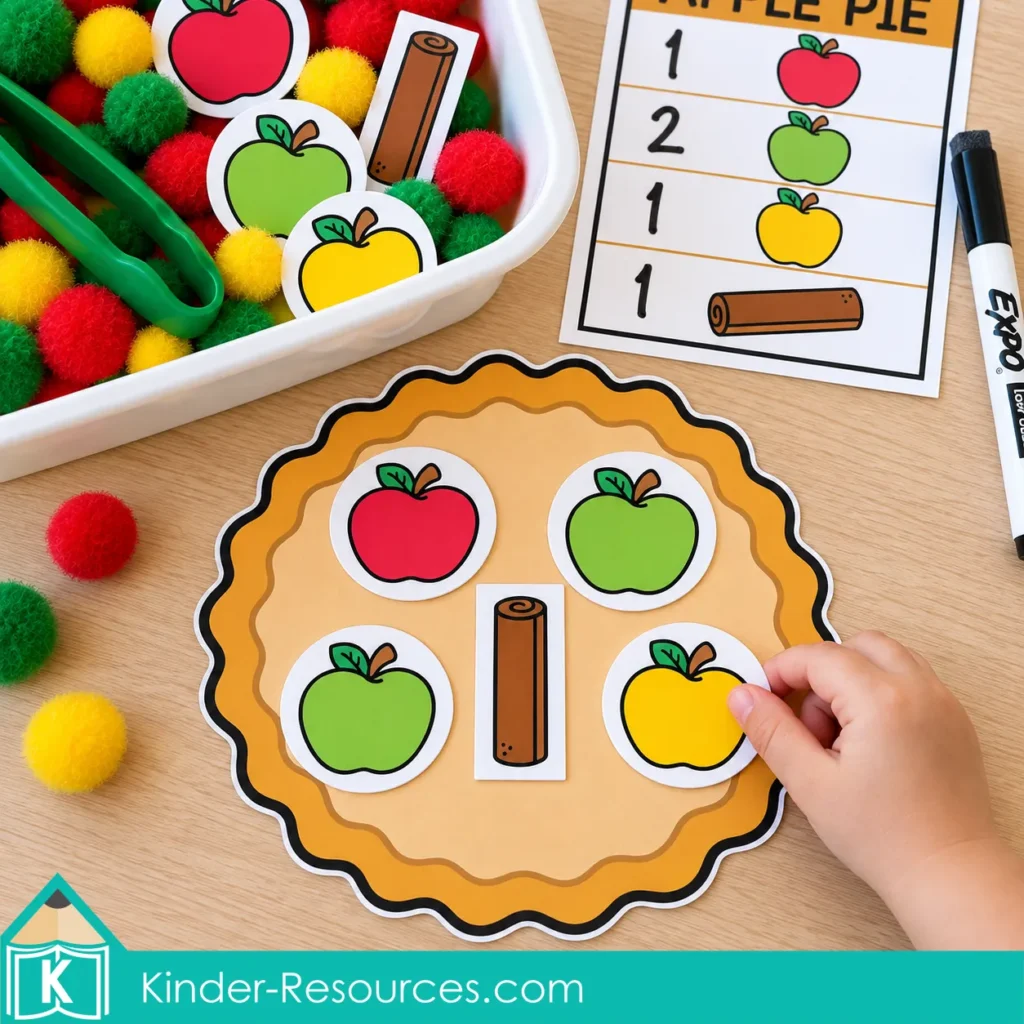
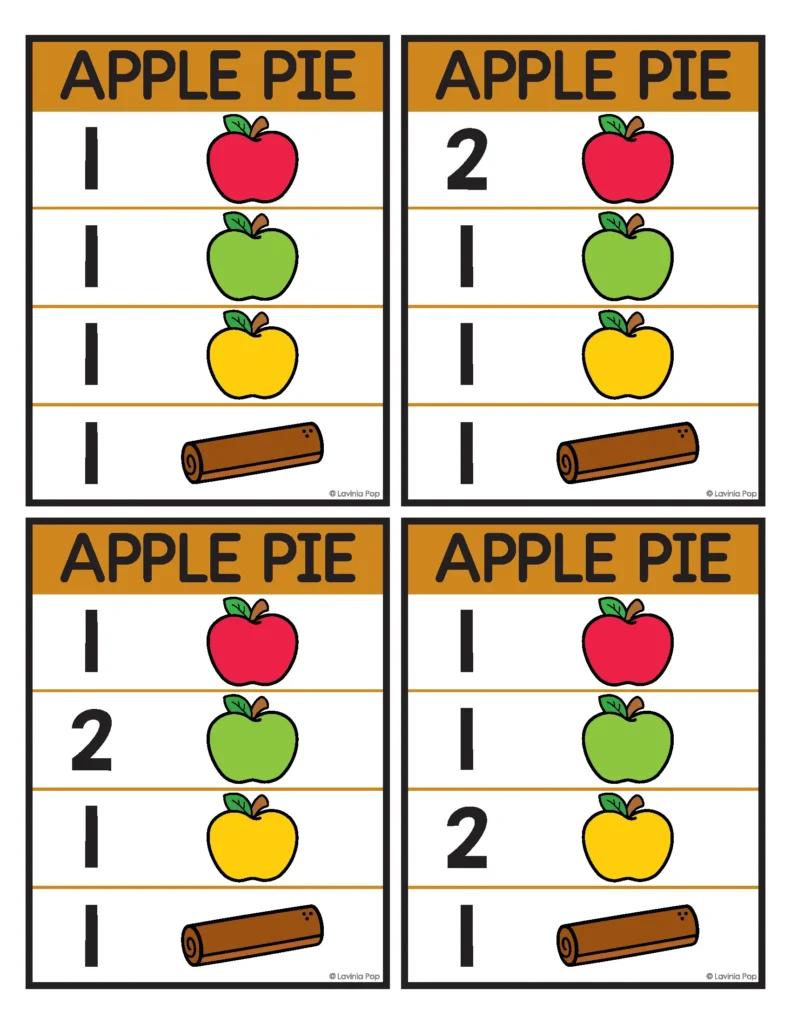
This apple sensory bin activity turns counting practice into pretend baking. Children choose an apple pie recipe card, search for the ingredients, and place the correct amounts on their pie mat.
The printable ingredients include red, green, and yellow apples and cinnamon sticks. Each recipe shows a number beside each ingredient, giving children a visual guide to follow as they build their pie.
For example, a recipe might ask for two red apples, one green apple, one yellow apple, and one cinnamon stick. Children find and count each group before adding it to the pie.
Start with recipes that use smaller quantities. Encourage children to touch or move each piece as they count, then check the finished pie against the card.
More ways to play: Use the included blank recipe cards to create a new recipe together. Children can also compare two groups of ingredients and talk about which has more, which has fewer, or whether the groups have the same number.
2. Apple Orchard Letter Match
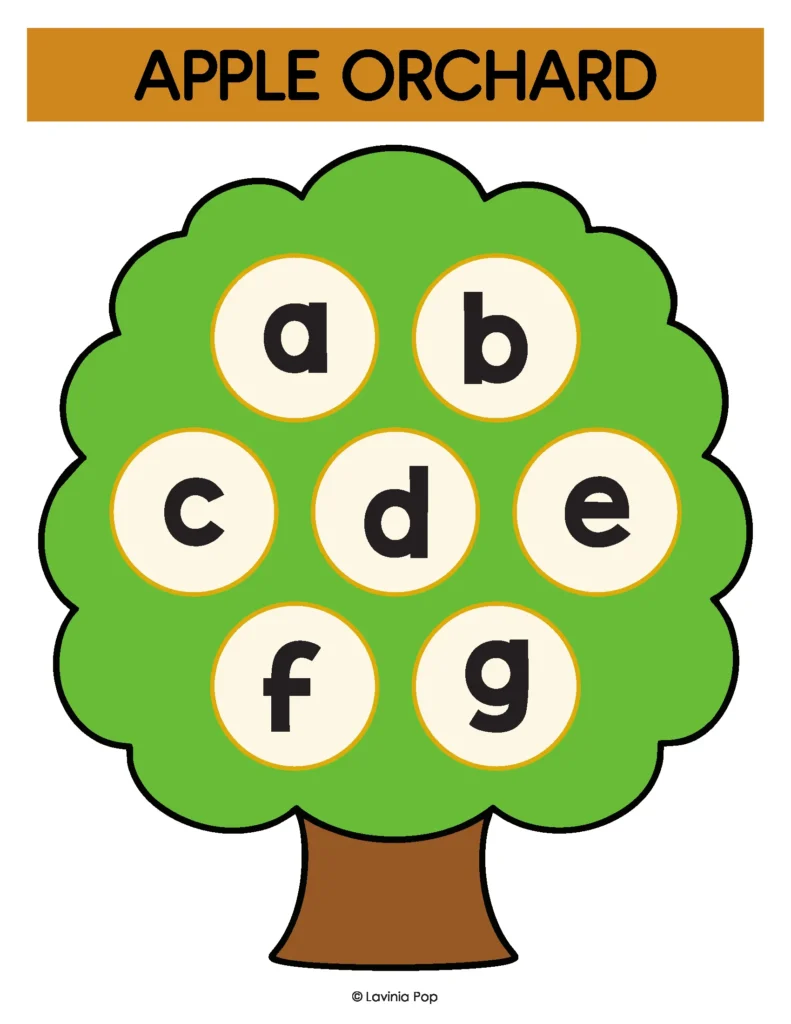
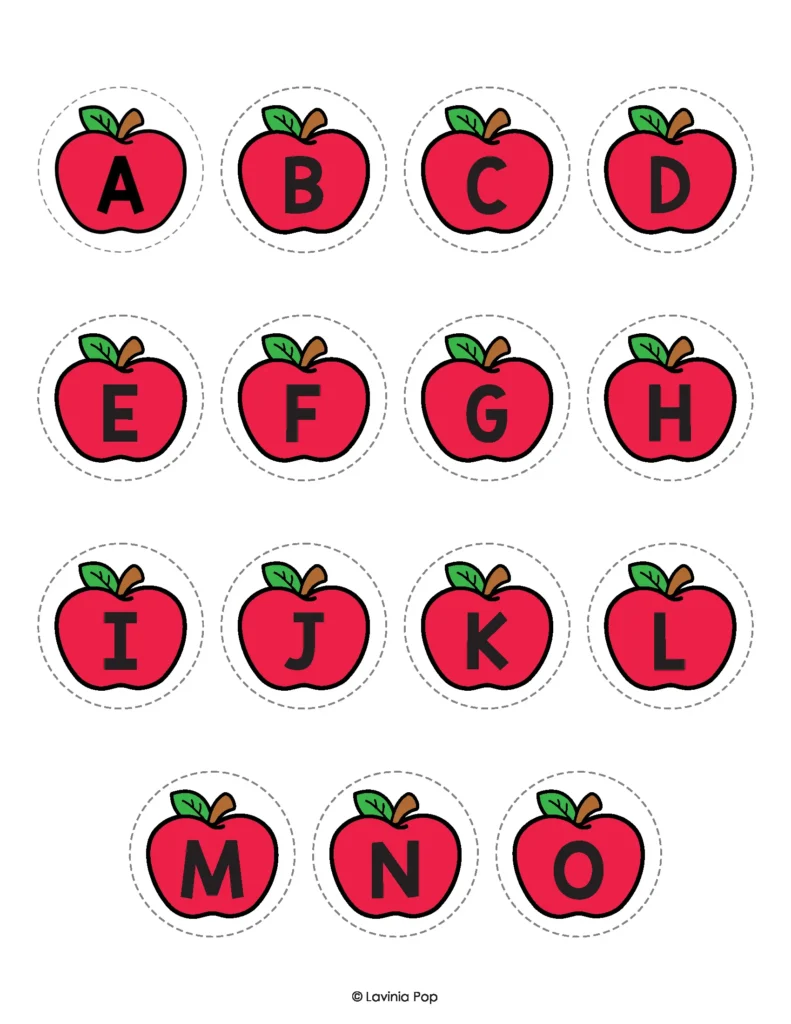
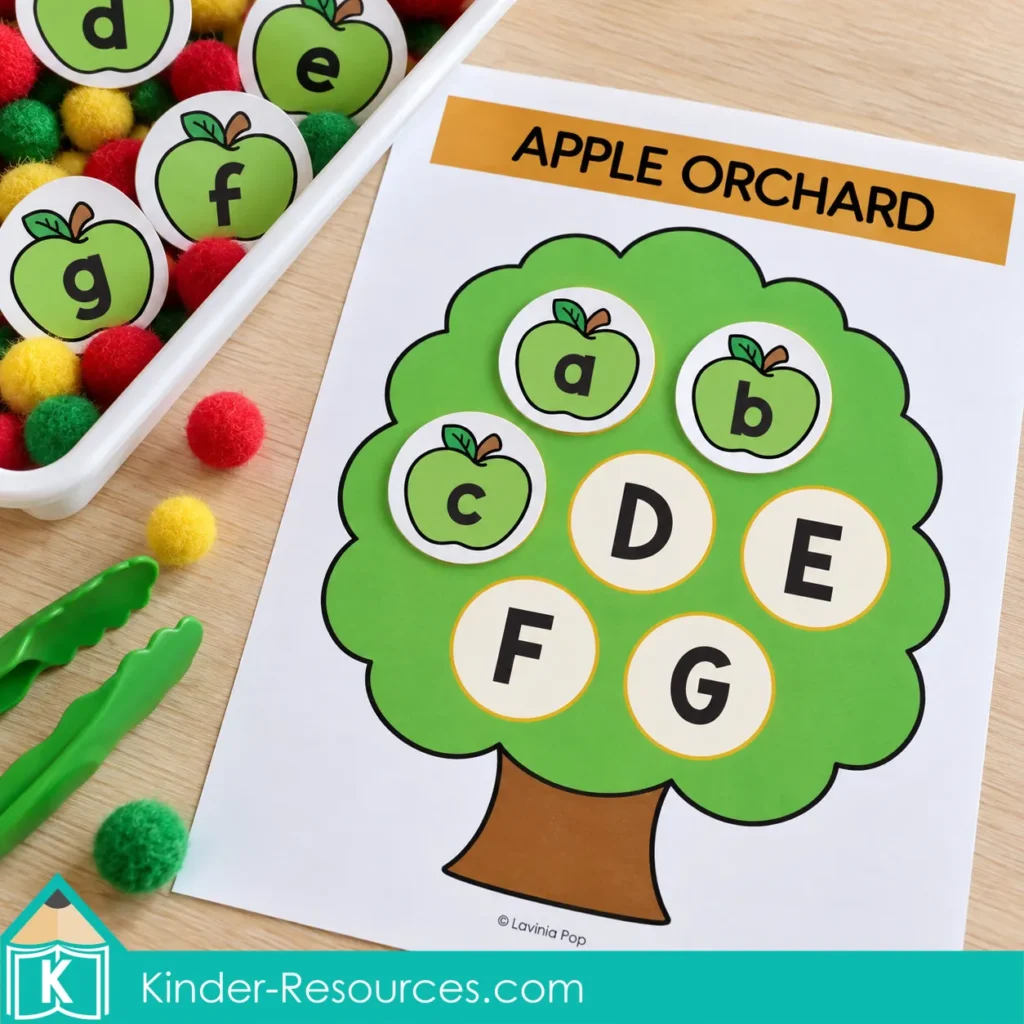
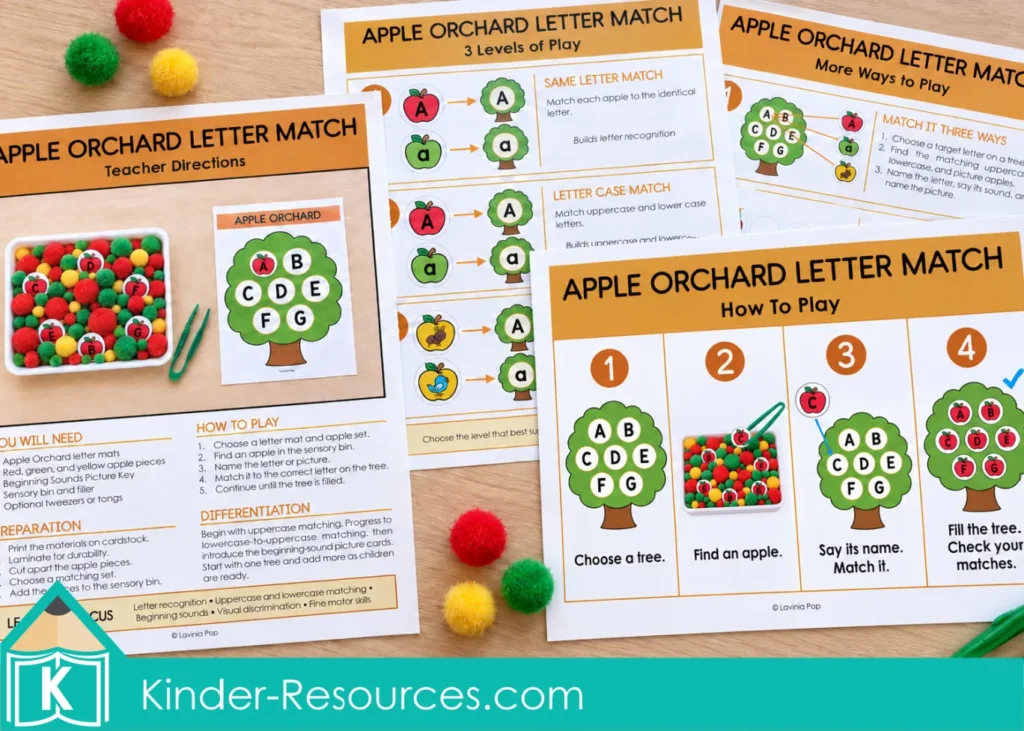
Children search for apple pieces and match them to the letters on an orchard mat. The resource includes uppercase letter apples, lowercase letter apples, and picture apples, allowing you to choose the type of matching your learners need.
There are three levels of play:
- Same letter match: Match an uppercase or lowercase apple to the identical letter on the tree.
- Letter case match: Match uppercase and lowercase letters, such as A and a.
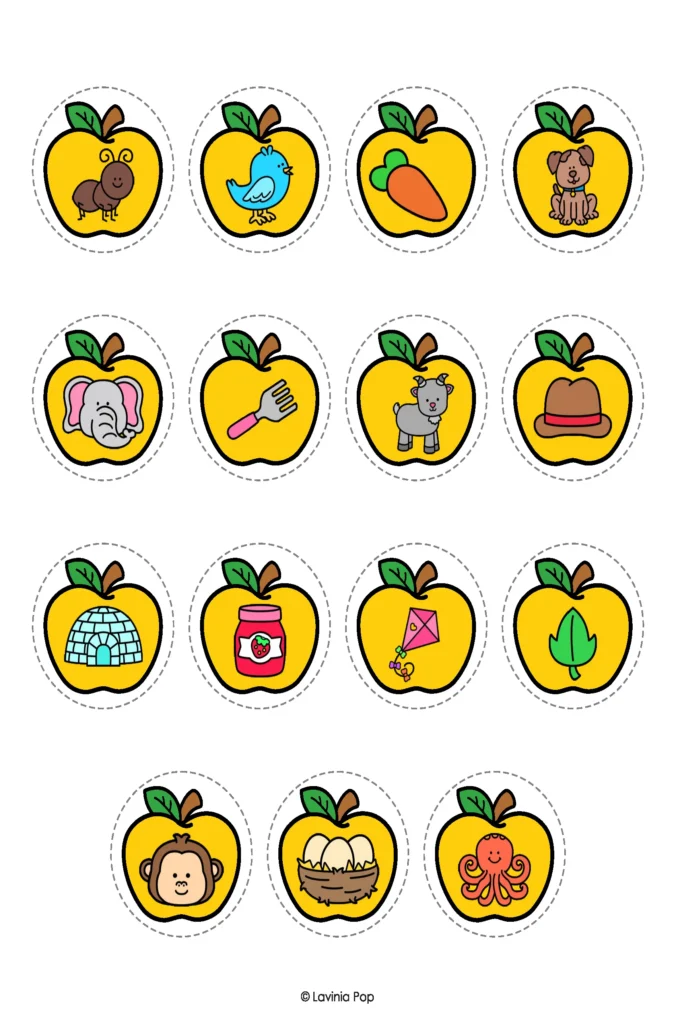
- Beginning sound match: Name the picture and match its beginning sound to a letter, such as ant and A.
Begin with one tree and a small selection of letters children have already explored. You can introduce more letters or change the matching task when they are ready. The included Beginning Sounds Picture Key helps adults identify the intended picture names.
More ways to play: Choose a letter and find its uppercase, lowercase, and picture apples. You can also use a few matching pairs for a memory game or invite children to spot an apple that does not belong.
3. Apple Harvest Number Sort
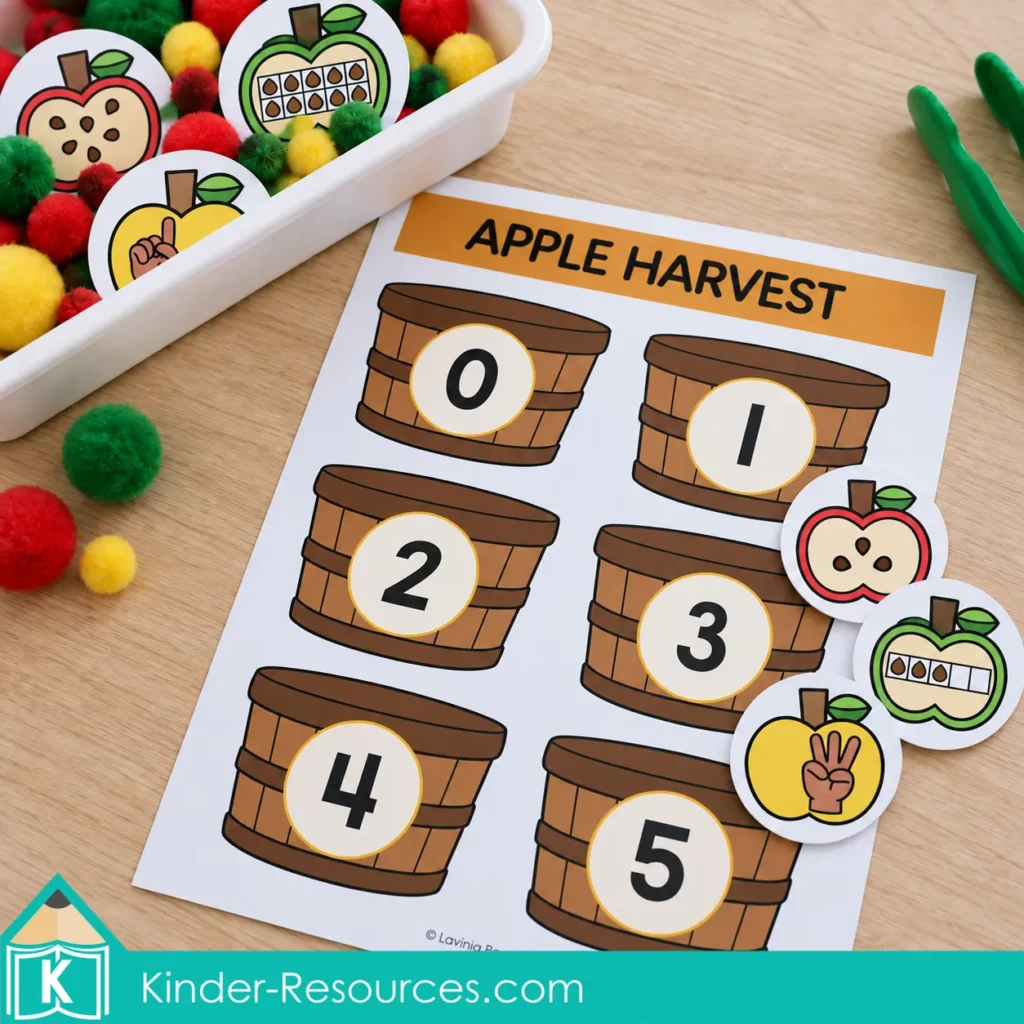
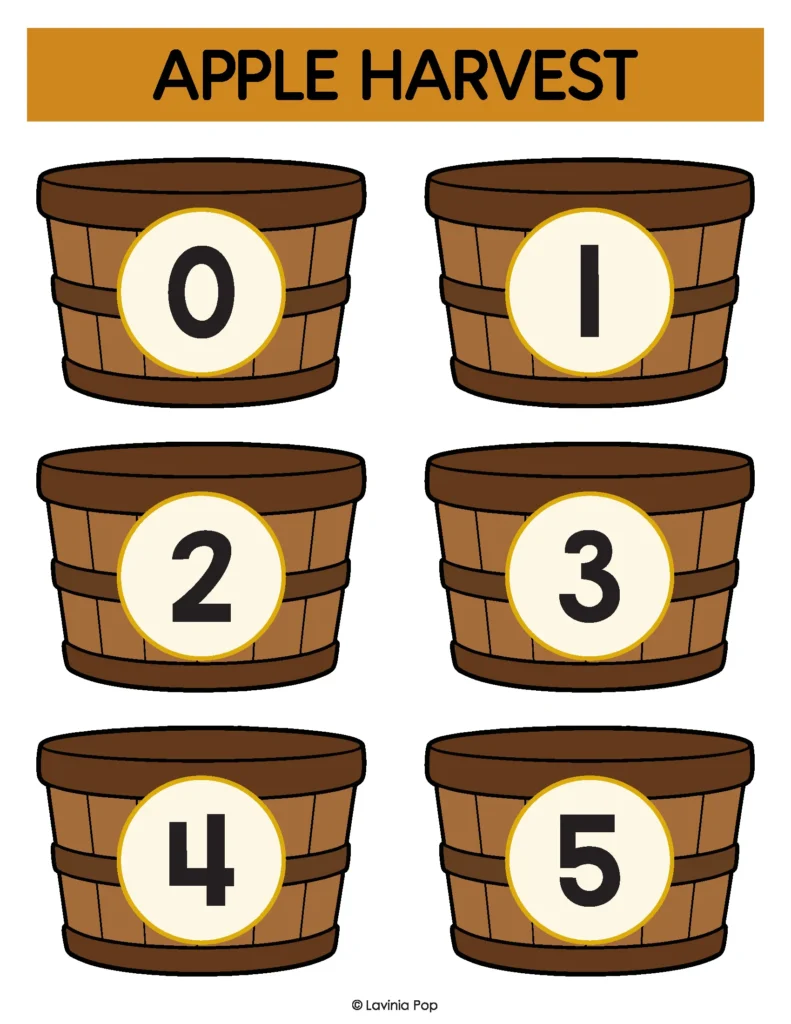
This apple sensory bin activity helps children connect numerals with quantities shown in different ways. They find an apple card, work out how many it shows, and match it to the correct numbered basket.
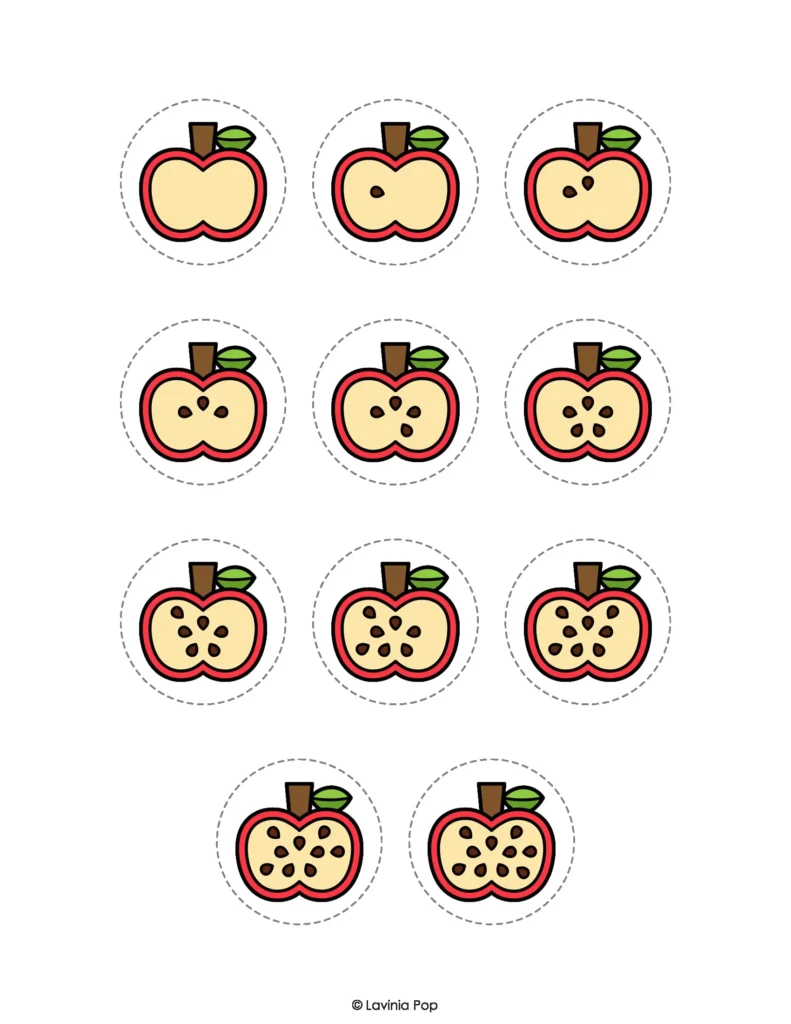
The baskets cover numbers 0 to 10, and the apple cards represent quantities using seeds, counting frames, and fingers.
For example, children can match an apple with three seeds, an apple with three filled frame spaces, and an apple showing three fingers to the basket labeled 3. Seeing the same quantity in different forms gives them several ways to explore what a number means.
Begin with numbers 0 to 5, then introduce the remaining numbers as children are ready. Ask questions such as, “How do you know this apple belongs with 4?” or “Can you find another way to show that number?”
More ways to play: Choose one set of apple cards and arrange the quantities from 0 to 10. For a comparison challenge, show two cards with the same quantity and one with a different quantity, then ask children to find the one that does not belong.
4. Apple Sorting and Patterns
The same apple cards can be used for several different tasks, making this a useful activity to revisit throughout your apple theme.
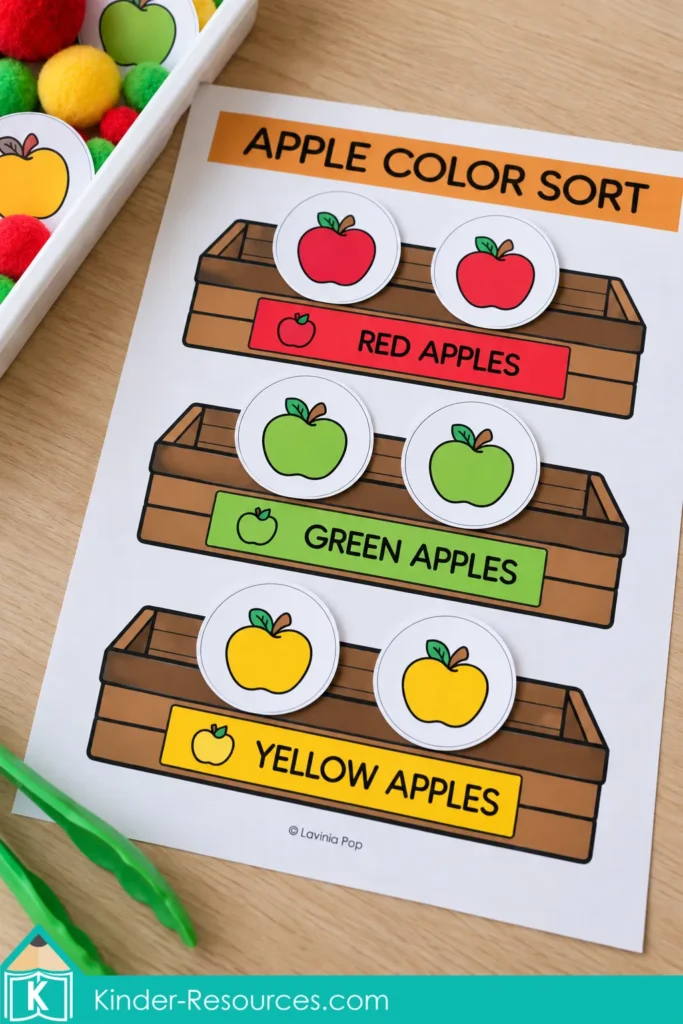
Sort by color. Children find red, green, and yellow apples and place them with the matching labeled crates. Begin with two colors if three choices feel overwhelming.
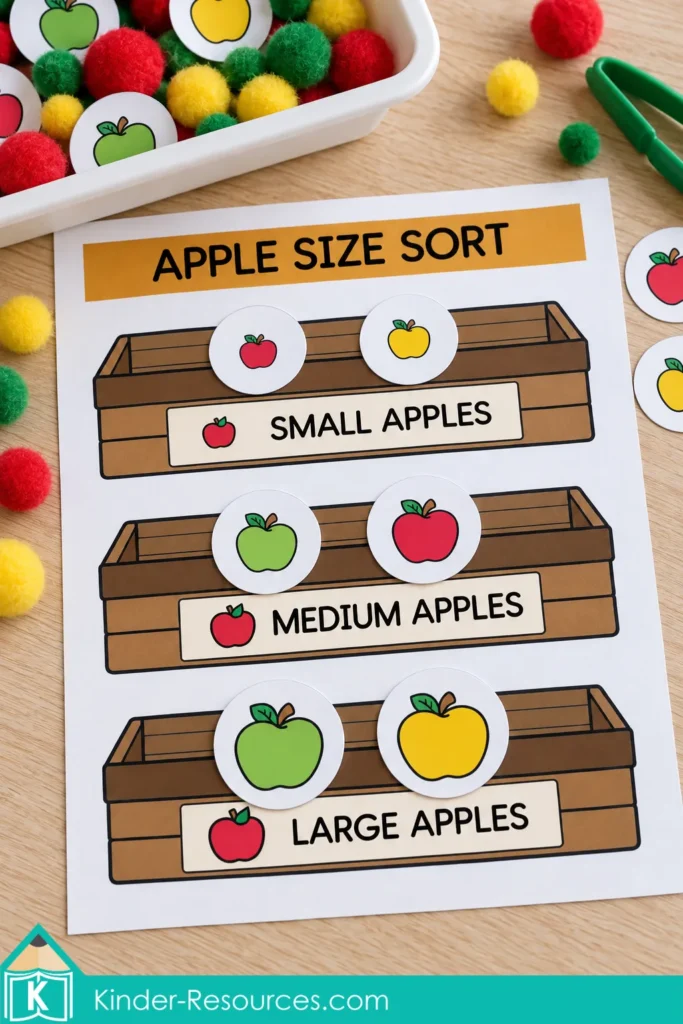
Sort by size. Children compare the apples and sort them into small, medium, and large groups. Encourage them to look at the size of the apple picture inside each circular card.
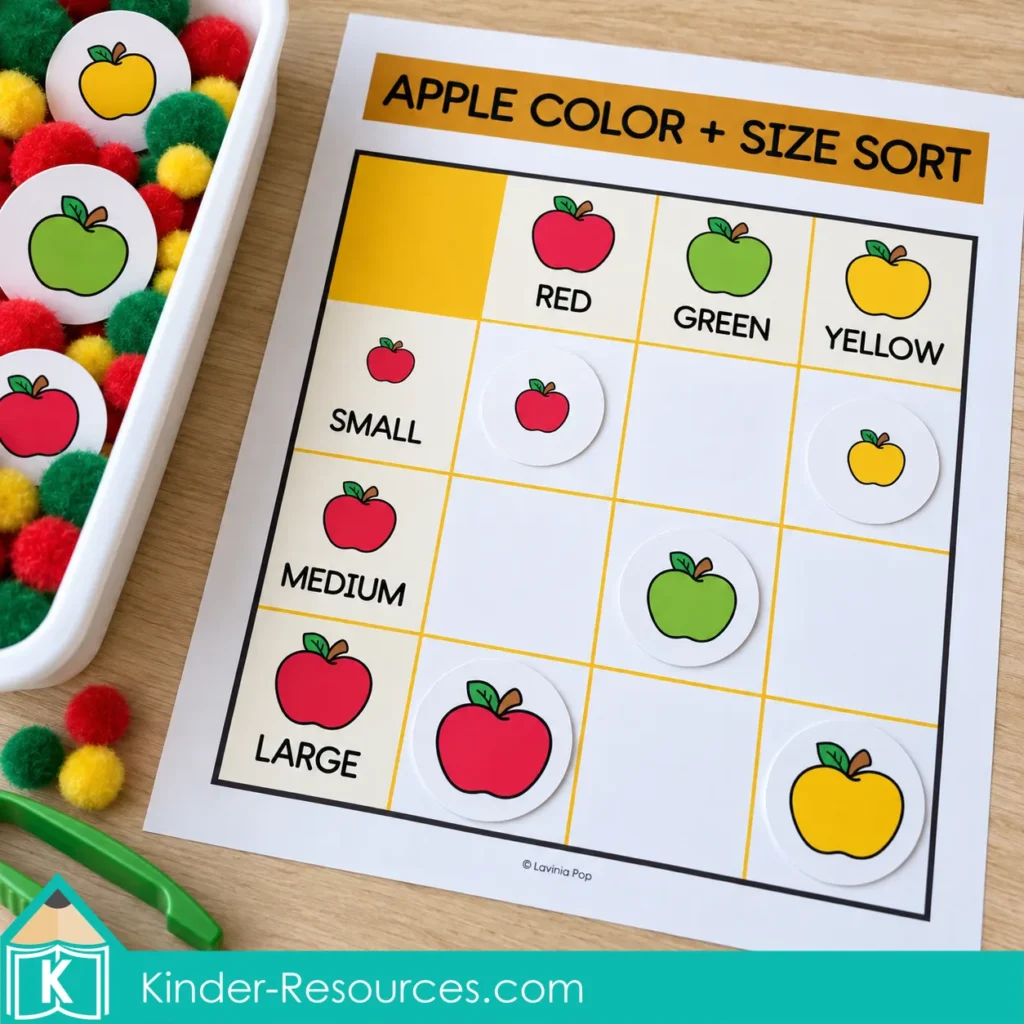
Sort by color and size. The combined sorting mat asks children to consider two features at once. A small red apple belongs where the small row and red column meet. Model a few examples together before inviting children to continue.
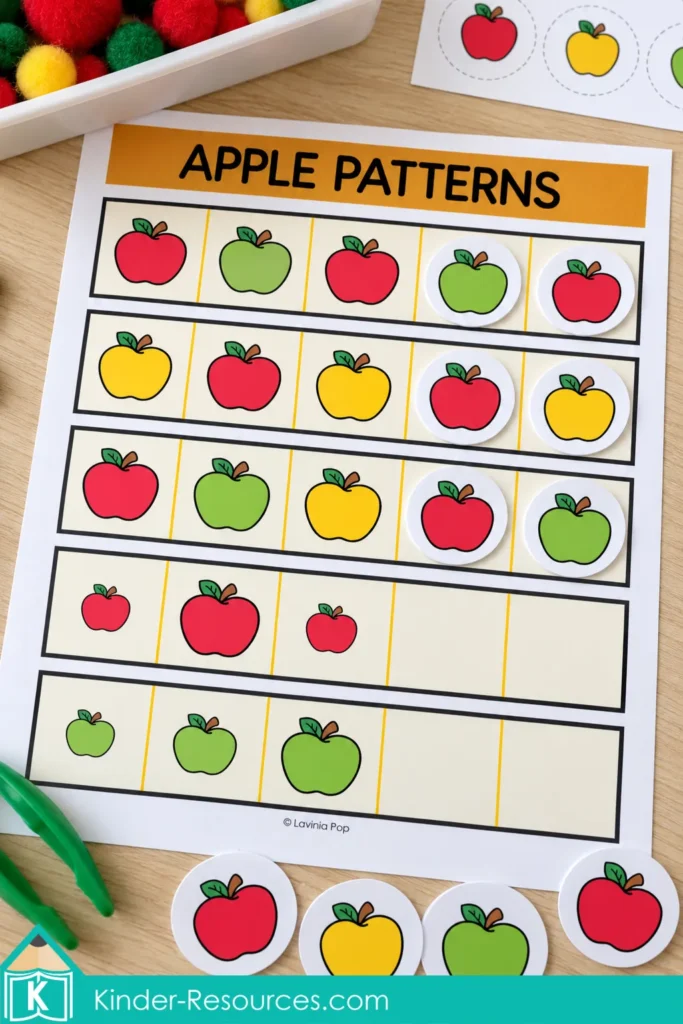
Continue a pattern. Children look at the apples already printed on a pattern mat, identify the repeating part, and find the pieces needed to continue it. The resource includes Apple Patterns and Apple Pattern Challenge mats with color and size patterns.
More ways to play: Sort a small collection by color, mix it up, and sort the same apples by size. Children can also create a repeating pattern for a partner to continue.
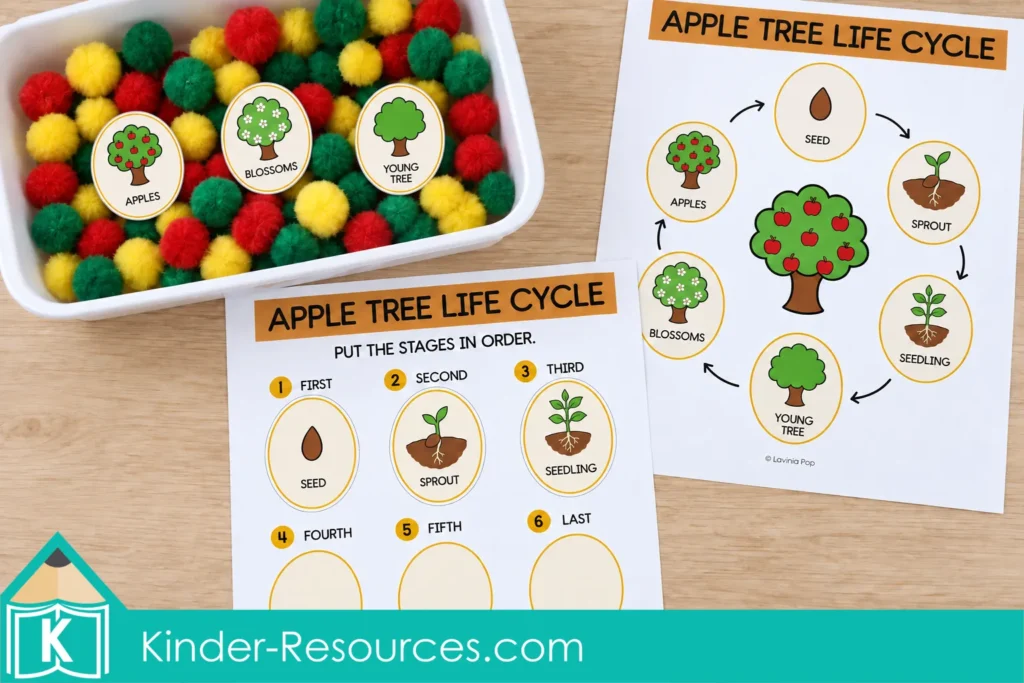
5. Apple Tree Life Cycle
Where do apples come from? This activity introduces a simple sequence showing how an apple tree grows from a seed to a tree with fruit.
The resource includes a life cycle poster, six picture cards, and a sequencing mat. The stages are:
Seed → Sprout → Seedling → Young Tree → Blossoms → Apples
Begin by looking at the poster together and naming each stage. Children then find the picture cards in the sensory bin and place them in order on the sequencing mat.
Keep the poster nearby as a visual guide. When children are familiar with the sequence, invite them to arrange the cards without it and explain what happens using words such as first, next, then, and last.
More ways to play: Arrange all six cards, remove one while children close their eyes, and ask which stage is missing. You can also choose a movement for each stage and act out the sequence, growing from a tiny seed into a tree with apples.
How to Set Up Your Apple Sensory Bin Activities
You can use one sensory bin and change the printable materials as you introduce each activity.
- Print the mats and activity pieces on cardstock.
- Laminate for repeated use if desired, and cut out the cards and pieces that children will handle.
- Add a suitable filler to a shallow bin or tray. Red, green, and yellow pom poms tie in with the apple theme.
- Tuck the pieces into the filler, leaving some partly visible to invite searching.
- Place the matching mat beside the bin and demonstrate how to find and use a piece.
Add child friendly tongs or tweezers if they suit your learners. Children can also pick up the cards with their fingers.
Choose materials to suit the children using them and supervise the activity. The resource contains small pieces and is not intended for children under 3 or children who mouth materials. Sensory fillers, bins, and tools are supplied separately.
Make the Apple Sensory Bin Activities Work for Your Learners
A small selection of pieces can be enough to begin. Try one orchard tree, a few numbers, or two sorting categories, then add choices as children become more confident.
Model your thinking aloud: “This apple is yellow. I am looking for the yellow apple crate.” Children can then practice explaining their own choices while you listen and offer support.
For children who are ready for more, use the extension ideas to introduce comparison, memory, pattern creation, or independent sequencing. The familiar materials stay useful as the task changes.
Simple Storage for Another Day
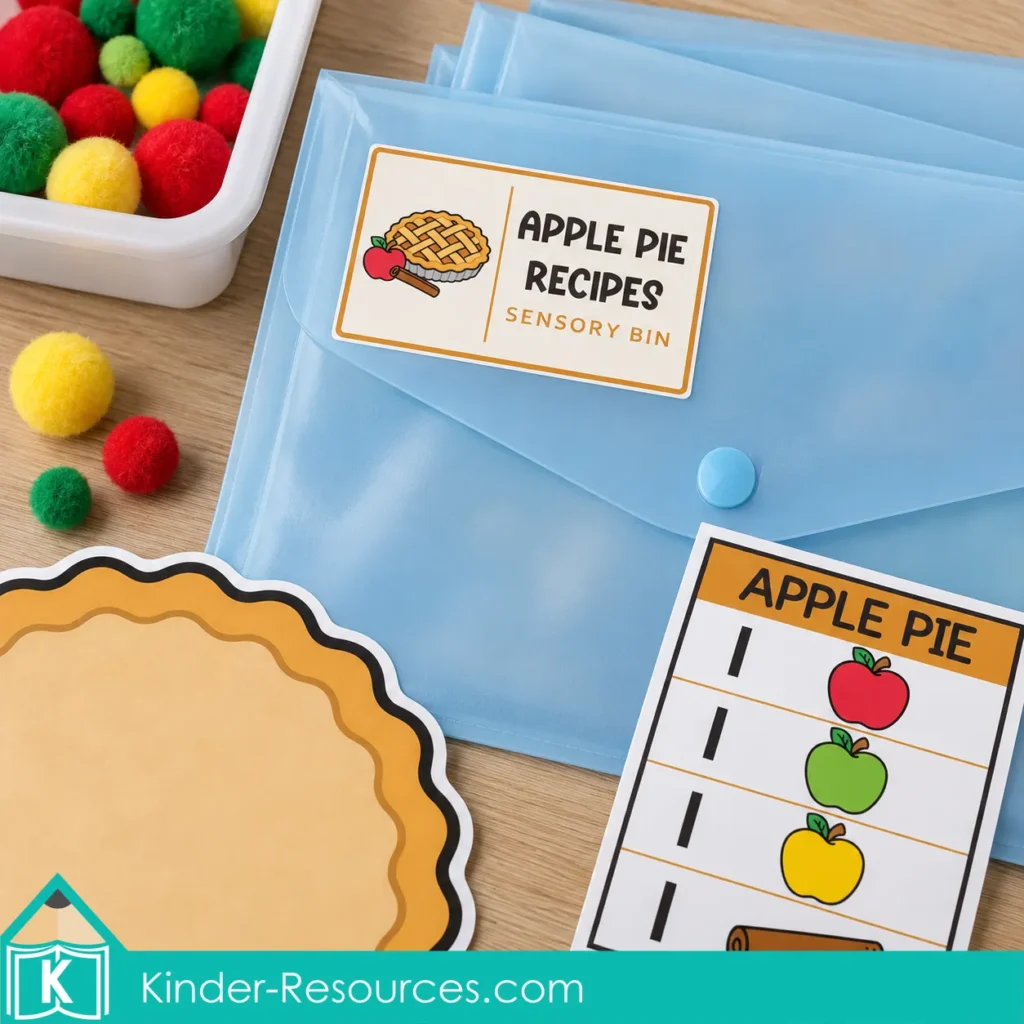
Keep each activity’s pieces, mats, and directions together in a separate envelope, bag, or container. The included storage labels make it easy to identify the five activities when you are ready to use them again.
Before packing away, check that all pieces have been collected and that the materials are clean and dry. Keeping each set together makes the next setup much easier.
Download the Free Sample Pages from the Apple Sensory Bin Activities
Would you like to take a closer look inside the resource? Download the free School Sensory Bins sample pages for a preview of each of the five activities.
The free download includes selected pages from Pack the Backpack, School Bus Alphabet Match, Pencil Number Match, School Sorting, and Build My Name. It is a helpful way to explore the activities and see how the complete resource could work with your learners.
Please note that the free download contains sample pages from each activity. The complete activities, printable pieces, differentiated options, teacher directions, and additional ways to play are included in the full resource.
Add Apple Sensory Bin Activities to Your Preschool Apple Theme
The Apple Sensory Bins printable resource includes all five activity sets, teacher directions, visual How to Play pages, extension ideas, setup guidance, and storage labels. The orchard activity also includes a dedicated three levels of play guide.
With 62 pages of printable materials, you can explore counting, letters, beginning sounds, sorting, patterns, and life cycle sequencing across your apple theme.
You May Also Like
Interested in resources, thanks
Hi Grace! Scroll down to the bottom of the blog post. You can choose Kinder Resources or Teachers Pay Teachers to purchase the pack. 😊
Merci
You’re very welcome, Virginie! 😊