The beginning of a new school year is filled with exciting experiences for preschoolers. Children are learning new routines, meeting classmates, exploring classroom materials, and becoming more independent. Back to school sensory bin activities offer a playful way to support this transition while introducing important early math and literacy skills.
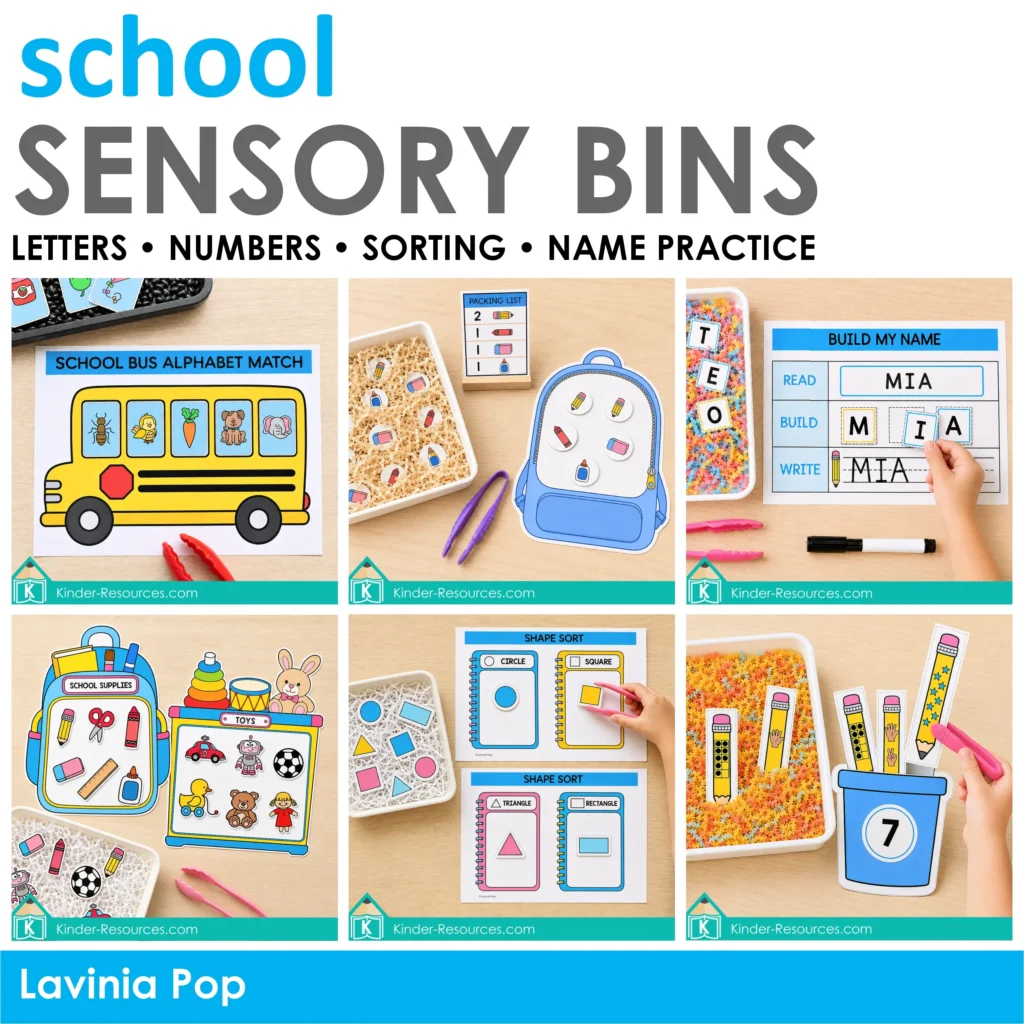
I created the School Sensory Bins Printable Preschool Activities resource to provide hands-on learning experiences that are easy to prepare, engaging for young learners, and flexible enough to use throughout the first weeks of school.
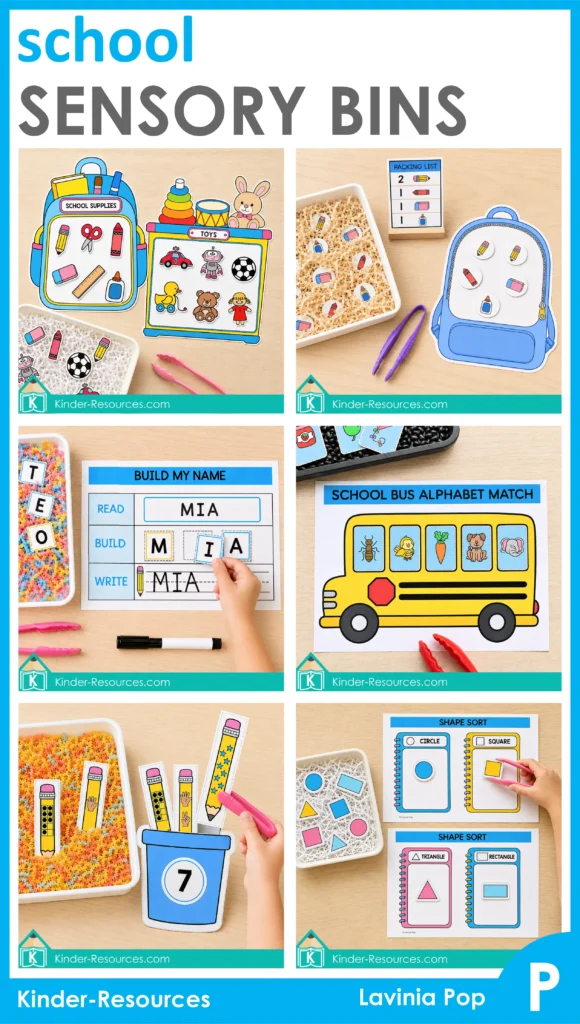
The resource includes five school-themed sensory bins covering counting, alphabet recognition, beginning sounds, number representations, sorting, patterns, name recognition, name writing, and fine motor development. Each activity also includes additional ways to play, allowing you to revisit the same materials in new ways.
Why Use Back to School Sensory Bin Activities?
Sensory bins provide a gentle and inviting way for children to explore new skills. They can be used during morning work, preschool centers, small groups, quiet time, intervention, or independent learning.
As children search for printable pieces, pick them up with tongs, and place them on the corresponding activity mats, they are also developing:
- Fine motor strength and coordination
- Visual discrimination
- Hand-eye coordination
- Concentration and persistence
- Language and communication skills
- Confidence and independence
Sensory bins can also help teachers observe what children already know. While children play, you can informally assess counting, letter recognition, beginning sounds, sorting, name recognition, and other early learning skills.
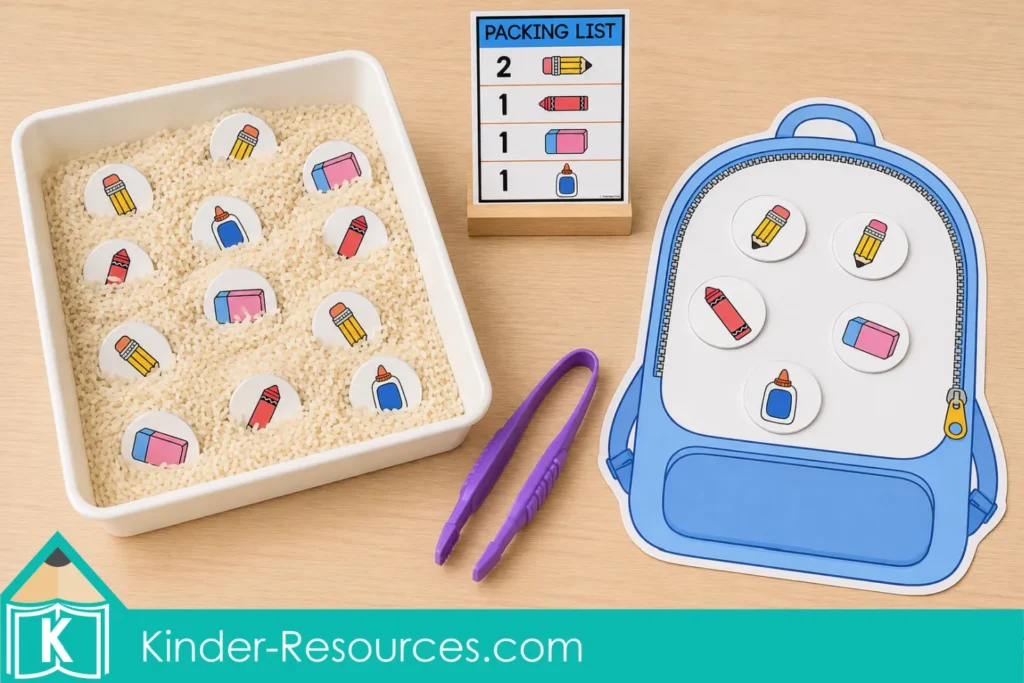
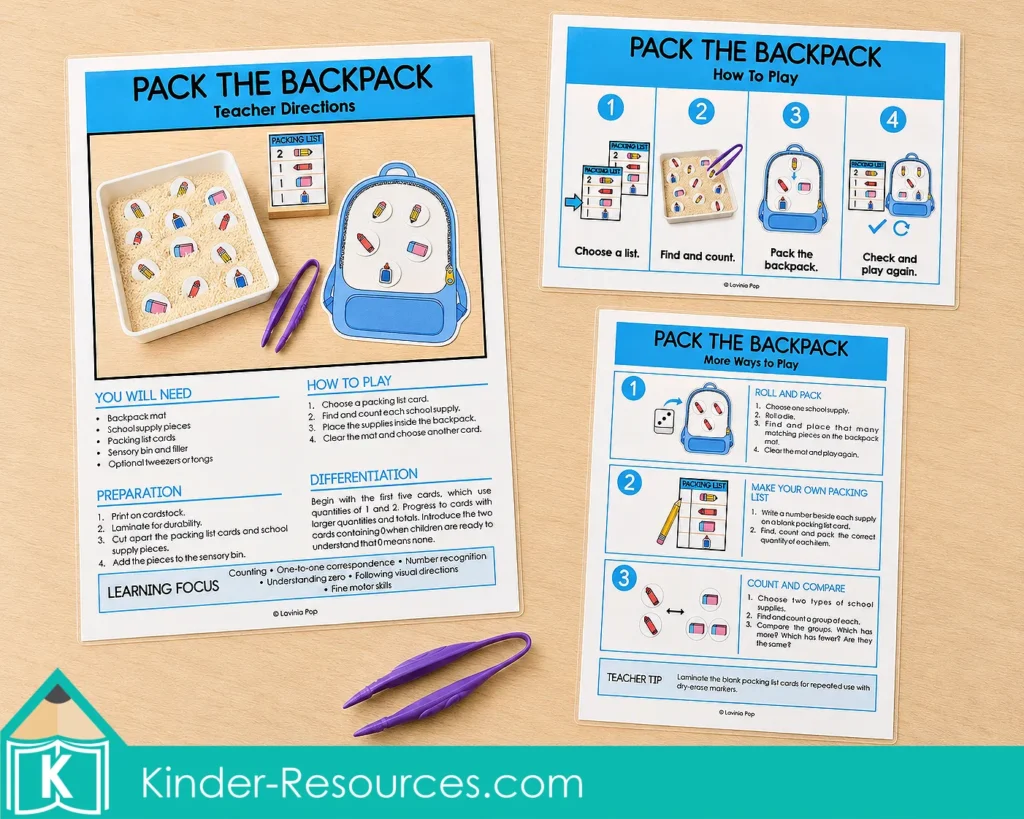
Pack the Backpack: A Back to School Counting Sensory Bin
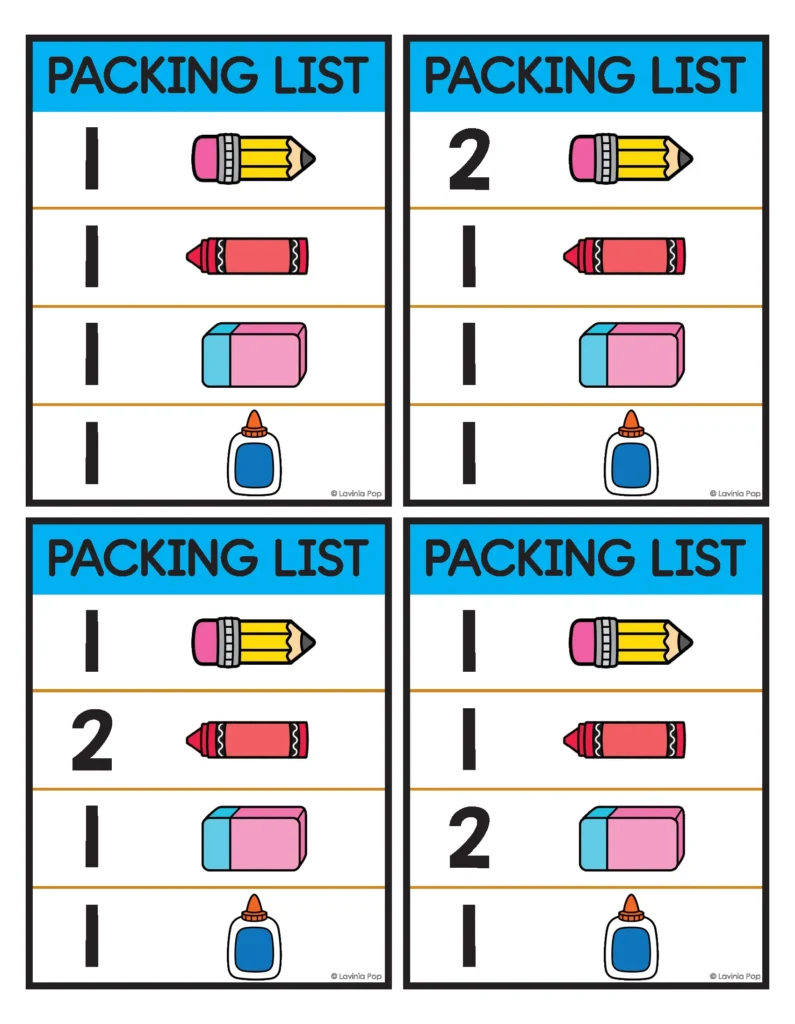
The Pack the Backpack sensory bin combines pretend play with counting and one-to-one correspondence.
Children choose a packing list, search the sensory bin for the pictured school supplies, and count the correct number of pencils, crayons, erasers, and glue bottles. They then place the supplies on the backpack mat.
Packing lists are included for numbers 1–20, making it easy to select cards that match the needs of your learners.
Children can also:
- Roll a die and pack the matching number of school supplies
- Create their own packing list
- Count and compare two groups of supplies
- Identify which group has more, fewer, or the same number
This activity is a playful way to practice number recognition, counting, one-to-one correspondence, and comparing quantities.
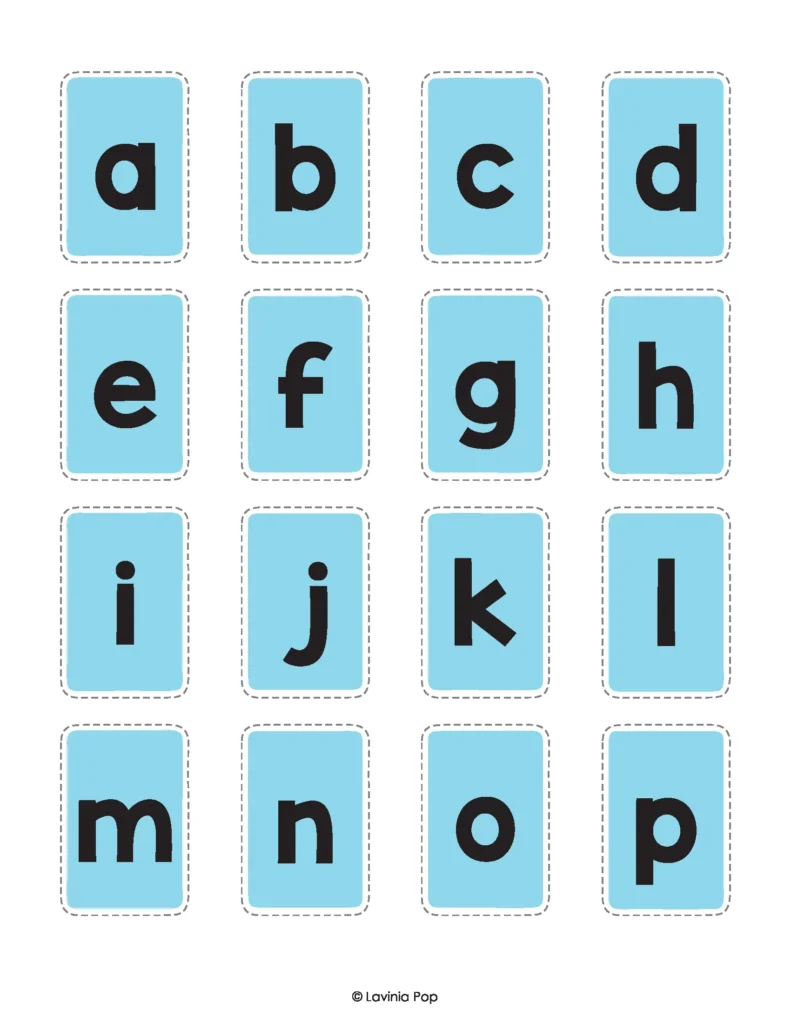
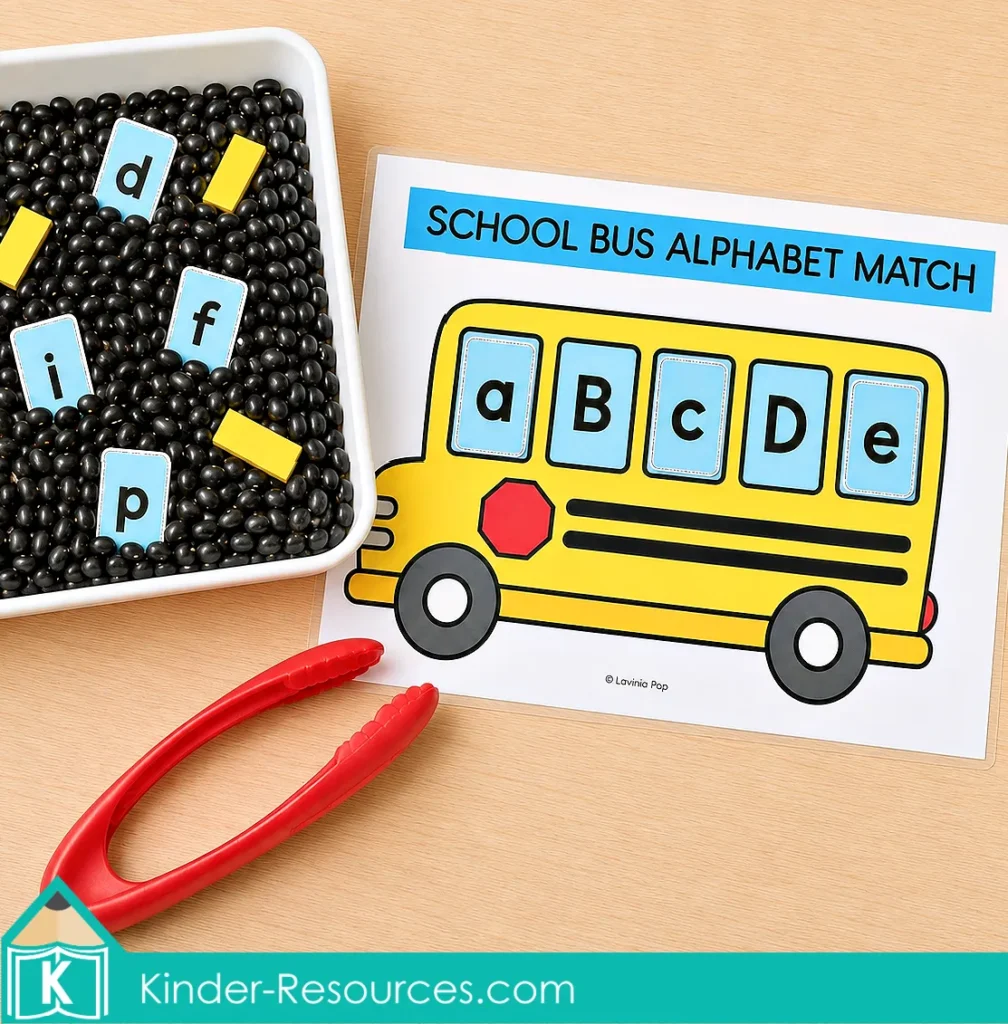
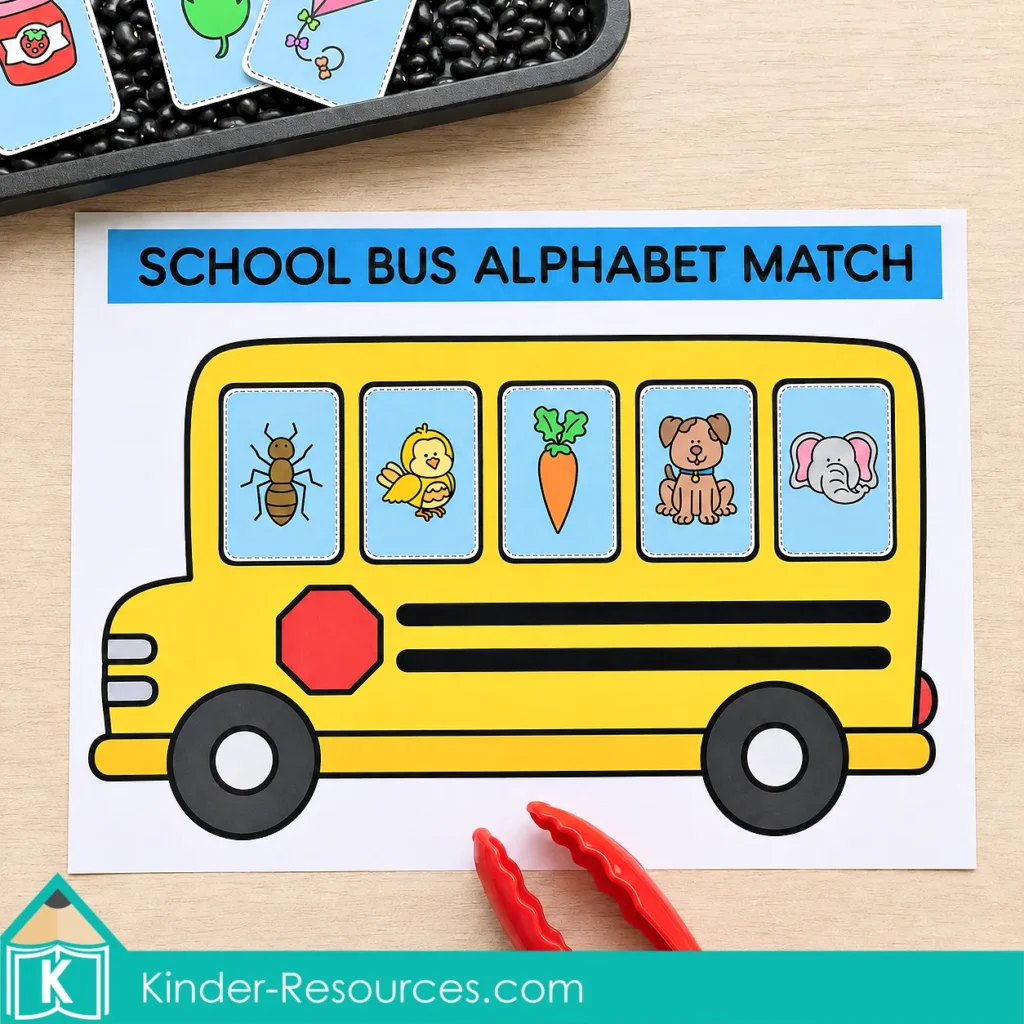
School Bus Alphabet Sensory Bin Activity
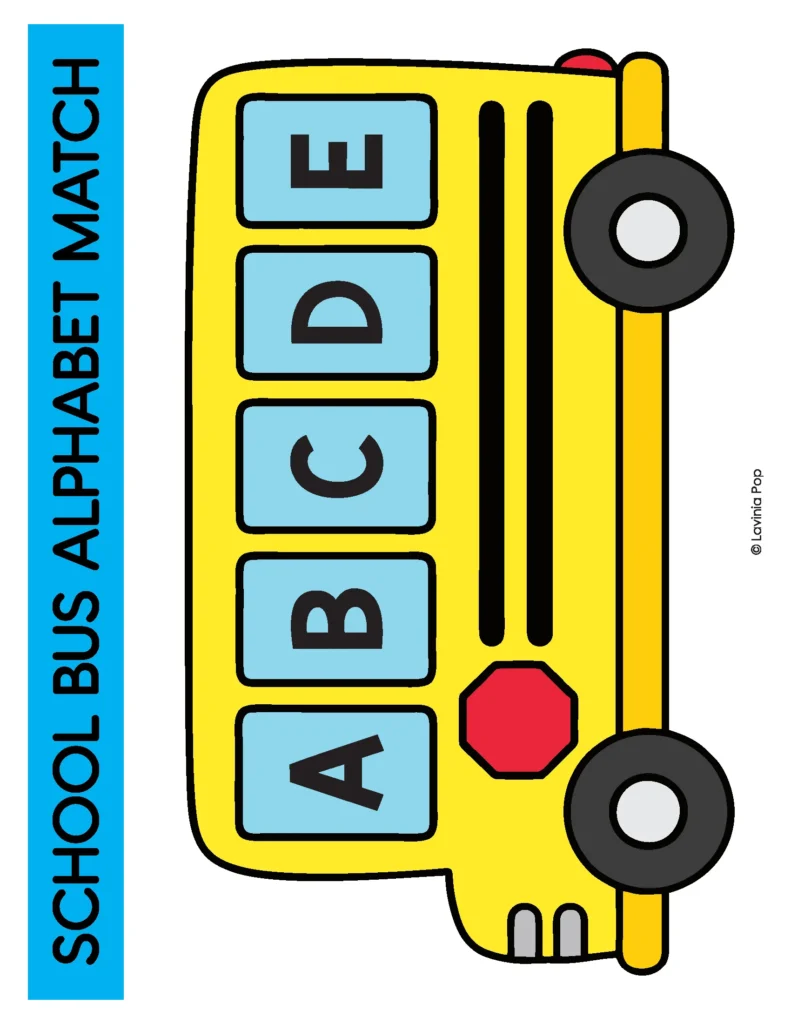
The School Bus Alphabet Match sensory bin includes three levels of play, allowing children to progress from simple letter recognition to beginning-sound matching.
Level 1: Same Letter Match
Children match an uppercase letter window to the same uppercase letter on the school bus.
Level 2: Uppercase and Lowercase Letter Match
Children find the lowercase letter window that matches each uppercase letter on the bus.
Level 3: Beginning-Sound Match
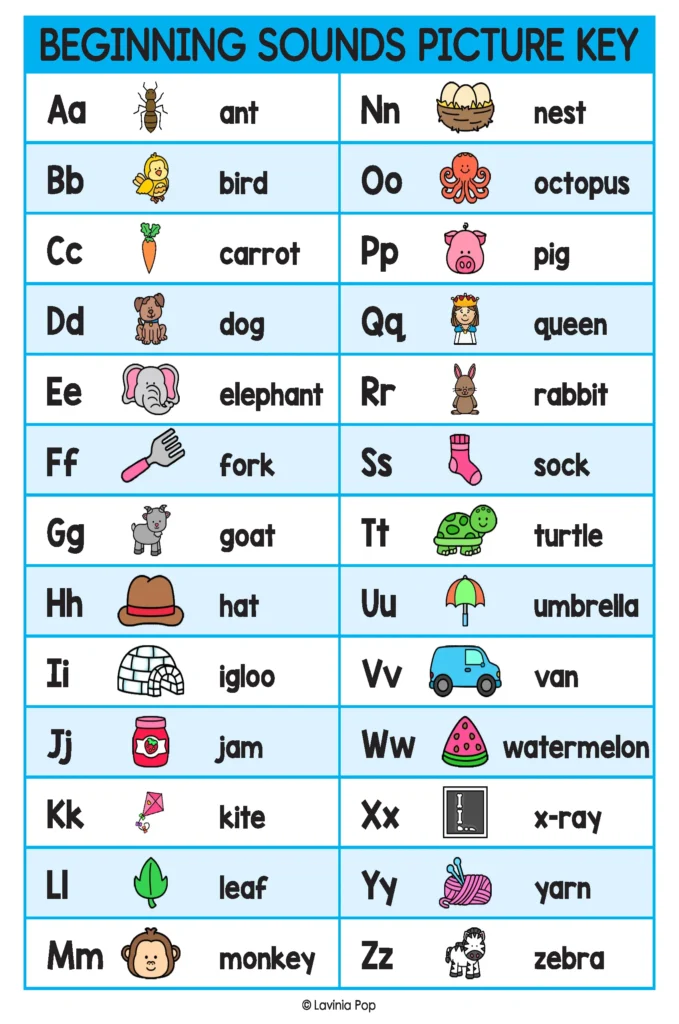
Children choose a picture window and match it to the letter representing its beginning sound.
The beginning-sound picture cards include familiar images for every letter of the alphabet, along with a picture key for the teacher.
Additional alphabet games include:
- Building a school bus alphabet line
- Playing alphabet memory match
- Finding the window that does not belong
You can use one bus at a time with a small group of letters or combine the buses to practice the complete alphabet.
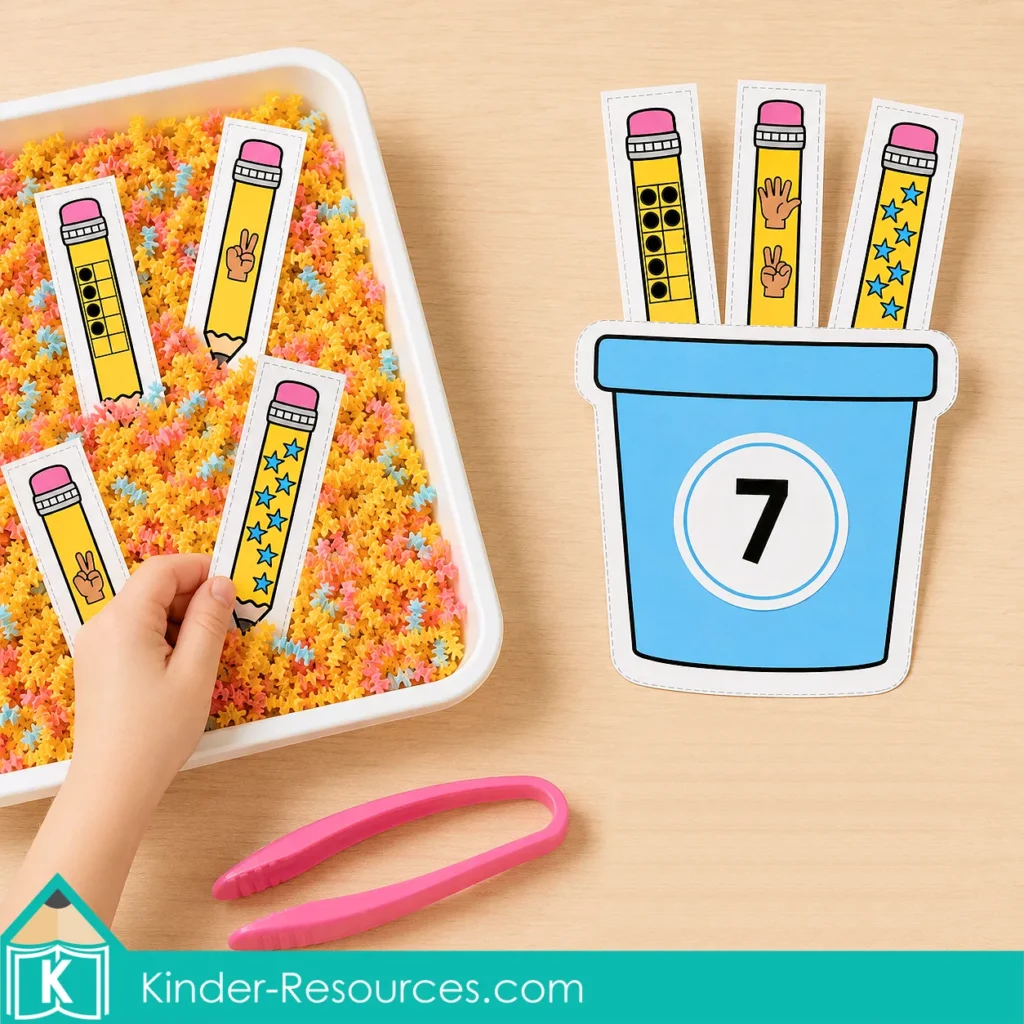
Pencil Number Match: A Preschool Math Sensory Bin
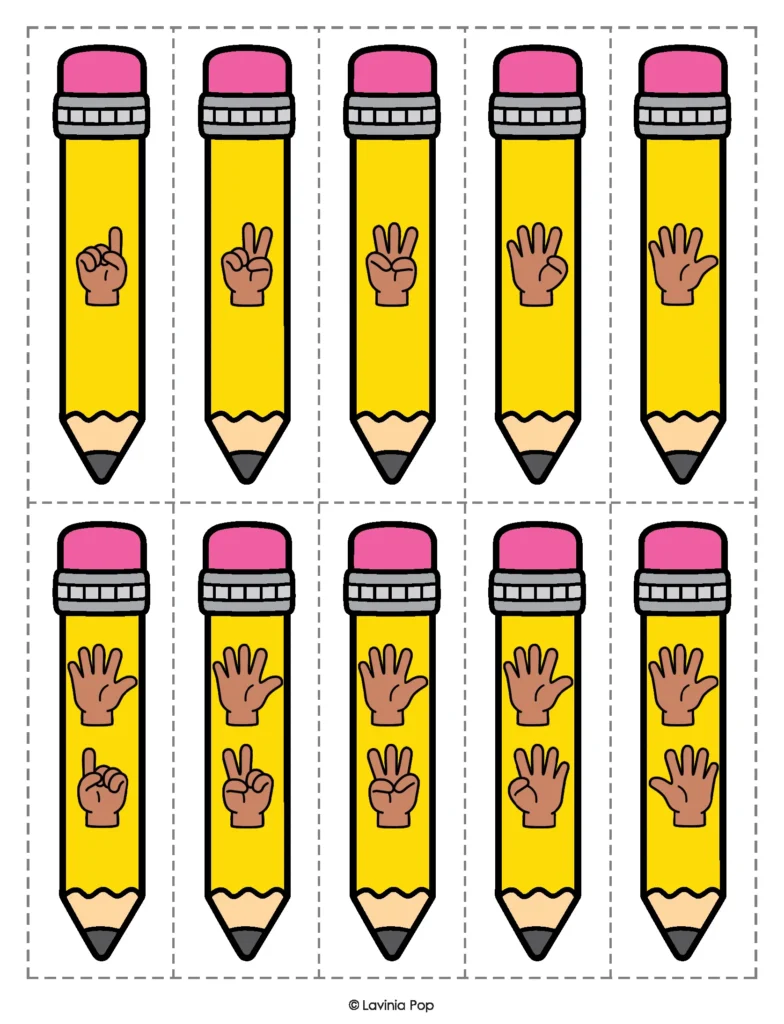
The Pencil Number Match sensory bin helps children recognize numbers and understand that a quantity can be represented in different ways.
Children choose a numbered pencil cup and search the sensory bin for pencils showing the matching quantity. The pencils include:
- Finger representations
- Groups of stars
- Ten-frame representations
Numbers 1–10 are included.
Once children are comfortable matching the pencils, the same materials can be used for several additional activities. Children can roll and fill a pencil cup, place the pencils in numerical order, or determine which pencil does not belong in a group.
Encourage children to explain how they know that a pencil matches the number. This helps build mathematical language and encourages children to look carefully at each representation.
4 Back to School Sorting Sensory Bin Activities
Sorting activities help children notice similarities and differences, describe attributes, classify objects, and explain their thinking. The School Sensory Bins resource includes four different sorting activities.
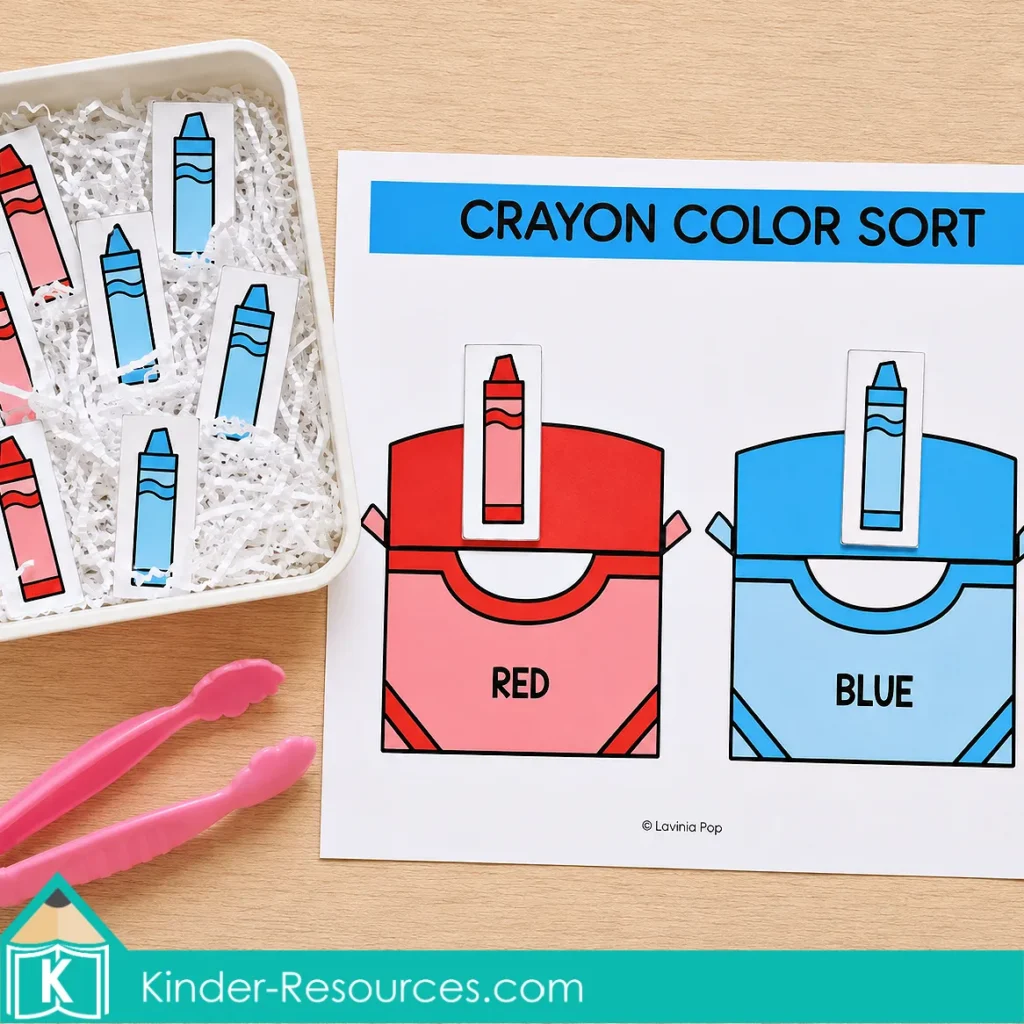
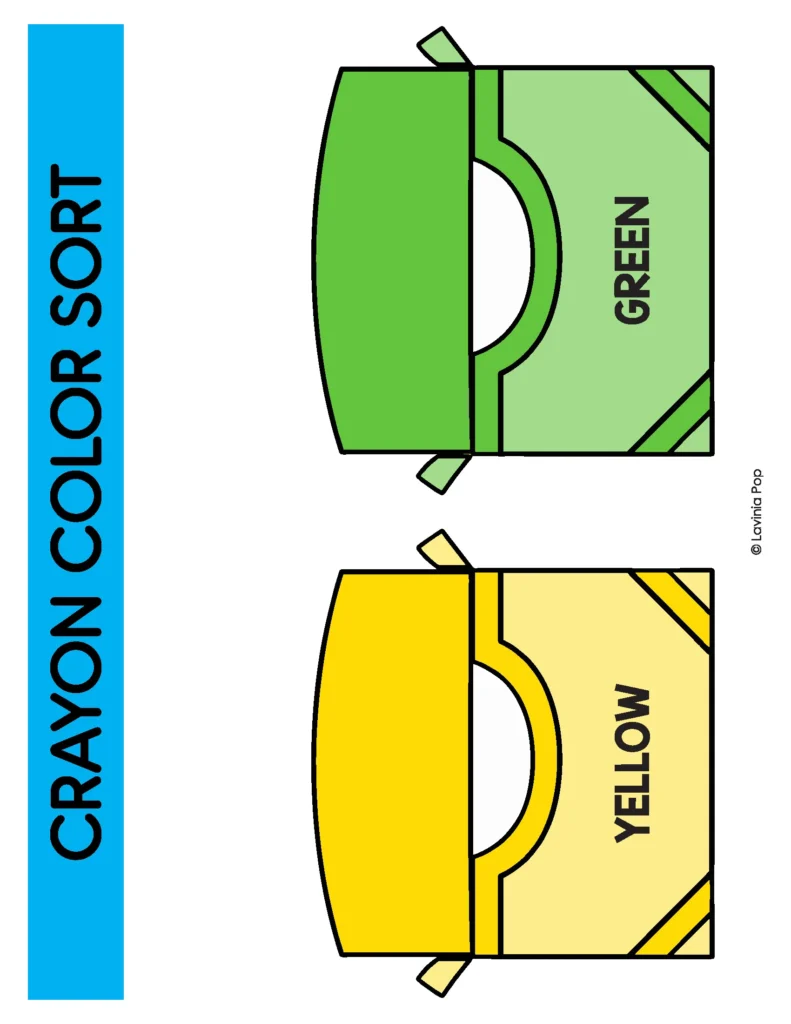
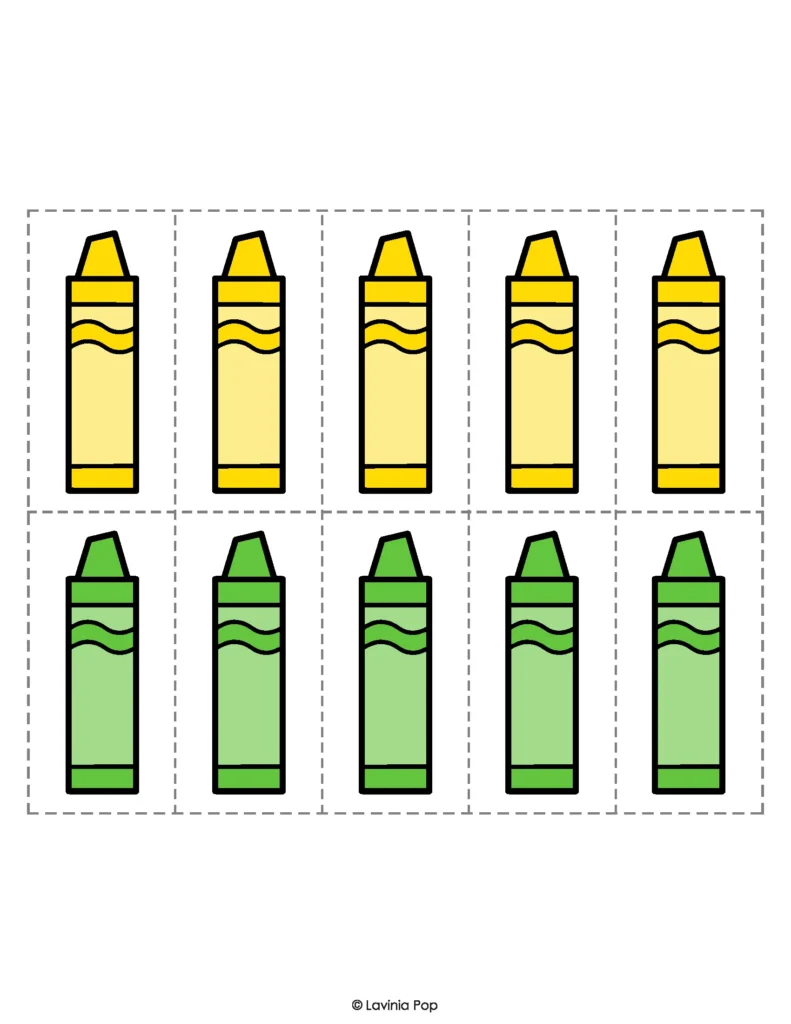
Crayon Color Sort
Children search for colorful crayon pieces and place each one in the matching crayon box.
Ten colors are included:
- Red
- Orange
- Yellow
- Green
- Blue
- Purple
- Pink
- Brown
- Black
- White
Begin with two or three colors and gradually add more as children become confident.
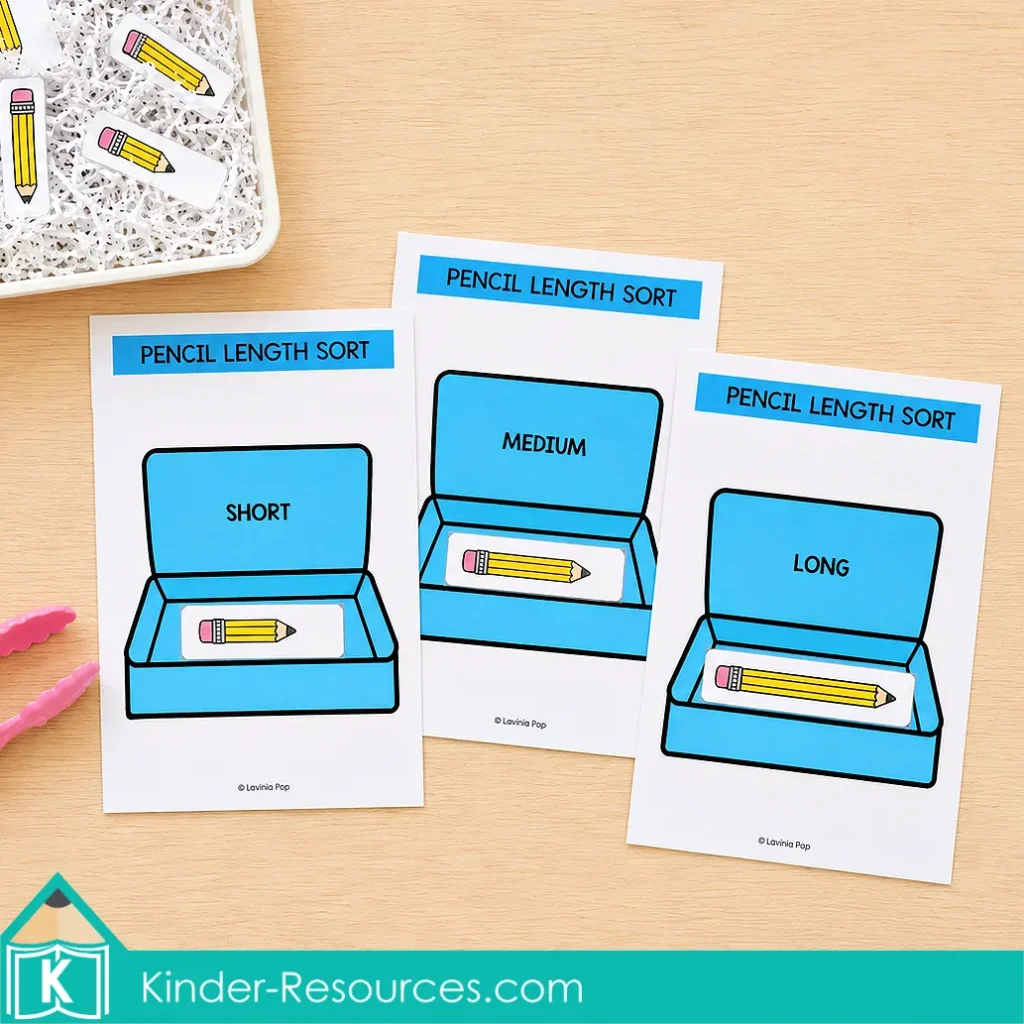
Pencil Length Sort
Children compare the printable pencils and sort them into short, medium, and long pencil boxes.
This activity introduces measurement language and encourages children to compare objects by length.
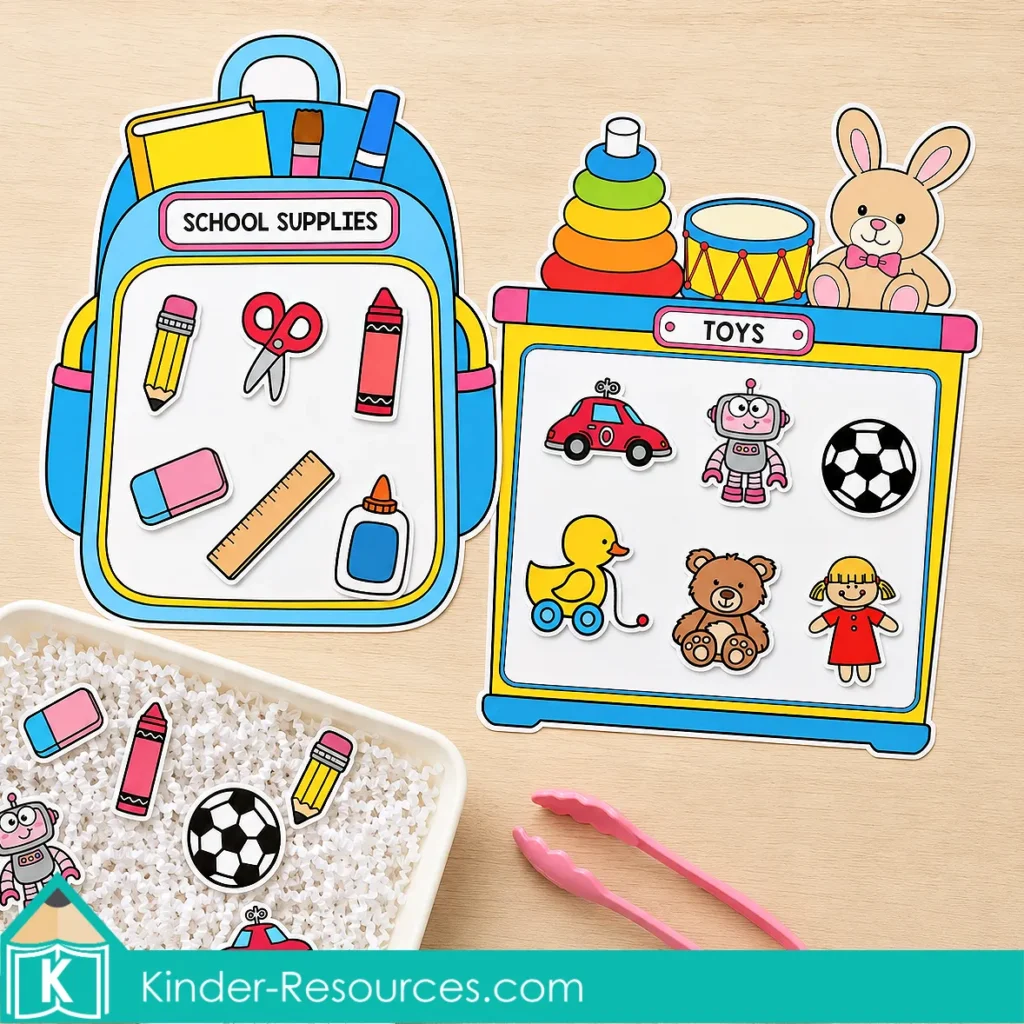
School Supplies and Toys Sort
Children decide whether each picture represents a school supply or a toy and place it on the corresponding sorting mat.
Ask children to name each object and explain why it belongs in that group. This makes the activity especially useful for developing vocabulary and reasoning skills.
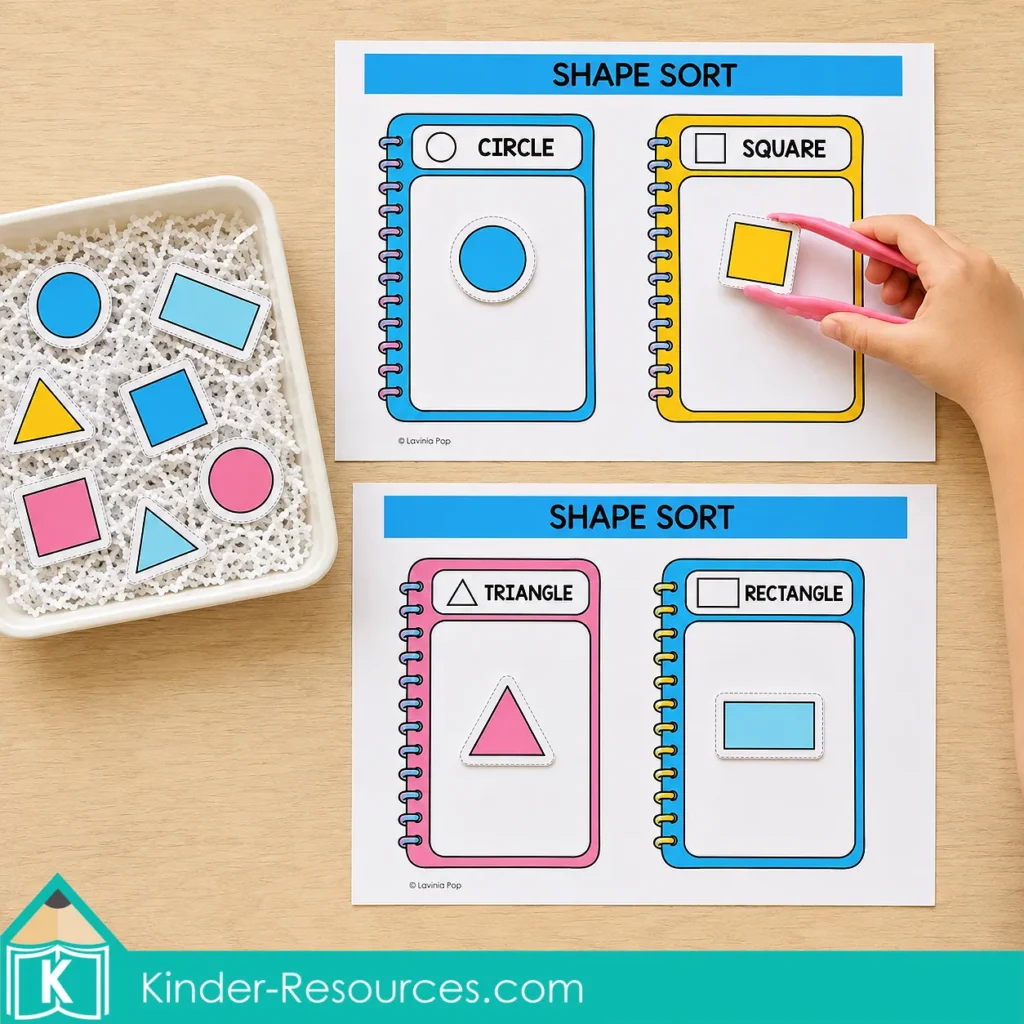
Shape Sort
Children identify circles, squares, rectangles, and triangles before placing them on the matching notebook mats.
The pieces vary in size, color, and orientation, encouraging children to concentrate on the defining features of each shape.
The sorting pieces can also be used to:
- Sort the objects in a different way
- Find the object that does not belong
- Create and continue simple patterns
- Compare the number of objects in each group
Build My Name: A Back to School Literacy Sensory Bin
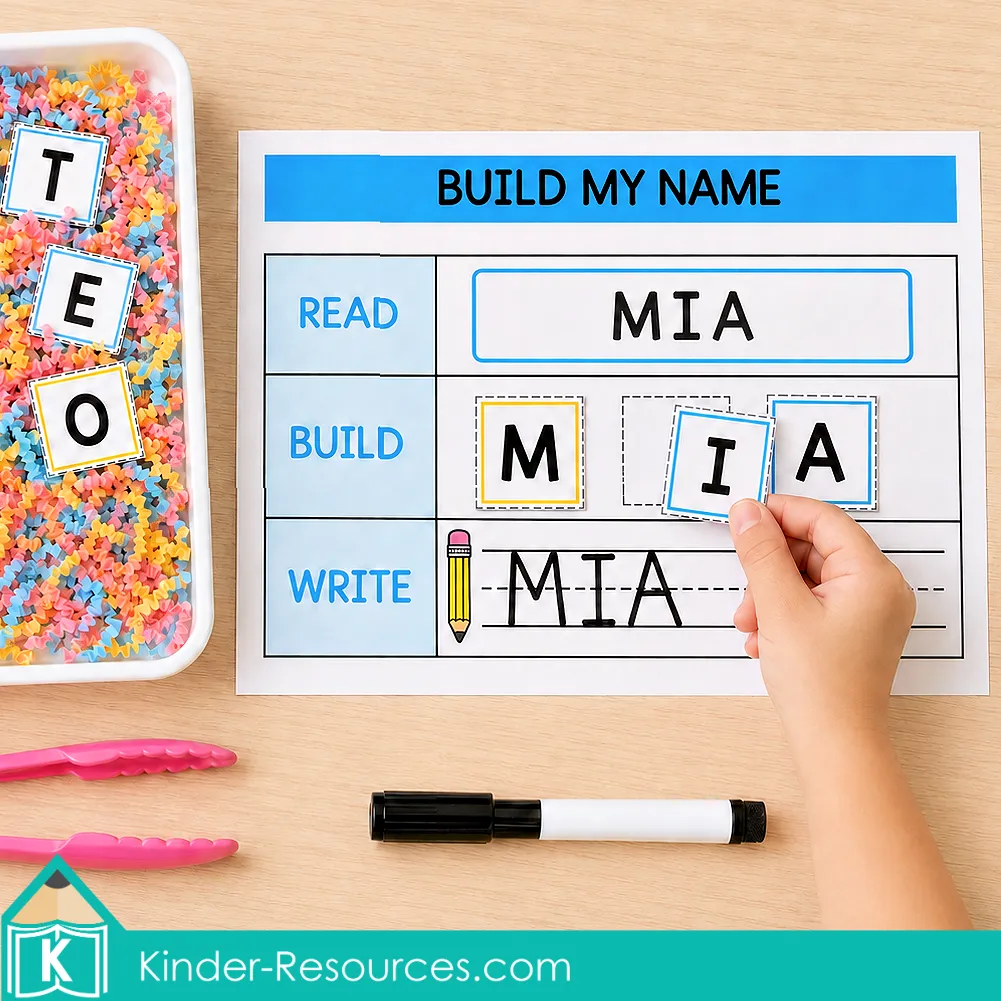
A child’s name is often one of the first words they learn to recognize, build, and write. The Build My Name sensory bin turns this important early literacy skill into a hands-on activity.
First, prepare an editable name card for each child. Children choose their name card, search the sensory bin for the correct letter tiles, and arrange the letters in order. They can then practice writing their name with a dry-erase marker.
The name cards include spaces for children to:
- Read their name.
- Build their name.
- Write their name.
The editable name cards must be opened in the free Adobe Acrobat Reader before names are entered.
Once children are familiar with the main activity, try these additional name games:
- Mix up the letters and ask children to fix their names
- Remove one letter and identify which letter is missing
- Match uppercase and lowercase letters
- Find the letters without using the name card
- Build the names of classmates
These variations allow the activity to grow with children as their name recognition and letter knowledge develop.
How to Set Up Back to School Sensory Bins
Sensory bins do not need to be complicated. To prepare each activity:
- Print the required activity mats and pieces.
- Laminate the materials if you would like to reuse them.
- Cut apart the printable pieces.
- Choose an age-appropriate sensory filler.
- Partially hide the pieces throughout the filler.
- Place the activity mat or cards beside the sensory bin.
- Add child-friendly tongs or tweezers if desired.
Partially hiding the pieces makes the search engaging without causing frustration. It also allows children to see what they are looking for when they are first learning how to use sensory bins.
Suggested fillers and setup ideas are provided on the Teacher Directions pages. Always consider the age of your learners, allergies, sensory preferences, choking hazards, and classroom policies when choosing materials.
Sensory fillers, containers, tools, and loose parts are not included with the printable resource.
Easy Storage for Back to School Sensory Bin Activities
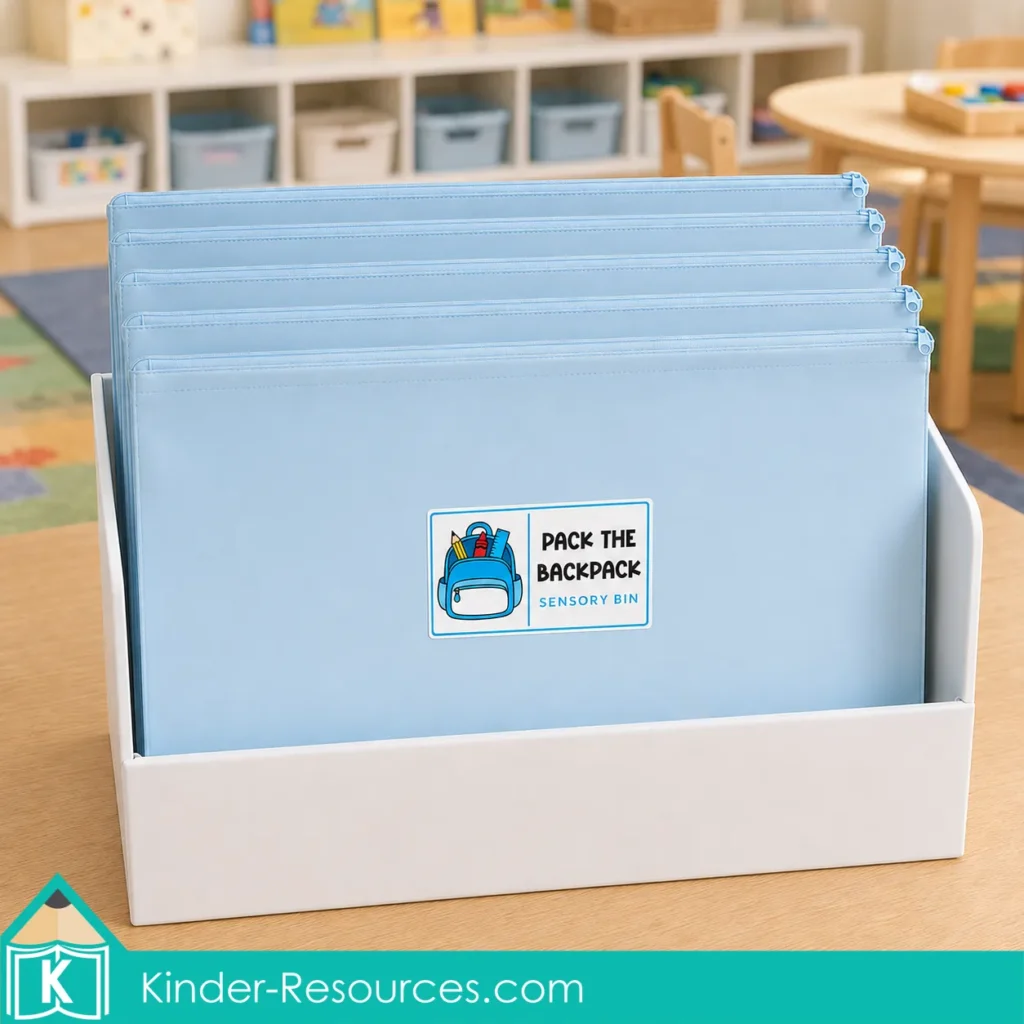
Storage labels for all five sensory bins are included in the resource. Place the printable pieces, activity mats, and directions in labeled bags, containers, or folders so that each activity is easy to locate and prepare.
You may also want to store the smaller pieces in separate labeled bags inside each activity container. This makes it easier to choose only the letters, numbers, colors, or pieces required for a particular group of learners.
Differentiating Preschool Sensory Bin Activities
These school sensory bins can be easily adjusted for different learners.
For children who are beginning:
- Offer fewer cards or pieces at one time.
- Use only a small group of letters or numbers.
- Place the printable pieces near the surface of the filler.
- Model the activity before inviting children to play.
- Complete the activity together during a small-group lesson.
For children who are ready for an additional challenge:
- Add more letters, numbers, or sorting categories.
- Ask children to explain their answers.
- Include the “Which One Doesn’t Belong?” activities.
- Encourage children to create their own packing lists or patterns.
- Invite children to record their answers on paper.
- Use the additional games included on the More Ways to Play cards.
The activities can be used repeatedly, with a different skill or variation introduced each time.
Back to School Learning Through Play
These back to school sensory bin activities provide meaningful practice without making learning feel like worksheet work. Children can search, count, match, sort, build, compare, and talk about their discoveries as they play.
The resource is suitable for Preschool, Pre-K, Transitional Kindergarten, Kindergarten, homeschool, early intervention, and special education settings.
Use the sensory bins for:
- Morning tubs
- Math and literacy centers
- Small-group instruction
- Fine motor stations
- Early finisher activities
- Quiet-time learning
- Beginning-of-the-year assessment
- Homeschool activities
Download the Free Sample Pages
Would you like to take a closer look inside the resource? Download the free School Sensory Bins sample pages for a preview of each of the five activities.
The free download includes selected pages from Pack the Backpack, School Bus Alphabet Match, Pencil Number Match, School Sorting, and Build My Name. It is a helpful way to explore the activities and see how the complete resource could work with your learners.
Please note that the free download contains sample pages from each activity. The complete activities, printable pieces, differentiated options, teacher directions, and additional ways to play are included in the full resource.
Purchase the Complete School Sensory Bin Activities for Preschool
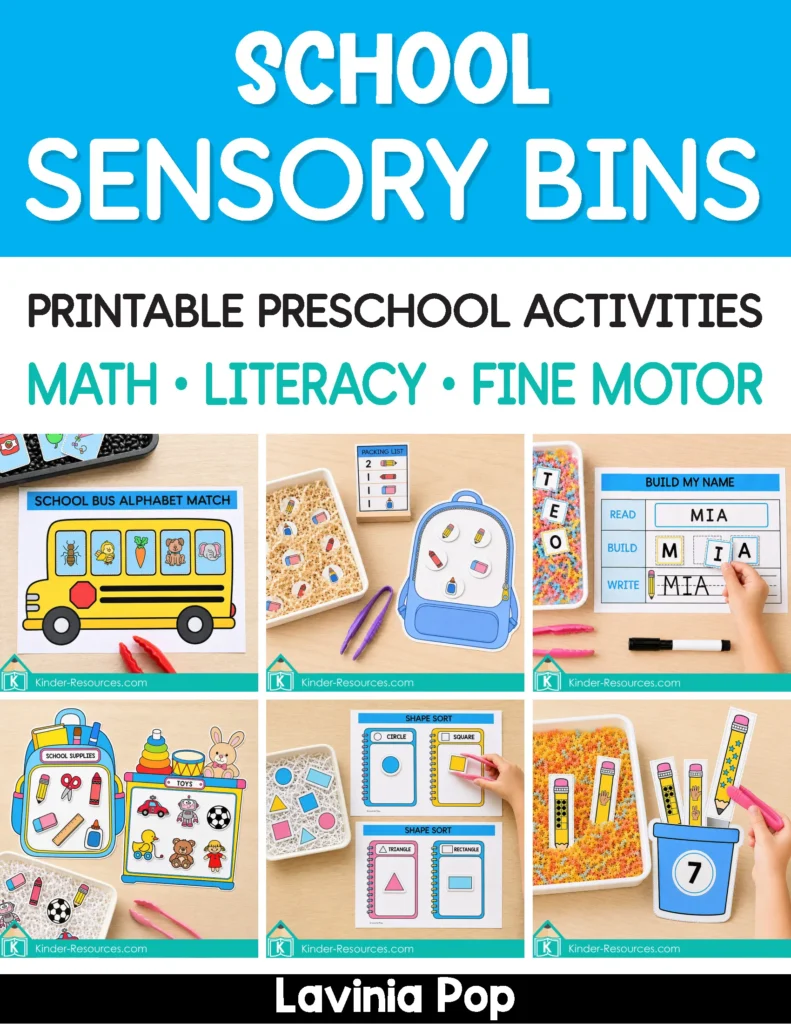
The complete School Sensory Bins Printable Preschool Activities resource includes teacher directions, How to Play cards, More Ways to Play cards, storage labels, printable activity mats, matching pieces, and editable name cards.
You May Also Like