
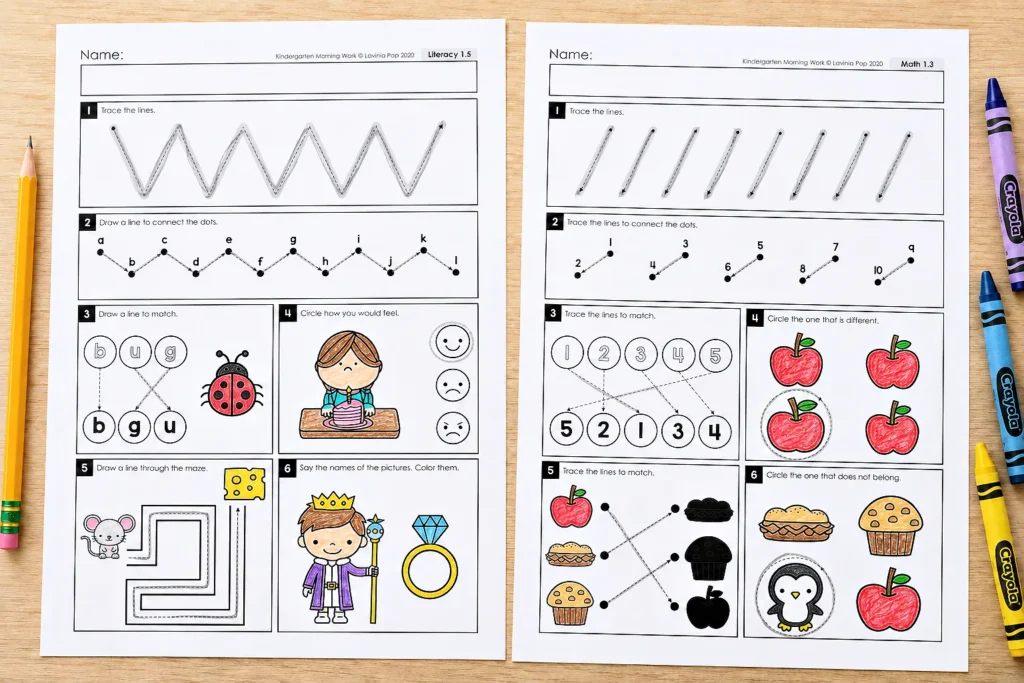
A familiar morning routine helps children settle into the classroom and understand what to do next. These kindergarten morning work worksheets provide simple literacy and math activities that children can practice as they become more confident working independently.
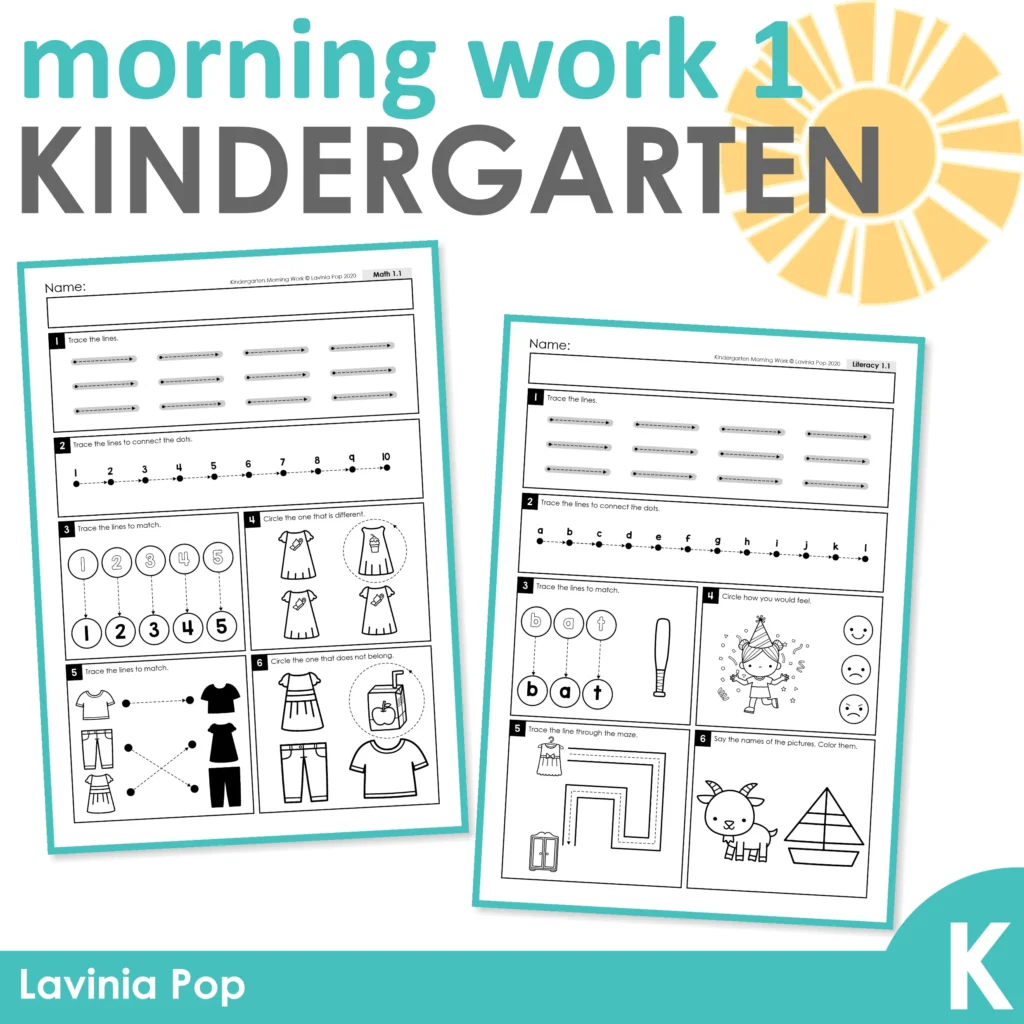
Kindergarten Morning Work Set 1 includes 40 no-prep worksheets, with a consistent layout that makes the activities feel familiar. Children practice pencil control, matching, visual discrimination, and other foundational skills while reviewing concepts they have already learned.
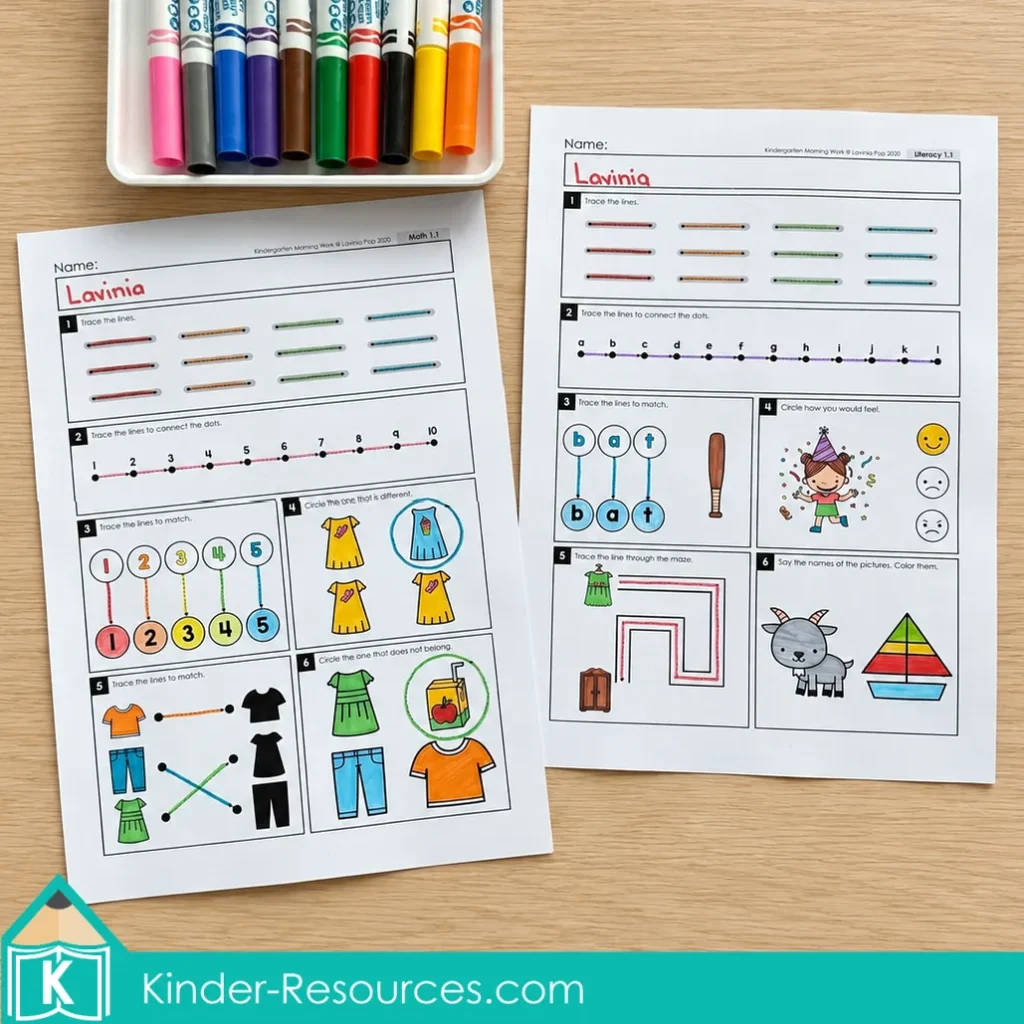
Download Six Free Kindergarten Morning Work Worksheets
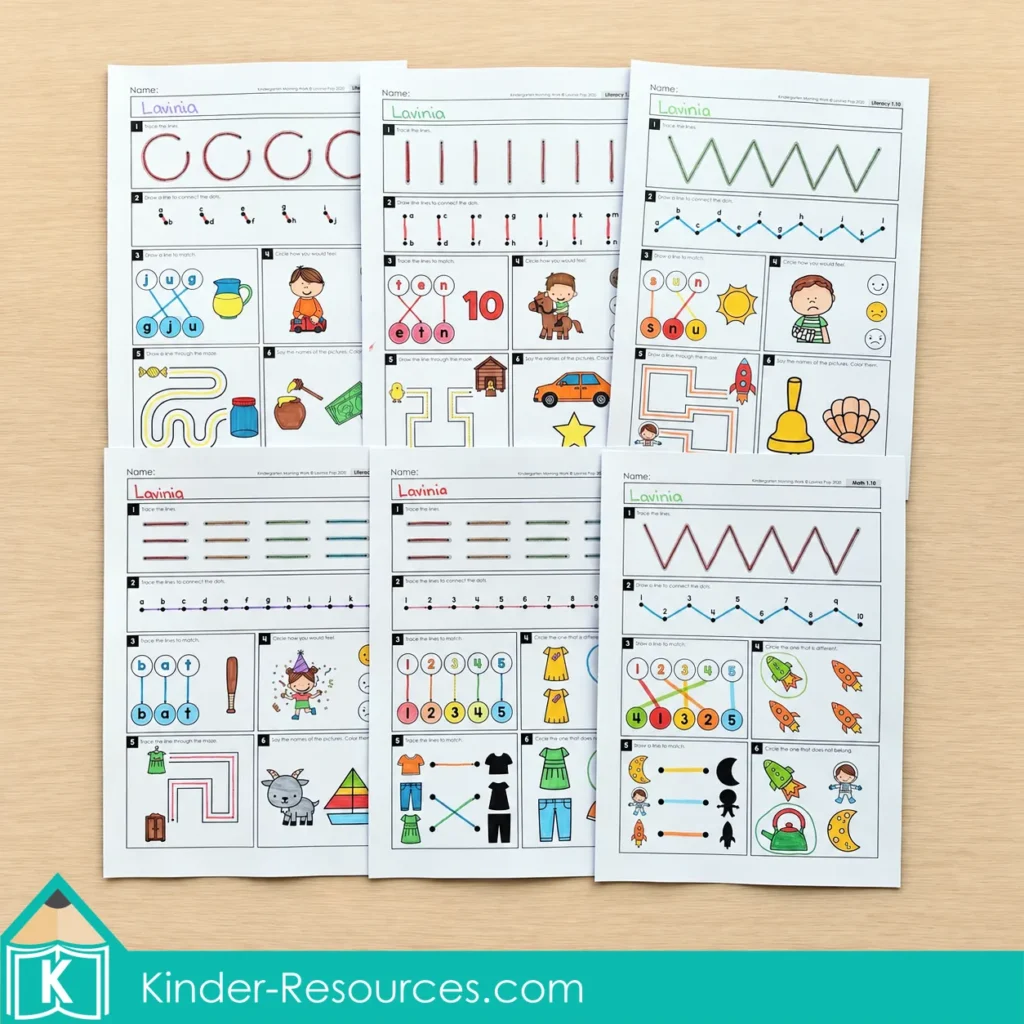
Want to try the activities with your children? The free download includes six sample worksheets: three literacy pages and three math pages.
The samples come from different points in the packet, so you can see the variety of activities and how the level of support changes. Try a page together, introduce the activities, and see how the format fits your classroom or homeschool routine.
What’s Included in Kindergarten Morning Work Set 1?
The complete packet contains:
- 20 literacy worksheets
- 20 math worksheets
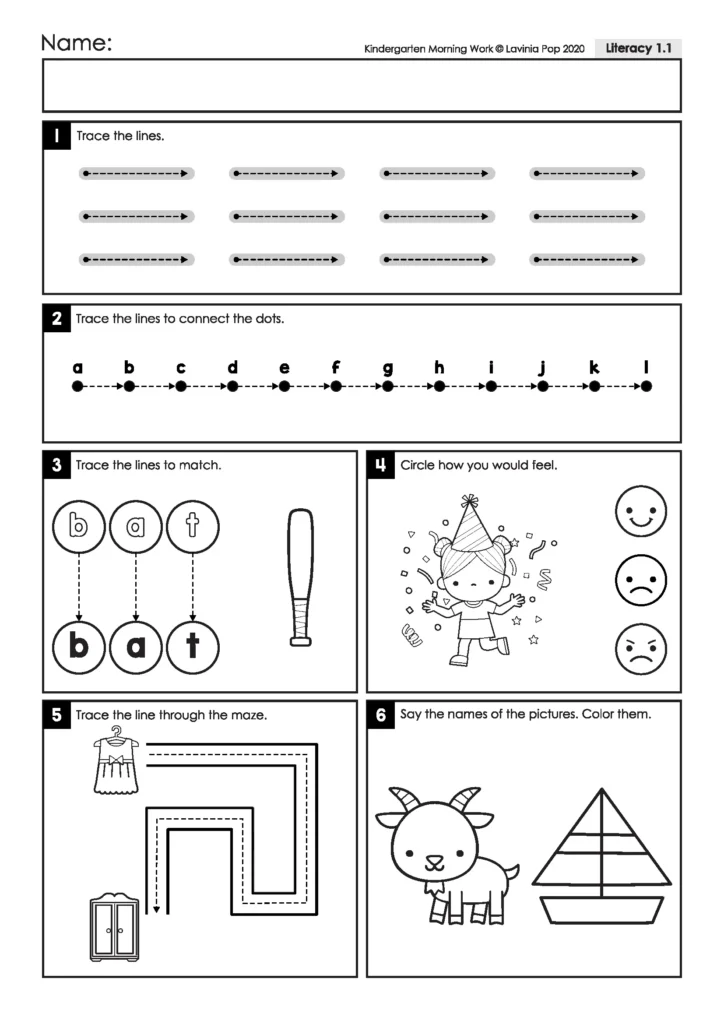
- A predictable layout with six activity sections on each page
- Extra tracing and circling guides on the first five worksheets in each set
- Both American and Australian spelling versions
The activities are designed for Kindergarten, Prep, and Foundation children who are practicing basic skills and learning to follow familiar routines.
Preparation is simple: print the pages you need and gather pencils and crayons. There is no cutting, laminating, or assembling required.
What Skills Do Children Practice?
Each worksheet combines several short activities, giving children opportunities to practice different skills within a familiar format.
Literacy Activities
The literacy worksheets include:
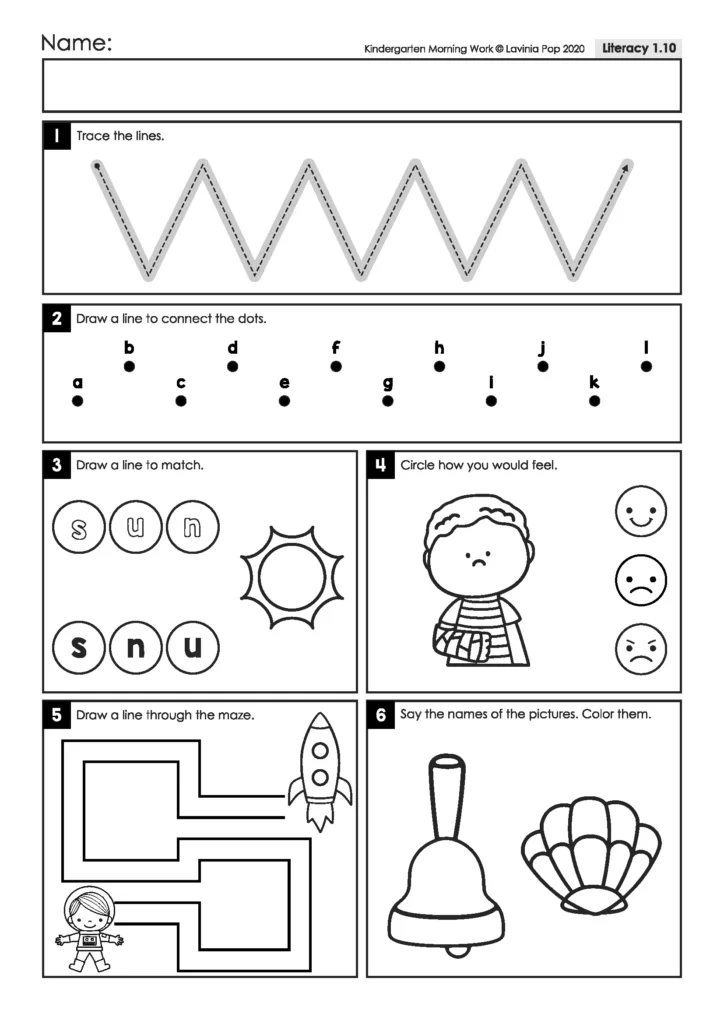
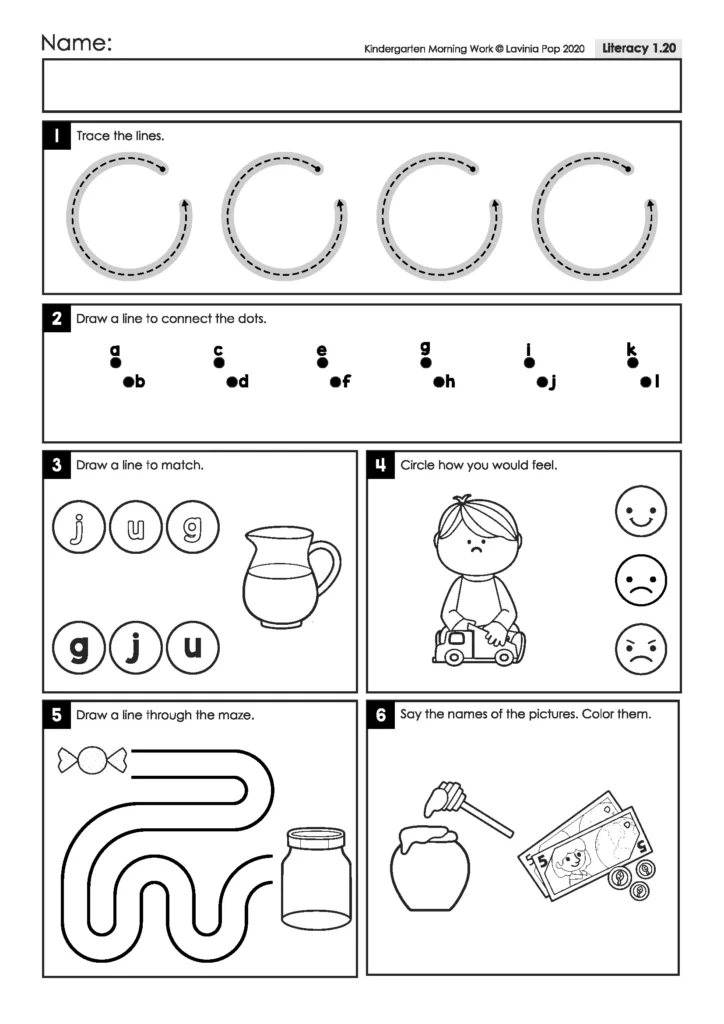
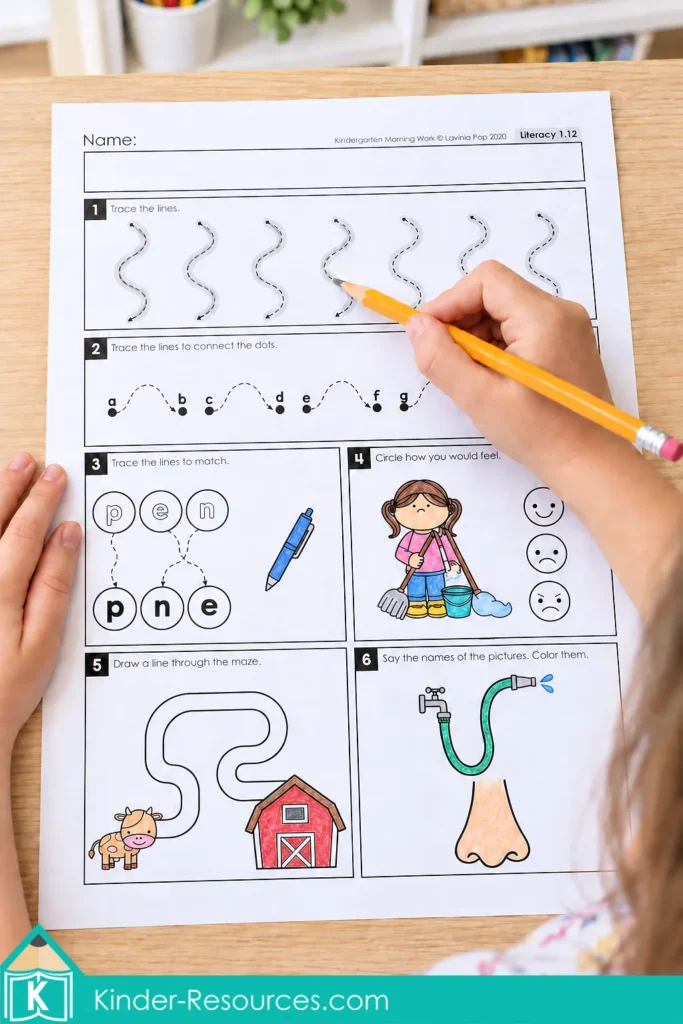
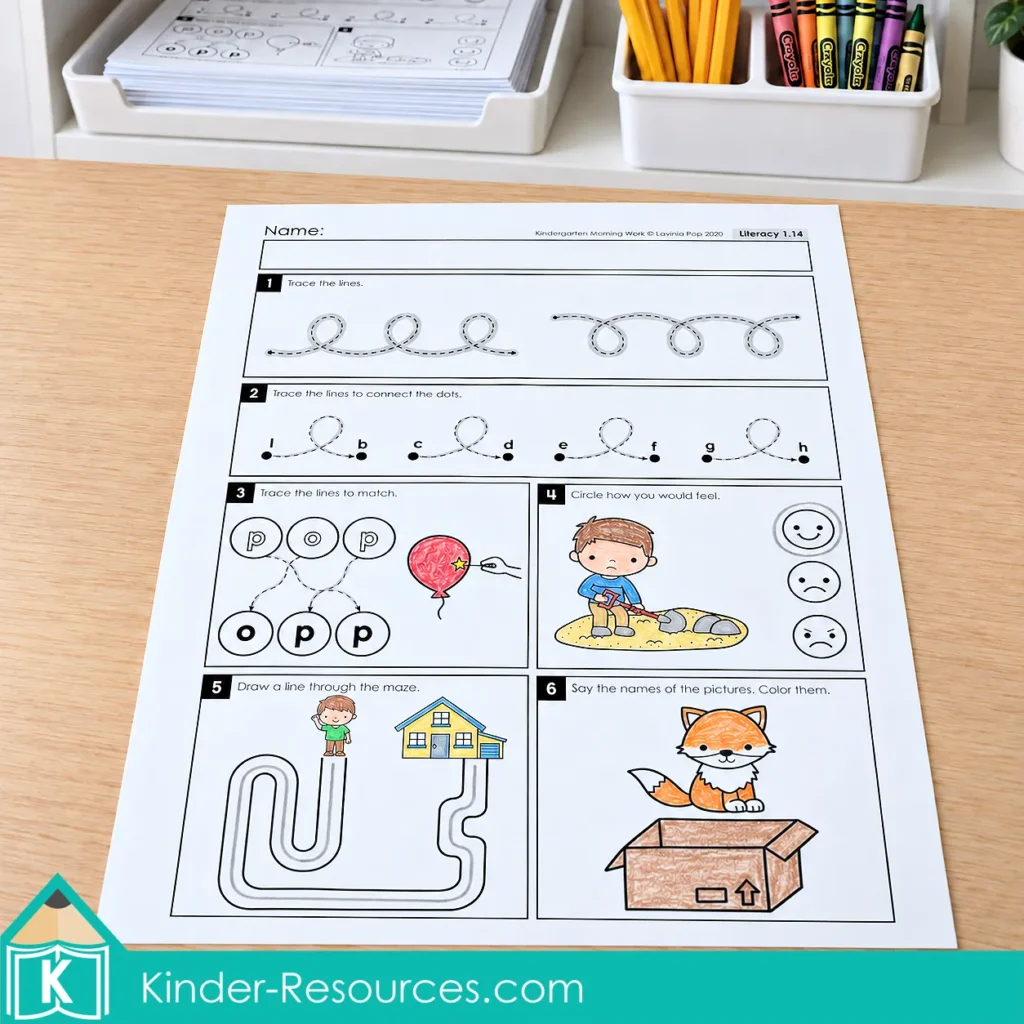
- Line tracing: Straight, diagonal, zigzag, curved, wavy, and other line patterns provide pencil-control practice.
- Lowercase letter recognition: Children trace or draw lines between dots labeled with lowercase letters.
- Letter matching with CVC words: Children match identical lowercase letters arranged in simple words, with a picture showing the word’s meaning.
- Feelings and emotions: Children look at a pictured situation and circle a face to show how they would feel.
- Mazes: Children guide their pencils through a path, practicing control and visual tracking.
- Picture naming and rhyming: Children name and color pairs of pictures, such as a goat and a boat.
The letter-matching activities also provide an opportunity to talk about sounds and blend simple words together when children are ready.
Math Activities
The math worksheets include:
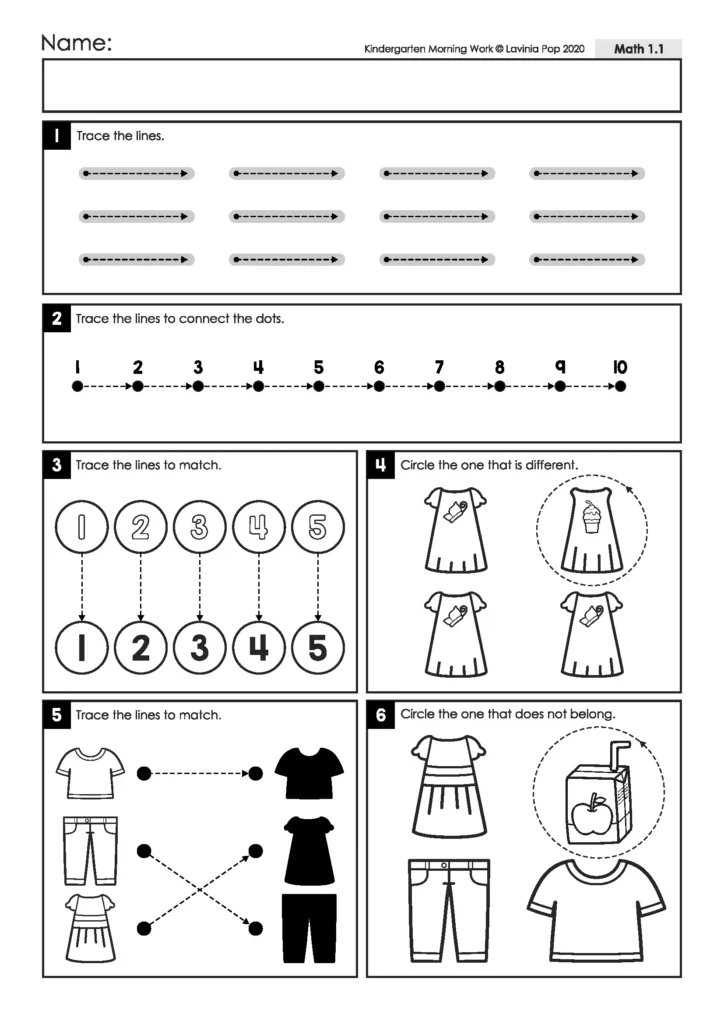
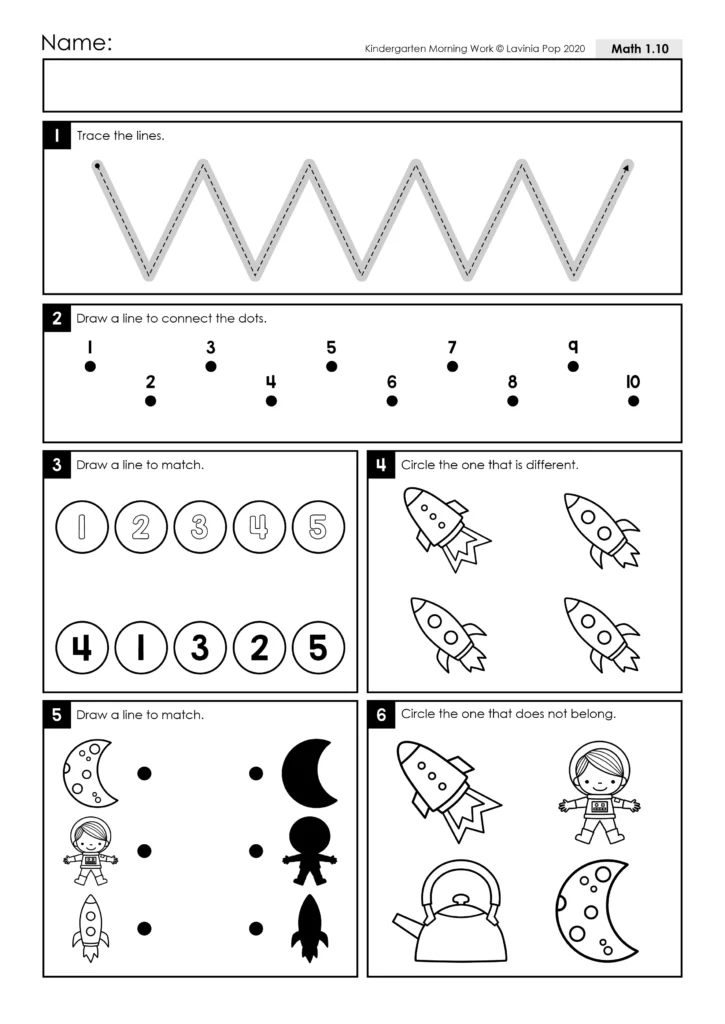
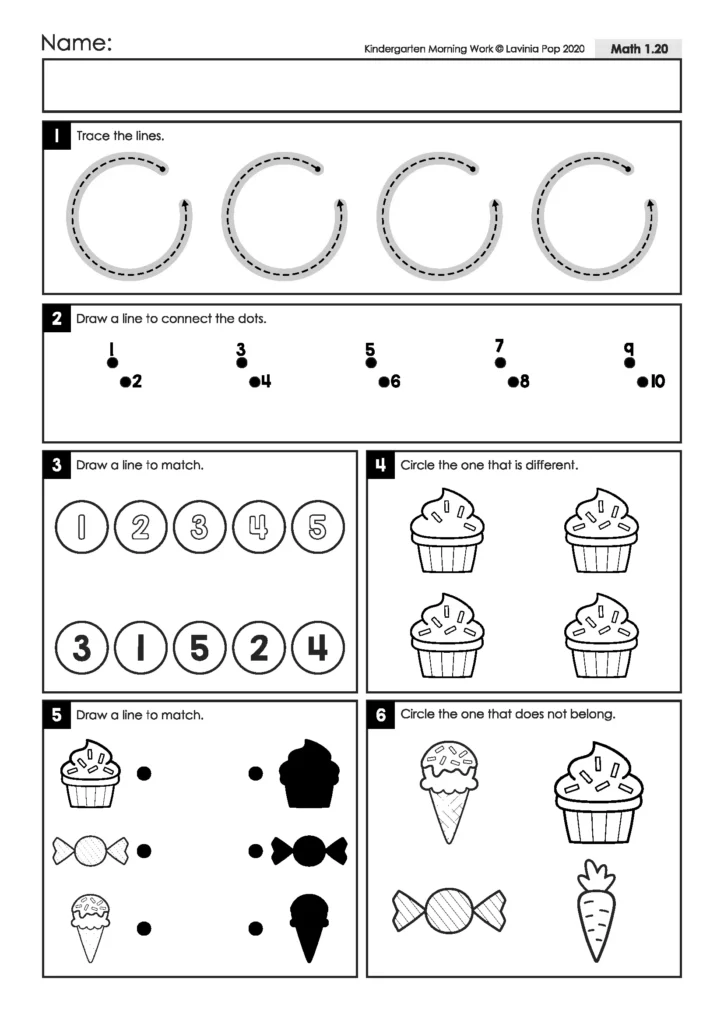
- Line tracing: Children practice controlling their pencils along different paths.
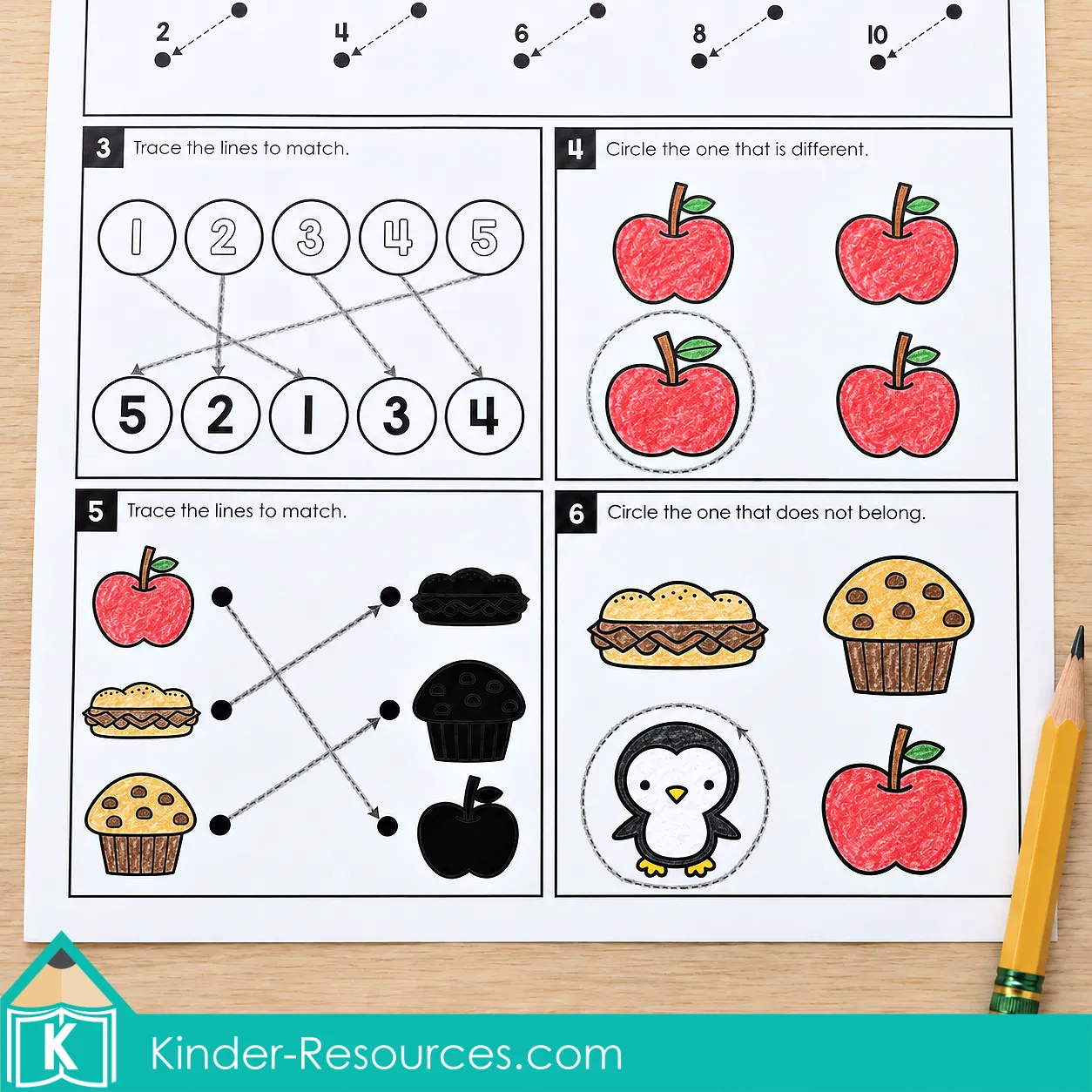
- Number recognition and sequencing: Children connect numbered dots in order.
- Numeral matching: Children draw lines between matching numerals.
- Finding the different picture: Children compare details and identify the picture that differs from the others.
- Shadow matching: Children connect pictures to their matching silhouettes.
- Finding what does not belong: Children identify an item that does not fit with the rest of a group.
These activities encourage children to look closely, compare, and make simple decisions while practicing familiar skills.
Pencil Control Practice with Tracing and Mazes
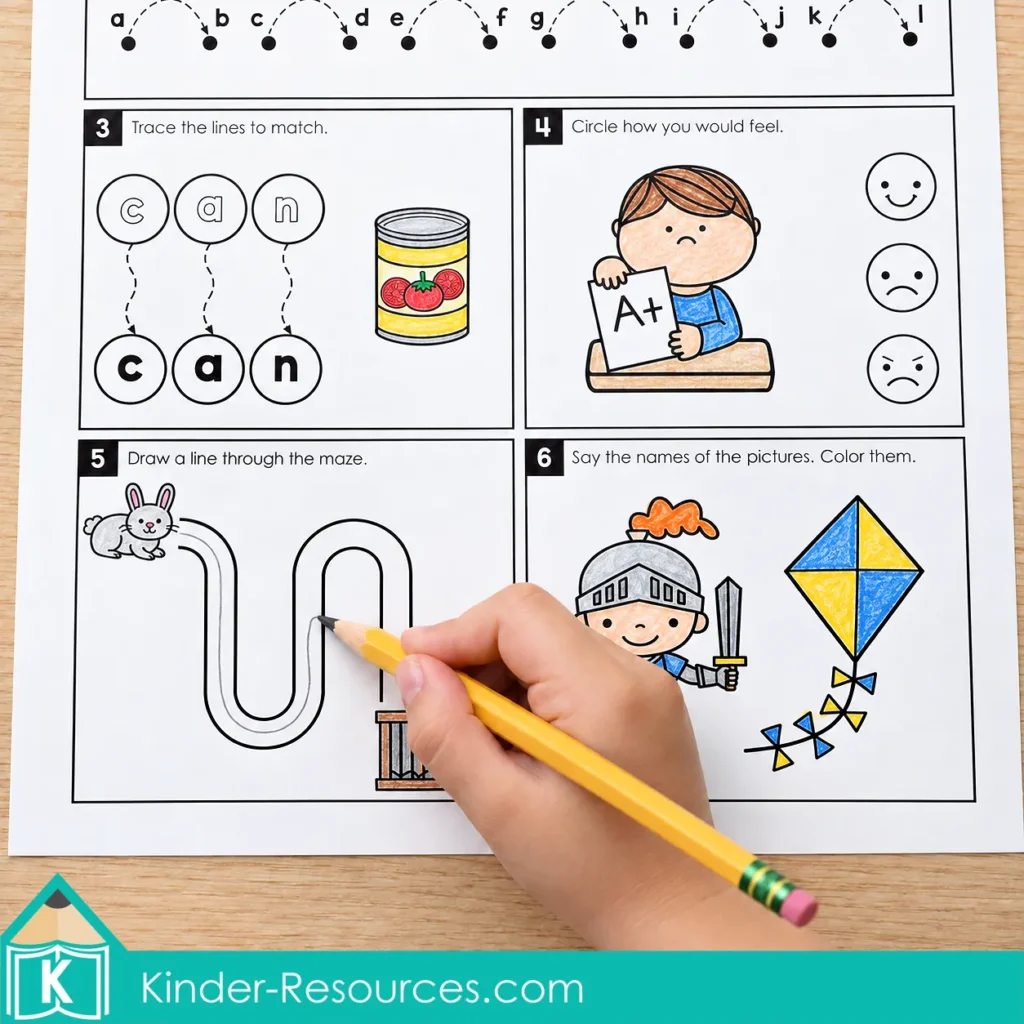
Tracing activities give children opportunities to practice moving a pencil along straight, diagonal, zigzag, curved, and wavy paths. Model where to begin and follow the printed arrows together before inviting children to try a line on their own.
For maze activities, show children how to keep their pencil inside the pathway as they move from one picture to the other. Encourage them to work slowly and look ahead at the next bend. You can practice one section together before asking children to complete more of the page independently.
From Guided Practice to Greater Independence
From Guided Practice to Greater Independence
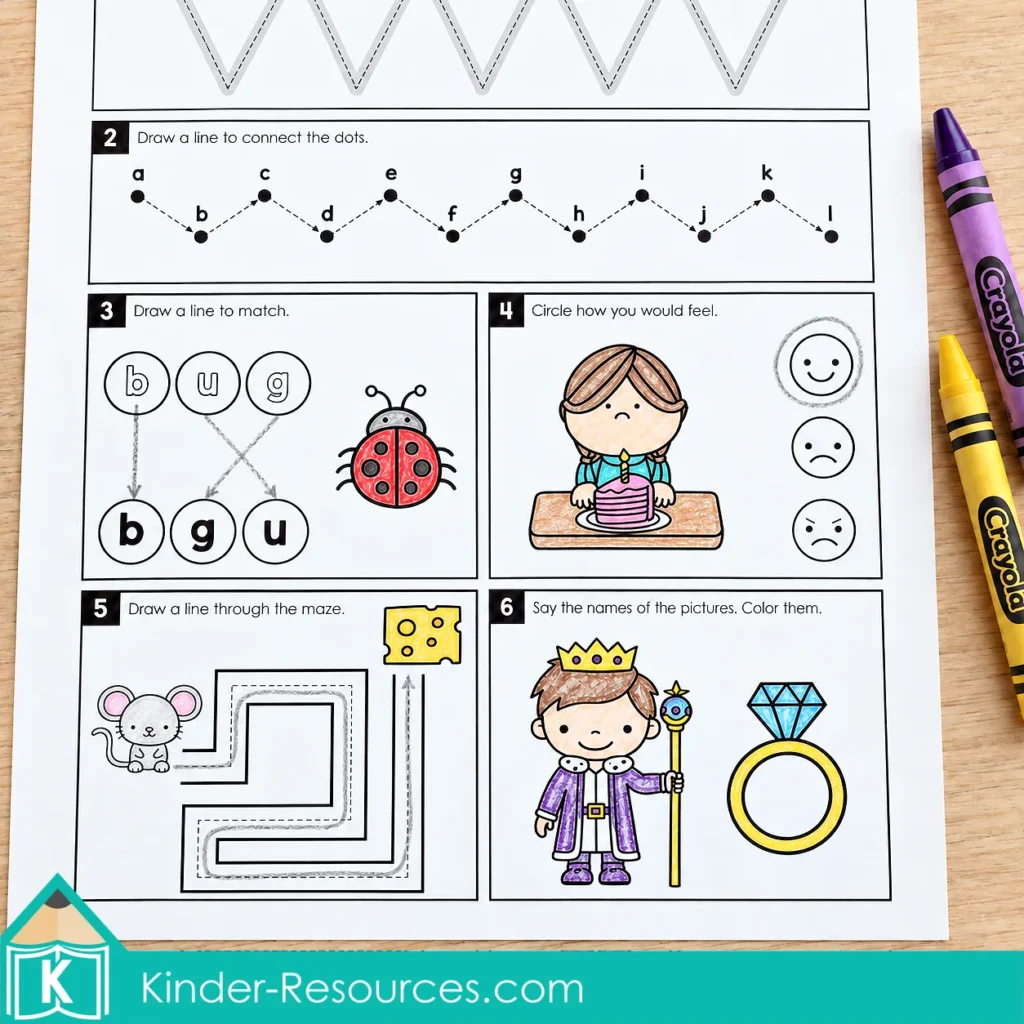
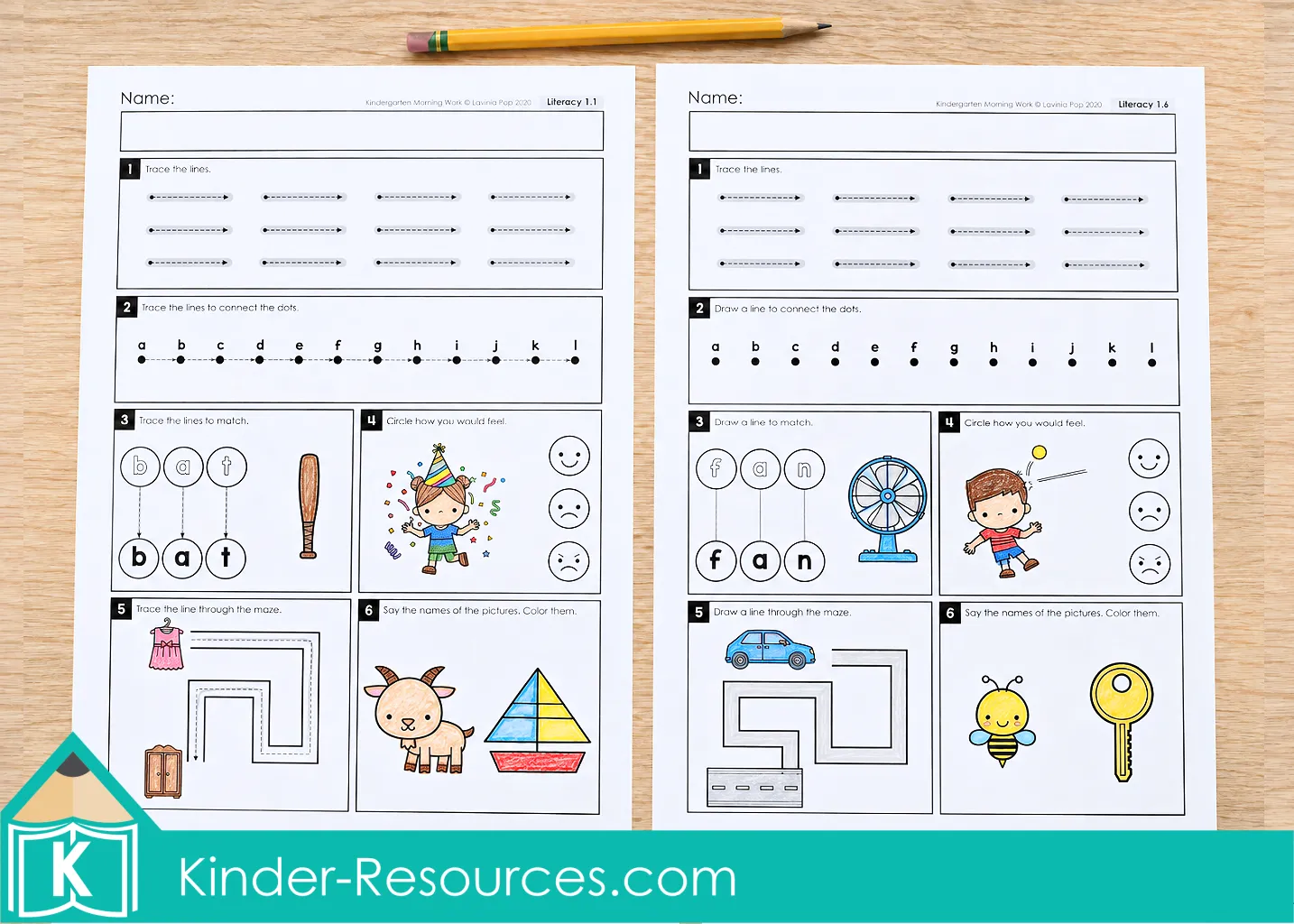
The first five literacy worksheets and first five math worksheets include extra guides to help children learn what to do.
For example, children can trace a matching line, follow a guided maze path, or trace around an answer. These supports help introduce the actions used throughout the packet.
Later worksheets remove many of those guides, giving children opportunities to draw their own matching lines, circle their answers, and complete paths more independently. Tracing remains where it helps children learn the correct path of a line.
The familiar layout stays consistent, so children can focus on the activity as they become more comfortable with the routine.
A Simple Classroom Setup for Kindergarten Morning Work Worksheets
A morning work routine is easier to introduce when children know where to find their materials and what to do with them.
Introduce the Activities Together
Before using the worksheets independently, demonstrate the six sections. Show children how to follow a tracing path, connect matching items, and circle an answer.
Take time to name unfamiliar pictures, especially when exploring rhyming pairs. For the feelings activity, encourage children to explain their choice. Different children may feel differently about the same situation.
Prepare One Page and Basic Supplies
Place a worksheet, pencil, and a few crayons at each child’s workspace before arrival. A small crayon tray keeps supplies within reach without crowding the page.
Start with one worksheet and adjust the amount of work to suit your children. You might alternate literacy and math pages across the week or use them during separate parts of the day.
Teach the Finishing Routine
Show children where completed pages belong and what they can do next. Looking at a book or choosing a familiar quiet activity can provide a simple next step.
Once children know the tasks and routine, morning work can give you time to welcome arrivals and help anyone who needs extra support.
Easy Storage for Morning Work Worksheets
Keep printed worksheets flat in a shallow paper tray, with pencils and crayons in a nearby supply caddy. Place the next page on the table when you are ready to use it.
One tray can hold a small selection of upcoming pages. If you prefer to separate literacy and math, use two trays so each set is easy to find.
You can also:
- Print upcoming pages ahead of time.
- Keep extra copies together for children who need another attempt.
- Use a separate tray for completed work.
- Refill the supplies as part of your end-of-day classroom routine.
For homeschool use, a folder and a small pencil-and-crayon container can keep everything together.
Other Ways to Use the Worksheets
Although designed for morning work, these pages can also be used for:
- Homework practice with familiar activities
- Early finisher tasks
- Small-group review
- Independent practice after instruction
- Extra pencil-control practice
- Homeschool learning
Choose pages that match the skills your children have already explored, and provide support where needed.
Get the Complete Kindergarten Morning Work Packet
If you would like more activities in this familiar format, Kindergarten Morning Work Set 1 includes 20 literacy worksheets and 20 math worksheets.
With simple preparation, varied activities, and built-in support, the packet gives children regular opportunities to practice foundational skills and develop greater independence.
Happy Teaching! 😊

You might also like
Looks amazing
Thank you so much, Lee! I’m so glad you like it. I hope your students have lots of fun using it. 😊