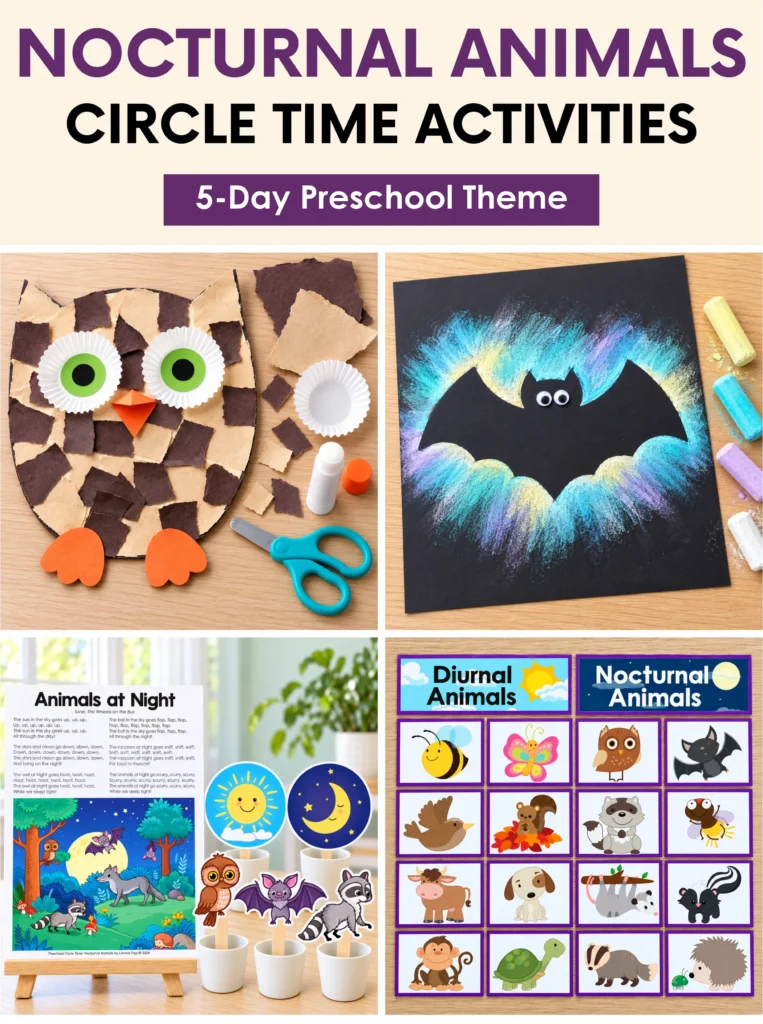
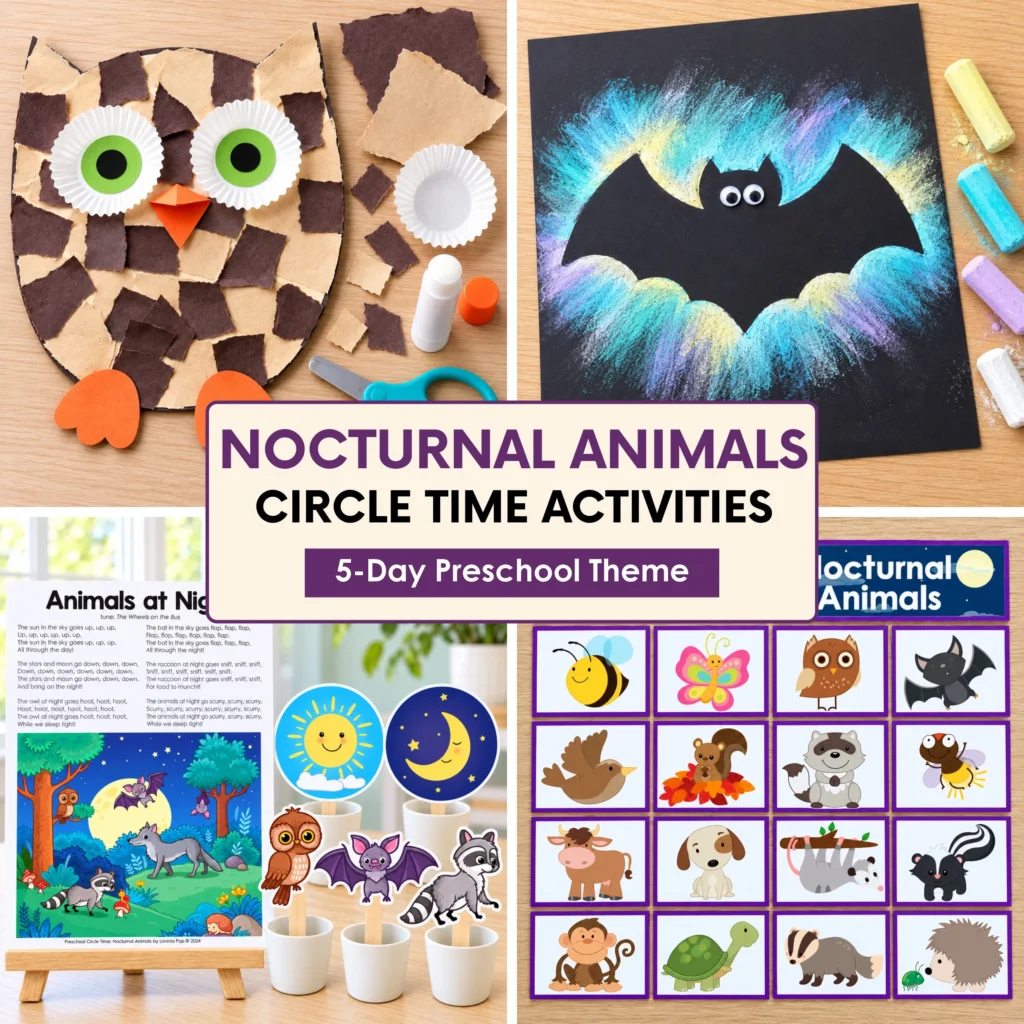
Explore what happens after dark with these nocturnal animals activities for preschool! This five-day circle time theme introduces day and night, owls, bats, raccoons, and the difference between nocturnal and diurnal animals through songs, picture books, crafts, and sorting activities.
My Nocturnal Animals Preschool Circle Time Plan brings the week together with daily lesson plans, printable song props, animal posters, and follow-up pages. You can follow the five-day sequence or choose activities for your preschool, pre-K, kindergarten, or homeschool group.
Download Free Nocturnal Animals Activities for Preschool
Would you like to try a few pages first? The free sample includes the torn-paper owl craft templates and a diurnal and nocturnal animal sorting worksheet, along with a preview of the resource.

Five Days of Nocturnal Animals Activities for Preschool
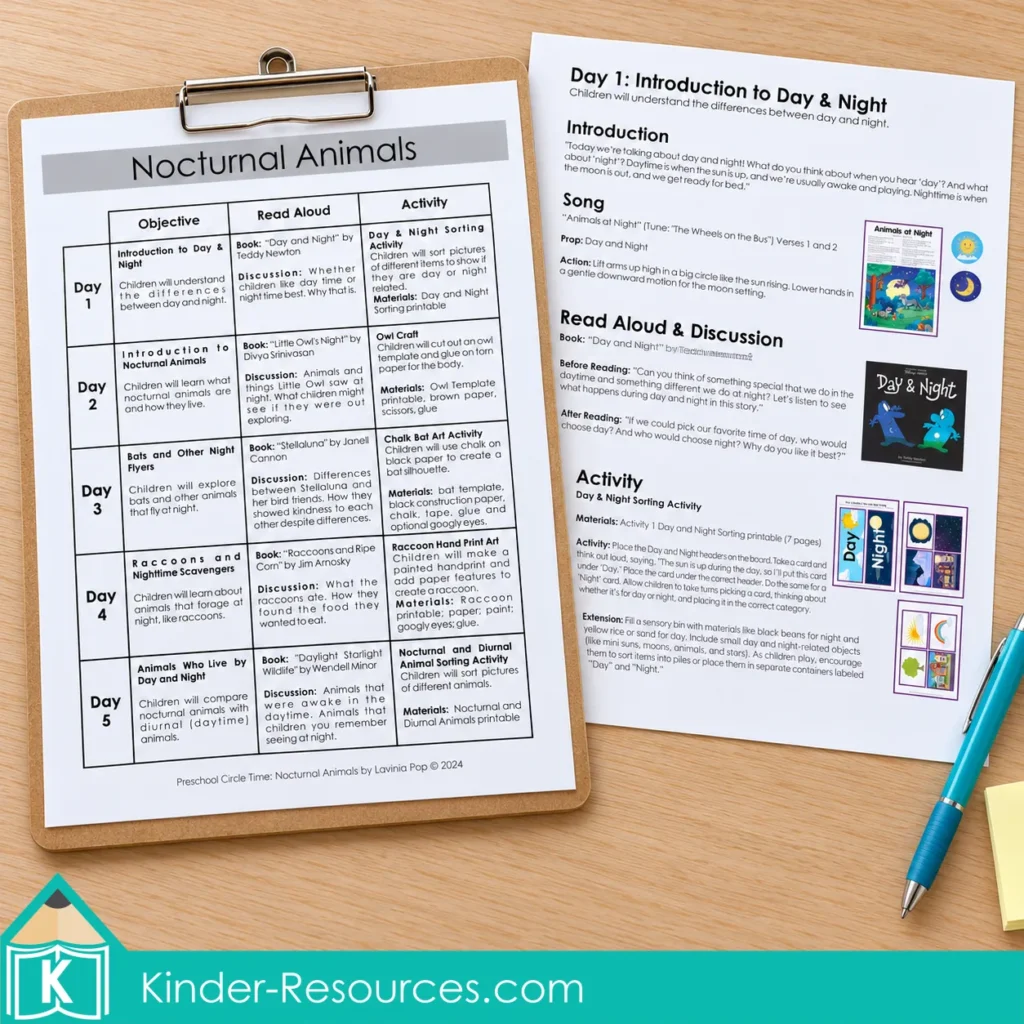
These nocturnal animals activities for preschool follow a simple daily routine: an introduction, a song with actions, a suggested read-aloud and discussion, and a main activity. Keep the group session focused on talking, singing, and sharing the story. The crafts and optional worksheets can follow during small groups or table time.
| Day | Theme | Main activity |
|---|---|---|
| Day 1 | Day and night | Sort daytime and nighttime pictures |
| Day 2 | Owls and nocturnal animals | Make a torn-paper owl |
| Day 3 | Bats and other night flyers | Create chalk bat art |
| Day 4 | Raccoons and nighttime scavengers | Make a handprint raccoon |
| Day 5 | Diurnal and nocturnal animals | Sort animal picture cards |
The suggested picture books are Day & Night by Teddy Newton, Little Owl’s Night by Divya Srinivasan, Stellaluna by Janell Cannon, Raccoons and Ripe Corn by Jim Arnosky, and Daylight Starlight Wildlife by Wendell Minor. These books are suggested read-alouds and are not included in the printable pack.
Nocturnal Animals Songs and Puppets for Preschool
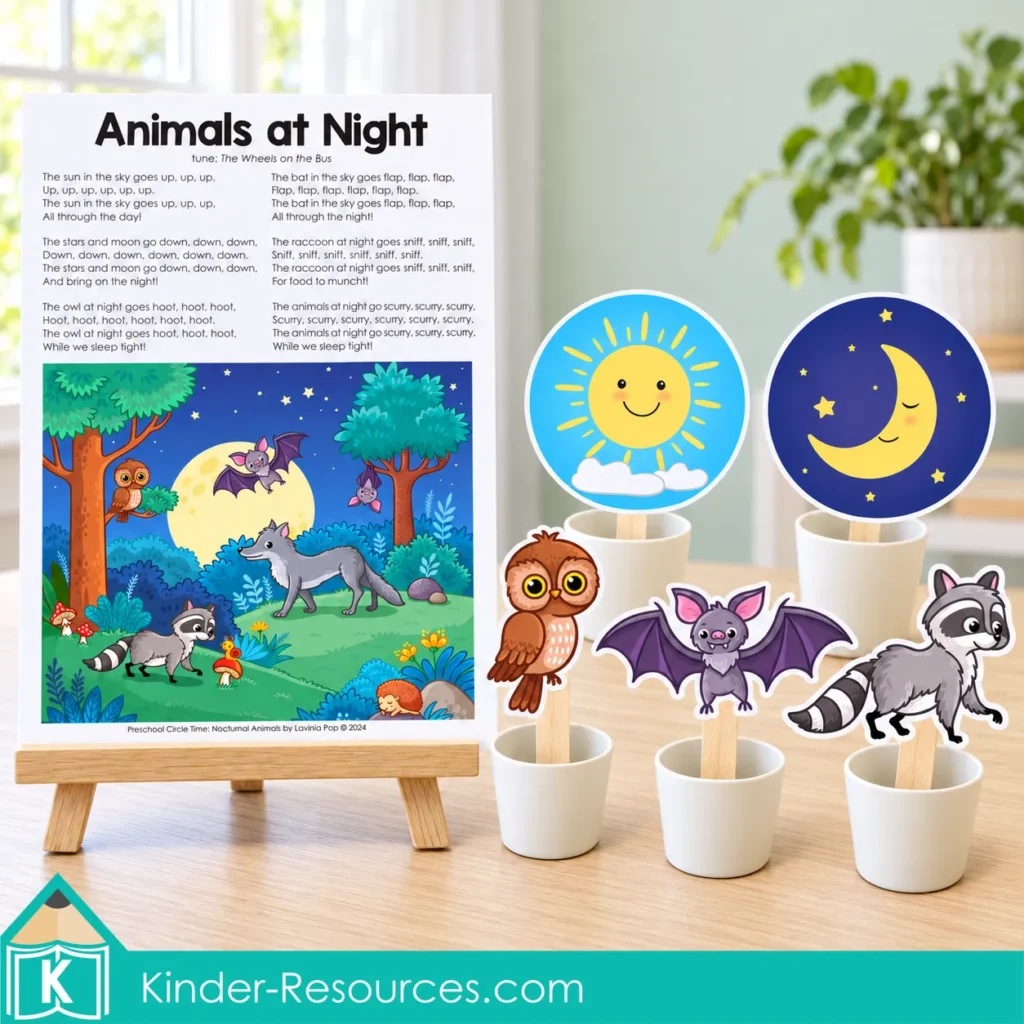
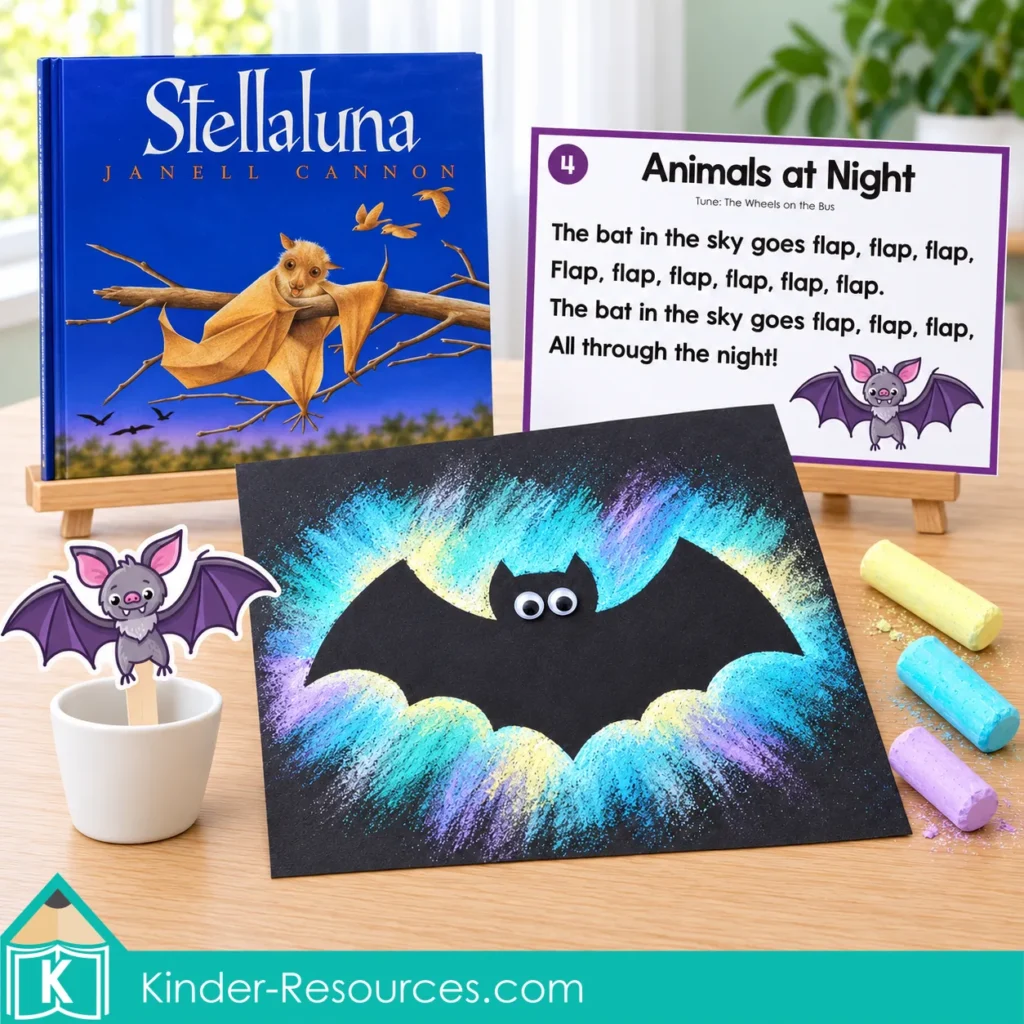
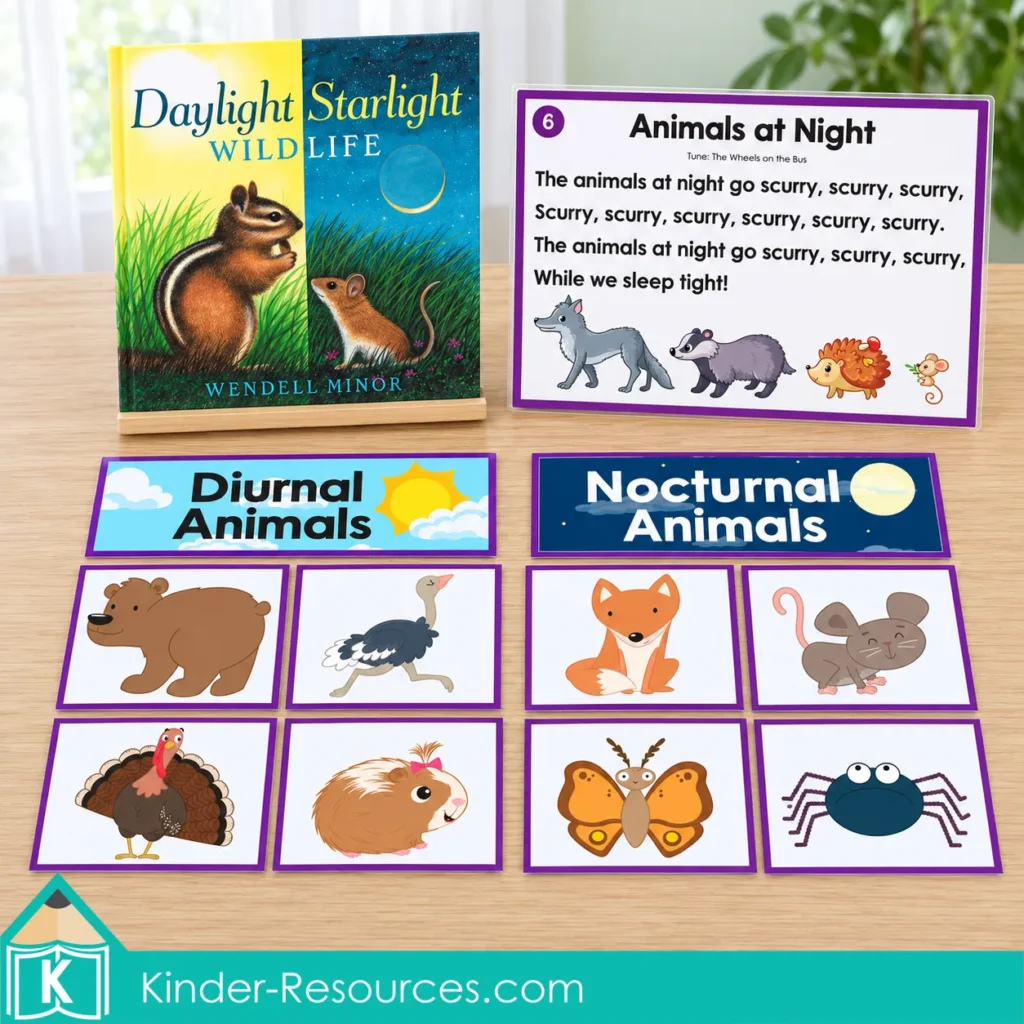
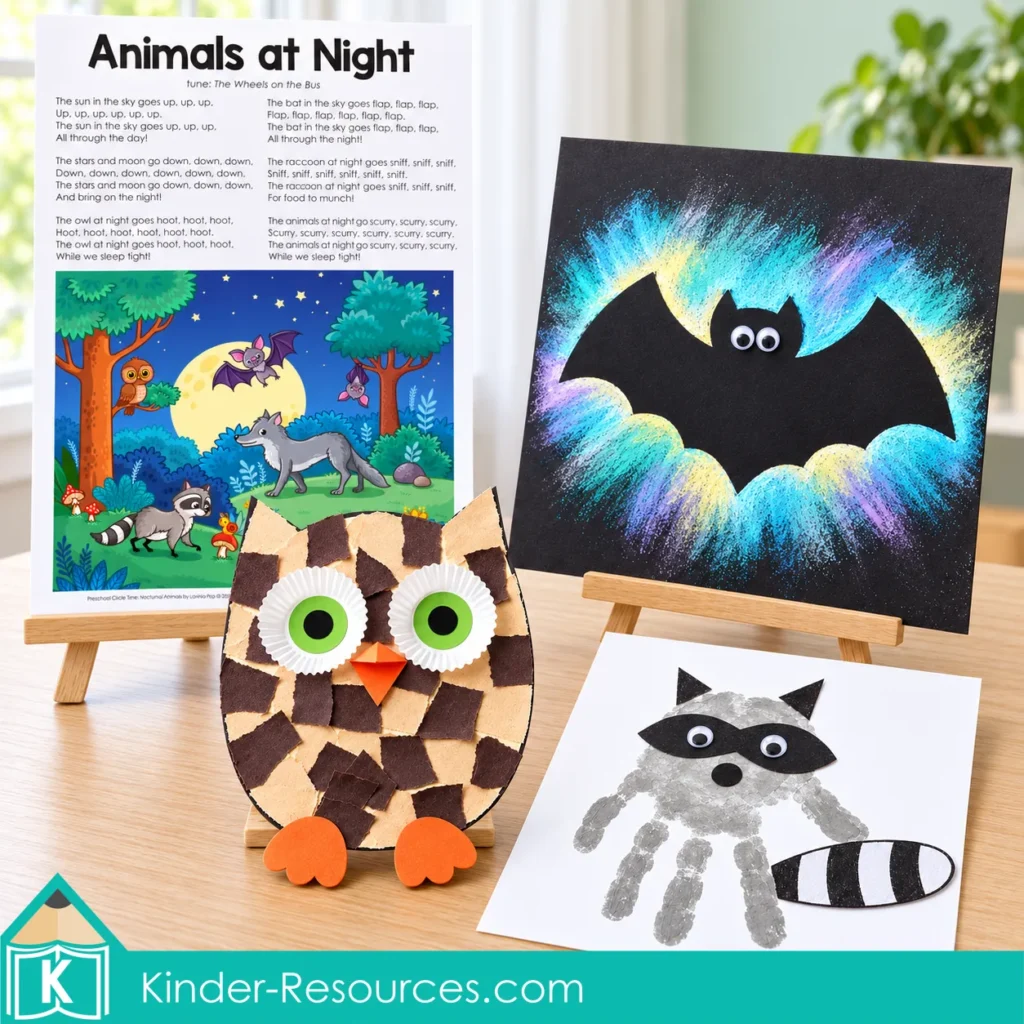
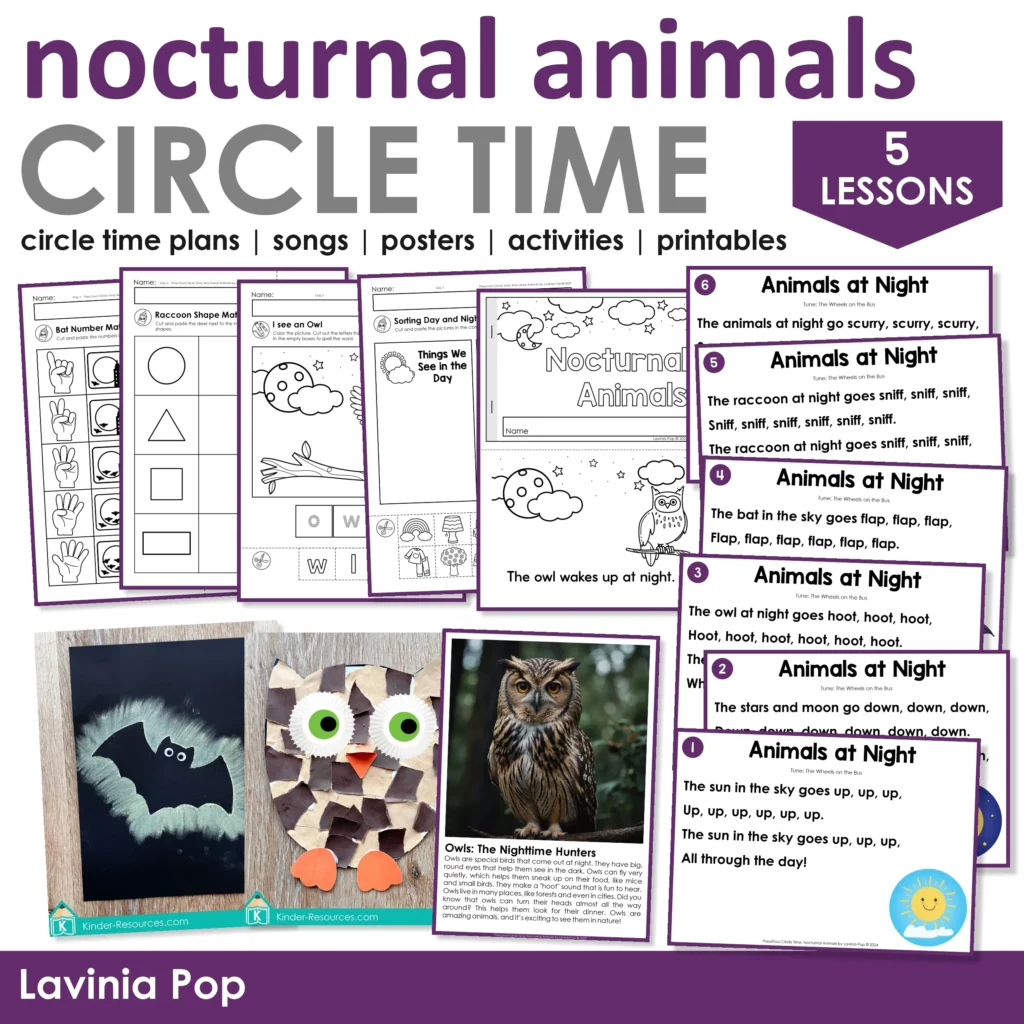
The Animals at Night song connects the daily themes. Sung to the tune of The Wheels on the Bus, it includes verses about the sun, moon, owl, bat, raccoon, and animals moving around at night.
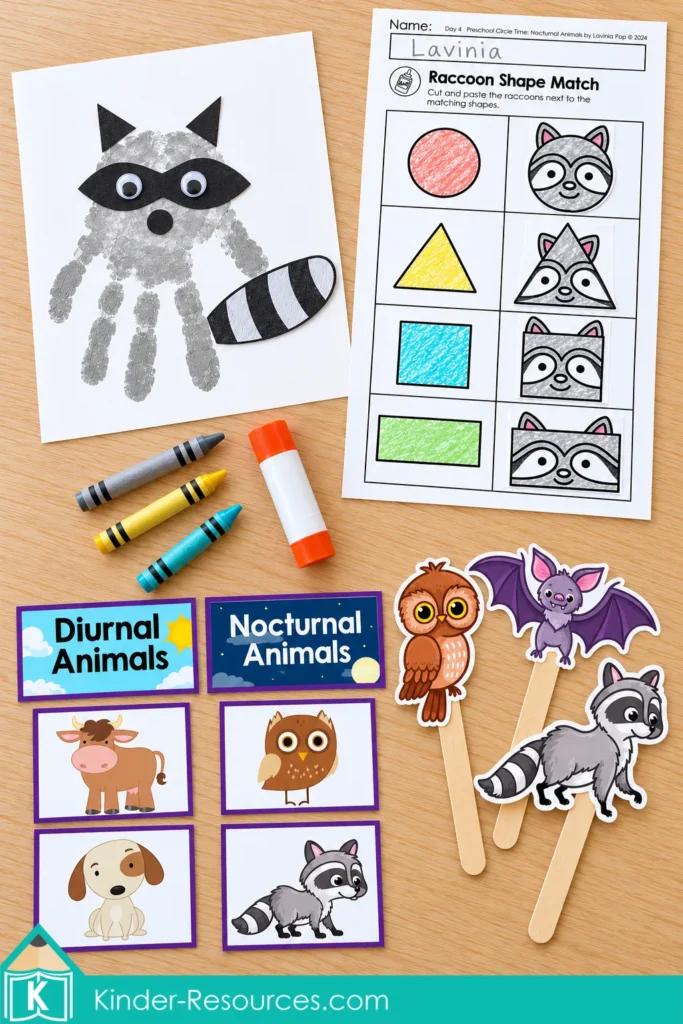
Print the song poster and individual verse cards, then attach the sun, moon, and animal props to craft sticks. Children can hold up the matching prop, join in with the repeated words, and try the actions.
Begin with the day-and-night verses, then introduce the animal verses as the week progresses. Children can hoot like an owl, flap their arms like bat wings, and pretend to sniff for food like a raccoon.
What Does Nocturnal Mean?
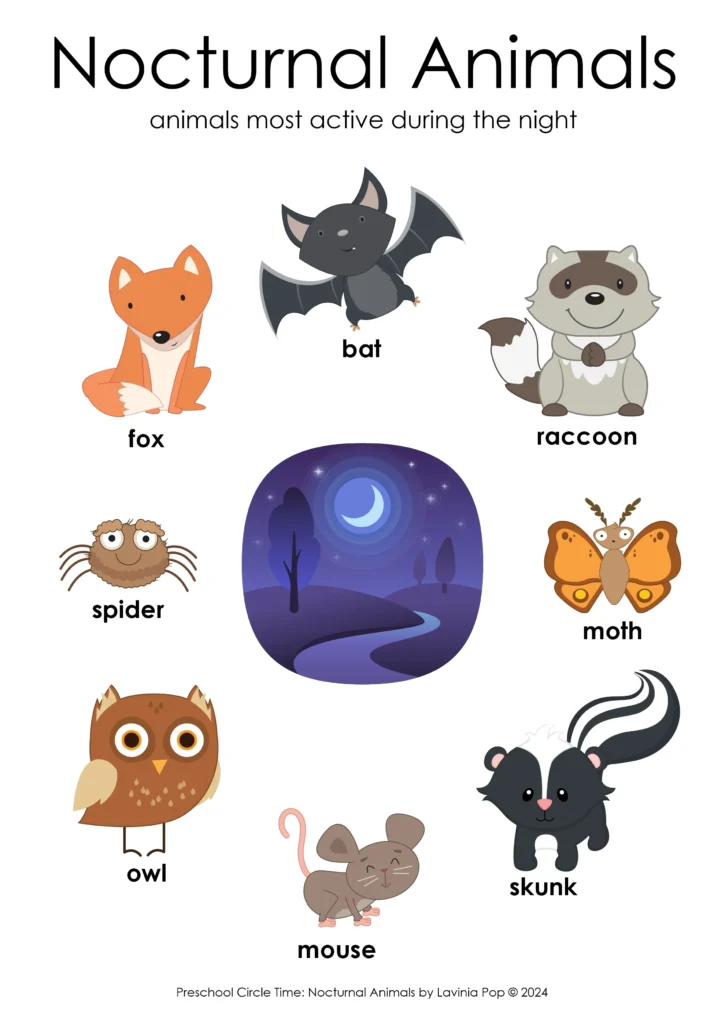
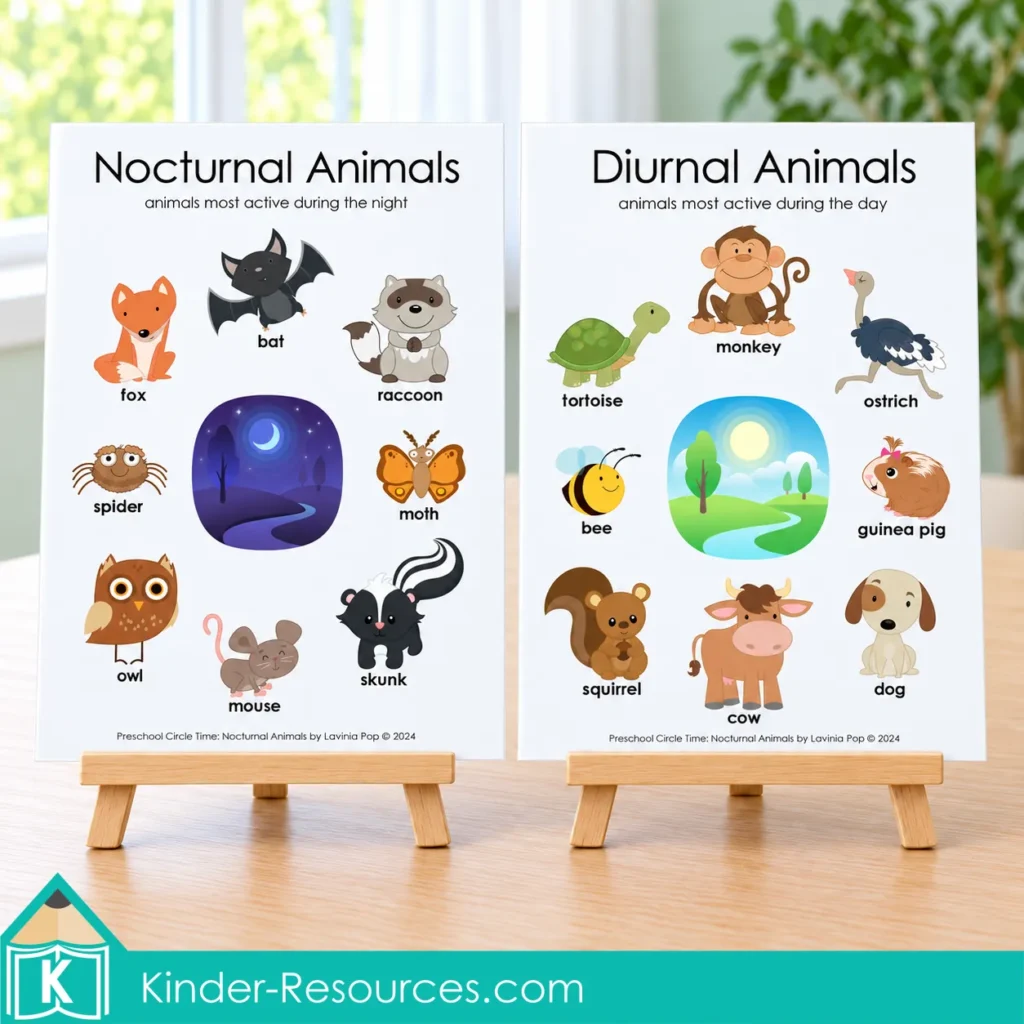
Nocturnal animals are mainly active at night. Diurnal animals are mainly active during the day. Introduce these words with the animal posters and return to them as children meet different animals throughout the week.
For young children, start with “active at night” and “active during the day,” then add the new vocabulary. Using “mainly” leaves room for the fact that animal routines can vary.
Day 1: Day and Night Activities for Preschool
Begin with children’s own routines. Ask what they enjoy doing during the day and what happens when they get ready for bed.
Read Day & Night by Teddy Newton and talk about the scenes in the book. Invite children to choose their favorite time of day and explain their choice.
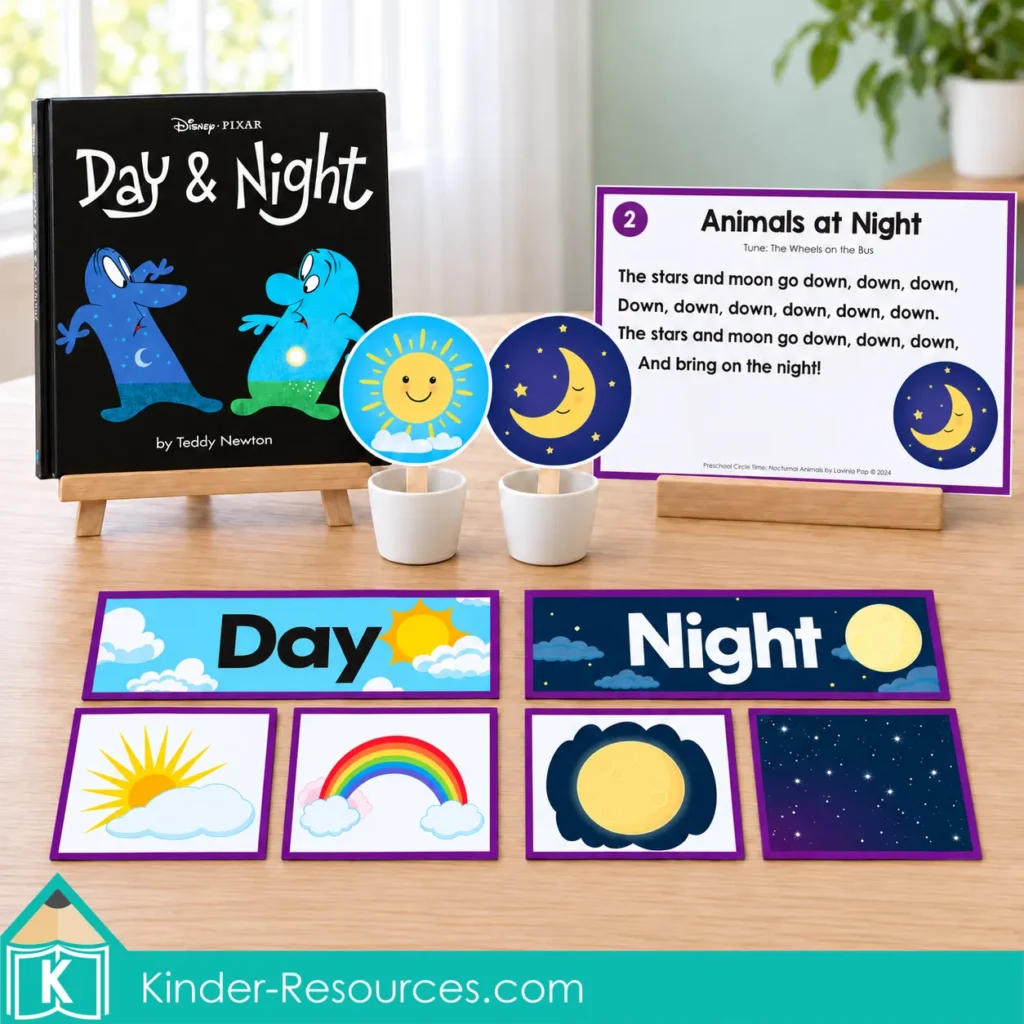
Sort Daytime and Nighttime Pictures
Place the Day and Night headings where everyone can see them. Model one choice, then invite children to select a card, describe the picture, and decide where it belongs.
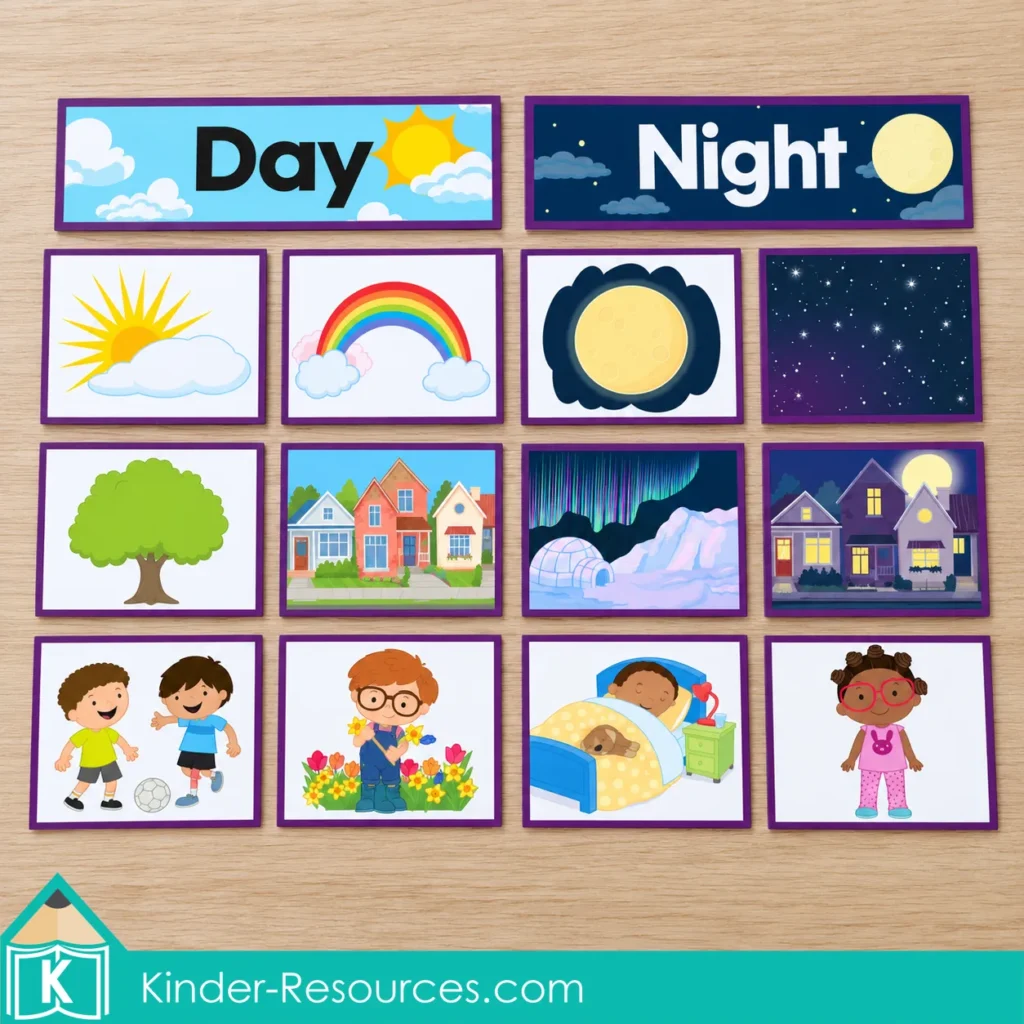
Encourage discussion as they sort sunshine, a rainbow, stars, outdoor play, and bedtime pictures. Some activities can happen at either time, so listen to the reasons children give. The moon can sometimes be seen during the day, too.
Draw and Sort with Follow-Up Pages
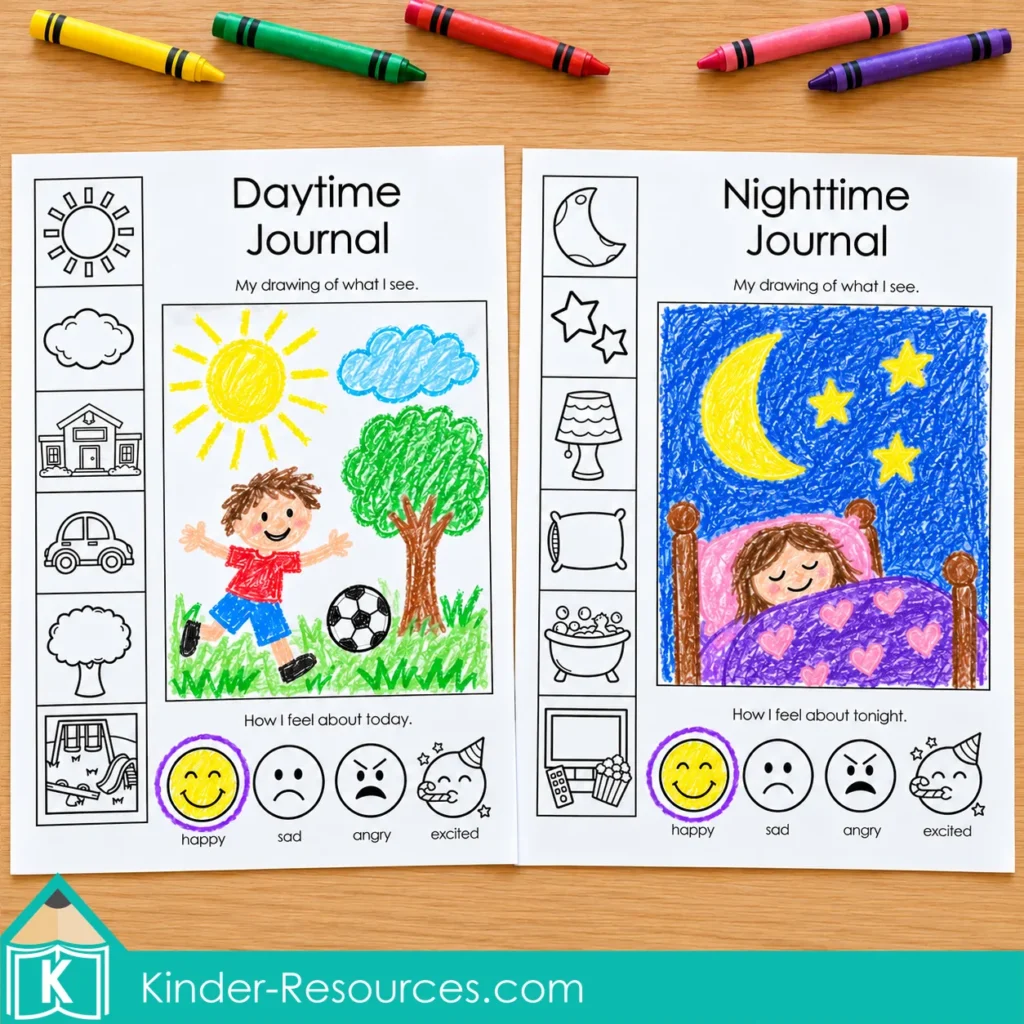
The daytime and nighttime journals invite children to draw something they do at each time and show how they feel about it. Children can tell you about their drawings while you write down their words.
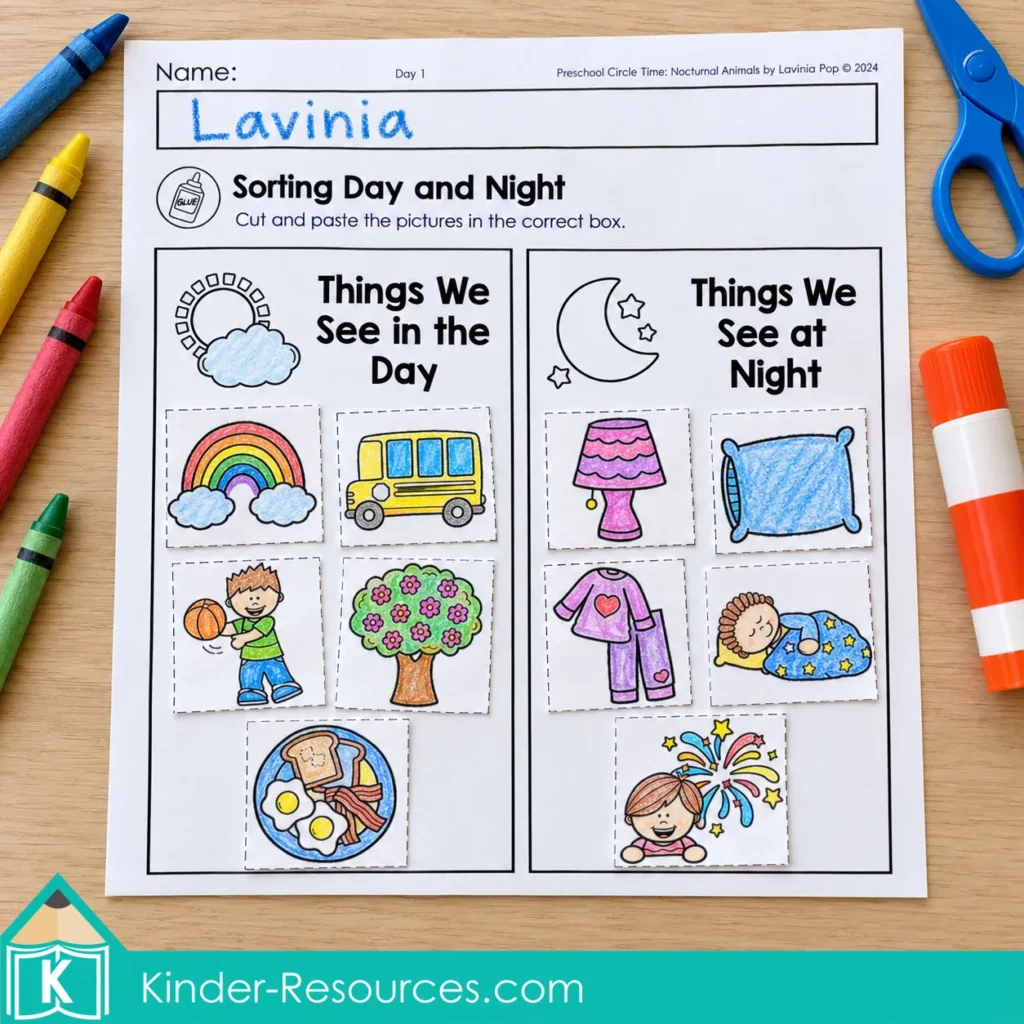
The day-and-night cut-and-paste worksheet offers another way to revisit the picture sort. Name the cut-outs together, then let children arrange them in the two columns before gluing.
Day 2: Owl Activities for Preschool
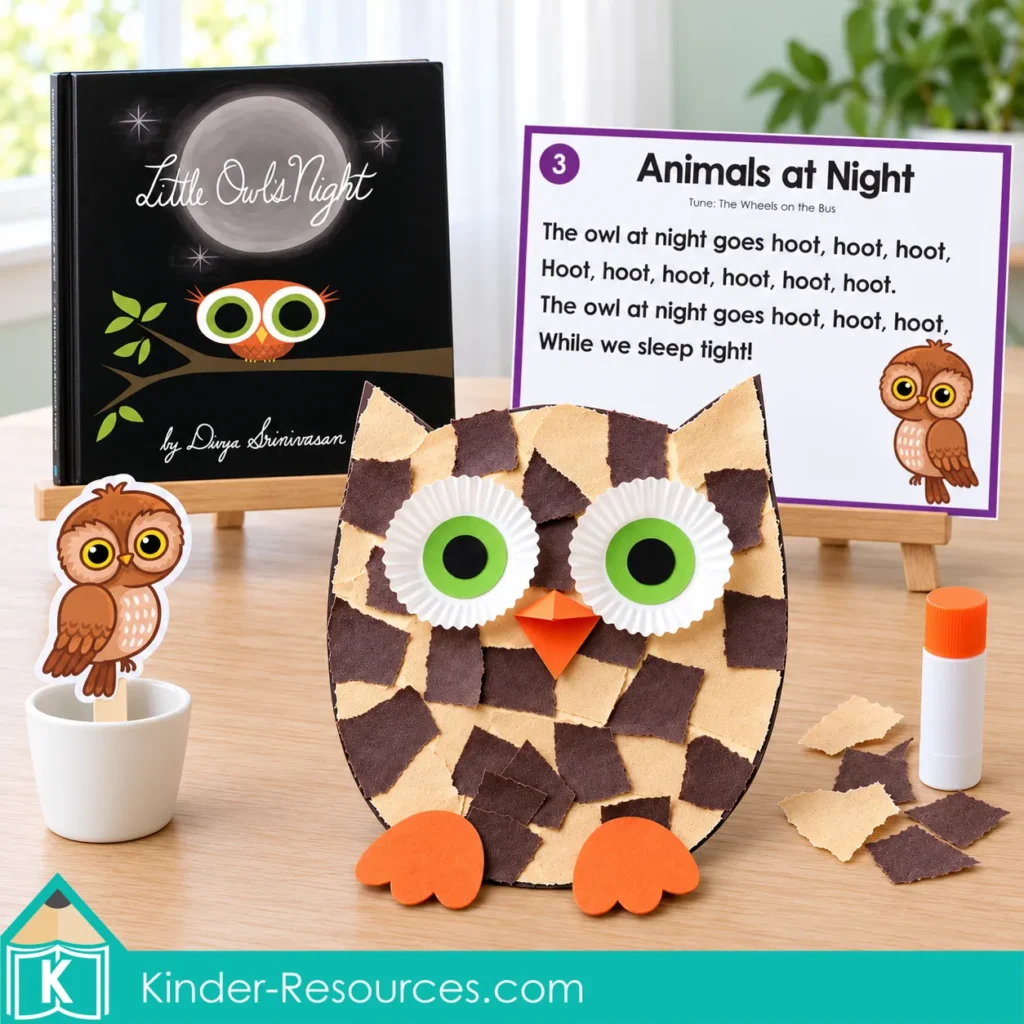
Introduce owls as an example of animals that may be active at night. Read Little Owl’s Night by Divya Srinivasan and talk about the animals Little Owl meets.
Ask children what they might see or hear if they explored a forest after dark. Revisit the owl song verse and let children join in with the repeated “hoot.”
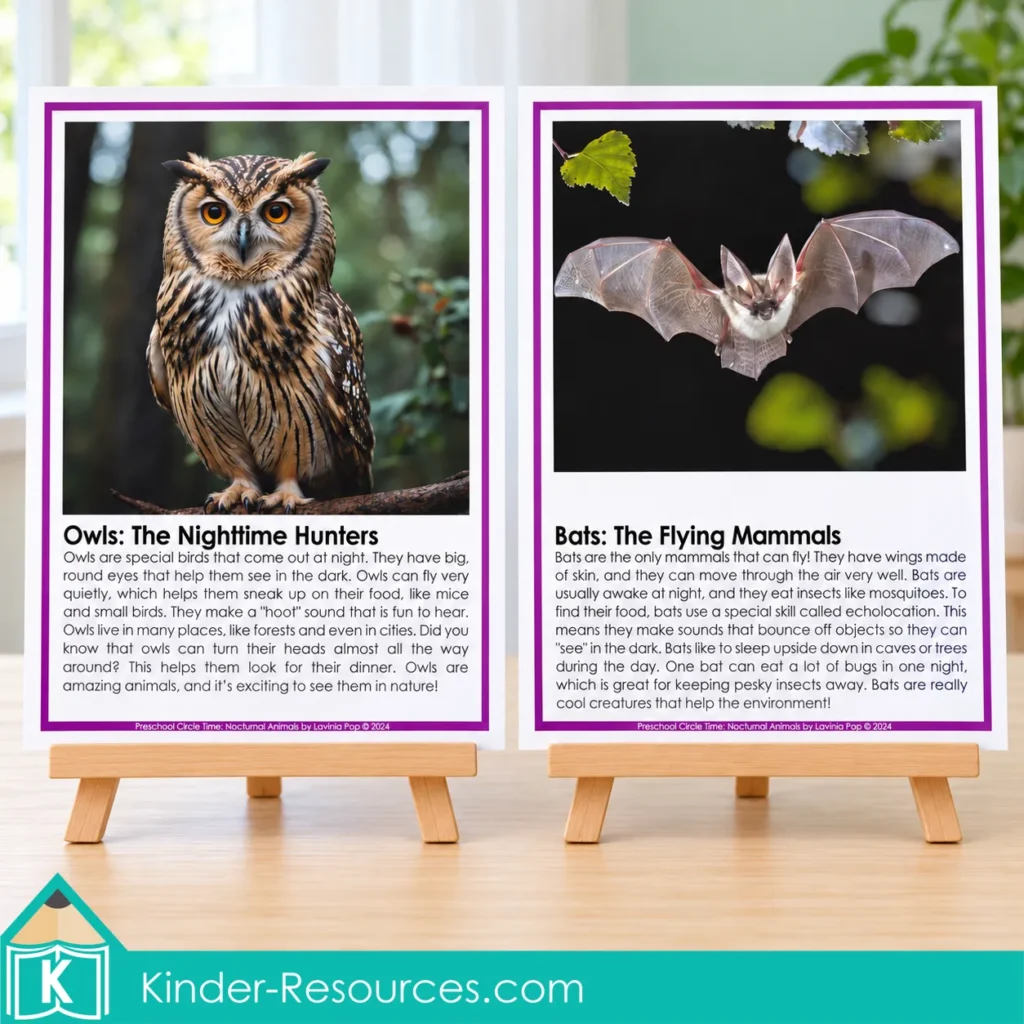
Use the owl information poster to look more closely at the animal’s eyes, feathers, and beak. Keep the bat poster nearby to revisit the following day.
Make a Torn-Paper Owl
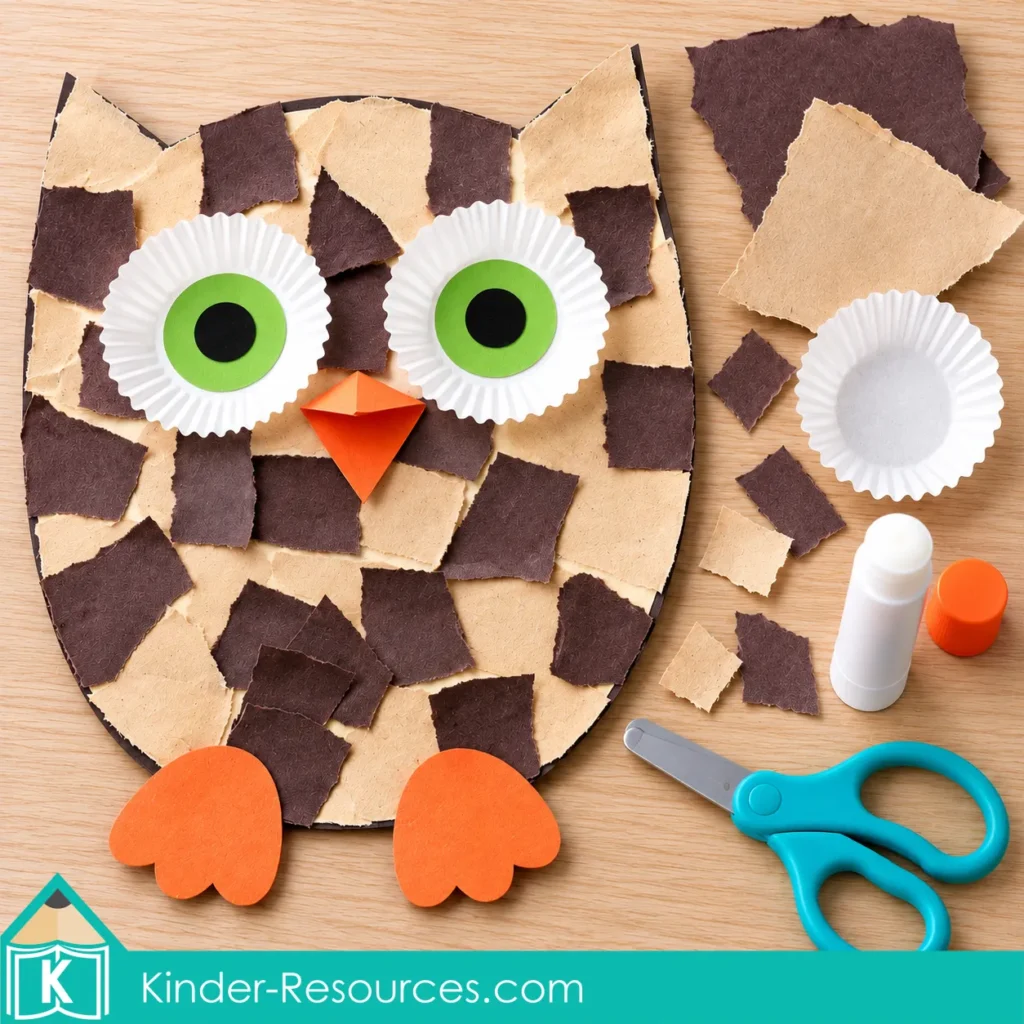
Children tear light and dark brown paper into small pieces and glue them onto the owl body template. Add orange feet and a beak, then use cupcake liners and paper circles to make the eyes.
Tearing, picking up, and overlapping the paper pieces gives children practice using their fingers with control. Let them decide how to arrange the colors so each owl has its own patchwork of feathers.
Owl Alphabet and Word Activities
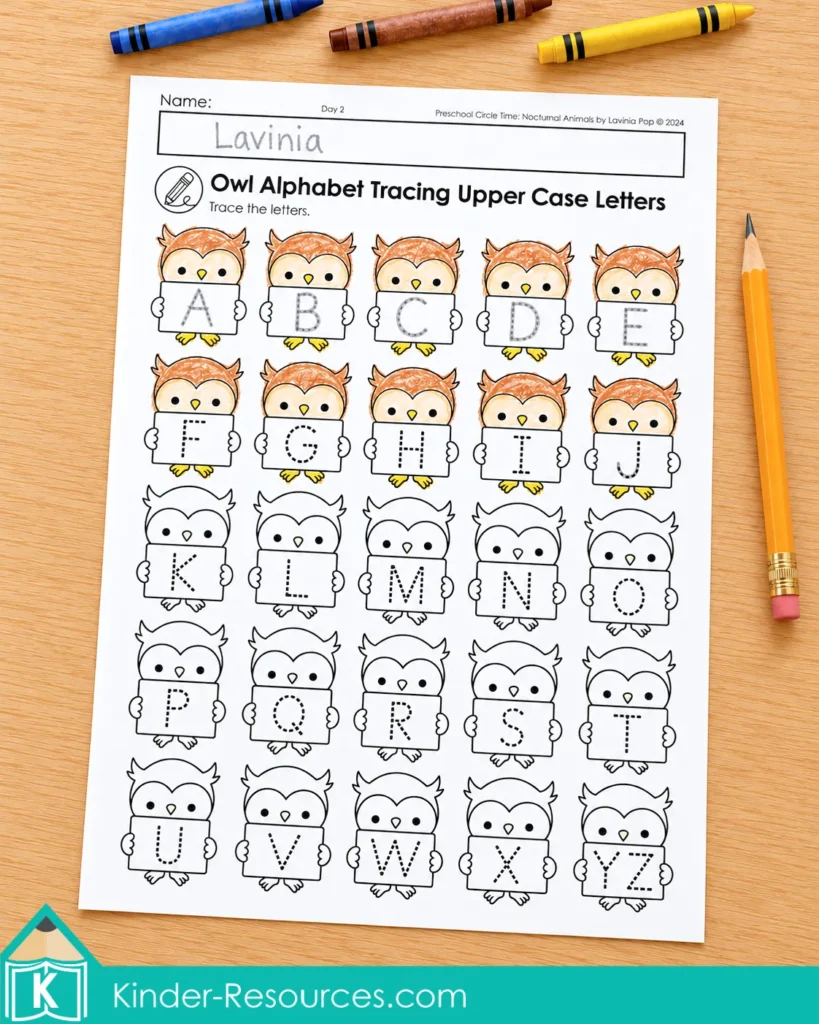
For children ready for letter practice, the owl alphabet page provides uppercase letters to trace. Choose a few familiar letters first, such as those in the child’s name, and return to the page another day.
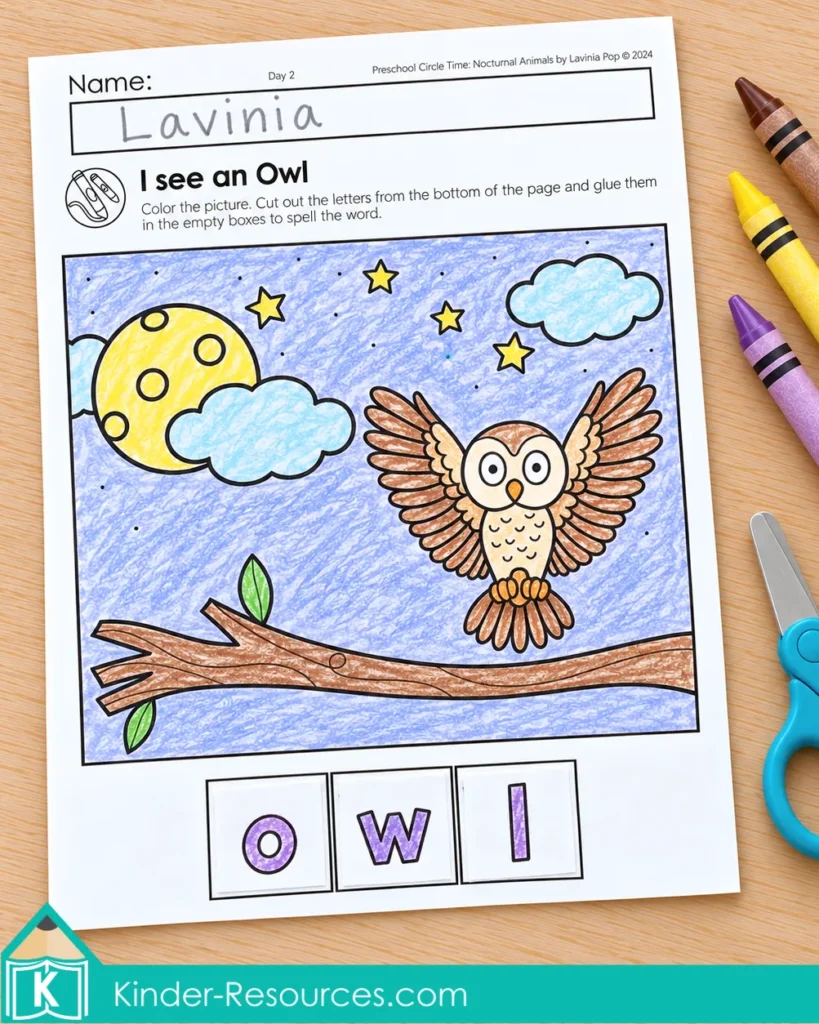
The owl literacy worksheet combines coloring with cutting and arranging the letters in owl. Say the word together and help children identify the letters as they build it.
Day 3: Bat Activities for Preschool
Continue your nocturnal animals activities for preschool with Stellaluna by Janell Cannon. Talk about the differences between Stellaluna and her bird friends, then ask how the characters showed kindness even when they did things differently.
Return to the bat information poster, then sing the bat verse while children gently flap their arms.
Create Chalk Bat Art
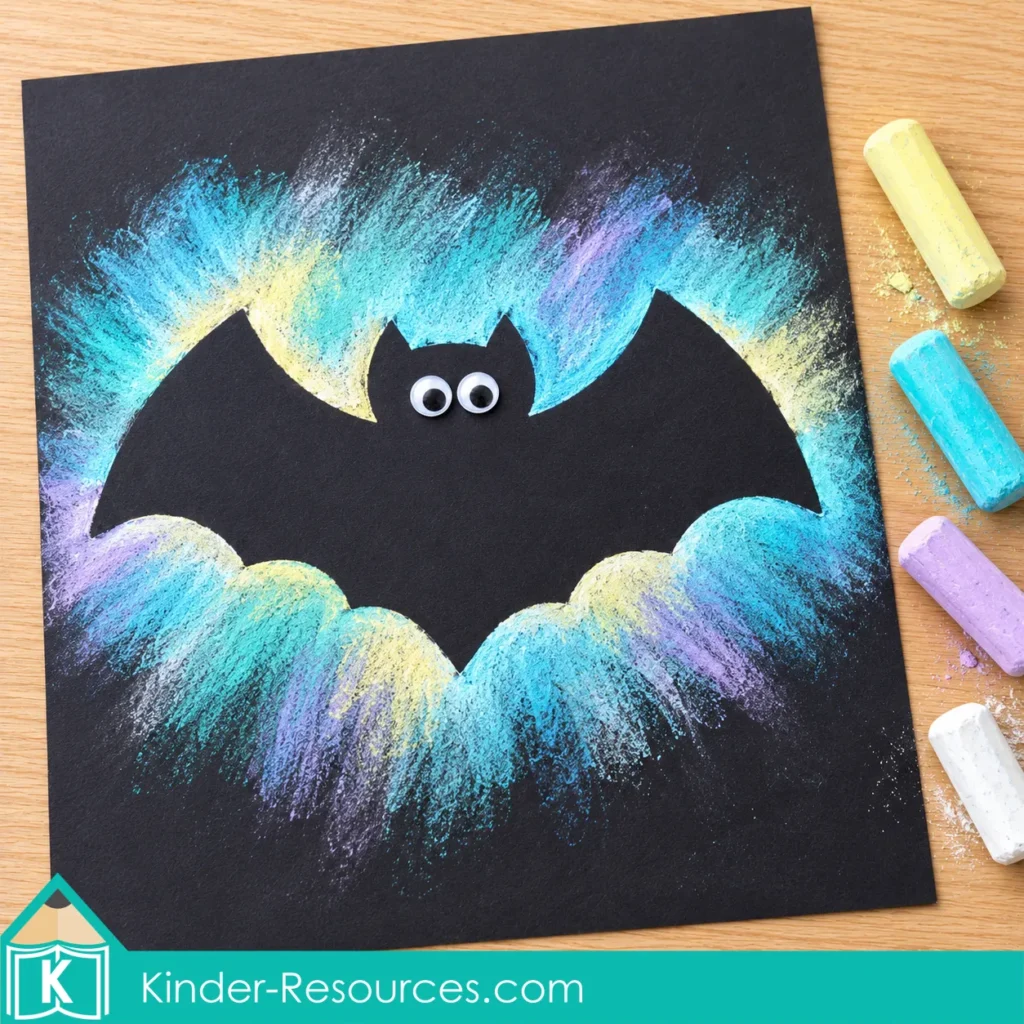
Place the bat template on black paper and secure it with small pieces of tape. Children draw chalk around the edge, then use their fingers to blend the color outward.
Carefully lift the template to reveal the dark bat silhouette. Add googly eyes to finish the picture. Blue, yellow, and purple chalk stand out against the black paper, and children can explore their own color combinations.
Practice Bat Words and Number Matching
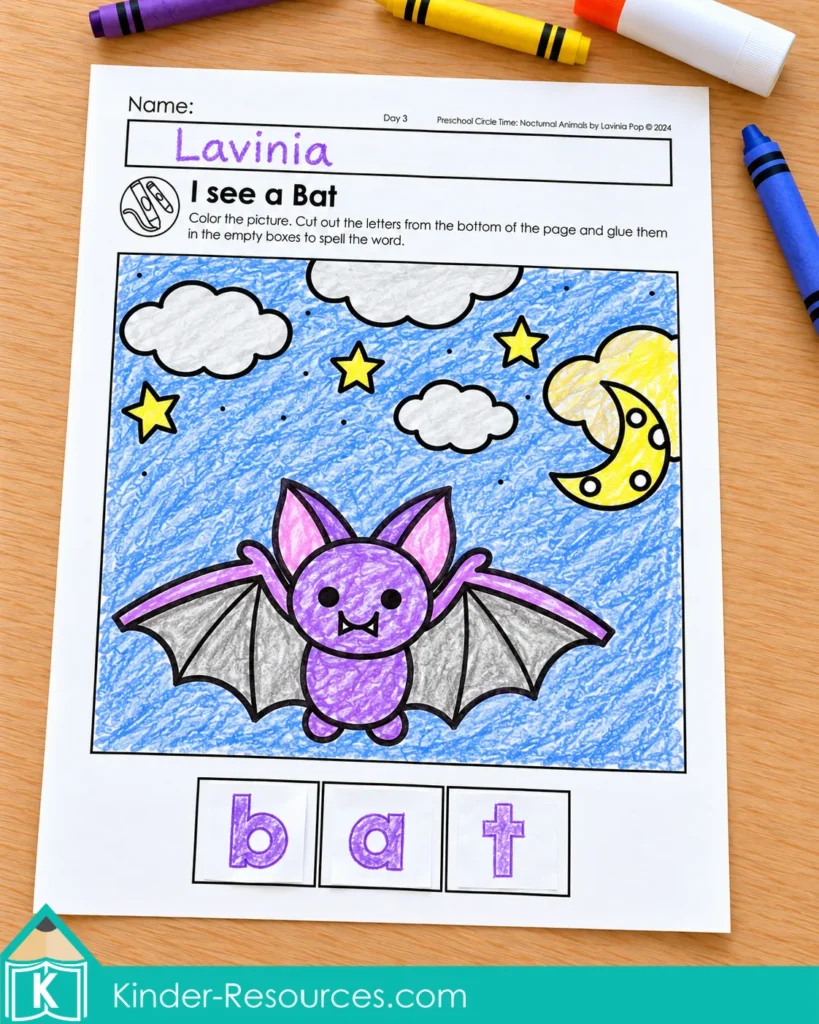
The bat coloring and word-building page lets children color a nighttime scene and arrange the letters in bat.
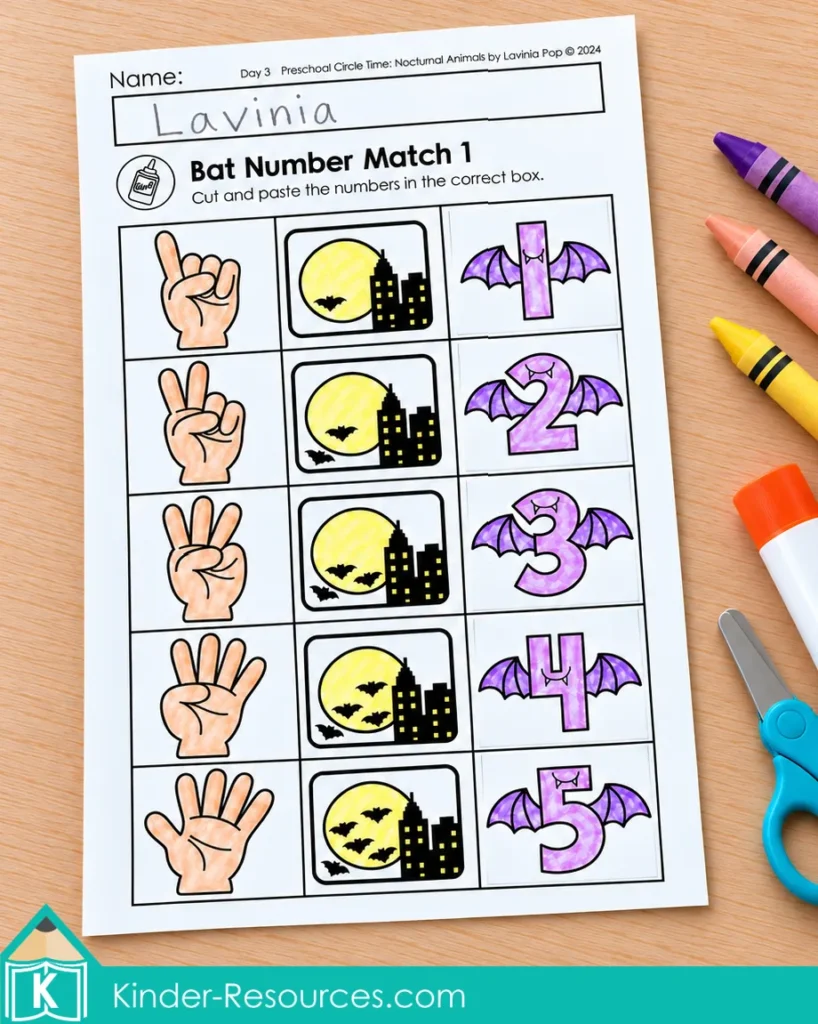
For a math follow-up, use the number matching worksheet to connect numerals with finger representations and groups of bats. The photographed page focuses on numbers 1–5; the pack also includes a page for 6–10.
Encourage children to touch each bat as they count before choosing where the piece belongs.
Day 4: Raccoon Activities for Preschool
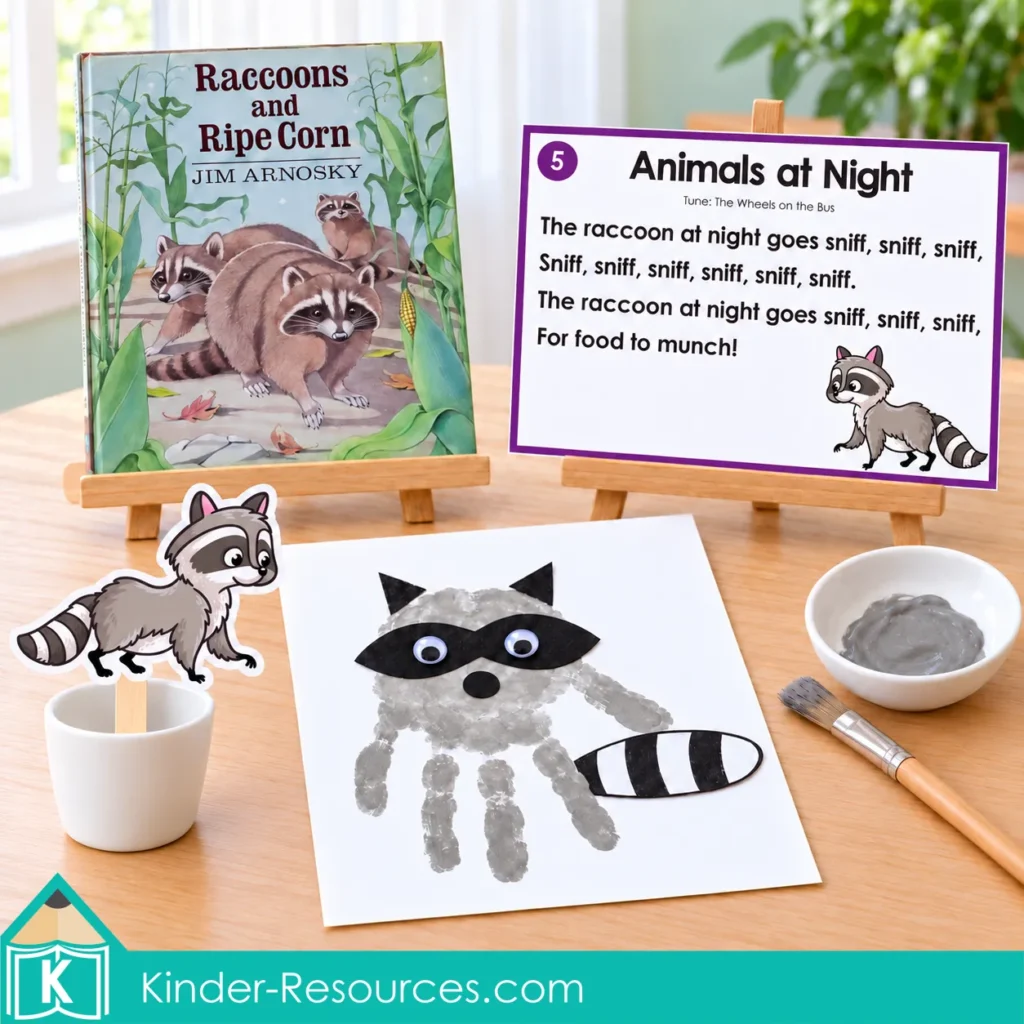
Day 4 explores animals looking for food at night. Read Raccoons and Ripe Corn by Jim Arnosky and discuss what the raccoons ate and how they found it.
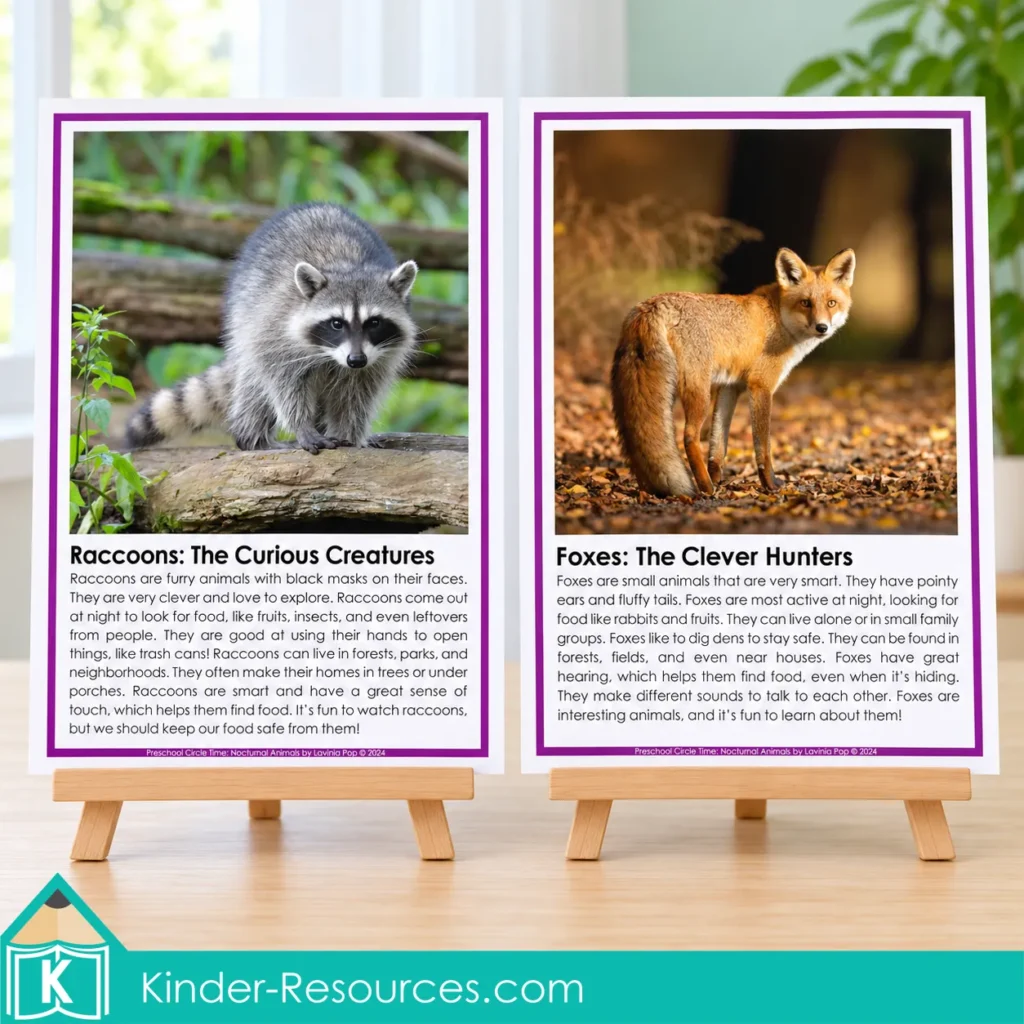
Sing the raccoon verse and invite children to pretend to sniff for food. The raccoon and fox fact posters give the group more animal photographs to observe and discuss.
Make a Raccoon Handprint Craft
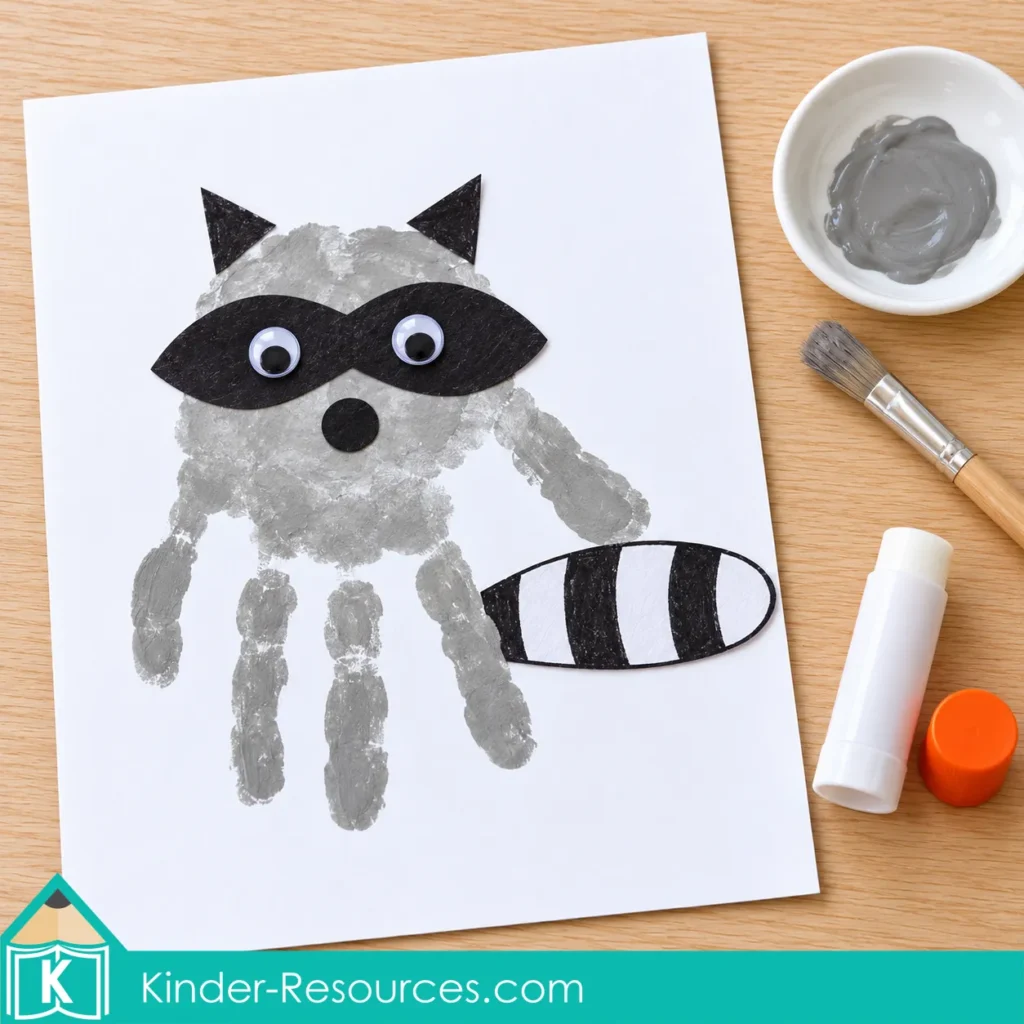
Help children make a gray painted handprint on white cardstock. Once the paint has dried, add the paper ears, eye mask, nose, striped tail, and googly eyes to turn the print into a raccoon.
Talk about the features children are adding and compare them with the raccoon pictures. The finished craft can join the owls and bats in a nighttime animal display.
Match Raccoon Shapes and Build a Word
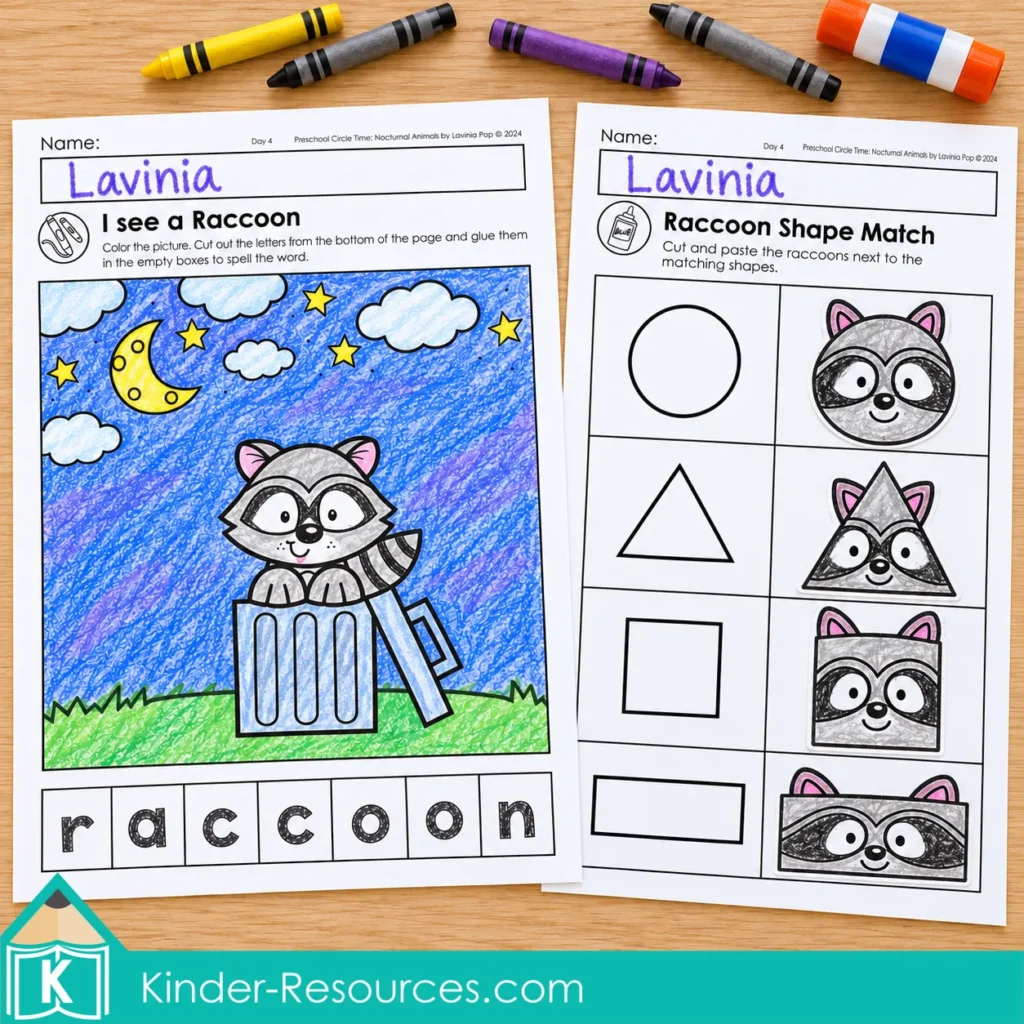
The Raccoon Shape Match worksheet asks children to match raccoon faces with a circle, triangle, square, and rectangle. Name each shape and compare its edges and corners before cutting and pasting.
Children can also color the raccoon literacy page and arrange the letters to build raccoon. Offer support with the longer word, matching one letter at a time.
Day 5: Diurnal and Nocturnal Animal Sorting
Finish the week with Daylight Starlight Wildlife by Wendell Minor. Talk about the animals shown during the day and at night, then revisit the words diurnal and nocturnal.
Sort the Animal Picture Cards
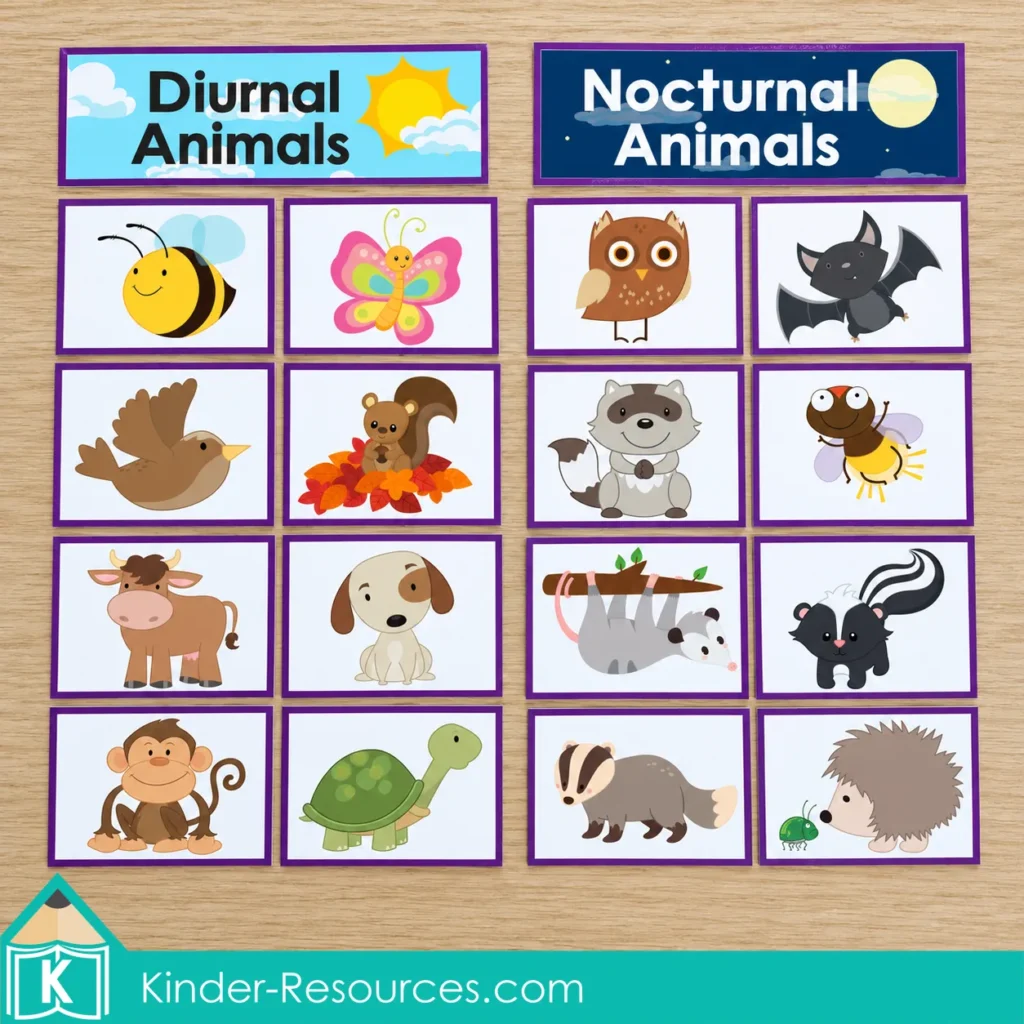
Place the Diurnal Animals and Nocturnal Animals headings side by side. Start with a few familiar animals, then add more cards as children become comfortable with the task.
Invite each child to name an animal, place its card, and explain the choice. Return to the books and posters when the group needs help. You can also count the cards in each group and compare the totals.
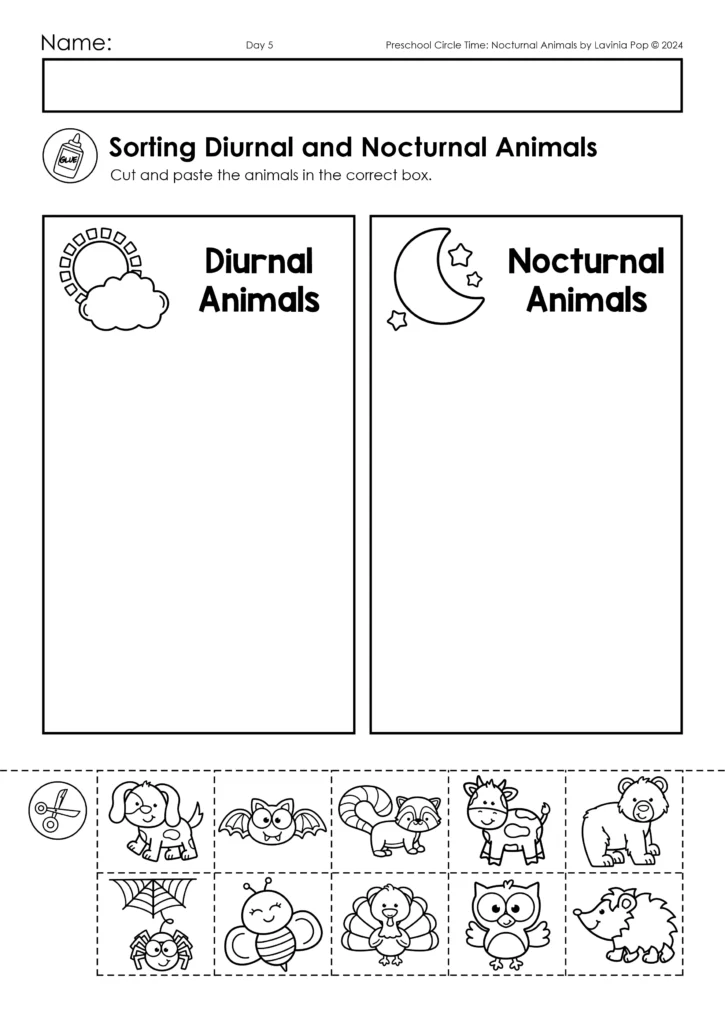
Complete an Animal Sorting Worksheet
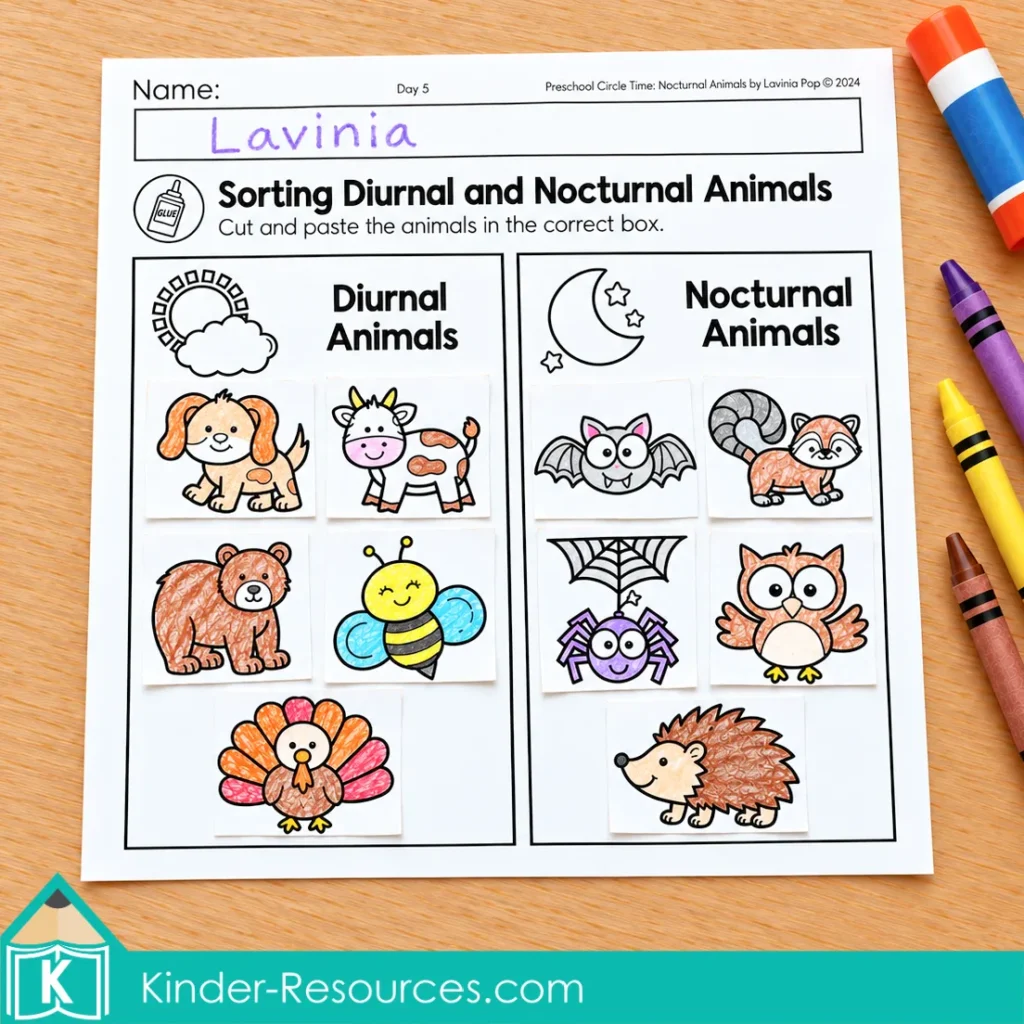
The cut-and-paste worksheet gives children a smaller version of the group activity. They color and cut out the animals, then sort them into the two columns.
Let children arrange all the pieces before gluing so they can talk through their choices and move a picture if needed.
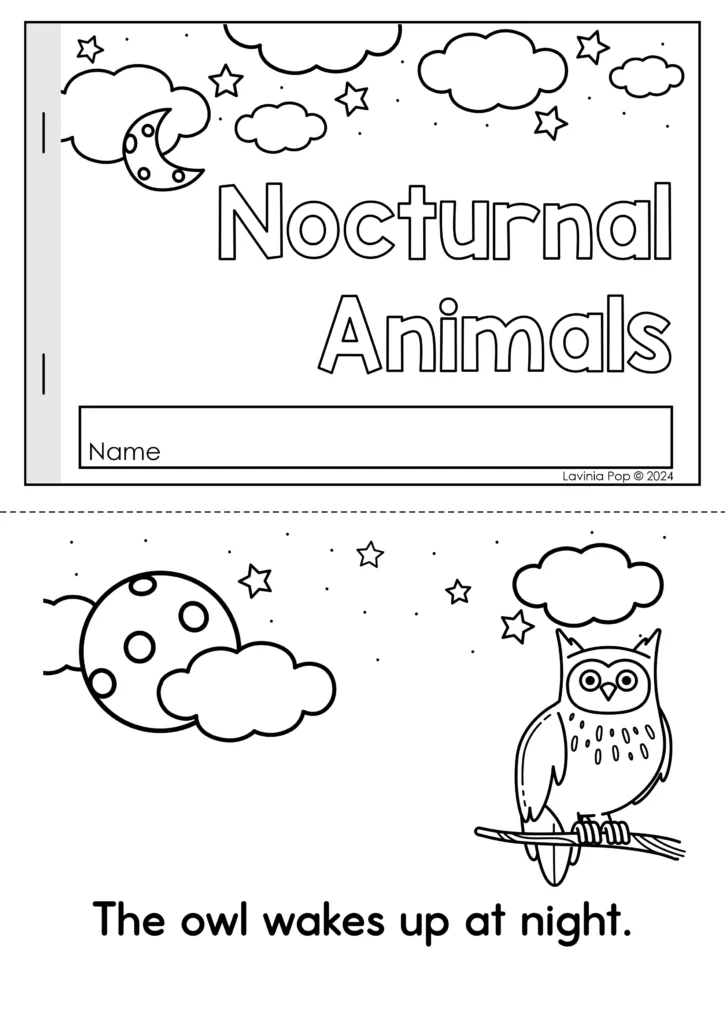
Make a Nocturnal Animals Mini-Book
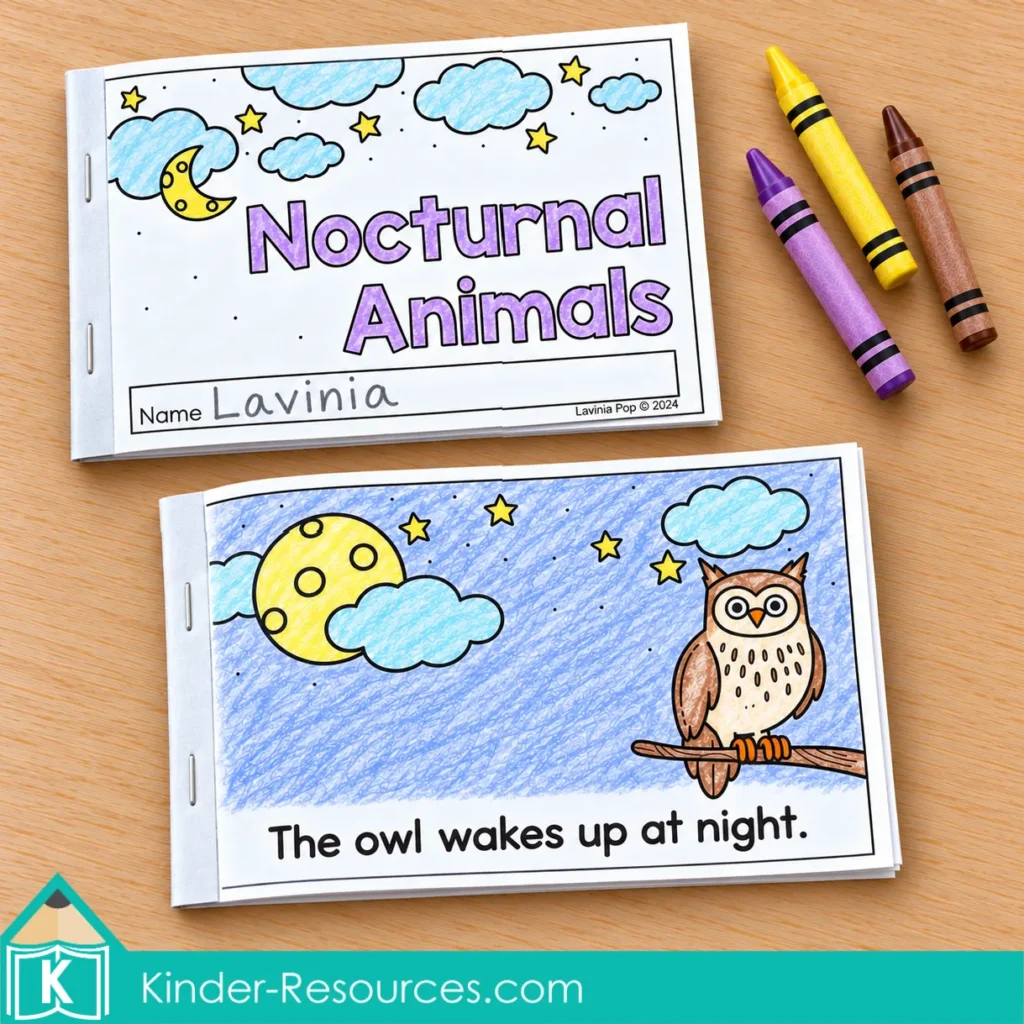
The printable mini-book brings the theme into shared reading. Children color the pictures and revisit the animals through short sentences about their nighttime activities.
Read the book together first. Children can point to the animals, join in with familiar words, and take the finished booklet home to share.
Explore What Animals Do at Night
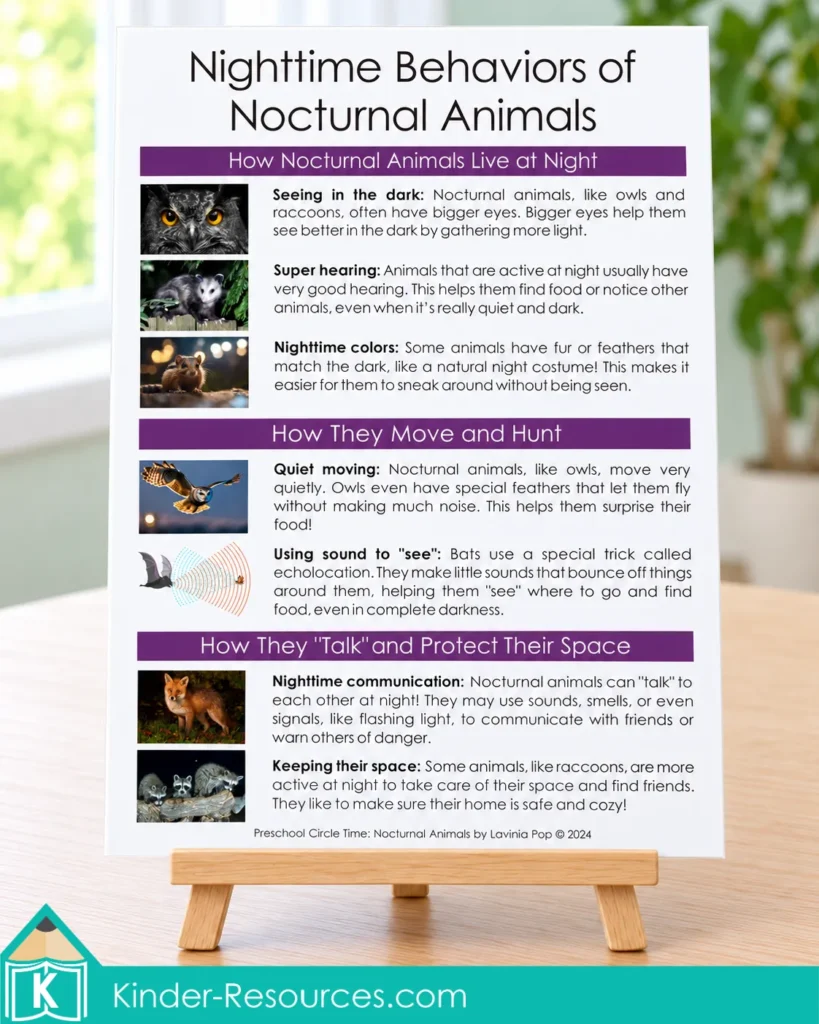
The Nighttime Behaviors of Nocturnal Animals poster can support a final conversation about how animals find food, move around, and communicate after dark.
Choose one section at a time and connect it with an animal the children remember. Invite them to point to a picture or act out a movement as they explain their ideas.
Preparing Nocturnal Animals Activities for Preschool
To prepare these nocturnal animals activities for preschool, organize the books, song cards, props, and main activity materials by day. Print only the follow-up pages you plan to use, and keep each day’s materials together so they are ready when you need them.
- Print the reusable posters, sorting cards, and song props on cardstock.
- Attach the props to craft sticks and store the sorting cards with their headings.
- Gather crayons, pencils, scissors, glue, colored paper, cupcake liners, chalk, gray paint, and googly eyes.
- Prepare craft templates in advance when children need help with cutting.
- Offer fewer sorting cards or a small selection of letters for children who need a simpler starting point.
Choose activities according to the children’s interests and readiness. Some groups may spend longer discussing the books and exploring the crafts, while others are ready for additional tracing, counting, and word-building practice.
Get the Complete Nocturnal Animals Activities for Preschool Circle Time Pack
Bring these nocturnal animals activities for preschool into your classroom with my complete Nocturnal Animals Preschool Circle Time Plan. The 70-page printable resource includes the weekly overview, five daily lesson plans, song posters and props, animal information posters, sorting activities, craft templates, worksheets, and a mini-book.
Find the complete resource in either store:


Happy Teaching! 😊
You Might Also Like