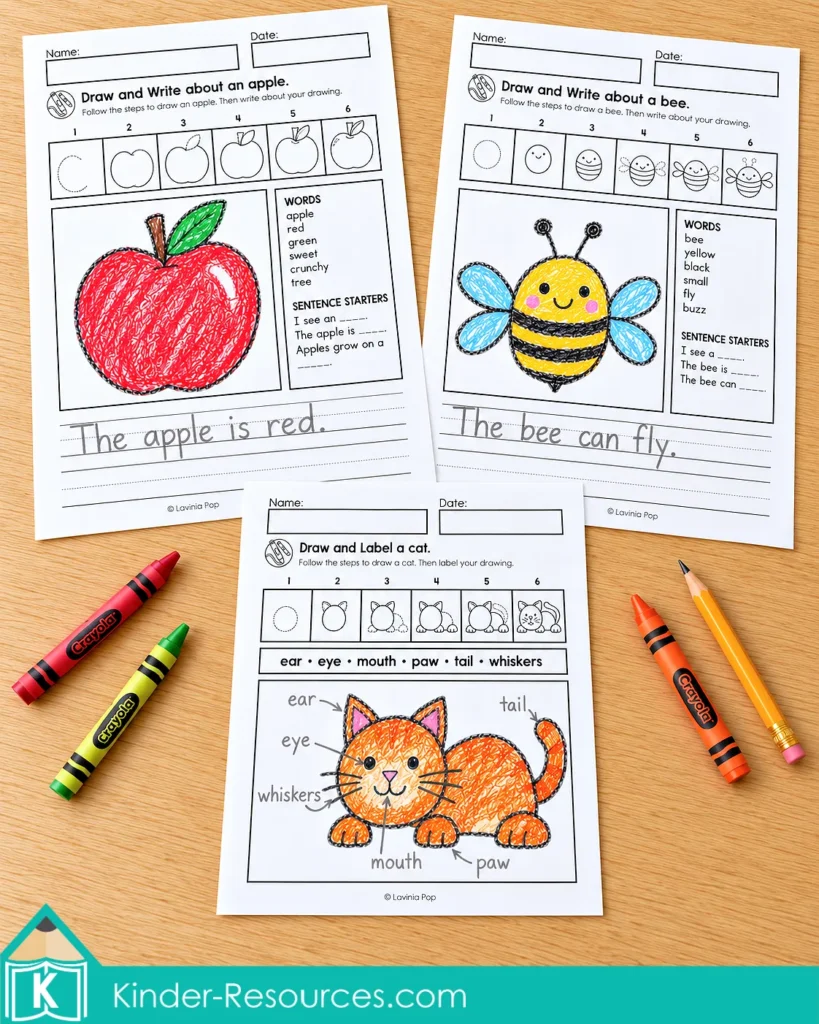
A drawing can lead to a few labels, a simple sentence, or a longer description. That makes it a useful starting place for children at different stages of learning to write.
A Free Sample of Alphabet Drawing and Writing Activities
Would you like to try an activity with your students? Download the free sample below and introduce a drawing and writing lesson in your classroom or homeschool.
Give children time to draw, talk about their picture, and share their ideas before beginning their writing.
Start with a Picture and a Conversation
Before picking up pencils, spend a little time talking about the picture you will draw together.
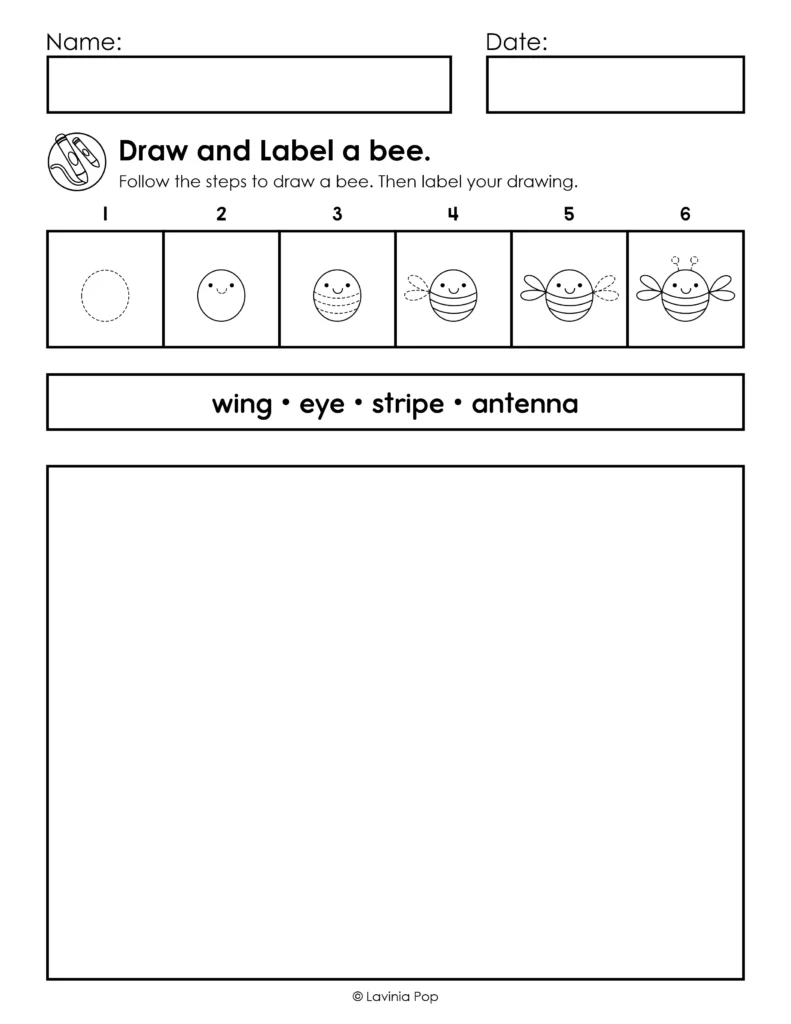
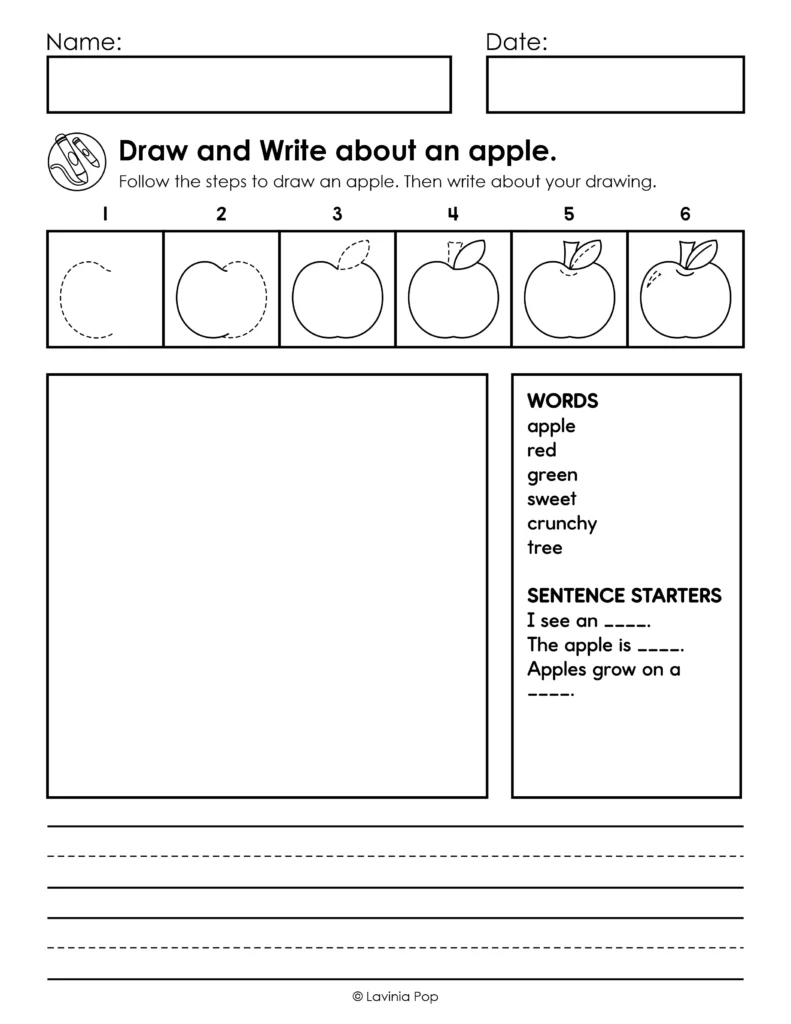
For a bee, you might ask, “What do you notice about its body?” or “What does a bee use to fly?” For an apple, children could describe its color, share how it tastes, or talk about where apples grow.
Keep the conversation short and give children a chance to contribute. A partner chat works well here, especially for students who need a little time to put their thoughts into words.
These conversations introduce vocabulary that children can return to when they begin labeling or writing.
Take the Drawing One Step at a Time
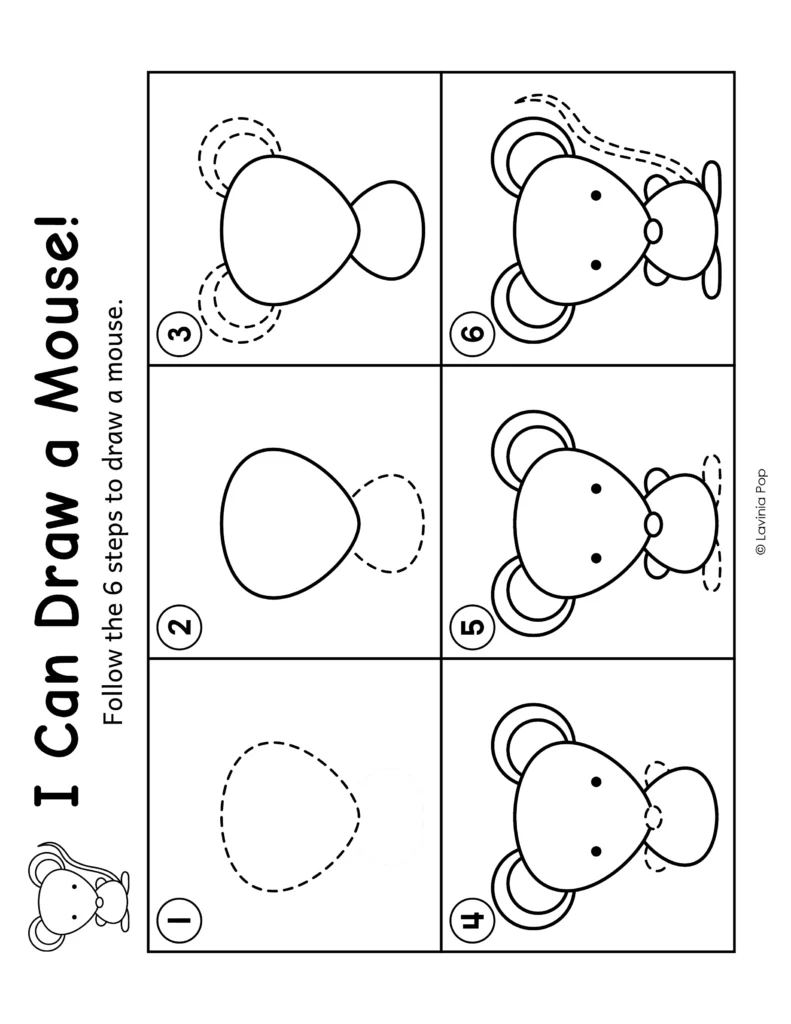
A finished picture can look complicated to a young child. Breaking it into smaller steps makes it easier to see where to begin.
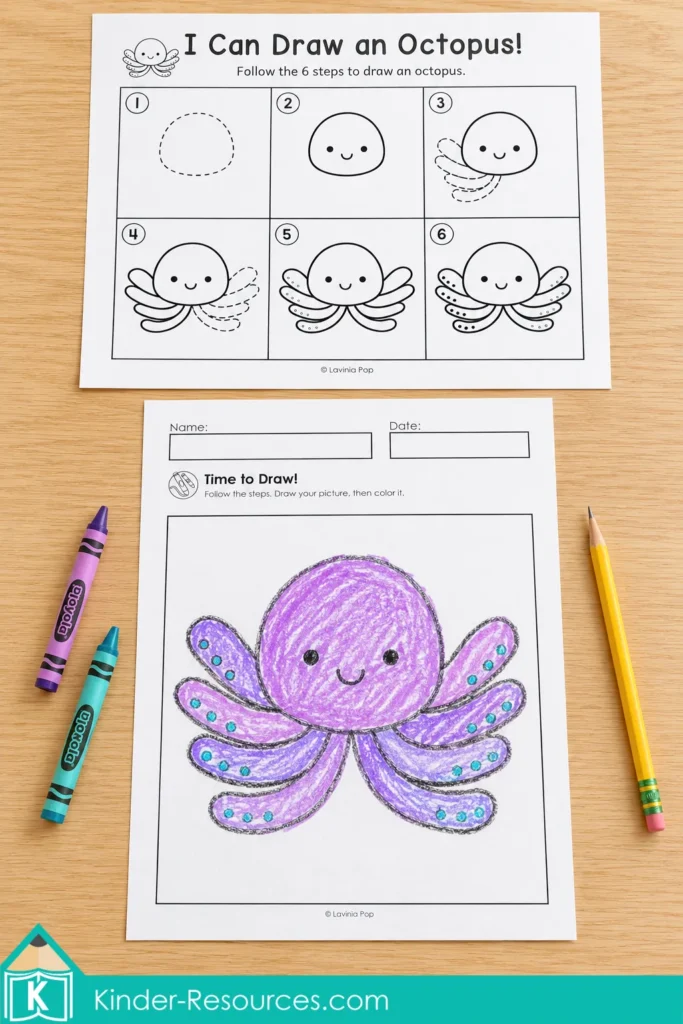
In the octopus example below, children begin with a rounded shape, then add the face, curved arms, and small circle details. Each step adds a little more to the picture. The dashed lines show which details to draw next.
The separate drawing guide can sit beside the “Time to Draw!” page so children can refer to it as they work. When introducing the activity, model one step and give everyone time to draw before moving on.
There is still room for individuality. The example has a purple body and turquoise details, but children can choose their own colors and add a background. Following the same steps does not mean every finished picture needs to look identical.
Alphabet Drawing and Writing Activities Can Begin with Labels
Children do not need to write a full sentence every time they draw. For beginning writers, labeling offers a manageable way to connect a spoken word with something on the page.
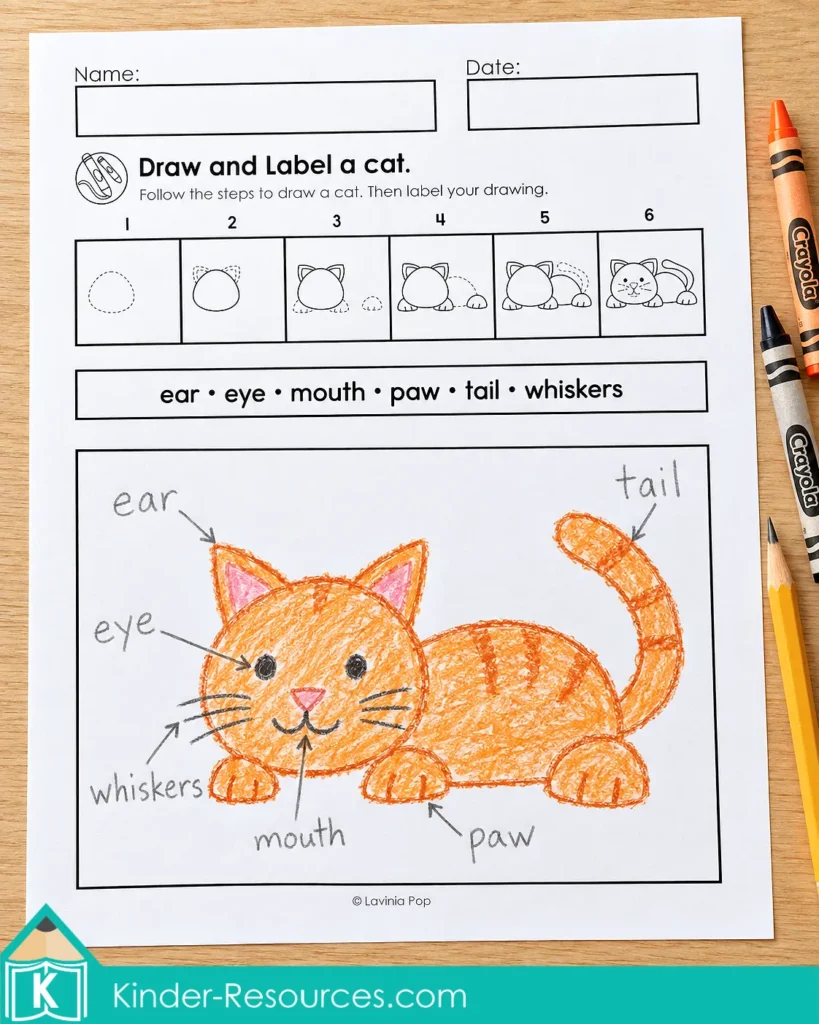
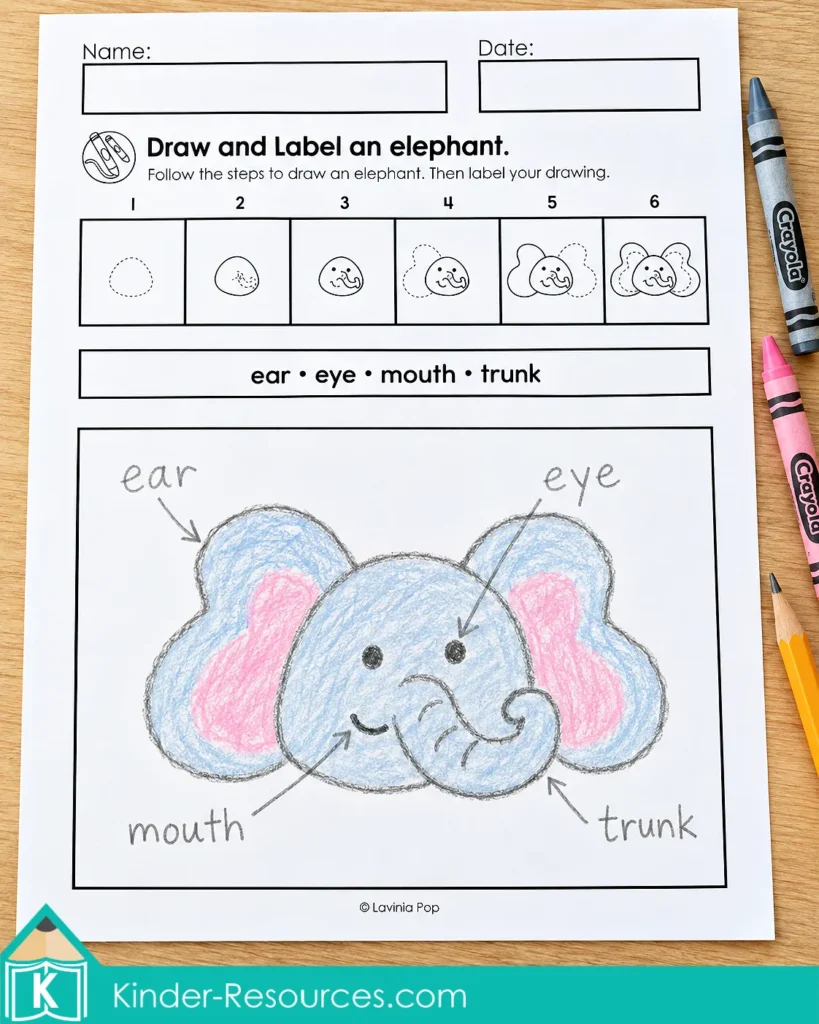
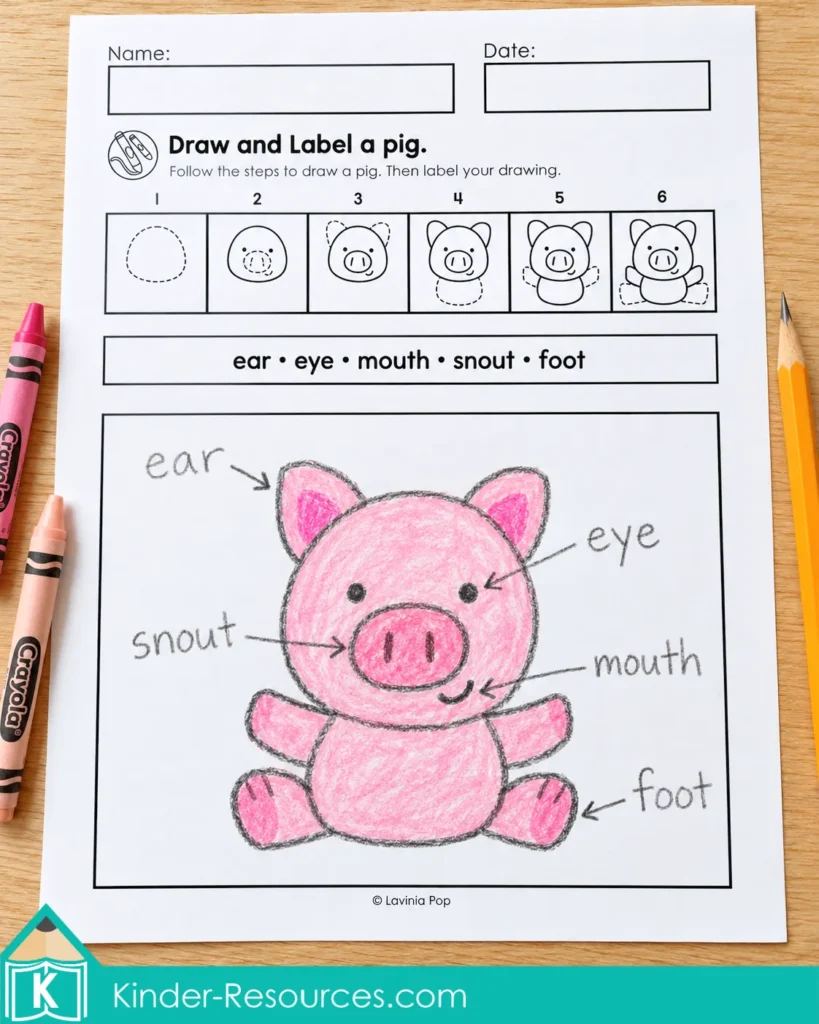
The cat, elephant, and pig examples below show how this can look. Children use the words above the drawing box to label features in their own pictures. The cat has labels for its ear, eye, mouth, paw, tail, and whiskers. The elephant introduces the word “trunk,” while the pig gives children a chance to label a snout.
Read the words together and ask children to point to each feature before writing. Model how to place a label near the drawing and use a short line or arrow to show which part it names.
Some children may begin with one or two labels and adult support. Others may be ready to add all the labels independently.
From a Drawing to a Sentence
When children are ready to write sentences, their drawings give them something specific to describe. A word bank and sentence starters can help them put those ideas into words.
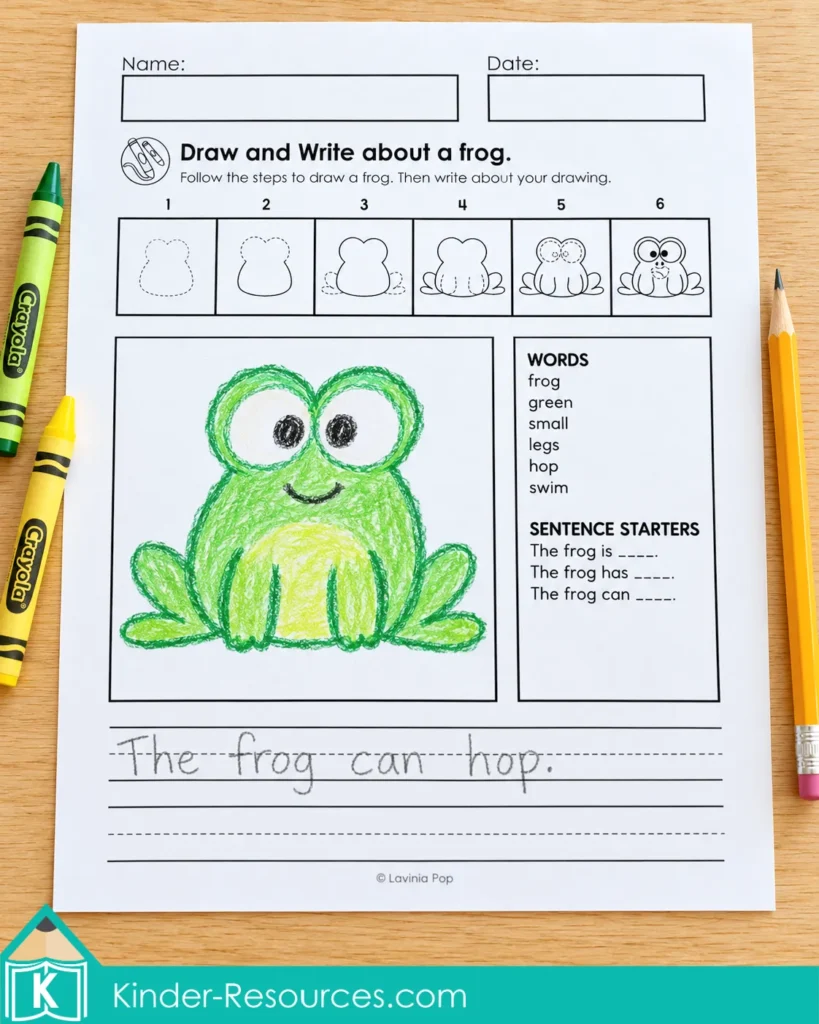
The frog example shows how a child can combine the starter “The frog can…” with the word “hop” to write “The frog can hop.” Encourage children to say their sentence aloud before writing it, then read it back when they finish.
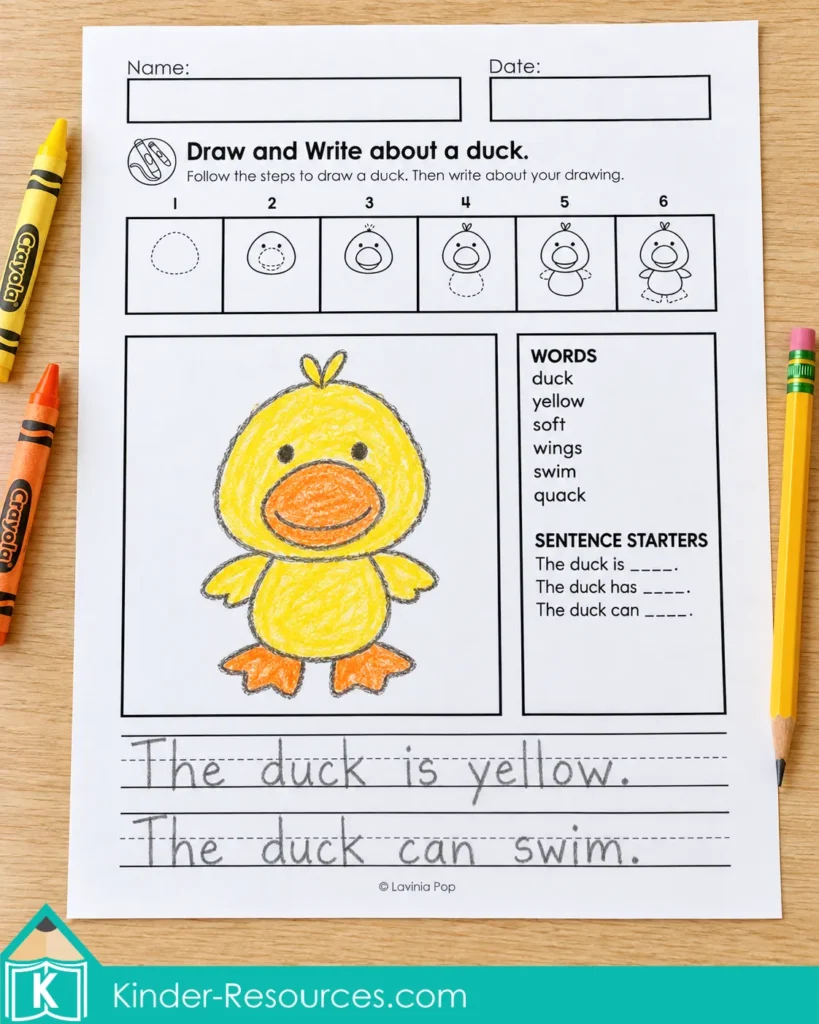
The duck page shows two simple sentences: “The duck is yellow.” and “The duck can swim.” One describes its appearance, while the other tells what it can do.
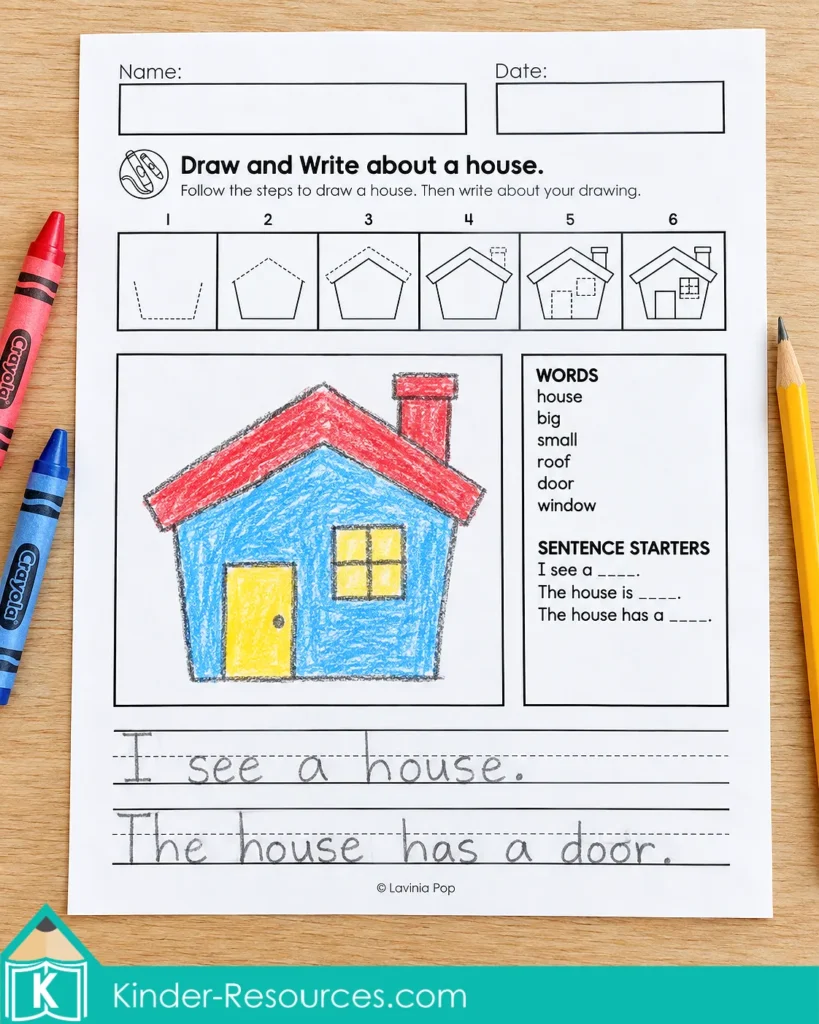
The house example uses a different pair of starters: “I see a house.” and “The house has a door.” Children can look at their own drawings to decide which details to include.
There is no need to complete every sentence starter. One sentence that a child can say, write with appropriate support, and read back is a useful place to begin.
Alphabet Drawing and Writing Activities for Different Learners
Alphabet drawing and writing activities can support children at different stages of learning to write. Some students may be working on labels, while others are ready to write sentences with less support.
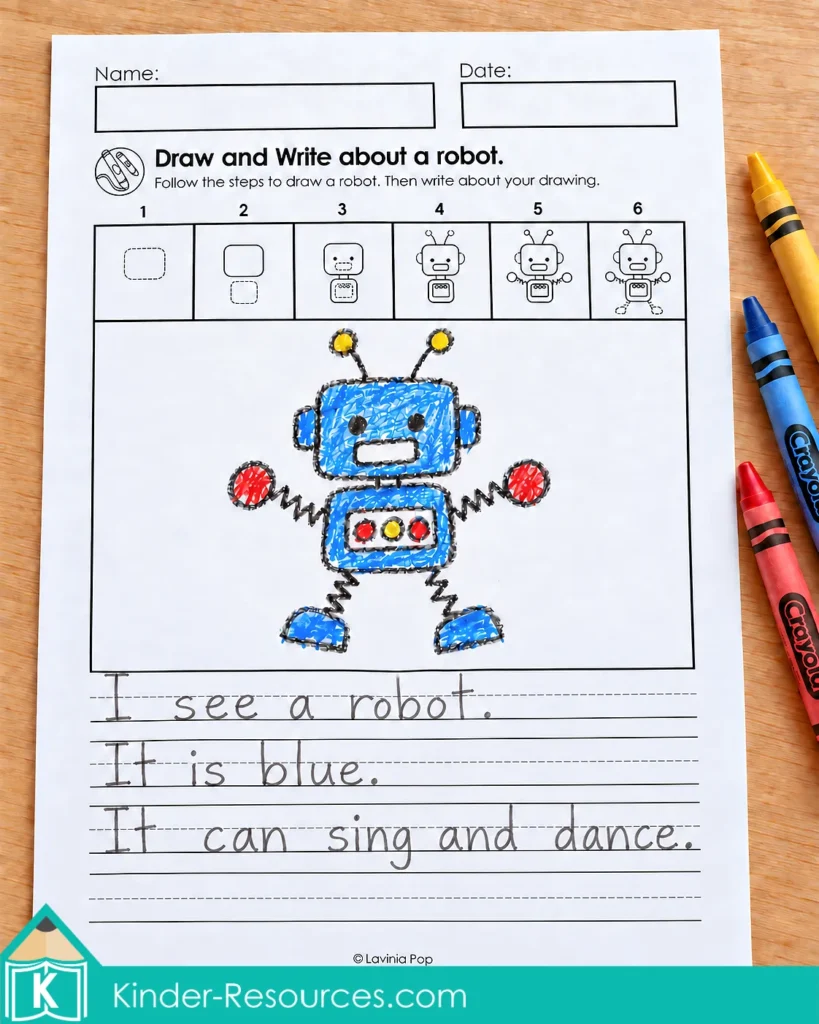
The robot page below shows the independent writing format. Children still have the six drawing steps to follow, but the writing area gives them room to choose their own sentences without a printed word bank or sentence starters.
In this example, the writing reads: “I see a robot. It is blue. It can sing and dance.” The first sentence names the picture, the second describes its color, and the third adds an imaginative detail about what the robot can do.
Children can rehearse their ideas aloud before writing. Some may write one sentence, while others may be ready to add several. Choose the format that gives each child an achievable next step.
Make Time to Share
Before putting the pages away, invite children to show their drawing to a partner and read their labels or sentences aloud.
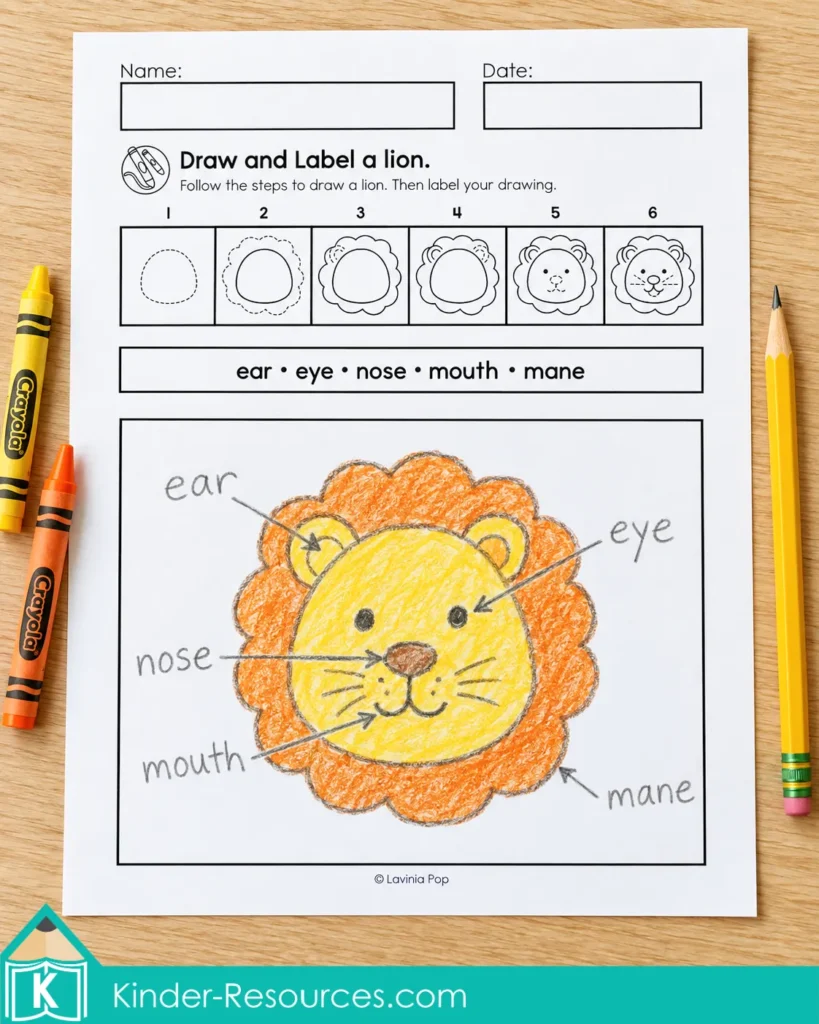
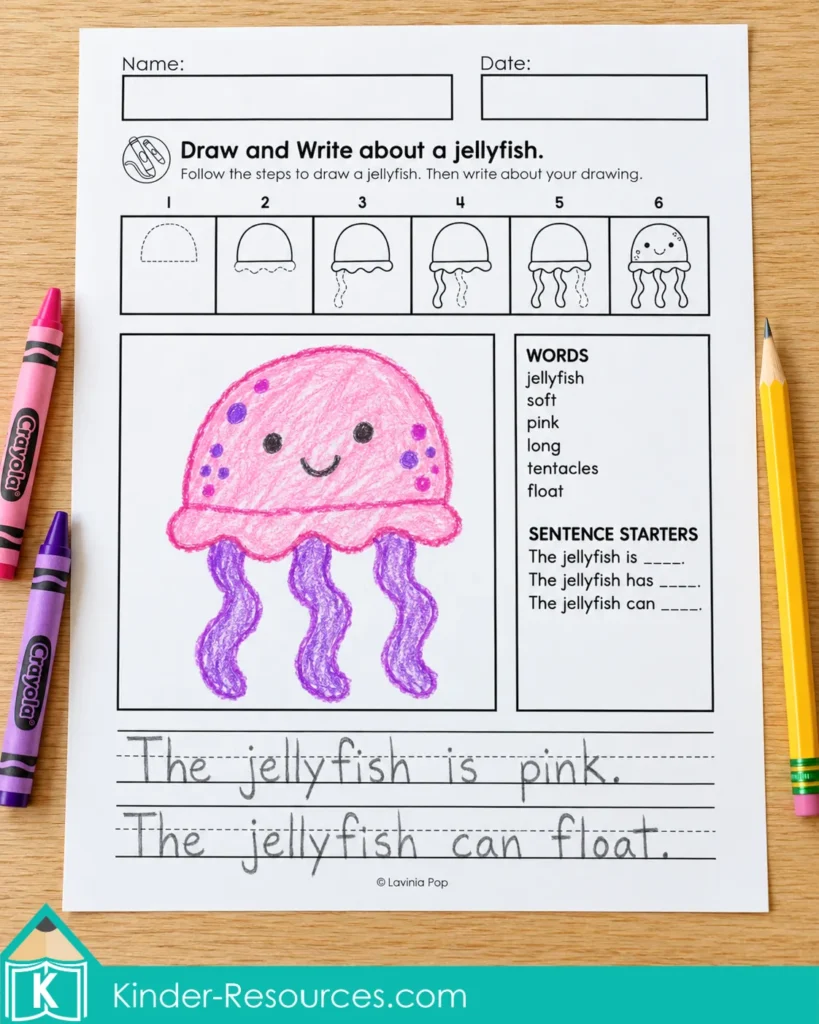
The examples below offer different ways to share. A child with the lion page might point to and read the labels, including “ear,” “mouth,” and “mane.” A child with the jellyfish page could read the sentences “The jellyfish is pink.” and “The jellyfish can float.”
Children who are still developing their writing can talk about their pictures, too. A simple prompt such as “Tell your partner one thing about your drawing” gives everyone a way to join in.
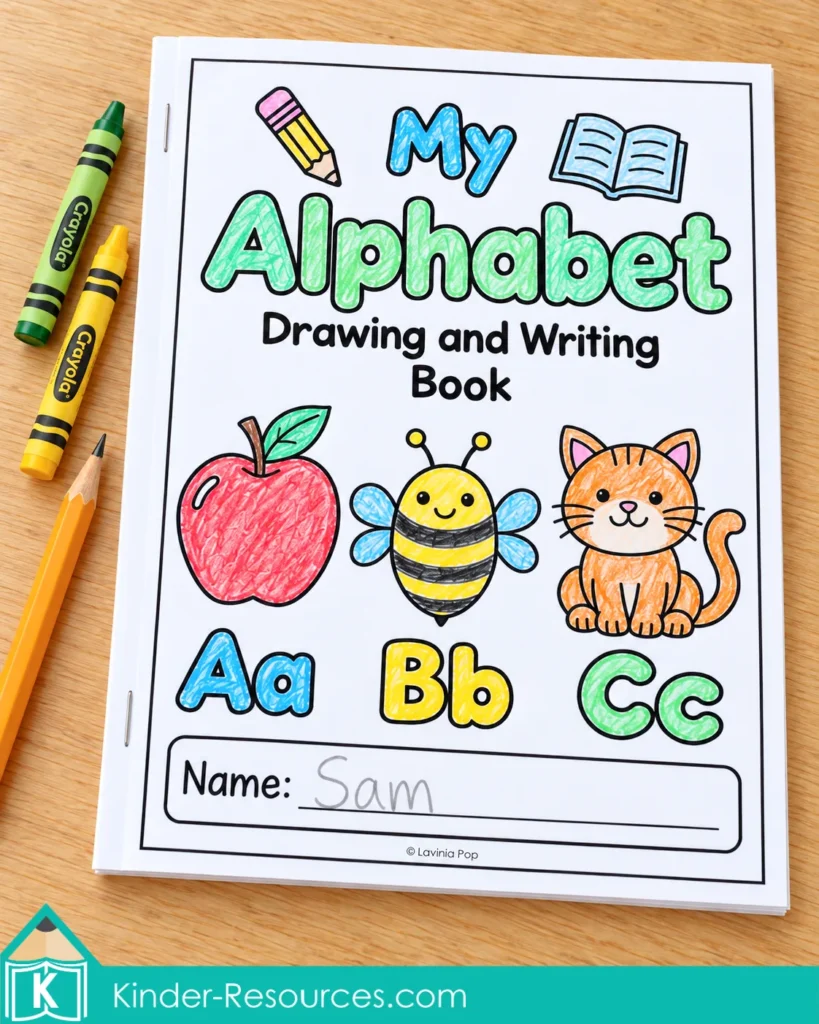
Completed alphabet drawing and writing activities can be collected in a personal book. Children can color the apple, bee, and cat cover, add their name, and keep their pages together. The book gives them something to reread, share with their family, and look back through as their drawing and writing develop.
Purchase the Alphabet Directed Drawing and Writing Packet
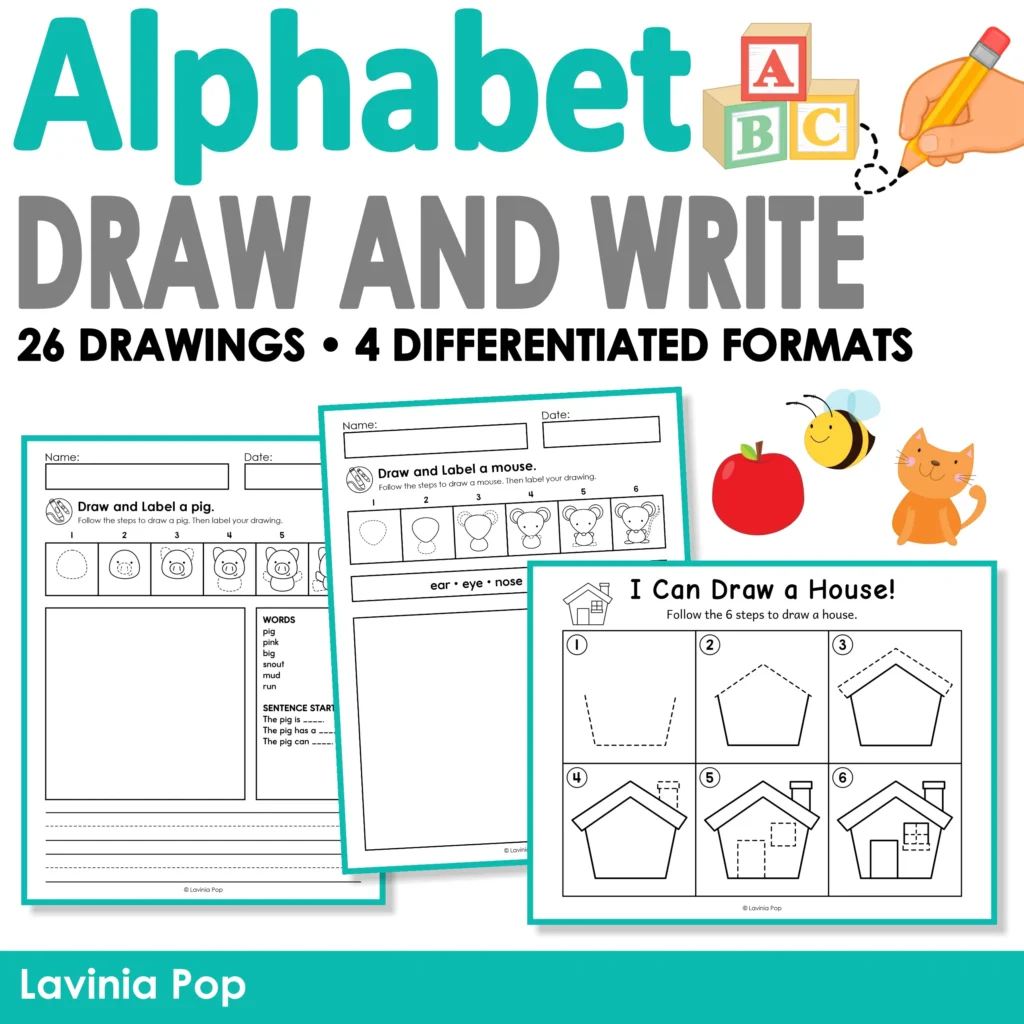
If you would like more drawing and writing activities to use throughout the year, the complete packet includes 26 alphabet pictures with step-by-step guides, labeling pages, supported writing, and independent writing options.
Choose your preferred store below to view the complete resource:

Happy Teaching! 😊
You Might Also Like
Yes
Absolutely! 😊 Just click on one of the store links in the post to grab the resource. I hope you enjoy it!
Wonderful for sub plans.
Thank you! 😊 They would work really well for sub plans too.