
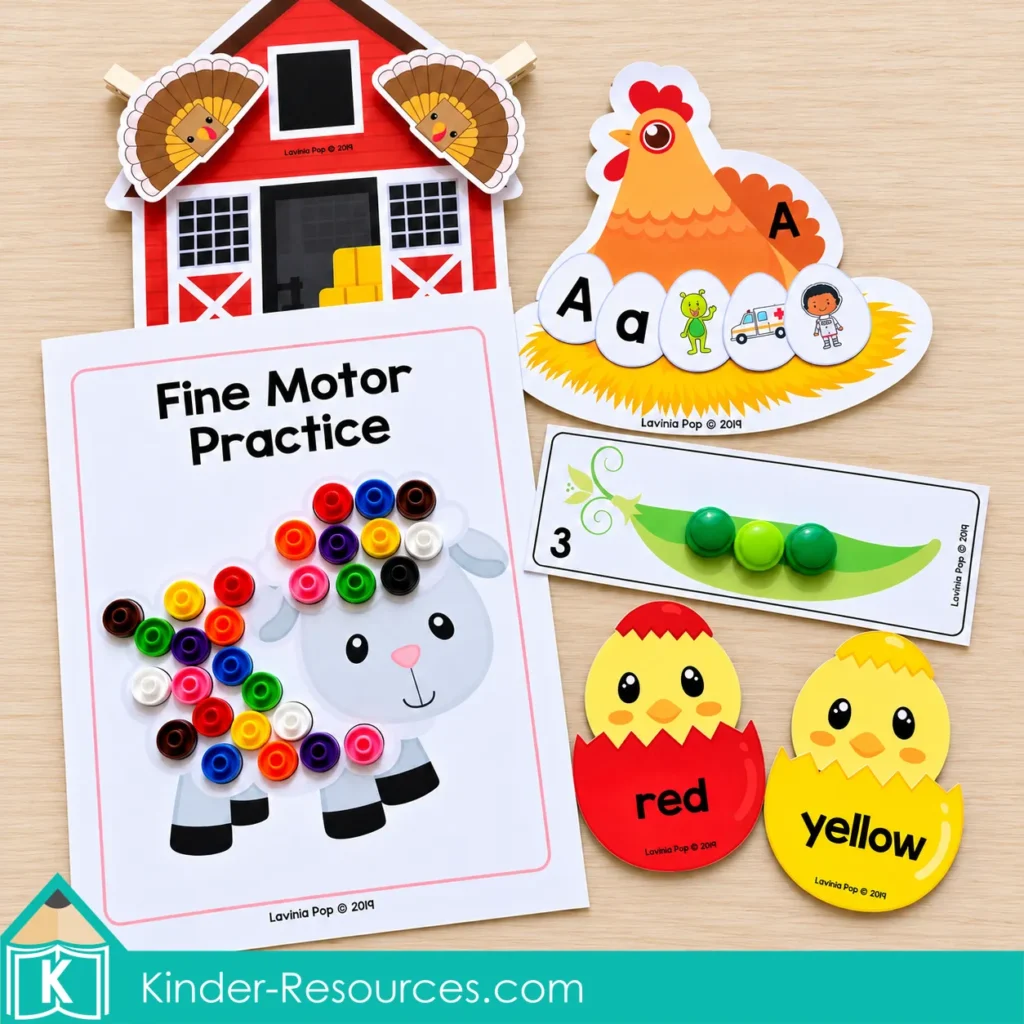
Counting peas, matching eggs to hens, and sorting animals into barns bring plenty of opportunities for learning through play. These farm activities for preschool combine familiar farm pictures with practical ways to explore letters, numbers, colors, shapes, and more.
My 93-page Farm Preschool Centers packet includes 17 printable activities for learning centers, morning tubs, small groups, and homeschool lessons. Children can work with counters, clothespins, picture cards, and letter pieces while practicing early literacy, math, and fine motor skills.
Choose a few activities that suit your children’s interests and readiness, then introduce others throughout your farm theme. The collection includes simple matching tasks as well as CVC word and sight word activities for children who are ready for an extra challenge.
Free Farm Activities for Preschool Sample
Would you like to try some pages before preparing the full collection? Download the free sample pages below.


Fine Motor Farm Activities for Preschool
These activities give children opportunities to practice picking up small objects, controlling their movements, and following different types of lines.
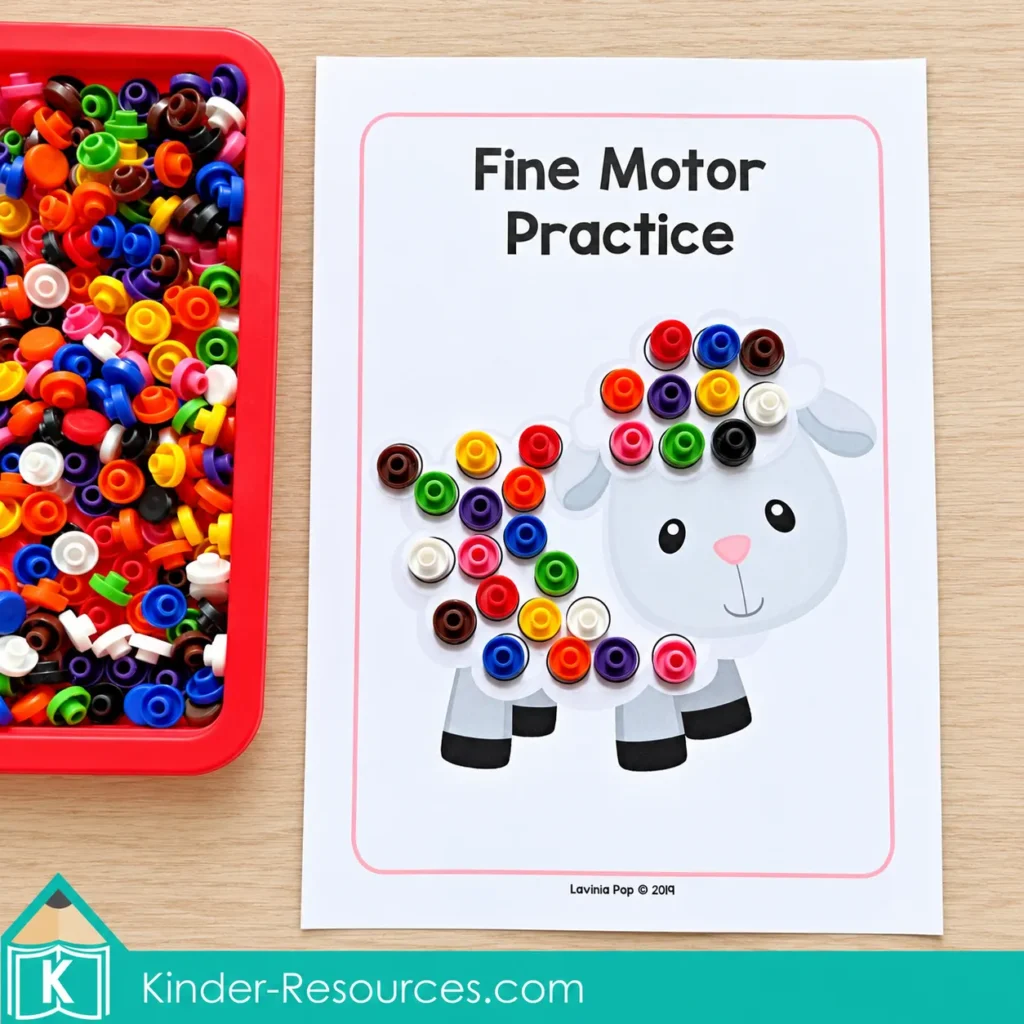
1. Sheep Fine Motor Practice Mat
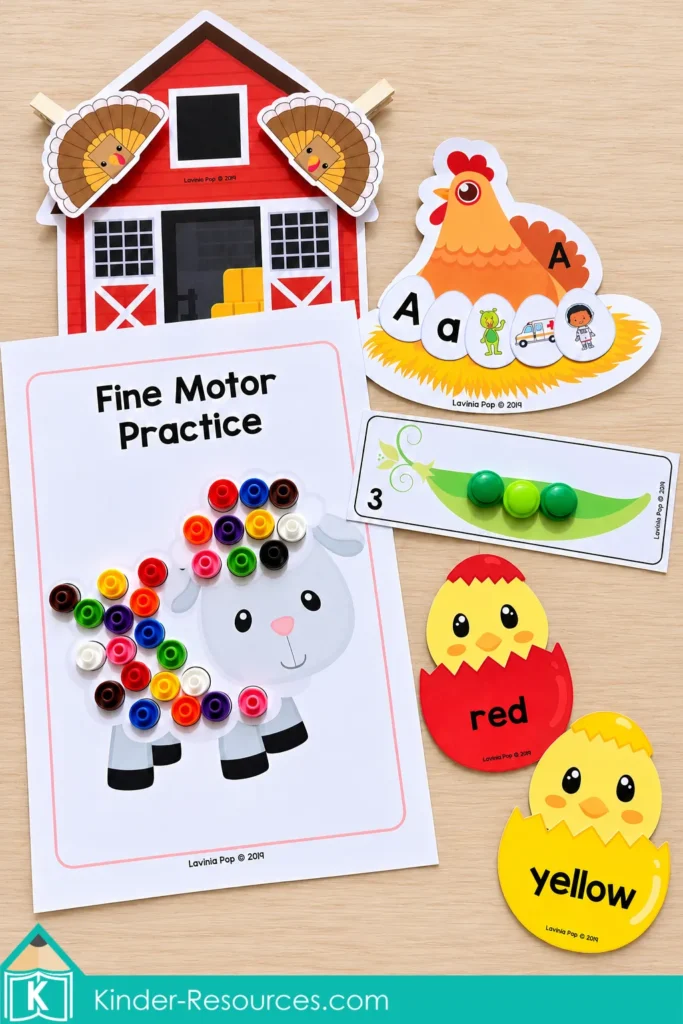
Children place counters, pom-poms, or small balls of play dough over the circles on the sheep’s wool. In the photo, colorful counters fill the spaces while leaving the sheep’s face visible.
Set out the mat with a small tray of materials so children can work independently. They can place the pieces with their fingers or use tweezers for an additional fine motor challenge. Once the sheep is covered, clear the mat and use it again.
2. Farm Prewriting Activities for Preschool
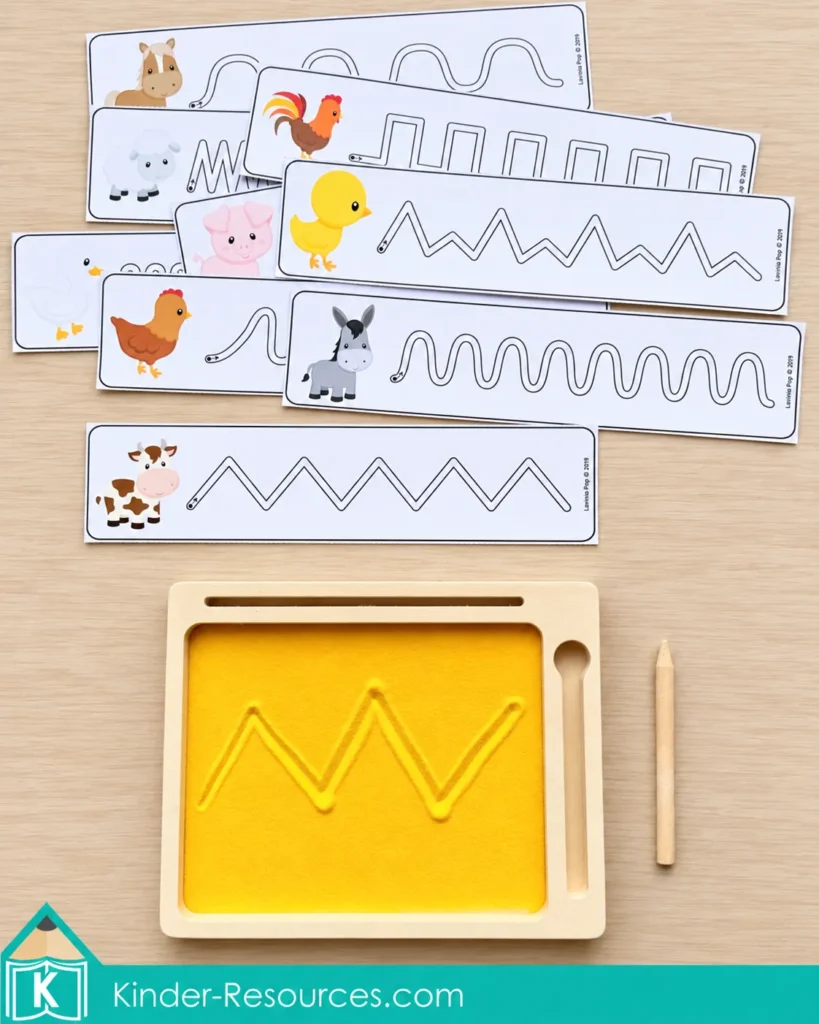
These farm animal cards feature lines for children to trace, including curves, loops, and zigzags. Laminate the cards or place them in suitable protective sleeves, then use a dry-erase marker for repeated practice.
The cards also work well beside a sand tray. Children choose a card, follow the line with their finger, and copy the movement in the sand. Smooth the surface between attempts so they can try another pattern.
Preschool Farm Activities for Literacy
The literacy activities include letter matching, beginning sounds, syllables, rhyming, and word building. Start with a small selection of cards so children can focus on the skill you are introducing.
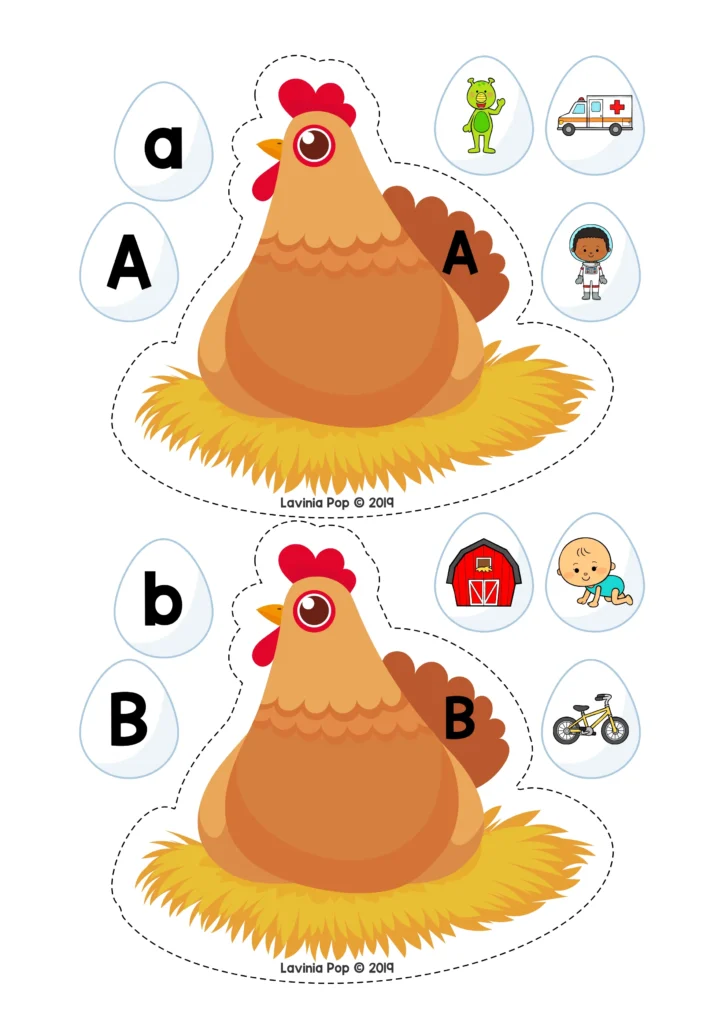
3. Hen and Egg Alphabet and Beginning Sounds Matching
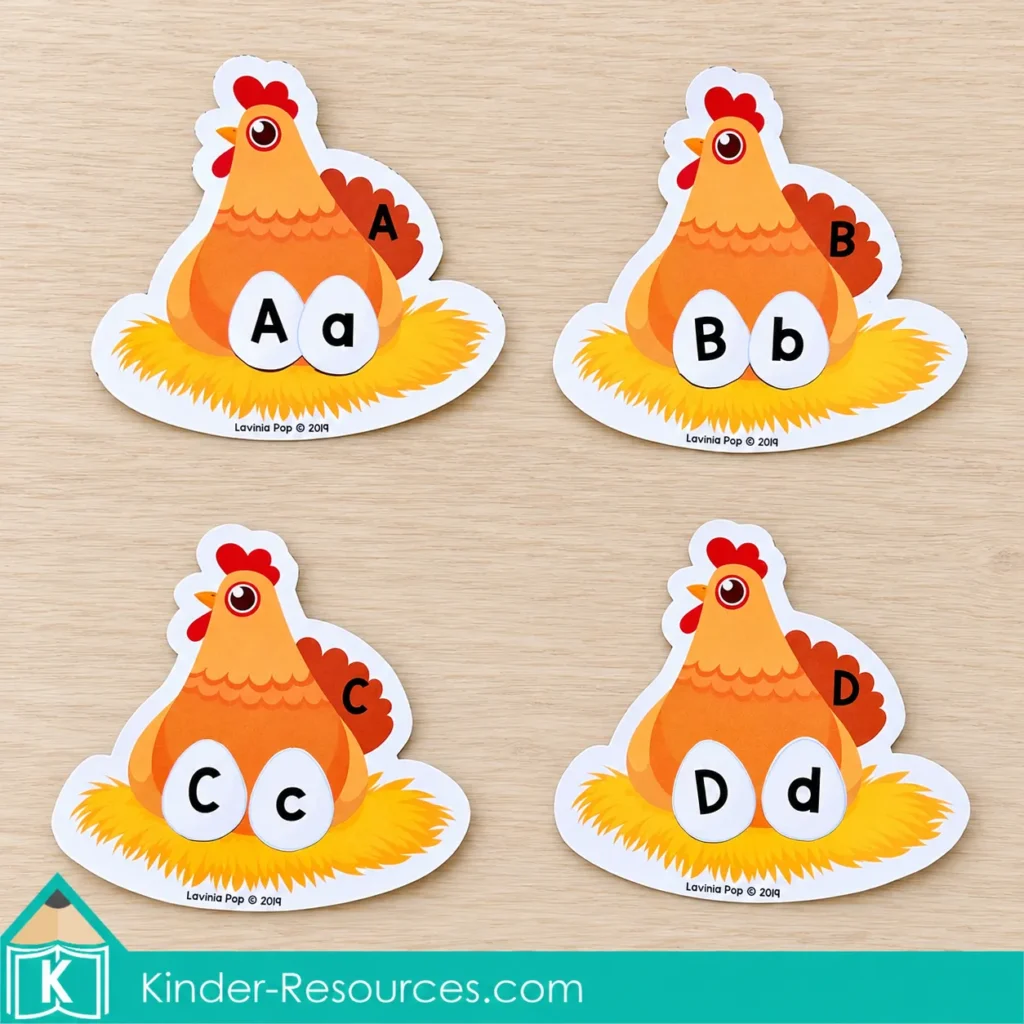
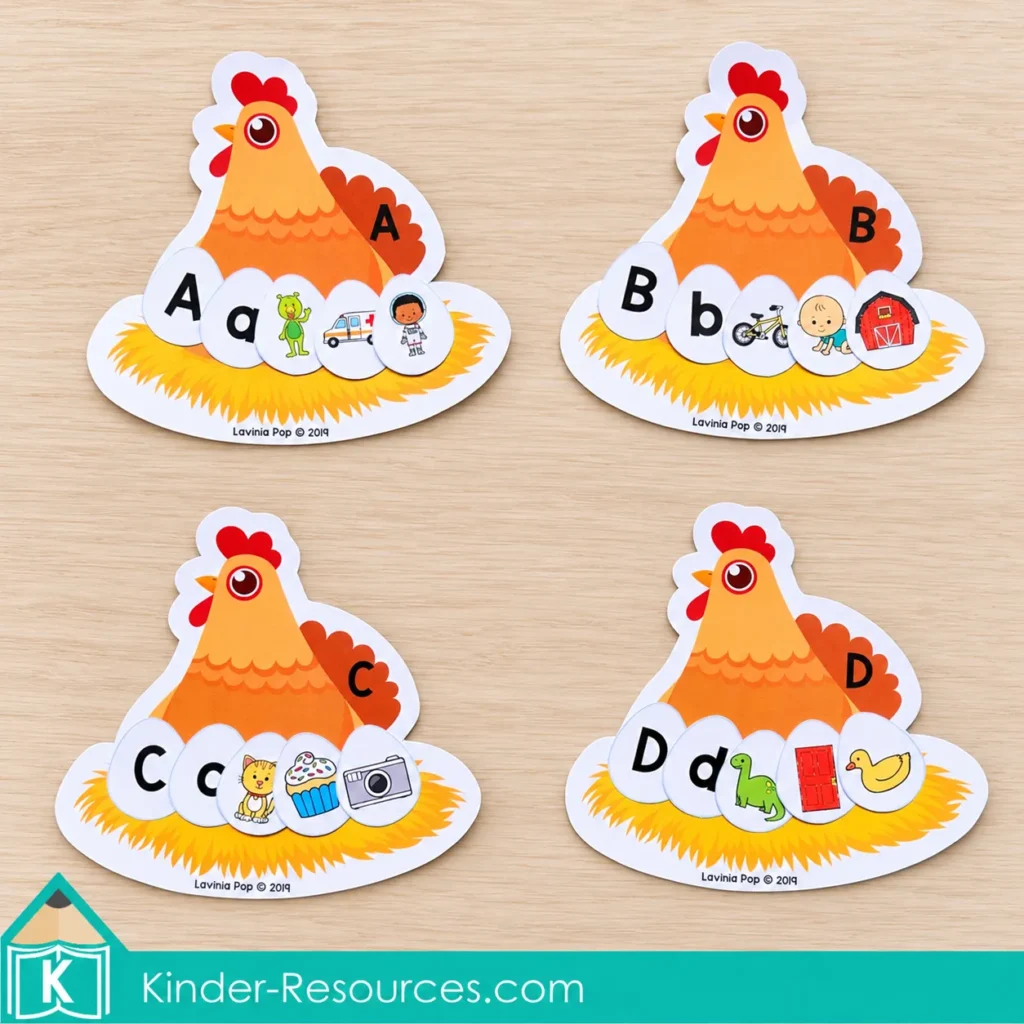
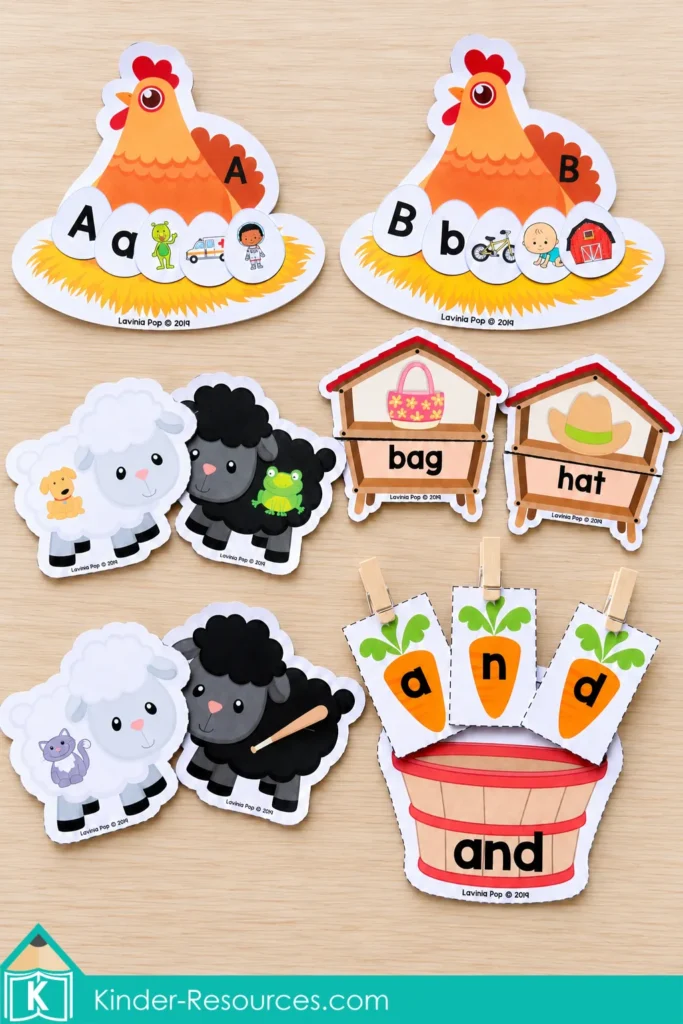
Children match uppercase and lowercase letter eggs to the corresponding hen cards. Once they are familiar with the letters, add picture eggs for beginning sound practice.
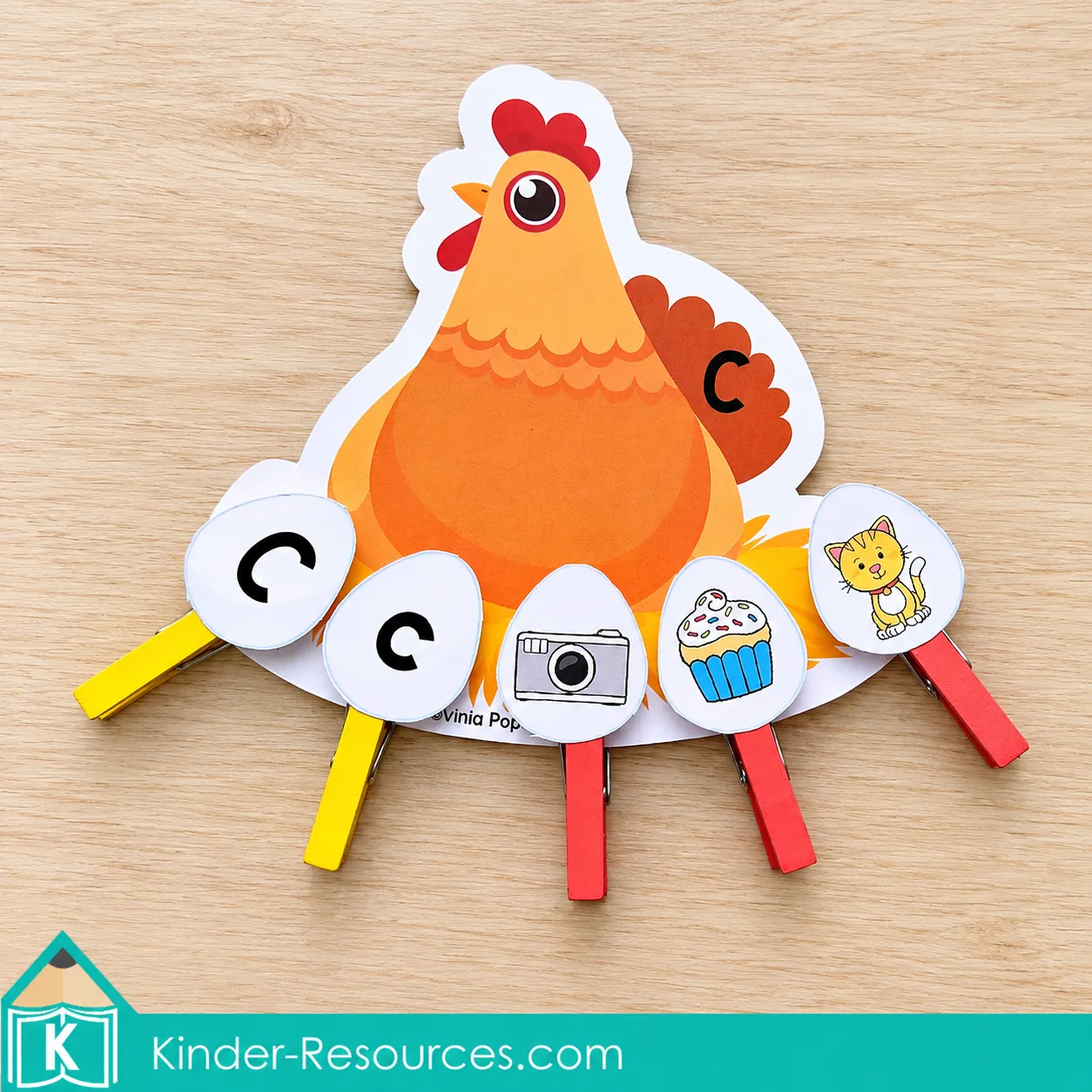
For example, children can match the cat, camera, and cupcake pictures to the letter C hen. Say each picture name together and listen for its first sound.
For a fine motor variation, attach the eggs to clothespins so children can clip them onto the hens. You can also hide the eggs in shredded paper for children to find and sort.
4. Farm Syllable Activities for Preschool
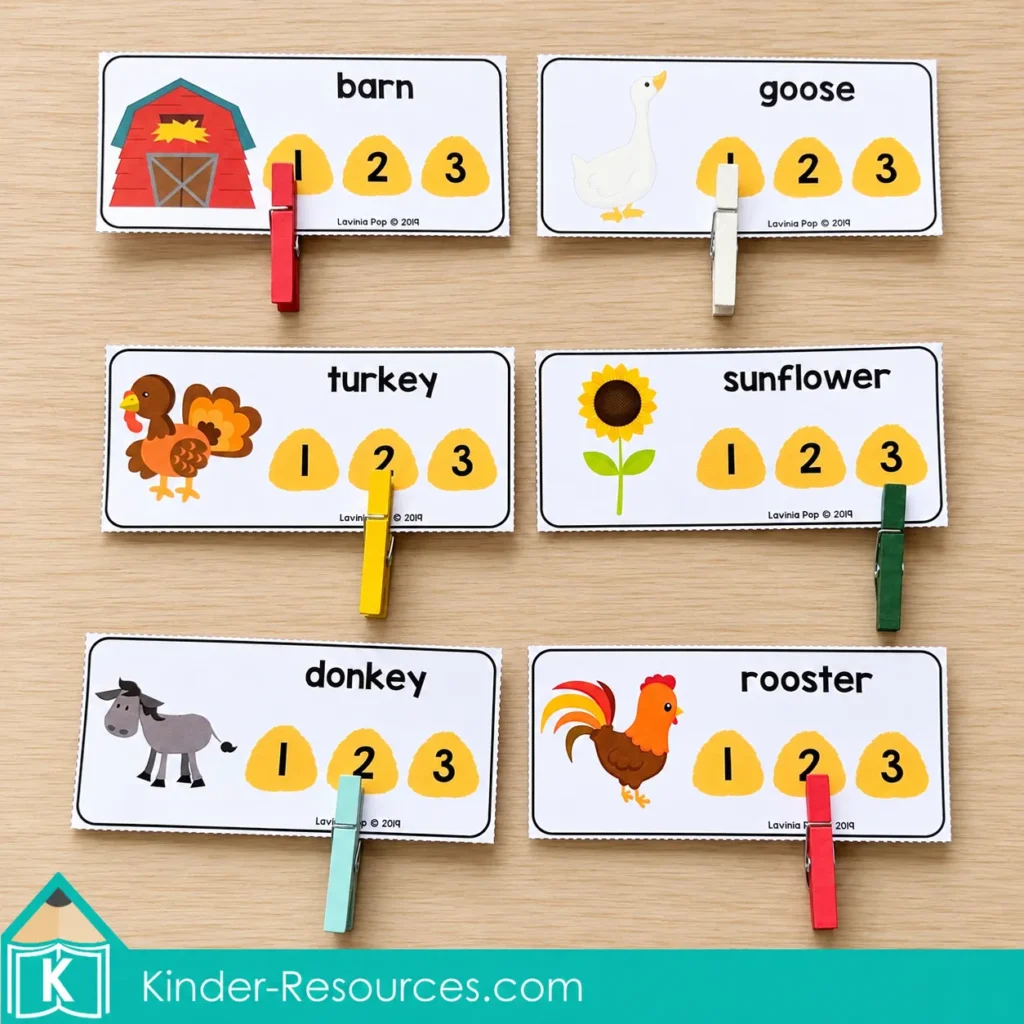
Children name the picture, clap or tap the syllables, and clip the matching number on the card.
Try saying barn, turkey, and sunflower together to compare words with one, two, and three syllables. Model a few examples before inviting children to work through the cards.
Counters can be used instead of clothespins. Children place one counter for each syllable they hear, then select the matching number.
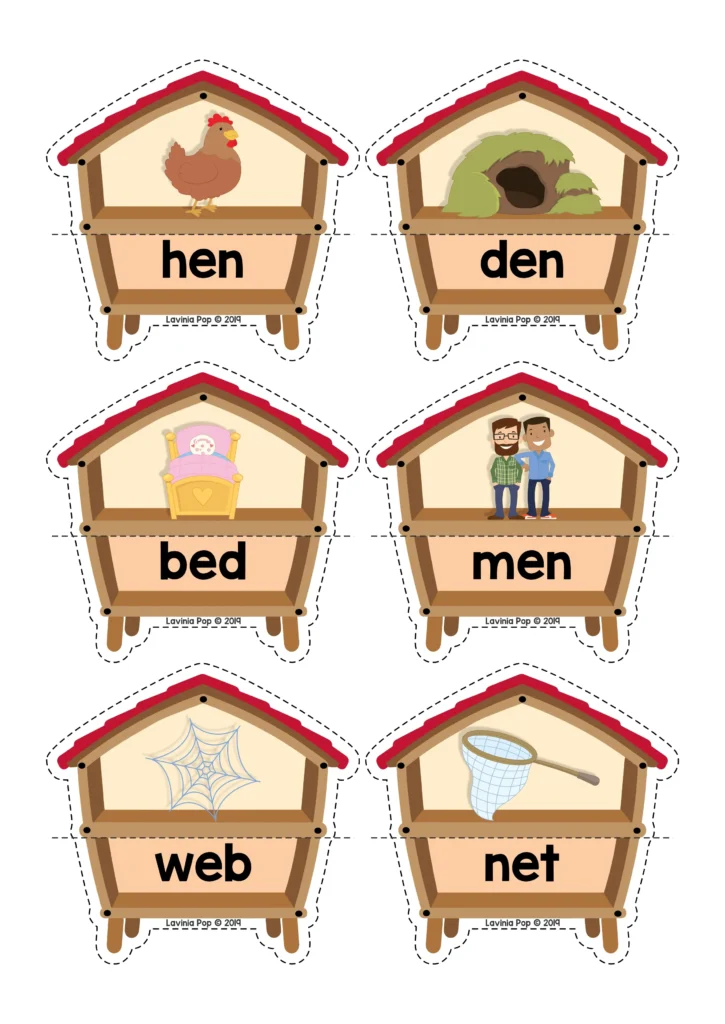
5. Chicken Coop CVC Word Puzzles
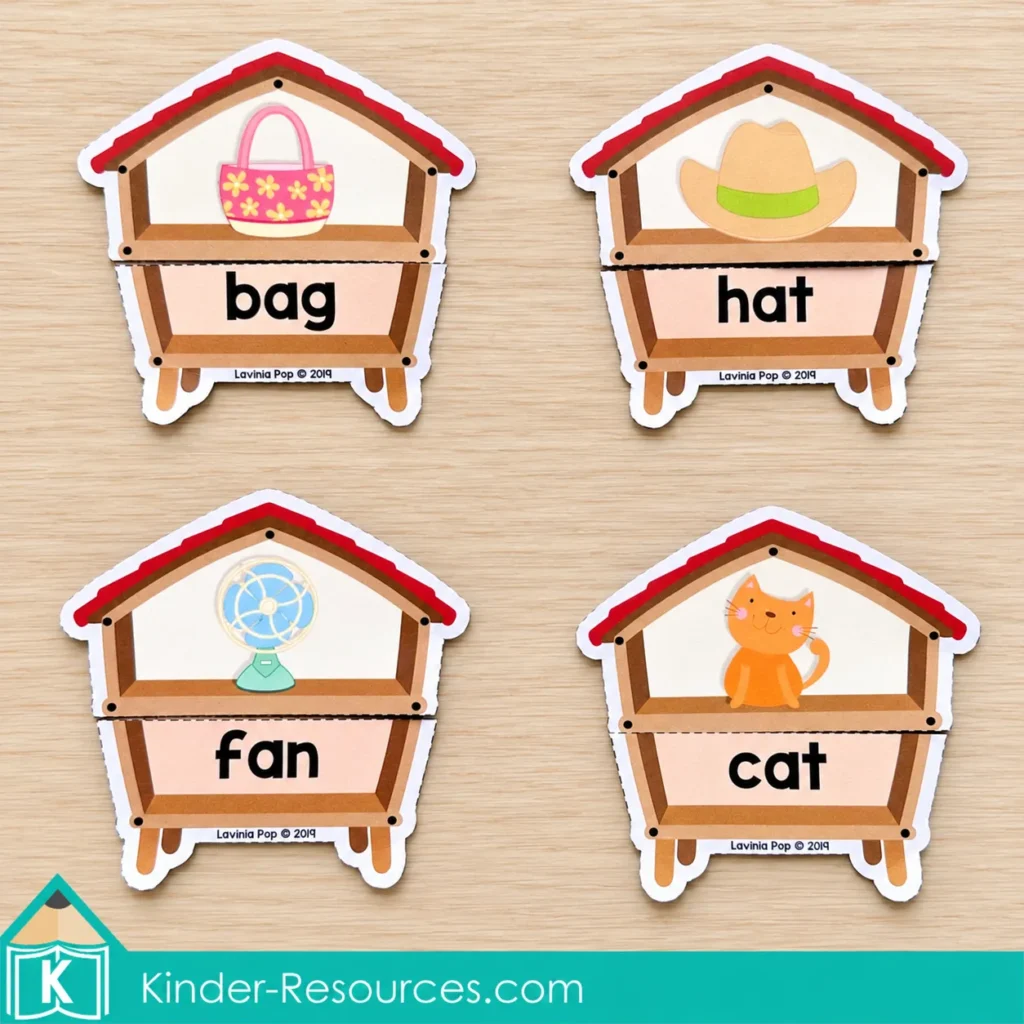
These two-piece puzzles match a picture with its CVC word. Examples include bag, hat, fan, and cat.
For children who are ready to read CVC words, begin with the word pieces. Help them say the sounds and blend the word before finding the matching picture. Joining the pieces completes the chicken coop.
Start with two or three puzzles, then add more as children become familiar with the task.
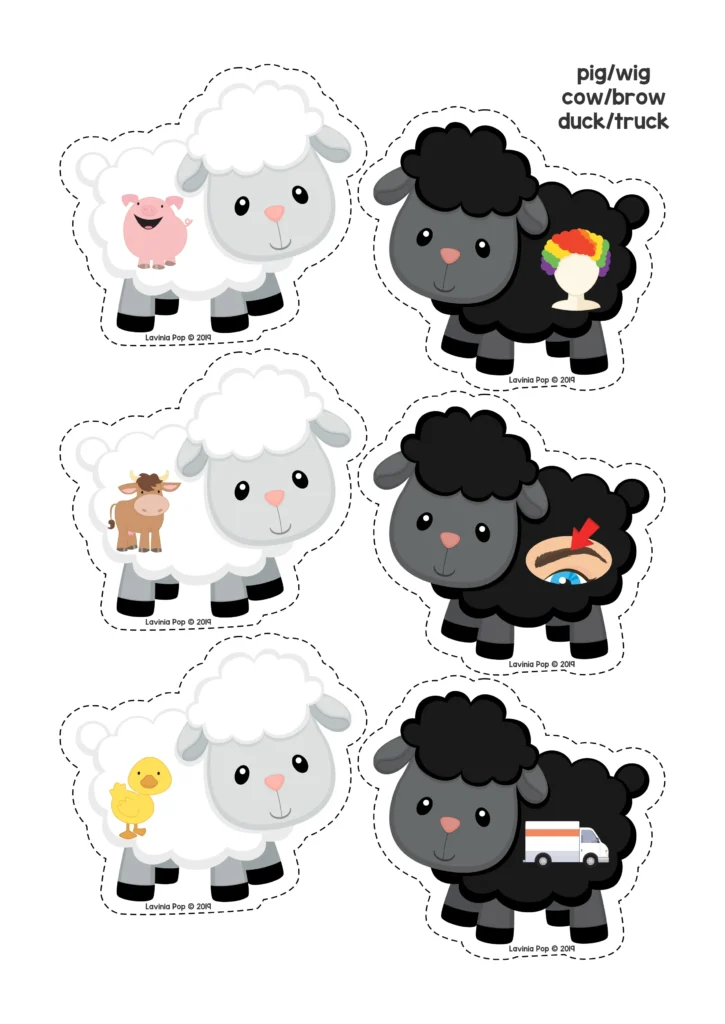
6. Rhyming Sheep
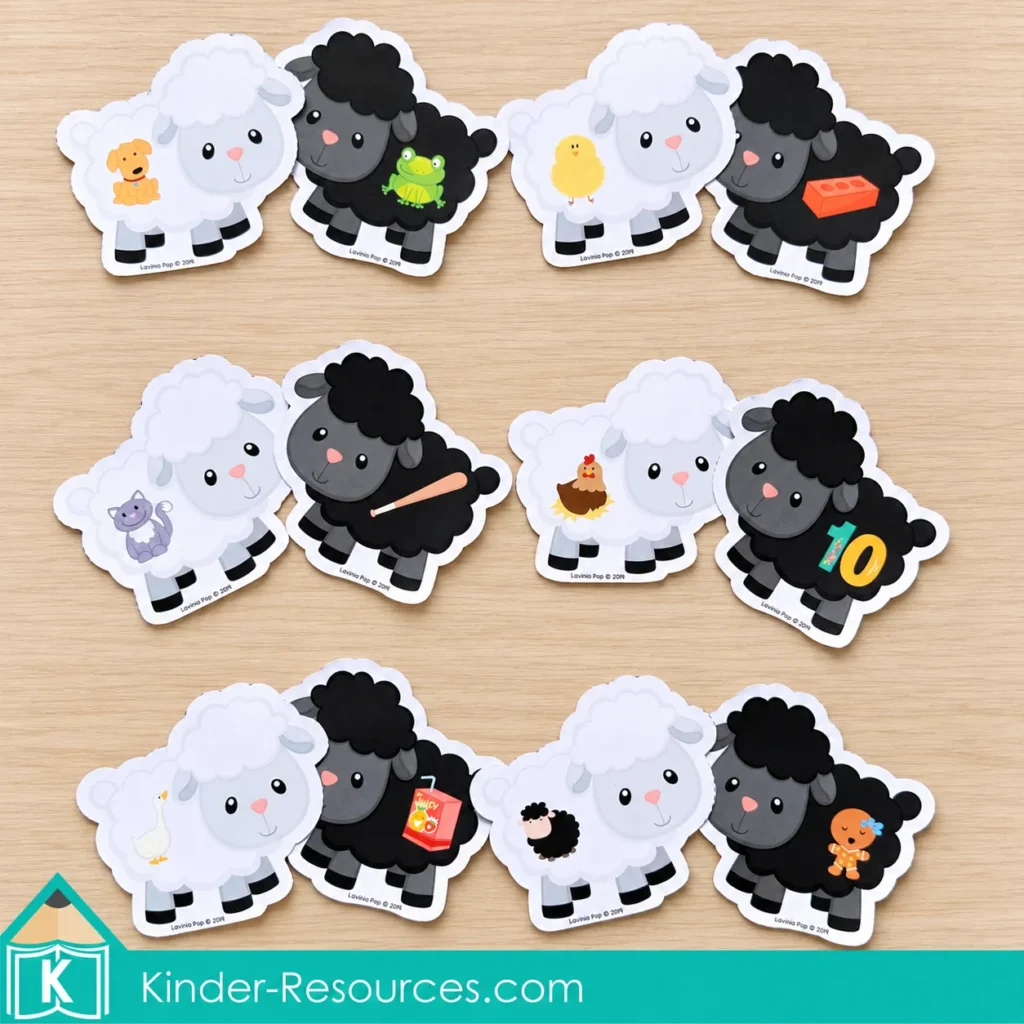
Children pair white and black sheep cards by finding pictures that rhyme. Examples include dog and frog, cat and bat, and chick and brick.
Name the pictures together before matching them so children know which words to compare. Then say each pair aloud and listen for the matching ending sounds.
This activity provides practice with phonological awareness through spoken words and pictures. Children can participate without needing to read printed words.
7. Carrot Sight Word Building
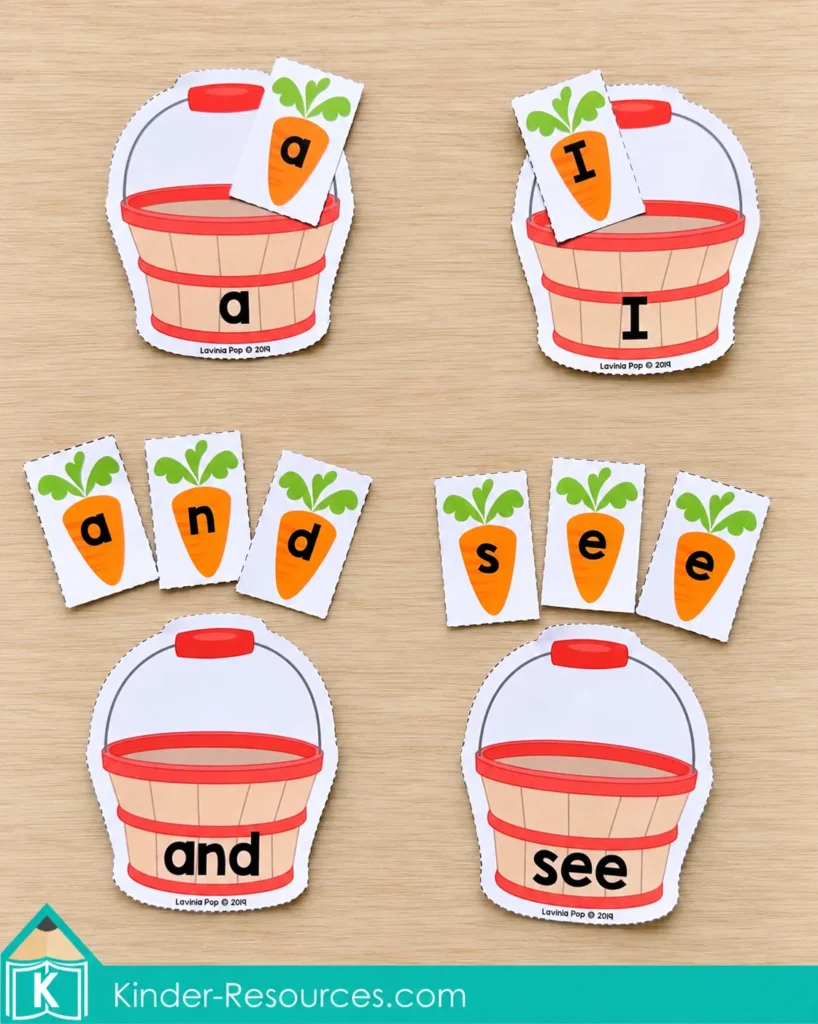
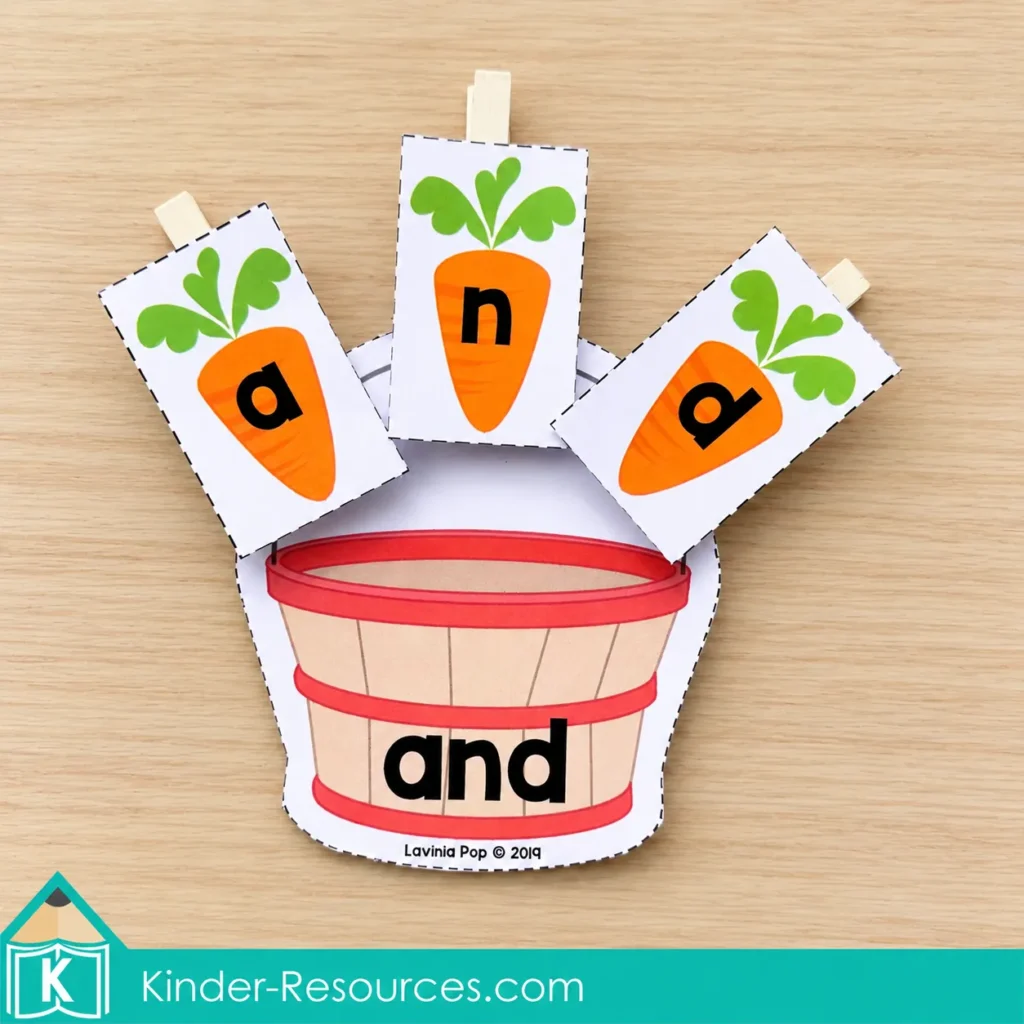
Children use carrot letter cards to build the words shown on the baskets. The activity includes 40 pre-primer sight words.
Begin with a word such as and. Read it together, help children connect its sounds to the letters, and arrange the carrot cards in order. Keep the basket visible as a model while they work.
For a fine motor variation, attach the carrot cards to clothespins and clip them around the matching basket.
Farm Math Activities for Preschool
These farm math centers give children practical ways to compare quantities, count objects, recognize shapes, and explore patterns.
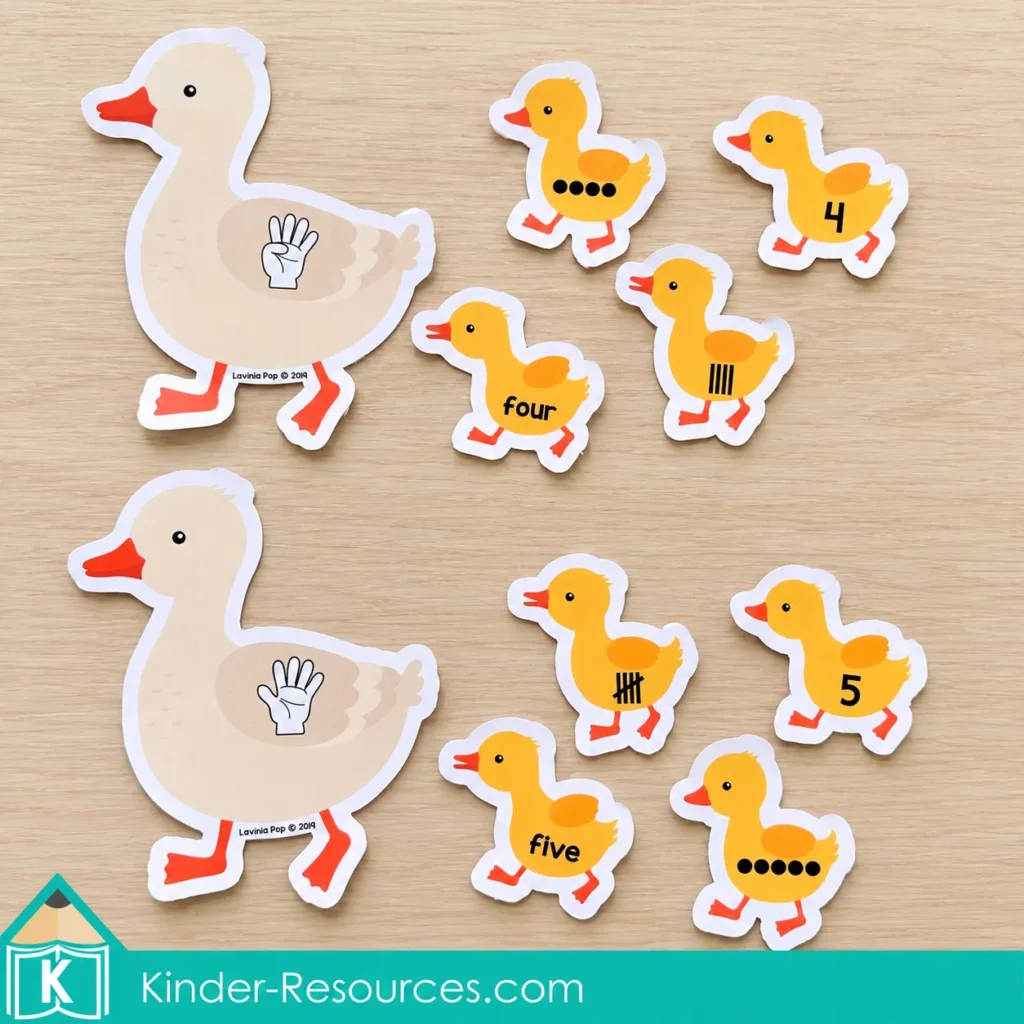
8. Mother Duck and Duckling Number Matching
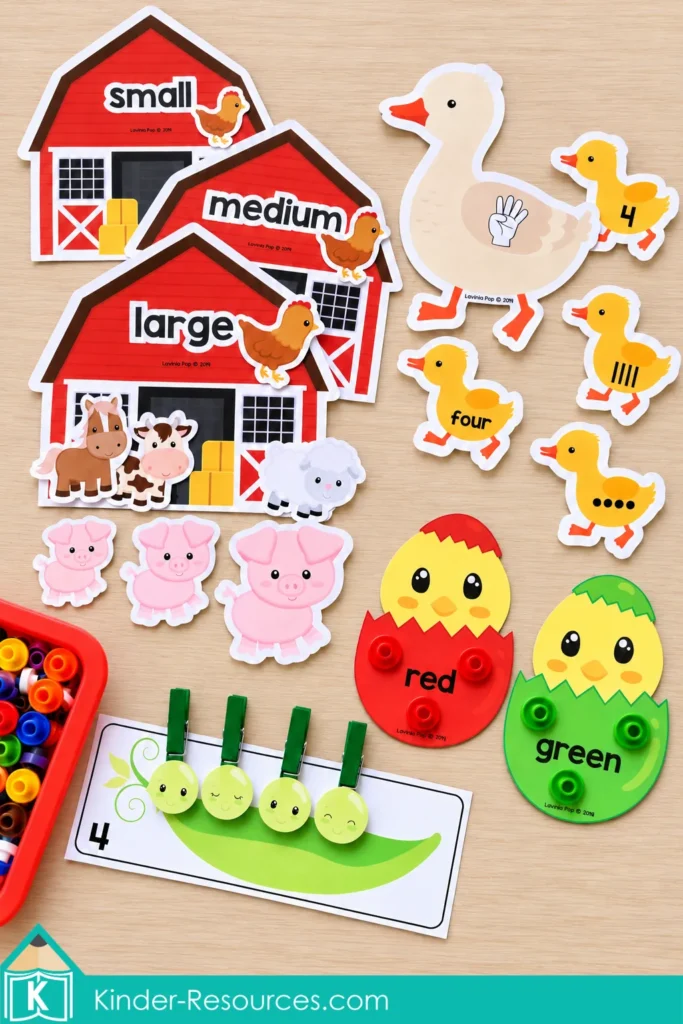
Children match each mother duck’s finger picture with ducklings showing the same number in different ways: a numeral, a number word, dots, and tally marks.
Begin with one number family and explore each representation together. For example, find the numeral 4, count four dots, and compare them with four tally marks.
Once children understand the task, mix two or more number families for them to sort.
9. Preschool Farm Activities for Counting: Peas in a Pod
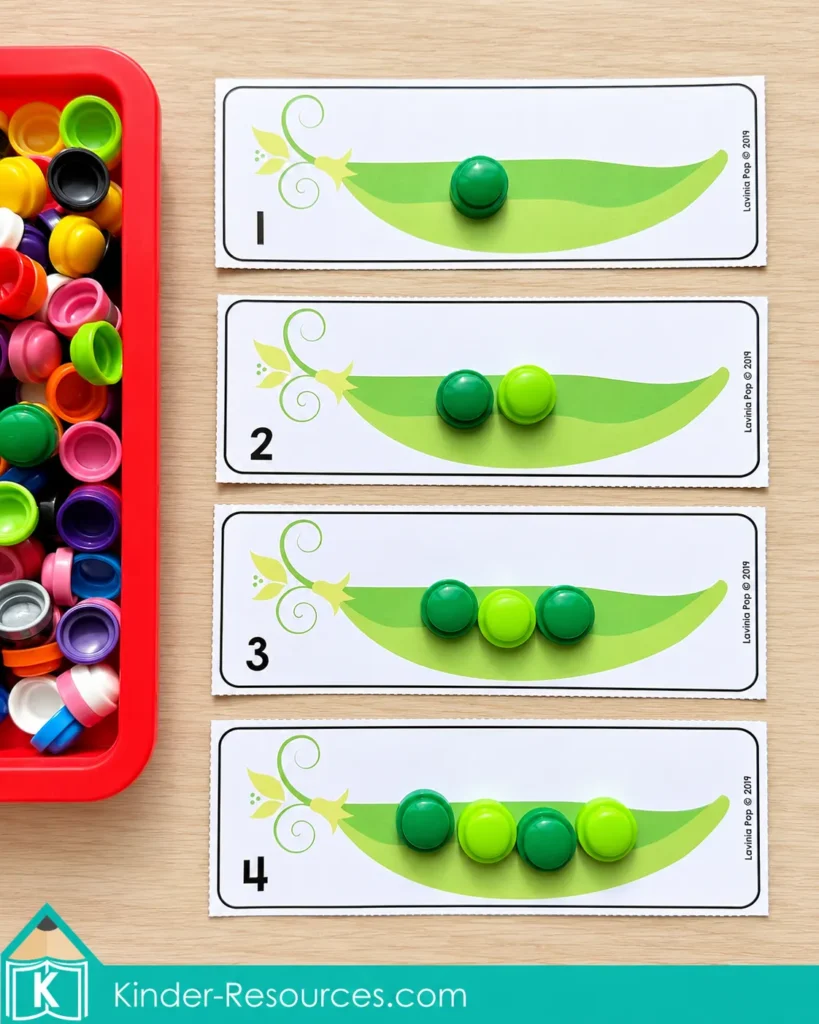
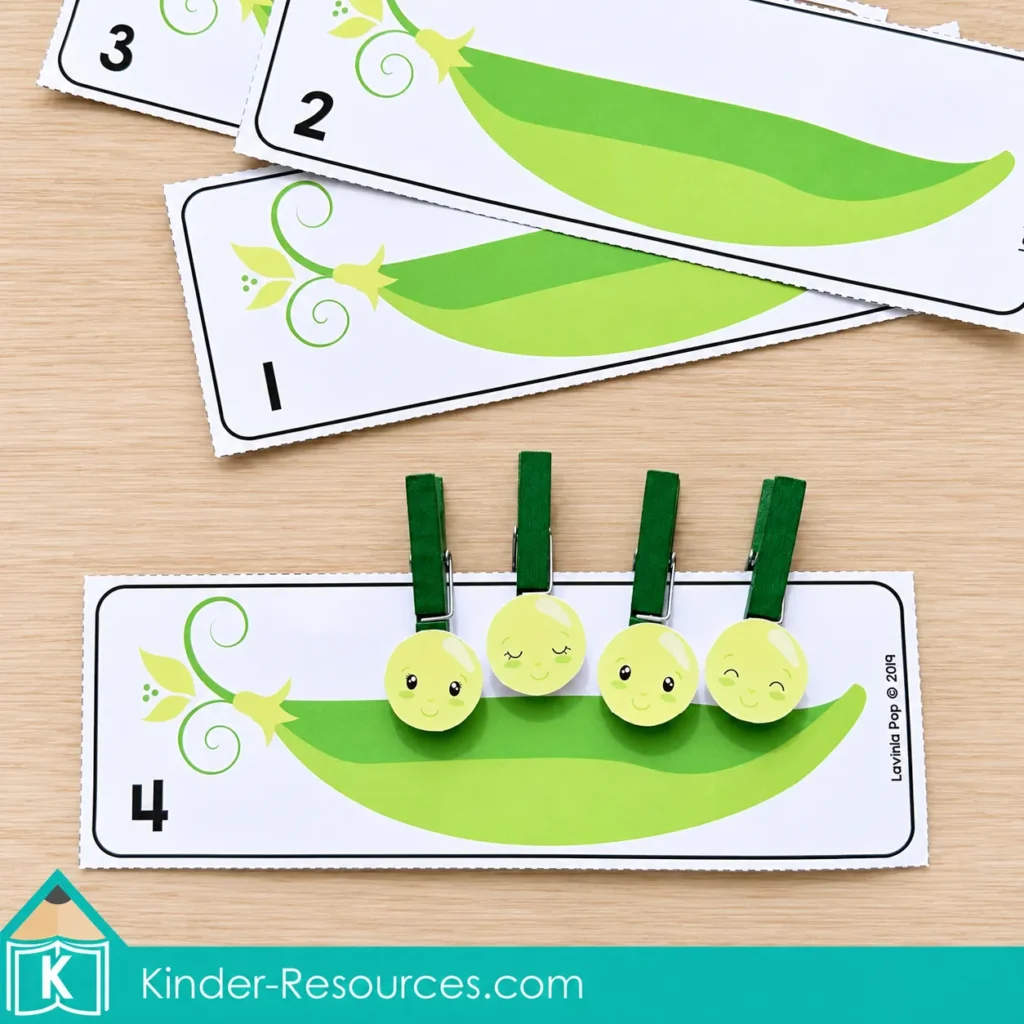
Children read the number on a pea pod card and add the matching quantity of peas.
Green counters make a simple counting option. Children can also use the printable pea pieces, pom-poms, or pea pieces attached to clothespins.
Encourage children to count each pea once as they place it on the pod. When they finish, ask, “How many peas are there altogether?” Count again together if they need help checking.
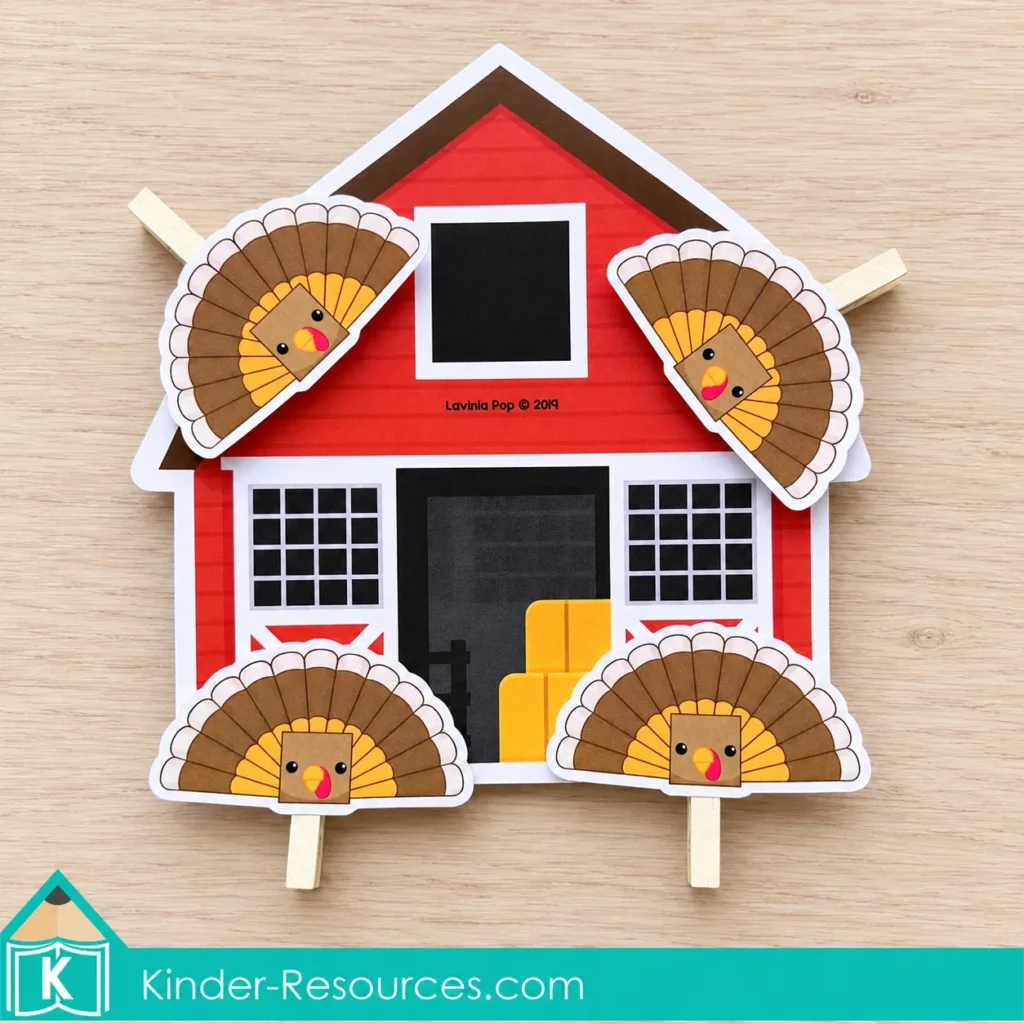
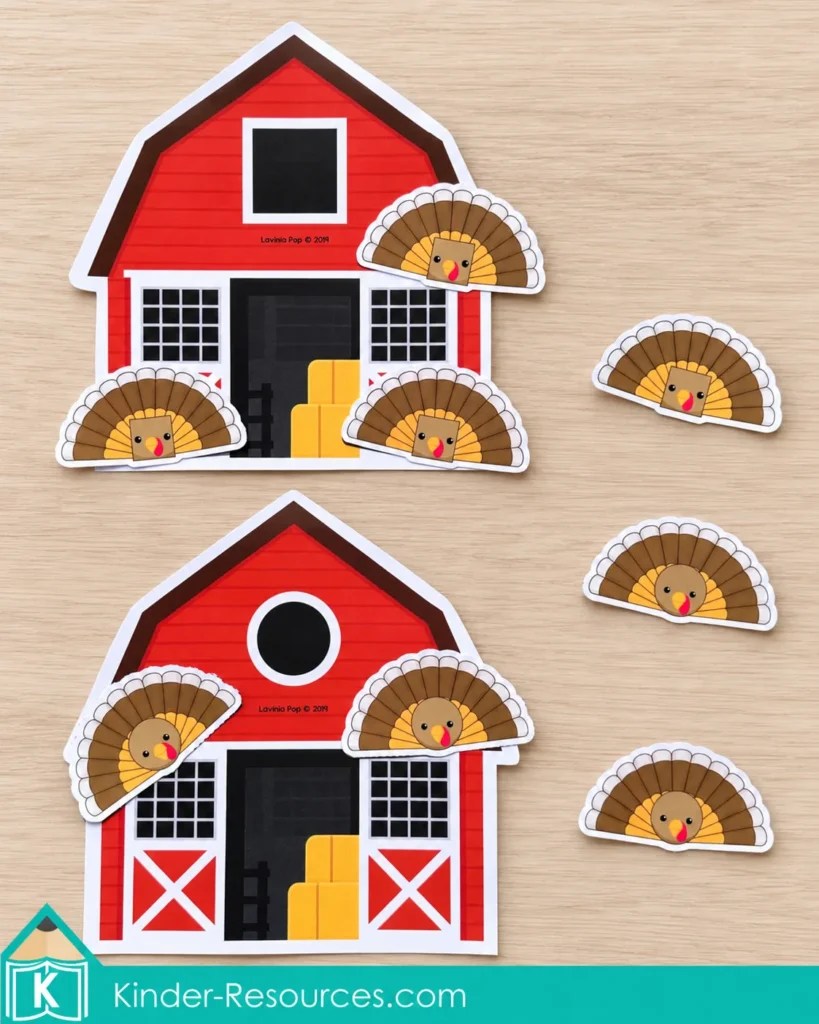
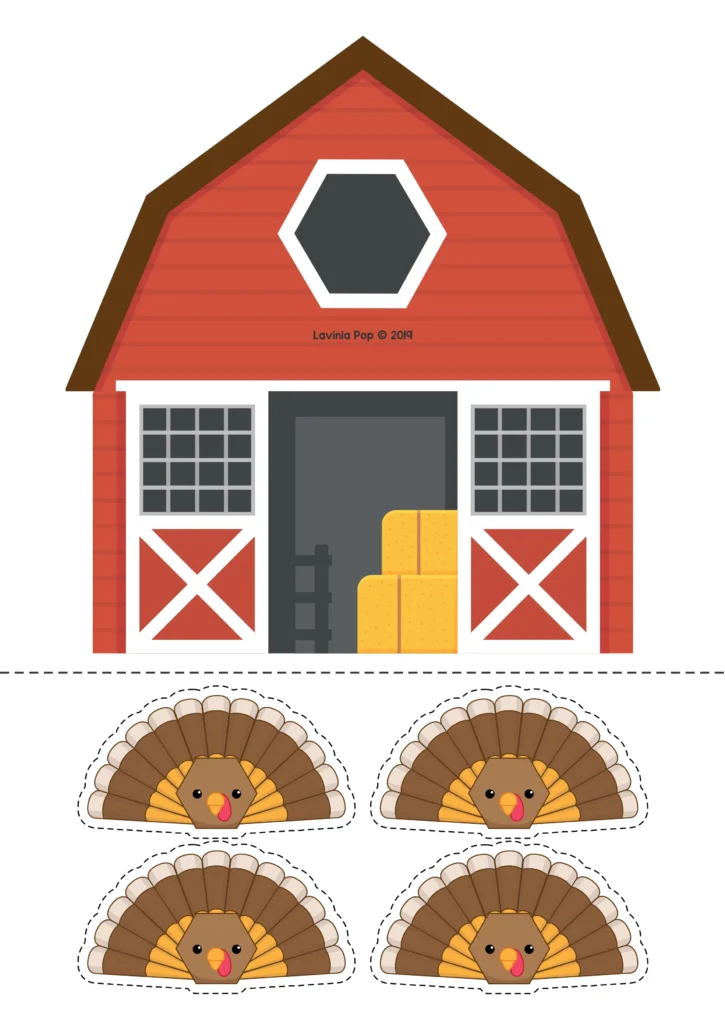
10. Barn and Turkey Shape Matching
Children match the shape of each turkey’s face to the shape shown on a barn.
Start with two contrasting shapes, such as a circle and a square. Name each shape and talk about what children notice before adding more barns and turkeys.
The turkey pieces can be used as loose matching cards or attached to clothespins. Clipping them around the matching barn adds fine motor practice.
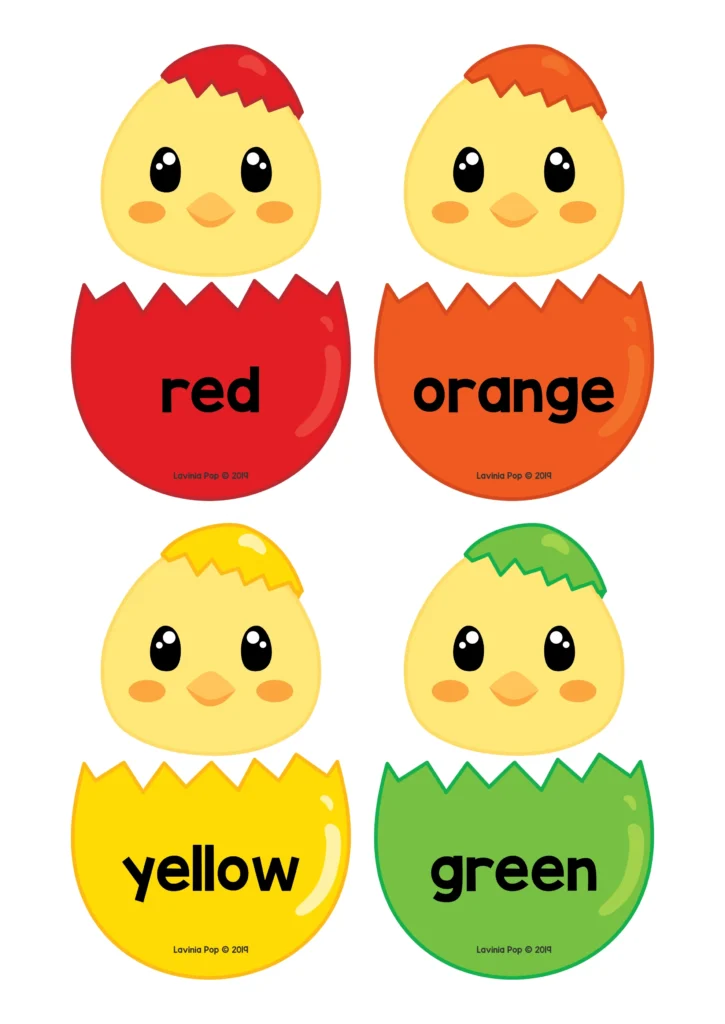
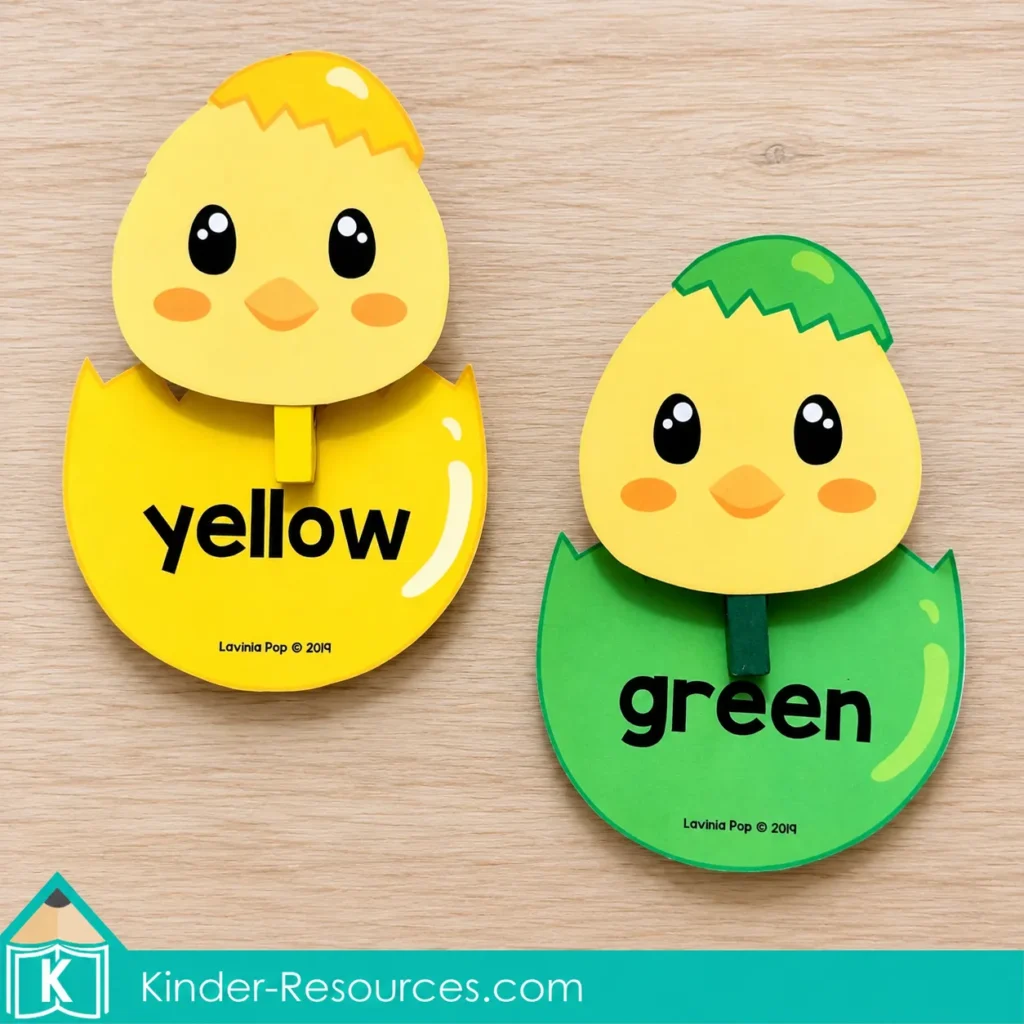
11. Chick and Egg Color Matching
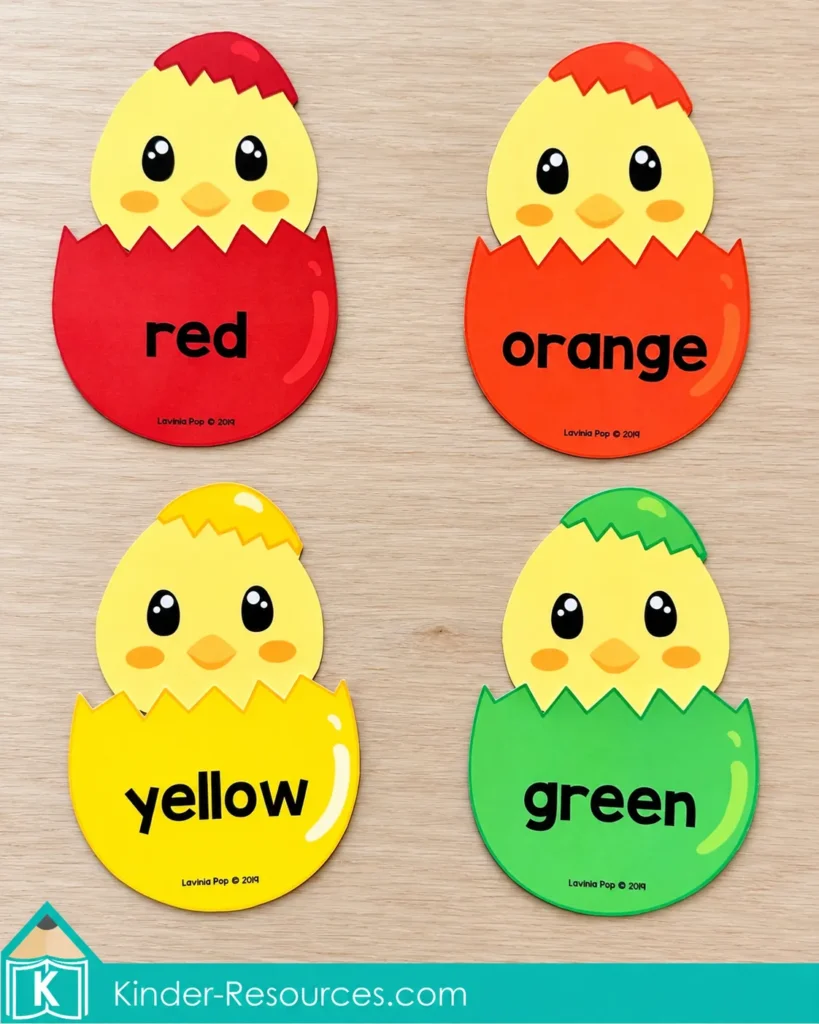
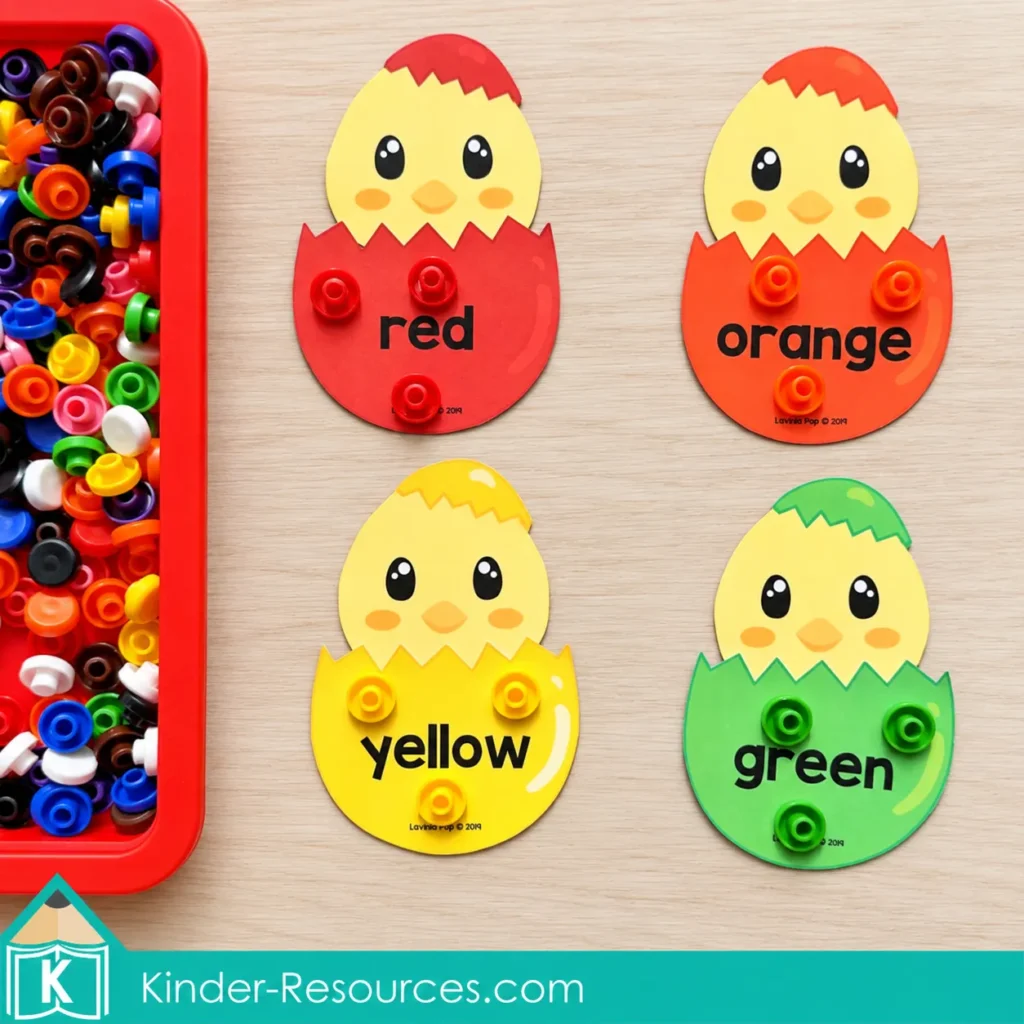
These hatching chicks provide several ways to practice colors. Children can match chick heads to the corresponding eggs, name the colors, or find the printed color words.
For a fine motor version, attach the chick heads to clothespins and clip them onto the matching egg halves.
Another option is to place matching colored counters on the eggs. Begin with two colors and gradually introduce more.
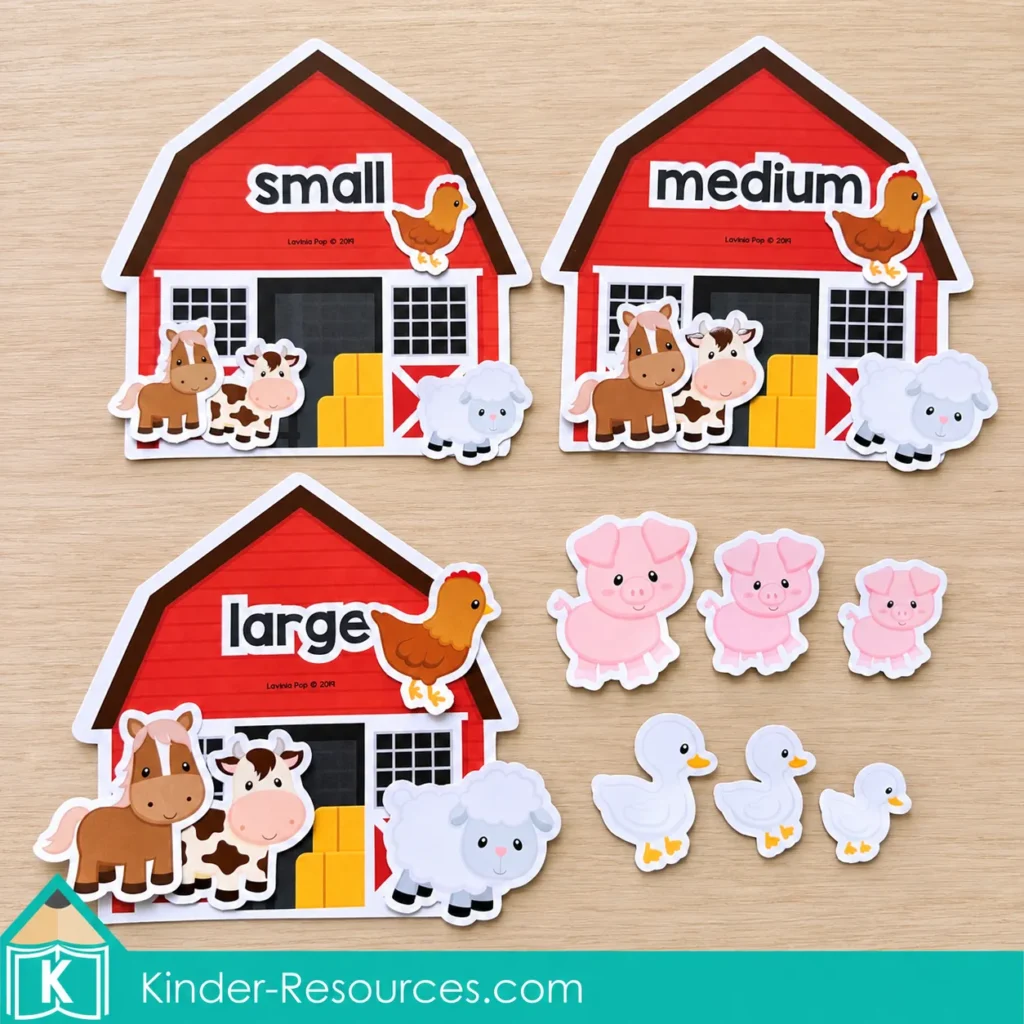
12. Farm Animal Size Sorting
Children sort farm animal pieces onto barns labeled small, medium, and large.
Begin with one animal in three sizes. Place the pieces beside each other and compare them before finding the matching barns. Once children understand the categories, introduce more animals.
Use words such as smaller, larger, and medium as you talk about the pieces. Children can also arrange each animal set from smallest to largest before sorting it.
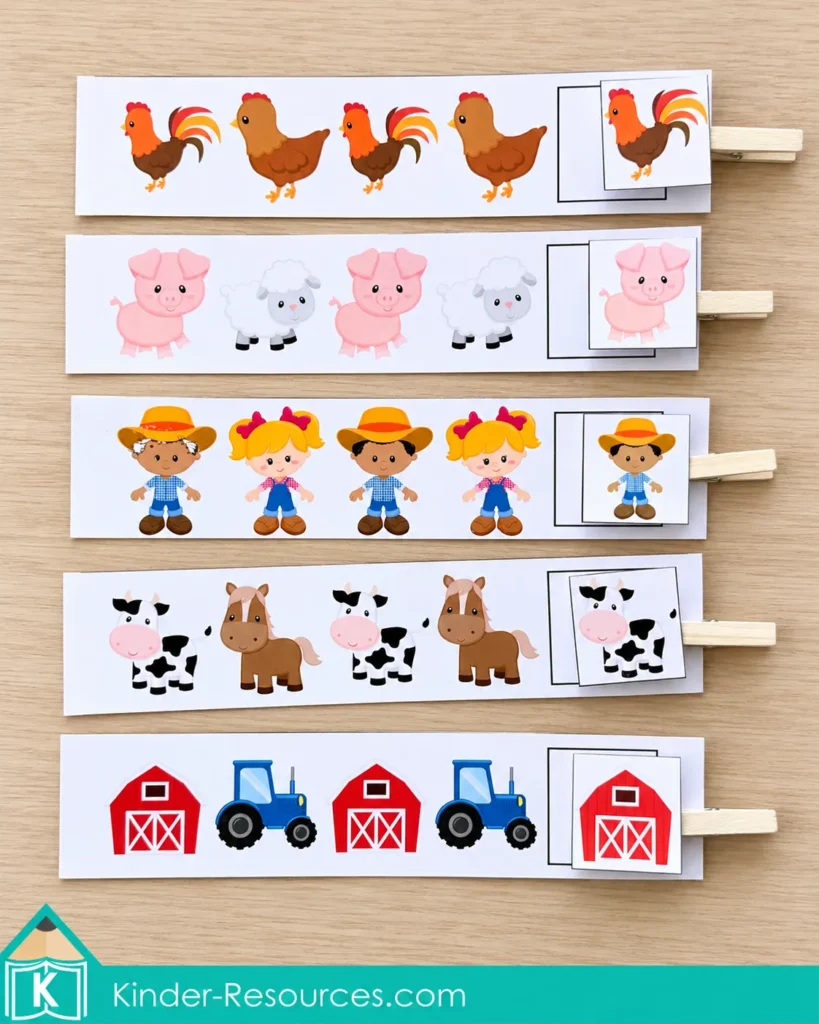
13. Farm Pattern Activities for Preschool
Children look at the alternating farm pictures and choose the piece that completes each AB pattern.
Say the pattern aloud together—for example, “pig, sheep, pig, sheep”—then pause for children to name what comes next. They can place the answer card in the final space or use a clothespin to attach it.
After completing the strips, invite children to make their own AB pattern using two kinds of farm animal toys or two colors of counters.
Farm Activities for Preschool: Matching, Sorting, and Science
These activities encourage children to look closely, compare pictures, explain their choices, and put events in order.
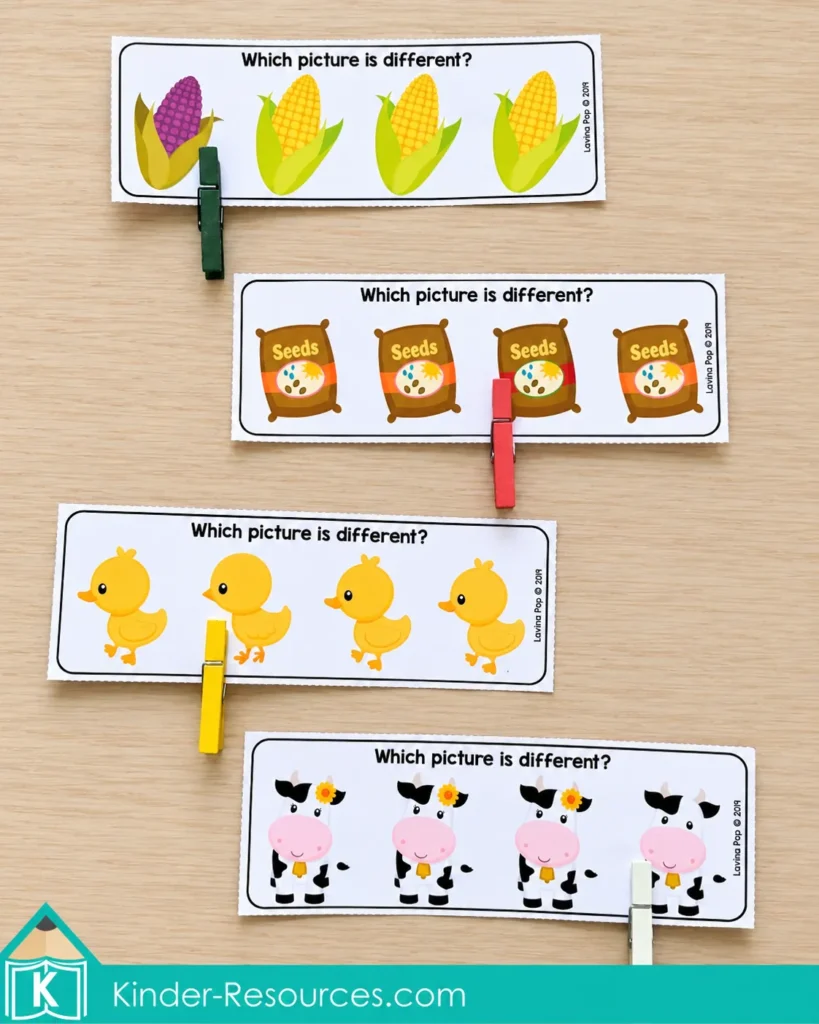
14. Which Picture Is Different?
Children examine a row of similar farm pictures and identify the one that is different.
The difference might be a color or a small detail within the picture. Encourage children to look across the whole row before choosing an answer.
A clothespin or counter can mark their choice. Ask, “What do you notice?” or “How is this picture different?” to encourage children to explain what they see.
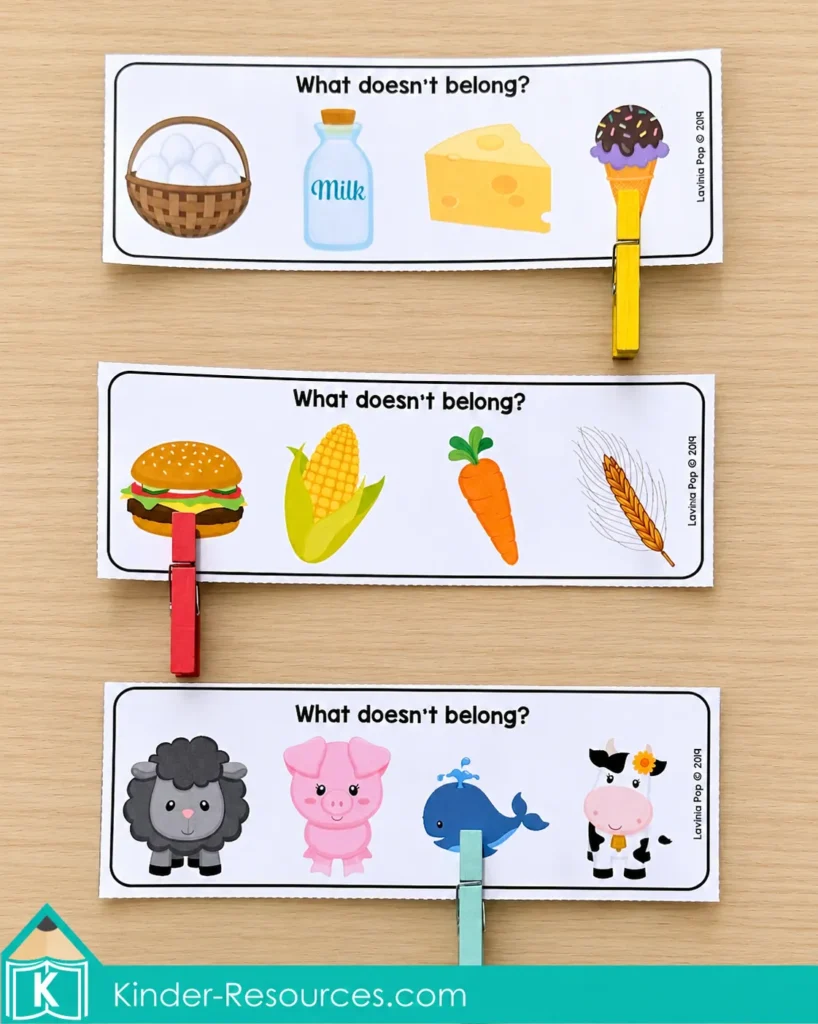
15. What Doesn’t Belong?
These cards invite children to compare a group of pictures and choose the item that does not belong.
Name the pictures together, then look for something they have in common. Encourage children to explain their choice instead of simply pointing to an answer.
The conversation is a useful part of this activity. If a child notices a different connection between the pictures, ask them to explain their thinking.
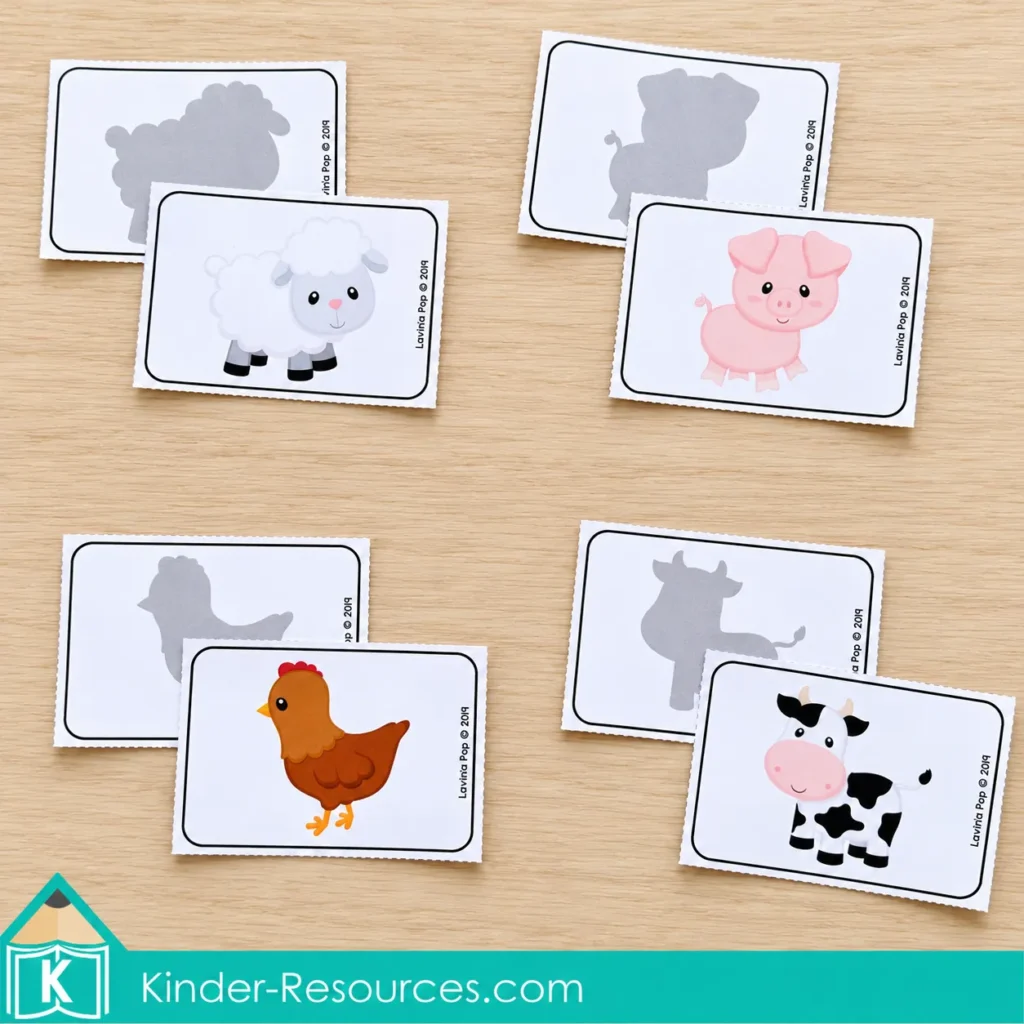
16. Farm Shadow Matching
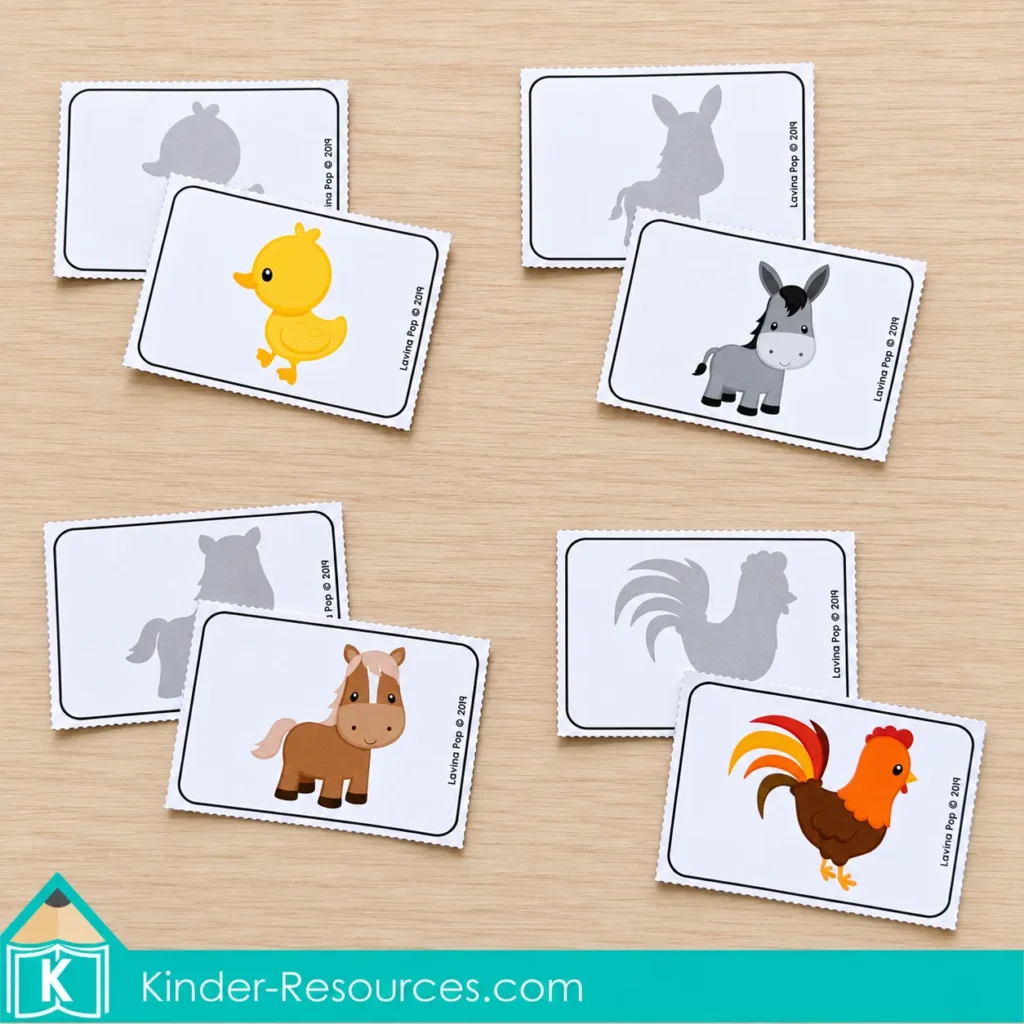
Children match farm animal pictures to their corresponding silhouettes.
Begin with a few animals that have noticeably different outlines. Encourage children to look at details such as the ears, legs, tail, or beak when deciding which shadow matches.
Add more pairs as children become confident. You can also spread the shadow cards across the table and invite children to find a matching animal one at a time.
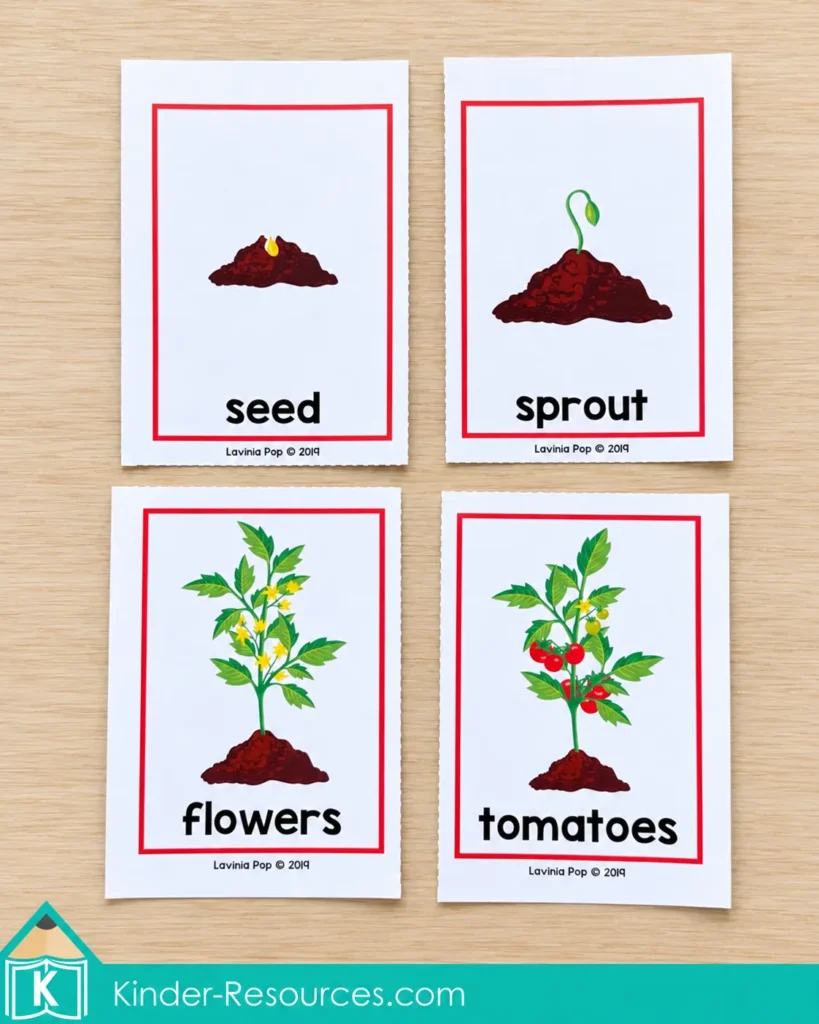
17. Chicken and Tomato Plant Life Cycle Cards
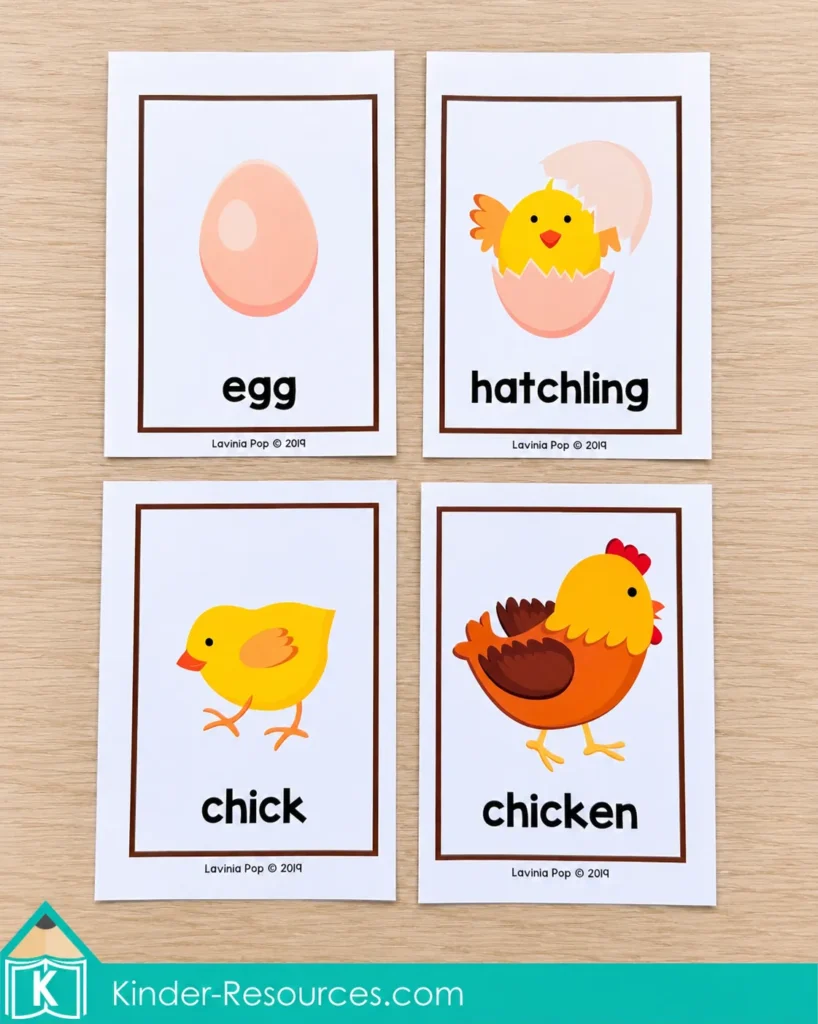
The packet includes two sets of sequencing cards: a chicken life cycle and a tomato plant life cycle.
Children arrange the chicken cards in the order egg, hatchling, chick, and chicken. The tomato plant cards show seed, sprout, flowers, and tomatoes.
Name each stage together before putting the cards in order. Then invite children to describe the sequence using words such as first, next, and last. These cards also provide a starting point for talking about how animals and plants grow.
Preparing Your Farm Preschool Centers
You don’t need to prepare all 17 activities at once. Choose a few that fit your current learning goals and add others as children become familiar with the routine.
Depending on the activities you select, useful materials include:
- Printed activity pages
- Scissors and laminating supplies
- Clothespins
- Counters or pom-poms
- Dry-erase markers
- Small trays or containers
- A shallow sand tray for prewriting practice
Keep each activity’s pieces together in a labeled bag, pouch, or container. A small tray makes it easy to set out the materials and pack them away afterward.
For children who are beginning to match and sort, start with colors, shadows, or animal sizes. Introduce letter and number activities in small sets. Save the CVC puzzles and word-building tasks for children who are ready for those skills.
These farm activities for preschool can be rotated through your learning centers throughout the theme, giving children time to revisit familiar tasks and try new ones.
Get the Complete Farm Activities for Preschool Packet
The complete 93-page Farm Preschool Centers packet includes all 17 activities featured in this post, with options for literacy, math, fine motor practice, matching, sorting, and sequencing.
Choose your preferred store below:



Happy Teaching! 😊
You might also like…

Pingback: Unit Study: Farm Animals - Pilato Projects